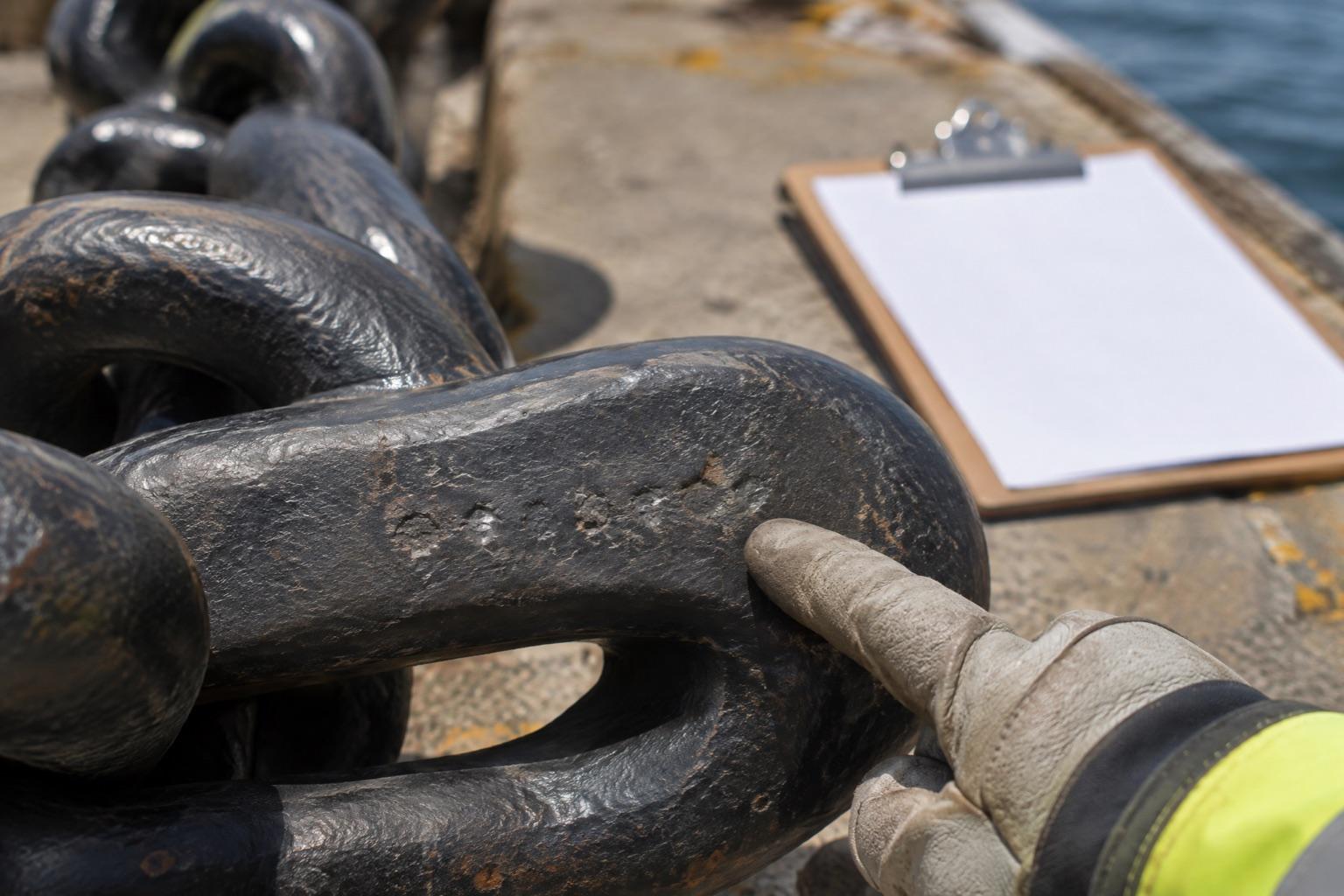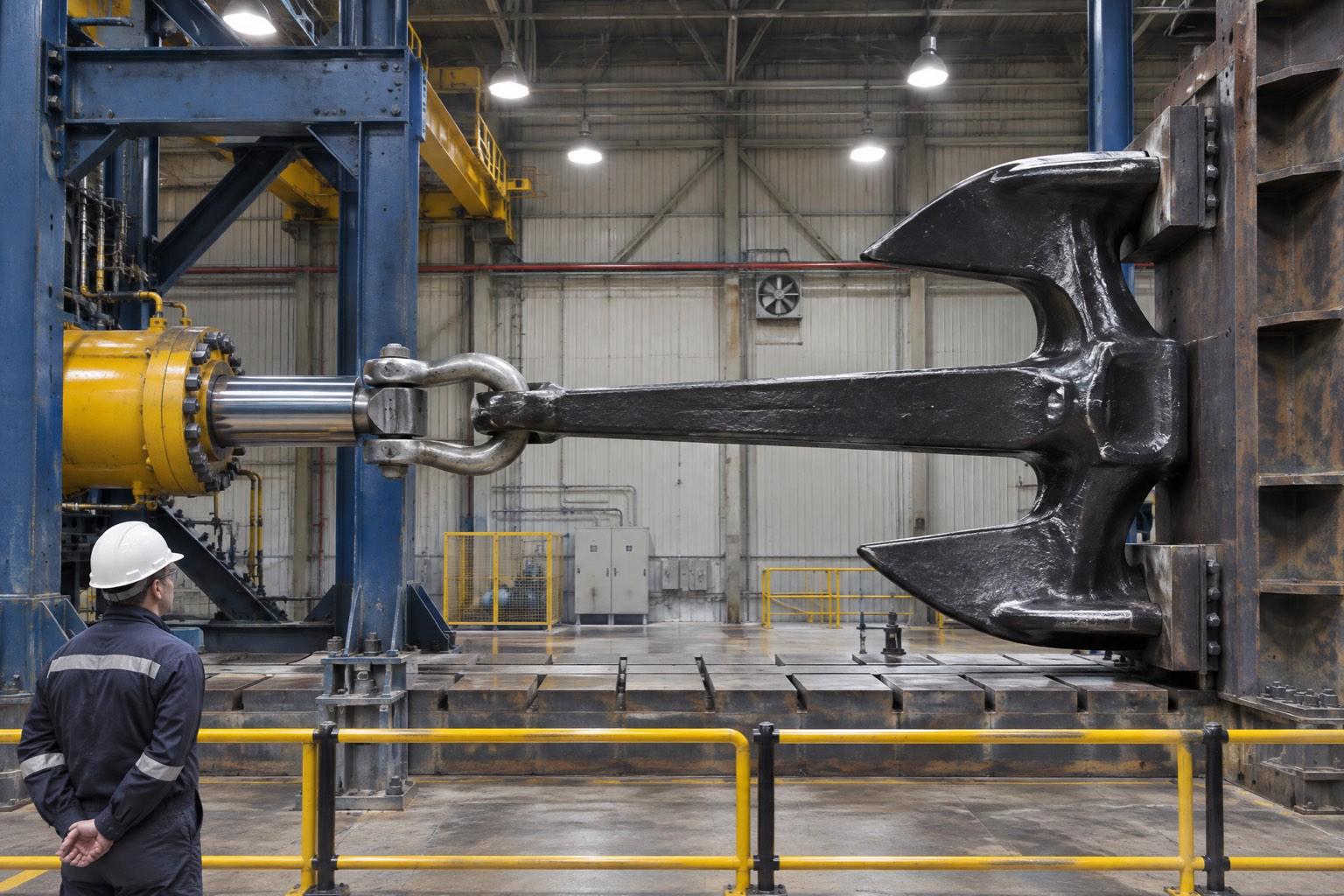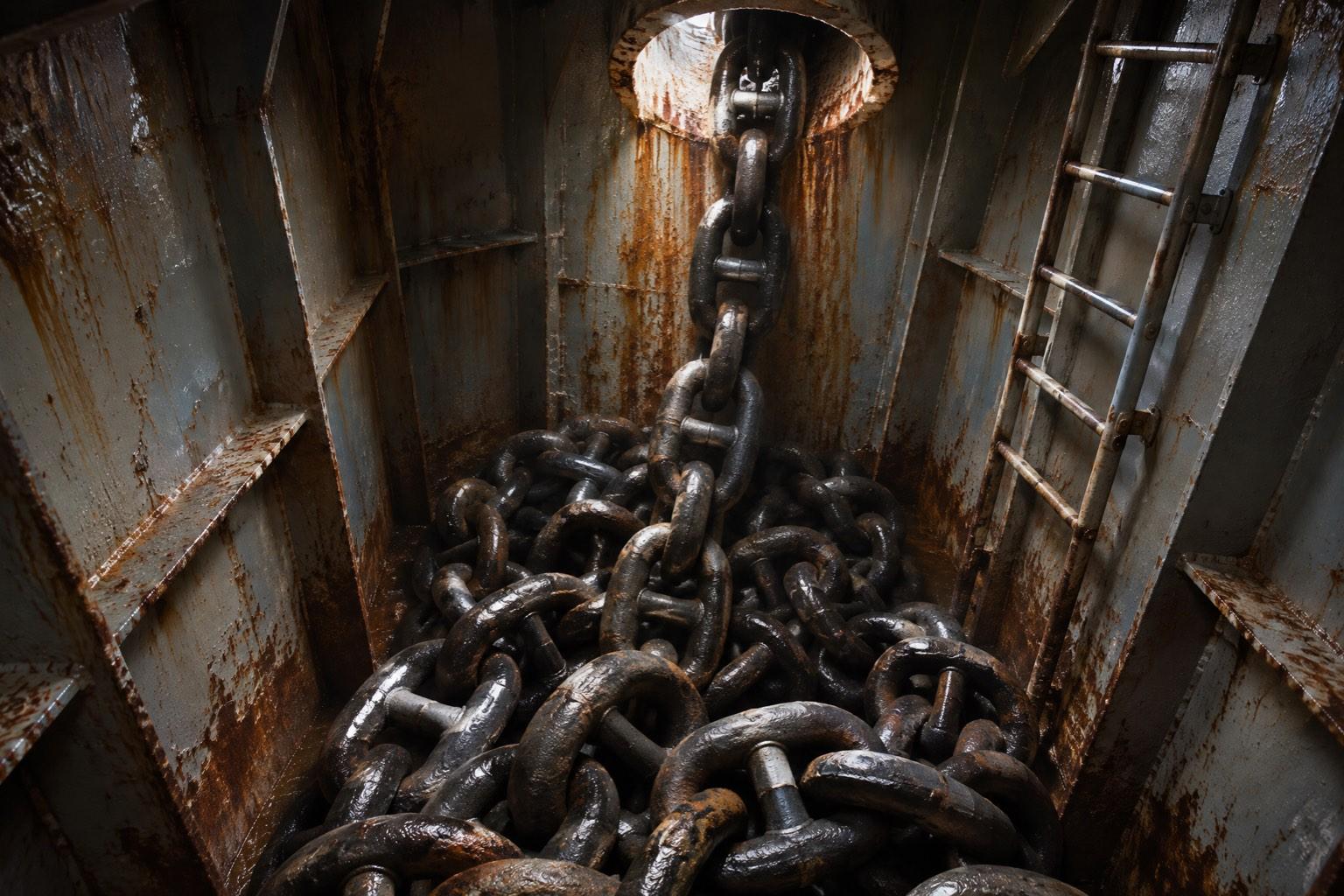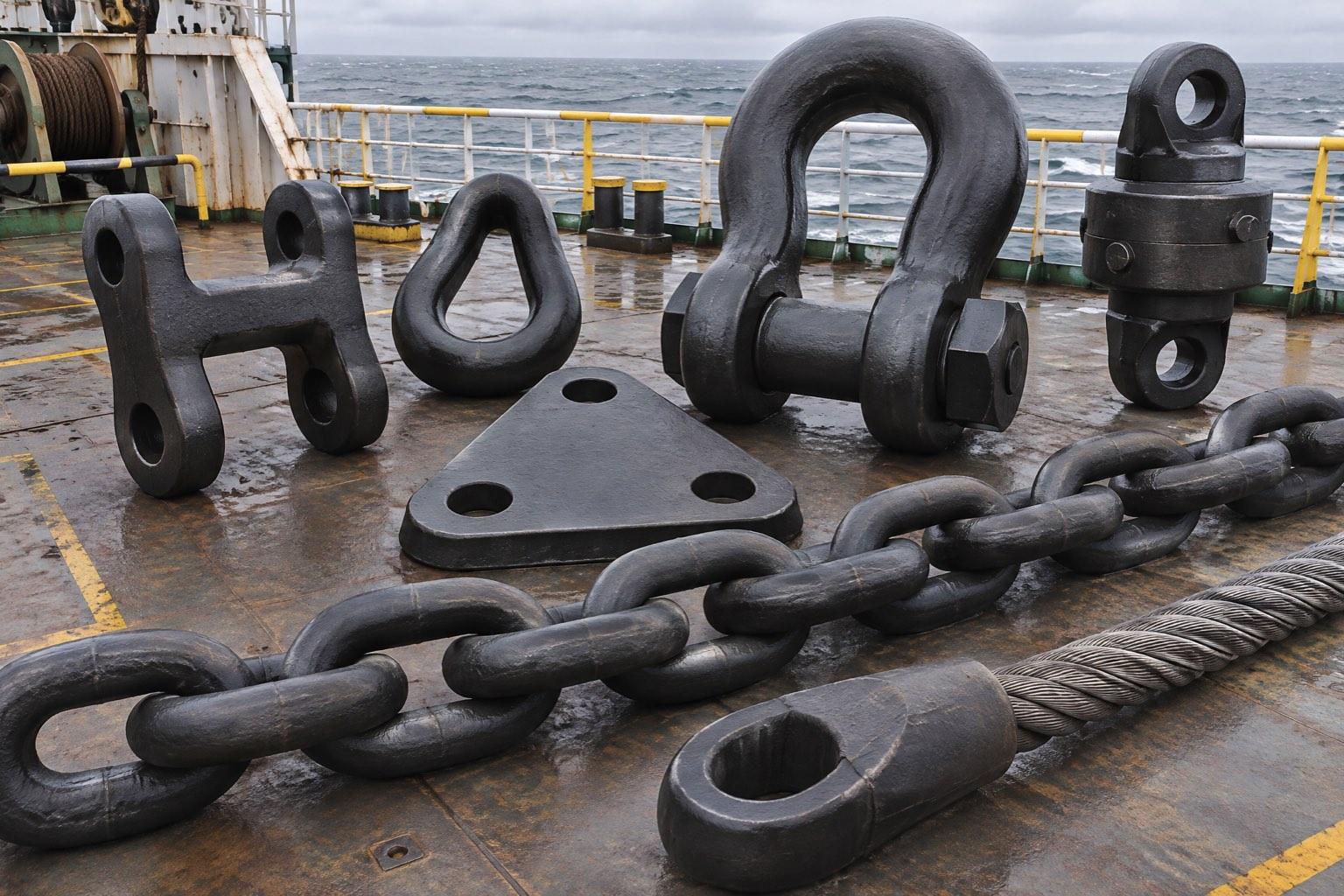
A mooring for a drilling rig, an FPSO, a floating storage unit, a single point mooring buoy or a floating wind turbine is a set of legs, each running from an anchor on the seabed to a fairlead on the unit. Along the way the leg may change from chain to wire to fibre rope and back, branch to a buoy or a clump weight, and pass through a swivel. Every one of those changes is a connector — and the connectors are where a mooring is most often specified wrongly.
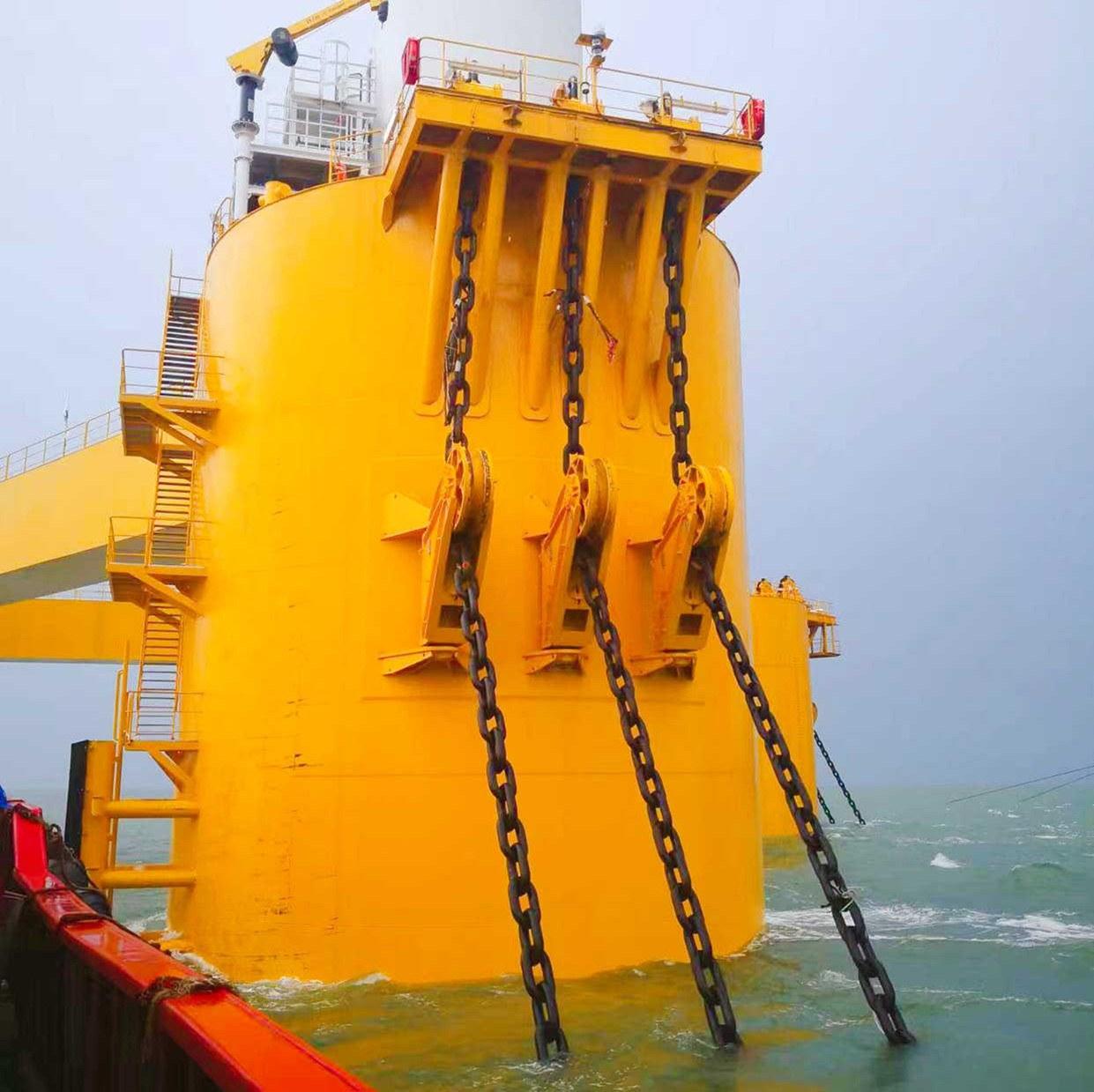
/01Connectors for chain.
| Component | What it does | Notes |
|---|---|---|
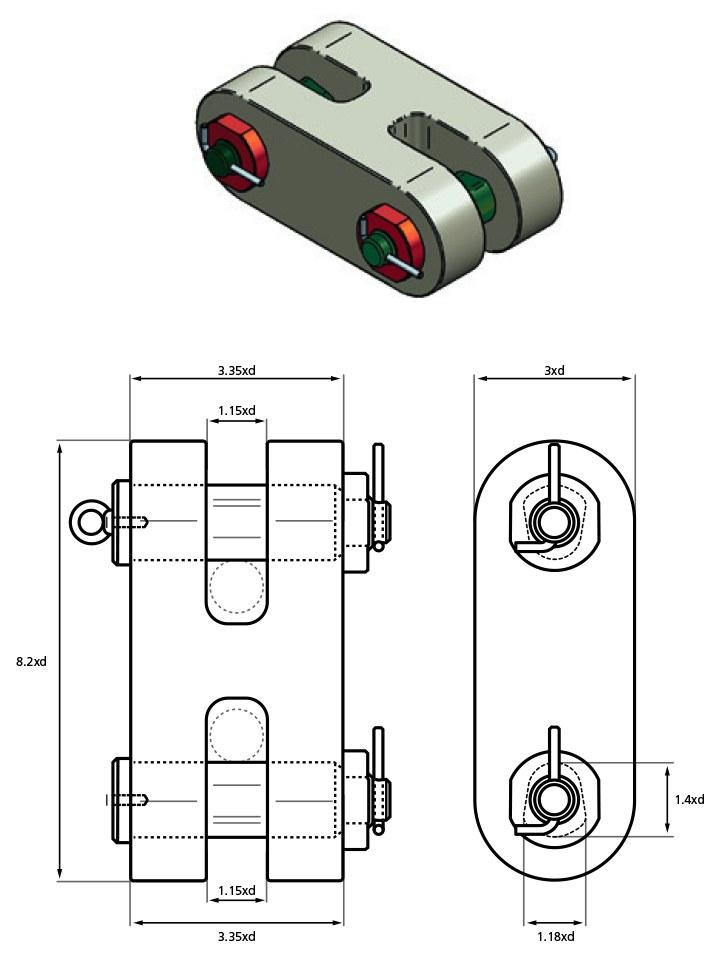
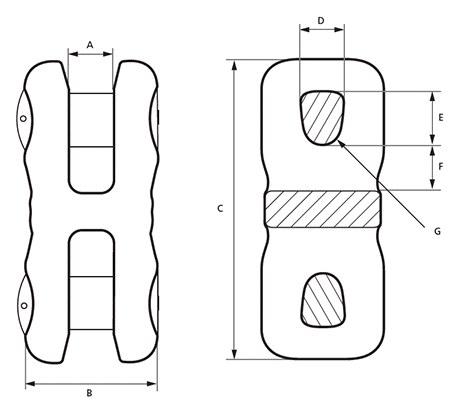
| H-link / H-connector | Joins mooring components; can connect several parts | Grades R3–R5; 76/84 mm R4 hybrid: proof 5,682 kN, break 7,208 kN |
| LTM H-type joining shackle | Joins two lengths of chain | About 9D long, 3.6D wide |
| LTM joining shackle (D) | Joins studless chain, and the ends of stud link chain | Forged; locking pin |
| LTM end joining shackle | Connects chain to the fastening device | About 8.6D × 3.8D |
| RF connector | Joins offshore chain | 76 mm R4: proof 4,731 kN, break 6,002 kN |
| Kenter / anchor Kenter shackle | Joins lengths; connects chain to an anchor | Common-link size, passes over a chain wheel |
Listings: H-link, H-connector, LTM joining shackle, LTM end joining shackle, RF connector and anchor Kenter shackle. Where studless meets stud link chain, a three-link adaptor makes the change — see stud link vs studless chain. These connectors sit with offshore mooring chain and anchors in our anchor chain and mooring equipment range.
/02Pear links and pear shackles.
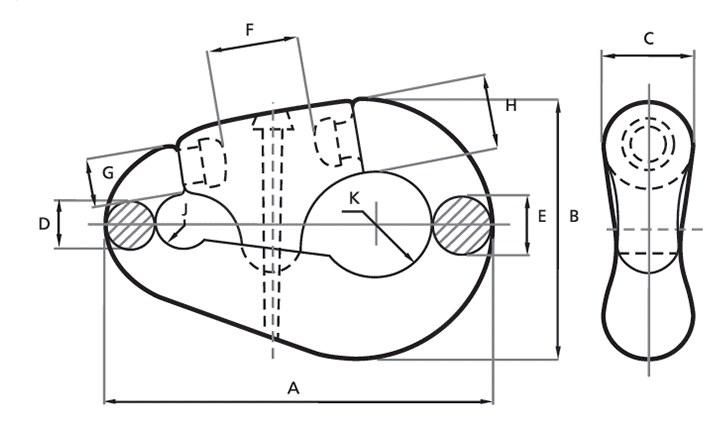
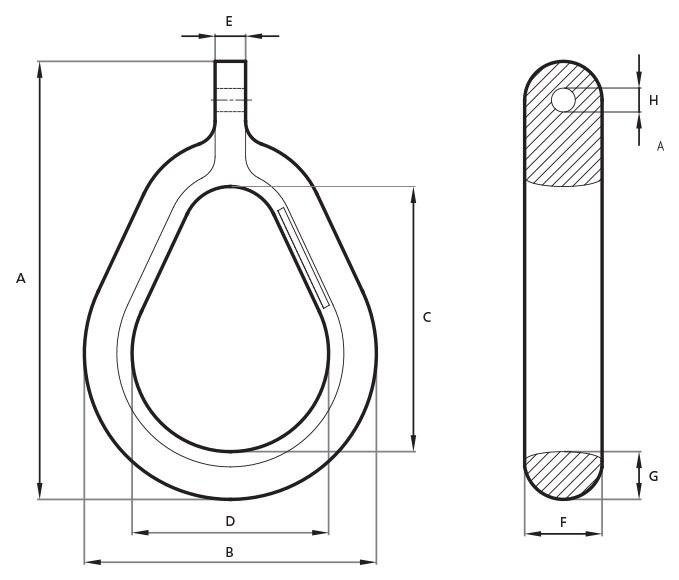
A pear link is pear-shaped: a wide end and a narrow end, so it can join a large component to a smaller one — chain to a smaller chain, or chain to a wire rope socket. A pear-shaped end shackle adds a bolt, and makes a useful spare: one maker notes it can stand in for a Kenter shackle, a three-link adaptor and a D-type end shackle. Our pear shackles come in grade 3 and grade R4.
/03Plates: where lines branch.
A triangle plate (tri-plate) joins three lines at one point — typically a mooring buoy’s riser chain, the ground leg and a pick-up or clump weight line. It is used mainly in buoy and wharf moorings. One published range runs from 9.5 t to 200 t working load. A quad plate takes four.
/04Swivels, installation links and chasers.
- Swivels release the twist that builds up in a line from wave action and from wire rope’s own torque. Offshore types include compact, in-line, box and bearing swivels. Bearing swivels need periodic servicing; one maker calls for a full strip-down with magnetic particle inspection every two years.
- Installation links make the temporary connections used while a mooring is laid and tensioned.
- Chasers run down a mooring line from a workboat: a permanent chaser recovers an anchor or holds chain clear of a pipeline during laying; a J-chaser lifts vertically to free a stuck anchor.
- Weak links set a deliberate failure point, used in aquaculture and at a ship’s chain locker — see the weak link system.
Common questions
- What is an H-link in mooring?
- A forged connector used to join mooring components, made in grades R3 to R5. It can connect several parts at once.
- What is a pear link used for?
- To join components of different sizes — chain to smaller chain, or chain to a wire rope socket.
- What is a triangle plate?
- A plate with three holes that joins three mooring lines at one point, mainly in buoy and wharf moorings.
- What does LTM mean on a shackle?
- It is a pattern name for heavy offshore D-type joining and end shackles with locking pins.
- Why does a mooring line need a swivel?
- To release twist from wave action and from wire rope torque, which would otherwise kink the chain and load the connectors unevenly.
What we list
Every listing on our Mooring Buoys shelf:
- Buoy Marking Light — Solar LED
- Buoy Marking Light with GPS Tracking
- Buoy Support Chain — 26 mm
- Chain-Through Mooring Buoy
- Cylindrical Chain Support Buoy
- Modular Subsea Support Buoy
- Subsea Support Buoy
And on our Mooring Connectors shelf:
- Connecting Link for Pennant Lines
- Forelock Shackle
- Forged Ring — S-643 Pattern
- M-Fairlead Shackle — Stainless Steel
- Master Link — A-342 Pattern
- Solid Thimble, Type K3
- Solid Thimble, Type K3B
- Swivel Connecting Link
- T-Mooring Link — Galvanized
- Tube Thimble
- Weak Link
And on our Offshore Mooring Chain shelf:
- Five-Link Adaptor — Mooring Chain
- Five-Link Adaptor with Special End Link
- Stud Link Offshore Mooring Chain — Grades ORQ, R3, R3S, R4, R4S and R5
- Studless Chain Tail — 78 mm Grade 3
- Studless Five-Link Adaptor — 78 mm Grade 3
- Studless Offshore Mooring Chain — Grades ORQ, R3, R3S, R4, R4S and R5
And on our Chasers & Anchor-Handling Tools shelf:
- Anchor Line Hook
- Chain Link Hook
- Four-Prong Grapnel
- J-Lock Chaser — Single Chain Grabber
- Swivel Shackle for Chaser
And on our Aquaculture Mooring shelf:
Mooring connectors
 IH-MR-CN-HLKH-Link
 IH-MR-CN-HCNH-Connector — Hybrid 76/84 mm, Grade R4
 IH-MR-AC-PESR4Pear-Shaped End Shackle — Grade R4
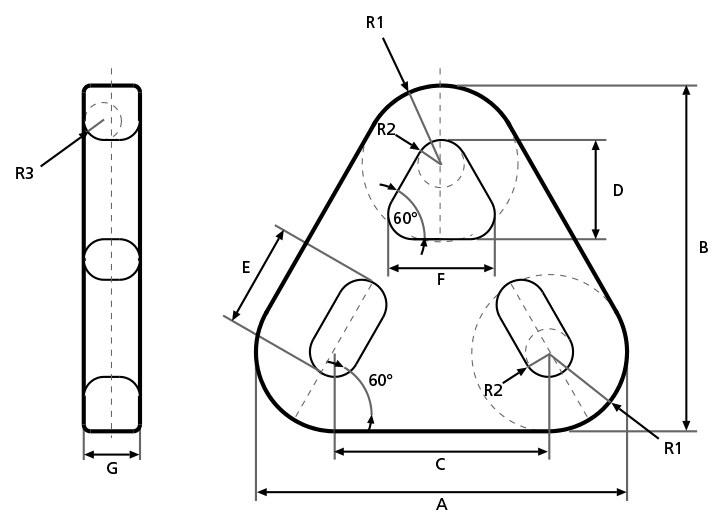 IH-MR-CN-TRPTriangle Plate (Triplate)
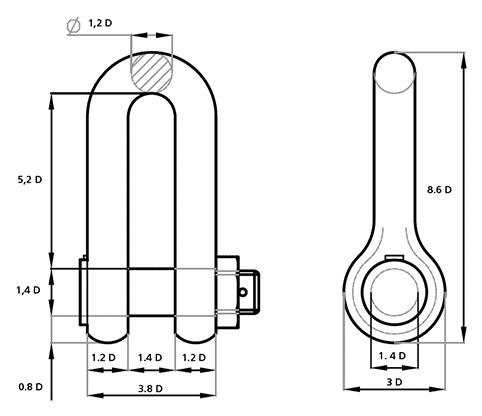 IH-MR-AC-LTMEJLTM End Joining Shackle, D Type — Grade R4
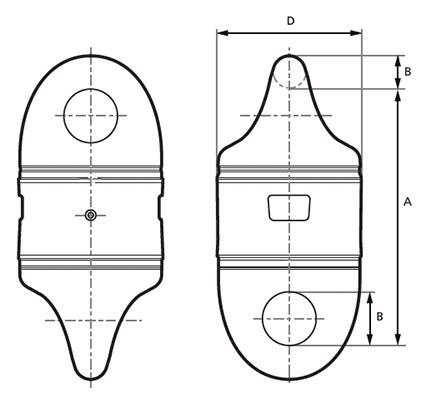 IH-MR-AC-CSWCompact Mooring Swivel — Grades R4 and R5
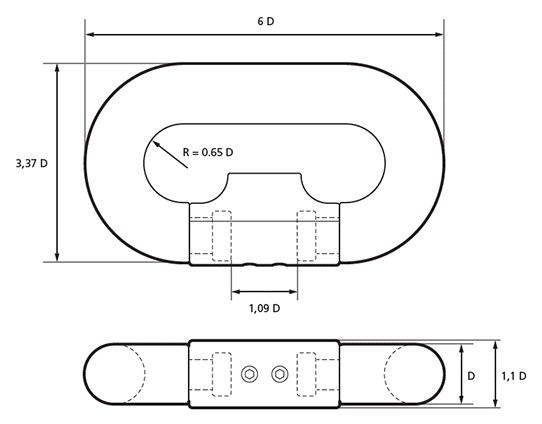 IH-MR-CN-ILKInstallation Link (LLLC)
 IH-MR-AH-PCHPermanent Chaser