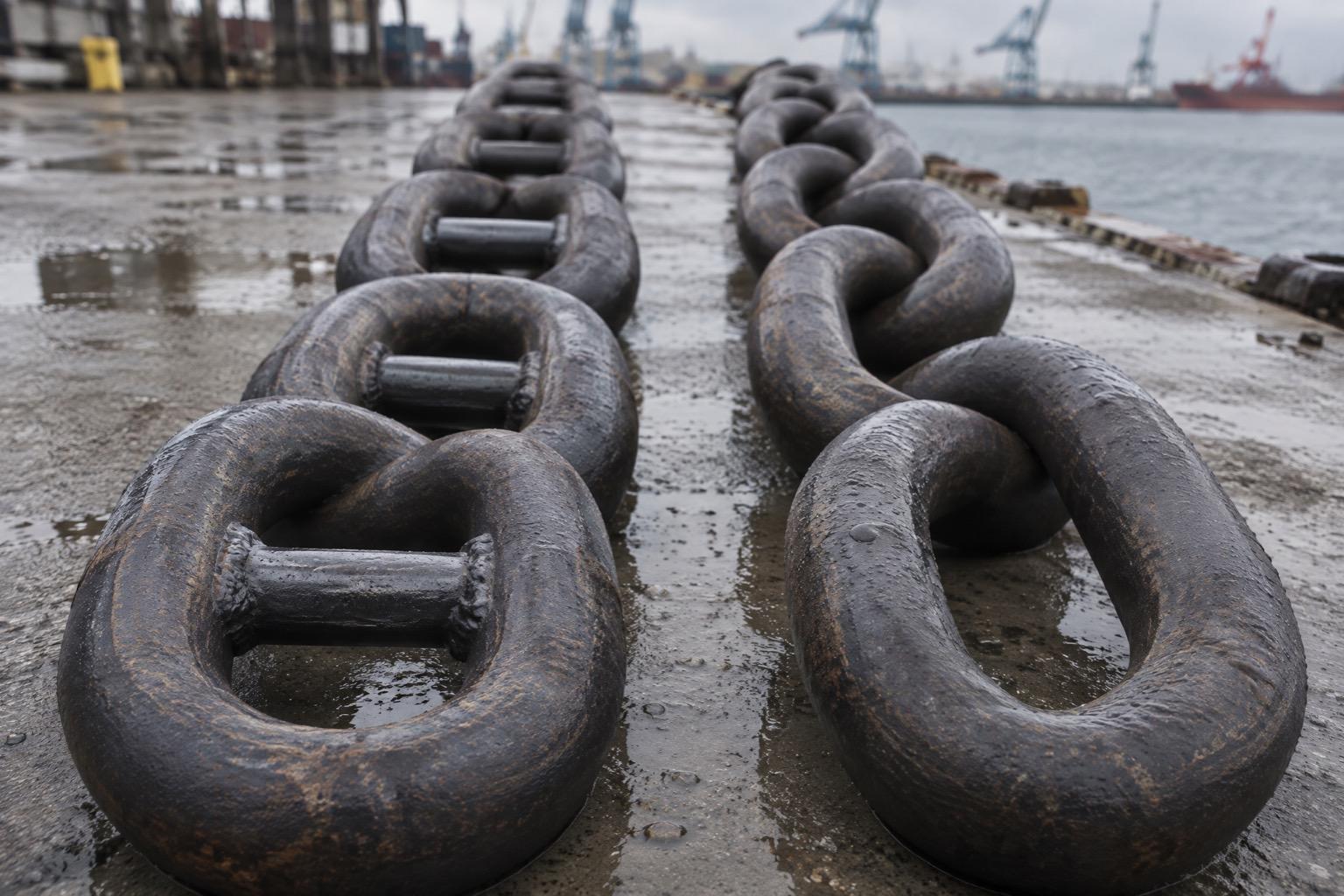
Lay two lengths of chain side by side and the difference is obvious: one has a bar across every link, the other is plain oval links. The bar is the stud, and it changes how the chain behaves — under load, in the chain locker, over the windlass and over decades on the seabed. Neither type is simply better. A ship’s anchor cable and a floating platform’s mooring line ask different things of the chain, and that is why they usually end up with different types.
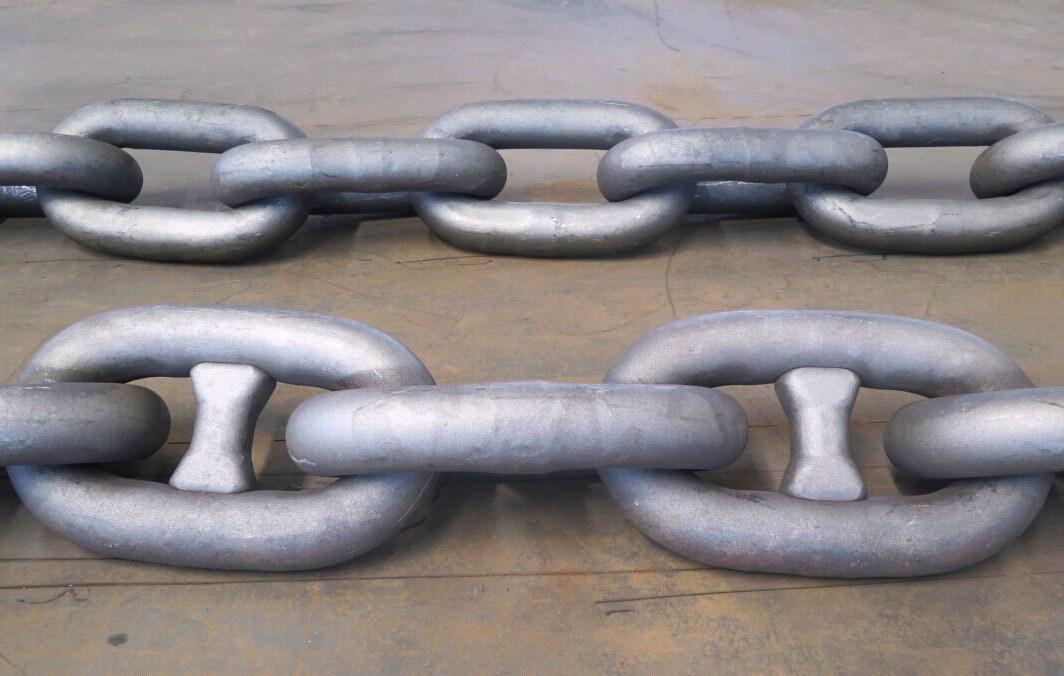
/01What the stud does.
Three things:
- It holds the link open. Under tension a plain oval link tends to narrow at the sides and lengthen. The stud props the sides apart, so the link keeps its shape and spreads the load more evenly.
- It stops kinking. When chain is paid out and hauled in, it piles into the locker. Studs keep each link from turning into its neighbour, so the cable runs out clean when the anchor is let go.
- It fits the windlass. The pockets of a cable lifter are shaped for stud link chain of a given size — see the cable lifter (chain wheel).
The cost is weight, and a joint. A stud that loosens over years of cyclic load can wear the link and start a fatigue crack, which matters most where the chain cannot easily be inspected.
/02Strength compared.
| Grade | Break (both types) | Proof, stud link | Proof, studless |
|---|---|---|---|
| ORQ | 4,621 | 3,066 | 3,066 |
| R3 | 4,884 | 3,417 | 3,417 |
| R3S | 5,454 | 3,942 | 3,811 |
| R4 | 6,001 | 4,731 | 4,205 |
| R4S | 6,658 | 5,257 | 4,665 |
| R5 | 7,009 | 5,498 | 4,884 |
The breaking load is set by the grade’s constant and the diameter, and IACS uses one constant for both types. The proof load is not: from R3S upward the rules prove studless chain at a lower load, because a link without a stud deforms more along its length under tension. In the ship grades the difference shows in both loads — our studless anchor chain is listed with lower proof and breaking loads than stud link anchor chain of the same size and grade. Every load, size by size, is in the anchor chain size chart.
/03Weight compared.
| Size | Stud link | Studless |
|---|---|---|
| 50 mm | 55 | 50 |
| 64 mm | 90 | 82 |
| 76 mm | 126 | 116 |
| 102 mm | 228 | 208 |
| 137 mm | 411 | 375 |
| 162 mm | 575 | 525 |
Studless chain is about 8 to 9% lighter for the same diameter. In a ship’s cable that matters little; in a deep-water mooring line, where the unit carries the weight of hundreds of metres of chain on every leg, it matters a great deal. More in anchor chain weight per metre and per shot.
/04Where each is used.
| Use | Usual choice | Why |
|---|---|---|
| Ship anchor cable | Stud link, U2 or U3 | Handles over the windlass, stows without kinking |
| Drilling unit and FPSO moorings in shallower water | Stud link, R3–R4 | Stable link-to-link connection, easier to hoist |
| Permanent mooring | Studless, R3–R5 | Lower weight per unit of strength, longer fatigue life |
| Small craft, anchor chain to 17 mm | Studless allowed | Rules permit studless chain of equal test load |
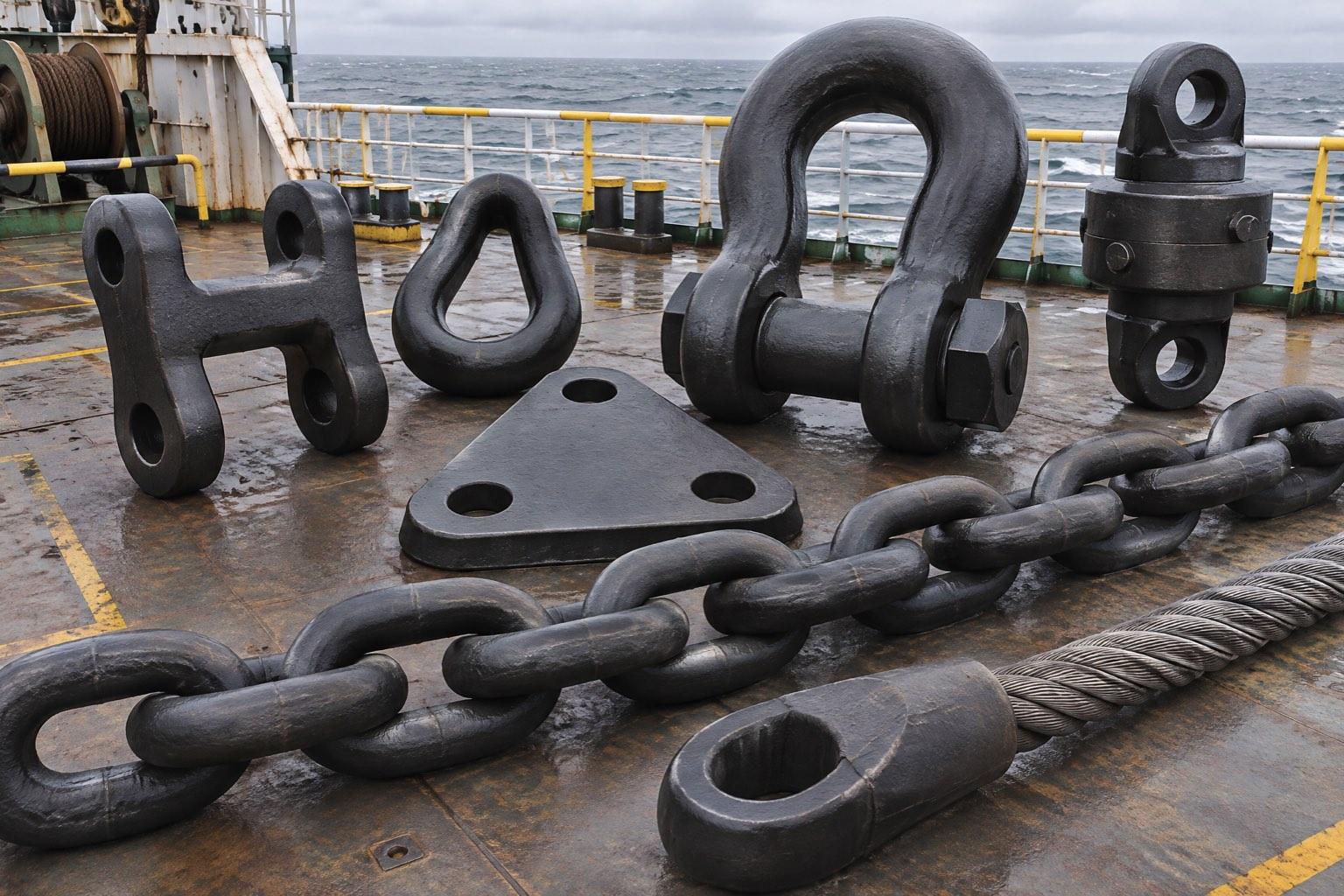
When the two types meet in one line — studless chain on the seabed and stud link through the fairlead, say — the join is made with a purpose-built adaptor rather than a shackle straight onto a studless link: see the three-link studless-to-stud-link adaptor. The other connectors offshore lines use are covered in offshore mooring components.
Common questions
- Is stud link chain stronger than studless?
- For offshore grades the minimum breaking load is the same. Stud link chain is proof tested higher from R3S up. In the ship grades studless chain is listed with lower loads.
- Why do ships use stud link anchor chain?
- It runs well over the windlass cable lifter and stows in the locker without kinking, so the anchor can be let go cleanly.
- Why are permanent moorings studless?
- Studless chain carries the same breaking load for less weight, and has a longer fatigue life — there is no stud to loosen over decades of cyclic loading. The trade-off is that it is less convenient to handle when hoisting.
- Can a ship use studless anchor chain?
- Where the rules require a chain diameter of 17 mm or less, studless chain with the same test load — or wire or fibre rope of the same breaking load — may be used instead. Larger ships use stud link.
- How much lighter is studless chain?
- About 8 to 9% at the same diameter — 116 kg/m against 126 kg/m at 76 mm in our offshore listings.
- Can I join studless chain to stud link chain?
- Yes, with a purpose-built adaptor of common, enlarged and end links, rather than a shackle straight onto a studless link.
Stud link and studless chain
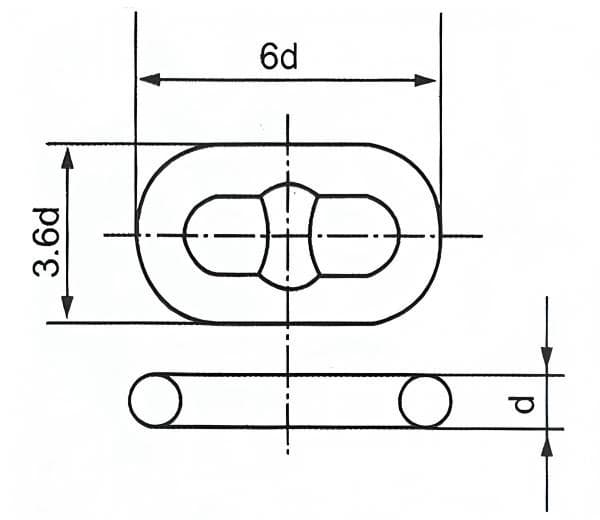 IH-LR-AC-SLACGU1U2Stud Link Anchor Chain — Grades U1, U2 and U3
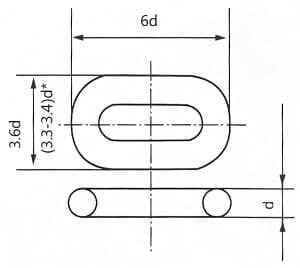 IH-LR-AC-SACGU1U2UStudless Anchor Chain — Grades U1, U2 and U3
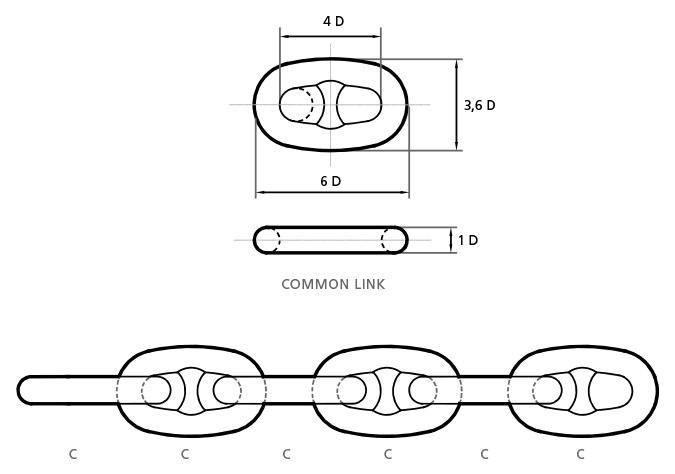 IH-MR-MC-SLStud Link Offshore Mooring Chain — Grades ORQ, R3, R3S, R4, R4S and R5
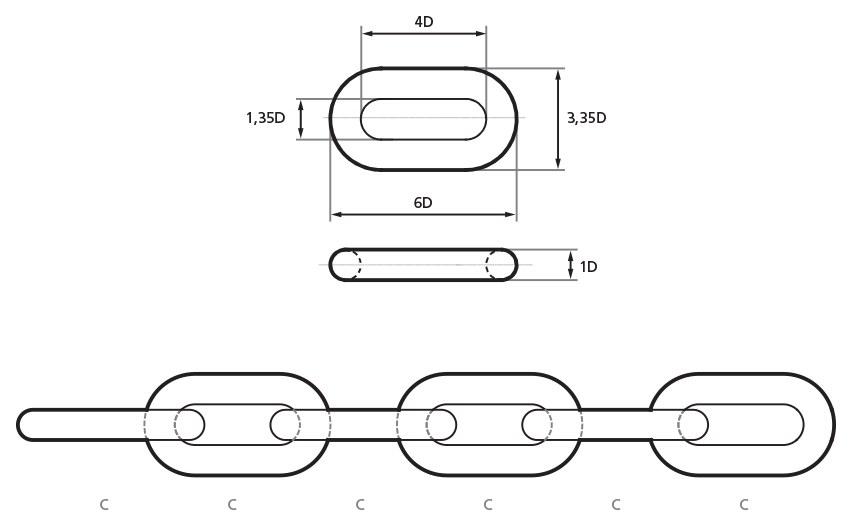 IH-MR-MC-SSStudless Offshore Mooring Chain — Grades ORQ, R3, R3S, R4, R4S and R5
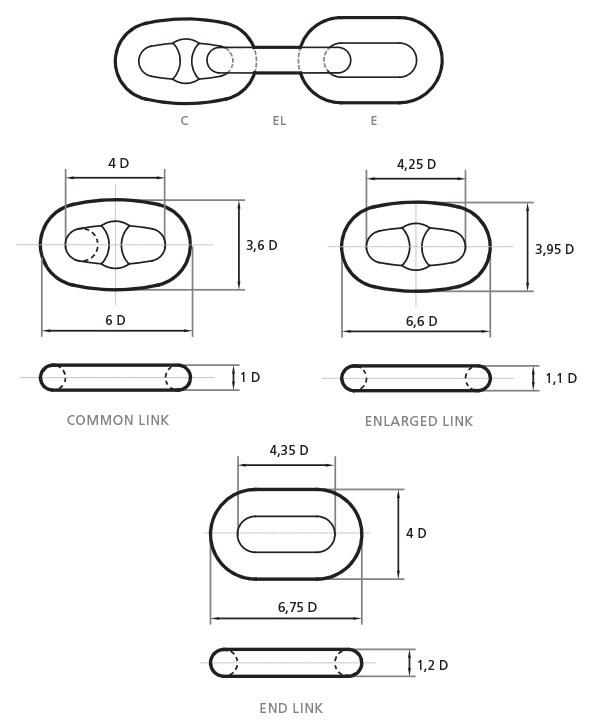 IH-MR-MC-3LAThree-Link Adaptor — Studless to Stud Link Mooring Chain
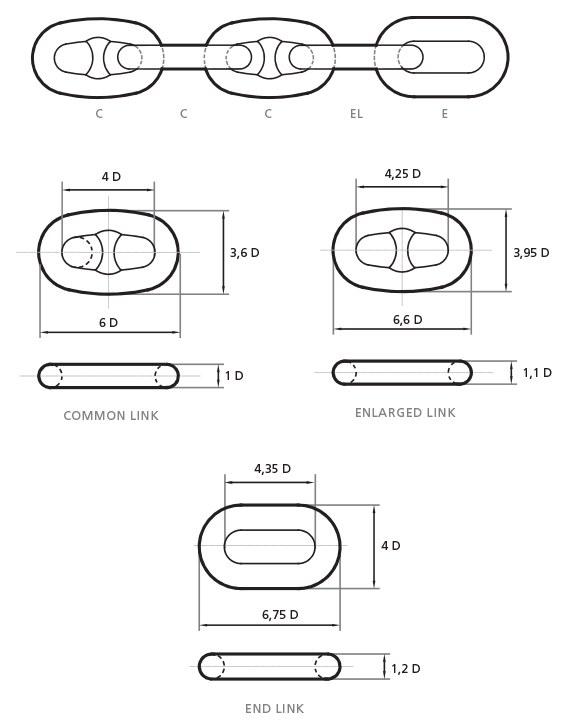 IH-MR-MC-5LAFive-Link Adaptor — Mooring Chain