
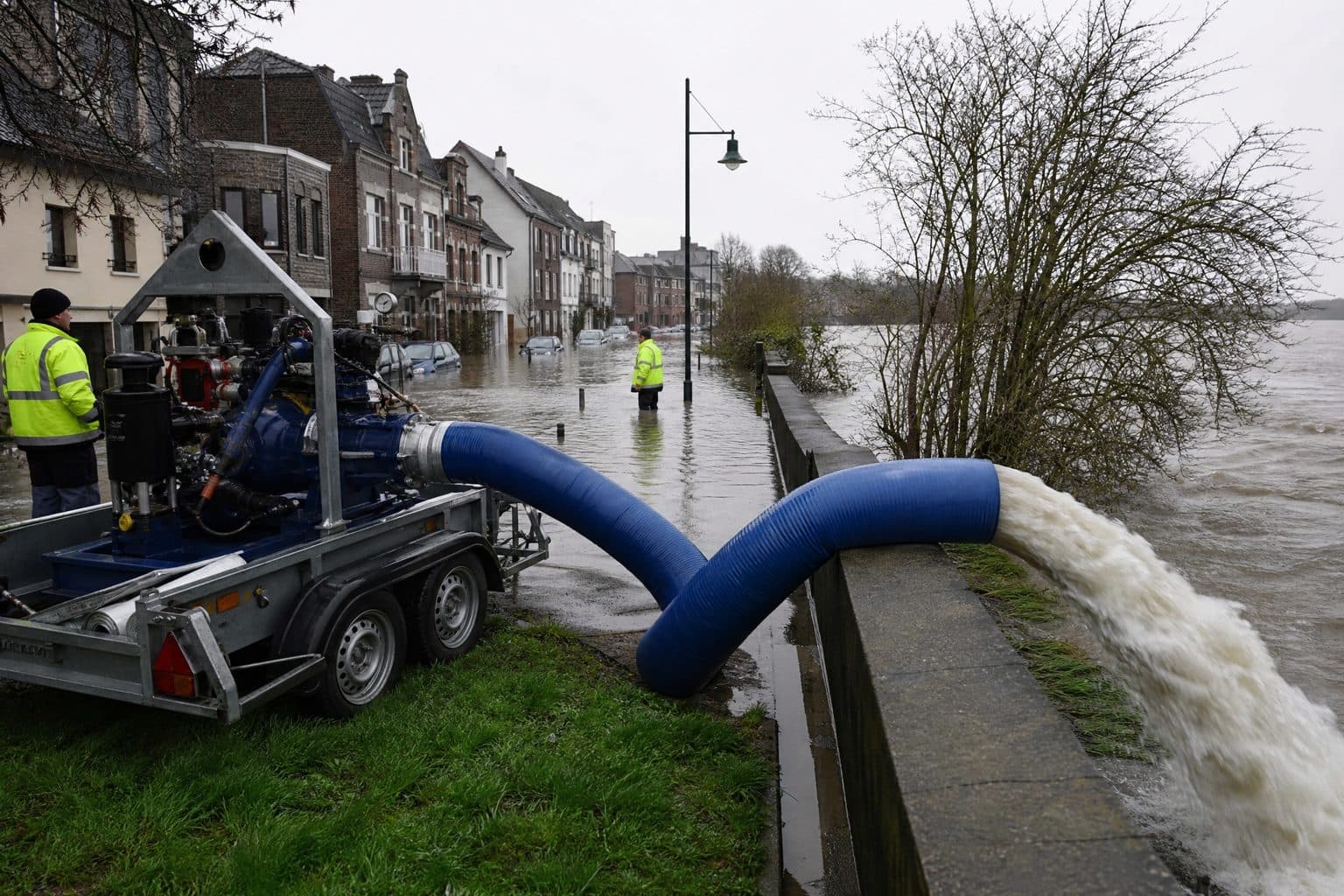
On 16 April 2024 the UAE’s National Center of Meteorology recorded 254.8 mm of rain in under 24 hours at Khatm Al Shakla in Al Ain — the largest in 75 years of records. Dubai International cancelled more than a thousand flights over the following days, and in Oman flash floods from 14 April killed at least 19 people. Three years earlier, in July 2021, floods in Germany and Belgium killed more than 220 people, at least 134 of them in the Ahr valley, and caused around €33 billion of damage in Germany alone. When the rain stops, the work becomes moving water — and that means pumps and a great deal of hose.
/01The scale of flood pumping.
Flood water lies in underpasses, basements, car parks and low-lying districts, and has to be moved to a drain, a river or the sea — often over hundreds of metres or kilometres. Two benchmarks show the scale. In England, every fire-service high volume pump (HVP) carries 3 km of 150 mm hose and is rated at up to 7,000 litres a minute (420 m³/h). Across Europe, the EU Civil Protection Mechanism defines a high-capacity pumping module that must move at least 1,000 m³/h against a 40 m height difference, deliver water over 1,000 m, handle muddy water up to 40 °C, use Storz-compatible couplings, deploy within 12 hours and run for 21 days. Belgium’s module sent to Emilia-Romagna in 2023 was rated at 6,000 m³/h.
/02Why the hose sets the flow.
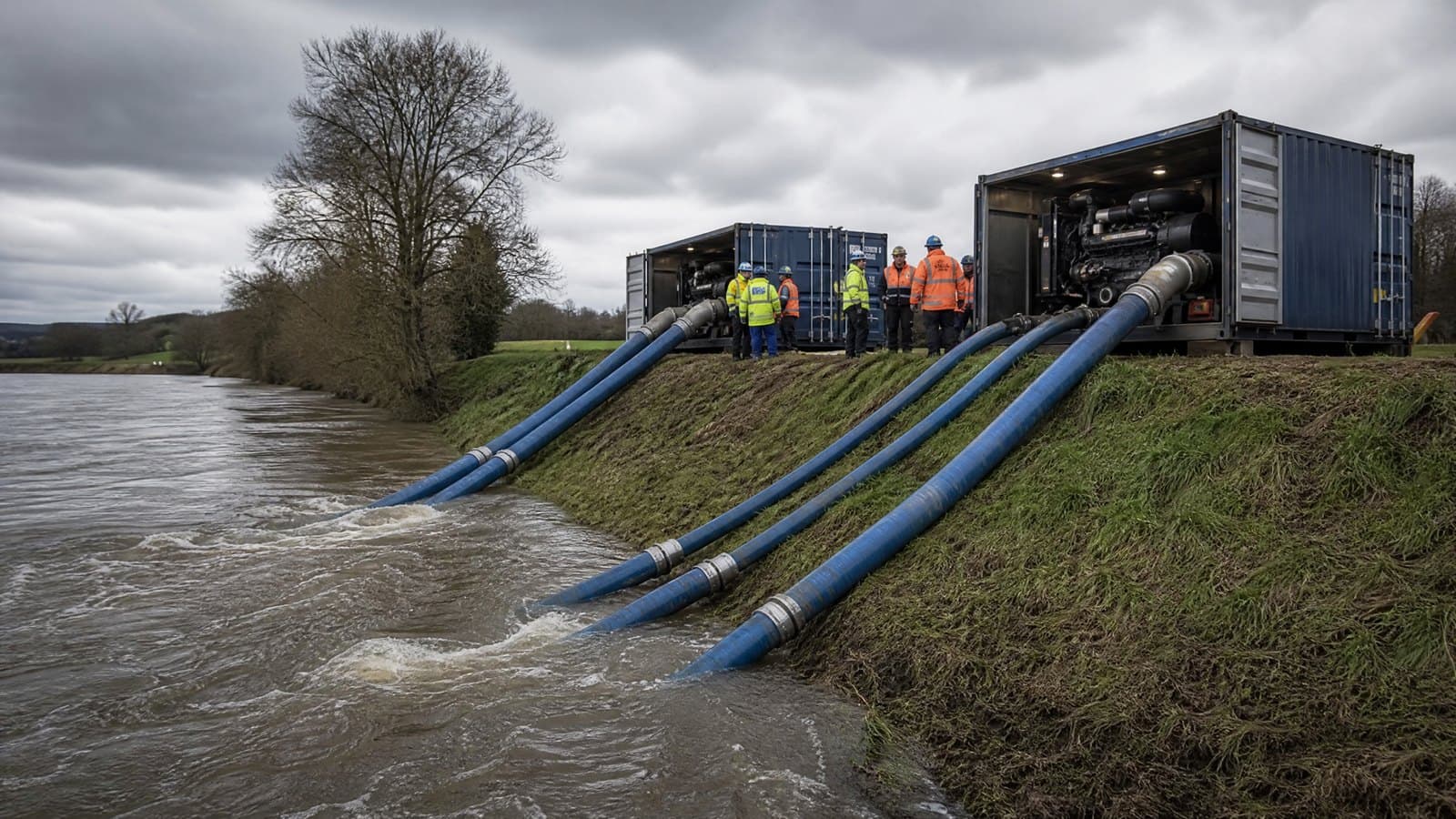
Pump ratings are quoted at low head and short hose lengths. Lay the hose out to a distant outfall and friction takes over. At 420 m³/h, a 6" (155 mm) lay flat line loses roughly 18 bar per kilometre — so a 150 mm HVP line delivers its rated flow only over short distances, and far less at the end of 3 km. The same flow through 8" loses under 5 bar per kilometre. That is why flood teams run parallel lines, and why the larger the flow, the larger the bore should be.
| Flow | Bore | Velocity | Loss per km |
|---|---|---|---|
| 420 m³/h (7,000 L/min) | 6" (155 mm) | 6.2 m/s | ≈ 18 bar |
| 420 m³/h (7,000 L/min) | 8" (205 mm) | 3.5 m/s | ≈ 4.7 bar |
| 1,000 m³/h | 10" (254 mm) | 5.5 m/s | ≈ 8.2 bar |
| 1,000 m³/hHighlighted | 12" (305 mm) | 3.8 m/s | ≈ 3.4 bar |
| 1,000 m³/h | 14" (355 mm) | 2.8 m/s | ≈ 1.6 bar |
| 1,000 m³/h | 16" (405 mm) | 2.2 m/s | ≈ 0.8 bar |
/03Choosing hose for flood work.
Flood water carries silt, debris and often fuel and sewage. A TPU lay flat transfer hose resists abrasion when dragged over rubble and kerbs, shrugs off oil and chemicals, and is light for its size — 4.6 kg/m at 12" — so crews can lay it by hand from a reel. It runs from 1-1/2" to 16" (14 bar from 6" to 14", 10 bar at 16") in lengths up to 400 m. For shorter, lower-pressure lines from smaller pumps, NBR discharge hose handles oily water. Every pump still needs rigid suction hose on its inlet.
Couplings decide how fast a line goes down. Storz couplings are genderless — any two ends lock with a quarter turn — which is why the EU module specification calls for Storz compatibility. Our large-bore Storz couplings carry the system up to 12"; flanged and grooved couplings connect to pumps and fixed pipework. See our coupling guide.
/04Deploying and recovering.
- Keep hose on reels or flaked in boxes, couplings fitted and capped, so a line can be run out in minutes.
- Run the shortest practical route to an outfall the authority has approved; avoid sharp debris and protect road crossings with hose ramps.
- Lift over walls and embankments with wide bends — a kink at the crest throttles the line.
- Start pumps gradually and close valves slowly; long, full lines surge.
- Recover from the far end, draining as you go; a portable winder handles 6" to 12" lengths without a crew of six.
- Wash and disinfect hose that carried sewage-contaminated water before storage, and inspect every length for cuts.
Common questions
- How far can a flood pump push water through lay flat hose?
- As far as its pressure allows after friction. At 420 m³/h, 6" hose loses roughly 18 bar per kilometre and 8" about 4.7 bar, so bore matters more than pump size over long distances.
- What couplings are used for flood pumping hose?
- Storz couplings are common because any two ends connect with a quarter turn; the EU high-capacity pumping module calls for Storz compatibility. Flanged and grooved couplings connect to pumps and pipework.
- What is a high volume pump?
- A trailer or vehicle-mounted pump used by fire and rescue services for flooding and large fires. In England each carries 3 km of 150 mm hose and is rated at up to 7,000 L/min.
- Can lay flat hose be used for dirty flood water?
- Yes. TPU and NBR lay flat handle silty and oily water; clean and disinfect the hose after use.
- How much hose should a flood response team stock?
- Enough to reach the furthest likely outfall from each pump, plus spare lengths for damage — and on reels or in boxes with couplings fitted, so it deploys quickly.
For flood response
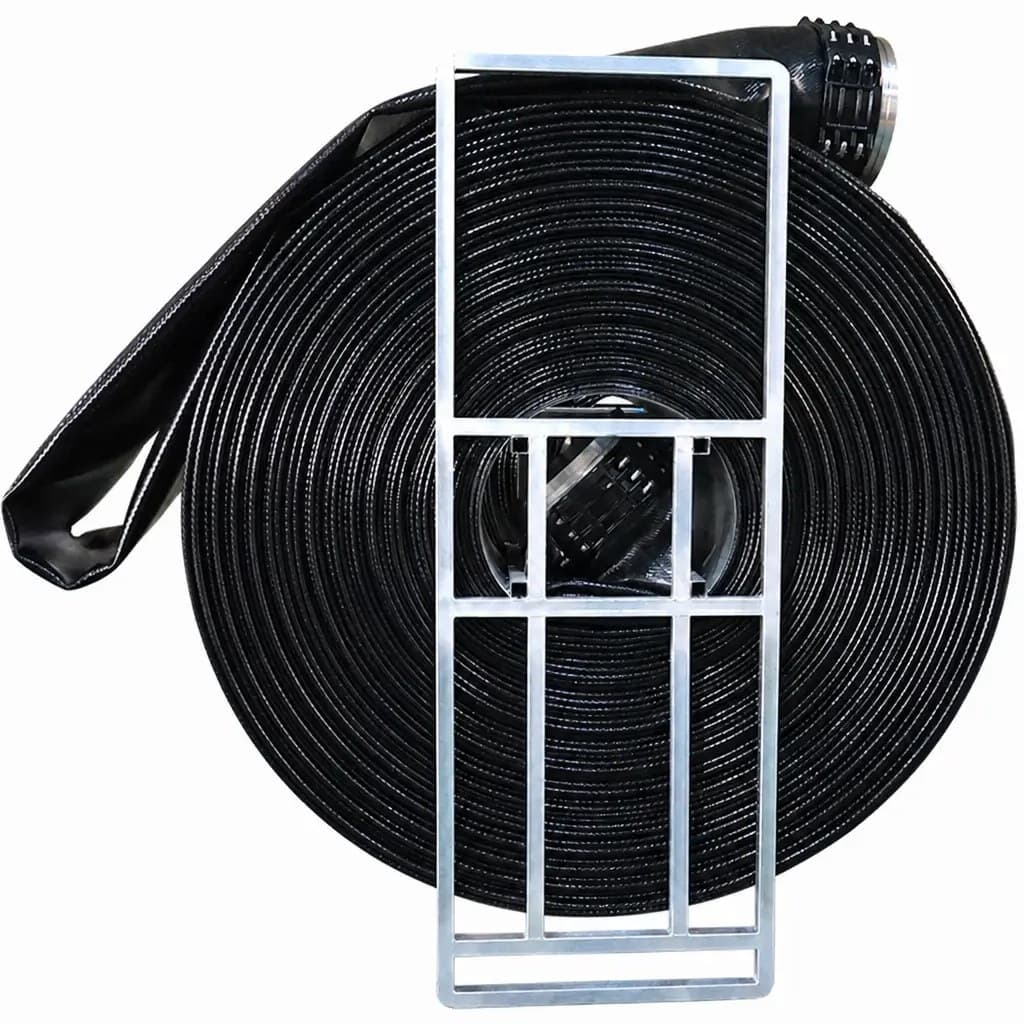 IH-LF-TDWTPU Lay Flat Dewatering and Water Transfer HoseIndus Hydraulics
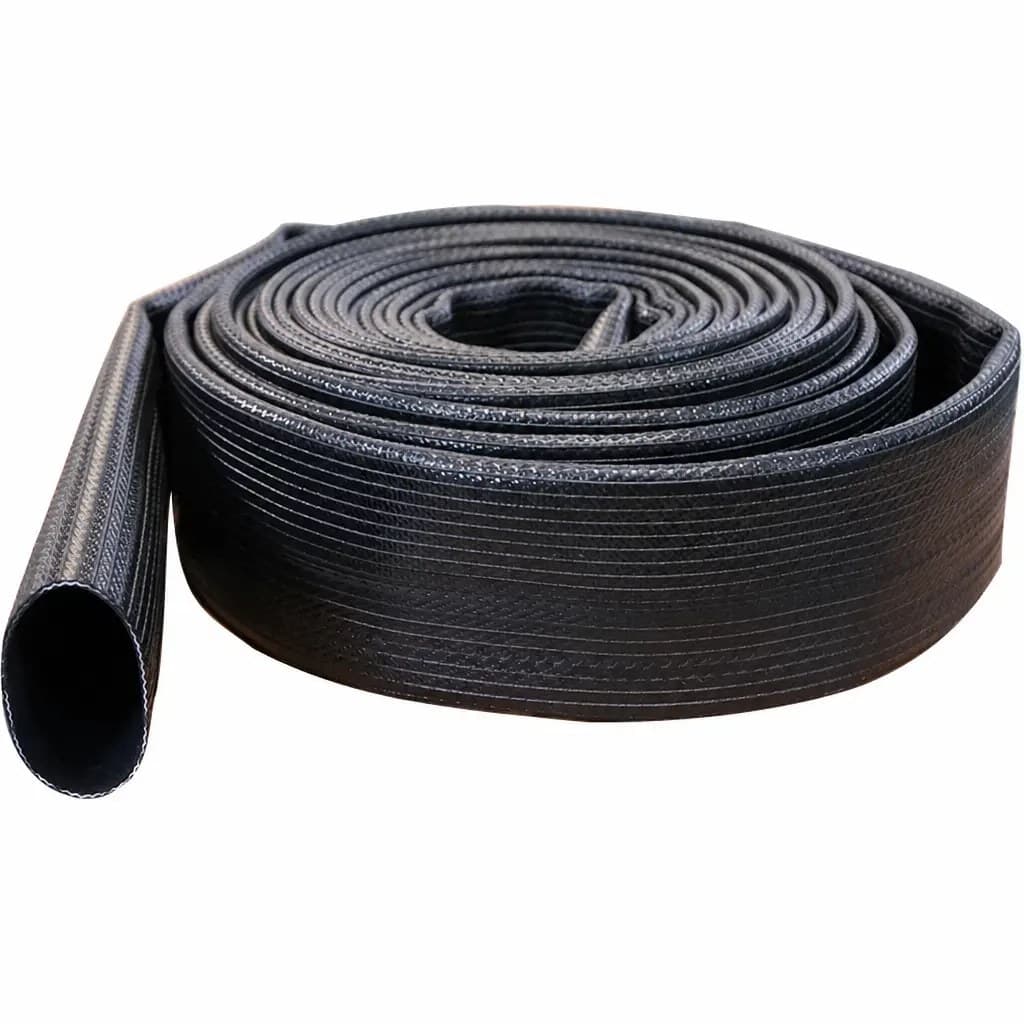 IH-LF-NBRNBR Lay Flat Discharge Hose, Ribbed CoverIndus Hydraulics
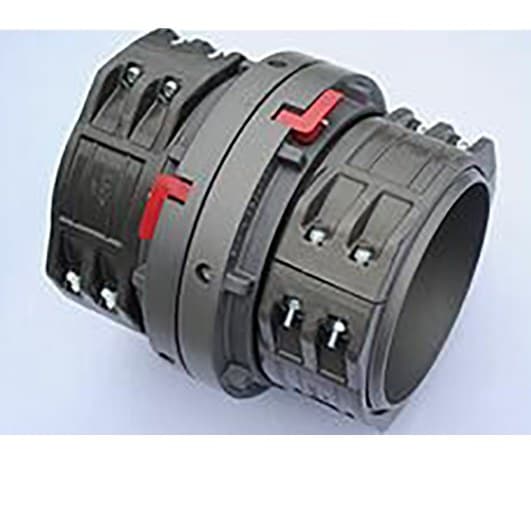 IH-LF-CSTLarge-Bore Storz Lay Flat Hose Coupling, 8" to 12"Indus Hydraulics
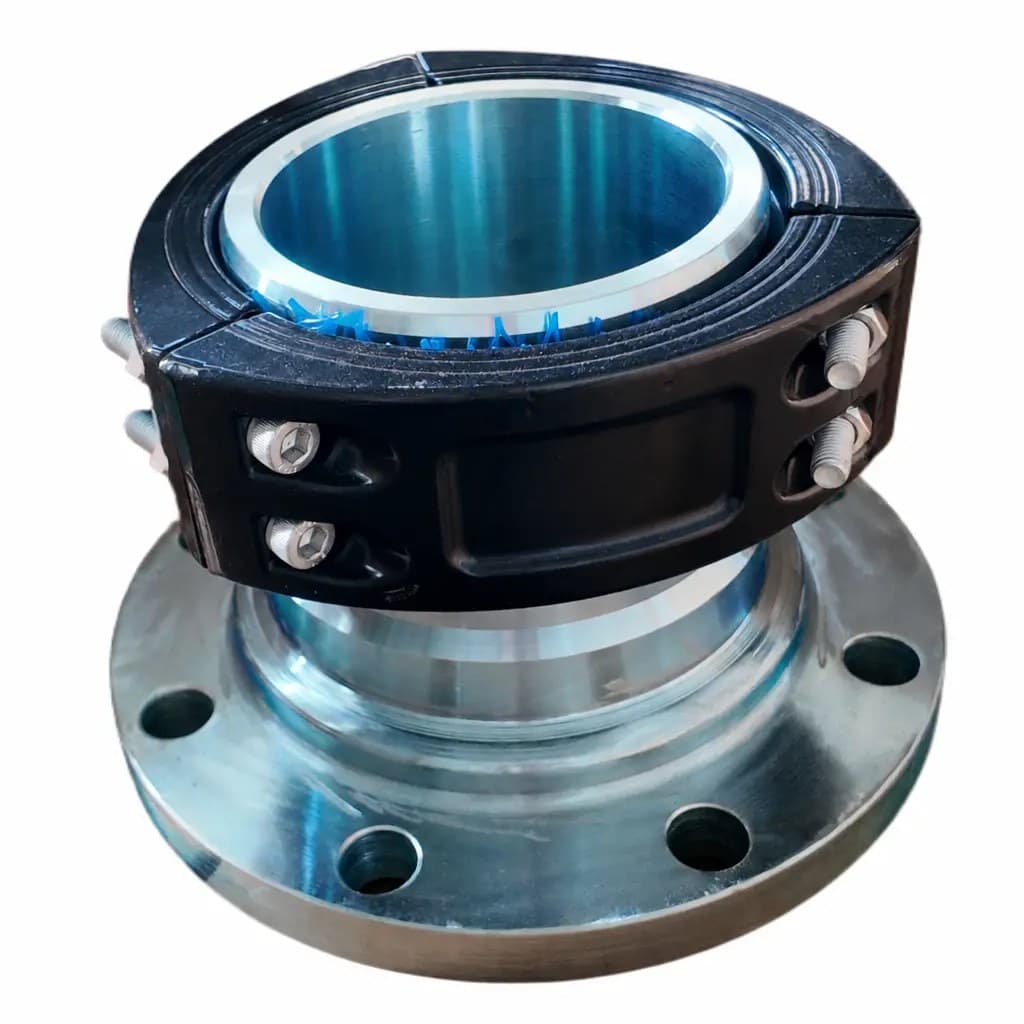 IH-LF-CFLLarge-Bore Flanged Lay Flat Hose CouplingIndus Hydraulics
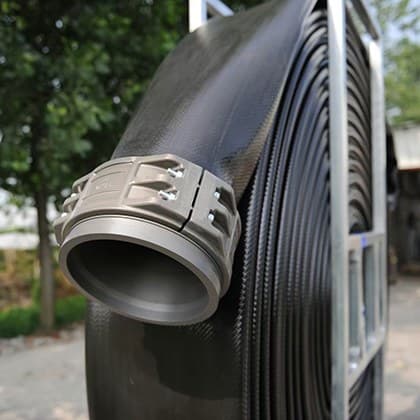 IH-LF-CVGLarge-Bore Lay Flat Hose Coupling, Grooved EndIndus Hydraulics
 IH-LF-EPWPortable Motorised Lay Flat Hose Winder, 6" to 12"Indus Hydraulics
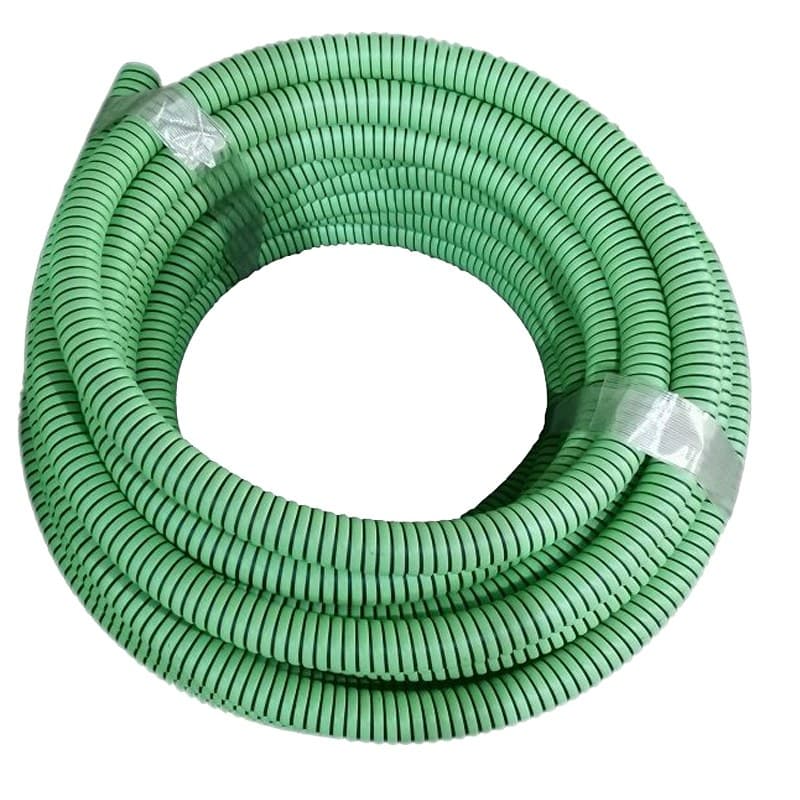 IH-LF-SEPEPDM/PE Suction Hose with Rigid HelixIndus Hydraulics


