
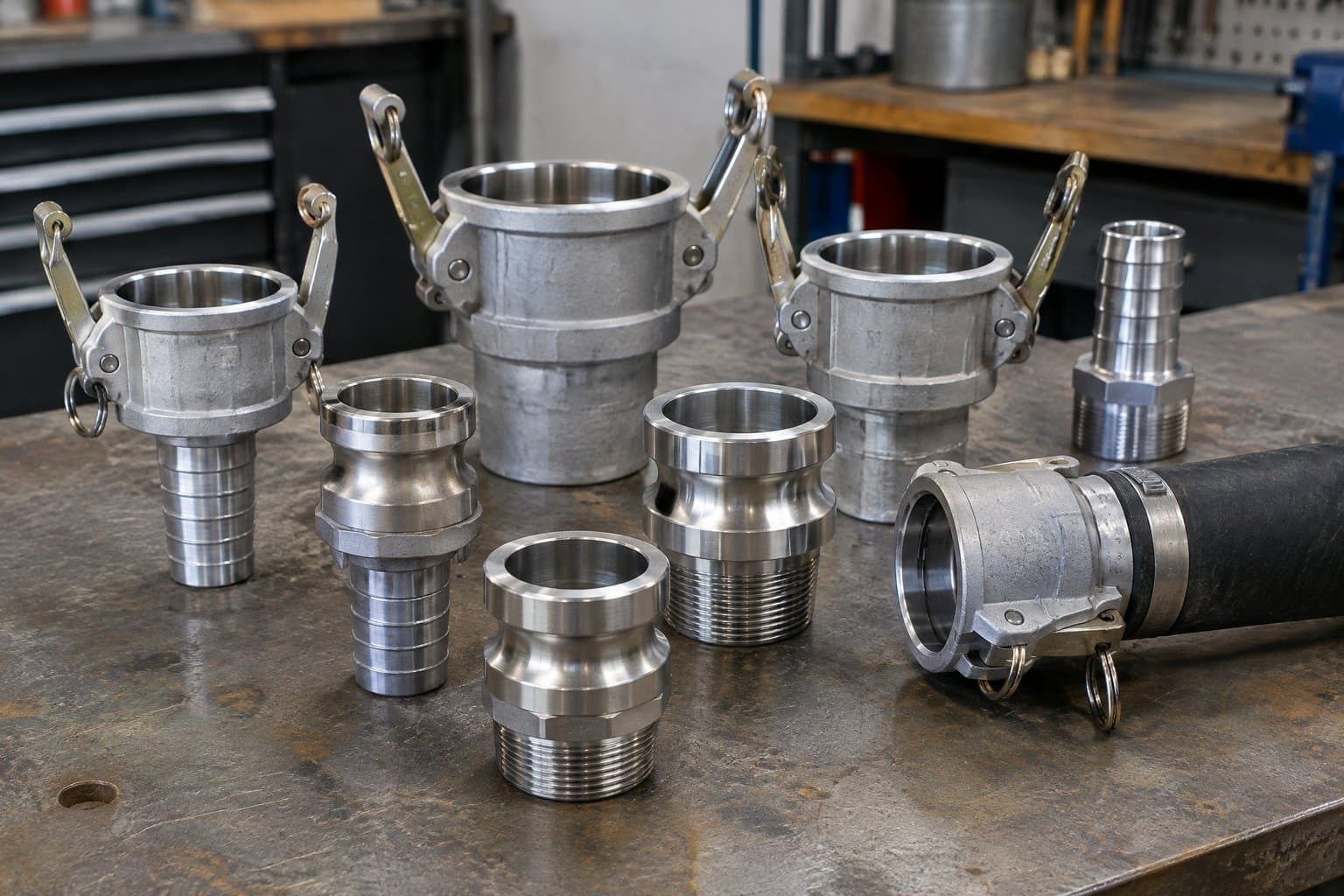
Cam and groove — camlock, cam lock, quick-release coupling — is the connection on almost every tanker outlet, transfer pump and frac tank in the region. It connects by hand in seconds, which is why it is everywhere, and it is ordered by letter, which is why the wrong half arrives so often. The letter is a code for which half it is and what is on its other end, and once you can read it the order writes itself.
/01Two halves, one groove.
Every cam and groove connection is a male adapter and a female coupler. The adapter is a plain spigot with a groove machined around it. The coupler carries a gasket and two cam arms on its sides: push the adapter in, close the arms, and the cams ride into the groove and draw the halves together against the gasket. Nothing is threaded at the joint itself — the threads, shanks and flanges are on the other end of each half, and that is what the letter describes.
| Type | Coupling half | Other end |
|---|---|---|
| A | Male adapter | Female NPT thread |
| B | Female coupler (cam arms) | Male NPT thread |
| CHighlighted | Female coupler (cam arms) | Hose shank |
| D | Female coupler (cam arms) | Female NPT thread |
| EHighlighted | Male adapter | Hose shank |
| F | Male adapter | Male NPT thread |
The way to hold it: the adapters are A, E and F, the couplers are B, C and D, and the two that take a hose are C and E. "A C on the hose and an F in the tank" is an order nobody can misread. "A two-inch camlock" is a guess waiting to happen, because it does not say which half you are holding.
/02Caps, plugs and the rest of the alphabet.
Two more letters close an open half. A DC is a dust cap with its own cam arms that locks over a male adapter; a DP is a dust plug — a male adapter with no bore — that locks into a female coupler. Both keep grit and rain out of a joint that is not in use, and both are listed as not designed for pressure. A line that has to be blanked under pressure wants a pressure-rated cap or a valve.
Beyond the eight, the letters combine. DA joins a coupler to an adapter — in our range as 45° and 90° elbows and as a reducer. DD is coupler to coupler and SA is adapter to adapter, both used as spools. Reducing types add an R: a CR is a reducing C, an ER a reducing E, a DR a reducing D. Socket-weld halves (DW, AW) and ANSI Class 150 flanged halves (FA, FC) put a cam and groove end on fixed pipework.
/03Working pressure falls as the size rises.
Our cam and groove listings carry one rating curve across the standard types: up to 250 psi from 1/2" to 2", 150 psi at 3" and 4", and 75 psi at 5" and 6". The reason is arithmetic — the force the cam arms must hold is the pressure times the area it acts on, and the area grows with the square of the bore. The datasheet for the specific material and size governs; sizes above 6" are rated individually.
| Size | psi | bar (approx.) |
|---|---|---|
| 1/2" – 2" | 250 | 17 |
| 3" – 4" | 150 | 10 |
| 5" – 6"Highlighted | 75 | 5 |
/04The shank is where it lets go.
A C or an E with a barbed shank holds the hose only as well as whatever is clamped around it. The cams rarely release; a hose walking off a shank under pressure is far more common. Use a clamp made for the hose's outside diameter, or swage a ferrule over the shank — our ferrules and sleeves for KC and cam-lock shanks exist for exactly that. CrimpTEK C and E halves go one step further: the shank is machined for hydraulic crimping, there is no band at all, and our listings rate the assembly to the host hose rather than to a clamp.
/05Materials, gaskets and variants.
The standard types are listed in aluminium, brass, 316 and 304 stainless steel, plated iron, polypropylene and Nyglass composite; the self-locking types in aluminium, brass and 316 stainless. Aluminium is the light general-purpose choice, stainless the usual choice for chemicals and food, and the plastics are for corrosive liquids at lower pressure. The gasket is Buna-N as standard, with Viton (FKM), EPDM, PTFE and neoprene available — and it needs the same compatibility check as the hose liner, because a compatible hose with the wrong gasket still leaks at the coupling.
Self-locking couplers have spring-loaded cam arms that lock shut, so vibration or a snagged lanyard cannot open a joint on a tanker or a pump skid. Every working type also comes as a 90° elbow, and the DA as a 45°. Lockable dust caps (DCL) add a padlock point where a product line must not be opened by the wrong person.
Frequently asked questions
- Is camlock the same as cam and groove?
- Yes. Camlock, cam lock, cam and groove and quick-release coupling describe the same two-half connection, and the letter types are common to all of them.
- Which cam and groove type goes on the hose?
- C (female coupler) or E (male adapter) — the two with a hose shank. The tank or pump end is then an A, B, D or F, chosen by the thread on the equipment.
- Can a dust cap blank a line under pressure?
- No. Our DC and DP listings are marked not for pressure applications. Use a pressure-rated cap or close a valve.
- Why does a 6" coupling carry a lower rating than a 2"?
- Because the force on the cam arms is the pressure times the area, and the area rises with the square of the bore. Our listings step the rating from 250 psi at 2" to 150 psi at 3"–4" and 75 psi at 5"–6".
The standard types
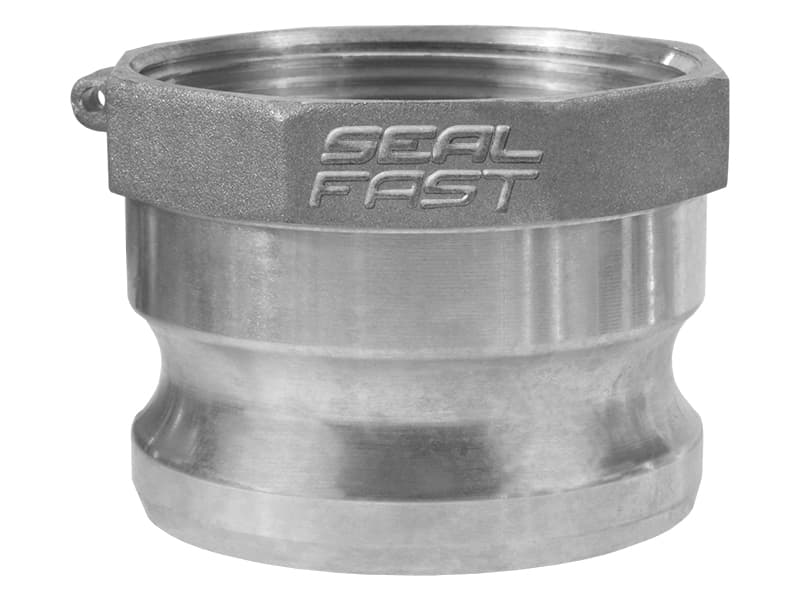 IH-CGC-STD-AStandard Type A: Female NPT × Male Adapter Cam and Groove CouplingSealfast
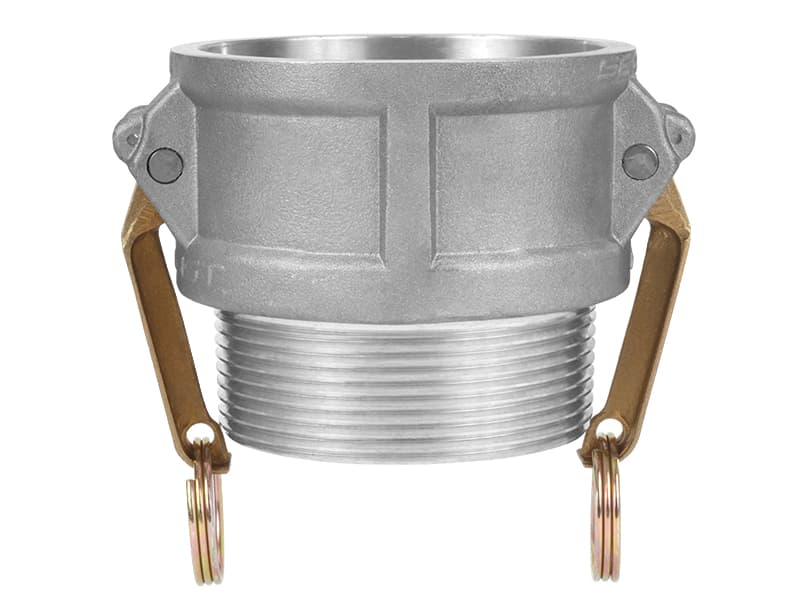 IH-CGC-STD-BStandard Type B: Female Coupler × Male NPT Cam and Groove CouplingSealfast
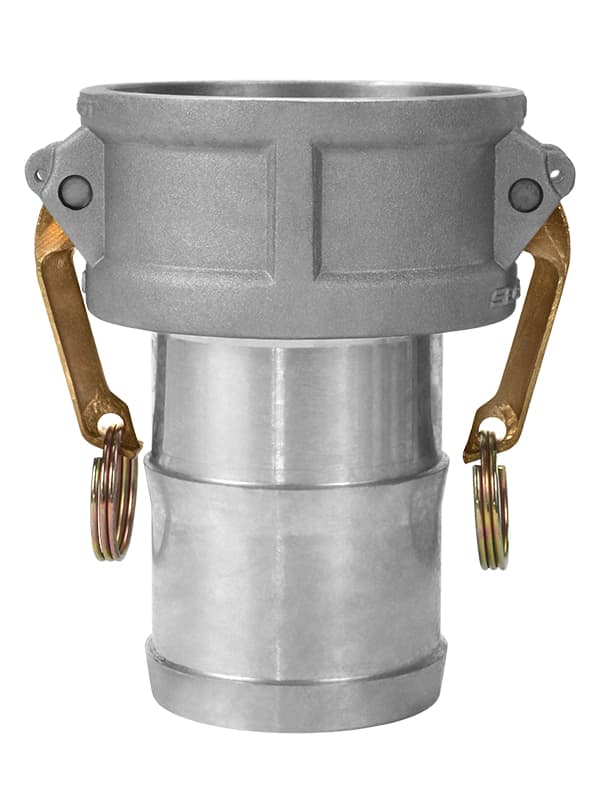 IH-CGC-STD-CStandard Type C: Female Coupler × Shank Cam and Groove CouplingSealfast
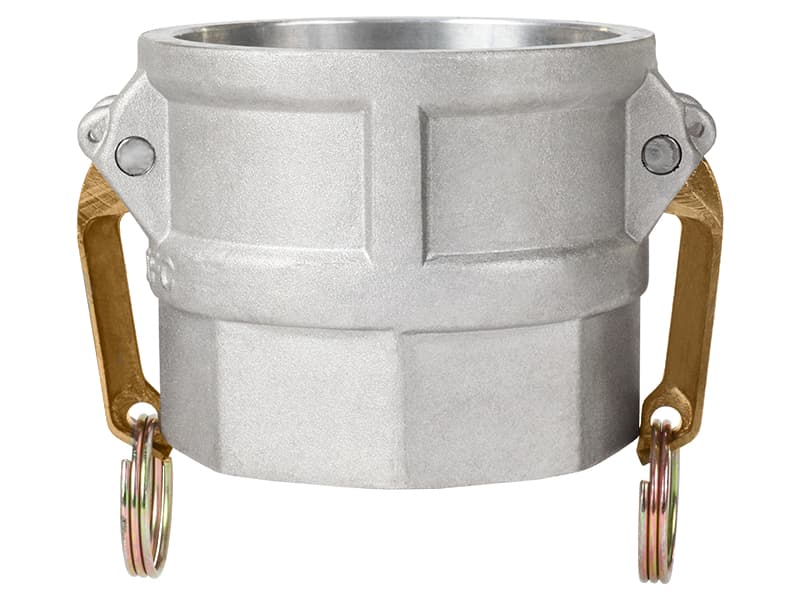 IH-CGC-STD-DStandard Type D: Female Coupler × Female NPT Cam and Groove CouplingSealfast
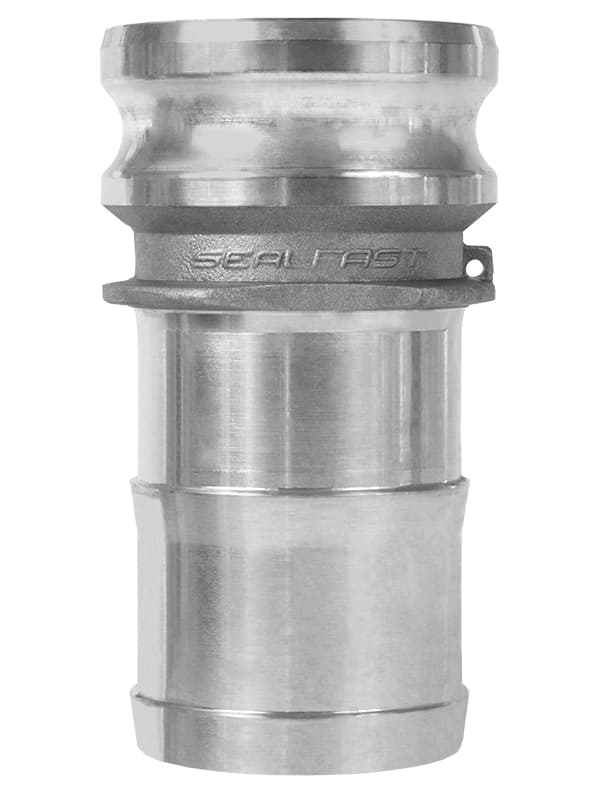 IH-CGC-STD-EStandard Type E: Male Adapter × Shank Cam and Groove CouplingSealfast
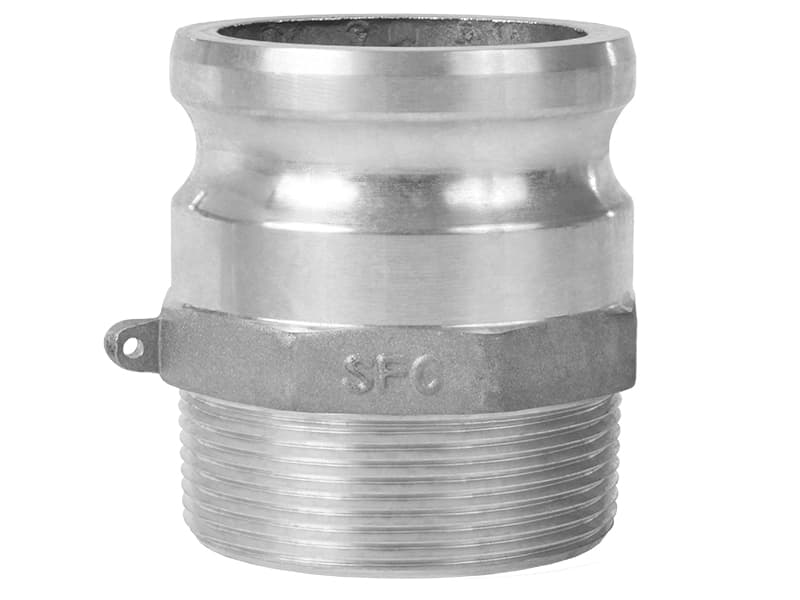 IH-CGC-STD-FStandard Type F: Male Adapter × Male NPT Cam and Groove CouplingSealfast
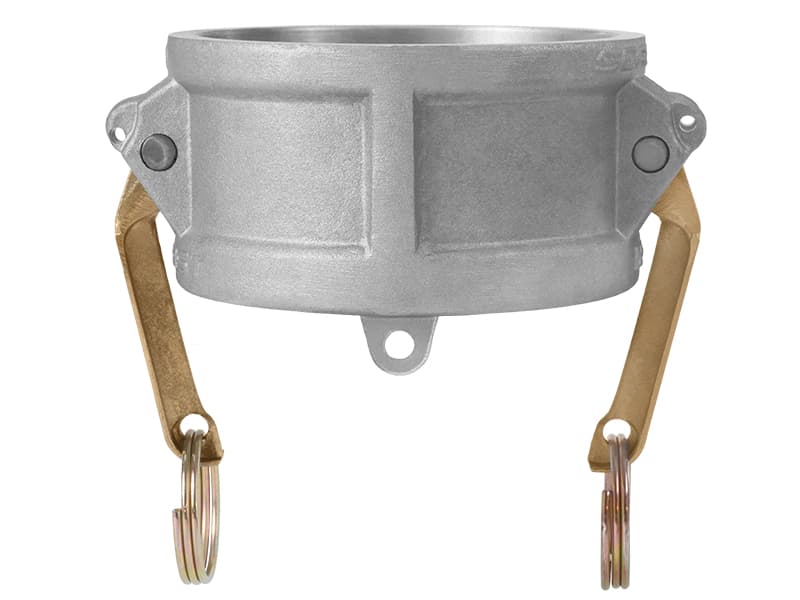 IH-CGC-STD-DCStandard Type DC: Coupler Dust CapSealfast
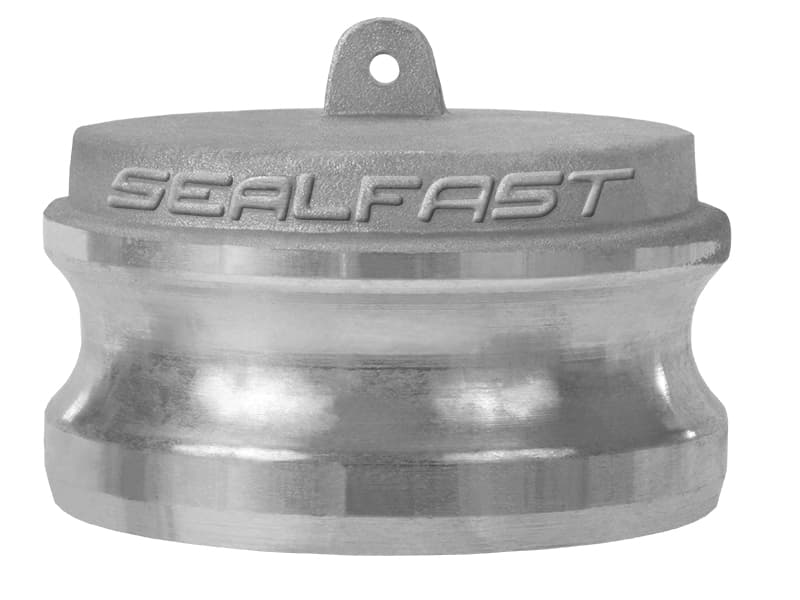 IH-CGC-STD-DPStandard Type DP Dust Plug AdapterSealfast
Self-locking, crimped and specialty halves
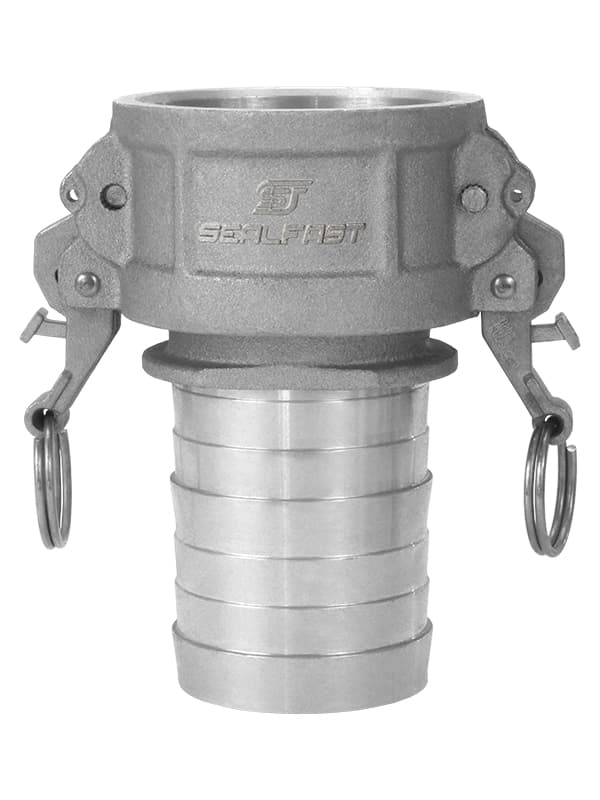 IH-CGC-SL-CSelf-Locking Type C: Female Coupler × Hose Shank Self-Locking Cam and Groove CouplingSealfast
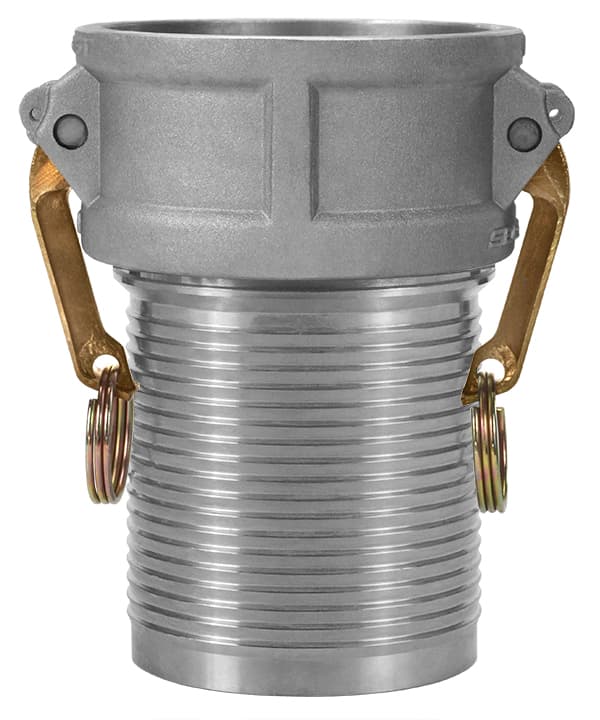 IH-CGC-CT-CCrimpTEK Type C: Female Coupler × Crimp Shank Cam and Groove CouplingSealfast
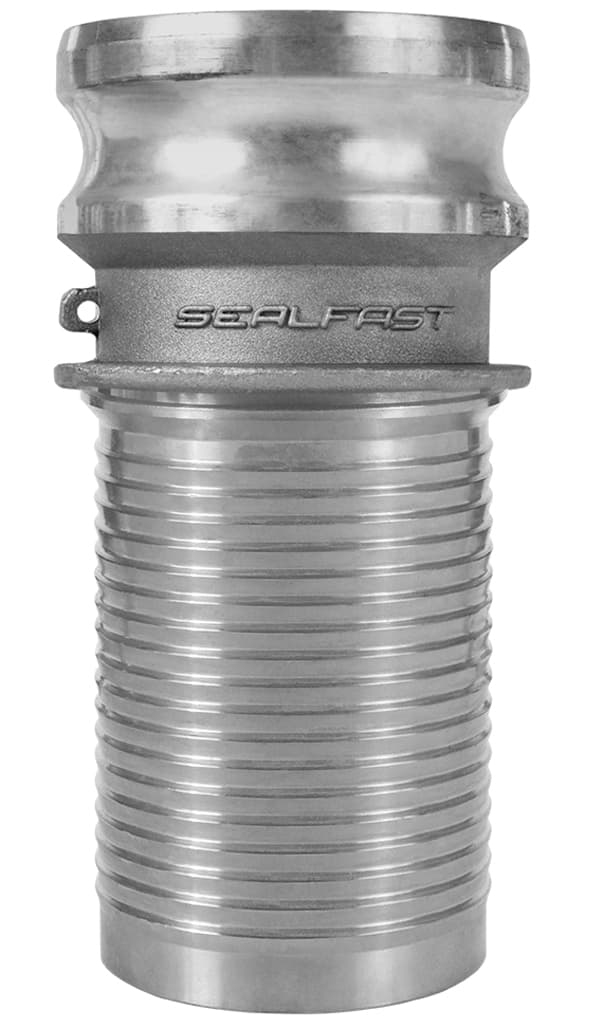 IH-CGC-CT-ECrimpTEK Type E: Male Adapter × Crimp Shank Cam and Groove CouplingSealfast
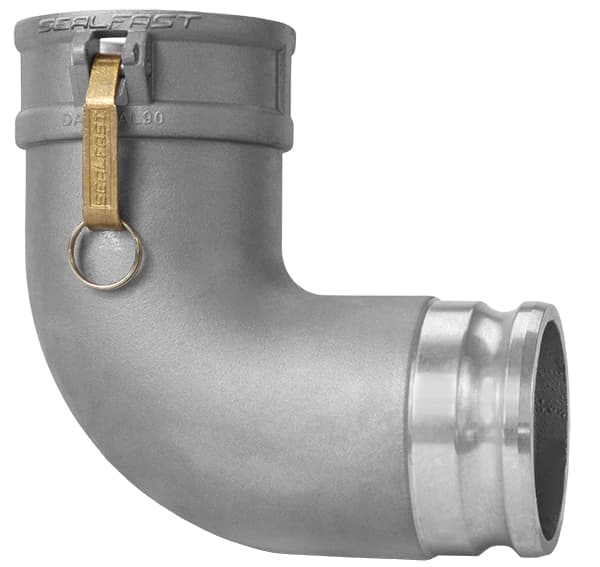 IH-CGC-90-DAType DA 90° Elbow: Female Coupler × Male Adapter Cam and Groove CouplingSealfast
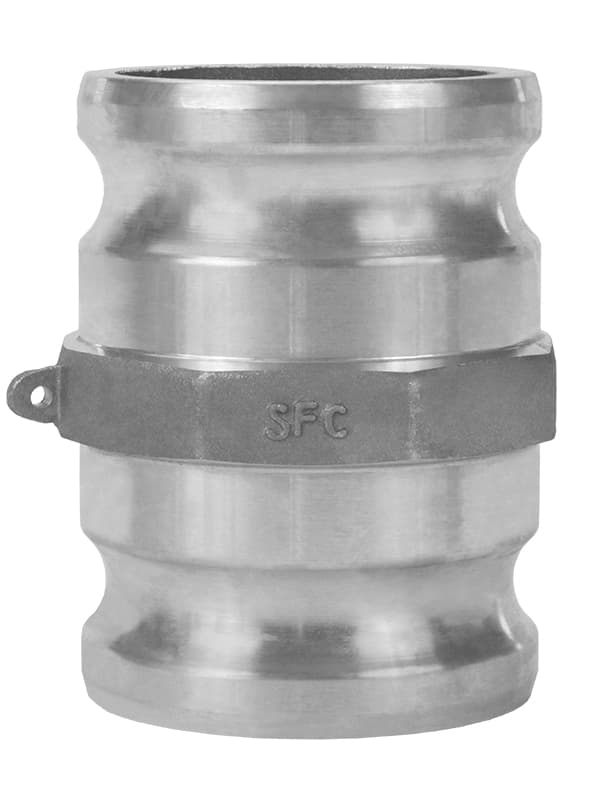 IH-SPC-SAType SA Male × Male Spool Adapter Cam and Groove CouplingsSealfast
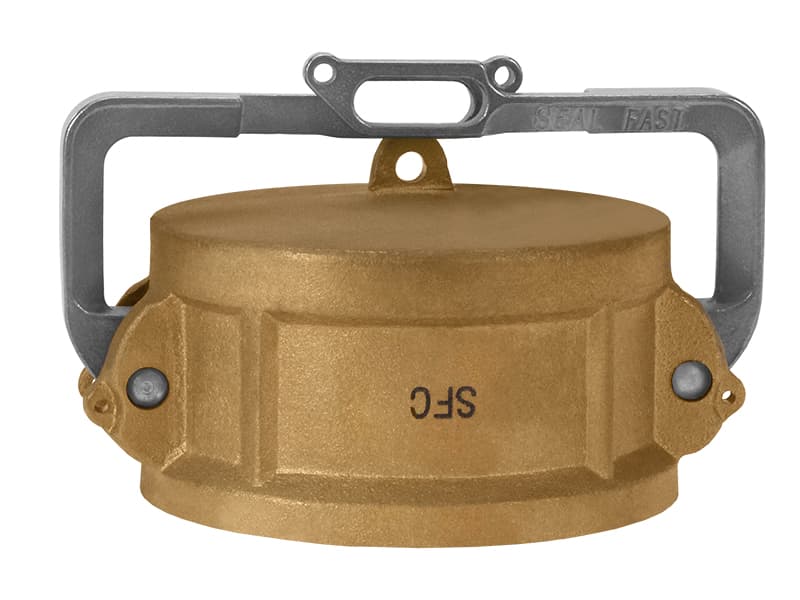 IH-SPC-DCLType DCL Lockable Dust Caps (SS / Brass)Sealfast


