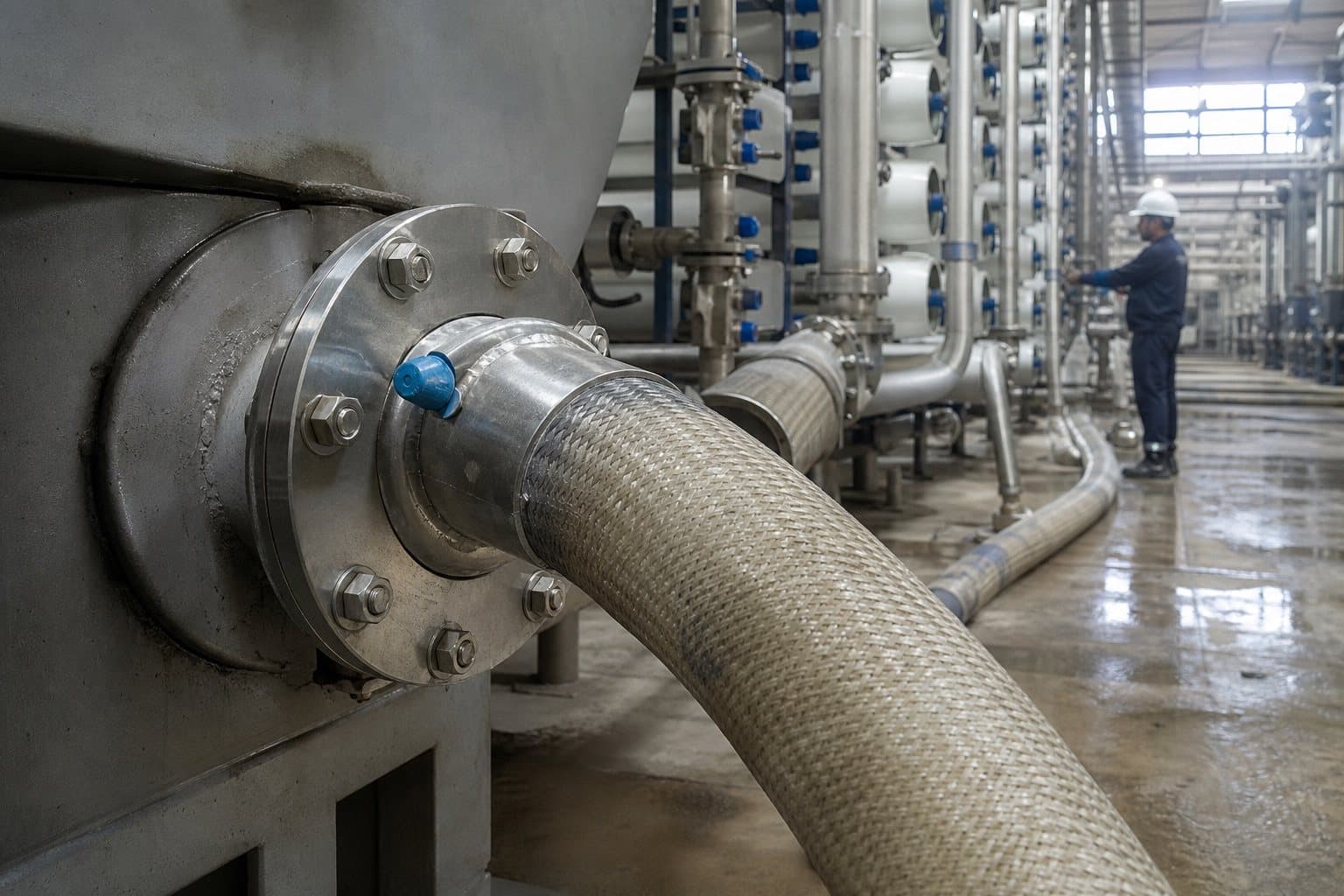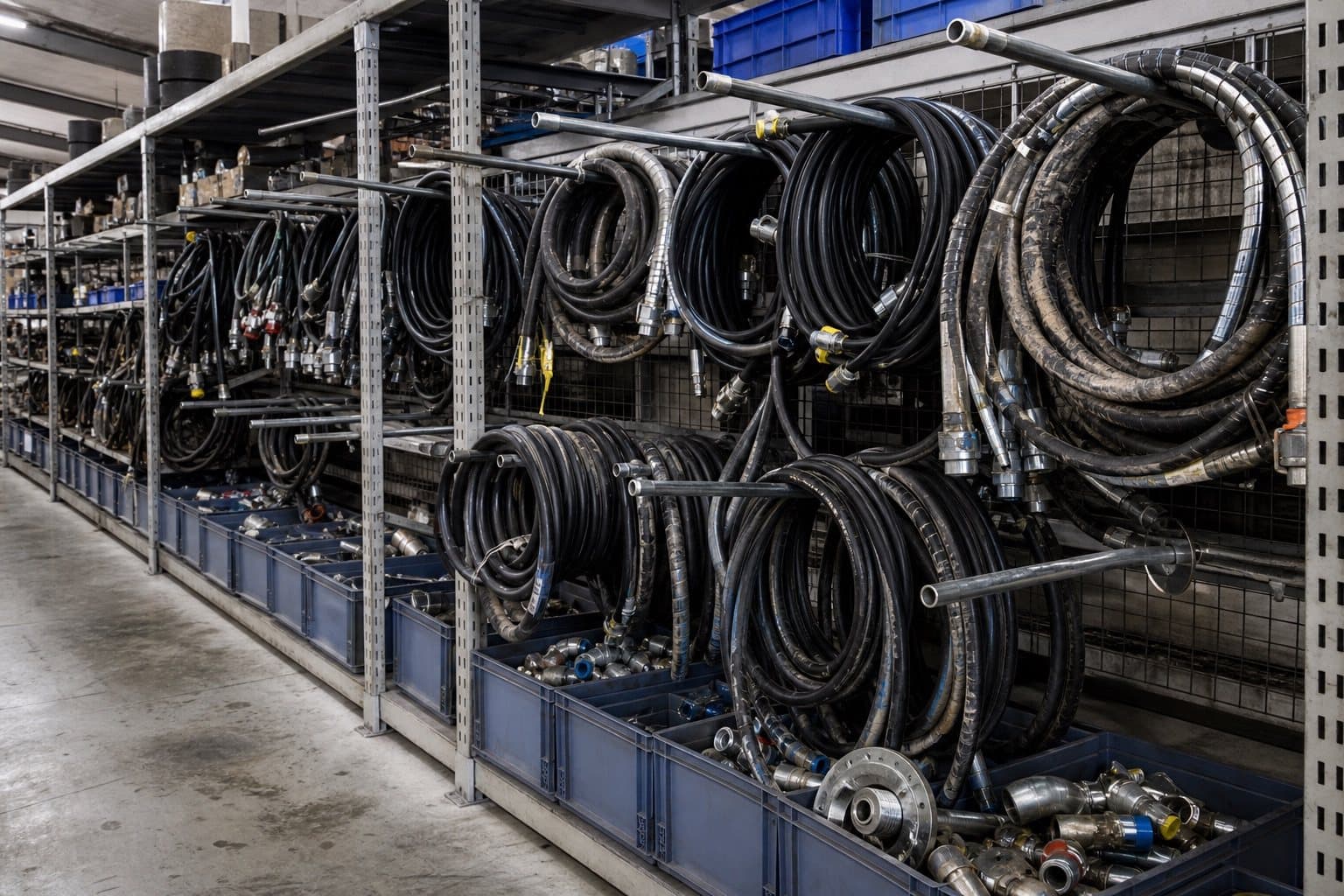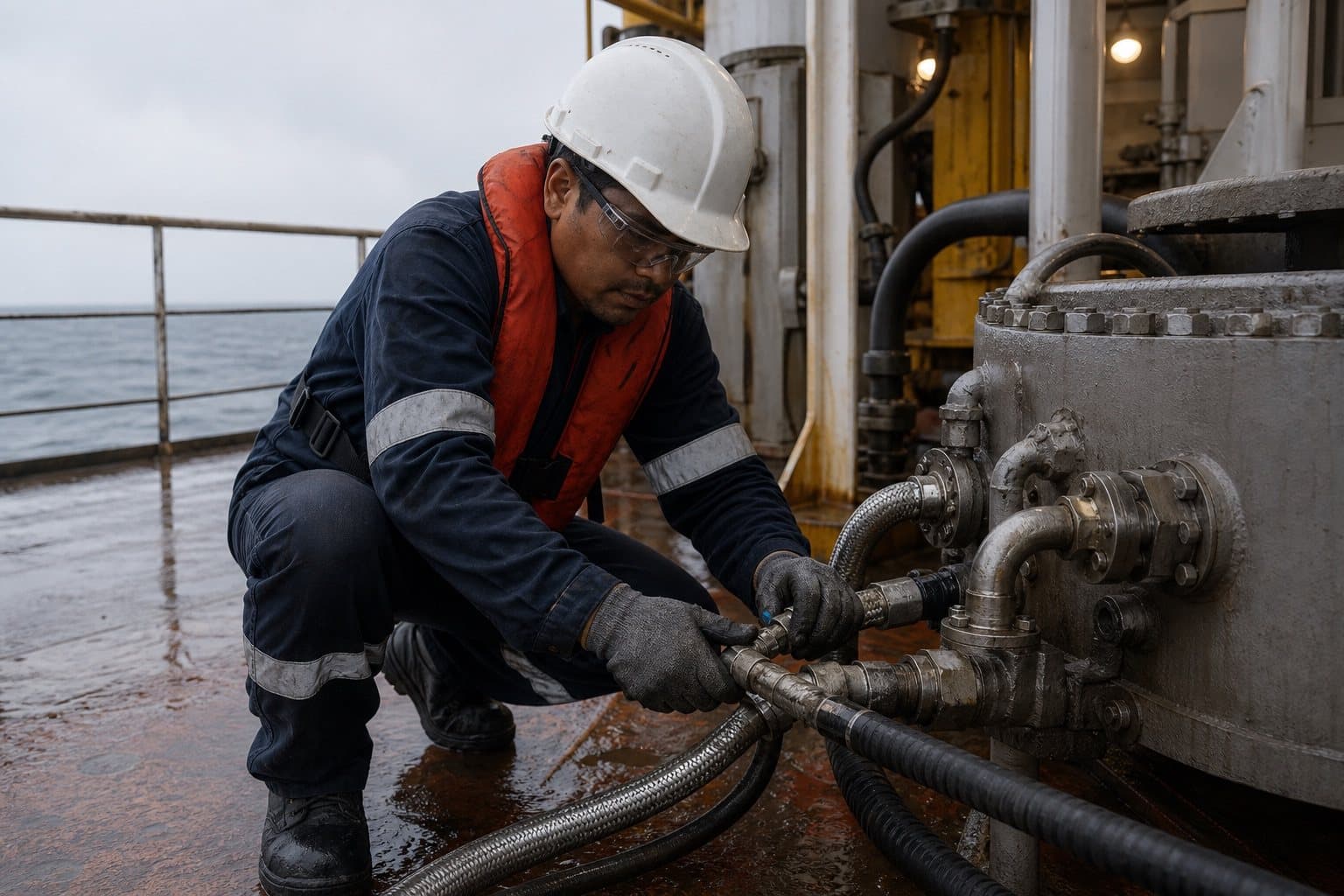
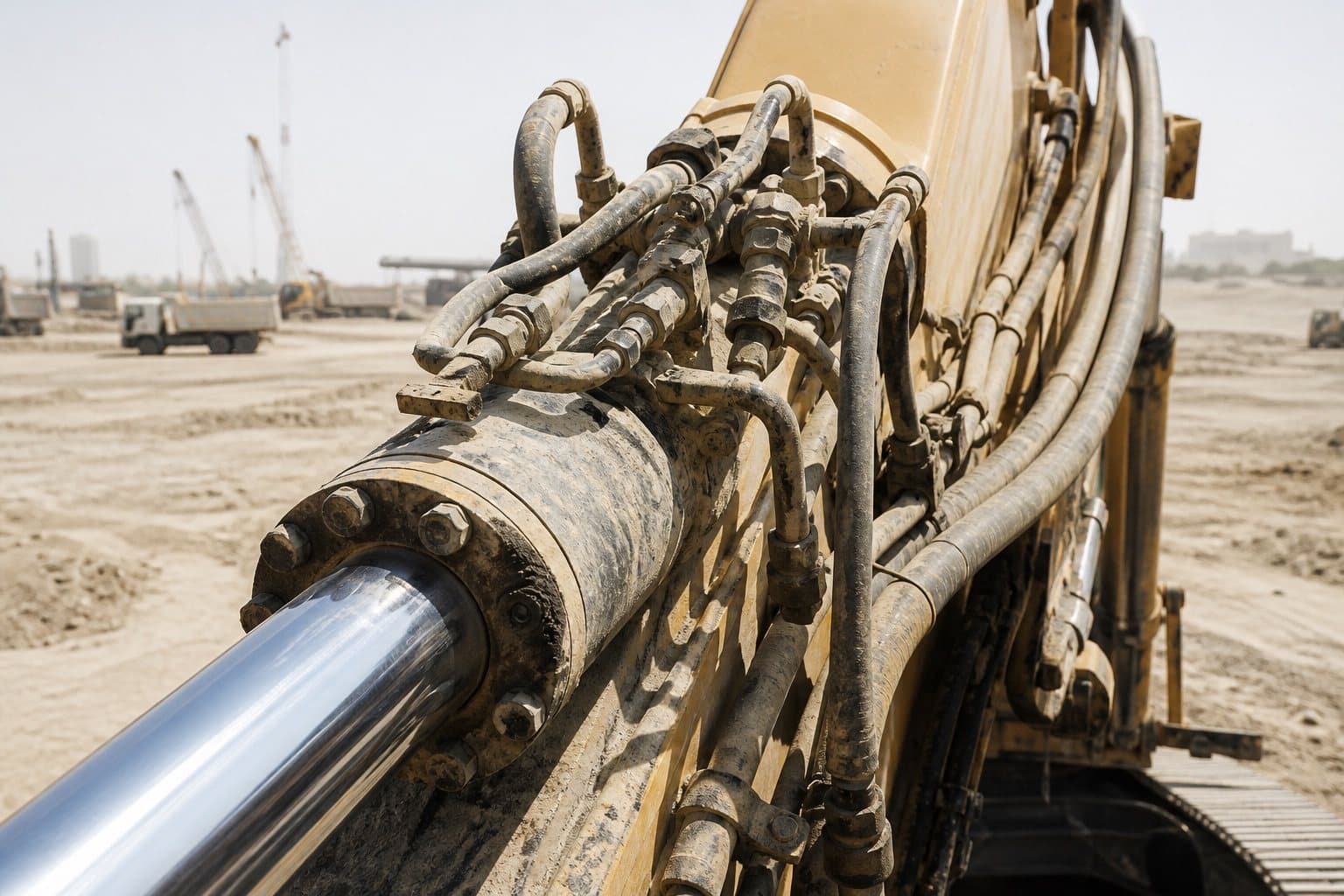
Every hose datasheet carries a maximum temperature, and it is easy to read it as a line the installation either crosses or does not. It is more like a speed limit on an engine: staying under it prevents sudden failure and says nothing at all about wear.
/01What the rating covers.
The rated maximum is the temperature of the fluid the hose is designed to carry continuously. It assumes the hose is otherwise in ordinary ambient conditions. In July in Mussafah it is not. Air temperature approaches 50 °C, the machine radiates heat from its own components, and a black cover in direct sun runs well above the air around it.
So a circuit running fluid at 70 °C — comfortably inside a 100 °C rating — can have hose sitting far closer to its limit than the fluid temperature suggests. Nothing in the rating is wrong; it is simply answering a different question from the one the installation is asking. Where it is genuinely hot, R13 and R5 are rated to 121 °C and R14 PTFE to 204 °C, against 100 °C for 1SN and 2SN.
| Construction | Max | Min |
|---|---|---|
| R7, R8 thermoplastic | 93 °C | −40 °C |
| 1SN, 2SN, 1SC, 2SC, 4SP, 4SH, R6Highlighted | 100 °C | −40 °C |
| R5, R12, R13, R15 | 121 °C | −40 °C |
| R14 PTFE | 204 °C | −54 °C |
/02Ageing is a clock, not a threshold.
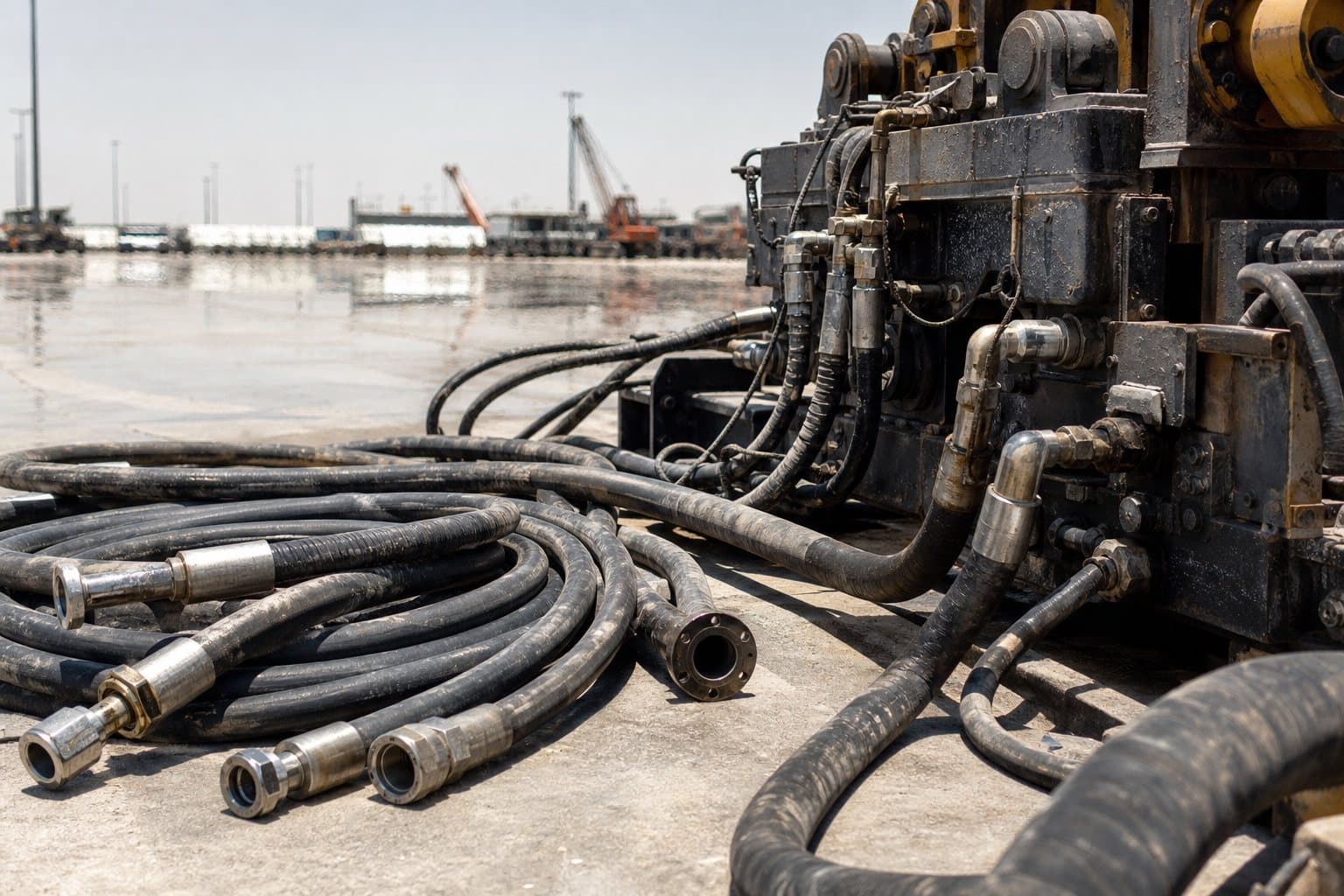
The failure mode heat produces is not a burst at 101 °C. It is a cover that hardens and crazes, a tube that stiffens, and an assembly that fails a year or two earlier than the same one would have somewhere cooler. Time spent hot is spent — a cool winter does not give it back.
/03What to do about it.
In order of how much difference each makes
The first two are free or nearly free. The fourth is the expensive one and rarely the first answer.
IfThe hose runs near a hot component
Move it, or put a barrier between the two.
Radiated heat falls off quickly with distance. A few centimetres and a shield are worth more than a grade change.
IfThe hose sits in direct sun all day
Shade or sleeve it.
A sleeve intended for abrasion also shades the cover, which is a second benefit people rarely count.
IfThe whole system runs hot
Look at the cooler and the reservoir before looking at hose.
A silted cooler raises every hose temperature in the circuit at once. That is a system fault presenting as a hose problem.
IfHeat is genuinely unavoidable
Move up to a construction rated for it.
The spiral grades and R5 are rated to 121 °C; PTFE to 204 °C. That is the right answer where the heat cannot be designed out.
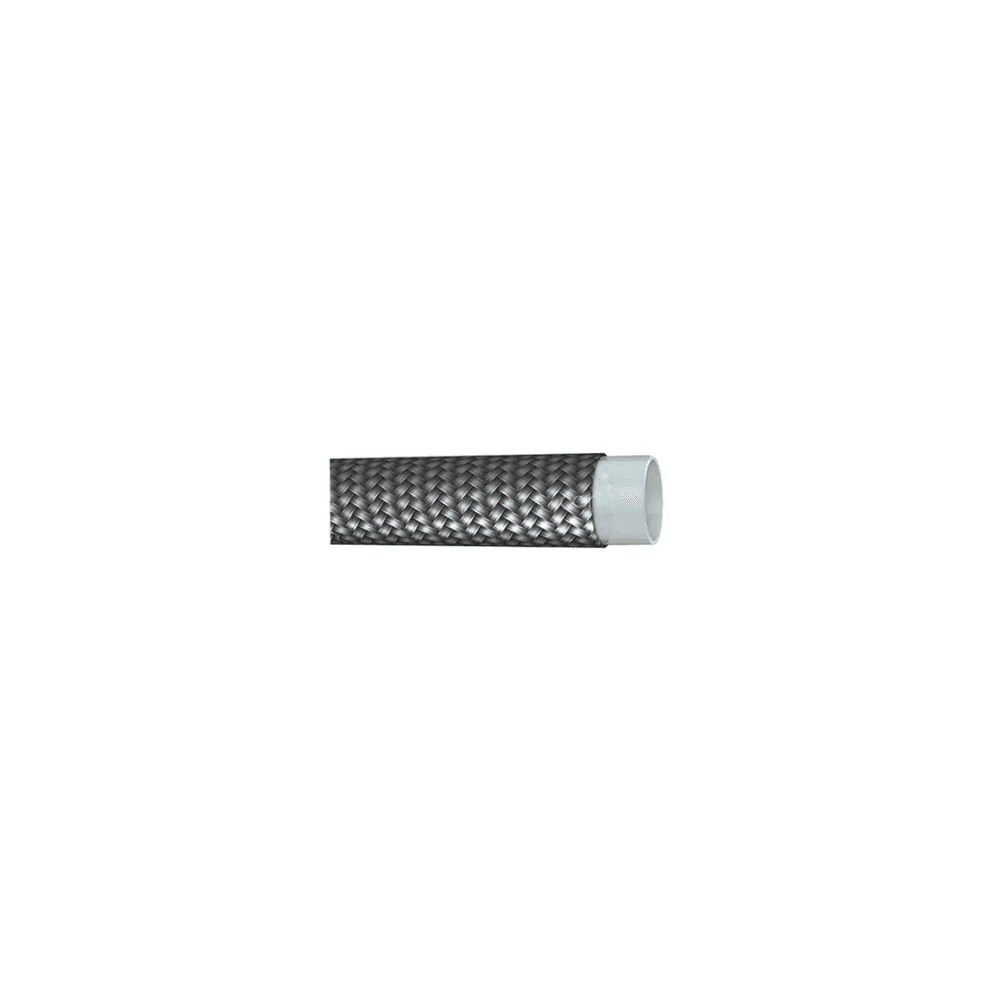
IH-HOSE-R14
Lay flat water and fuel hose faces the same summer from the outside in; see lay flat hose in Gulf heat.
Higher-rated constructions


Common questions
- How hot does a hose actually get in a UAE summer?
- It depends entirely on where it is: shaded and away from hot components, close to air temperature; in direct sun against a hot manifold, far above it. Measuring the hose surface at the worst point in the run is the only way to know, and it is worth doing before changing anything.
- Is a higher-rated hose always better here?
- No. It costs more, and if the heat comes from a component a few centimetres away, moving the hose solves the problem completely for nothing. Reach for the higher rating when the heat genuinely cannot be designed out.
- Does heat affect the fittings too?
- The fittings are steel and largely unbothered. What suffers is any elastomeric seal in the joint — O-rings in ORFS and ORB fittings age on the same clock the hose cover does.
- Should we replace hoses more often in summer?
- Replace on a schedule that accounts for the environment rather than switching seasonally. What summer changes is the rate of ageing, and that accumulates year-round in this climate.