People treat spiral hose as the premium option and braid as the standard one, and then choose on budget. The data says something more useful: the two constructions diverge as bore rises, and past a certain size the choice has already been made for you.
/01What the reinforcement is doing.
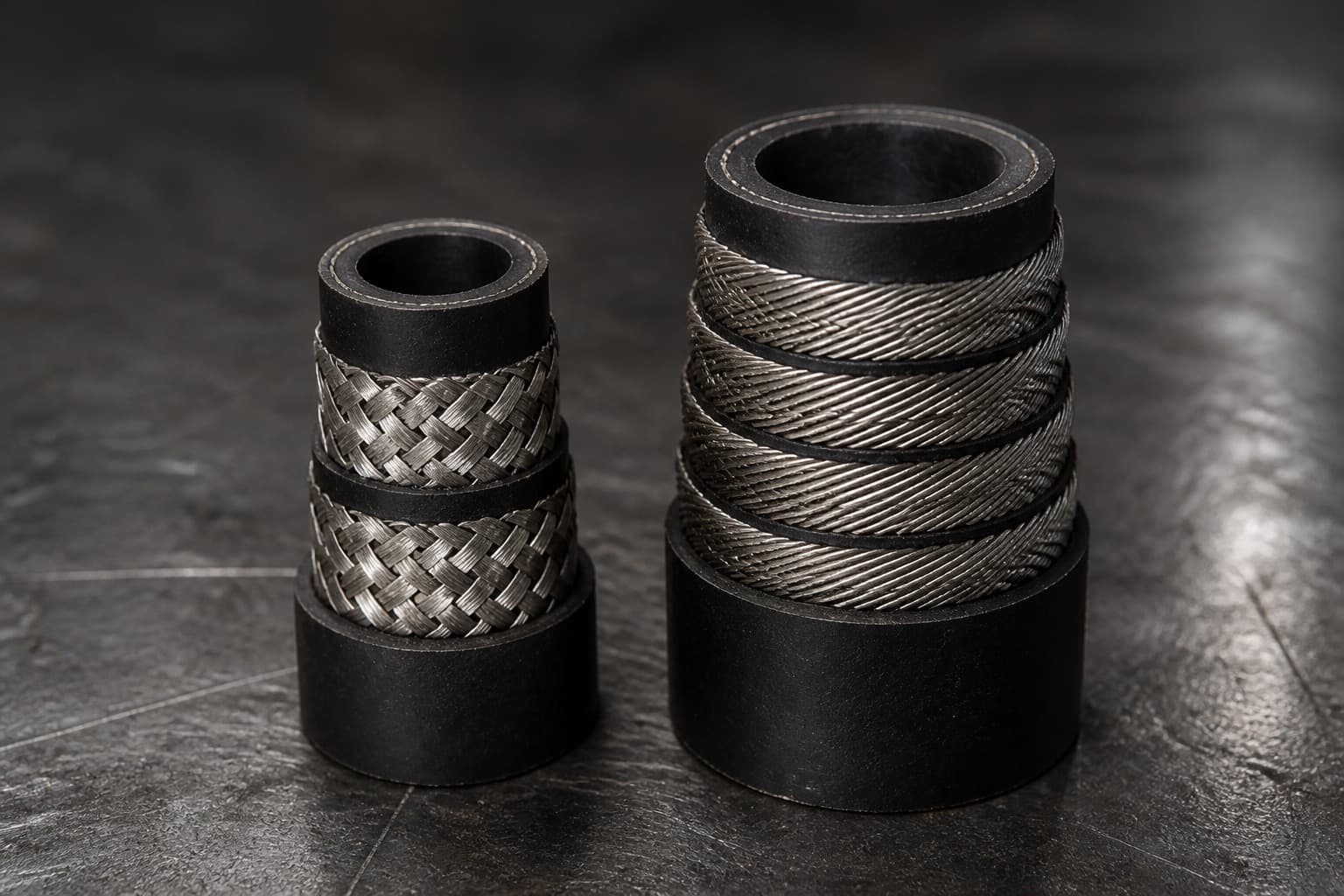
Braided reinforcement is woven — wires cross over and under each other in interlacing layers. Spiralled reinforcement is laid in helical layers running in alternating directions, with no interlacing. Woven wire has to accommodate the crossings, and as diameter grows the geometry works against it. Spiral layers simply carry hoop load along their length.
That is why the two behave so differently with scale. Look at what happens across the range on the constructions we stock:
| Construction | Smallest bore | Largest bore | Loss |
|---|---|---|---|
| 1SN — one wire braid | 225 (−04) | 40 (−32) | 82% |
| 2SN — two wire braid | 400 (−04) | 80 (−32) | 80% |
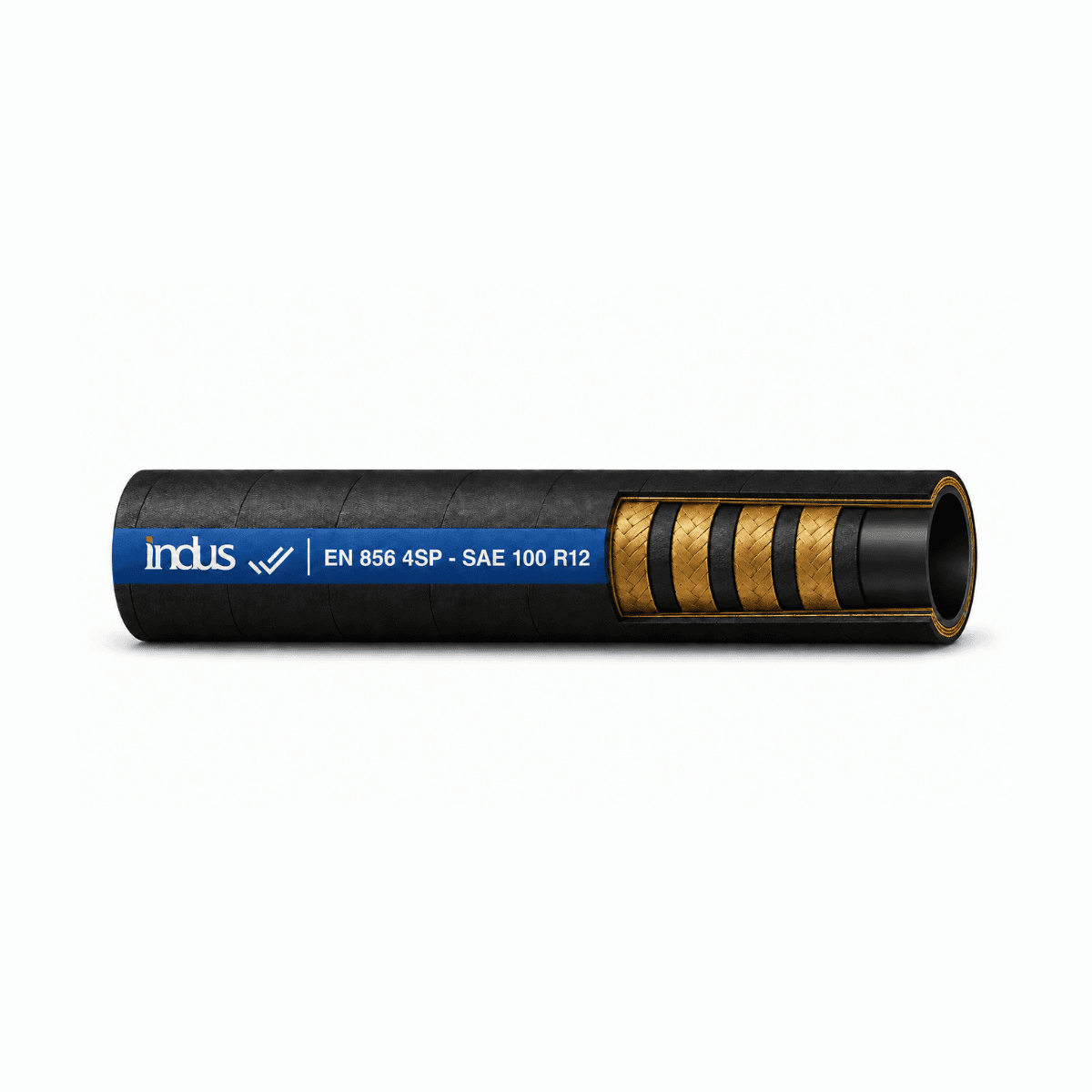
| 4SP — four spiral | 450 (−06) | 210 (−32) | 53% |
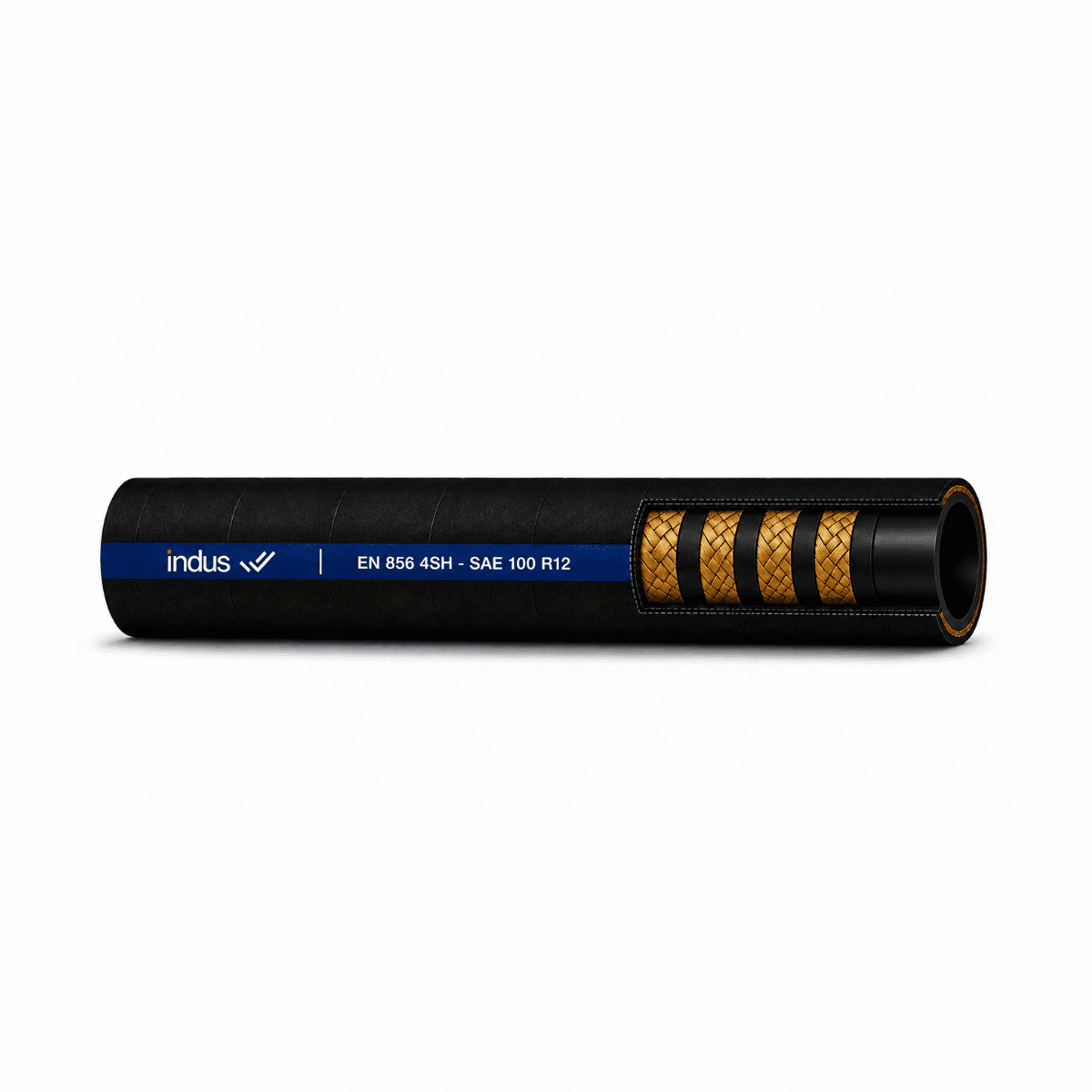
| 4SH — four spiral heavy | 420 (−12) | 250 (−32) | 40% |
| R13 — multi spiralHighlighted | 350 (−12) | 350 (−32) | 0% |
/02What spiral costs you.
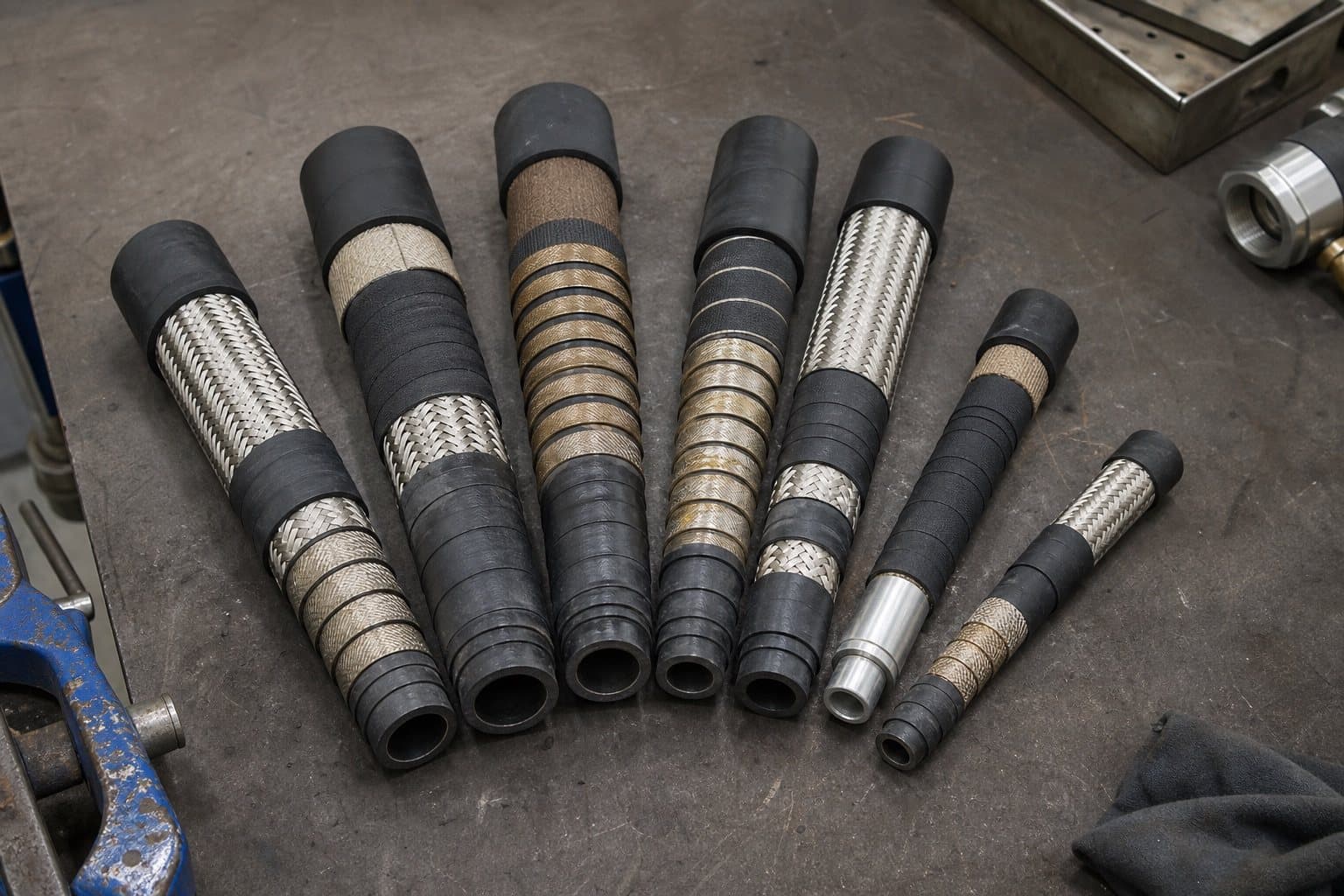
Stiffness, mostly. More reinforcement in more layers means a hose that resists bending, and the bend radius figures show it plainly — at −32, 2SN needs 630 mm and 4SH needs 700 mm. It also means more weight, a larger outside diameter for the same bore, and a higher price. It also takes different ends: spiral hose crimp fittings are a separate range from the fittings used on braid.
| Construction | −12 | −16 | −20 | −24 | −32 |
|---|---|---|---|---|---|
| 2SN braid | 240 | 300 | 420 | 500 | 630 |
| 4SP spiral | 300 | 340 | 420 | 500 | 630 |
| 4SH spiralHighlighted | 280 | 340 | 460 | 560 | 700 |
| R13 spiral | 240 | 300 | 420 | 500 | 600 |
/03Where compact fits.
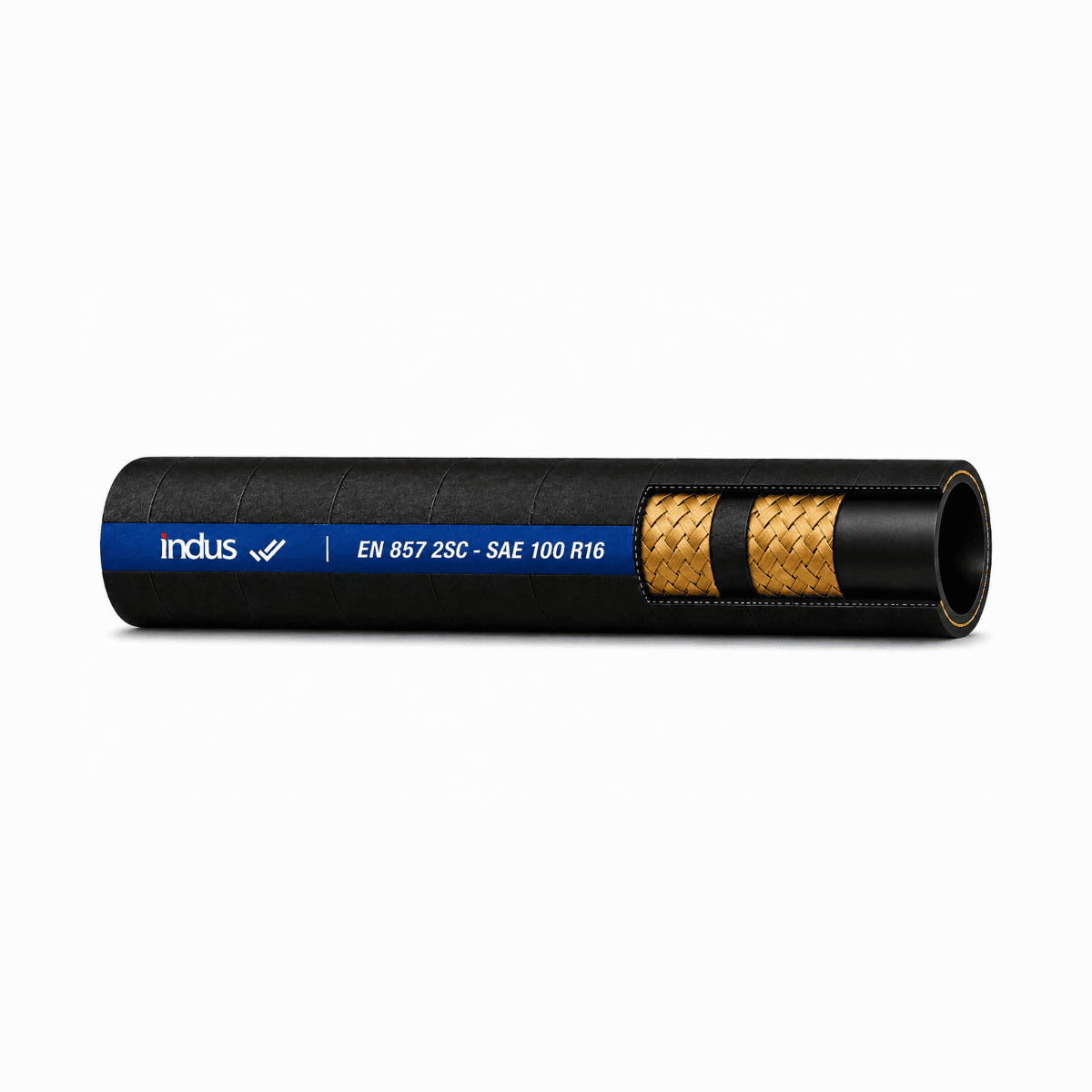
There is a third option that gets overlooked. Compact constructions — 1SC and 2SC — are braided but built to a smaller outside diameter and a much tighter bend radius than standard braid at the same bore. At −12, 2SC bends to 120 mm where 2SN needs 240 mm, and it carries slightly more pressure at that size, not less.
Where a machine has tight routing and moderate pressure — mobile equipment, confined bays, anything that flexes through a small arc — compact is frequently the correct answer and is not considered simply because it is less familiar than 2SN.
One from each construction

Common questions
- Is four-spiral always stronger than two-wire braid?
- At any bore they share, yes — substantially. But 4SP is not made below −06 and 4SH not below −12, so at small bores the comparison does not arise and braid is the sensible choice.
- Why is R13 flat across its whole range?
- Because the reinforcement is scaled with the bore rather than the construction being held constant. It is designed to deliver one pressure class across sizes, which is exactly what large-bore high-pressure circuits need.
- Can I use spiral hose in a tight-routing application?
- Only if the route accommodates its bend radius. Where it does not, look at compact braid first — it exists for this problem — and at elbow fittings to take the turn in the fitting rather than the hose.
- Does spiral hose last longer?
- Not inherently. Service life is dominated by routing, abrasion and temperature rather than construction. A spiral hose in a bad route fails like anything else in a bad route.