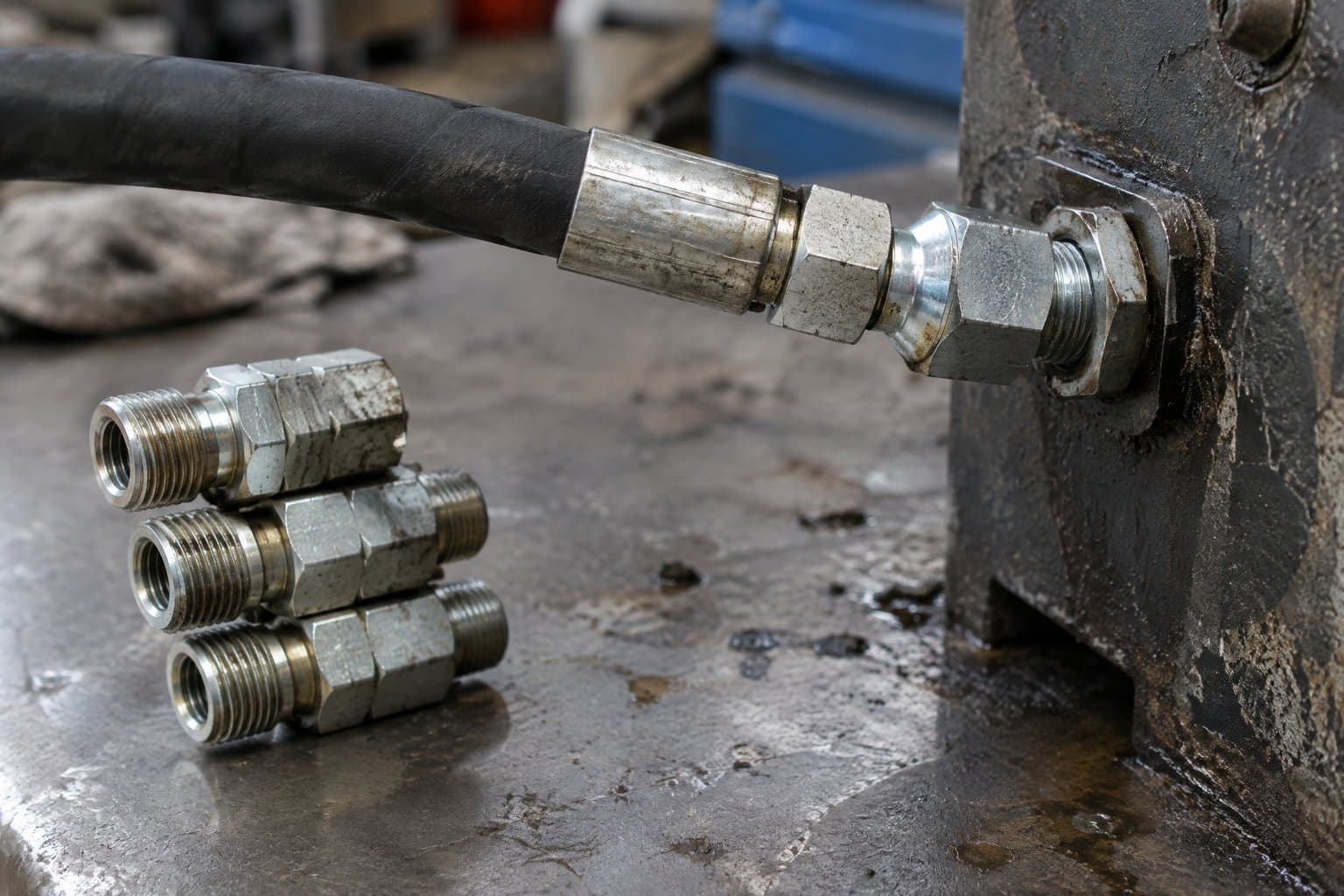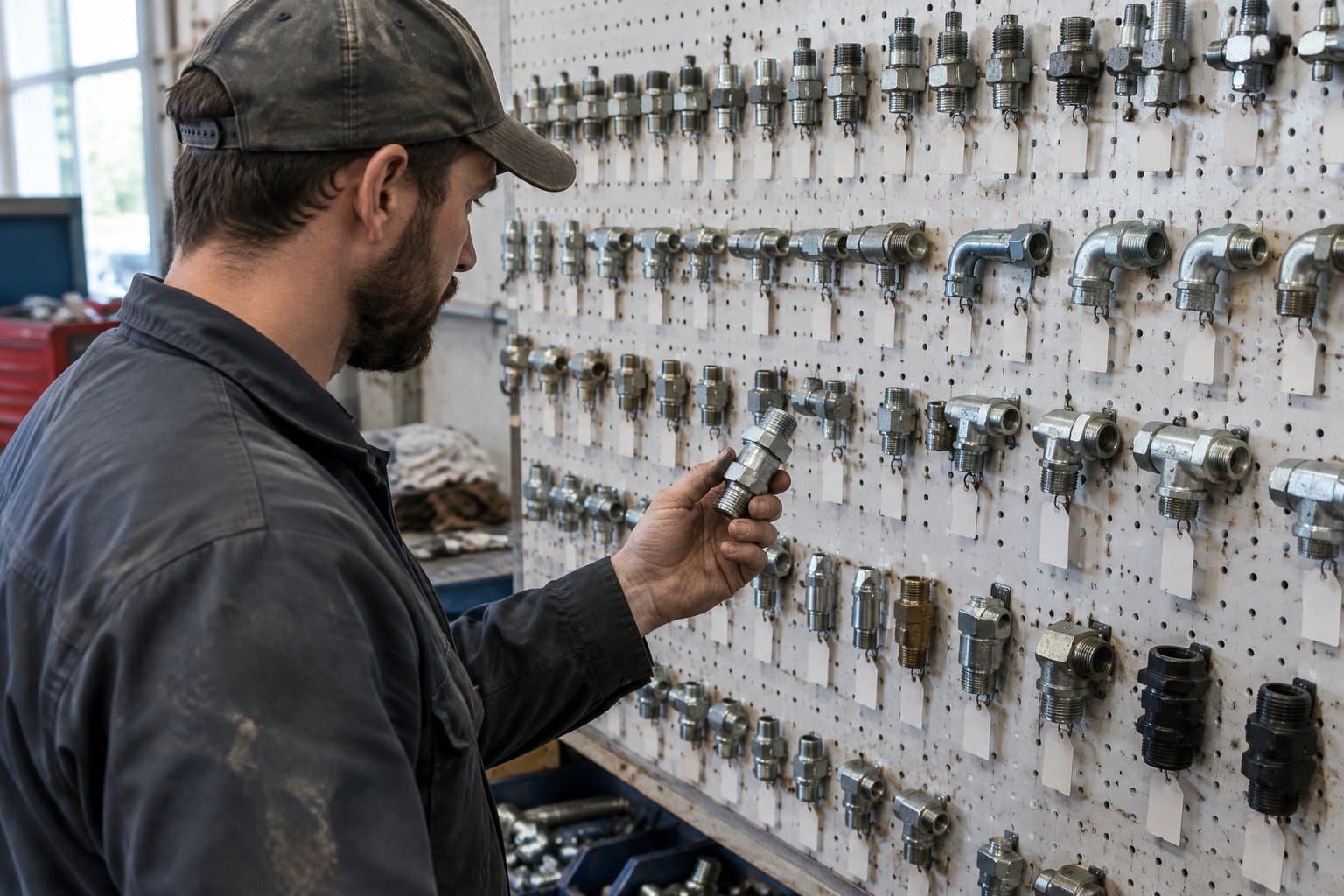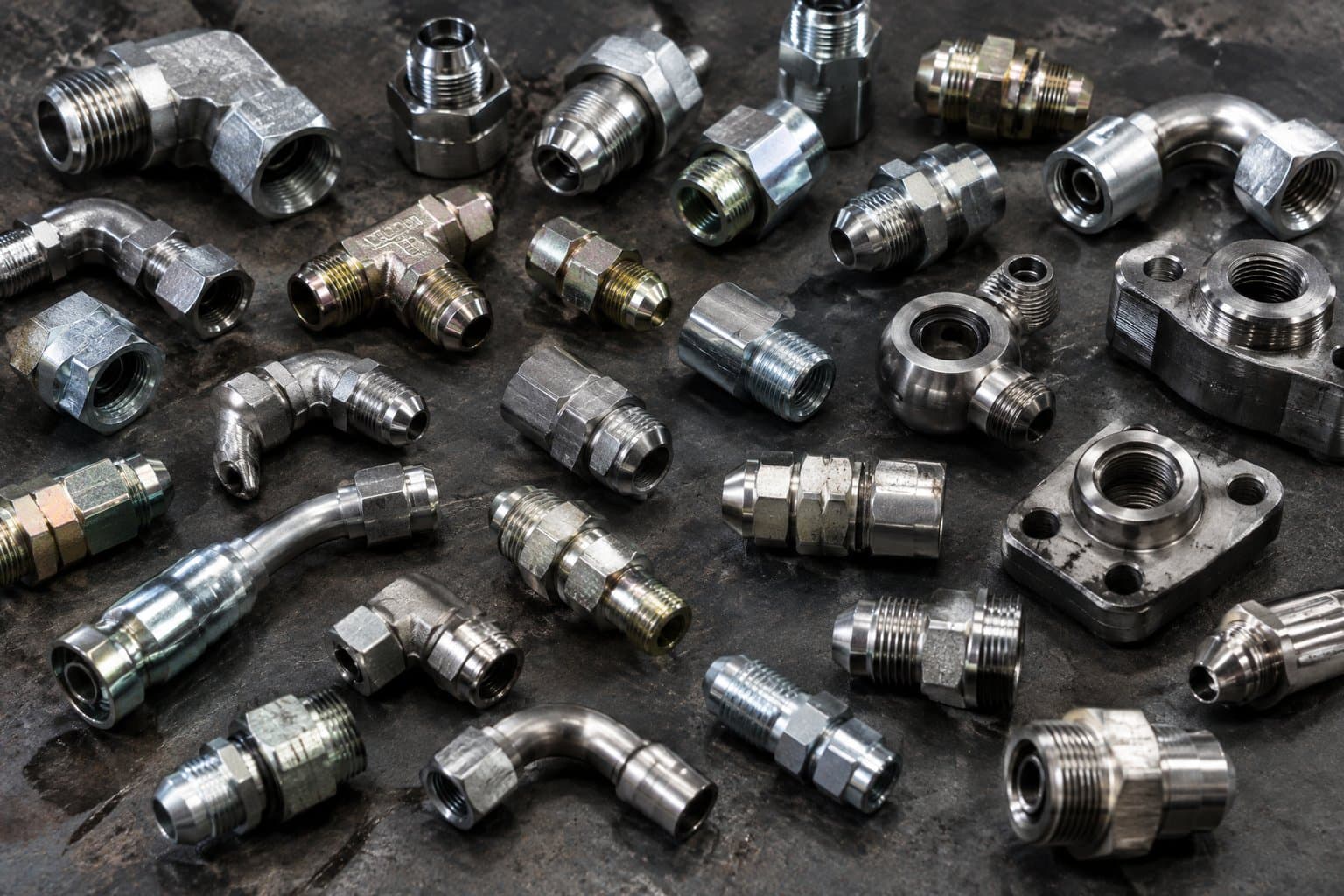
A hydraulic fitting has three independent properties: the thread that holds it together, the seat or seal that keeps the oil in, and the gender. A designation such as 9/16"-18 describes only the first, which is why two fittings with the same thread can be entirely different parts. This guide sorts the families we stock by how they seal, names the standards our listings cite for each, and links to the identification, buying and failure articles that go deeper.
/01The families, by how they seal.
| Family | Seal | Thread | Standard (our listings) |
|---|---|---|---|
| JIC 37°Highlighted | 37° flare, metal to metal | UN/UNF | SAE J514, ISO 8434-2 |
| ORFS | O-ring in a flat face | UN/UNF | SAE J1453, ISO 8434-3 |
| BSP parallel (BSPP) | 60° cone, or bonded seal at the port | Whitworth 55°, parallel | ISO 228-1 |
| BSP taper (BSPT) | On the thread, with sealant | Whitworth 55°, taper | ISO 7-1 |
| NPT | On the thread, with sealant | 60°, taper | ASME B1.20.1 |
| NPSM | 60° cone in a swivel | 60°, parallel | ASME B1.20.1 |
| SAE 45° flare / inverted flare | 45° cone | UN/UNF | SAE J512 |
| SAE O-ring boss | O-ring under the shoulder | UN/UNF | SAE J1926, ISO 11926 |
| Metric 24° cone (DIN 2353), L and S series | 24° cone, bite ring or O-ring | Metric | DIN 2353, ISO 8434-1 |
| Japanese 30° (JIS, Komatsu) | 30° seat | BSP or metric | — |
| SAE J518 flanges, Code 61 / 62 | O-ring in the flange face | 4-bolt clamp | SAE J518, ISO 6162 |
The four most common are compared side by side in JIC against ORFS against NPT against BSP; the flanges in SAE J518 Code 61 and Code 62.
/02Identifying a fitting.
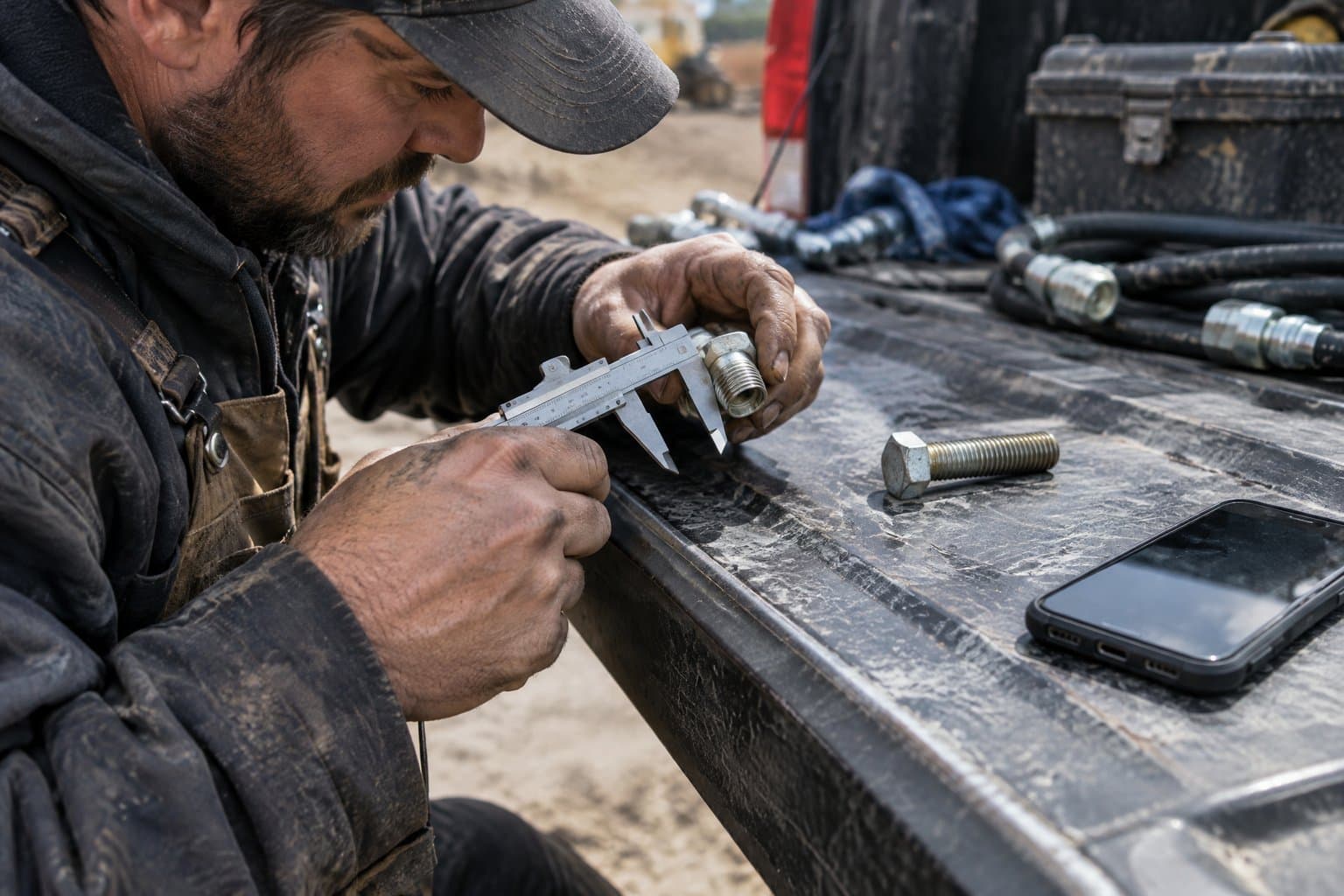
Start with the seat. A plain cone is JIC, SAE 45°, BSP 60° or metric 24° — the angle separates them, and a seat gauge settles it in seconds. A flat face with an O-ring groove is ORFS. An O-ring under a shoulder is O-ring boss or a metric port. A flat port face with a bonded washer is BSP parallel. A thread that grows in diameter and has no seat at all is NPT or BSPT. Then measure the thread outside diameter with a caliper and the pitch with a gauge — 55° flanks for BSP, 60° for everything else. The method is in identify any hydraulic fitting in four steps, the reference table in thread size and pitch, and what to do without gauges in measuring a fitting without gauges.
/03Which families a machine carries.
A machine's fittings follow where it was designed and repaired, not where it works. European machines are largely metric 24° cone with BSP ports; American machines bring JIC, ORFS, O-ring boss and NPT; Japanese and Korean machines carry 30° seats over two thread conventions as well as metric and BSP; Chinese machines are mostly metric 24° cone and BSP parallel with flanges at the pump. The detail is in our origin series: European, American, used Japanese, Korean and Chinese.
/04Hose fittings and adapters.
A hose fitting is crimped onto a hose and carries one thread family at its end — straight, 45° or 90°, female swivel or male. It has to match the hose as well as the port: our braided-hose crimp fittings are listed for 1SN, 2SN, R1AT, R2AT, R16 and R17, our spiral-hose crimp fittings for 4SP and R12 — see braided against spiral hose fittings. An adapter has no hose end; it joins two threads, often of two families. One correct adapter is ordinary engineering; a stack is a lever on the port and a leak path per joint — see adapter stacking and bridging two thread standards.
| Adapter | Rating (listing) |
|---|---|
| Male JIC × Code 61 L-series flange (straight, 45°, 90°) | L-series to 210 bar |
| JIC male 74° cone × SAE flange (straight, 90°) | To 310 bar, manufacturer stated |
| Metric male bite type × L-series flange (straight, 90°) | L-series, 3,000 psi |
| Metric male bite type × S-series flange (straight, 90°)Highlighted | S-series, 6,000 psi |
| Weld flange connectors, L- and S-series | L to 210 bar; S to 415 bar |
/05Sealing and make-up.
Each family has one correct way to seal, and most leaks come from applying another family's habit. Tapered threads take anaerobic sealant, started back from the first thread; straight threads take nothing on the thread and rely on the seat or seal. Bonded seals and O-rings are single-use. Cone seats are made up by turns or flats from finger tight rather than by feel. See stopping an NPT leak, sealant on hydraulic threads, bonded seal sizing and make-up torque and turns.
/06Materials, plating and stainless.
Our carbon steel fittings are zinc-plated with a Cr3+ passivation. On coastal and washdown sites the plating is what wears first, at thread crests and hex corners — see plating and corrosion and why fittings seize in coastal air. Where plating cannot cope, 316L stainless versions exist for most families — BSP, JIC, ORFS, metric, NPT/NPSM and SAE flanges — passivated rather than plated, usually at a lower pressure rating than carbon steel and prone to galling without anti-seize. See 316L hydraulic fittings and when stainless is worth it.
/07Ordering without ambiguity.
A fitting order that names the family, the thread size, the gender, the seat, the shape and the hose it goes on is answered with a part number rather than questions. Photographs of the end face and down the bore, with a ruler in shot, close most of the rest. See what to send for a fittings quote, photographing a fitting and cross-referencing a part number.
Frequently asked questions
- What is the difference between JIC and ORFS?
- JIC seals on a 37° metal cone; ORFS seals on an O-ring in a flat face. They share two thread sizes, so check the seat before relying on a thread match.
- Do BSP and NPT fittings interchange?
- No. BSP threads have a 55° flank angle and NPT 60°. At 1/2" and 3/4" the pitches match and the parts will start, but they do not seal.
- Which fittings need thread sealant?
- Only tapered threads — NPT and BSPT. Straight-thread families seal on a seat, an O-ring or a bonded washer, and sealant on them prevents the seal from forming.
- What is the difference between SAE Code 61 and Code 62 flanges?
- Code 62 is the high-pressure series. Our listings rate Code 61 parts to 210 bar and Code 62 parts to 415 bar, and their clamp halves are not interchangeable.
- Are stainless hydraulic fittings rated the same as steel?
- Often not. For a given size and design a 316L fitting can carry a lower working pressure than carbon steel. Check the rating of the stainless part itself.
One hose fitting from each main family
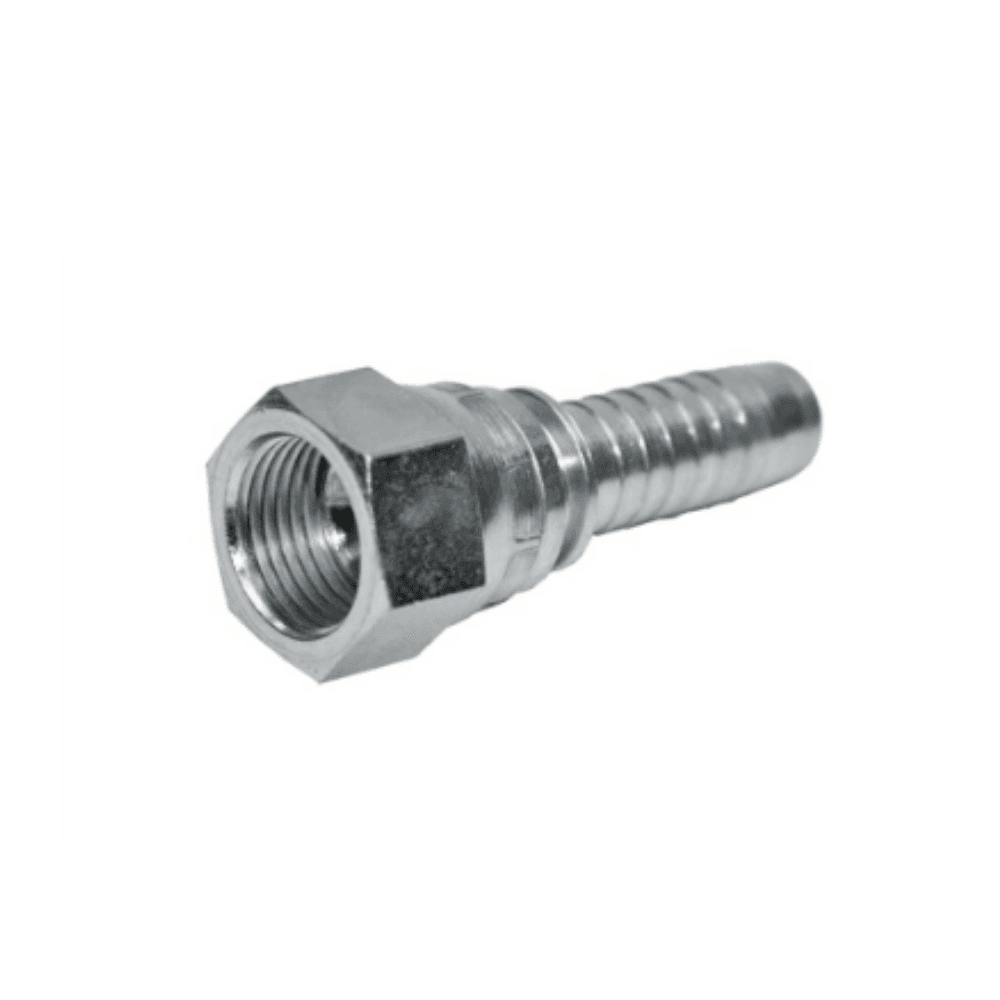 IH-CF43-JICFJIC 37° Female Swivel Crimp Fitting for Braided HoseIndus Hydraulics
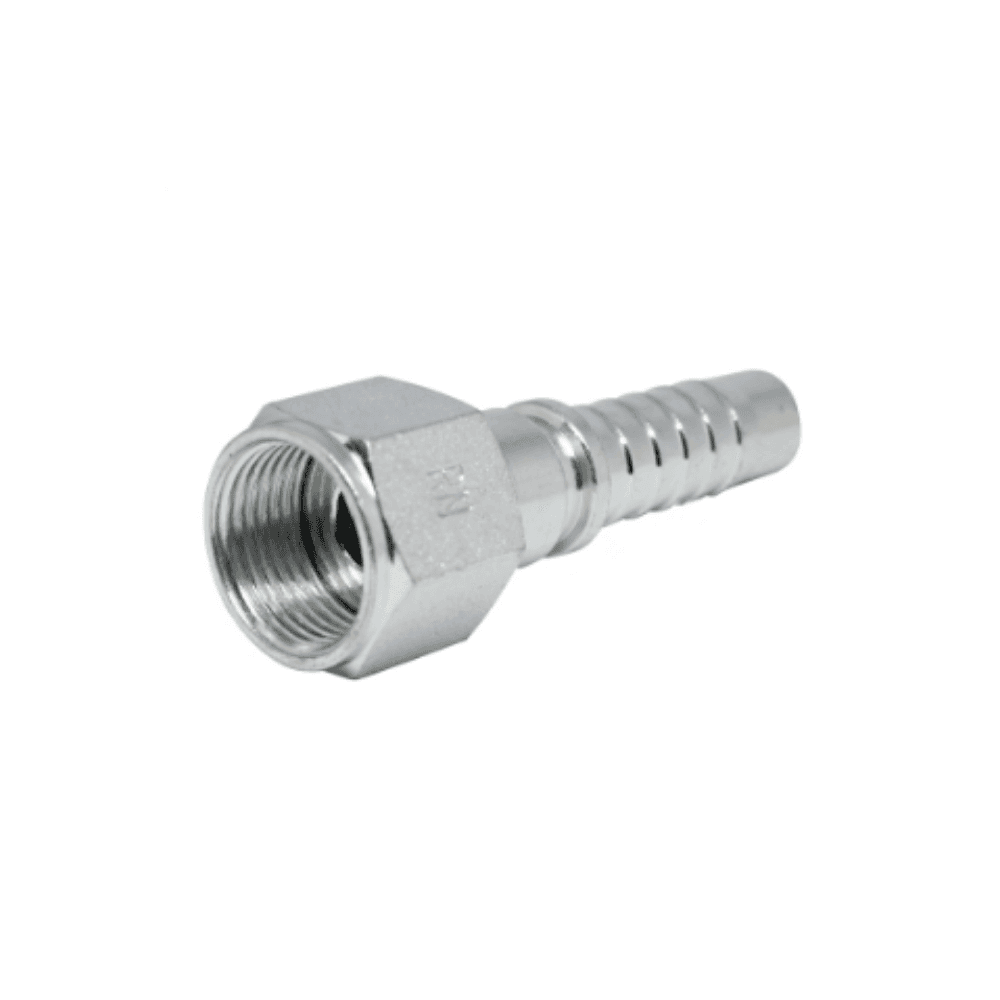 IH-CF43-ORFSFORFS Female Swivel Crimp Fitting for Braided HoseIndus Hydraulics
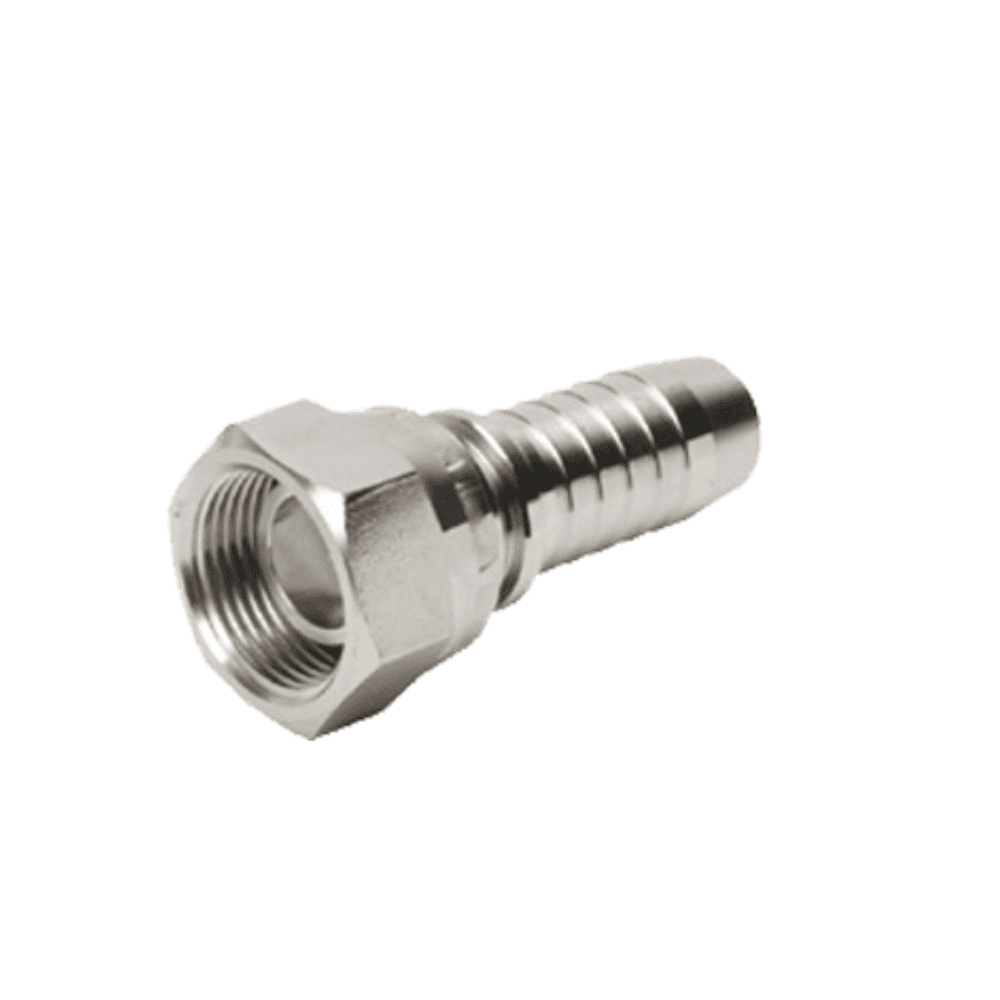 IH-CF43-BSPFBSP Female Swivel 60° Cone Crimp Fitting for Braided HoseIndus Hydraulics
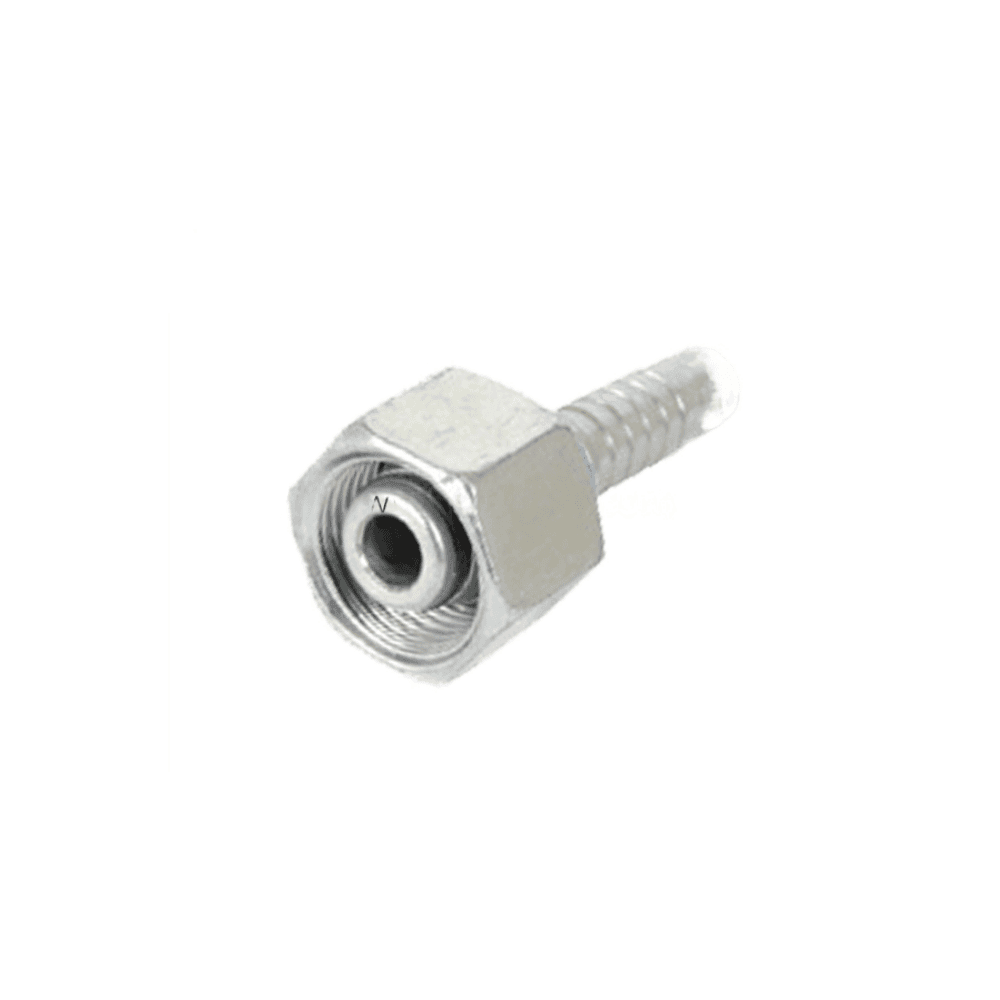 IH-CF43-DINLFDIN Light Metric 24° Female Swivel Crimp Fitting for Braided HoseIndus Hydraulics
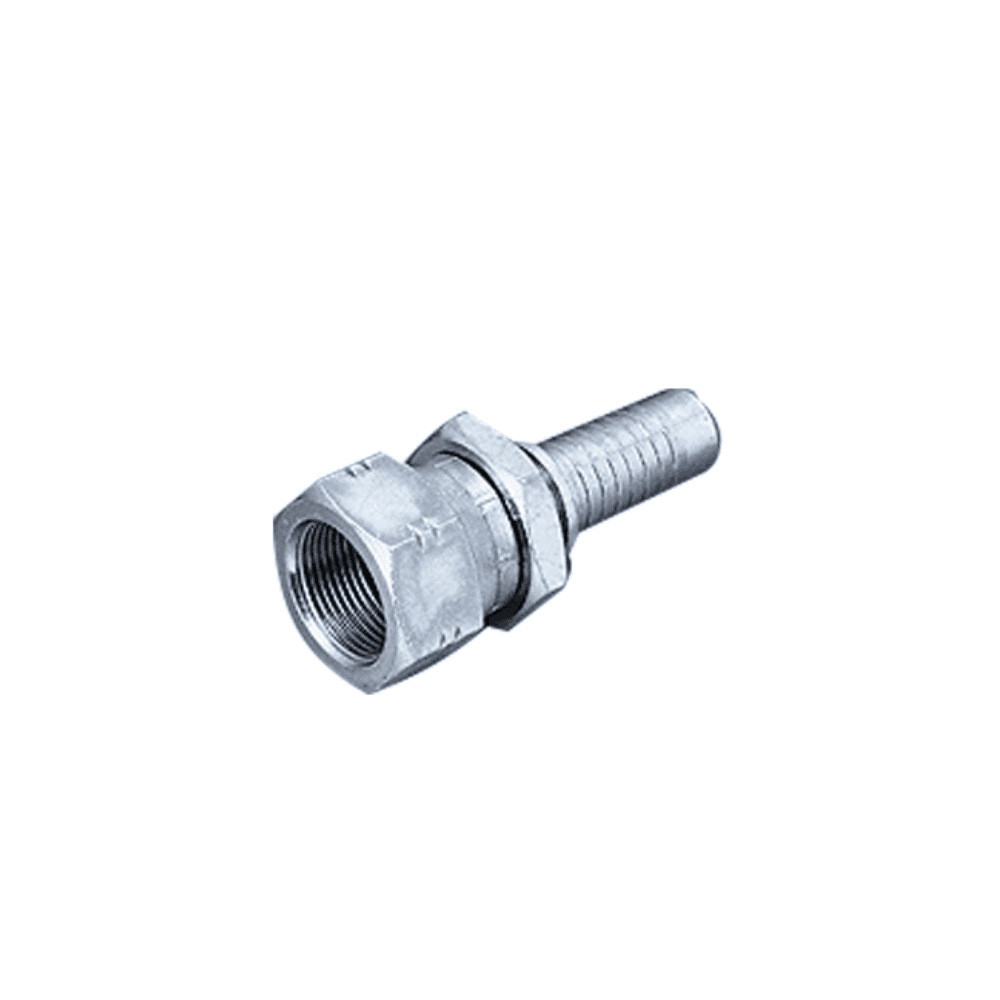 IH-CF43-KOMFKomatsu JIS Metric 30° Female Swivel Crimp Fitting for Braided HoseIndus Hydraulics
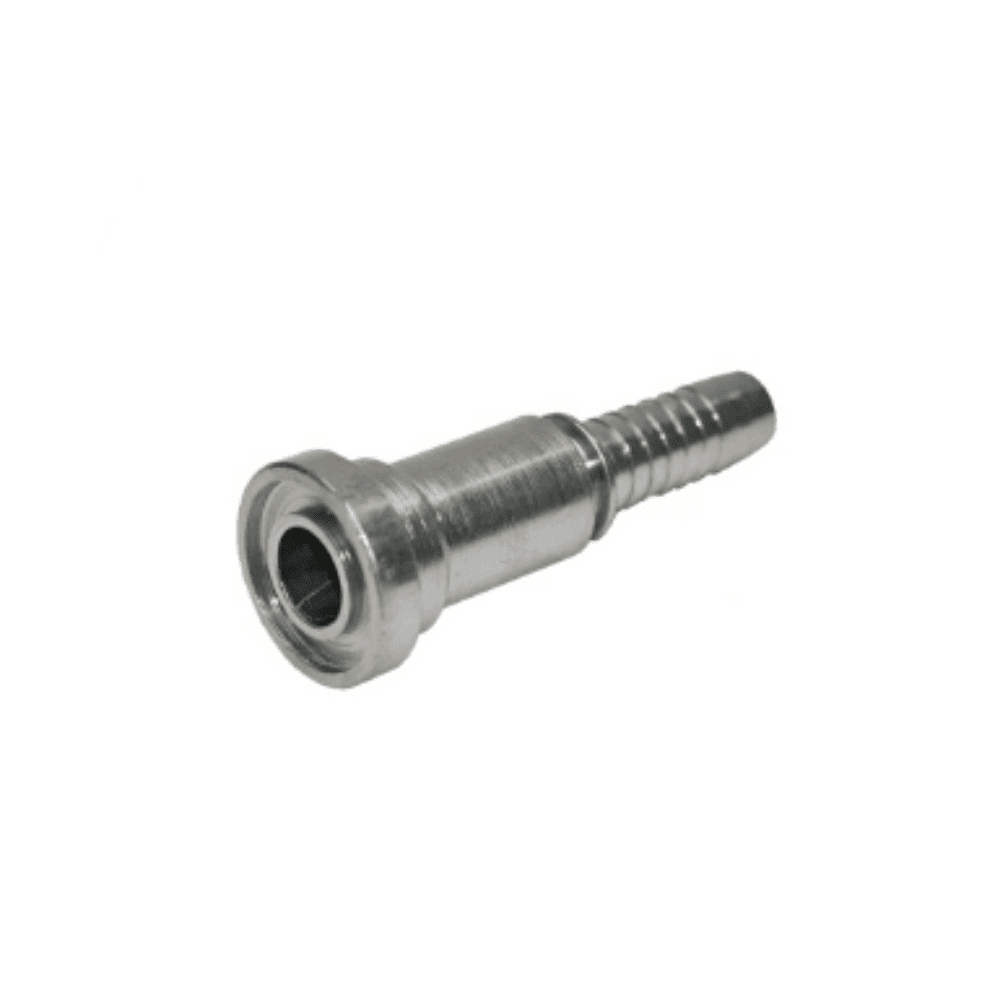 IH-CF43-C61SAE Code 61 Flange Head Crimp Fitting for Braided HoseIndus Hydraulics
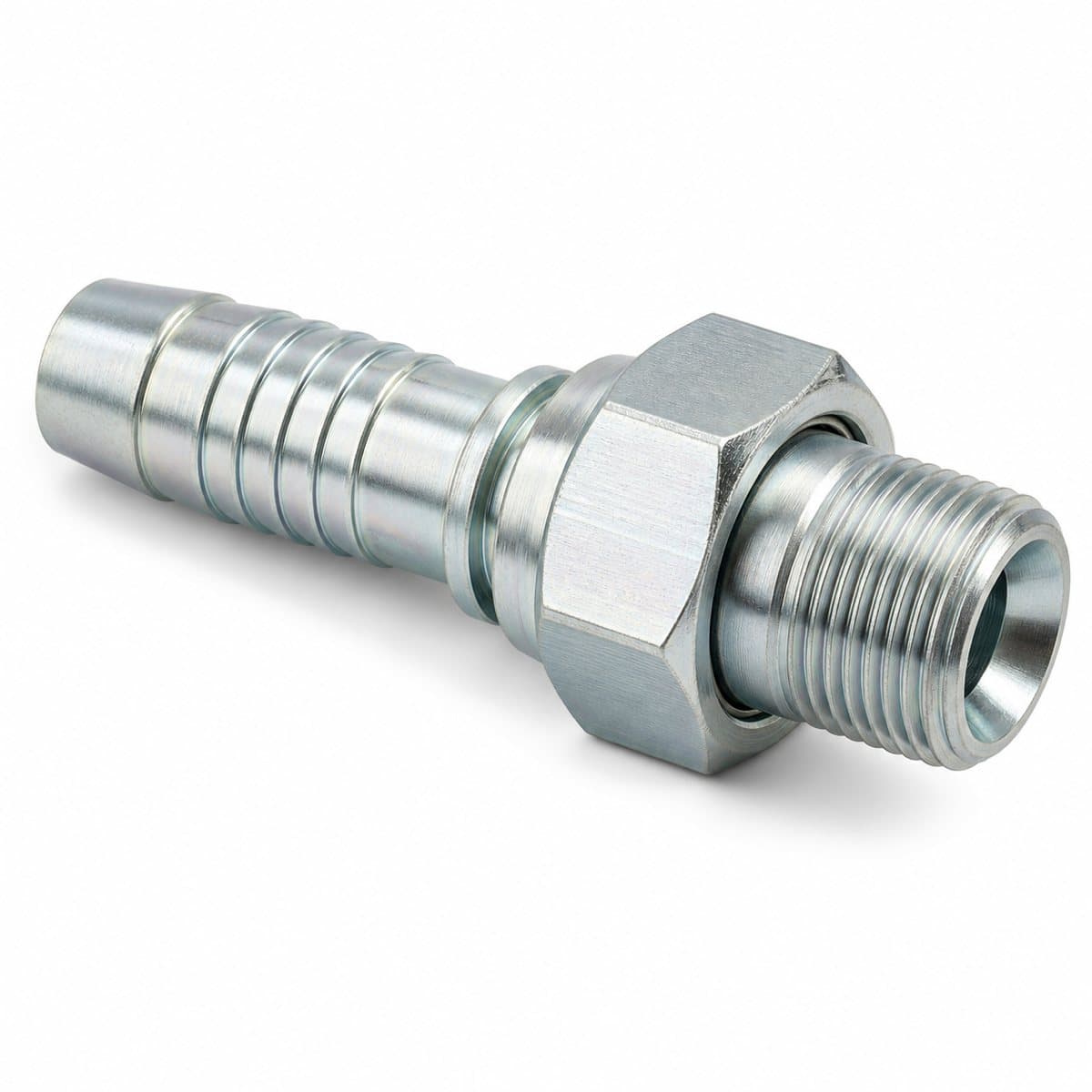 IH-PT-NPSM-SWVNPSM Male Swivel Hose FittingIndus Hydraulics
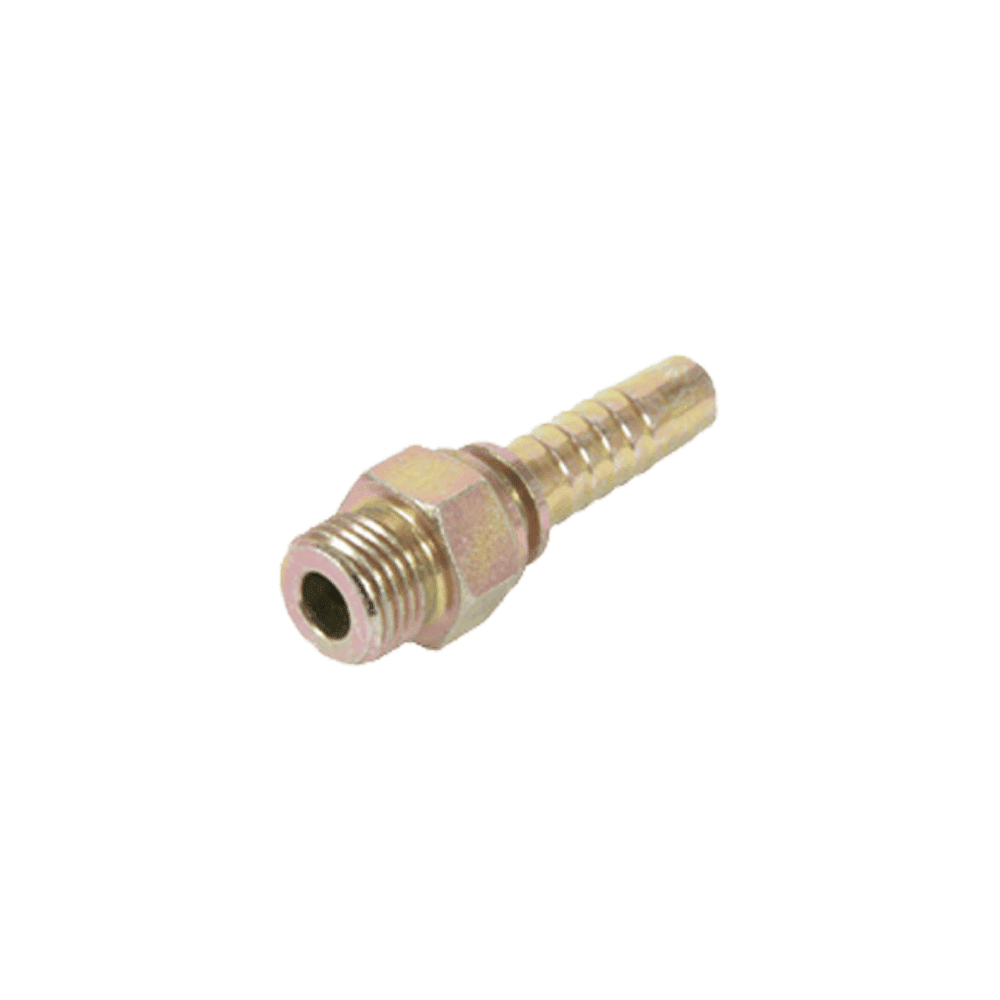 IH-PT-SAE-MAL-ORSAE O-Ring Male Hose FittingIndus Hydraulics