
Every sling type will lift the load if it is rated for the weight. The real choice is about everything else: whether the load has sharp edges, whether it is hot, whether its paint matters, whether there are chemicals about, and how the sling will be stored between lifts. Get those right and the size follows.
The four types at a glance.
| Sling | Best for | Watch out for |
|---|---|---|
| Alloy chain (Grade 80, Grade 100) | Hot loads, rough and abrasive work, foundries, steel stockholding, adjustable leg lengths | Weight; can damage soft or finished surfaces; must be Grade 80 or 100, never transport chain |
| Wire rope | General heavy lifting, long lengths, high capacity for the weight | Kinking, crushing, broken wires; loses strength bent around small pins or edges |
| Polyester webbing (flat) | Painted, polished or fragile loads; wide bearing surface | Cuts on unprotected edges; heat above 100 °C; alkalis |
| Polyester round sling | Light, flexible lifting of awkward shapes; easy handling | Same as webbing; damage to the core can hide inside the cover |
Strength, weight and design factor.
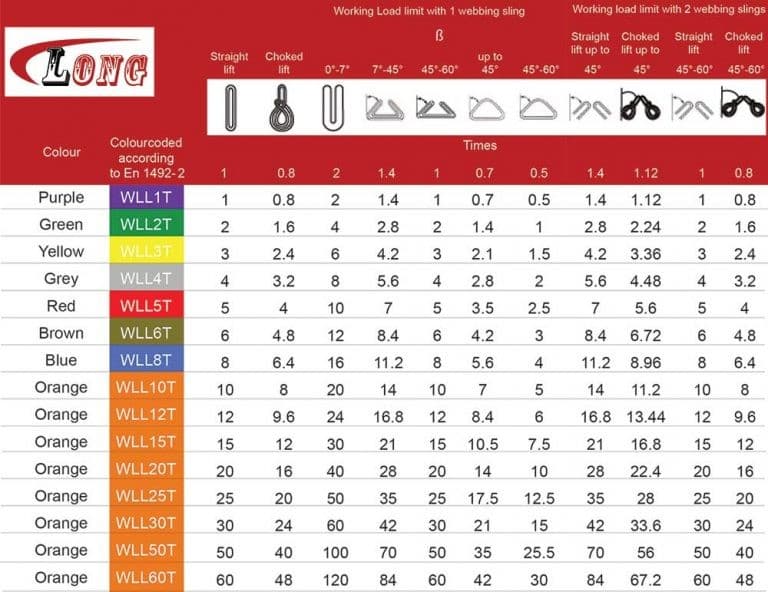
All four are rated by working load limit, but they reach it with different safety margins, set by their standards: 4:1 for alloy chain slings, 5:1 for wire rope slings and 7:1 for polyester slings under EN 1492. The higher factor for polyester reflects how easily it can be cut or weakened without obvious signs. Our guide to working load limit explains the factors in full.
Weight is where the synthetics win. Our 1 t × 1 m polyester round sling weighs 0.3 kg; a 1 m length of 10 mm Grade 80 chain, rated 3.2 t, weighs 2.2 kg before any fittings. For loads a rigger handles by hand all day, that difference matters.
Heat and chemicals.
| Sling material | Temperature | Chemicals |
|---|---|---|
| Polyester (blue label) | −40 °C to 100 °C | Resists mineral acids; damaged by alkalis |
| Polyamide / nylon (green label) | −40 °C to 100 °C | Resists alkalis; damaged by mineral acids |
| Polypropylene (brown label) | −40 °C to 80 °C | Resists acids and alkalis; damaged by solvents |
| Wire rope, fibre core | Not above 100 °C | Acid conditions not recommended |
| Wire rope, steel core, aluminium ferrules | Not above 150 °C | Acid conditions not recommended |
| Grade 8 alloy chain | Full rating −40 °C to 200 °C; derated above, to the maker’s table | Follow the maker’s instructions |
Above 200 °C, chain makers’ derating tables differ — including on whether a chain sling returns to full rating once it has cooled — so follow the table for the sling in use. A chemical solution that seems harmless can also become damaging as it evaporates and concentrates on a synthetic sling; rinse and dry slings that have been exposed.
Edges and surfaces.
Edges decide more sling choices than weight does. A polyester sling over an unprotected steel edge can be cut through under load — always use edge protection, or choose chain. Wire rope loses strength when it bends sharply, so it also needs packing at edges and a generous bend radius. Chain is the most tolerant of edges, but it marks paint and soft materials. For a painted, polished or coated load with rounded edges, webbing gives the widest bearing and the gentlest contact.
Each type in more detail.
Chain slings
Built from Grade 80 or Grade 100 alloy chain with matching master links, connectors and hooks, in one to four legs. Shortening clutches let leg lengths be adjusted on the job, and a damaged component can be replaced rather than the whole sling. Transport chain — Grade 30, 43 or 70 — must never be made into a lifting sling; see our guide to chain grades.
Wire rope slings
Single and multi-leg slings with ferrule-secured or spliced eyes, endless grommets, and Flemish-eye slings. Strong for their diameter and tolerant of abrasion, but they kink if mishandled and fatigue with repeated bending. Their eyes must be pressed or spliced — never made with wire rope clips.
Webbing slings
Flat woven polyester in eye-and-eye or endless form, colour-coded by WLL. The wide, flat bearing surface spreads load on finished items and makes them good for choking smooth loads.
Round slings
A core of continuous polyester yarns inside a protective cover. Very flexible, they wrap awkward shapes and are easy to handle. Because the load-bearing core is hidden, damage can be internal: inspect the cover carefully for cuts, and withdraw any sling whose core is exposed.
Choosing a sling type
Work down the list; the first condition that applies usually decides it.
If · Load is hot — above 100 °C
Alloy chain, derated to the maker’s table.
If · Load has sharp edges you cannot pad
Alloy chain. Synthetics only with proper edge protection.
If · Chemical exposure
Match the fibre to the chemical — polyester for acids, polyamide for alkalis — or use chain after checking with the maker.
If · Painted, polished or fragile surface
Polyester webbing or round sling, with edge protection where needed.
If · Heavy, general lifting with long reach
Wire rope sling.
If · Needs adjustable leg lengths
Grade 80 or 100 chain sling with shortening clutches.
Slings and sling components in this guide
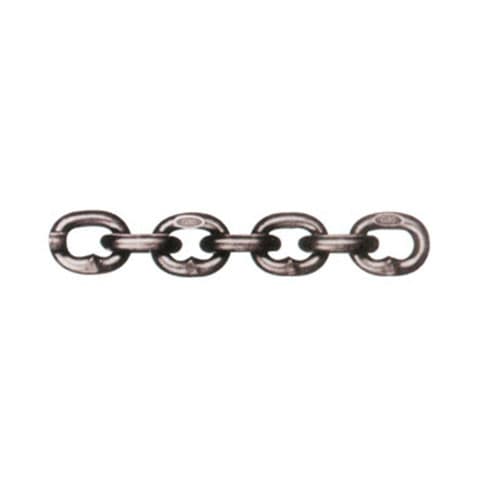
IH-LR-CH-G80
Grade 80 Alloy Lifting Chain
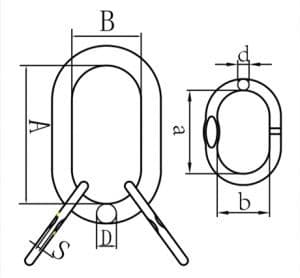
IH-LR-G8-MLAE16774
Grade 80 Master Link Assembly — EN 1677-4
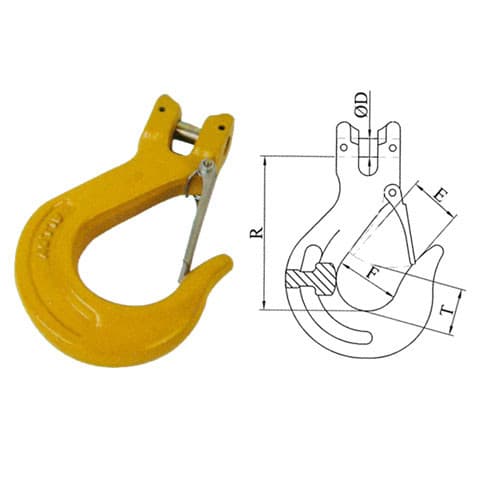
IH-LR-G8-CSHL
Grade 80 Clevis Sling Hook with Latch
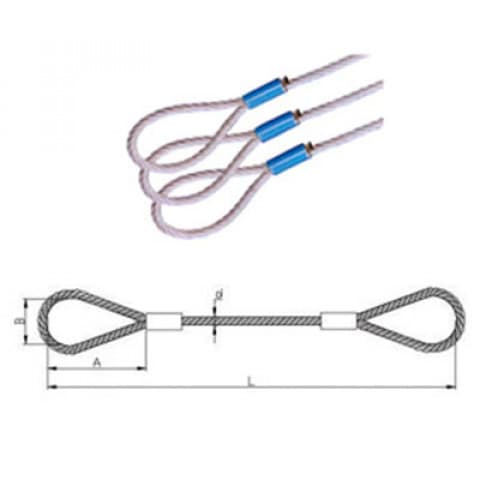
IH-LR-WS-SWG
Swaged Soft Eye Wire Rope Sling (Ferrule Secured)
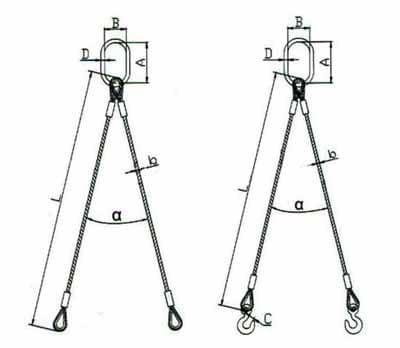
IH-LR-SL-TWRS
Two-Leg Wire Rope Sling

IH-LR-SY-PFWSEE
Polyester Flat Webbing Sling — Eye and Eye
IH-LR-SY-PRSEE
Polyester Round Sling — Eye and Eye
IH-LR-SY-PRSE
Polyester Round Sling — Endless
Common questions
Which type of sling is strongest?
None is strongest in general — each is made in a range of capacities. Compare slings on their WLL for the hitch you will use. For the same WLL, chain is heaviest and synthetics are lightest.
When should I use a chain sling instead of a webbing sling?
When the load is hot, has sharp edges that cannot be padded, or the work is rough and abrasive. Webbing slings are limited to 100 °C and are easily cut; Grade 80 chain keeps its full rating up to 200 °C and tolerates edges.
Are round slings better than flat webbing slings?
They suit different jobs. Round slings are more flexible and wrap awkward shapes; flat webbing gives a wider bearing surface on finished loads. Both are polyester under EN 1492, colour-coded and rated the same way.
Can I make a chain sling from transport chain?
No. Grades 30, 43 and 70 are not for overhead lifting. Lifting chain slings are made from Grade 80 or Grade 100 alloy chain with fittings of the same grade.
How hot can a polyester sling get?
Polyester slings are rated from −40 °C to 100 °C under EN 1492. Above that, use a chain sling.
Lifting slings
Synthetic and wire rope slings, rated by hitch and angle.
Alloy lifting chain
Grade 80 and Grade 100 chain for building chain slings.
Grade 80 chain fittings
Master link assemblies, sling hooks and connectors.
Figures verified · Product figures from the size tables on the linked product pages. Textile limits from EN 1492 user information; wire rope sling temperatures from the LEEA Code of Practice for the Safe Use of Lifting Equipment. The maker’s instructions for the specific sling govern.
Not sure which sling suits the load?
Send the weight, a photo of the load and its lifting points, and anything unusual — heat, edges, chemicals. We will recommend and quote the sling type and size, with the manufacturer’s certificate.
Plant-down? Call +971 52 2477942 — 24/7