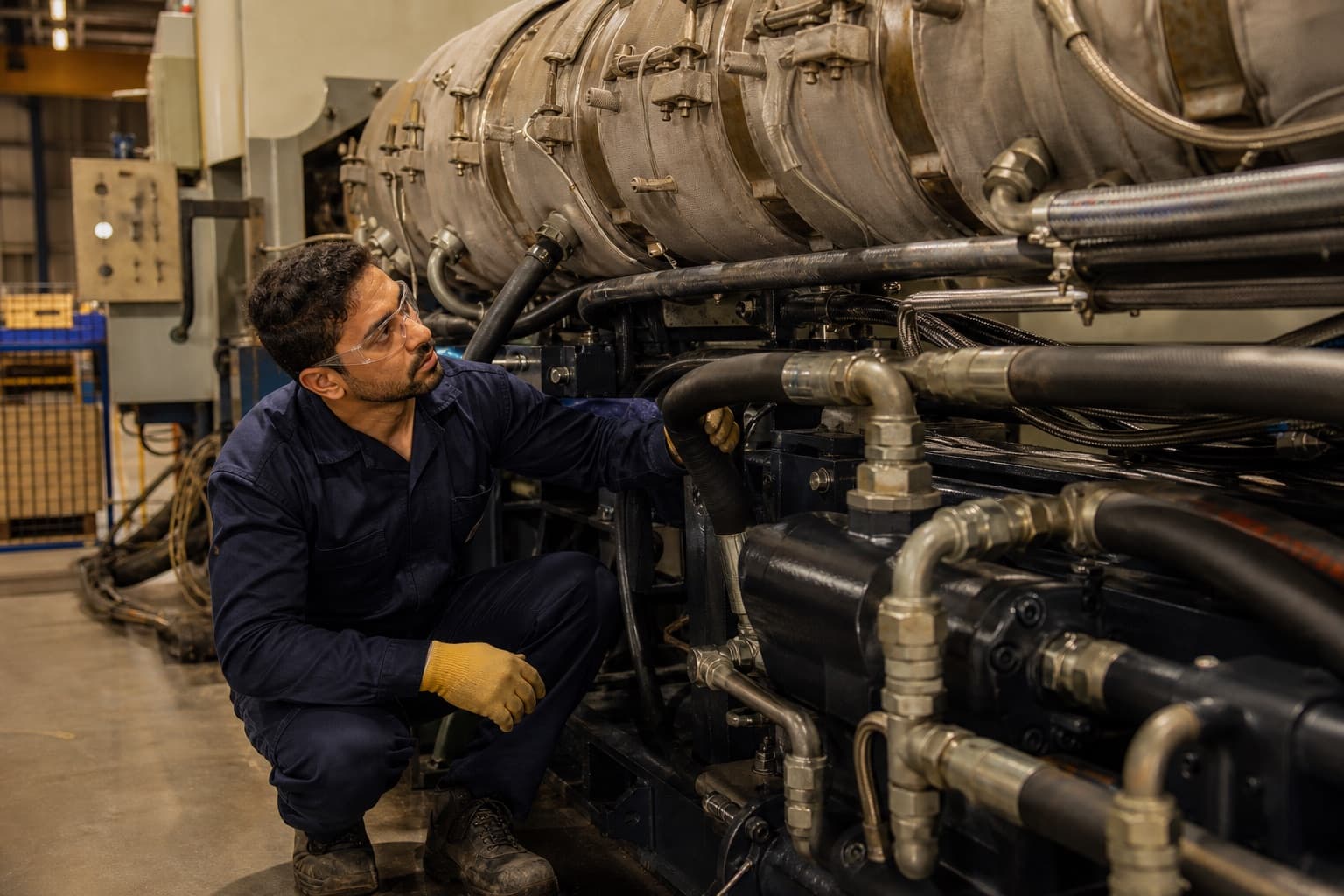
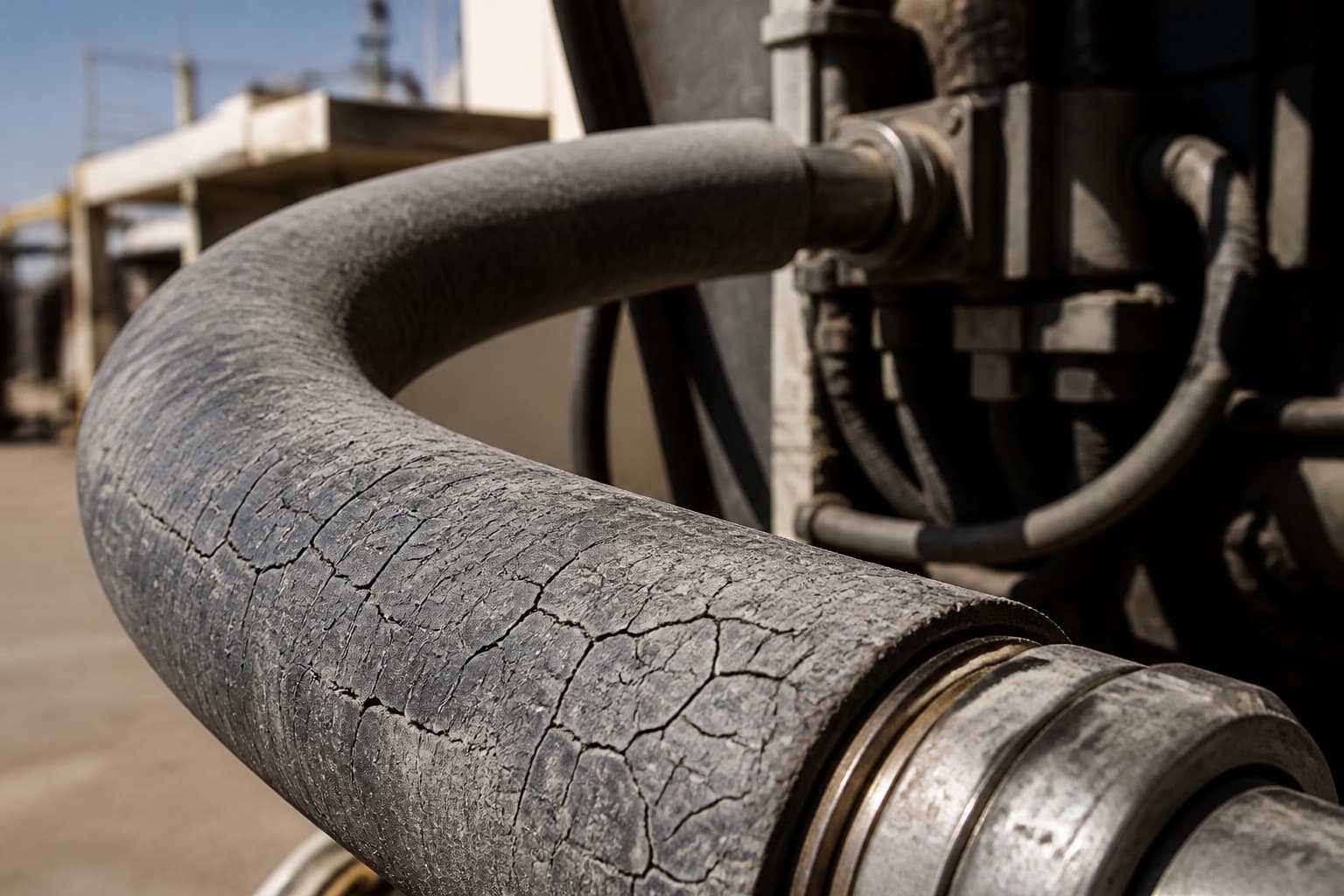
Every other machine in this section fails its hoses through movement, abrasion or weather. A moulding machine does none of those. It stands in a clean, air-conditioned hall and ages its hoses anyway, because a few centimetres away there is a barrel running at plastic-processing temperature all day.
/01Heat from outside.
A hose temperature rating describes the fluid inside it. On a moulding machine the fluid may be well controlled while the hose itself sits in radiated heat from the barrel, the heater bands and the nozzle area. The two add, and only one of them appears in any specification. Where the radiant heat cannot be shielded, R14 PTFE hose (204 °C) or R13 (121 °C) gives more headroom than 100 °C braid.
| Construction | Max fluid temperature |
|---|---|
| R7, R8 thermoplastic | 93 °C |
| 1SN, 2SN, 1SC, 2SC, 4SP, 4SH | 100 °C |
| R5, R12, R13, R15Highlighted | 121 °C |
| R14 PTFEHighlighted | 204 °C |
Ageing is cumulative and irreversible, so a hose that spends its life warm is spending its life. That is why moulding machine hoses tend to fail in groups — they were fitted together, they aged together, and they arrive at the end together.
/02The cycle count nobody counts.
/03What to change, in order.
Cheapest first
The higher-rated hose is a real answer and it is rarely the first one.
IfA hose runs close to the barrel or heater bands
Move it, or put a shield between the two.
Radiated heat falls off quickly with distance. Centimetres matter.
IfThe hall is hot as well
Look at ventilation around the machine before changing hose.
A machine in still, hot air has no way to lose the heat it radiates.
IfThe oil runs hot
Check the cooler before specifying anything.
A silted cooler raises every hose temperature in the machine simultaneously.
IfHeat is genuinely unavoidable
Move to a 121 °C construction, or PTFE where it is severe.
The right answer where the heat cannot be designed out, and over-specified where it can.
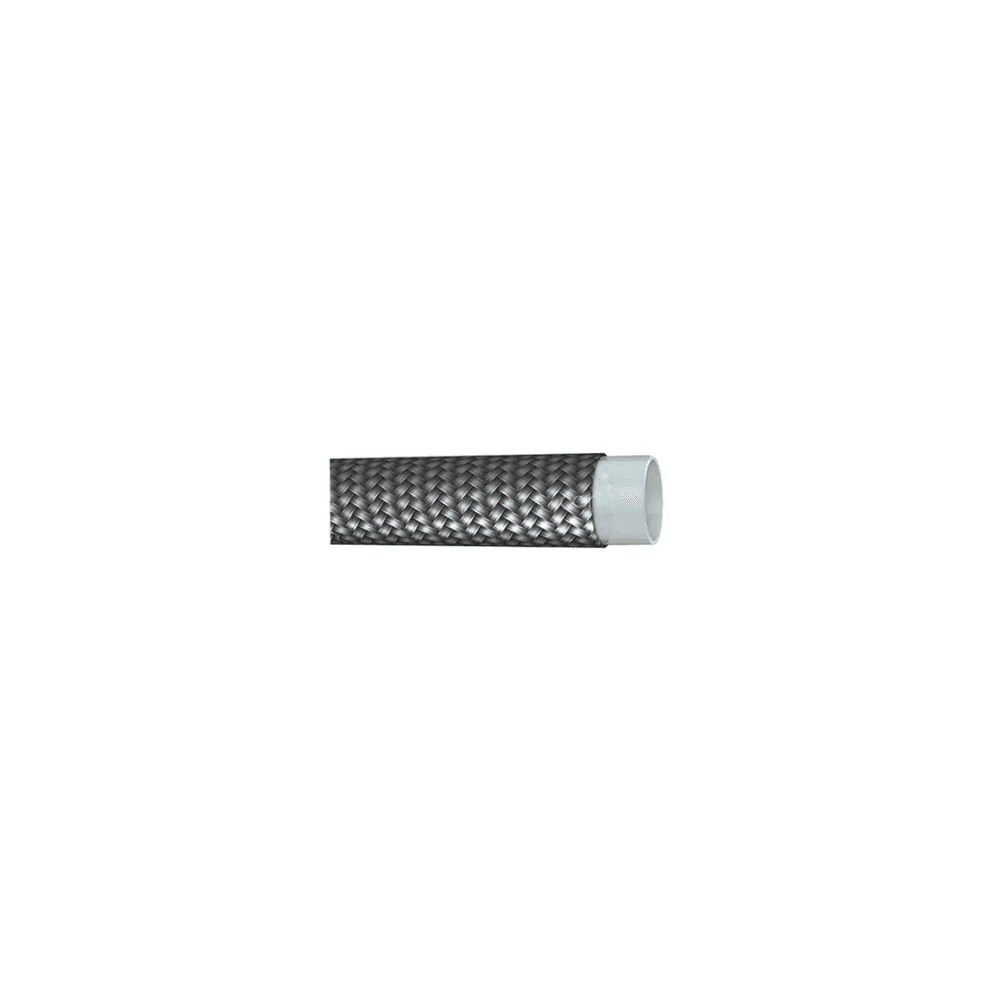
IH-HOSE-R14
Where heat is the constraint


Common questions
- Should we just fit PTFE hose everywhere on the machine?
- No. It is the right answer next to the barrel and over-specified on circuits that never see that heat. It is also stiffer and needs different fittings, so blanket substitution creates routing problems it did not have.
- The hoses fail in the same area every time. Is that a bad batch?
- Almost never. Failures clustered in one area point at a heat source in that area, and the fix is distance or shielding rather than a different supplier.
- How do we set a replacement interval?
- From your own failure history and cycle count rather than a calendar figure borrowed from mobile plant. Tagging assemblies with build dates is what makes that possible.
- Can you build assemblies to a cleanliness standard?
- Yes — tell us what the machine requires and we will build and cap to it rather than assuming a general-purpose clean is adequate.