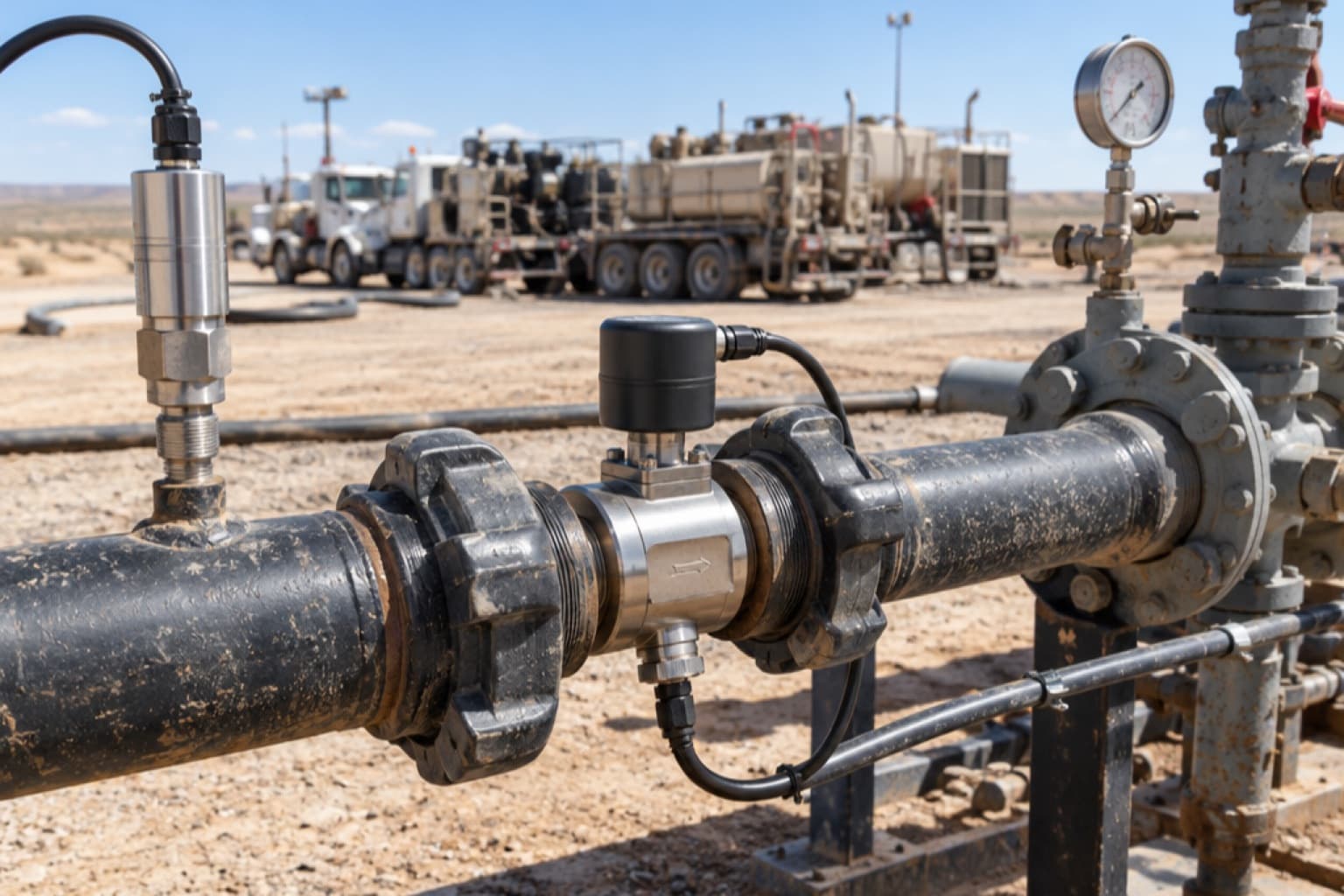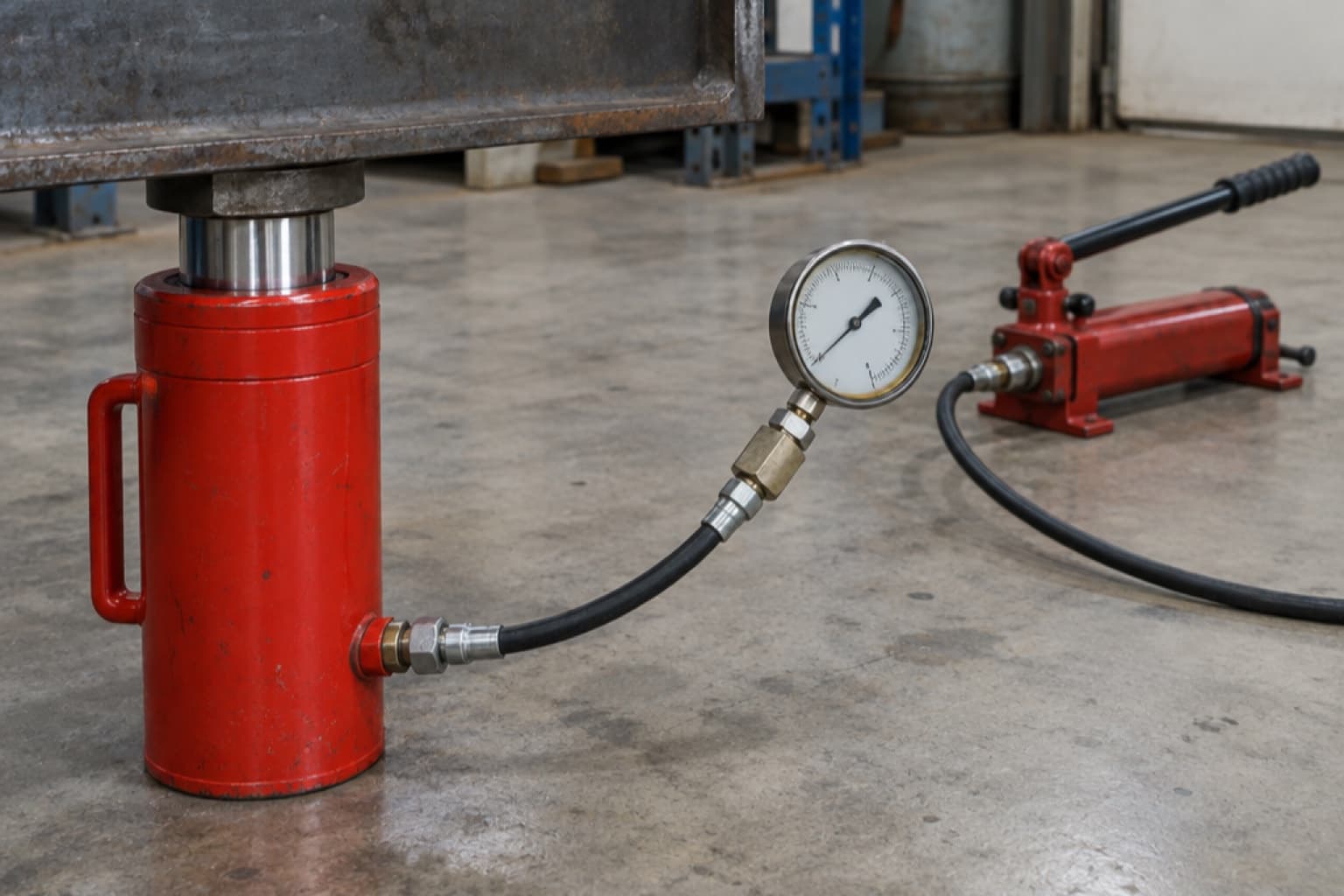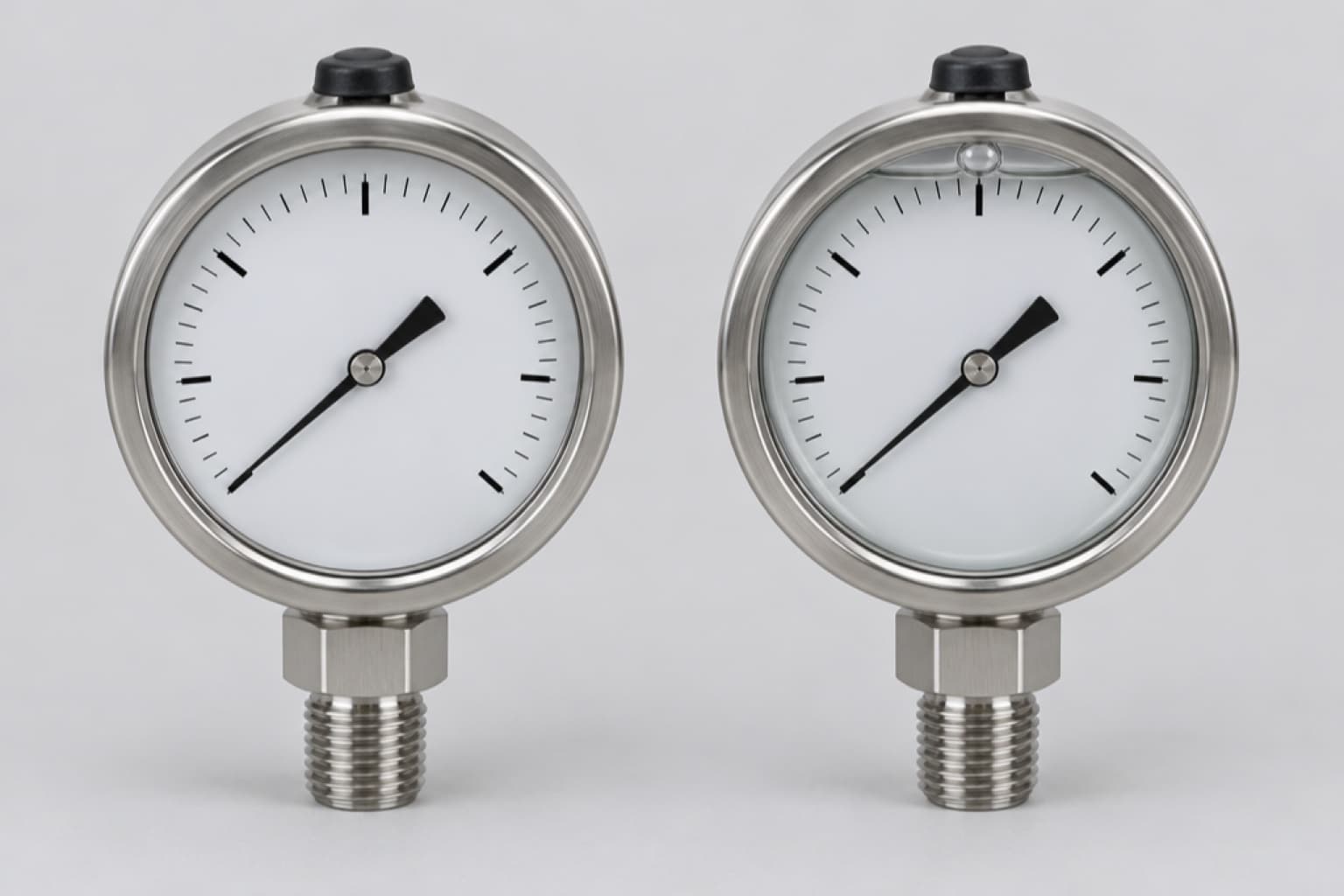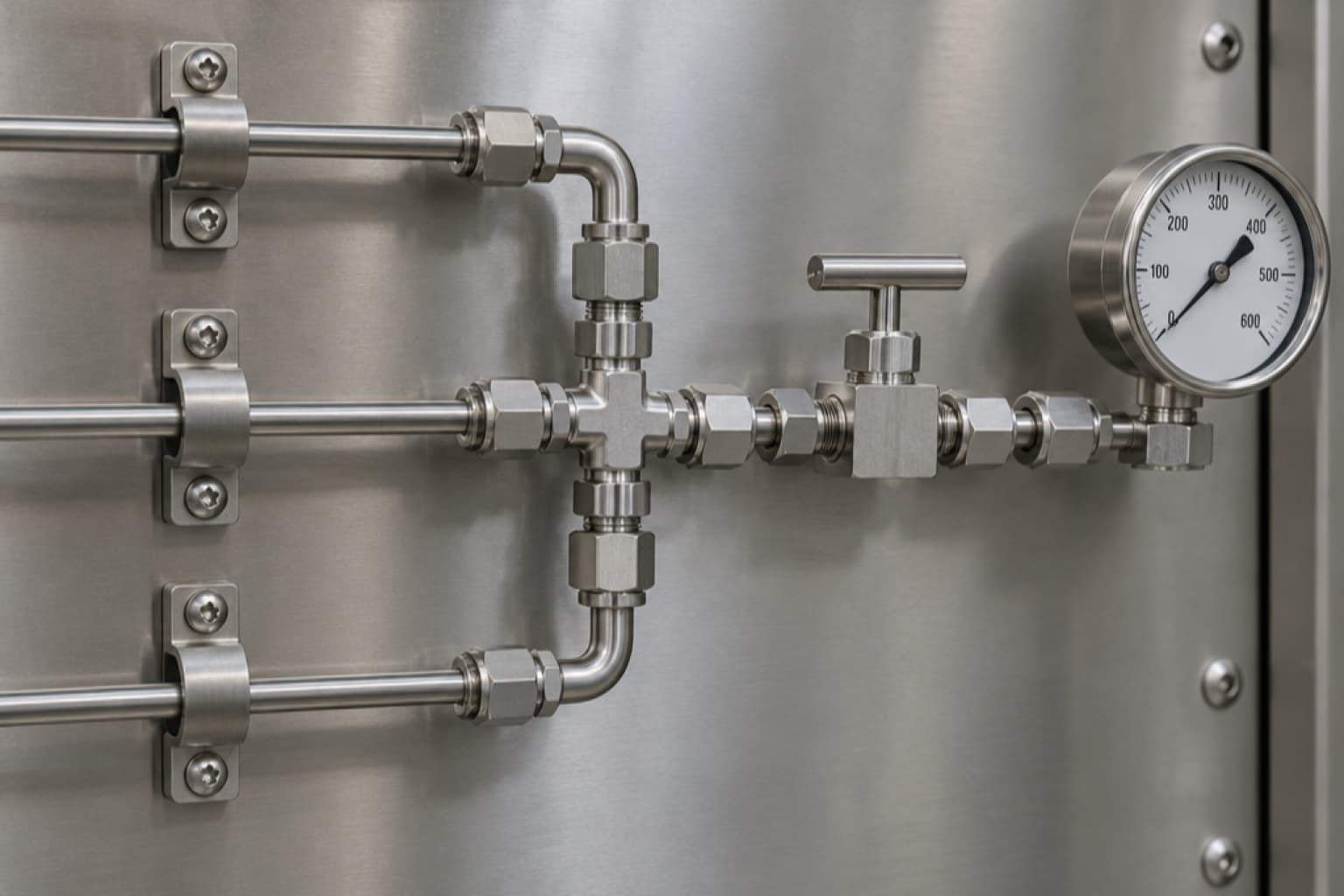
Every analyser shelter, wellhead control panel, sample system and hydraulic test bench is plumbed with small stainless tube and compression fittings. They are reliable for decades when they are built right and they leak from day one when they are not, and almost all the difference lies in details that look unimportant: which ferrule went in which nut, how hard the tube was, whether the tube was pushed all the way home. This guide covers how they work and how to choose them; the companion articles cover making them up, choosing tube and finding leaks.
/01How a compression fitting seals.
Every compression fitting has the same three jobs to do at the tube end: seal against the fitting body, seal against the outside of the tube, and hold the tube so pressure and vibration cannot pull it out. It does all three with the tube itself left intact — no welding, no threading, no flare.
Two-ferrule fittings
In the two-ferrule design used by most instrument fitting makers, the work is split. As the nut is tightened, the back ferrule pushes the front ferrule forward into the tapered mouth of the body. The front ferrule is squeezed between body and tube and makes both seals. The back ferrule is driven inward behind it and grips the tube. Swagelok’s back ferrule is designed to hinge and collet — gripping hard at one point and supporting the tube just behind it — to resist the bending fatigue that vibration causes; Parker case-hardens its back ferrules (about 70 HRC at the surface) so they bite into tube that is often harder than ideal.
Makers describe the two-ferrule joint as live-loaded: the ferrules stay elastically sprung against the tube and body, which is what lets the joint hold through temperature swings at start-up and shutdown. And the make-up motion is axial — the nut turns but the tube is not twisted.
Single-ferrule fittings
A single-ferrule instrument fitting uses one ferrule that both seals and grips. Parker’s CPI is the best-known example. It has fewer parts to lose or mis-assemble, and makers publish the same make-up turns as their two-ferrule lines.
Cutting-ring fittings are a different family
The 24° cutting-ring fitting of hydraulic systems — ISO 8434-1, formerly DIN 2353 — looks similar but works differently: the ring’s edges bite into the tube to hold and seal it, and the whole system is dimensionally standardised, from 4 to 42 mm OD, for fluid-power ports. It is covered in fittings on European machines. Do not use cutting-ring parts in an instrument fitting, or the other way round.
/02Sizes.
Instrument tube fittings are sized by the outside diameter of the tube, not by a pipe size or a bore. Inch fittings run from 1/16" to 1" for hand assembly, and to 2" with hydraulic presetting tools; metric fittings from 2 mm to 25 mm by hand and to 50 mm with tools. Our double-ferrule range covers 1/16" to 2", and our single-ferrule range includes metric fittings from 2 mm to 38 mm.
Inch and metric sizes that look close are not interchangeable: 6 mm and 1/4" (6.35 mm), 10 mm and 3/8" (9.53 mm), 12 mm and 1/2" (12.7 mm) are all different. Makers mark metric bodies to stop the mistake — Swagelok metric fittings carry a stepped shoulder on the body hex and shaped metric fittings are stamped “MM”; Parker metric fittings also carry an identification shoulder. Measure the tube with a caliper before ordering.
| Inch tube | OD (mm) | Nearest metric tube | Difference |
|---|---|---|---|
| 1/8" | 3.18 | 3 mm | 0.18 mm |
| 1/4"Highlighted | 6.35 | 6 mm | 0.35 mm |
| 3/8" | 9.53 | 10 mm | 0.47 mm |
| 1/2" | 12.70 | 12 mm | 0.70 mm |
| 3/4" | 19.05 | 18 or 20 mm | 1.05 / 0.95 mm |
| 1" | 25.40 | 25 mm | 0.40 mm |
/03Materials.
The default is 316 stainless steel: our fittings are forged 316L from bar to ASTM A479 and A276. Makers also offer brass (for copper and plastic tube), carbon steel, and for corrosive or offshore service, 6Mo super-austenitic, 2507 super duplex, and nickel alloys 825, 625 and C-276.
Two material rules come from the makers themselves. The tube must be softer than the fitting, so with stainless fittings the stainless tube must be fully annealed — stainless tube in brass fittings is not allowed. And do not mix materials between tube and fitting: Parker allows only brass fittings on copper tube as an exception, because of galvanic corrosion and hardness differences. Material choice for the Gulf’s salt air is covered in stainless tube fittings and corrosion.
/04Pressure: the tube sets it.
A compression fitting is rated to the tube. The makers test their fittings across a range of wall thicknesses for each OD and publish working pressure as a property of the tube — so 1/4" × 0.035" 316 seamless tube is rated 5,100 psig and the fitting on it holds the same. Our listings carry this: rated to the tube, up to 12,000 psi on 316 stainless tubing, by OD and wall. The full table and the temperature derating are in instrumentation tubing pressure ratings.
Two exceptions: bored-through fittings (for thermocouples and dip tubes) are derated — Swagelok rates them at 0.75 of the tube up to 1/2", 0.50 to 3/4" and 0.25 above — and walls outside the maker’s tested range are not rated at all.
/05The shapes and the ends.
Tube fittings come in the same shapes as pipe fittings — unions, elbows, tees, crosses, reducers, caps, plugs and bulkhead versions — plus connectors that join a tube end to another kind of end:
- Male and female connectors to NPT, BSPT, BSPP or SAE straight thread ports.
- Gauge connectors with a BSP parallel female thread and a gasket face for pressure gauges.
- Weld connectors — socket weld, pipe weld and butt weld — for joining to welded pipework.
- Port connectors with a machined ferrule end, to join two fittings directly without a length of tube.
- Bulkhead fittings that pass through a panel and lock with a nut.
- Positionable elbows and tees with an O-ring and locknut, which can be turned to face the tube before locking.
- Inserts that support soft plastic tube from inside so the ferrules have something to grip.
- O-seal and bored-through connectors for vacuum service and for thermocouples.
Every end type and its standard is in tube fitting end connections.
Choosing an instrument tube fitting
IfWhat tube is installed — OD, wall, material?
Measure with a caliper; inch and metric are not interchangeable. The tube sets the rating.
IfWhose fittings are already on the panel?
Stay with that maker throughout the line. Do not intermix nuts, ferrules or bodies.
IfSingle or double ferrule?
Match the existing design. For new work, see single vs double ferrule.
IfWhat does the other end connect to?
NPT, BSPT, BSPP gauge port, SAE straight thread, weld, bulkhead or another tube.
IfIs the service corrosive, sour or offshore?
316 for most; 6Mo or 2507 for hot marine air; NACE MR0175 compliance for sour.
IfGas service or vacuum?
Heavier wall, scratch-free tube, and the maker’s gas-service guidance.
Common questions
- What is a compression tube fitting?
- A fitting that seals and grips on the outside of a tube using a nut and one or two ferrules, with no welding, threading or flaring of the tube.
- What does each ferrule do in a two-ferrule fitting?
- The front ferrule seals against the fitting body and the tube; the back ferrule pushes it forward and grips the tube behind it.
- Can I mix ferrules and nuts from different manufacturers?
- No. There is no industry design standard for two-ferrule fittings, and makers say intermixing causes unpredictable performance and leaks. Keep each joint, and preferably each line, to one maker.
- What pressure is an instrument tube fitting rated to?
- To the tube it is installed on. The rating depends on tube OD, wall, material and temperature — for example 5,100 psig on 1/4" × 0.035" 316 seamless tube. Our 316 fittings reach up to 12,000 psi on the right tube.
- Is a compression fitting the same as a DIN 2353 fitting?
- No. DIN 2353, now ISO 8434-1, is a standardised hydraulic cutting-ring fitting whose ring bites into the tube. Instrument compression fittings are proprietary ferrule designs. Do not mix parts between them.
- What tube should I use with stainless compression fittings?
- Fully annealed seamless or welded-and-drawn stainless tube to ASTM A269 or A213, no harder than 90 HRB — Parker recommends 80 HRB or less — free of scratches, within the maker’s wall range.
Common instrument fittings
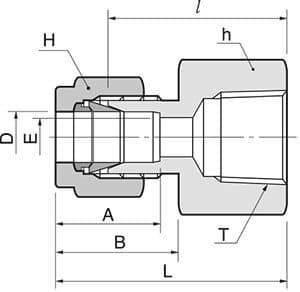 IH-TF-CF316 Stainless Double Ferrule Female Connector, Tube × NPT FemaleIndus Hydraulics
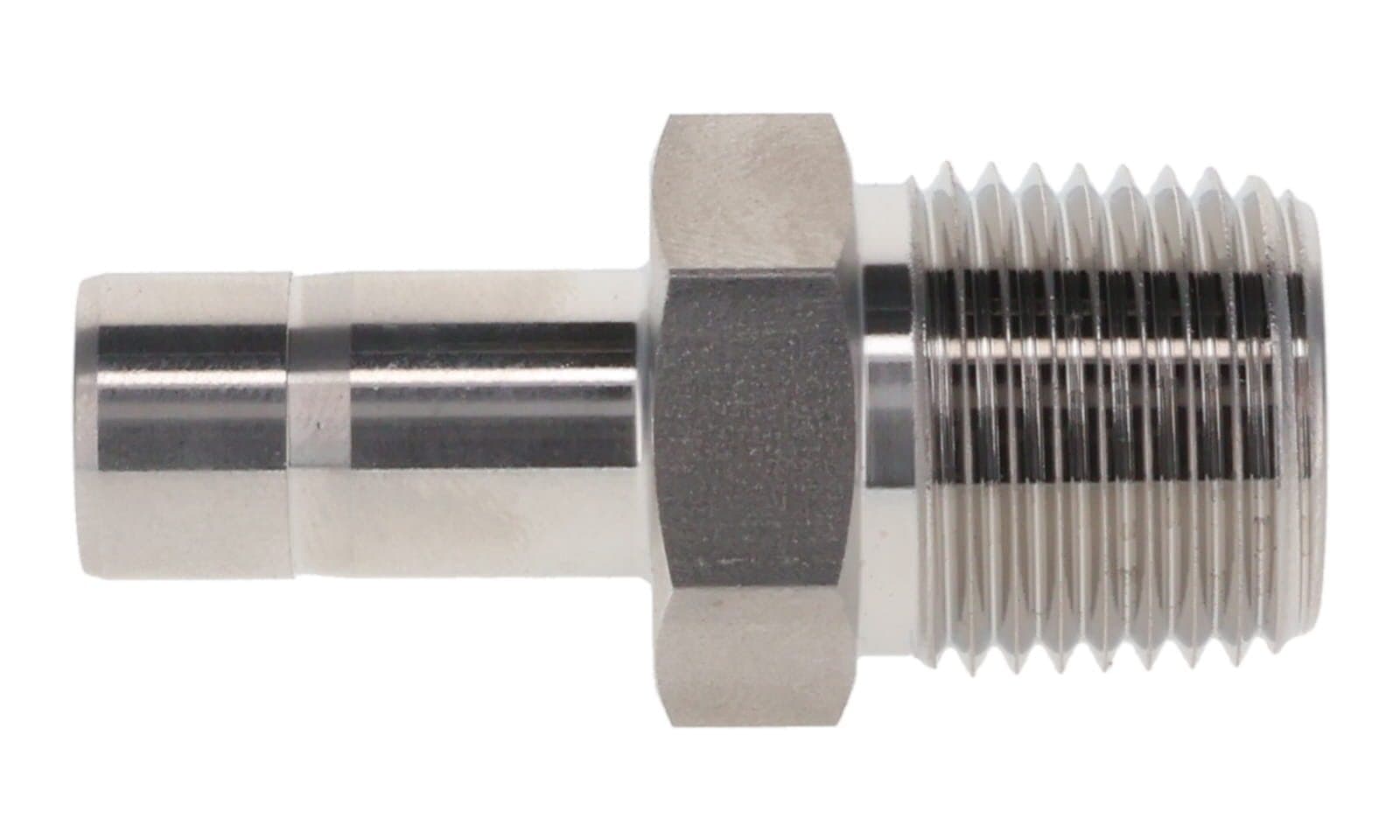 IH-TF-AM316 Stainless Double Ferrule Male Adapter, Tube Stub × NPT MaleIndus Hydraulics
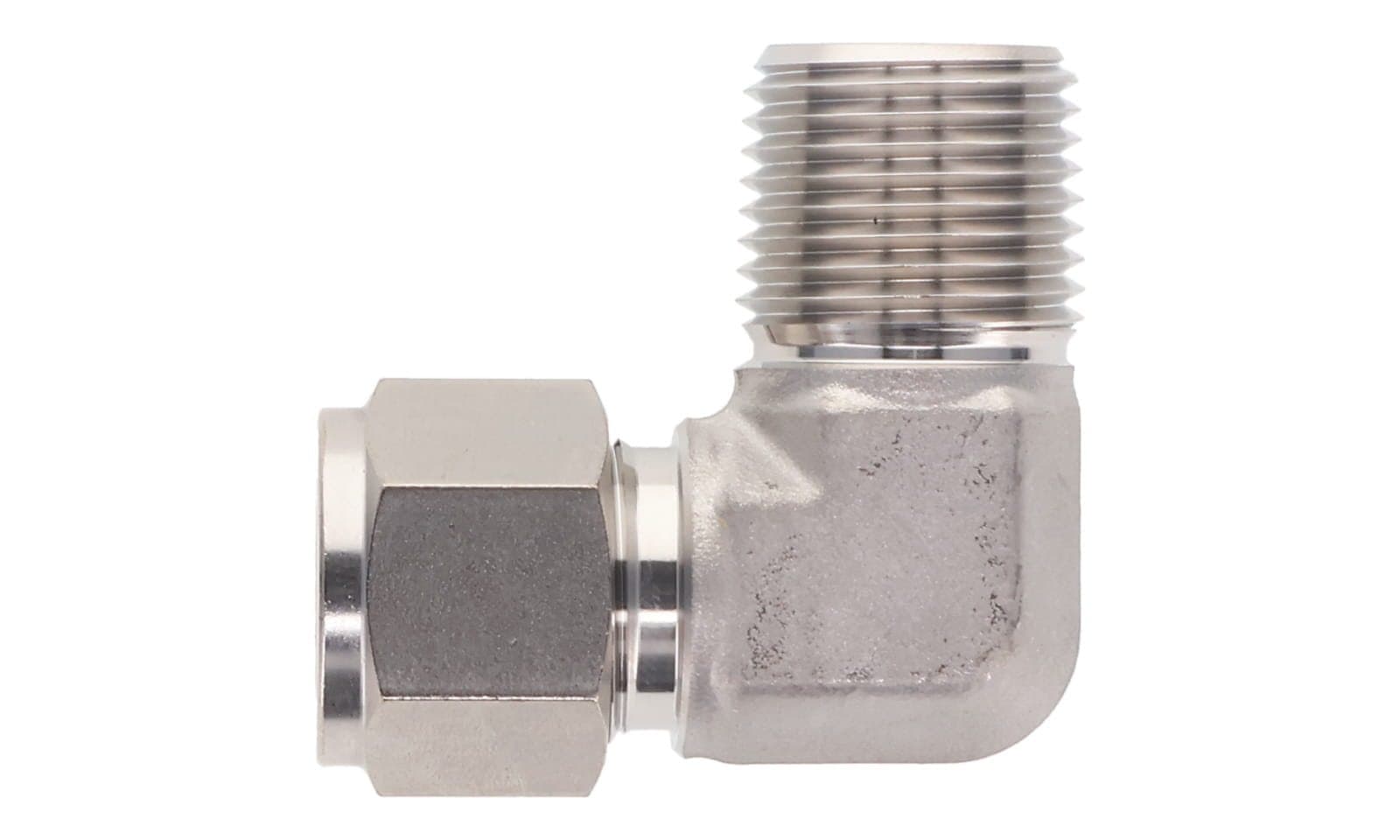 IH-TF-LM316 Stainless Double Ferrule Male Elbow, Tube × NPT MaleIndus Hydraulics
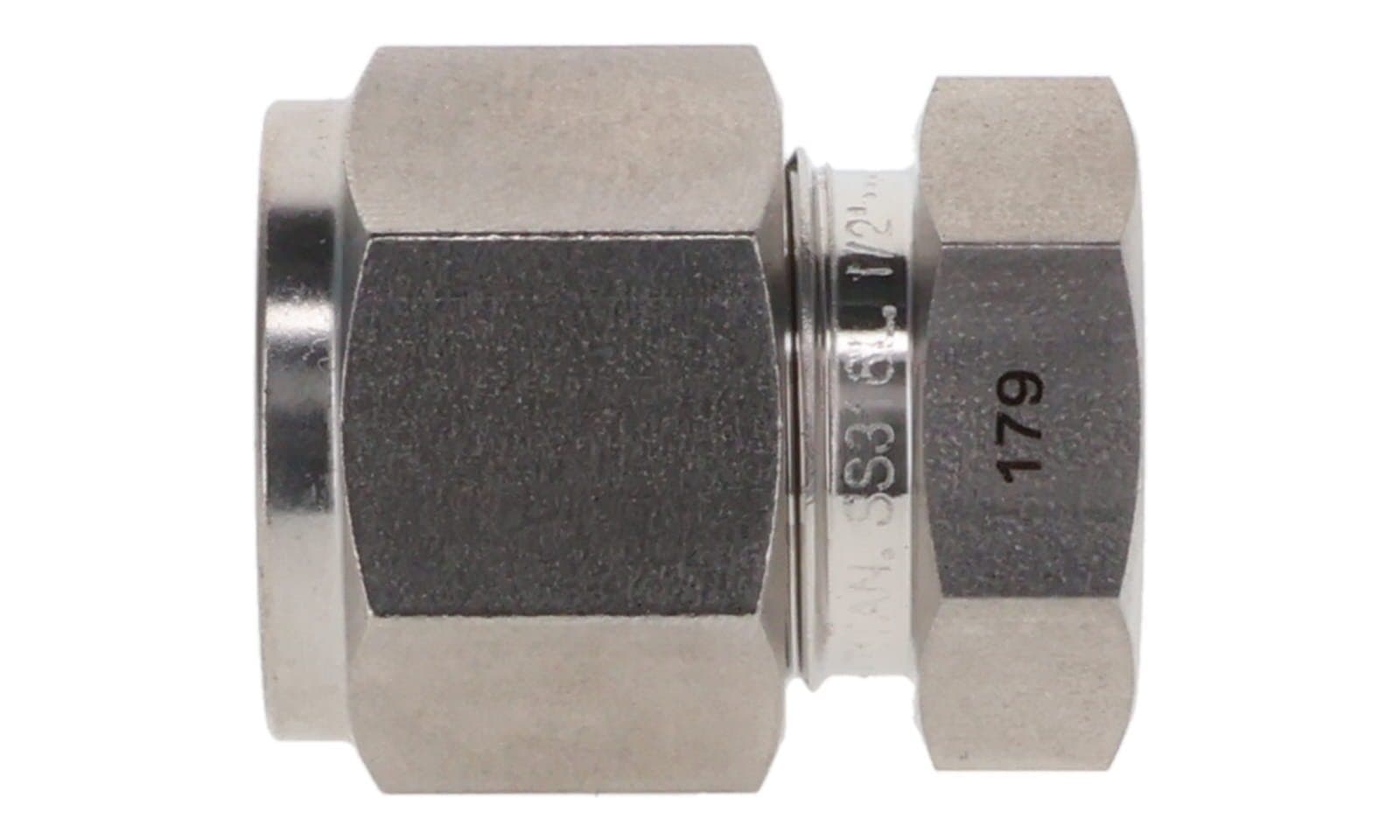 IH-TF-C316 Stainless Double Ferrule CapIndus Hydraulics
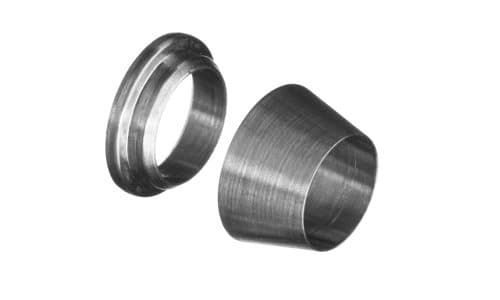 IH-TF-FS316 Stainless Double Ferrule Ferrule Set (Front and Back)Indus Hydraulics
 IH-TF-MCN-SF316 Stainless Single Ferrule Male Connector, Tube × NPT MaleIndus Hydraulics
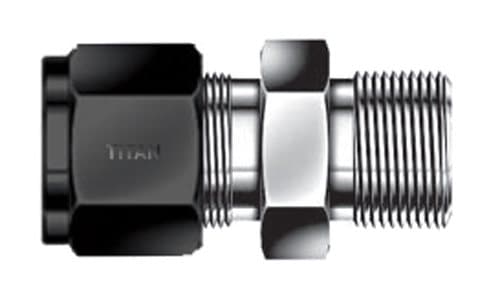 IH-TF-MCR-SF316 Stainless Single Ferrule Male Connector, Metric Tube × BSPT MaleIndus Hydraulics
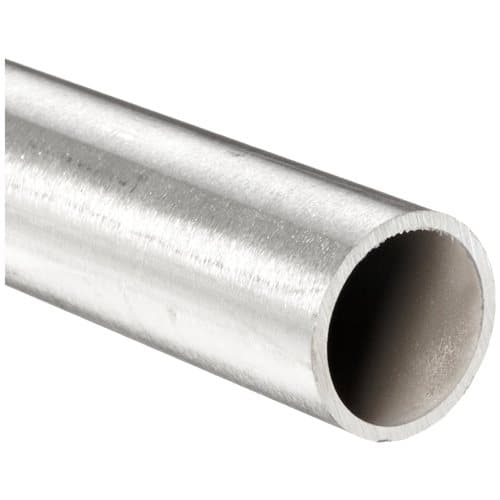 IH-TB-ST6316 Stainless Steel Seamless Tubing, InchIndus Hydraulics