
Skip to content

Topic

Instrumentation & gauges

An instrument line is the smallest pipework on the plant and the one most often built wrong: a ferrule from one maker in a nut from another, a tube a shade too hard, a gauge whose pointer lives at the top of its dial. These guides cover the details that decide whether a line holds for twenty years or weeps by the end of commissioning.

Articles
12
Reading
82 min
Updated
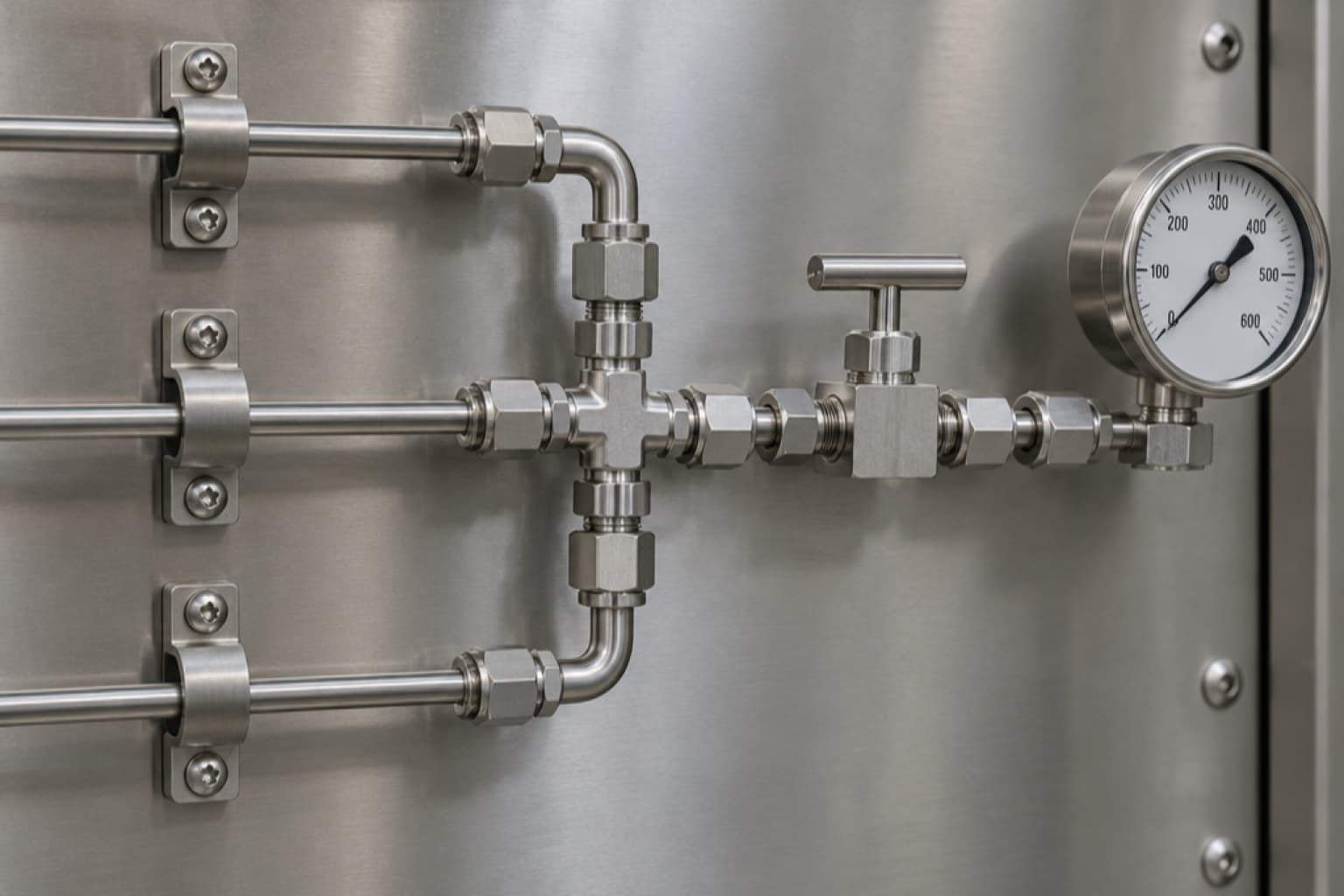
A stainless instrument panel with small-bore tubing runs joined by compression tube fittings, valves and pressure gauges

Start here

Instrumentation tube fittings: how compression fittings work, the families, and how to choose them

A compression tube fitting joins small stainless tube to a valve, gauge or transmitter with nothing but a nut and one or two ferrules — and it only works if tube, ferrules, nut and body were made to work together. How the ferrules seal and grip, single against double ferrule, cutting rings, sizes, materials, end connections and the rules that keep an instrument line tight for decades.

8 min read

Topic guide

The short version

What each part of an instrument line has to get right
PartThe decisionWhat goes wrong
Tube fittingSingle or double ferrule, one maker throughoutIntermixed parts, under- or over-tightening
TubingHighlightedGrade, OD, wall, hardnessTube too hard or too thin for the fitting and pressure
End connectionNPT, BSP, SAE straight thread, weldWrong thread family, taper into parallel
GaugeRange, accuracy class, fill, connectionPointer at full scale, flutter, wrong wetted material

Building an instrument line?

Send the tube OD and wall, the end connections and the pressure and temperature. We will quote the fittings, tube and gauges from one maker, with material certificates if the project needs them.

Plant-down? Call +971 52 2477942 — 24/7