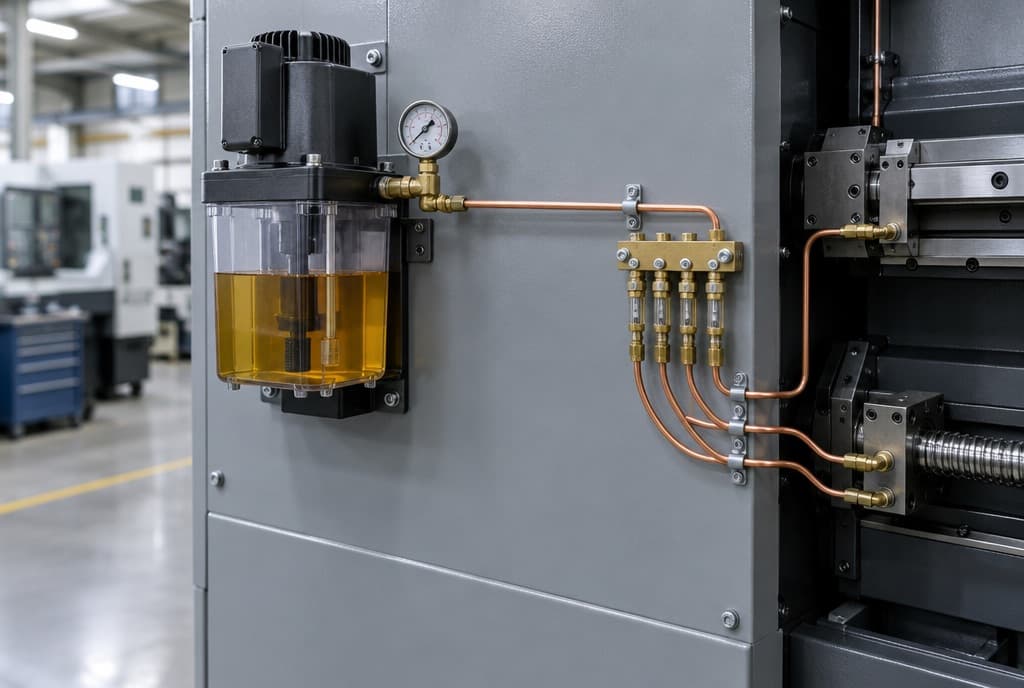
Bijur Delimon defines a centralised lubrication system as one that delivers controlled amounts of lubricant to multiple points on a machine while it is operating. Every system has the same three parts — a pump and reservoir, a distribution network, and a device at or near each point that meters the dose — and the type of system is named after that metering device. Choosing the type comes first; the pump follows from it.
/01Five ways to split the flow.
| System | What meters the dose | Lubricant | Typical use |
|---|---|---|---|
| Single-line resistance (SLR)Highlighted | Meter or control unit (a calibrated restrictor) at each point | Oil | Machine tools and small to medium machines, up to about 100 points |
| Positive displacement injector (PDI) | Injector discharges a fixed shot, then resets when the line vents | Oil, fluid grease | Industrial and mobile machines; points easy to add or remove |
| Series progressive | Divider segments discharge in a fixed sequence | Oil, grease to NLGI 2 | Mobile plant and industrial grease systems |
| Dual-line (Dualine) | Measuring valves worked by two main lines in turn | Light oil to NLGI 2 grease | Steel, pulp and paper, mining; large point counts and long lines |
| Multi-line (direct feed) | One pumping element per point | Oil, grease | Machines with a few individually fed points; can also supply progressive dividers |
Single-line resistance. The pump pressurises one main line — typically 5/32″ tube on Bijur systems — and a resistance fitting at each point lets through its share. Bijur’s SLR brochure is explicit that the amount at each point is apportioned by the fitting, not the lubricator; the pump only sets the total available. Cyclic systems fire at intervals and use type F meter units; continuous systems run constantly through type C control units. A SureFire II SLR pump runs at a 75 psi relief setting, and Bijur rates SLR systems at up to 100 points. The oil must be clean mineral oil of 20–2,000 cSt that passes a 25–40 micron filter.
Positive displacement injectors. Each injector stores a fixed volume. When the pump pressurises the line every injector fires its shot; a pressure switch stops the motor, and a quick-release valve vents the line to the reservoir so the injectors spring back and refill. Bijur’s ZEM injectors range from 0.01 to 1.5 cc per cycle and need 220 psi at the injector to fire. Because each injector meters its own shot, points can be added to or removed from the system without redesigning it.
Series progressive. A divider block is a stack of piston segments; each segment completes its stroke and discharges to its point before the next one moves. If any outlet blocks, the sequence stops, so a single cycle switch on one segment proves every outlet. Bijur’s PVB divider gives a fixed 0.20 cc per outlet per cycle, with 6 to 20 outlets that can be combined for larger doses.
Dual-line. Two main lines run past measuring valves mounted close to the points. A reversing valve pressurises line 1, then line 2; each change drives the valve pistons and discharges a set, adjustable volume. Farval DD and DM valves are rated 3,500 psi, and a blocked branch does not shut down the rest of the system. Bijur calls Dualine economical above 20 bearing points.
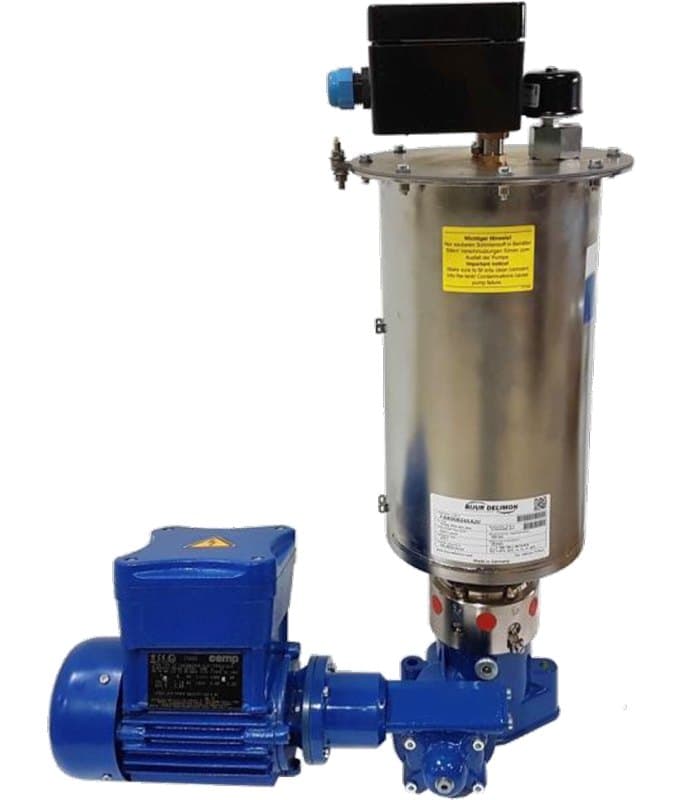
Multi-line. The pump has one element per outlet and feeds each point directly. The FZ-A serves up to 12 points this way, and a ZP5000 up to 16 at 160 bar; either can also supply progressive dividers to reach more points. A working outlet on a multi-line pump must never be plugged.
/02Oil or grease.
Bijur’s rule of thumb: oil systems are used mainly on stationary manufacturing equipment such as CNC machines, and grease systems mainly on mobile units — trucks, mining and construction plant. The lubricant then narrows the system type:
- SLR is oil only. The resistance fittings depend on oil flowing through a restriction.
- PDI takes oil or fluid grease. The SureFire PDI pump handles oil of 20–1,500 cSt and soft greases of NLGI 000 and 00.
- Progressive, dual-line and multi-line take grease — typically up to NLGI 2 — as well as oil.
Grease grade comes from the bearing, not the system — see grease selection by base oil, thickener and NLGI grade — but the system must be able to push it. Check the pump’s NLGI range against the grease before you order.
/03What drives the pump.
- Electric AC — single- or three-phase motors for plant. SureFire II, V5, GPO and TM-1 oil pumps; BM-B and BS-B grease pumps for dual-line and large systems.
- Electric DC — 12 or 24 VDC for mobile machines. MultiPort II takes up to three pumping elements, is rated IP69K and runs from its own controller, an external one or the machine PLC; Dynamis Maxx and CLP are the other DC grease pumps.
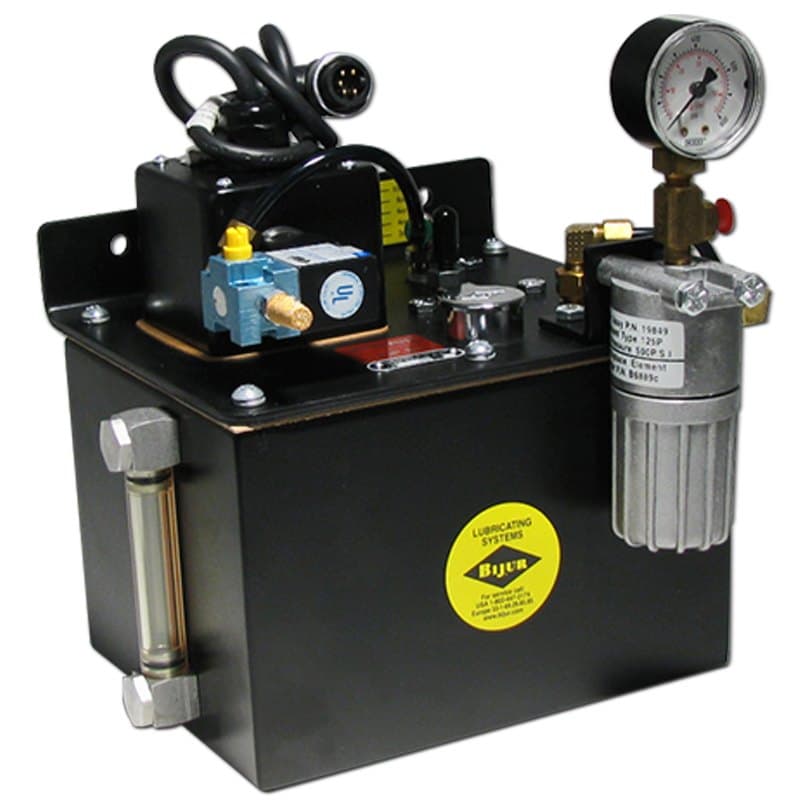
- Compressed air — air-operated piston pumps cycled by a 3/2 solenoid valve. The AirMatic discharges 2–10 cc of oil per stroke into SLR, PDI or progressive systems; Bijur specifies dry air through a filter-regulator-lubricator.
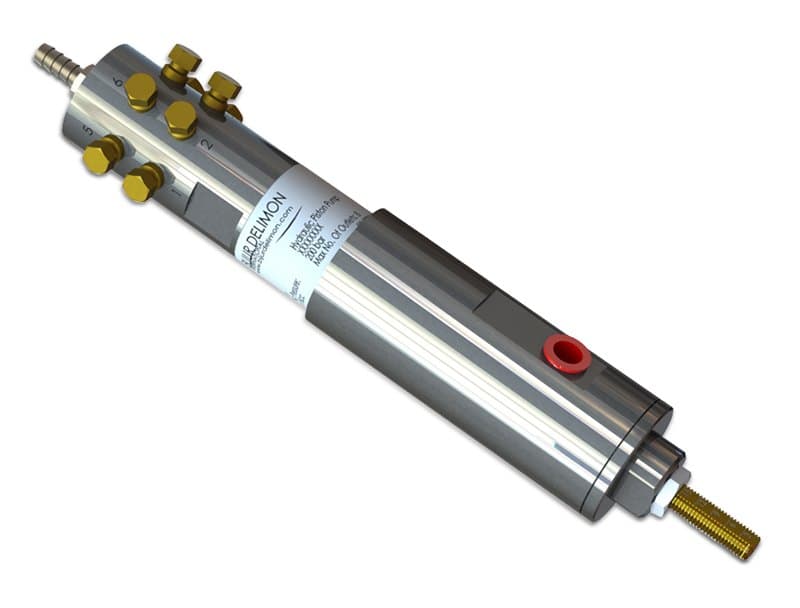
- Machine hydraulics — the PulseFire is plumbed into a regularly cycled actuator line and dispenses up to 15 cc on every actuator stroke, with no electrics at all.
- Mechanical — driven by the machine itself. Bijur’s rotary gear pumps run from a shaft at 20–1,000 rpm, giving about 50 cc/min per 100 rpm; the FZ-A can be driven by ratchet or rotary drive, so output follows machine speed without a separate controller.
Where grease is fed straight from the drum, an Electric Barrel Pump (to 300 bar, AC or DC) can replace an air or hydraulic barrel pump on progressive, injector or Dualine systems. For manual and drum pumps, see grease and oil drum pumps and manual lubricators.
/04Chains.
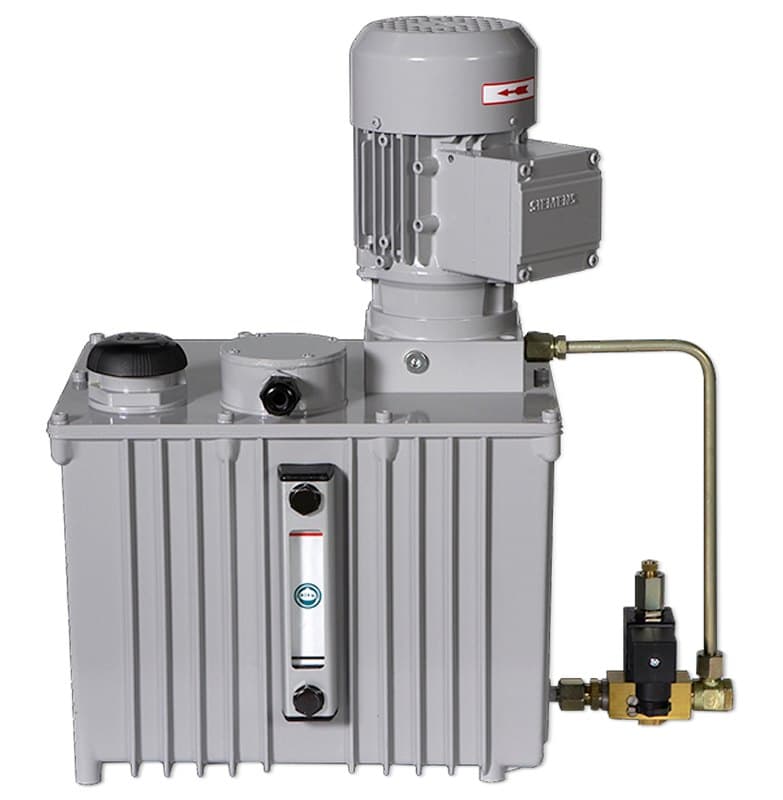
A moving chain cannot be piped, so the lubricant has to be placed on it in flight. Bijur Delimon’s WS-E is a gear pump unit for chains, joints, rollers and hinges. With ZE-E dynamic dividers it places a metered drop on the moving part — up to seven per second, depending on viscosity — using mineral oil of 40 to 900 cSt at up to 30 bar. The furthest ZE-E divider must be within 5 m of the pump. On agricultural machines the PulseFire does the same job hydraulically, through meter units and brushes.
/05Choosing, and proving it works.
Work through the machine in this order:
- Points and their demand. List each point, what it is (bearing, slide, pin, gear, chain) and how much it needs. SLR suits up to about 100 closely grouped oil points; PDI suits machines where points will be added later; progressive suits grease on mobile plant; dual-line suits large plants with long main lines.
- Lubricant. Oil viscosity in cSt at operating temperature, or grease NLGI grade. This rules system types in or out (section 02).
- Power available. Mains AC, 12/24 VDC, shop air, machine hydraulics or a drive shaft.
- Environment. Outdoor and wash-down duty, temperature, and hazardous areas — the FZ-A and FZ-B come in ATEX versions.
Reservoir and monitoring. Size the reservoir for the refill interval you want; The FZ-A and FZ-B take an ultrasonic level switch and fill port so the reservoir can be refilled automatically. Low-level switches are standard or optional across the range, and the controller should treat a low level as a fault. Pressure proves delivery: SureFire PDI pumps carry a pressure switch that ends each cycle, DC41 Dualine stations reverse on a pressure switch in each main line, and progressive systems are proved by the cycle switch on the divider. A system that cannot report a missed cycle will fail without anyone noticing.
Common questions
- What is a centralised lubrication system?
- A system that feeds measured amounts of lubricant to many points on a machine from one pump and reservoir, usually automatically and while the machine is running.
- What is the difference between SLR and PDI?
- In SLR, a restrictor at each point shares out oil from a low-pressure line. In PDI, each injector discharges a fixed shot when the line is pressurised and resets when the pump vents the line; PDI also takes fluid grease.
- Can a progressive system use grease?
- Yes. Bijur’s PVB dividers handle grease of NLGI 000 to 2 and oil of ISO VG 68 to 1500.
- When is a dual-line system worth it?
- On large plants with many points and long main lines; Bijur Delimon rates Dualine economical above 20 bearing points, and a blocked branch does not stop the rest of the system.
- How is a centralised system monitored?
- With a low-level switch on the reservoir, plus a pressure switch (SLR, PDI, Dualine) or a divider cycle switch (progressive) that proves each cycle to the controller or PLC.
- Can a lubricator run without electricity?
- Yes. Air-operated pumps run on shop air, the PulseFire runs from machine hydraulics, and gear pumps and the FZ-A can be driven by the machine itself.
What we list
Electric lubrication pumps (Bijur Delimon):
- Bijur Delimon AD-M Gear Pump Units
- Bijur Delimon BF-E Electric Barrel Pumps
- Bijur Delimon BL-3 and XV-3 PDI Lubricators
- Bijur Delimon BM-B Grease Pumps
- Bijur Delimon BS-B Dualine Grease Pumps
- Bijur Delimon Cartridge Lube Pumps (CLP)
- Bijur Delimon CS2000 Grease Central Stations
- Bijur Delimon CSK 24 VDC Progressive Lubricators
- Bijur Delimon DC4, DC40, DC41 and DC42 Dualine Central Stations
- Bijur Delimon Dynamis Maxx Mobile Grease Lubricators
- Bijur Delimon Electric Barrel Pumps (EBP and EBPD)
- Bijur Delimon FZ-A Multi-Line Grease Lubricators (incl. ATEX)
- Bijur Delimon FZ-B Progressive Grease Lubricators (incl. ATEX)
- Bijur Delimon GPO Motor-Driven Lubricators
- Bijur Delimon JS and JSP DC Lubricators
- Bijur Delimon Motor-Driven Sump Gear Pumps (MDGP)
- Bijur Delimon MultiPort Automatic Grease and Oil Lubricators
- Bijur Delimon MultiPort II Lubricators (Progressive and PDI, 12–24 VDC)
- Bijur Delimon SureFire II M12 and DIN Connectors and Cables
- Bijur Delimon SureFire II PDI Lubricators with ZEM Injectors (71800 and SFX71322)
- Bijur Delimon SureFire II Single-Phase Lubrication Pumps (SLR and PDI)
- Bijur Delimon SureFire II Three-Phase Lubrication Pumps
- Bijur Delimon TM-1 Automatic Oil Lubricators
- Bijur Delimon TM-5 and TMD-5 Automatic Oil Lubricators
- Bijur Delimon V5, V5B and V5C Motor-Driven Oil Pumps
- Bijur Delimon V5W Pump and Motor Assemblies
- Bijur Delimon WS-E Chain Lubrication Units
- Bijur Delimon ZP3000, ZP4000, ZP5000 and ZP6000 Multi-Line Pumps
Air- and hydraulic-operated lubrication pumps:
- Bijur Delimon 60:1 Pneumatic Grease Guns
- Bijur Delimon AirMatic Air-Operated Oil Lubricators
- Bijur Delimon PulseFire Hydraulic Oilers
- Bijur Delimon SKA881 Reciprocating Air Lubricators
- Bijur Delimon SureMatic Air-Operated Grease Lubricators
- Bijur Delimon TB-D Pneumatic Piston Pumps
- Bijur Delimon TS30 and TS33 Lubrication Stations (Pneumatic and Hydraulic)
Gear pumps and mechanical lubricators:
- Bijur Delimon Lubrication Gear Pumps and Gear Pump Elements (V100, PR1, R25, SF, MP100)
- Bijur Delimon Mechanical Lubricators (LQ Cable Lubricators, LeverMatic)
- Bijur Delimon Rotary-Drive Oil Gear Pumps
Service kits and spare parts for Bijur Delimon pumps and lubricators, by pump family:
- Bijur Delimon AD-M Gear Pump Unit Service Kits
- Bijur Delimon AirMatic Lubricator Service Parts
- Bijur Delimon AutoLub-M Pump Service Kits
- Bijur Delimon Barrel Pump Parts, Kits and Accessories
- Bijur Delimon BF-E and BF-G Barrel Pump Service Kits
- Bijur Delimon BM-B Pump Service Kits
- Bijur Delimon BS-B Pump Service Kits
- Bijur Delimon Cartridge Lube Pump (CLP) Service Parts
- Bijur Delimon CS2000 Station and DJ2000 Pump Service Parts
- Bijur Delimon DA Manual Lubricator Service Parts
- Bijur Delimon Dualine Station Service Parts (DC41, DJ45 and 39900 Enclosure)
- Bijur Delimon Dynamis Maxx Service Parts and Kits
- Bijur Delimon Electric Barrel Pump (EBP and EBPD) Service Parts
- Bijur Delimon FZ-A and FZ-B Lubricator Spare Parts and Kits
- Bijur Delimon GPO Lubricator Service Parts
- Bijur Delimon JS and JSP Lubricator Service Parts
- Bijur Delimon L13 Manual PDI Lubricator Service Parts
- Bijur Delimon Manual One-Shot Lubricator Service Parts
- Bijur Delimon Motor-Driven Sump Gear Pump Service Parts
- Bijur Delimon MultiPort II Service Parts
- Bijur Delimon MultiPort Lubricator Service Parts
- Bijur Delimon PM2 Oil Transfer Pump Service Kits
- Bijur Delimon PM3 55:1 Grease Pump Service Parts
- Bijur Delimon PM35 Grease Pump Service Kits
- Bijur Delimon PM4 Oil Pump Service Kits
- Bijur Delimon PM45 Drum Pump Service Kits
- Bijur Delimon PM60 Drum Pump Service Kits
- Bijur Delimon PulseFire Hydraulic Oiler Service Parts
- Bijur Delimon Service Parts and Kits for Older Bijur Lubricators
- Bijur Delimon SKA881 and DPG Pneumatic Dualine Pump Service Parts
- Bijur Delimon SureFire II Service Parts and Kits
- Bijur Delimon SureMatic Lubricator Service Parts
- Bijur Delimon TB-D Piston Pump Service Kits
- Bijur Delimon TM-1 Lubricator Service Parts
- Bijur Delimon TM-5 and TMD-5 Lubricator Service Parts
- Bijur Delimon TS30 Lubrication Station Service Parts
- Bijur Delimon WS-E Chain Lubrication Unit Service Kits
- Bijur Delimon ZP3000 to ZP6000 Pump Service Kits
Centralised lubrication pumps
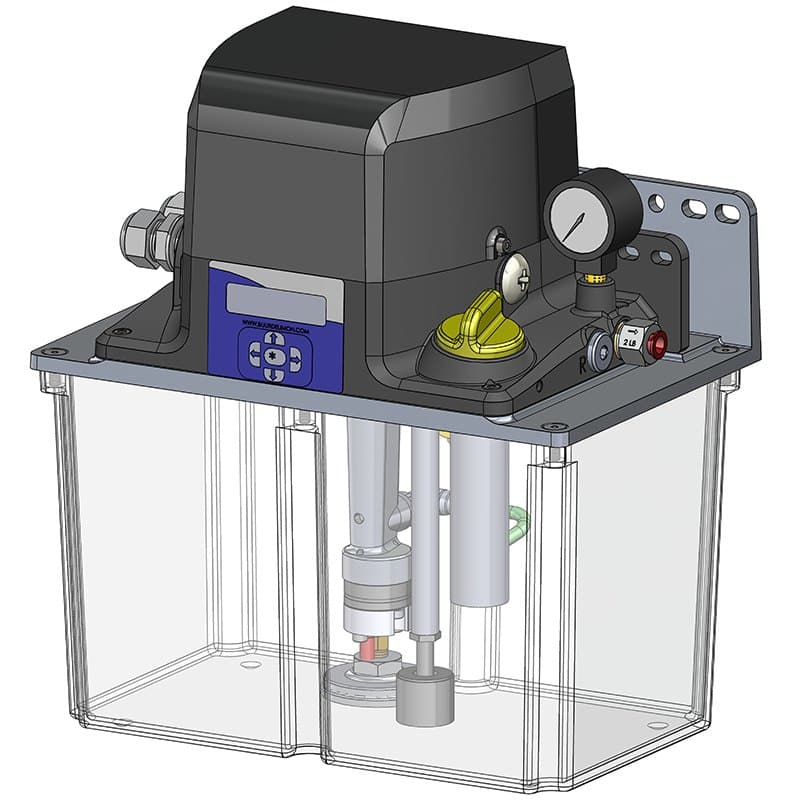 IH-BD-SFX1Bijur Delimon SureFire II Single-Phase Lubrication Pumps (SLR and PDI)Bijur Delimon
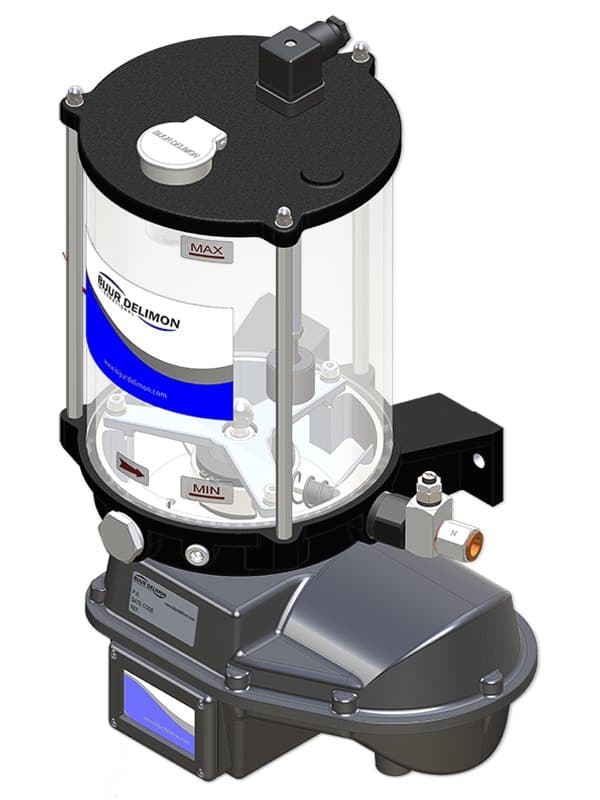 IH-BD-MP2Bijur Delimon MultiPort II Lubricators (Progressive and PDI, 12–24 VDC)Bijur Delimon
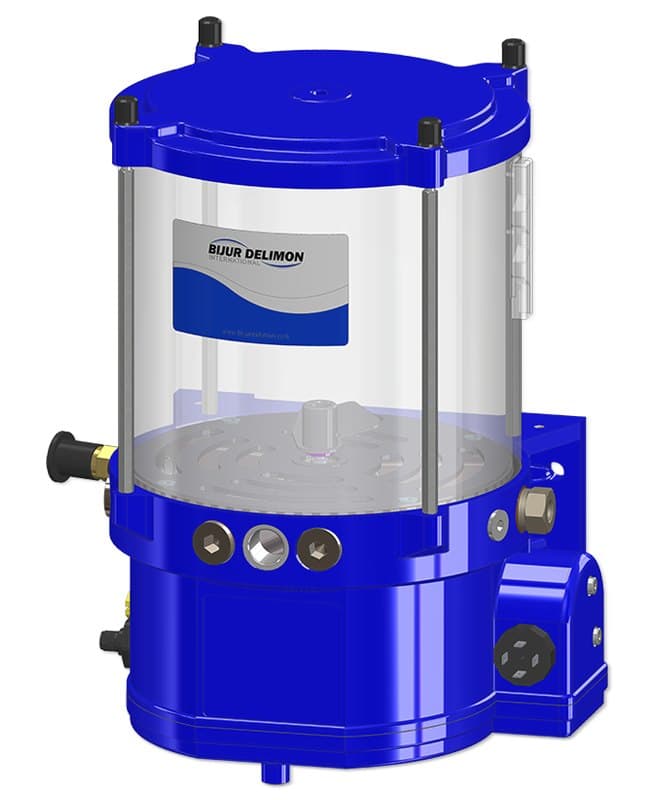 IH-BD-DYXBijur Delimon Dynamis Maxx Mobile Grease LubricatorsBijur Delimon
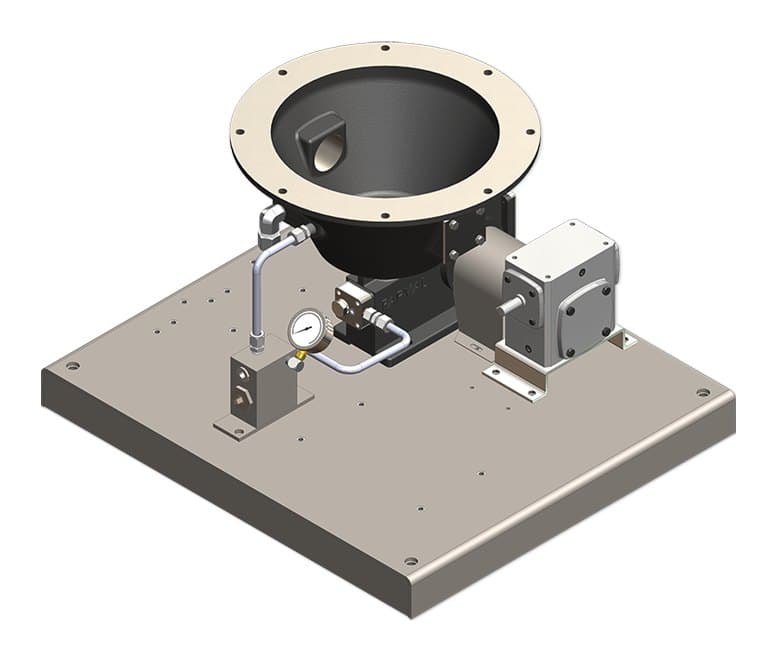 IH-BD-DCBijur Delimon DC4, DC40, DC41 and DC42 Dualine Central StationsBijur Delimon
 IH-BD-FZABijur Delimon FZ-A Multi-Line Grease Lubricators (incl. ATEX)Bijur Delimon
 IH-BD-WSEBijur Delimon WS-E Chain Lubrication UnitsBijur Delimon
 IH-BD-AIRMBijur Delimon AirMatic Air-Operated Oil LubricatorsBijur Delimon
 IH-BD-PULSEBijur Delimon PulseFire Hydraulic OilersBijur Delimon
Sources
- 1.Bijur Delimon International. Automatic Lubrication Systems FAQ. ↗
- 2.Bijur Delimon International. Single Line Resistance Systems, brochure 258. ↗
- 3.Bijur Delimon International. SureFire PDI, brochure 200. ↗
- 4.Bijur Delimon International. PVB Divider Valve, datasheet 35635. ↗
- 5.Bijur Delimon International. Farval Dualine Systems, brochure DL29. ↗
- 6.Bijur Delimon International. FZ-A Lubricator, datasheet 35214. ↗
- 7.Delimon. Central lubrication pump ZP5000, datasheet P_2006_1. ↗
- 8.Delimon. WS-E chain lubrication unit, operating instructions BA_2018_1. ↗