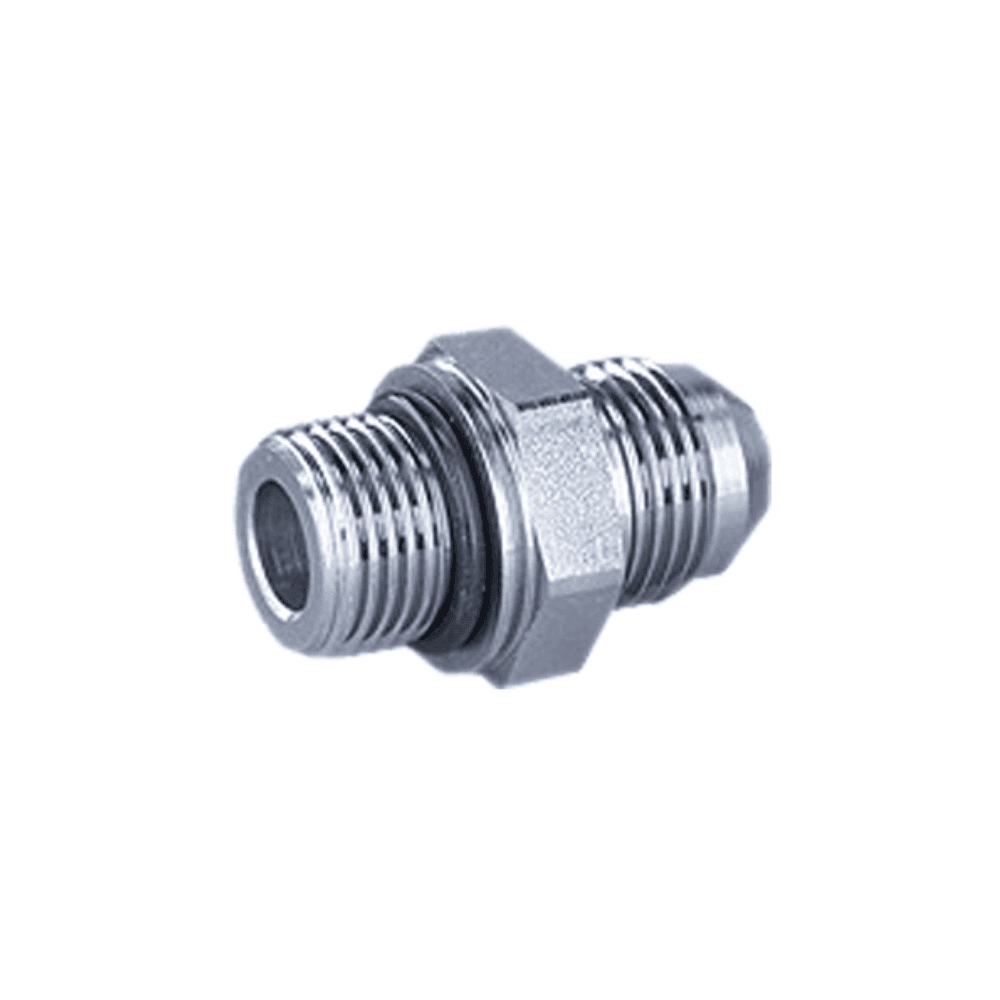
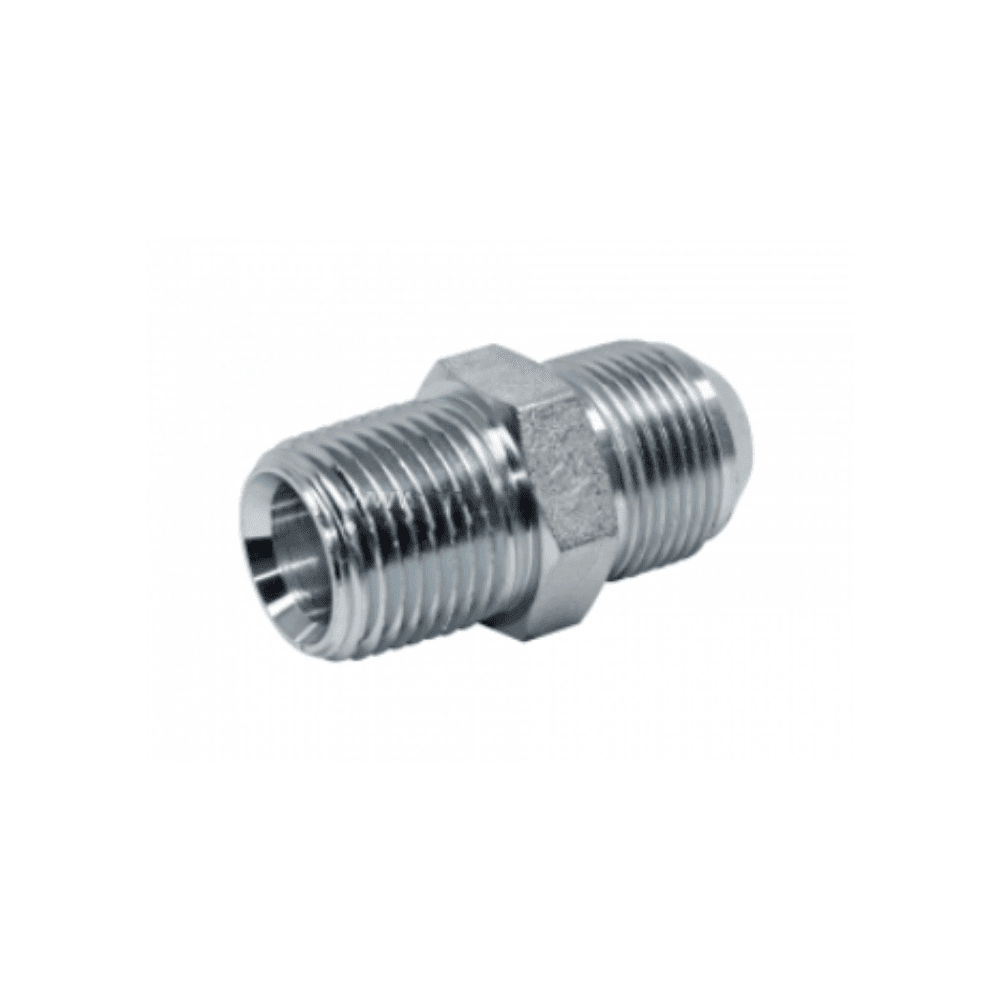
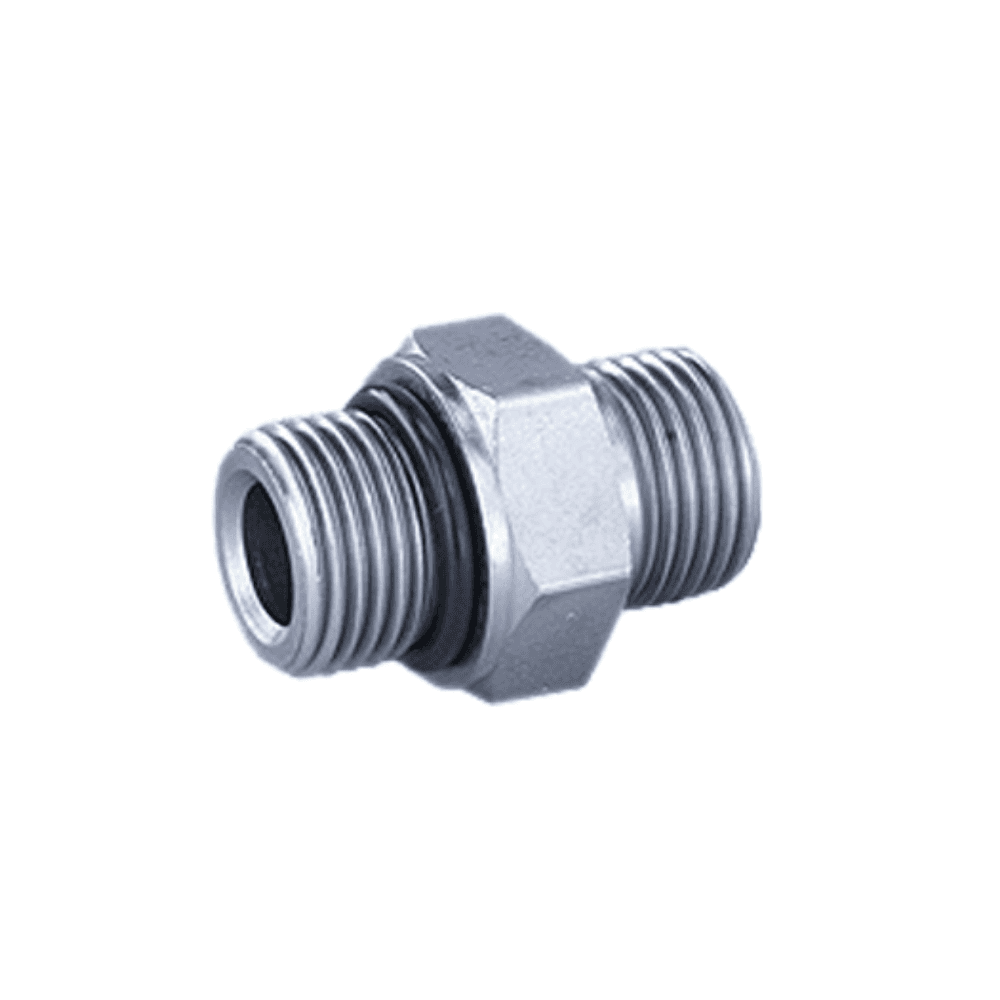
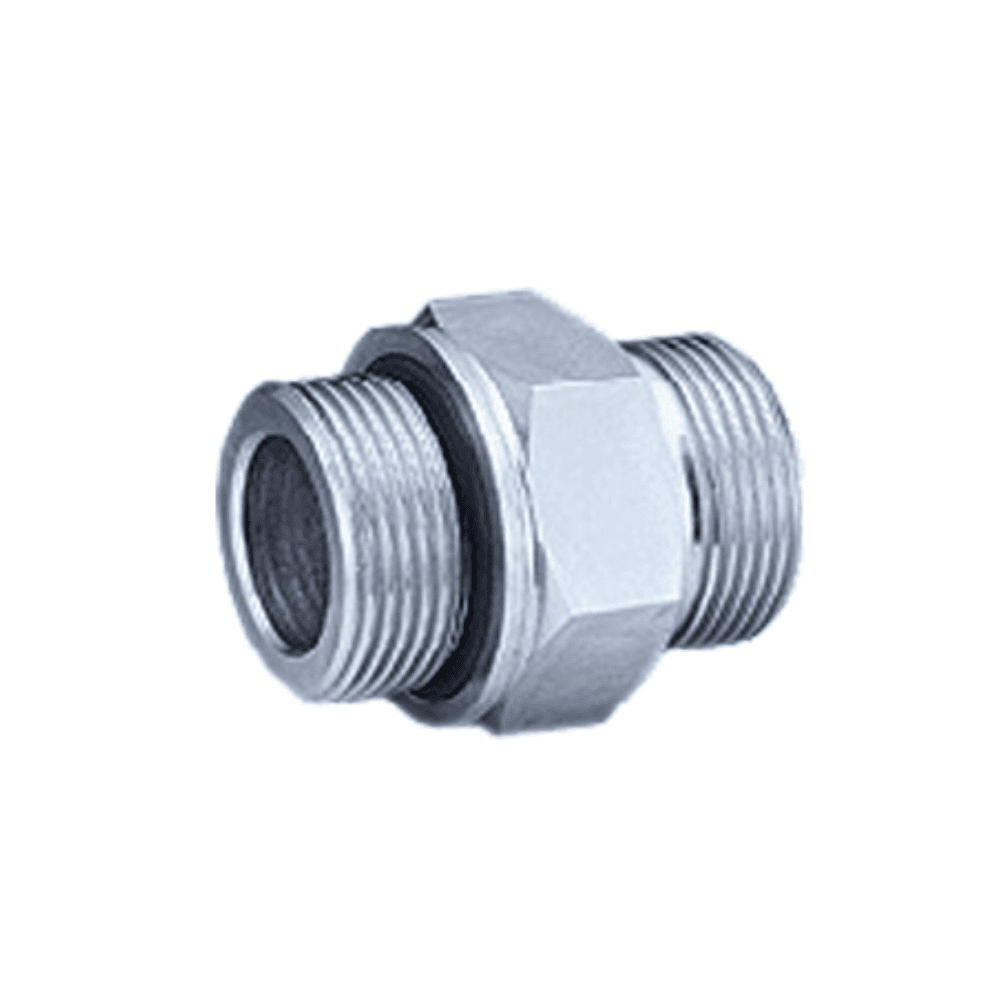
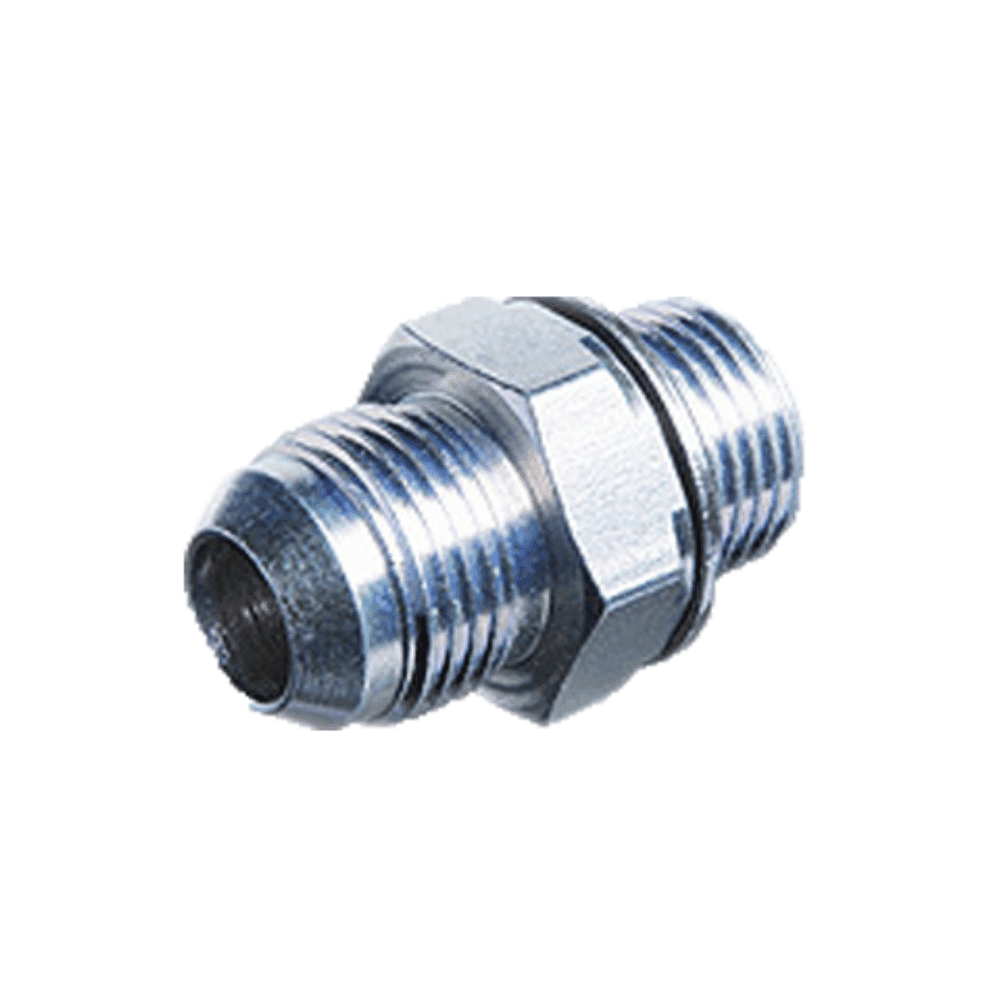
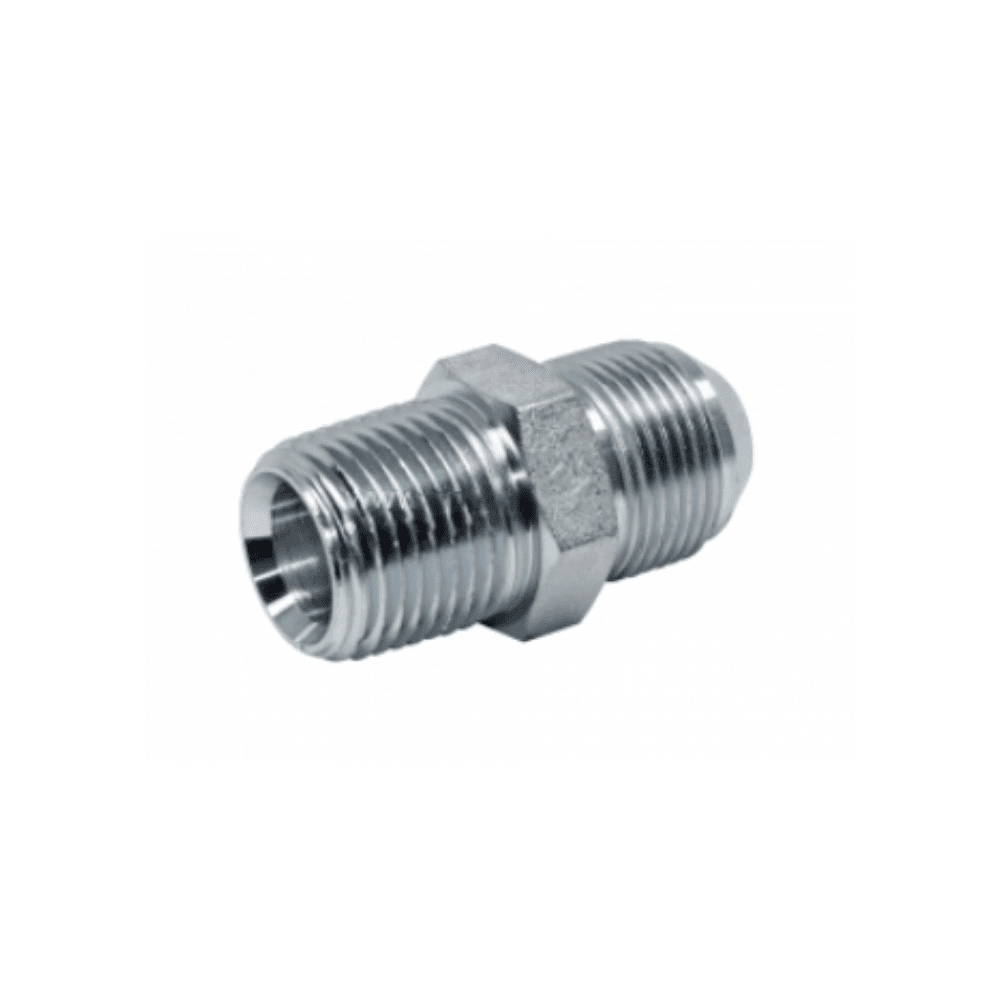
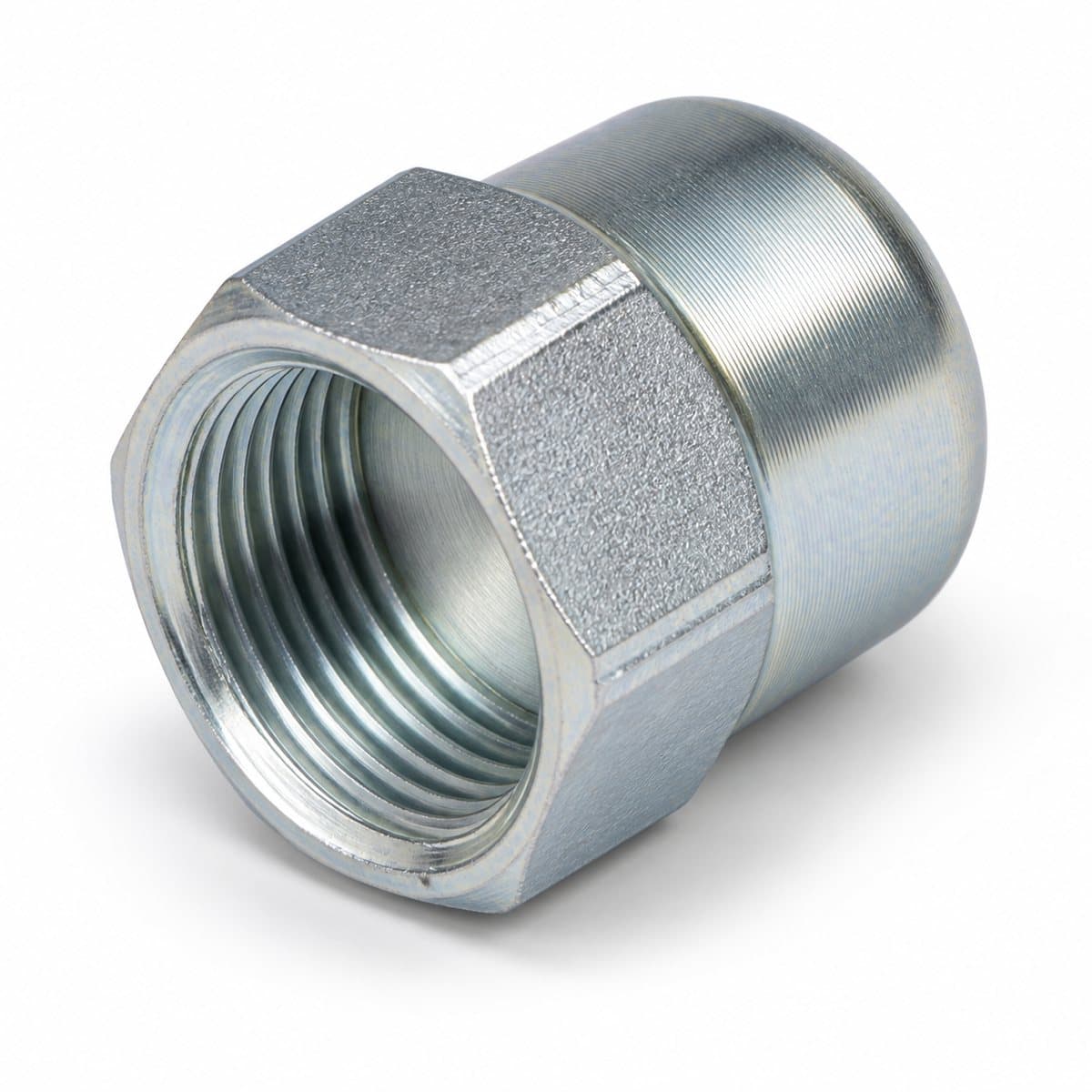
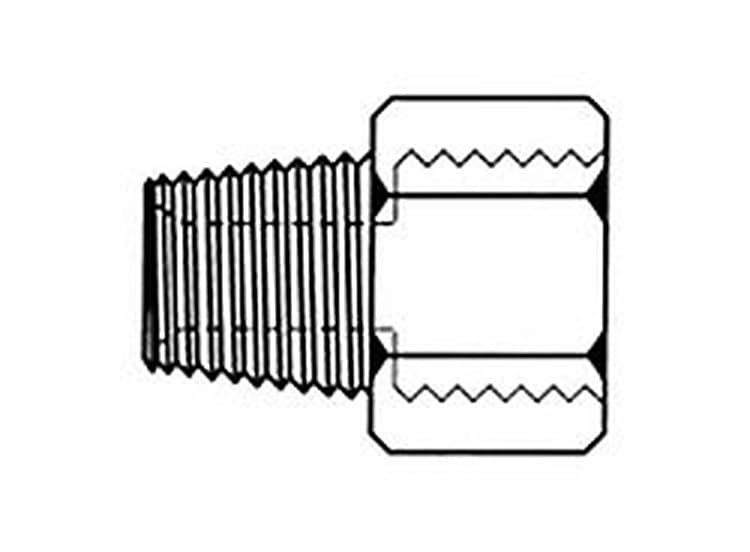
- 01How do I tell an ISO 6149 port from a DIN 3852 port?
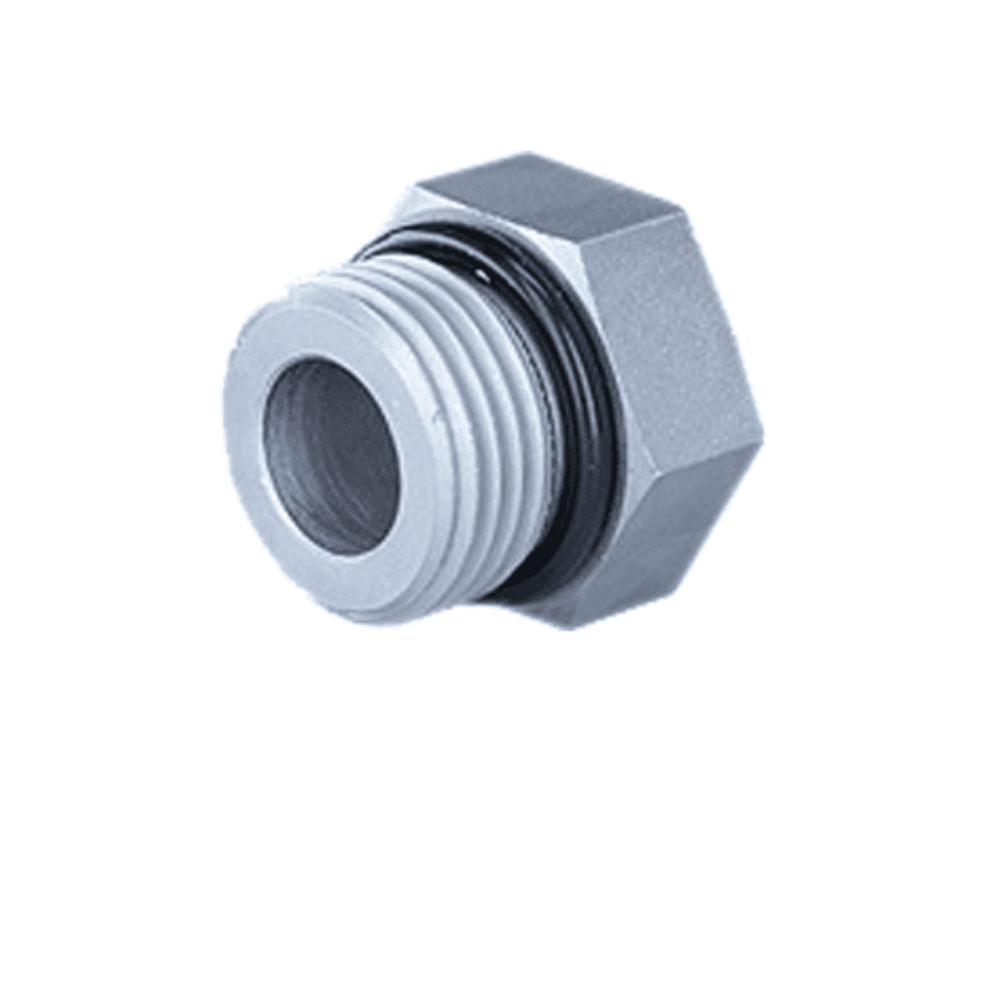
- An ISO 6149 port has a raised identification ring on its spot-face and seals on an O-ring in a truncated housing. A DIN 3852 port is a plain spot-face sealed by a bonded or elastomer seal on the stud end.
- 02Are JIS metric and DIN metric ends interchangeable?
- No. JIS metric ends seal on a 60° cone and DIN metric ends on a 24° cone; the threads can look alike, but the seats are different.
- 03Do you stock Komatsu adapters?
- Yes — metric adapters made to Komatsu’s specification sit on this shelf alongside the standard ranges.
- 04Which thread sizes does an ISO 6149 metric port use?
- ISO 6149-1 ports run from M8×1 up to M60×2. The common hydraulic sizes are M10×1, M12×1.5, M14×1.5, M16×1.5, M18×1.5, M20×1.5, M22×1.5, M27×2, M33×2 and M42×2. Measure the outside diameter of the male thread and the distance between crests to read it, then look for the raised identification ring on the port spot-face to confirm it is ISO 6149 rather than a plain DIN face port of the same thread.
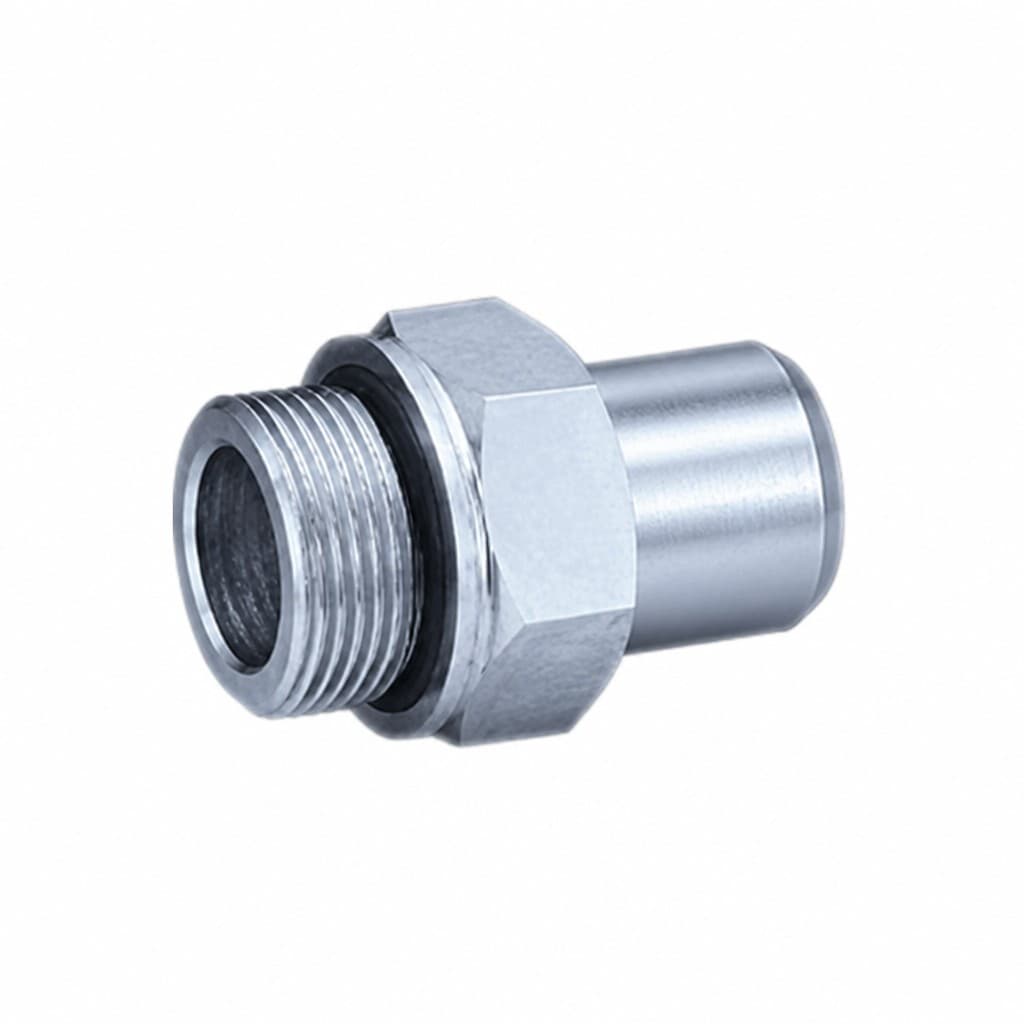
- 05What is a butt-weld tube end on a metric adapter for?
- It is a plain end machined to be butt-welded to steel tube, so a welded pipework system can be joined to a metric port or fitting. Remove every O-ring and seal before welding and fit them after the part has cooled, because the heat destroys elastomers. Match the adapter material and wall to the tube, and clean scale out of the bore before the line goes into service.
- 06Which way round do I fit an adjustable metric elbow?
- Fit the stud end into the port first, then connect the tube or hose to the other end. Back the locknut off fully, screw the elbow in by hand until the washer touches the port face, turn it back no more than one turn to aim it, then hold the body and tighten the locknut. Making up the line end first and then winding the stud in twists the line and can cut the O-ring.