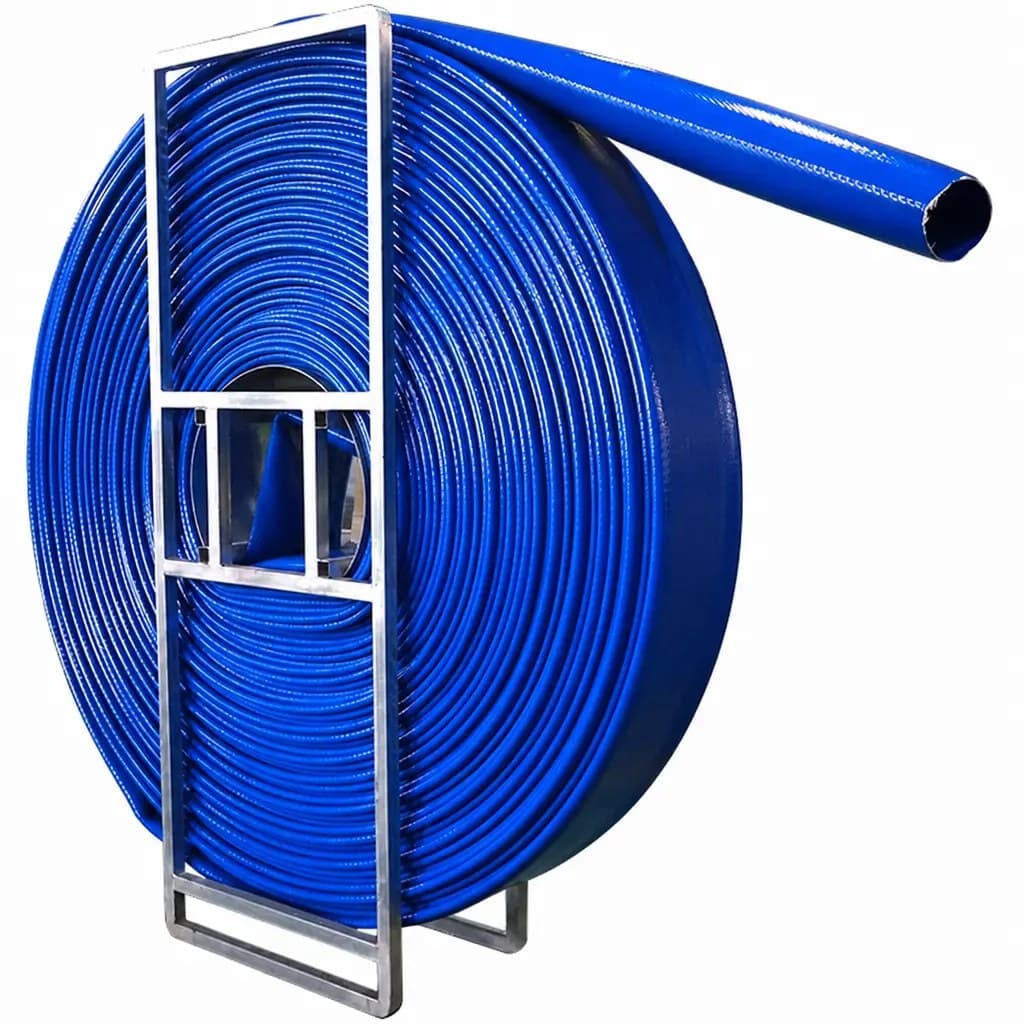
Flexible lay flat riser hose has changed borehole pump work: no pulling rig, no threaded joints, one continuous length from pump to well head. But the hose carries the whole string — pump, motor, cable and the column of water — so the installation has to be right. This guide walks through it step by step. For why flexible risers are chosen over steel and how to size one, see flexible borehole riser vs steel column pipe.
/01Before you start.
- Well: total depth, casing inside diameter, static and pumping water level, any deviation or tight spots.
- Pump: model, weight with motor, outlet thread, duty point and shut-off head.
- Setting depth: where the pump will hang, with the margin above the well bottom the pump maker requires.
- Hose: bore, length and rating. Pressure at the pump at shut-off head must be within the working pressure; the hanging load of pump, water, hose and cable must be well within the tensile strength.
- Cable: size and length for the motor and depth, plus enough at the top for the control panel.
- Equipment: reel or winding trailer, well-head clamp or support, straps, tools and lifting gear.
Our TPU well riser hose is rated from 40 bar at 1-1/4" to 18 bar at 10", with tensile strength from 3,700 kg to 60,900 kg; the heavy-duty riser has a reinforced jacket for heavier strings and continuous duty, up to 12". Send us the pump and depth if you want the rating checked.
/02Fitting the couplings.
- Cut the hose square with a sharp knife; a ragged or angled end will not seal or hold.
- Push the hose fully onto the shank of the stainless riser coupling matched to the bore.
- Close the clamp halves and tighten the bolts evenly, side to side, to the torque given for the size.
- Connect the pump with thread sealant suited to drinking water if the well supplies it.
- Fit the well-head coupling the same way once the hose is cut to length — or leave it until the pump is at depth.
/03Strapping the cable.
The pump cable runs alongside the hose and is strapped to it so it cannot tangle or hang free. Strap at regular intervals — follow the pump maker’s spacing — with the cable lying flat against the hose, not twisted around it. Leave a little slack between straps: a riser hose stretches slightly under the load of the pump and water and under pressure, and a cable strapped tight will be pulled. Protect the cable where it passes the coupling at the pump. Use straps that will not cut into the hose cover.
/04Lowering the string.
- Set the reel square to the well, with the hose paying off over a roller or guide so it does not rub on the casing edge.
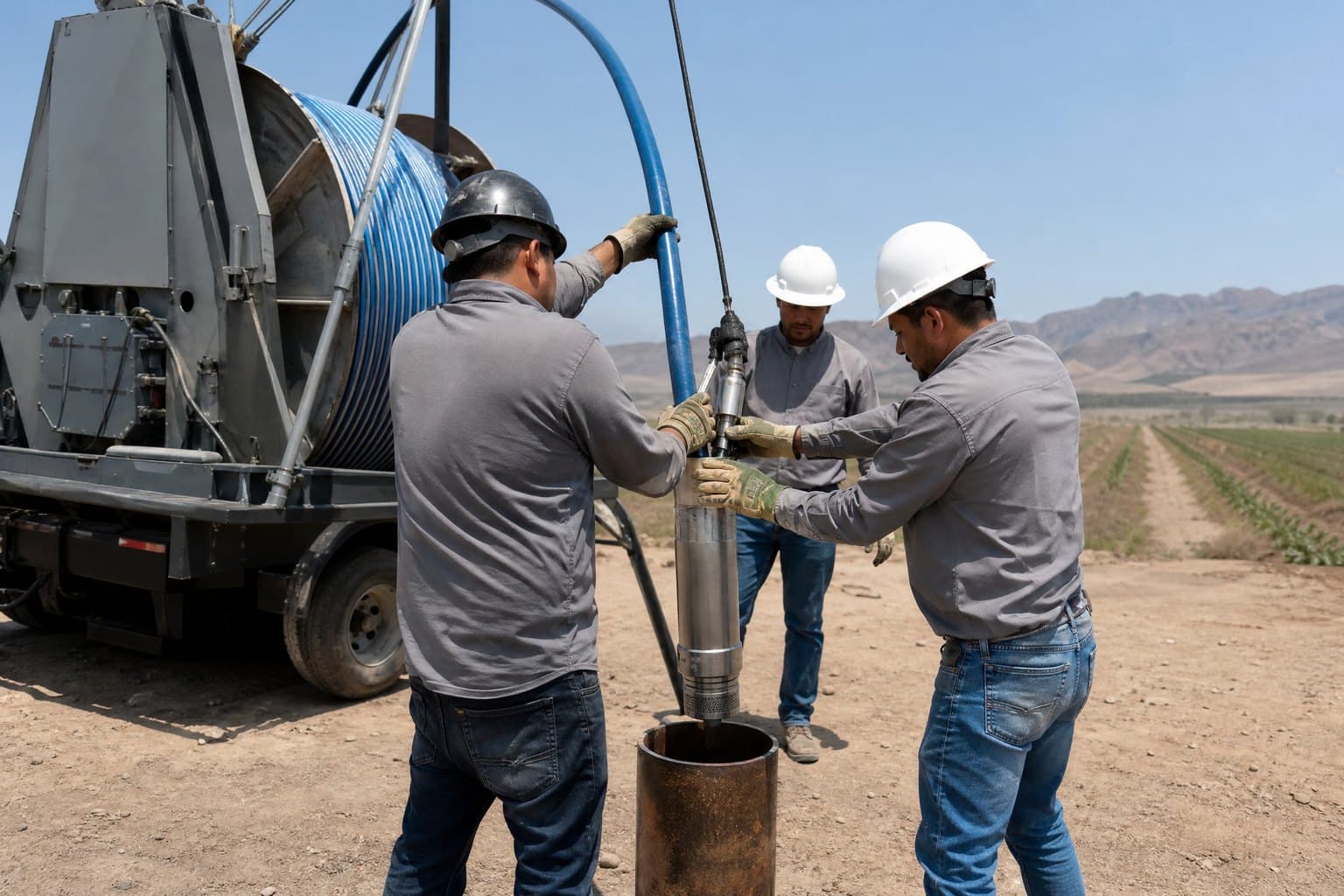
- Lift the pump over the well with the hose attached and lower it into the casing by hand or hoist.
- Lower under control with the reel’s drive and brake, strapping cable as you go. Never let the string run free.
- Watch for tight spots; if the pump stops, do not force it — lift, check and try again.
- At setting depth, clamp the hose at the well head, cut to length, fit the well-head coupling and connect to the discharge.
- Follow the pump maker’s guidance on safety ropes and torque arrestors.
A powered reel makes this a two- or three-person job. Our winding trailer carries 300 m of 2" riser with cable on a reel that takes up to 1,400 kg, with a 5.5 kW winding motor and its own 8 kW diesel generator for wells without power; the 8" winding system handles 150 m of 8" riser with a swing arm for high-yield wells.
/05Commissioning.
Start the pump against a partly open discharge valve and open it slowly, so the string takes up load and pressure gradually. Check the well head for leaks, watch the hose for any movement at the clamp, and check that the pump is delivering the expected flow and pressure. Record the setting depth, hose length, cable length and date — the next crew will need them. If the well supplies drinking water, disinfect the installation to the water authority’s procedure before it goes into service.
/06Recovering the pump.
Isolate the pump electrically, disconnect the discharge, and wind the string back onto the reel under control, cutting straps as the cable comes up. Inspect the hose, couplings and cable as they pass: abrasion where the hose rubbed the casing, cover damage, and any slippage at the coupling. Re-setting a pump deeper as the water table falls is the same operation in reverse with a longer length — the reason many well fields now use flexible risers. Store the hose clean and out of the sun between uses.
Common questions
- How many people does it take to install a flexible riser?
- With a powered reel or winding trailer, typically a crew of two or three; without one, more, and with greater risk of losing control of the string.
- How often should the cable be strapped to the hose?
- At regular intervals as the pump maker specifies, with a little slack between straps so the hose can stretch without pulling the cable.
- Do I need a safety rope?
- Our riser hose is rated to carry the pump on its own tensile strength, but follow the pump maker’s and operator’s guidance on safety ropes.
- Can the same riser be reused after recovery?
- Yes, if it passes inspection. Check for abrasion, cover damage and coupling slippage, and cut back and re-couple a damaged end.
- What couplings are used on riser hose?
- Dedicated riser couplings that carry the tensile load — our stainless riser couplings run from 2" to 12" to match the hose.
For riser installation
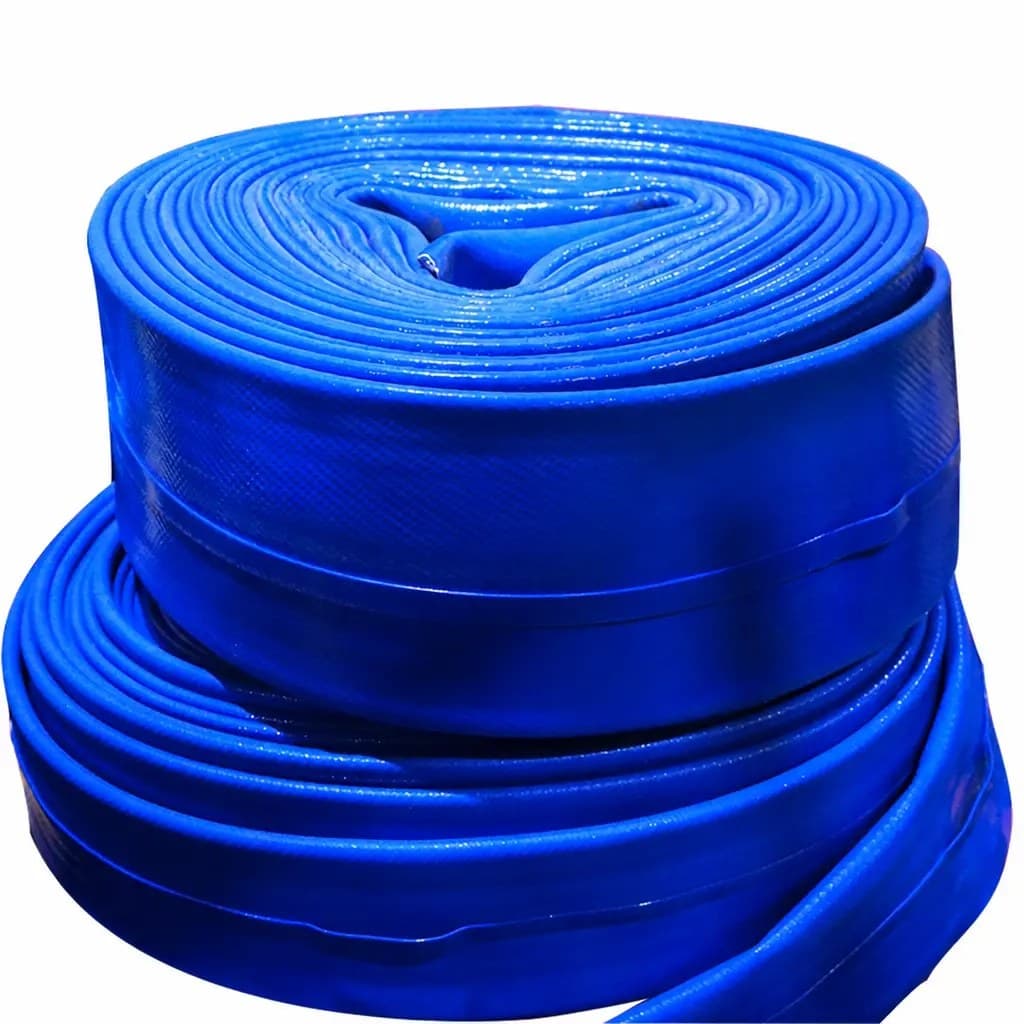 IH-LF-TWRTPU Lay Flat Well Riser HoseIndus Hydraulics
 IH-LF-TWRHHeavy-Duty TPU Lay Flat Well Riser HoseIndus Hydraulics
 IH-LF-CWRStainless Steel Well Riser Hose Coupling, 2" to 12"Indus Hydraulics
 IH-LF-EWR1Well Riser Hose Winding Trailer, 2" × 300 mIndus Hydraulics
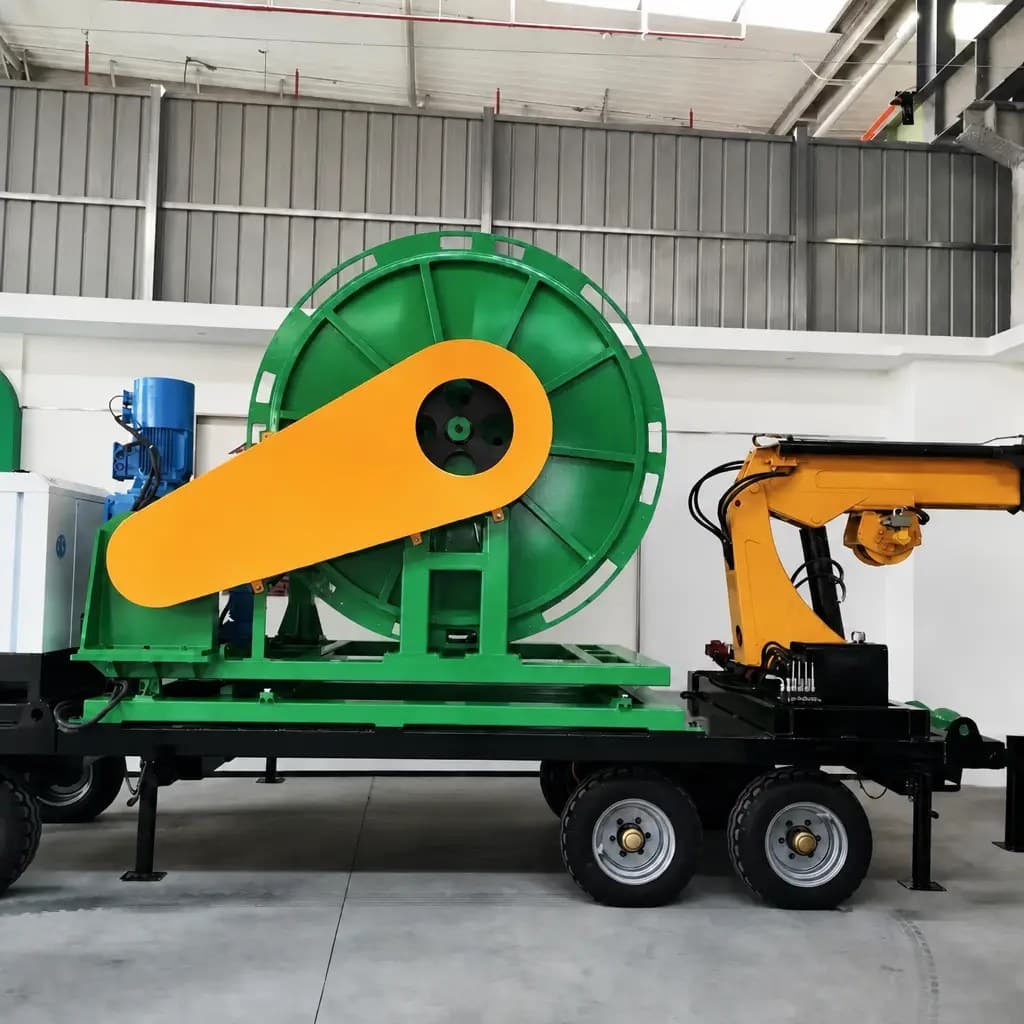 IH-LF-EWR2Large-Bore Riser Hose Winding System, 8" × 150 mIndus Hydraulics