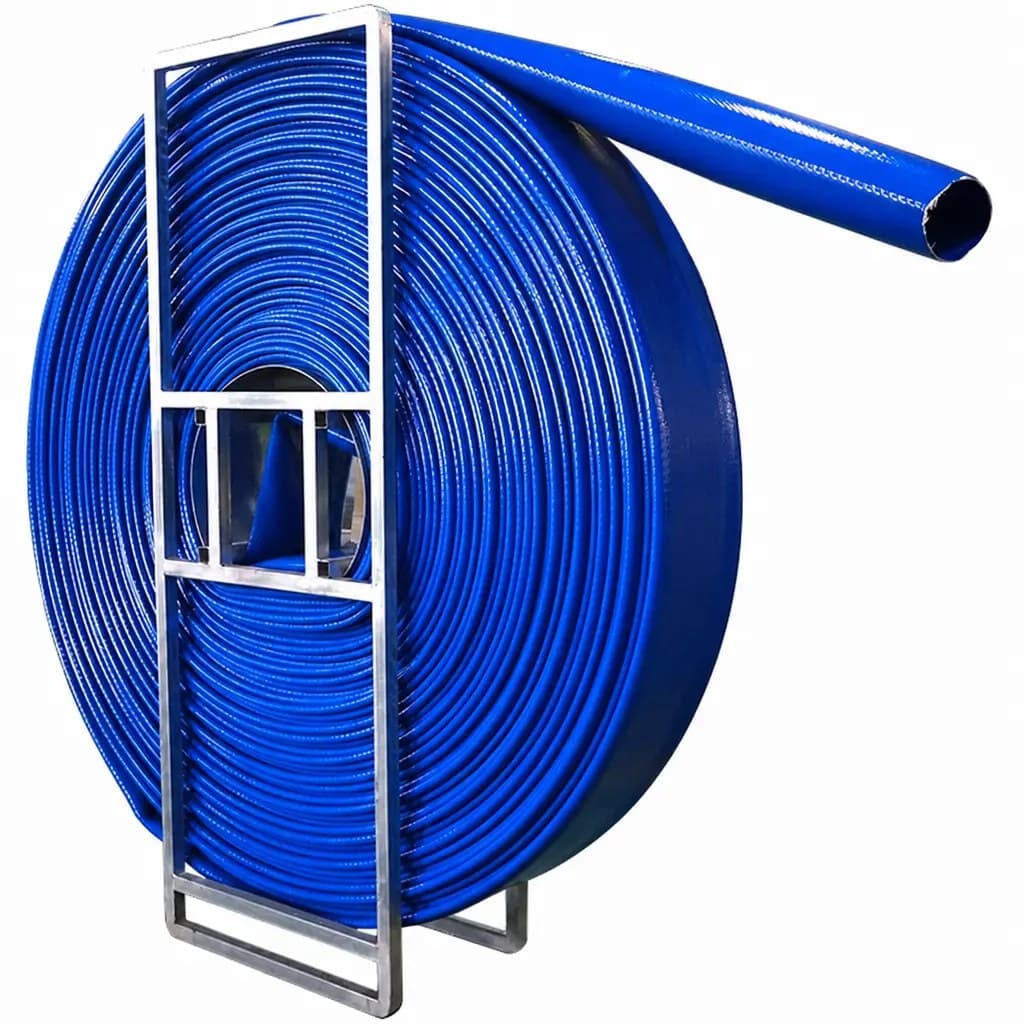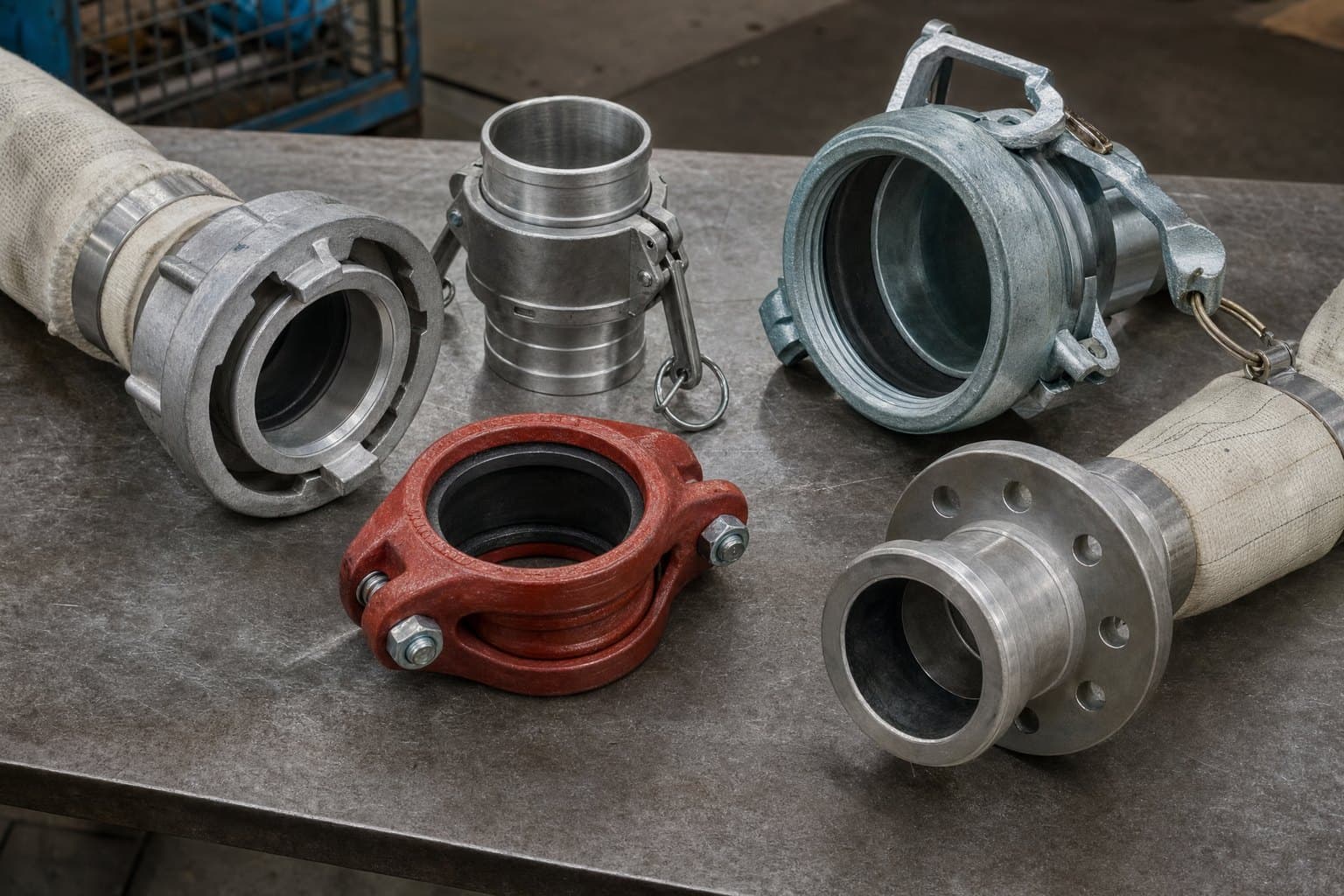
Lay flat hose rarely fails in the middle of a length. It fails where it is joined — a coupling pulled off under pressure, a band that crept, a reducer that throttled an 8" line down to 6". Choosing the coupling family and fitting it properly matters as much as choosing the hose, and the right answer changes with the bore.
/01The coupling families.
| Family | How it connects | Typical bores | Best for |
|---|---|---|---|
| Cam and groove (camlock) | Male adaptor locked by two cam arms | Up to 6" | Pump and tanker connections, quick changes |
| StorzHighlighted | Symmetrical heads lock with a quarter turn; no male or female | Up to 6" standard; 8" to 12" large-bore | Long lines of many lengths; fire and flood |
| Bauer-type | Ball-and-socket male into lever-ring female | Small to mid bores | Agriculture, irrigation, quick field joints |
| Grooved end | Grooved spigot joined by a grooved pipe clamp | 4" to 16" | Joining hose to grooved steel or HDPE pipe and manifolds |
| Flanged | Bolted flange to a matching flange | 4" to 16" | Pumps, valves, permanent or semi-permanent lines |
| Male × female (large bore) | Matching halves join directly | 8" to 12" | Hose-to-hose joints on long transfer lines |
| High-pressure male × female | Locking halves with bolted clamps, leak-tested | 4" to 12" | Frac water, high-head dewatering, oil transfer |
| Expansion ring | Ring expanded inside the hose; threaded end | 1" to 2-1/2" | Fire hose with NST, NPSH or BAT threads |
/02Small and mid bores: camlock, Storz, Bauer.
Cam and groove couplings are the most widely used quick coupling on pumps, tankers and hose: a male adaptor is pushed into a female coupler and two arms lock it. They need no tools, mate across most makes of the same size and pattern, and come in aluminium, stainless, brass and polypropylene. Their one discipline is gender — every joint needs a male and a female half.
Storz couplings are symmetrical: every head is identical, and any two lock together with a quarter turn. On a line made of many lengths that removes the most common field problem — two lengths arriving the wrong way round — which is why fire services and flood responders standardise on Storz. Our standard Storz couplings and adapters run from 1" to 6"; the large-bore Storz lay flat coupling carries the system on to 8", 10" and 12".
Bauer-type couplings join a ball-ended male into a female with a lever ring, and tolerate a few degrees of misalignment — useful on uneven ground. They are common in irrigation and agriculture, and sold as hose-shank, flanged and threaded halves.
/03Large bores: dedicated lay flat couplings.
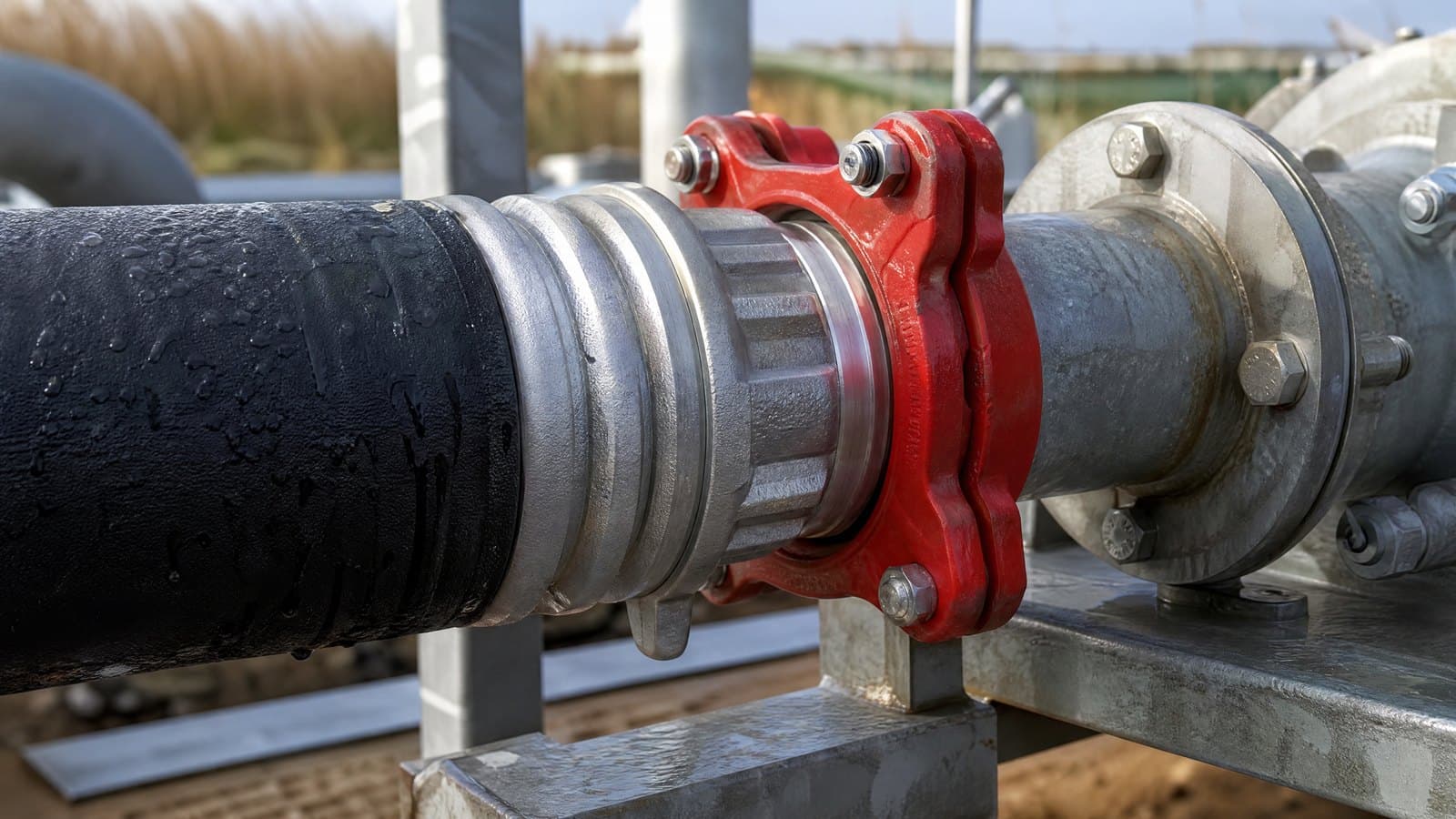
From 4" upwards a banded-on quick coupling becomes the weak point: the force trying to push it off the hose grows with the bore area. Large-bore lay flat couplings solve that with a forged shank that the hose slides over and bolted clamp halves that grip the hose wall around its whole circumference. The clamps can be removed and refitted to a new hose end, so the coupling outlives several hoses. Aluminium versions are hard-anodised against wear and corrosion.
- Grooved end (4" to 16") — the hose ends in a grooved spigot, joined to grooved pipe, pumps and valves with a grooved clamp. The usual choice where a lay flat line meets a steel or HDPE manifold.
- Flanged (4" to 16", aluminium, stainless or carbon steel) — bolts straight to a pump, valve or flanged pipe. The most secure joint for big, higher-pressure lines.
- Male × female (8" to 12") — matching halves on each hose end for fast hose-to-hose joints along a long line.
- High-pressure (4" to 12") — zinc-plated cast aluminium halves, every one air leak-tested, for frac water, high-head dewatering and oil transfer.
- Slurry (4" to 10") — knurled for a gloved grip; 4", 5" and 6" intermate without adapters, as do 7" and 8".
/04Special duties.
Borehole risers use a stainless well riser coupling that carries the weight of the pump and the water column through the hose and still lets the coupled hose coil flat. Fire hose in US-thread systems uses expansion-ring couplings — a brass ring expanded inside the hose locks the jacket into the coupling bowl — in NST, NPSH or BAT threads; elsewhere fire hose takes Storz or national instantaneous patterns.
/05Fitting a coupling so it stays on.
- Match coupling to hose. Tell the supplier the hose type and wall, not just the bore — a TPU dewatering hose and an NBR hose of the same bore have different walls, and the clamp must close on the one you have.
- Cut square. A clean, square cut lets the hose seat fully on the shank. Never push hose onto a damaged or corroded shank.
- Push fully home before closing any clamp or band.
- Tighten evenly, side to side, to the torque for the size — then check again after the first pressurisation, as the hose settles.
- Restrain the ends. On pressurised lines, especially near people or roads, secure couplings against whipping if a joint fails.
- Keep the bore full size. Reducers at each end of a large line throw away much of what the larger hose was bought for.
Two applications put couplings under particular load: frac water lines, where high-pressure couplings set the limit, and borehole risers, where the coupling carries the pump.
Common questions
- Can I put a camlock on lay flat hose?
- Yes, up to about 6", using a hose-shank camlock and bands or clamps sized to the hose. For larger bores use a dedicated lay flat coupling with a forged shank and bolted clamp.
- Why do fire services use Storz couplings?
- Storz heads are genderless, so any two hose ends connect with a quarter turn. On lines made of many lengths that saves time and avoids lengths arriving the wrong way round.
- Do different makes of Storz coupling fit each other?
- Couplings of the same Storz size are made to interconnect. Sizes are designated by their claw dimension, so confirm the size code, not just the hose bore, when mixing sources.
- How do I connect lay flat hose to HDPE or steel pipe?
- Use a grooved-end lay flat coupling and a grooved clamp to a grooved pipe end or spool, or a flanged lay flat coupling to a flange.
- Can you supply hose with the couplings already fitted?
- Yes. We cut lay flat hose to length and fit the couplings, so assemblies arrive ready to connect and tested on request.
Lay flat couplings
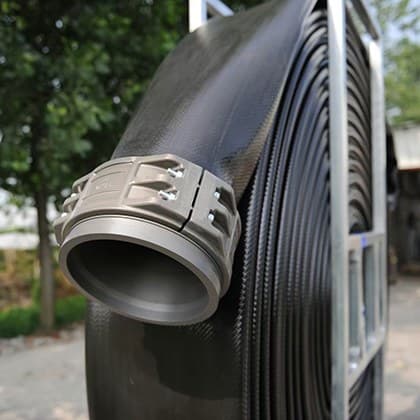 IH-LF-CVGLarge-Bore Lay Flat Hose Coupling, Grooved EndIndus Hydraulics
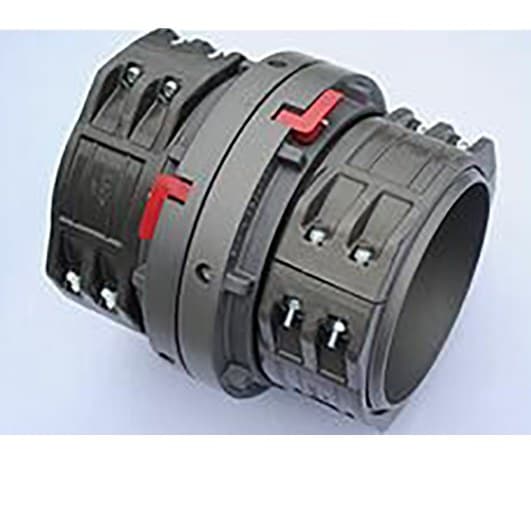 IH-LF-CSTLarge-Bore Storz Lay Flat Hose Coupling, 8" to 12"Indus Hydraulics
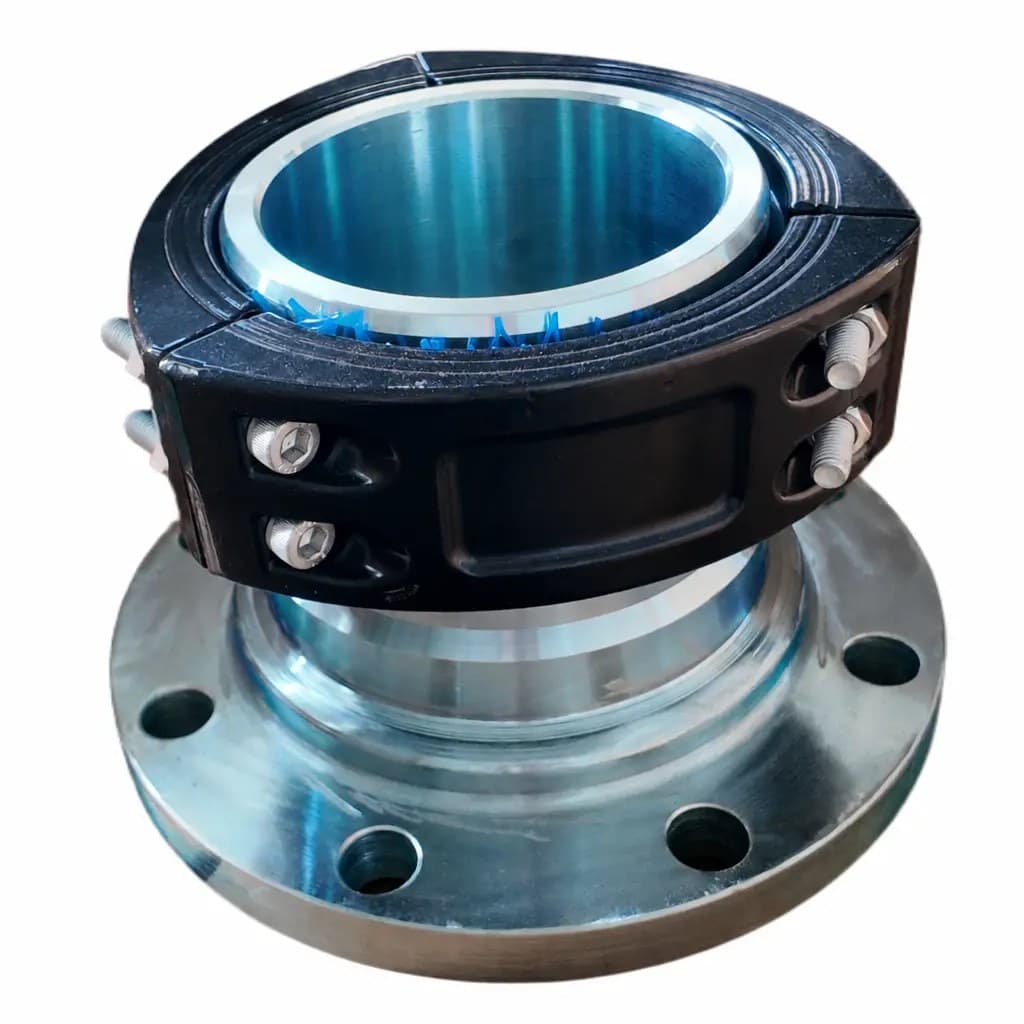 IH-LF-CFLLarge-Bore Flanged Lay Flat Hose CouplingIndus Hydraulics
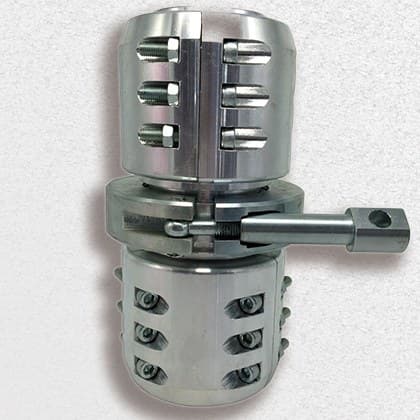 IH-LF-CHPHigh-Pressure Lay Flat Hose Coupling, Male × FemaleIndus Hydraulics
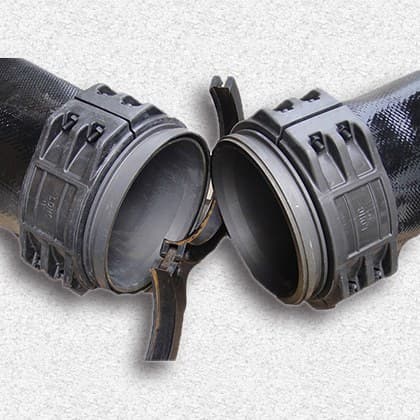 IH-LF-CFMLarge-Bore Male × Female Lay Flat Hose CouplingIndus Hydraulics
 IH-LF-CAGLay Flat Slurry Hose Coupling, 4" to 10"Indus Hydraulics
 IH-LF-CWRStainless Steel Well Riser Hose Coupling, 2" to 12"Indus Hydraulics
 IH-LF-CERExpansion Ring Fire Hose Coupling, 1" to 2-1/2"Indus Hydraulics