
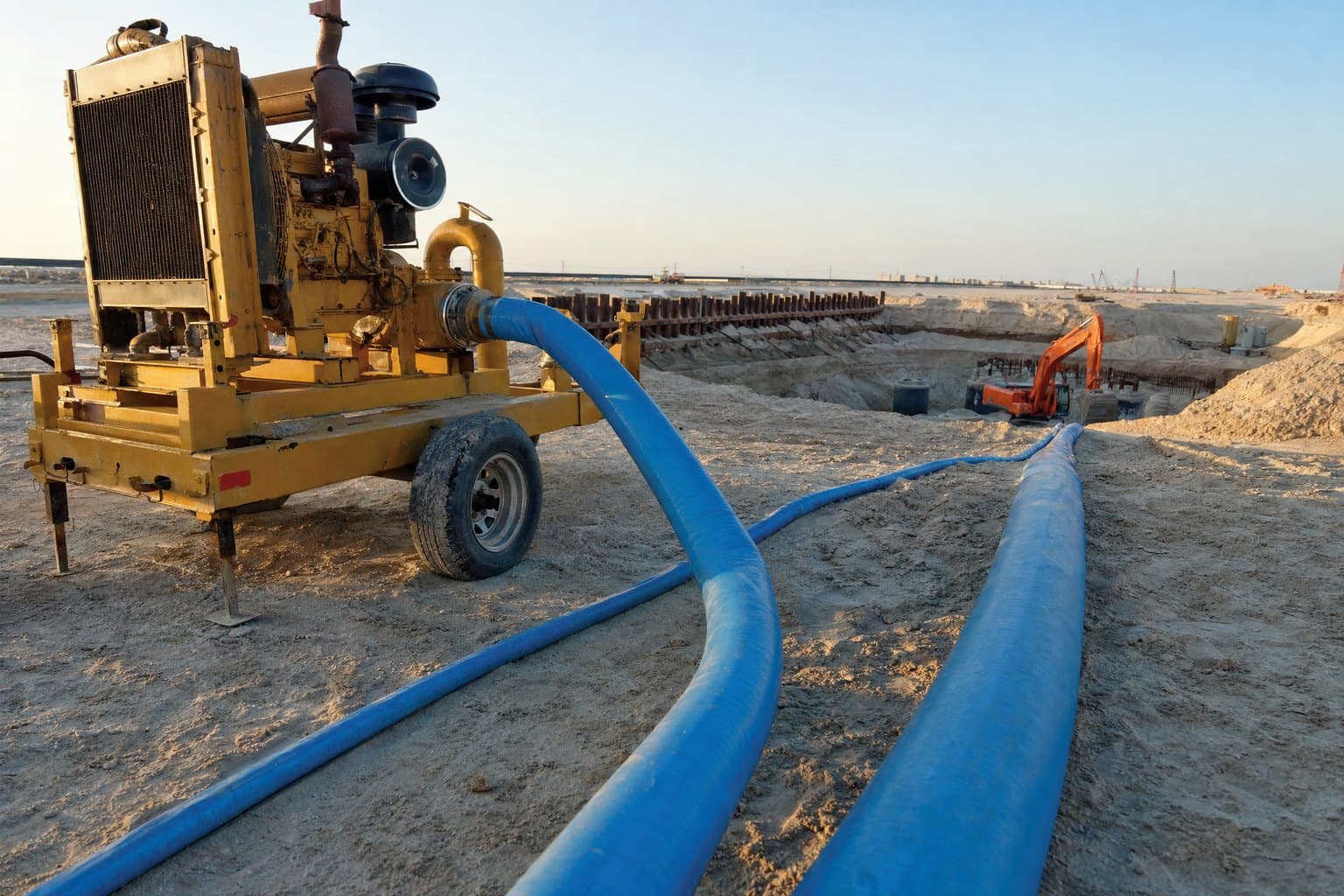
Few hoses do as many jobs as lay flat. The same basic construction carries floodwater off a construction site, frac water between ponds and well pads, a submersible pump’s output up a 200 m borehole, diesel to a drilling camp, drinking water to a relief site and liquid manure across a farm. What changes from job to job is the cover material, the pressure class, the bore and the coupling — and choosing those four correctly is most of the work.
/01What lay flat hose is.
Every lay flat hose has three layers. The jacket is a seamless tube of polyester yarn woven on a circular loom; it carries the internal pressure and, when the hose hangs in a well or is dragged behind a tractor, the tensile load. The tube on the inside seals the fluid in and decides chemical resistance. The cover on the outside takes abrasion, sunlight and weather.
How the layers are joined matters more than any single material. In through-the-weave construction the polymer is extruded through the woven jacket in one pass, so tube, jacket and cover become one wall that cannot delaminate. All of our TPU lay flat hoses are made this way. Older lined hoses glue a separate tube inside the jacket; they work, but the bond is the first thing to fail when the hose is flexed, heated or dragged for years.
/02Where it is used.
Lay flat replaces rigid pipe wherever a line has to go down quickly, move often or come back up again. These are the applications we supply it for, and the hose built for each:
| Application | What matters | Hose |
|---|---|---|
| Construction and mine dewateringHighlighted | Flow, abrasion, long runs | TPU dewatering hose (1-1/2" to 16"); NBR discharge hose |
| Frac water transfer | Large bore, pressure, fast deploy and recovery | TPU dewatering hose, 10" to 16" |
| Borehole pump riser | Tensile strength, pressure at depth, no corrosion | TPU well riser hose (to 40 bar) |
| Diesel and fuel transfer | Oil resistance, static earthing | Antistatic TPU fuel hose |
| Temporary drinking water | Potable-water certification | TPU drinking water hose |
| Concrete placement | High pressure, abrasion | TPU concrete hose (to 85 bar) |
| Slurry umbilical systems | Kink and abrasion resistance, tensile strength | TPU slurry supply and drag hose |
| Firefighting | Approvals, handling, liner type | Single- and double-jacket fire hose |
| Irrigation and site pumps | Low cost, light weight | PVC lay flat hose |
Links to each: TPU dewatering hose, NBR discharge hose, TPU well riser hose, antistatic fuel hose, drinking water hose, concrete placement hose, slurry supply and slurry drag hose, jacketed fire hose and PVC lay flat hose.
/03TPU, nitrile rubber or PVC.
The cover material sets almost everything else — pressure class, abrasion life, oil resistance, temperature range, weight and price. In short:
| Property | TPU | NBR | PVC |
|---|---|---|---|
| Working pressure | 10 to 85 bar by product and size | 10 bar, all sizes 1-1/2" to 12" | Low; confirmed per order |
| Abrasion and dragging | Highest | Good, ribbed cover | Lowest |
| Oil and fuel | Good; antistatic grade for fuel | Good | Poor |
| Temperature (our range) | -50 °C to +80 °C | -20 °C to +80 °C | Mild conditions |
| Lengths | Up to 400 m | Up to 200 m | Shorter coils |
| Typical use | Dewatering, frac, risers, fuel, slurry | Dewatering, oily water, fire | Irrigation, site pumps |
Our TPU vs NBR vs PVC comparison goes through each property in detail, with the trade-offs that decide most orders.
/04What the pressure rating means.
Lay flat hose carries two pressure figures. The working pressure is the most it may see in service; the burst pressure is a test figure — usually two to three times the working pressure — and never an operating limit. The working pressure also falls as the bore grows, because the same jacket has to hold a larger circumference. Our TPU dewatering hose shows the pattern:
| Bore | Working pressure | Burst pressure | Weight |
|---|---|---|---|
| 1-1/2" to 2-1/2" | 21 bar | 63 bar | 0.45 to 0.75 kg/m |
| 3" and 4" | 17 bar | 51 bar | 1.07 to 1.45 kg/m |
| 6" | 14 bar | 42 bar | 2.30 kg/m |
| 8" | 15 bar | 45 bar | 3.50 kg/m |
| 10" to 14" | 14 bar | 42 bar | 3.80 to 5.25 kg/m |
| 16" | 10 bar | 30 bar | 6.20 kg/m |
Different products are built to different classes: the TPU well riser hose runs from 40 bar at 1-1/4" to 18 bar at 10", the high-pressure class of concrete hose reaches 85 bar, and the NBR discharge hose is 10 bar in every size. Our guide to lay flat hose pressure ratings explains why, and how to allow for surge and couplings.
/05Sizing a line.
Pick the bore from the flow and the length of the line, not from the pump outlet. Pushing water through a hose costs pressure — friction loss — and the loss climbs steeply as the bore shrinks. As a rule of thumb, keep the water speed between about 1.5 and 3 m/s. At 200 m³/h a 6" line loses roughly 4.6 bar per kilometre; a 4" line at the same flow loses over 30 bar per kilometre, more than the hose can carry.
Then add the static head: every 10 m the water is lifted costs about 1 bar. The friction loss plus the lift plus any delivery pressure must stay inside the working pressure of the hose and of every coupling on it. The full method, with a loss table for every bore from 2" to 16", is in our guide to lay flat hose flow and friction loss.
/06Couplings and handling.
A lay flat line is only as good as its joints. Small bores take cam and groove, Storz or Bauer-type couplings banded onto the hose. From 4" up, purpose-made lay flat couplings use a forged shank and bolted clamp halves, ending in a grooved end, a large Storz head, a flange or a high-pressure male and female pair. Our coupling guide compares them.
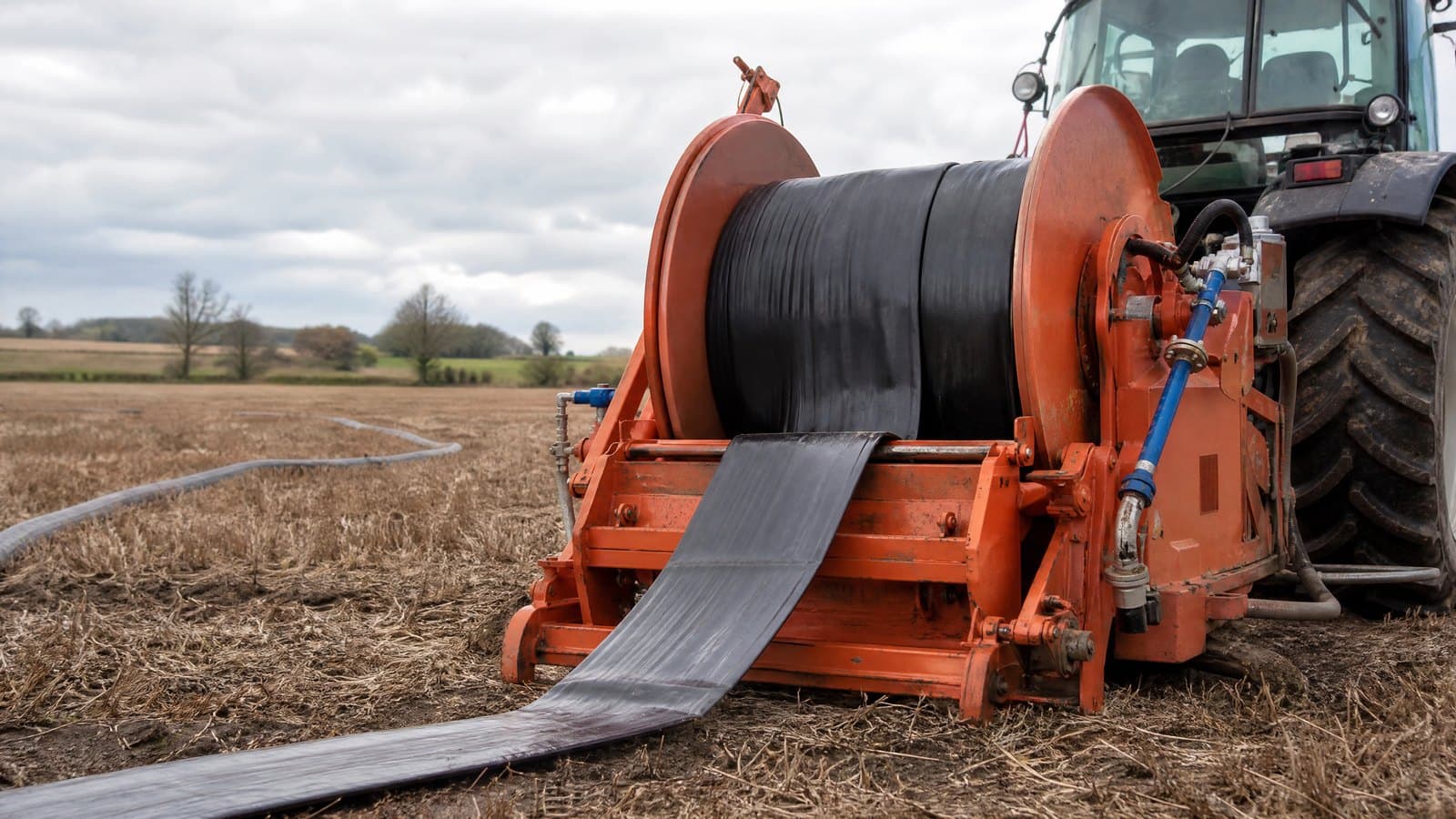
Handling is the other half of the economics. A 16" hose weighs 6.2 kg per metre, so a 200 m length is more than a tonne: it needs a tractor-mounted reel, a portable motorised winder or a hose mover. Borehole risers go in and out with a powered winding trailer.
/07The one job it cannot do.
Our EPDM/PE suction hose has a rigid polyethylene helix and is rated for vacuum at every size from 1" to 6". The guide to suction hose vs lay flat hose shows how to lay out the two sides of a pump.
/08Choosing in five questions.
Specifying a lay flat hose
Answer these in order; each one narrows the next.
IfWhat is the fluid?
Clean water: any cover. Oily water: NBR or TPU. Fuel: antistatic TPU. Drinking water: certified potable hose. Concrete or slurry: the dedicated TPU grades.
IfWhat flow, over what length and lift?
Sets the bore — keep velocity near 1.5 to 3 m/s and check friction loss plus lift.
IfWhat is the highest pressure the pump can make?
Choose a hose and couplings whose working pressure at that bore is higher, with margin for surge.
IfWill it be dragged, buried, left in sun or moved daily?
Dragging and daily moves favour TPU; long sun exposure favours TPU or NBR over PVC.
IfWhat does it connect to?
Pick the coupling family — grooved, Storz, flanged, camlock, Bauer — and whether you want assemblies made up.
In the Gulf, lay flat does most of its work in a handful of jobs: construction dewatering on high-water-table sites, frac water transfer to gas well pads, flexible risers in boreholes, temporary fuel lines and fire hose. Each has its own guide, and running lay flat in Gulf heat covers what summer does to all of them.
In Europe the same hose turns up in very different work: slurry umbilical systems on farms, over-pumping and water main bypass, flood response, mine dewatering, snowmaking, irrigation and concrete placement.
Practical references: the lay flat hose size chart, how to roll and store lay flat hose, how to repair it, and the RFQ checklist for ordering.
Common questions
- How long can a single lay flat hose be?
- Our TPU lay flat hoses are made in continuous lengths up to 400 m; NBR up to 200 m. Long lengths mean fewer joints — fewer leak points and less friction loss at couplings.
- Can lay flat hose be used for suction?
- No. It collapses under vacuum. Use a rigid-helix suction hose on the pump inlet and lay flat on the discharge.
- What is the difference between working pressure and burst pressure?
- Working pressure is the maximum allowed in service. Burst pressure is the pressure at which a test sample fails, typically two to three times the working pressure. Never operate a hose near its burst pressure.
- Does lay flat hose need special couplings?
- Small bores use standard camlock, Storz or Bauer couplings banded on. Large bores use dedicated lay flat couplings with a forged shank and a bolted clamp sized to the hose wall.
- Is TPU lay flat hose worth the extra cost over PVC?
- For anything dragged, pressurised above a few bar, exposed to oil or used repeatedly, yes: TPU carries far higher pressure, resists abrasion and lasts longer. For a seasonal, low-pressure clean-water line, PVC is usually enough.
Lay flat hoses in this guide
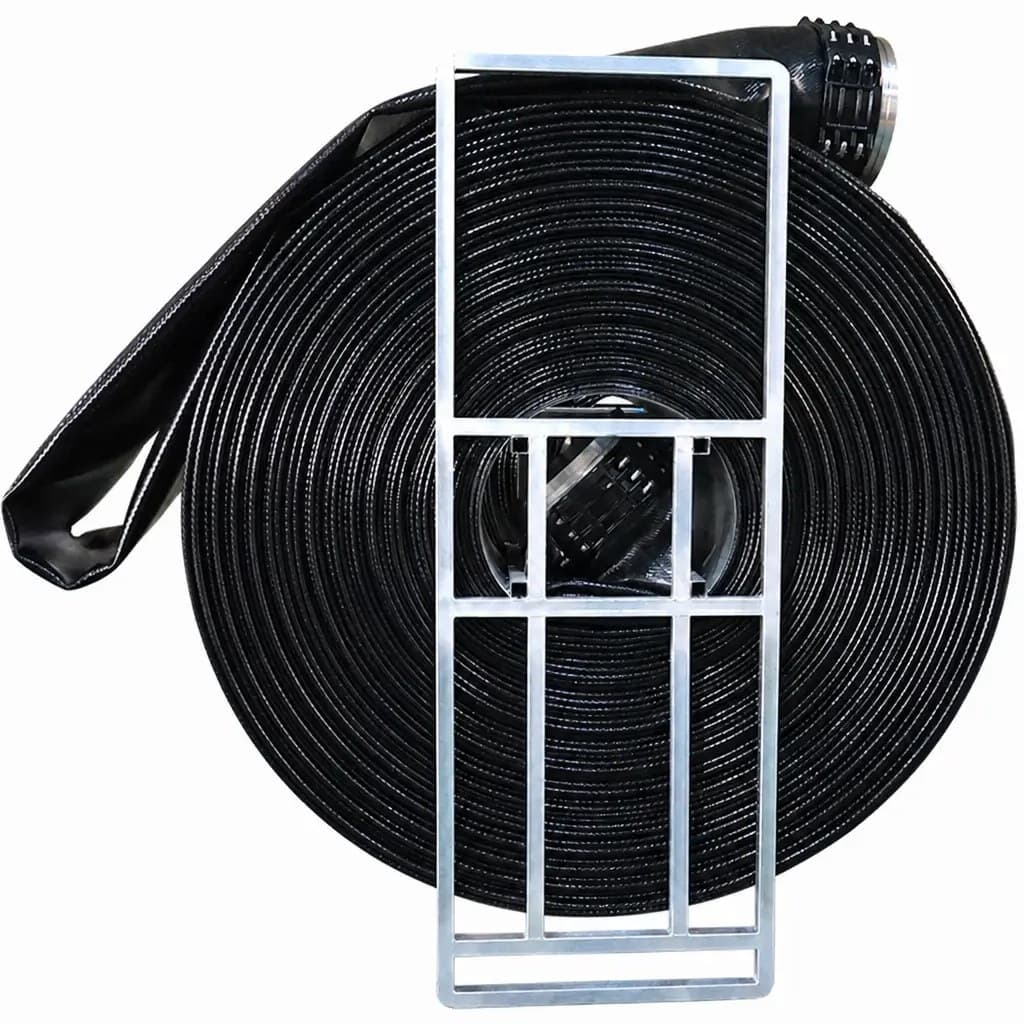 IH-LF-TDWTPU Lay Flat Dewatering and Water Transfer HoseIndus Hydraulics
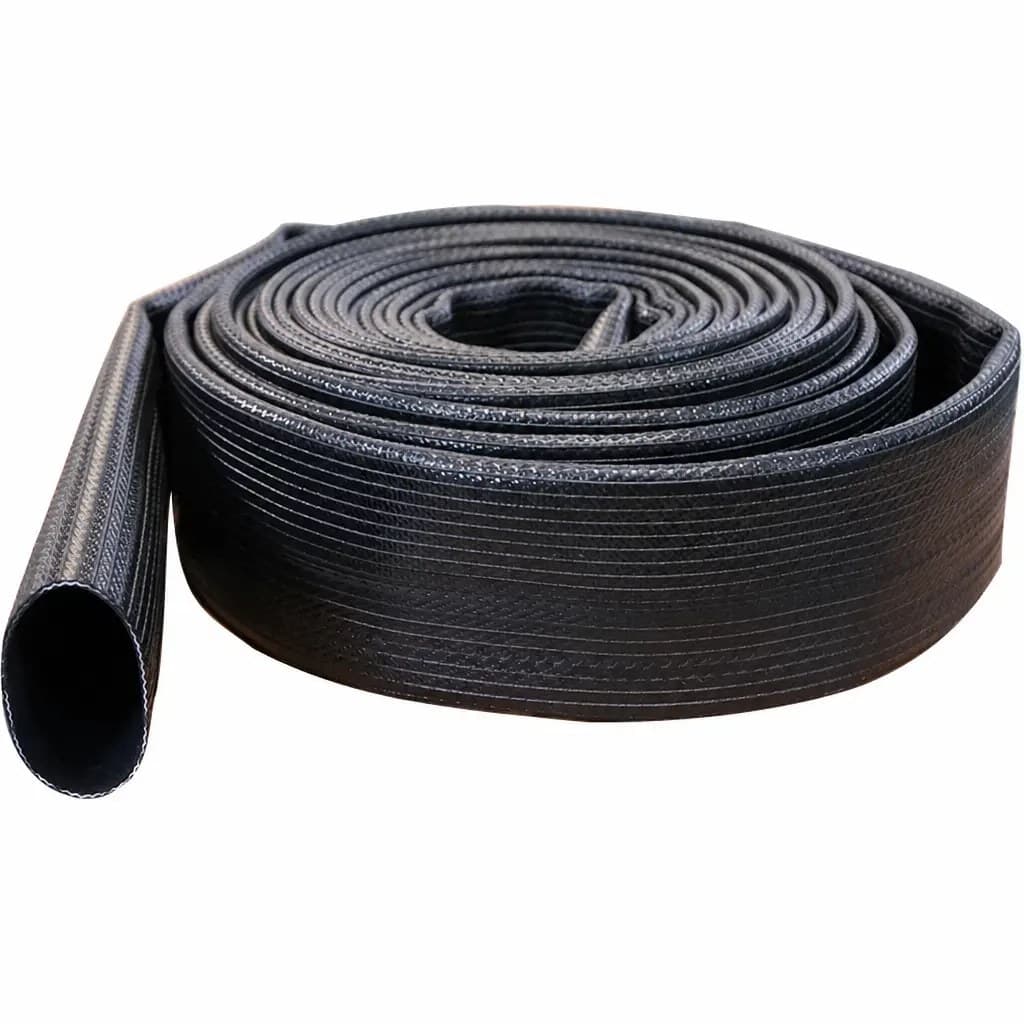 IH-LF-NBRNBR Lay Flat Discharge Hose, Ribbed CoverIndus Hydraulics
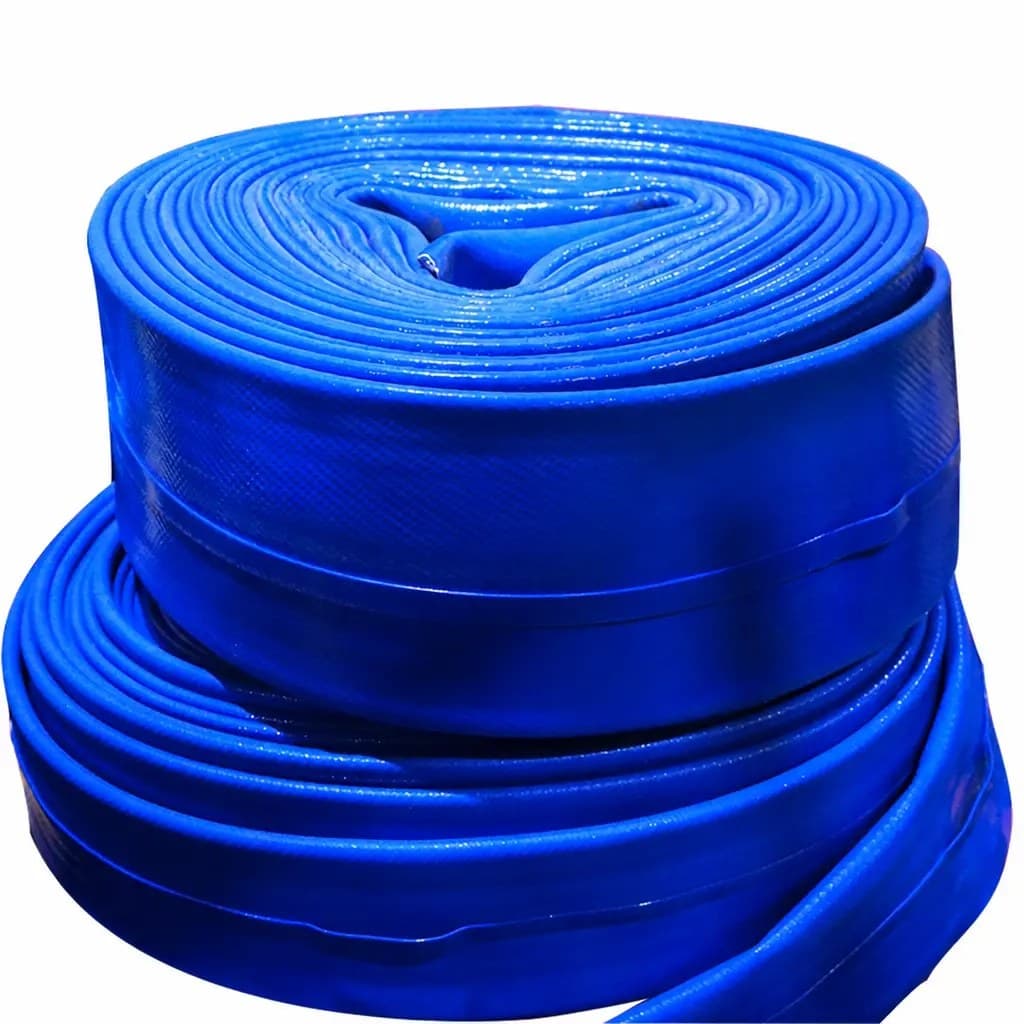 IH-LF-TWRTPU Lay Flat Well Riser HoseIndus Hydraulics
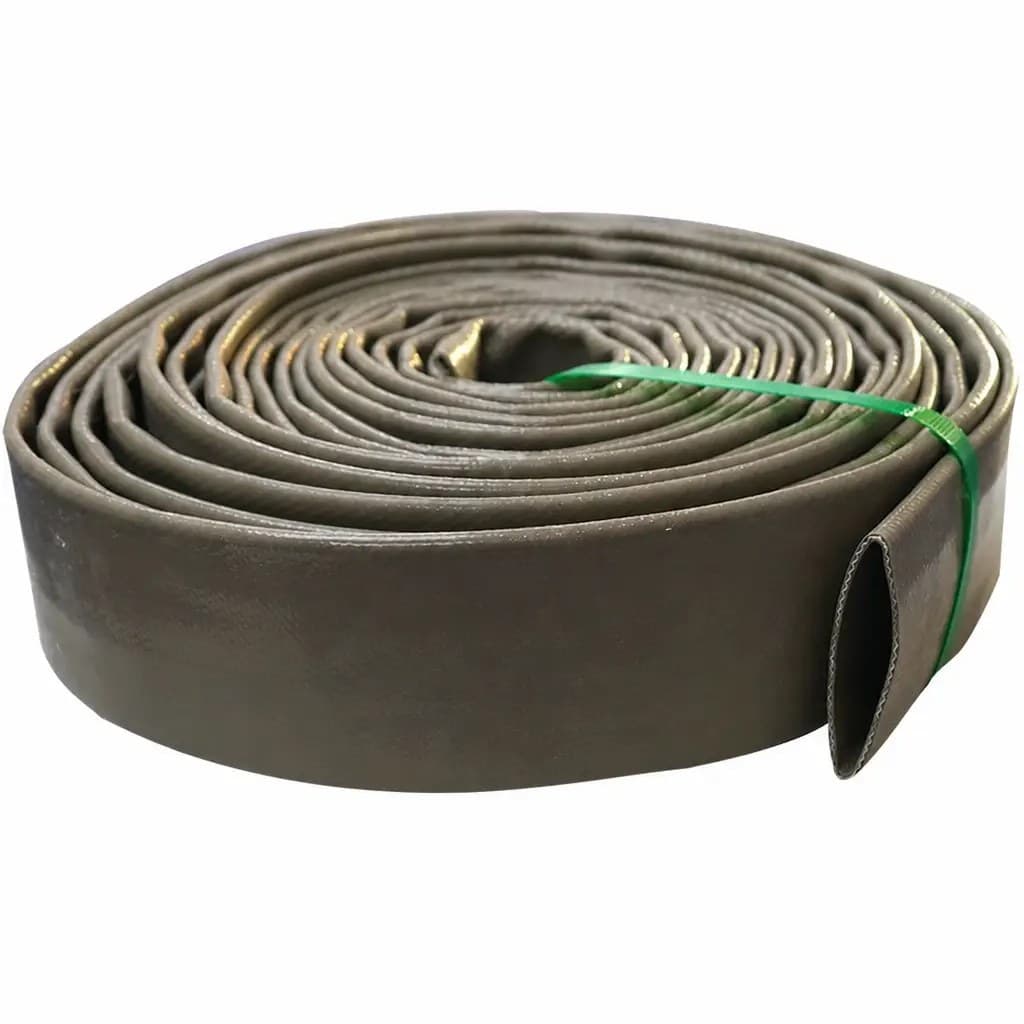 IH-LF-TOFAntistatic TPU Lay Flat Oil and Fuel Transfer HoseIndus Hydraulics
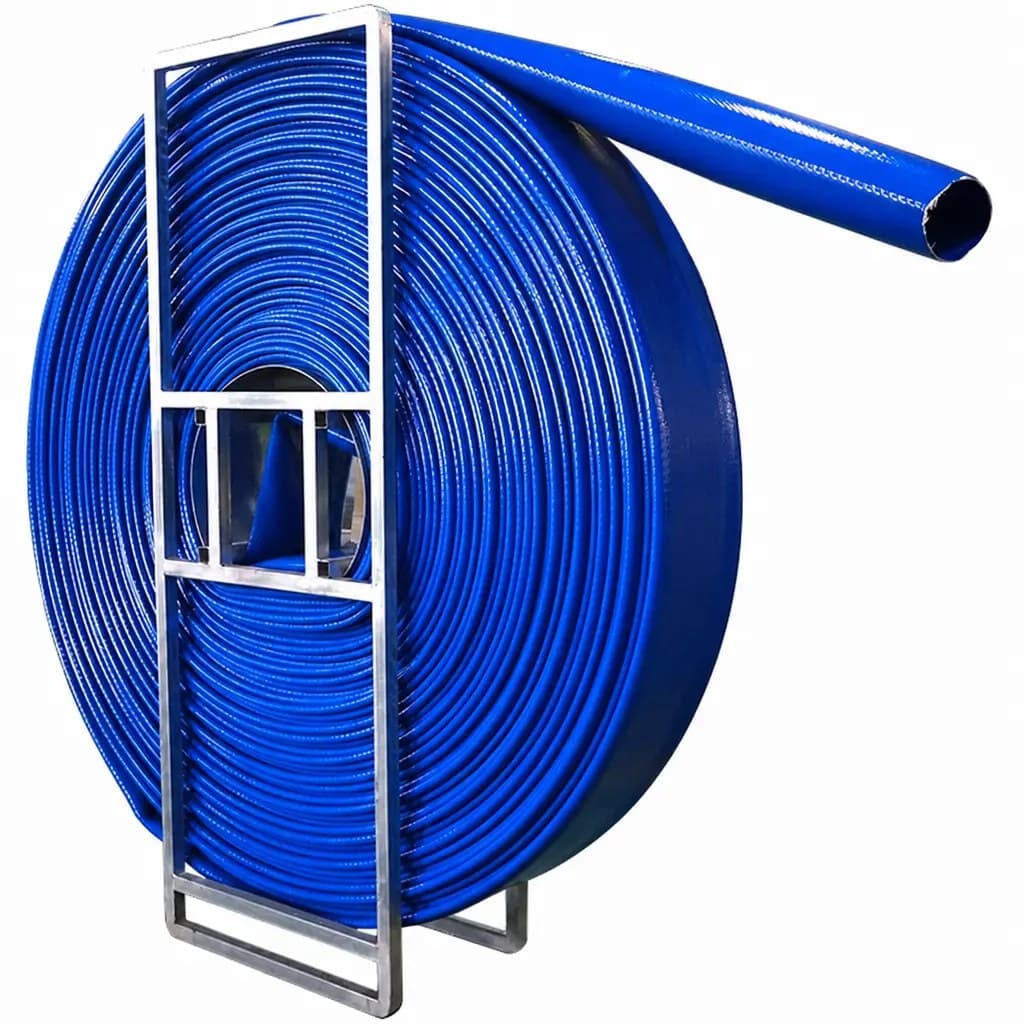 IH-LF-TPWTPU Lay Flat Drinking Water HoseIndus Hydraulics
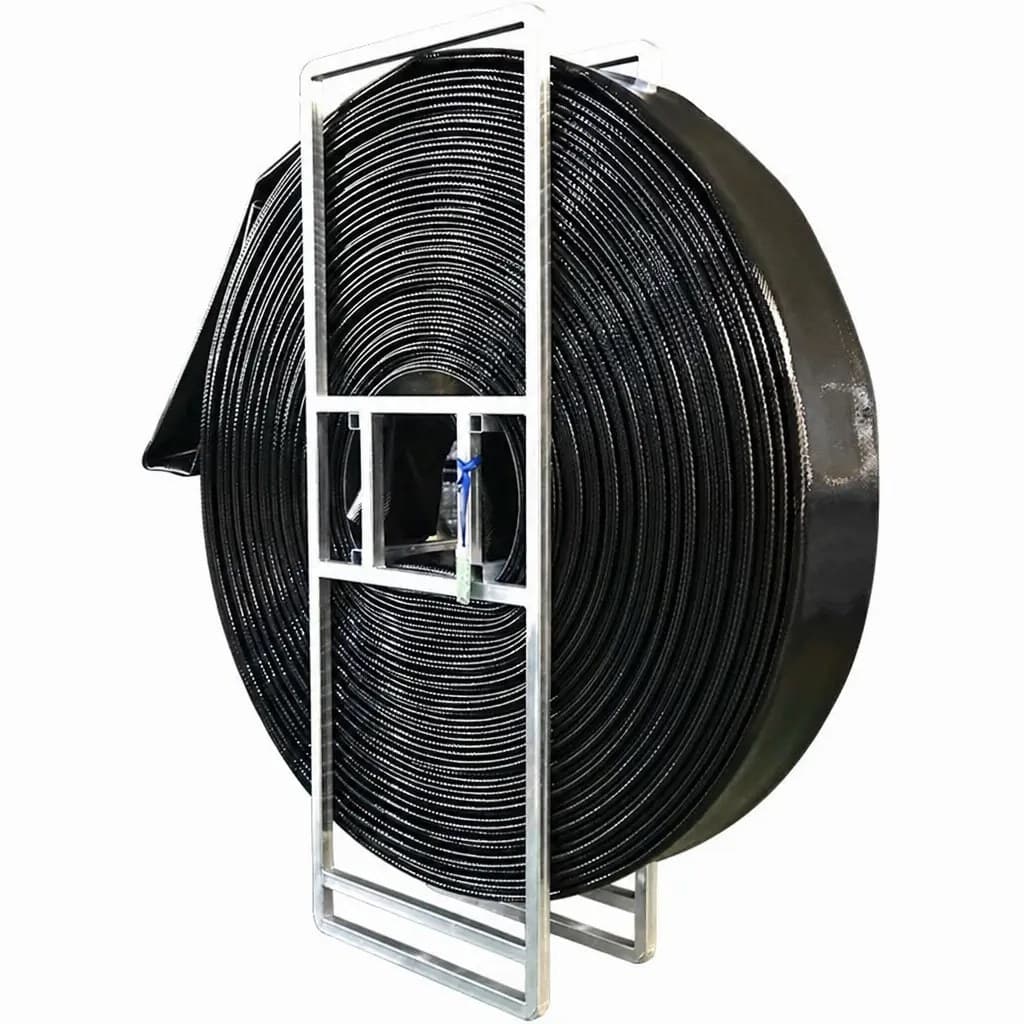 IH-LF-TSSTPU Lay Flat Slurry Supply HoseIndus Hydraulics
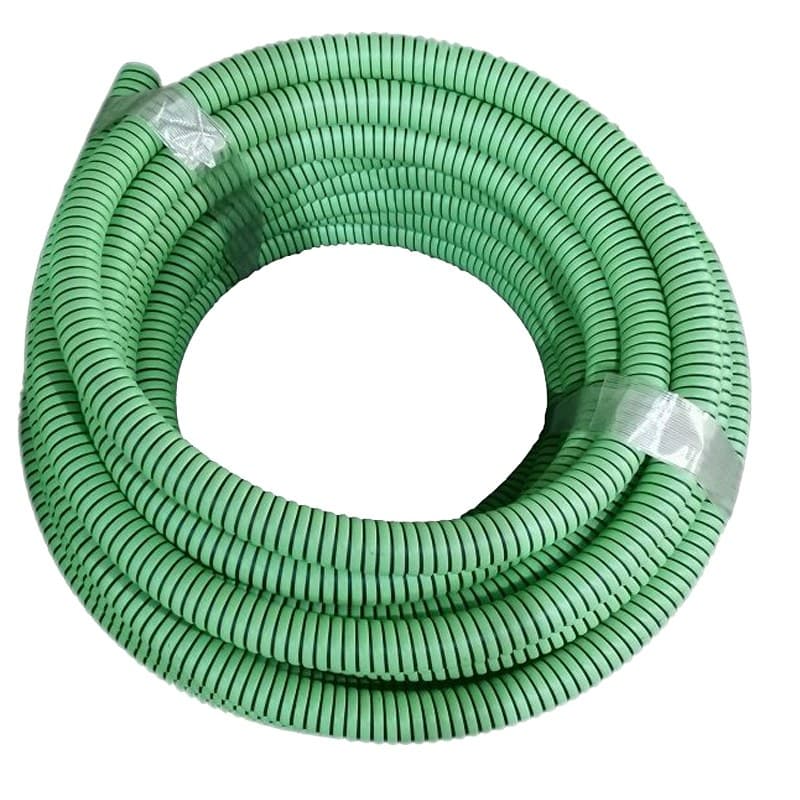 IH-LF-SEPEPDM/PE Suction Hose with Rigid HelixIndus Hydraulics
 IH-LF-PVCPVC Lay Flat Discharge HoseIndus Hydraulics


