A drawing from a German machine builder says 2SN. The spare in the store says R2AT. Somebody has to decide whether those are the same hose before the machine goes back together, and the answer is genuinely yes — which makes it all the more damaging that the same confident logic gets applied to 4SP and R12, where the answer is no.
/01Two standards bodies, one hose.
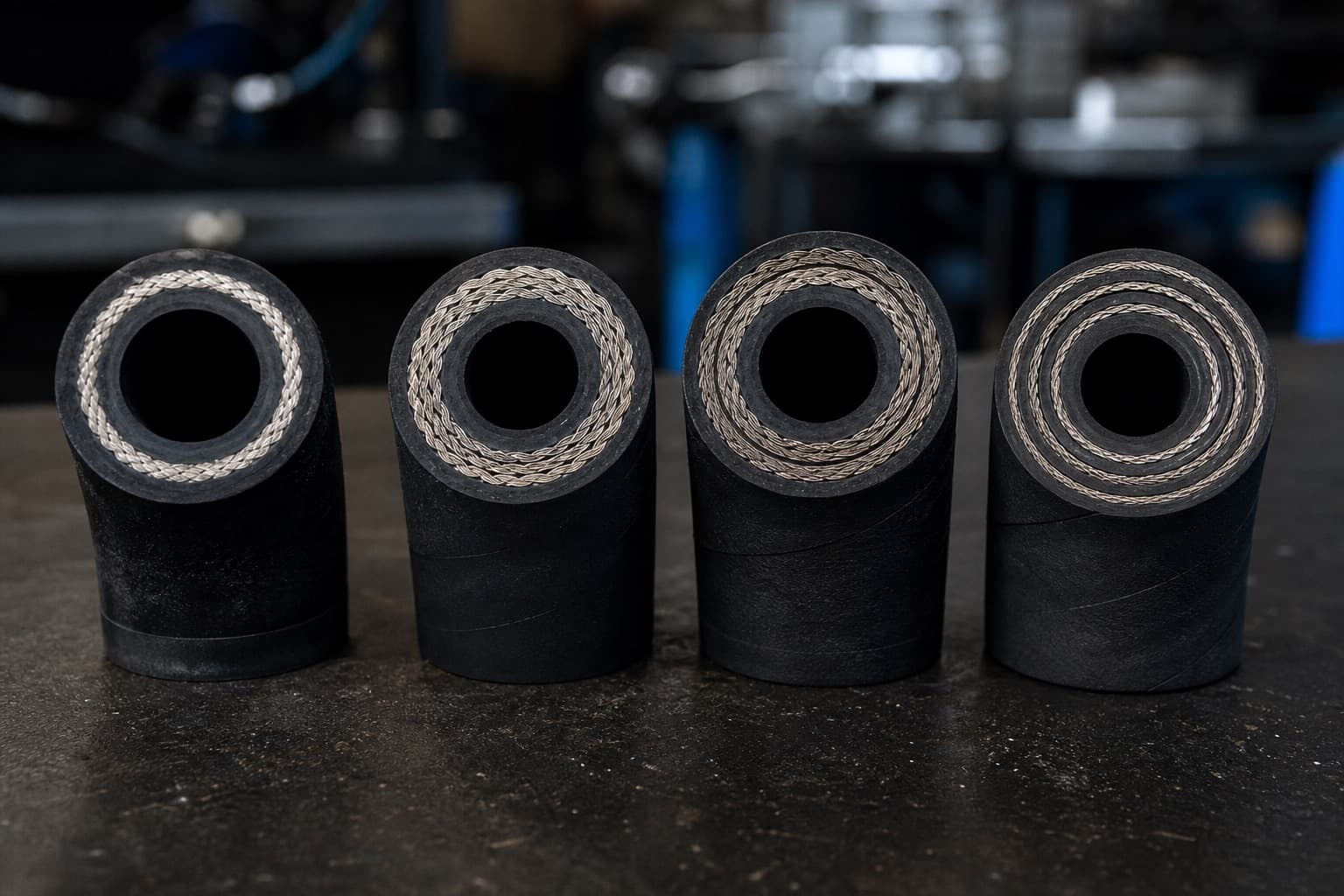
EN 853, EN 856 and EN 857 are European standards for wire-reinforced hydraulic hose. SAE J517 defines the 100R series in the United States. They were written independently, and for the two oldest constructions — single and double wire braid — they converged closely enough that manufacturers certify one hose to both and print both designations on the cover.
That convergence is real but it is a property of specific products, not a rule about the standards. Our own catalogue records it per construction, and where it records only one designation, that is the information — not an omission to be helpfully filled in.
| Construction | EN designation | SAE designation | Pairing |
|---|---|---|---|
| Single wire braidHighlighted | EN 853 1SN | SAE 100R1AT | Genuine — both on the hose |
| Double wire braidHighlighted | EN 853 2SN | SAE 100R2AT | Genuine — both on the hose |
| Compact single braid | EN 857 1SC | — | No SAE counterpart |
| Compact double braid | EN 857 2SC | — | No SAE counterpart |
| Four-spiral | EN 856 4SP | — | No direct SAE counterpart |
| Four-spiral, heavy | EN 856 4SH | — | No direct SAE counterpart |
| Four/six-spiral | — | SAE 100R13 | SAE only |
| Six-spiral | — | SAE 100R15 | SAE only |
| ThermoplasticHighlighted | EN 855 R7 | SAE 100R7 | Genuine — both on the hose |
/02The 4SP-equals-R12 problem.
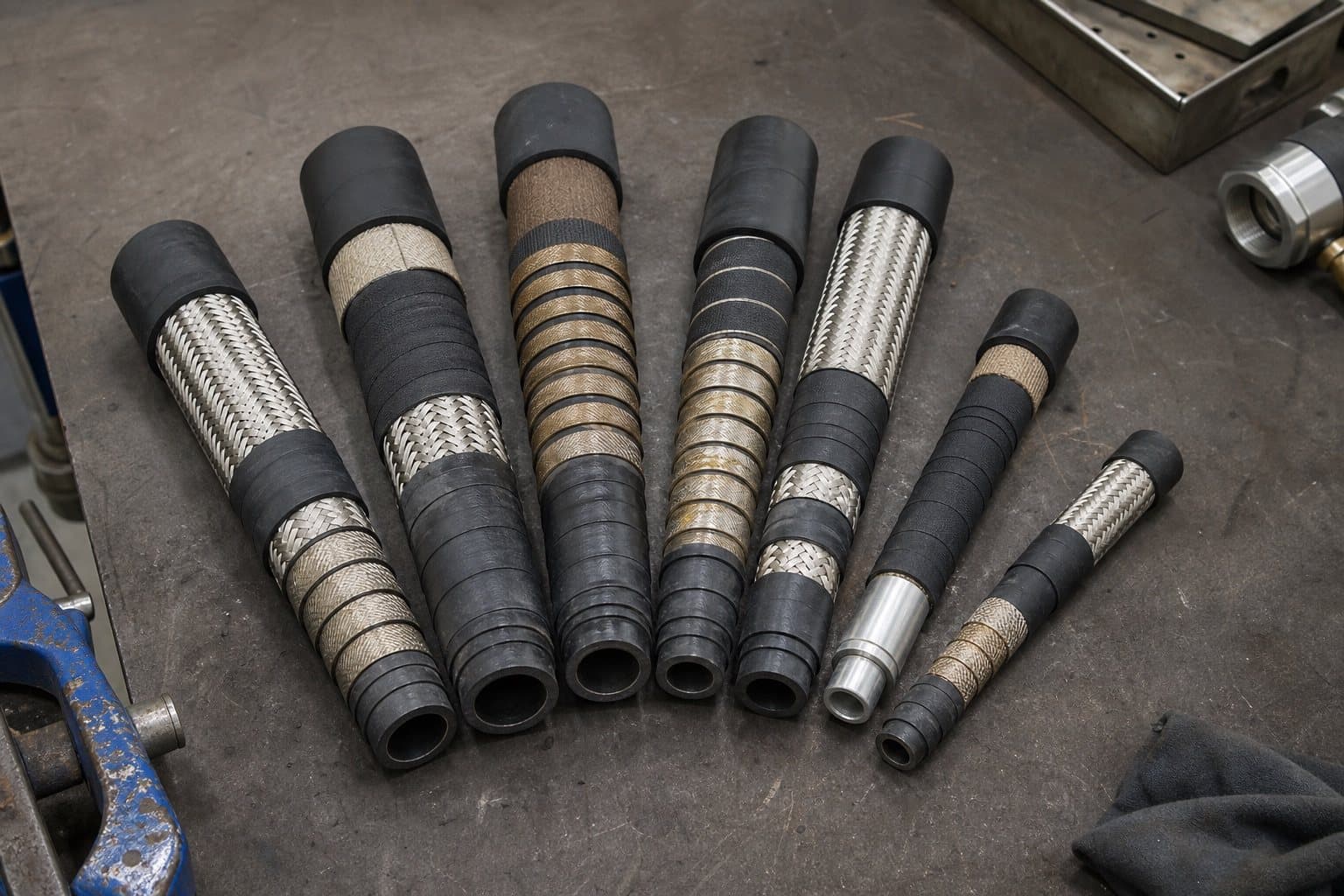
Search for a cross-reference table and most of them will put EN 856 4SP opposite SAE 100R12. The two are broadly comparable in intent — four-spiral, high pressure, large bore — and in many applications one will do the other’s job. But they are separately specified constructions with different dimensional and performance requirements, and “will usually do the job” is not the same claim as “is the equivalent of”.
/03Compare on the figures, not the designation.
When there is no clean pairing, the honest comparison is the one that was always valid: same bore, then pressure, then bend radius. Here are the spiral constructions we stock set against each other at the sizes they share.
| Construction | −12 | −16 | −20 | −24 | −32 |
|---|---|---|---|---|---|
| EN 856 4SP | 350 | 320 | 210 | 210 | 210 |
| EN 856 4SHHighlighted | 420 | 380 | 350 | 300 | 250 |
| SAE 100R13 | 350 | 350 | 350 | 350 | 350 |
| SAE 100R15 | 420 | 420 | 420 | 420 | — |
Read across and the practical answer appears without any cross-reference table at all. At −20 and above, 4SP falls to 210 bar while R13 holds 350 — so a machine drawing calling for 4SP at −24 is asking for a hose that will be comfortably outperformed by the SAE alternative, not merely matched by it. The figures settle the substitution question that the designations cannot.
Rubber hoses and hose assemblies — Wire braid reinforced hydraulic type — Specification
Specifies the wire-braid constructions designated 1SN and 2SN, including dimensions, pressure requirements and test methods. It is the European counterpart to the wire-braid portion of SAE J517, and the two align closely enough that a single hose is routinely certified to both — which is a fact about manufactured product, not a formal equivalence between the documents.
Hydraulic Hose
Defines the SAE 100R series. Each 100R designation is a separate specification setting minimum performance for a stated construction; the numbering reflects the order of standardisation rather than any ranking of capability. Minimum performance means two conforming hoses can differ materially in cover, temperature range and dimensions.
/04Using this in practice.
A drawing names a designation you cannot source
Work down until one applies.
IfIt is 1SN, 2SN or R7
The pairing is genuine. Source the counterpart with confidence.
The hose we stock carries both designations on the cover, so the substitution is visible to whoever inspects it later.
IfIt is 1SC or 2SC
There is no SAE equivalent to look for — these are compact constructions specific to EN 857.
If the drawing chose compact, it probably chose it for the bend radius. Substituting a standard braid grade may not physically route.
IH-HOSE-2SCIfIt is 4SP or 4SH
Compare at the bore against R13 and R15 rather than looking for a designation match.
Check outside diameter as well as pressure — the crimp specification does not carry across a construction change.
IH-HOSE-4SHIfThe pressure is unclear from the drawing
Stop and establish it before substituting anything.
A designation swap made without knowing the working pressure at the actual bore is a guess wearing a part number.
The constructions compared here
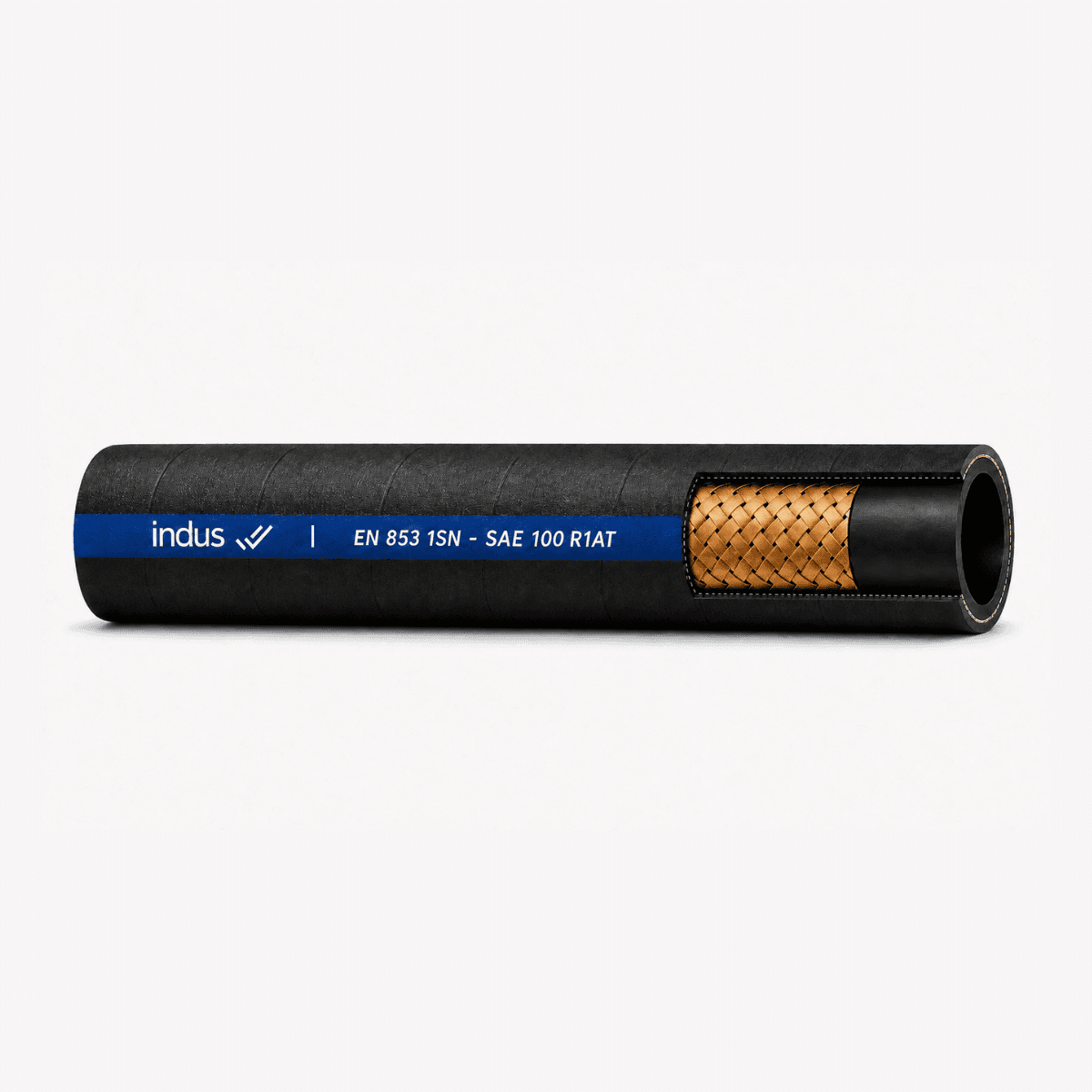 IH-HOSE-R1-1SNR1 1SN Single Wire Braid Hydraulic HoseEaton Winner
 IH-HOSE-R2-2SNR2 2SN Double Wire Braid Hydraulic HoseEaton Winner
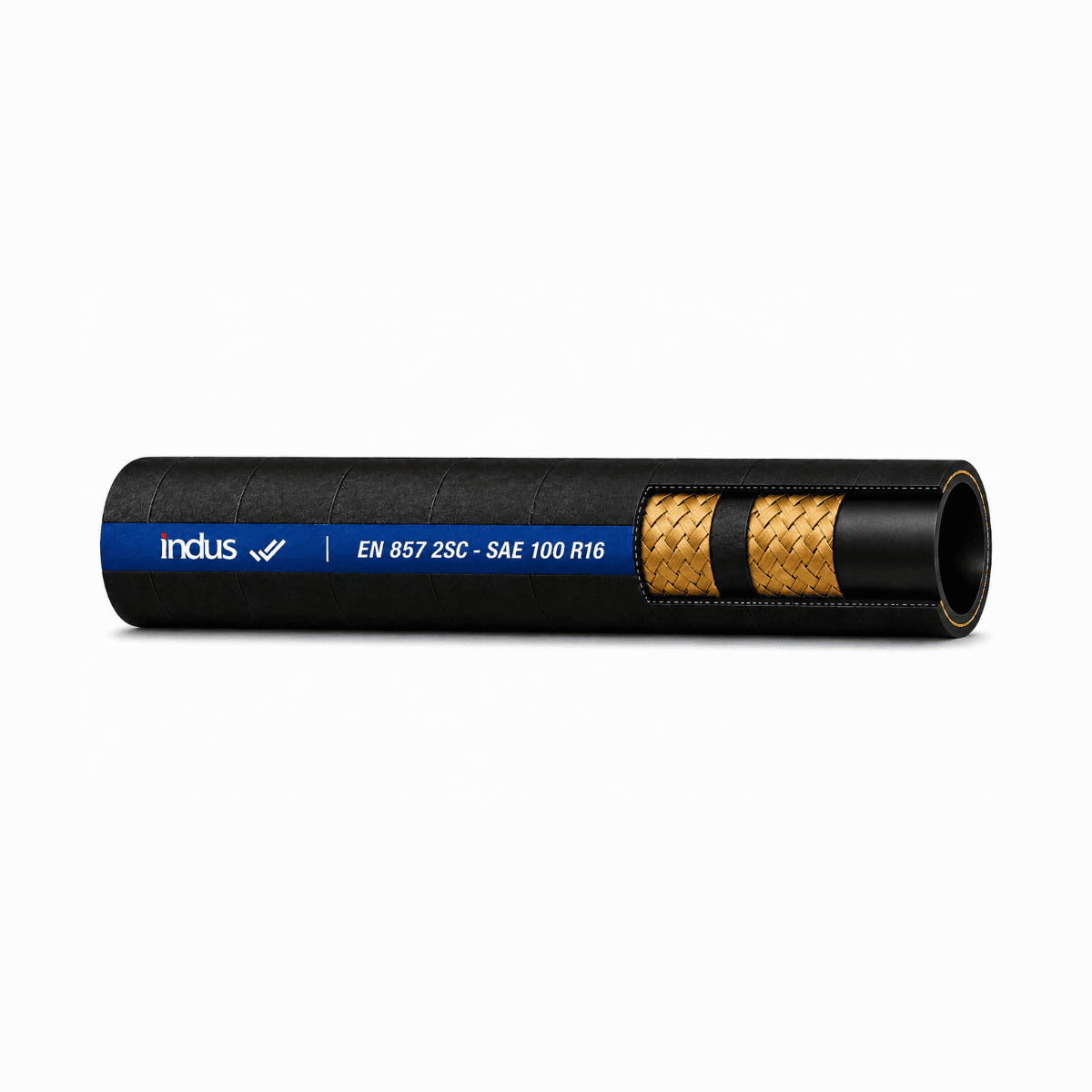 IH-HOSE-2SC2SC Compact Two Wire Braid HoseIndus Hydraulics
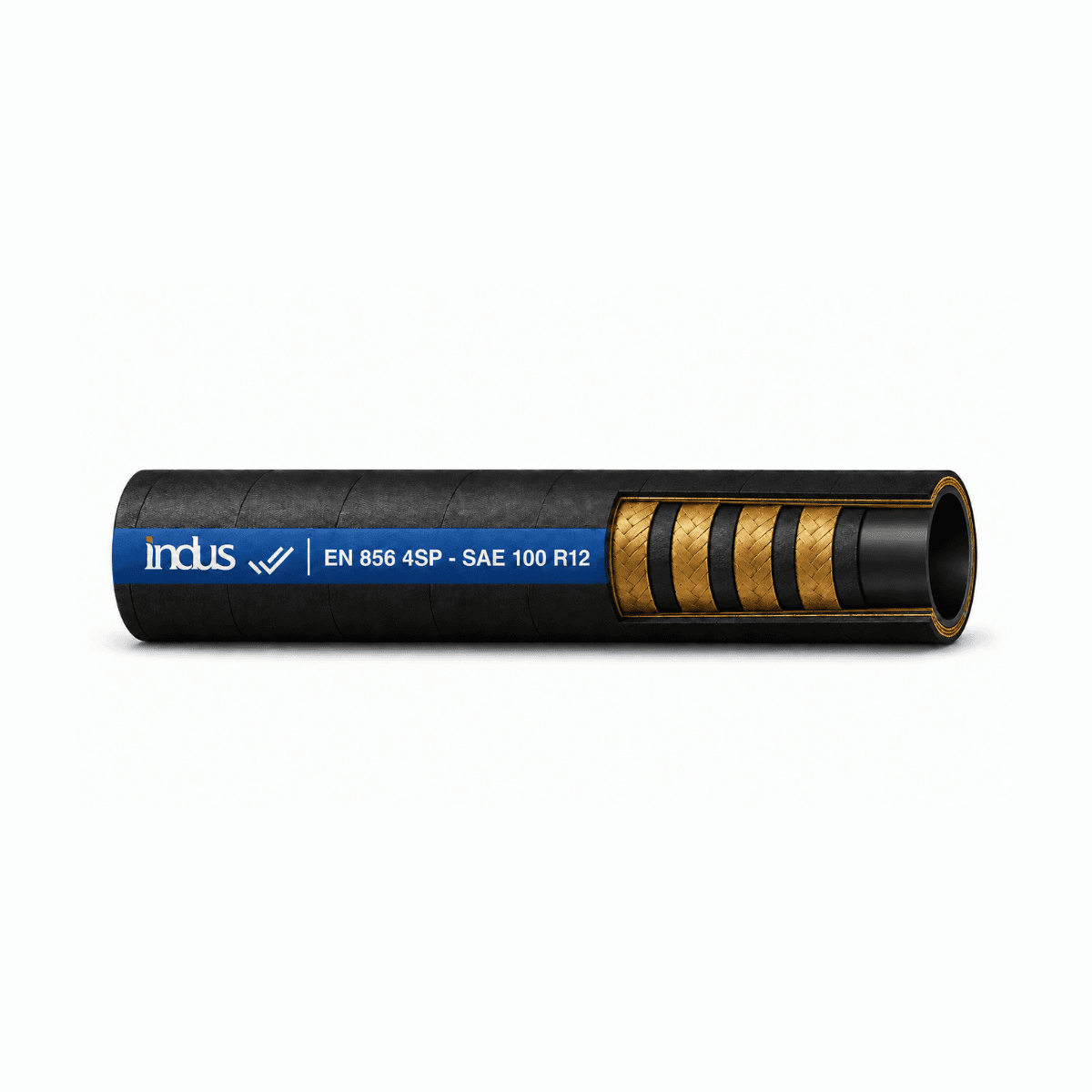 IH-HOSE-4SP4SP Four-Spiral Hydraulic HoseIndus Hydraulics
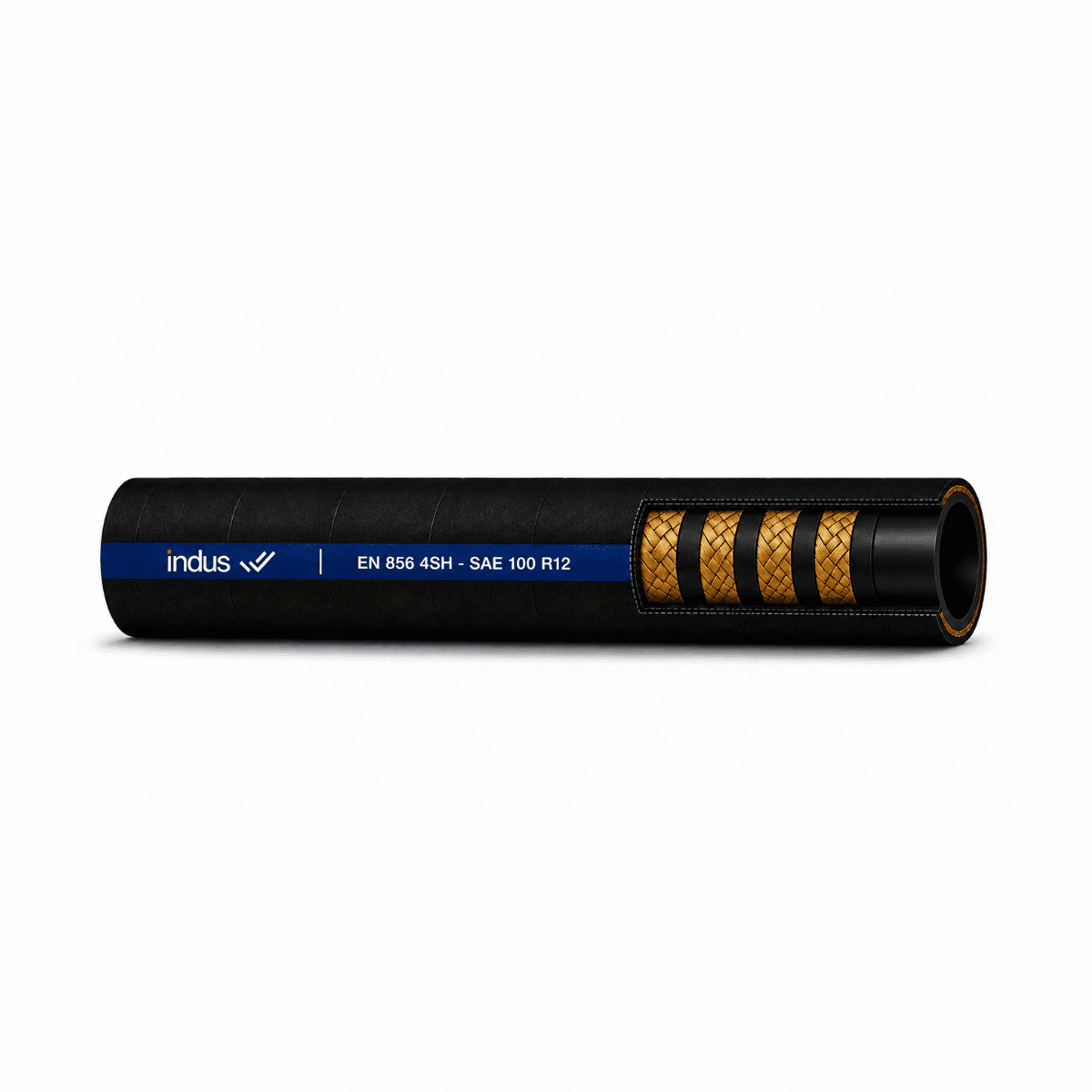 IH-HOSE-4SH4SH Four-Spiral Heavy-Duty Hydraulic HoseIndus Hydraulics
 IH-HOSE-R13R13 Multi-Spiral Very-High-Pressure HoseIndus Hydraulics
Common questions
- Can I fit an R2AT hose where the drawing says 2SN?
- On the constructions we stock, yes — the same hose is certified to both and printed with both. Confirm the bore and the fitting termination as you would for any replacement, and check the cover marking on the hose in your hand rather than assuming it from the catalogue.
- Does EN 857 have an American equivalent at all?
- Not as a designation. Compact constructions are defined in EN 857 and the SAE series has no counterpart specification. The closest SAE grade on pressure will usually be bulkier and need a larger bend radius, which is normally the reason the compact grade was specified.
- Why do cross-reference tables disagree with each other?
- Because most of them are listing approximate application equivalence, not certified dual conformity, and they rarely say which. A table that pairs every EN grade with an SAE one is telling you about intent, not about what is printed on the hose.
- Which designation should we put on our own drawings?
- Whichever one your supply chain can actually buy, plus the bore, the working pressure and the fitting ends. A designation on its own has never been a complete specification, and adding the three figures removes the entire cross-reference problem.