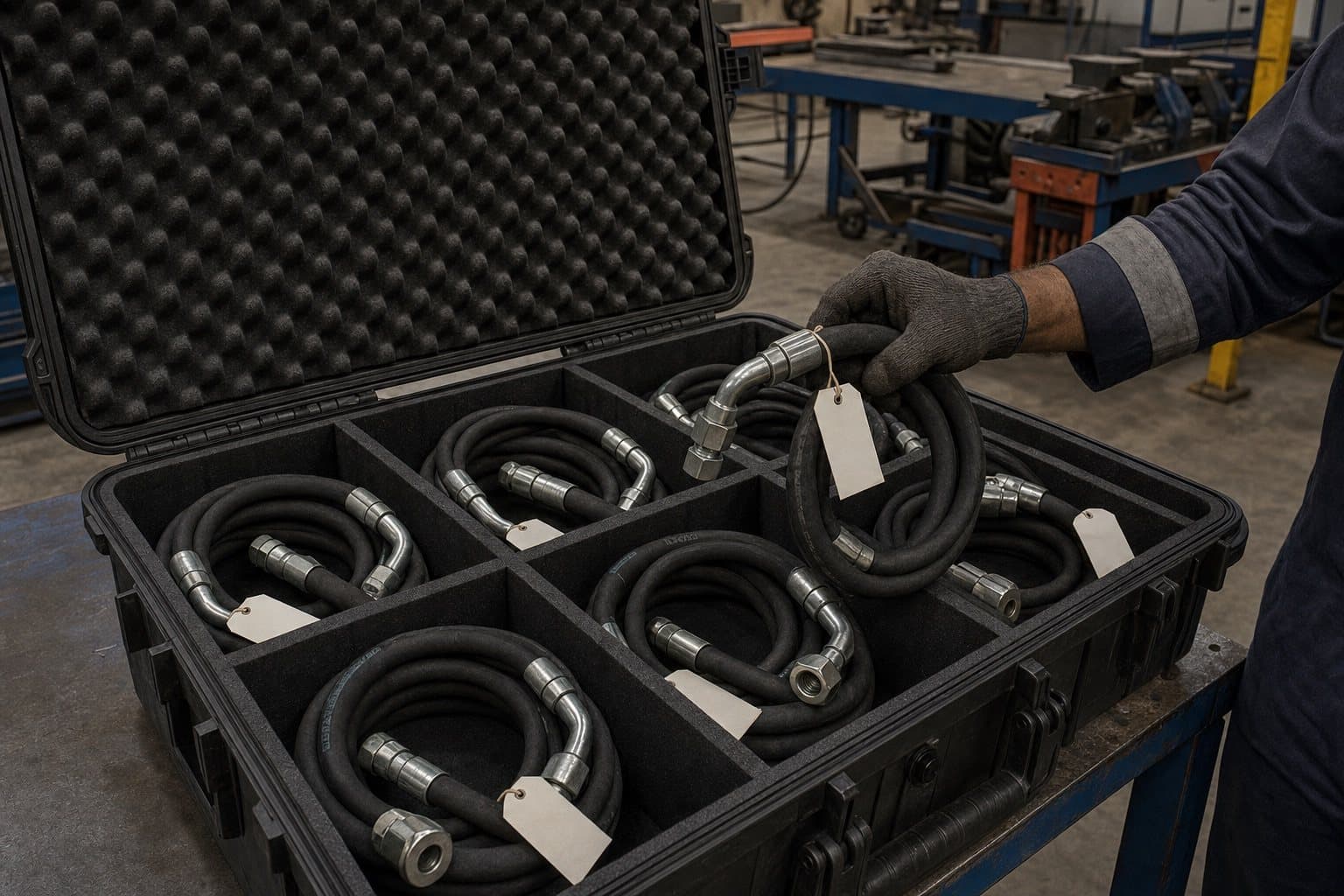
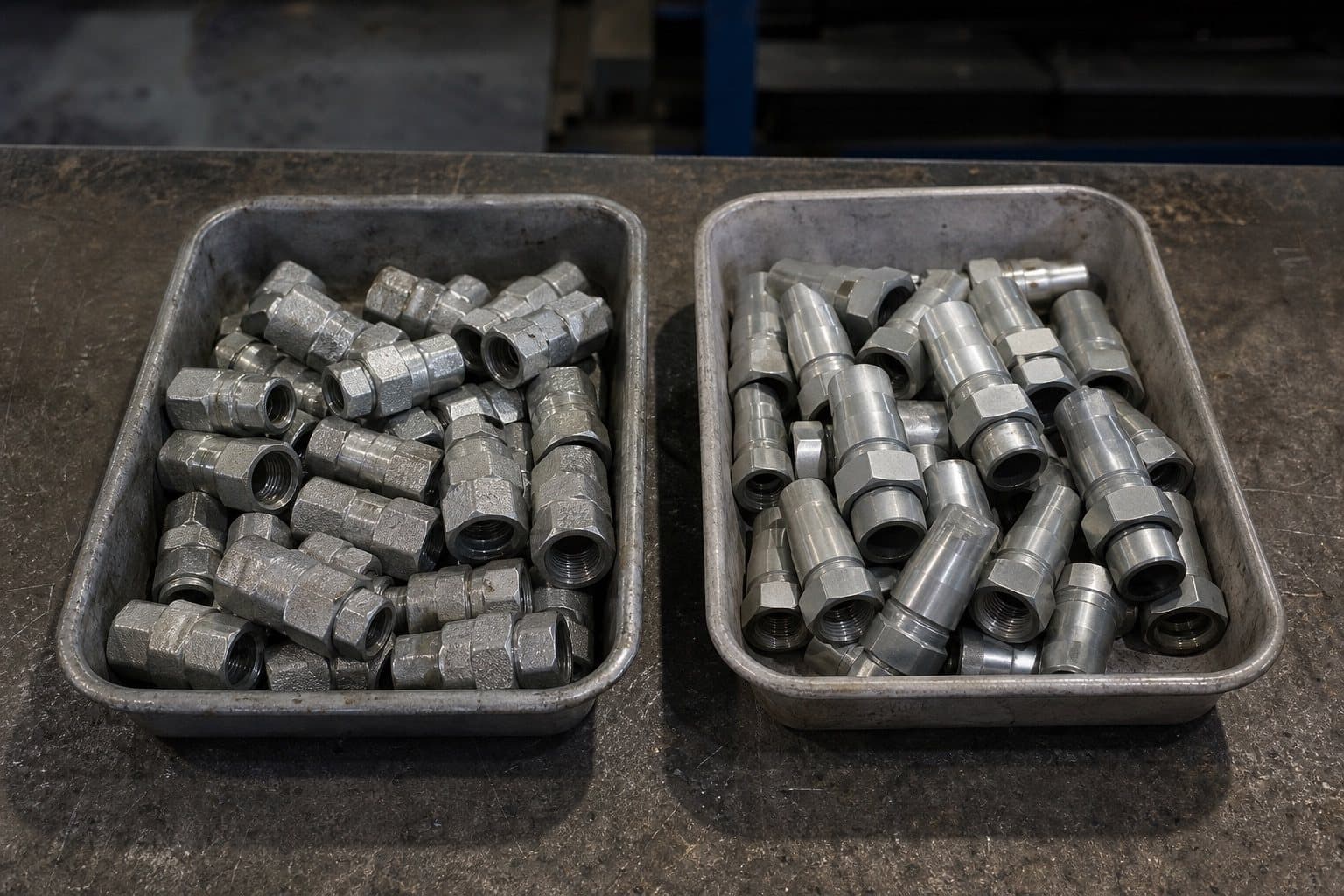
Most quote requests come back with a question rather than a price, and it is nearly always the same handful of missing details. Here is what to include so the first reply is a number.
The failed assembly, or its length and ends, is what a hose quote needs.
At a glance
Key takeaways
01Five items cover almost every assembly: bore and grade, overall length, both end types, elbow orientation, and quantity.
02Overall length means sealing face to sealing face — not the length of rubber.
03Both ends need stating separately, even when they are identical.
04Elbow orientation is the most commonly omitted detail and the most common cause of a remake.
05If you have the old hose, photographs of the layline and both ends replace nearly all of the above.
Figures verified · Based on what our own quotations desk has to ask for when it is missing.
A hose quote is a simple thing to price and a surprisingly easy thing to under-specify. The difference between a same-day answer and three days of email is usually one line of missing information — and it is the same line most of the time.
/01The five items.
What each one settles
Item
What it settles
If you omit it
Bore and grade
Which hose, and whether it suits the pressure
We have to ask, or guess and be wrong
Overall length, face to faceHighlighted
The dimension the machine imposes
Cut length cannot be derived
End types, both ends
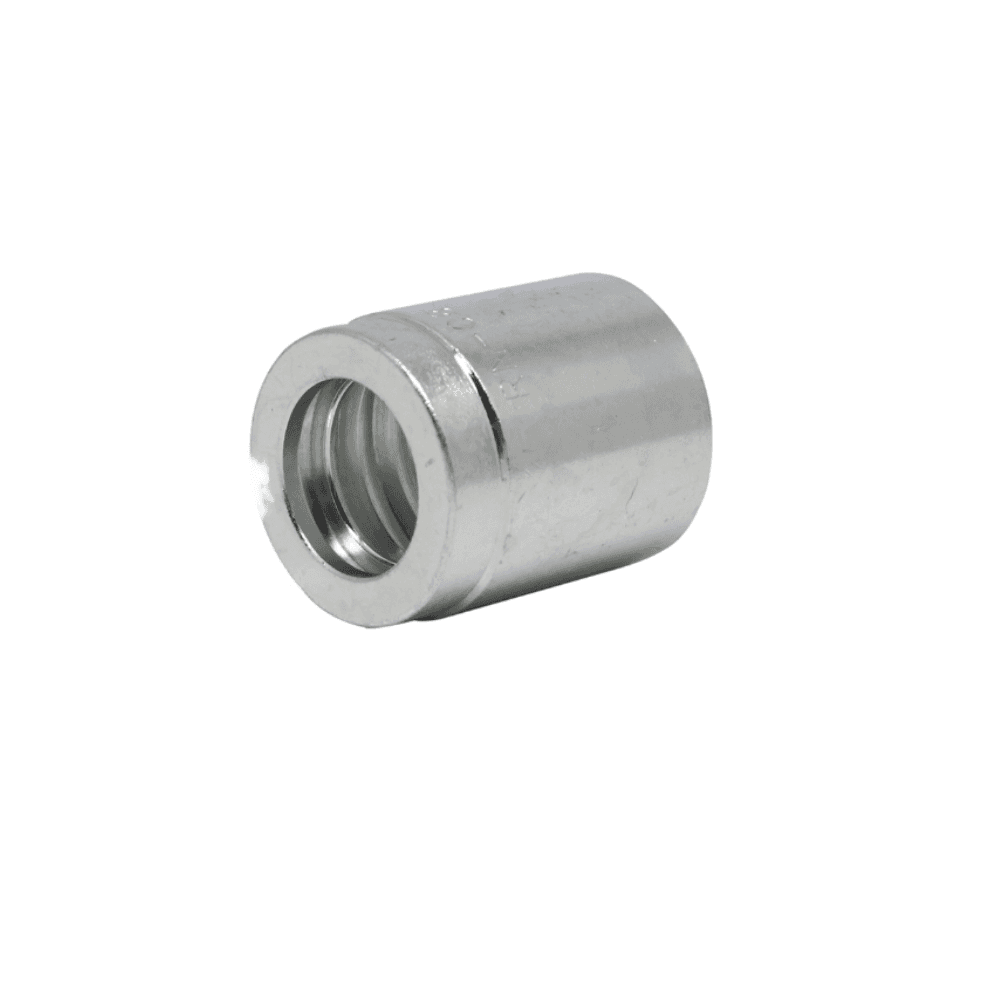
Which fittings, and therefore the ferrules
Nothing can be quoted at all
Elbow angle and orientationHighlighted
Whether the assembly will route
It gets built straight and comes back
Quantity
Pricing, and whether to batch the build
Priced as one-off
/02If you have the old hose, send photographs instead.
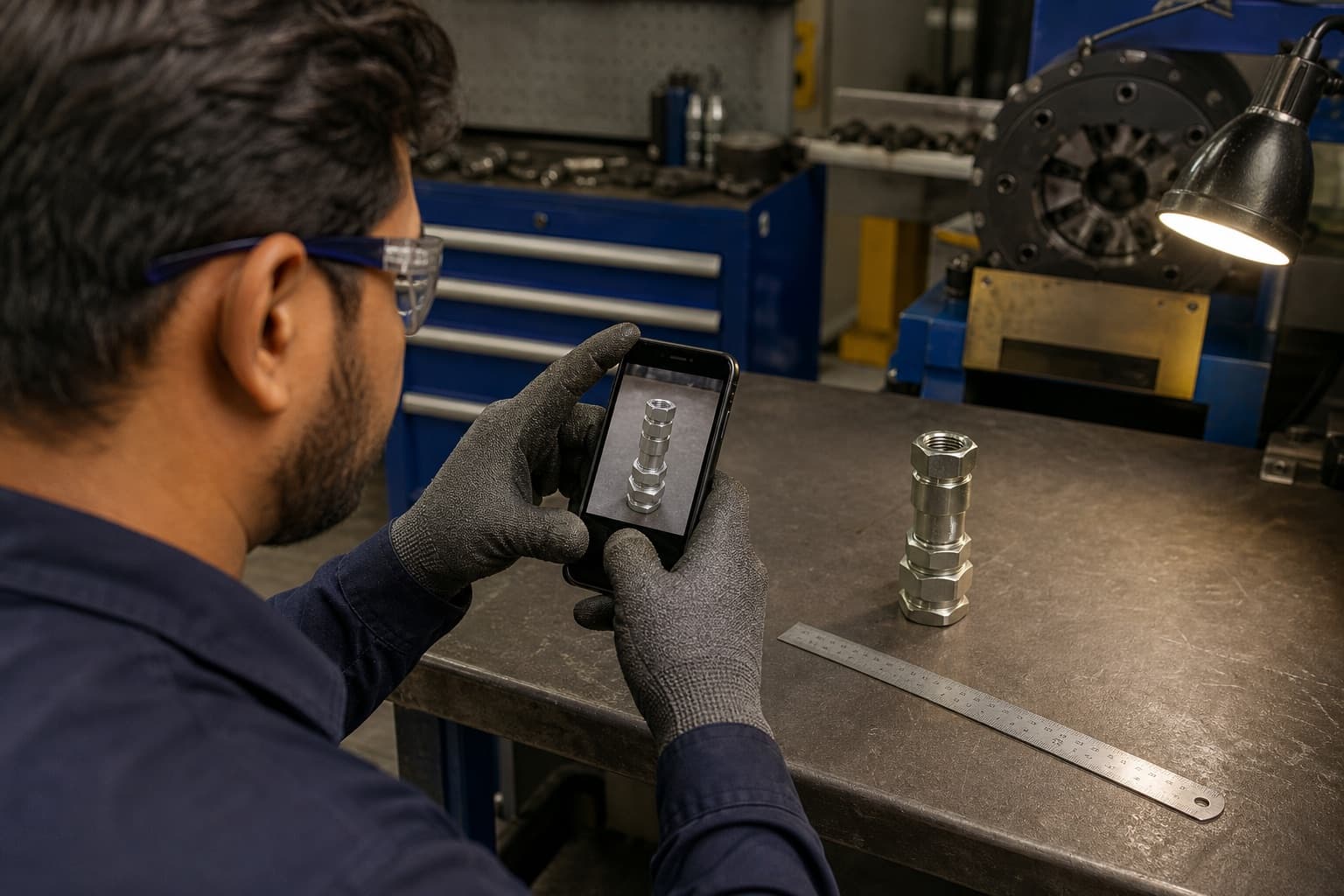
Square on to the end face, with something of known size in frame. Most quote requests fail on this one photograph.
A failed assembly carries most of its own specification. Three photographs replace nearly the whole list above: one along the layline, one of each fitting end. Add the overall length measured with the hose lying straight and relaxed, and that is a complete request. The ends are usually one of the families on our hose fittings shelf — JIC, ORFS, BSP, metric or flange.
What each photograph gives us
Photograph
What we read from it
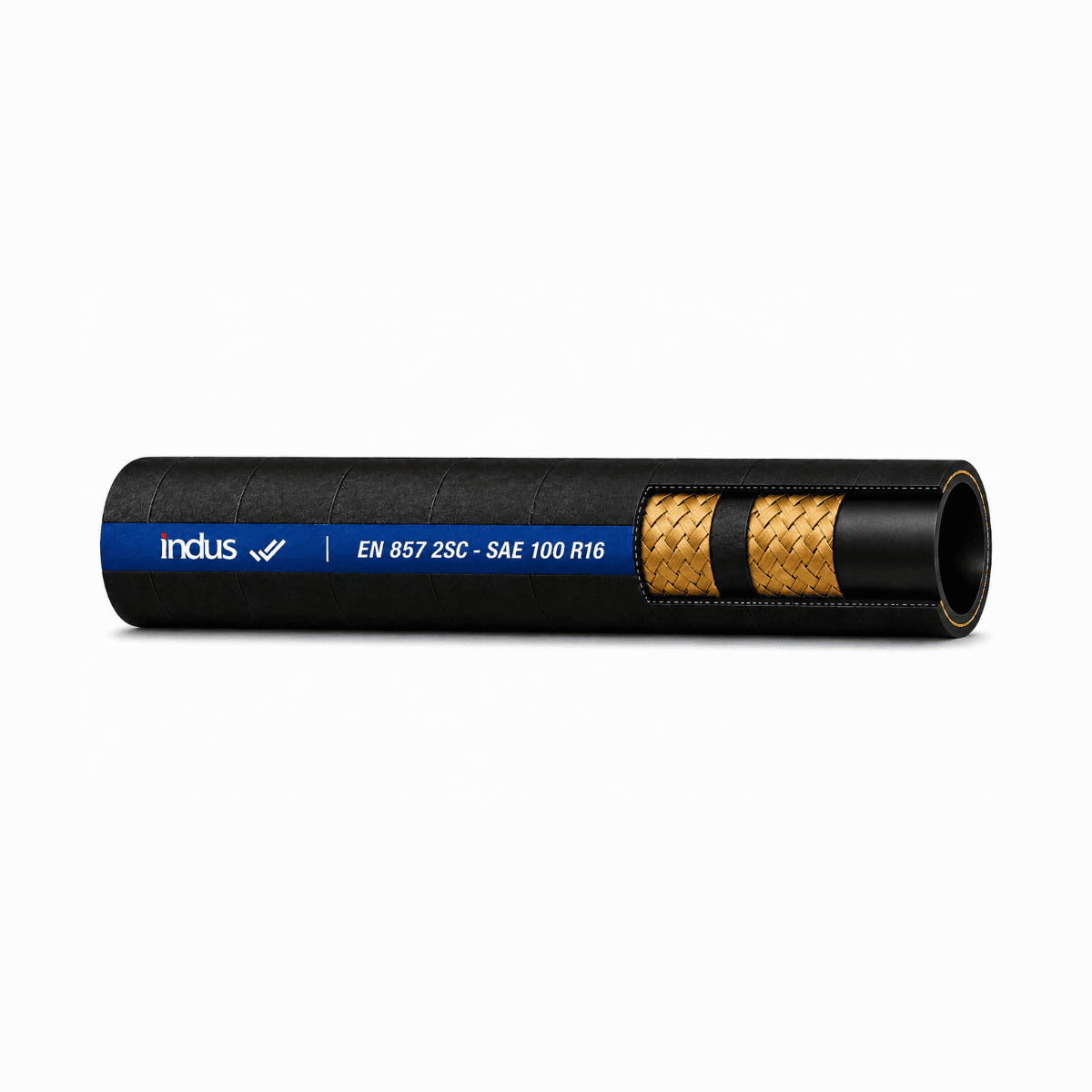
Along the layline
Grade, size, standard, often the pressure rating
Each fitting end, square on
Thread family, seat type, gender
The hose lying straight, next to a tapeHighlighted
Overall length and elbow orientation together
The routing on the machine, before removal
Why it failed — which changes what we recommend
/03Things worth adding when they apply.
Not always needed, occasionally decisive
Detail
When it matters
Working pressure
Always worth stating — it confirms the grade rather than copying what was there
Fluid and temperature
Anything other than mineral oil, or anything running hot
Machine and circuit
Lets us sanity-check the specification against the duty
Test certificate requiredHighlighted
Lifting equipment, access equipment, anything with an inspection regime
This position has failed before
Changes what we recommend — a repeat is a routing problem
Common questions
Can I just send the old hose?
Yes, and it is the most reliable option. Send it lying straight rather than coiled tight if you can, and tell us which machine it came off.
I do not know the grade. Is that a problem?
No, provided we can see the layline or the cut end. Failing both, tell us the working pressure and the bore and we will specify rather than match.
How do I describe a fitting I cannot identify?
Photograph the end face square on and measure the thread diameter and pitch. The seat is what a photograph settles, and the seat is what distinguishes families that share a thread.
Do you quote for quantities, or only one-offs?
Both. Tell us the quantity up front — batching a build changes the price and the lead time.
This is an export business run out of one warehouse rather than a network of branches, so the answer to "do you supply my country" is nearly always yes and the real questions are Incoterm, transit and documentation. We quote in AED or USD, ship EXW, FOB, CIF or DAP as the buyer prefers, and prepare certificates of origin and conformity before the consignment leaves. The lanes below are the ones that move most often.
Everything above ships from the same Dubai warehouse. If your destination is not listed, it is almost certainly still one we quote. See every export destination →
Send it however you have it.
A list, a photograph, or the old hose in a bag. If something is missing we will tell you exactly what — but most requests with photographs get priced first time.
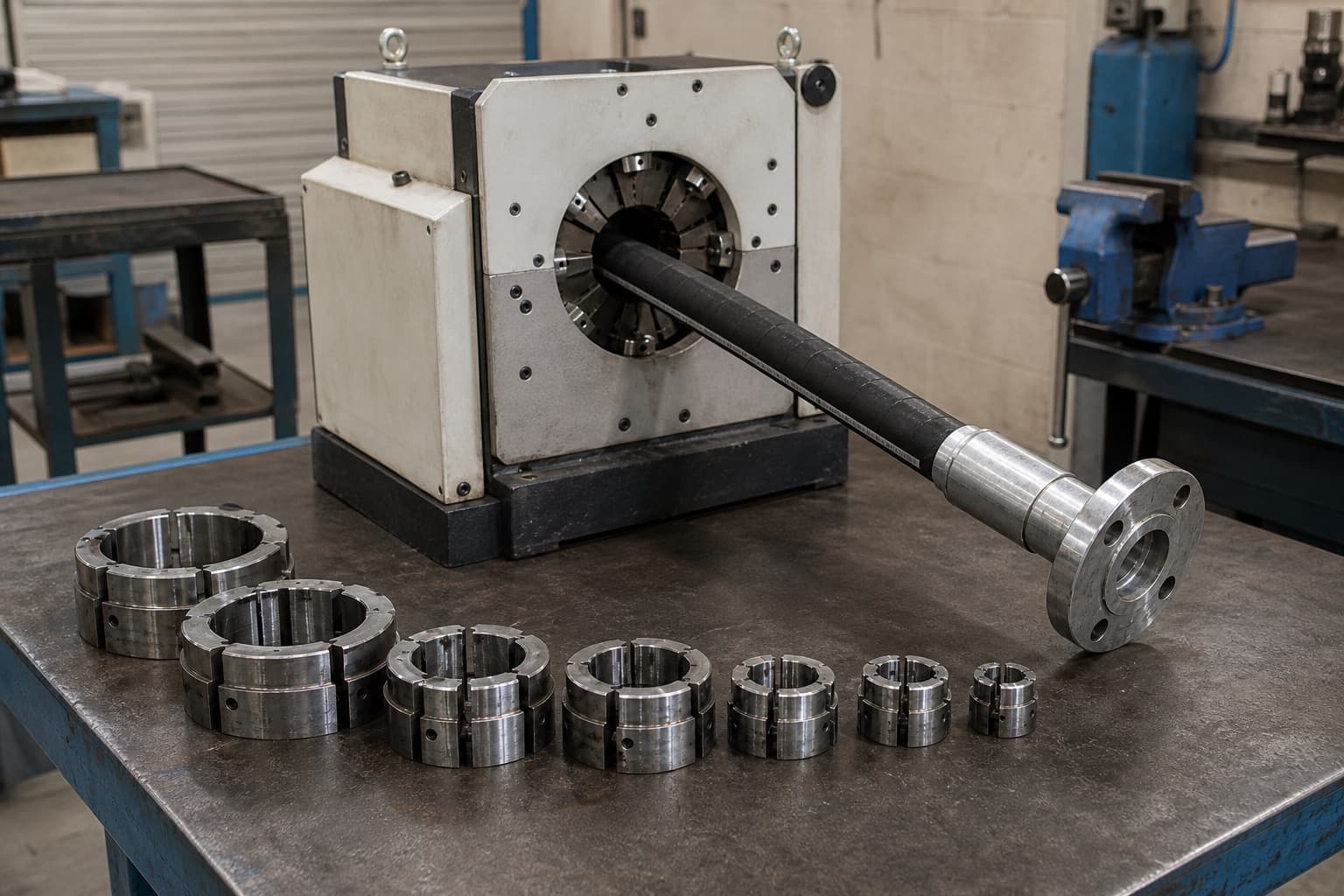
Sometimes the answer is yes. The machine is rarely the expensive part, the dies usually are, and the thing that decides it is not cost at all — it is how far away your machines break down.
A kit is not a box of spare hoses. It is a decision about which failures you are prepared to have unplanned — written down, priced, and put on a shelf before it is needed.
The problem with an unbranded fitting is not that it is cheap. It is that nobody can tell you its crimp specification, its material or its pressure rating — so the assembly built from it has no stated rating at all.