
Galvanised alloy chain is the default for lifting, but it rusts once the zinc goes, and rust and zinc flakes are unwelcome in a food plant, a clean room or a water tank. Stainless lifting chain solves that — at a price in capacity, and with a corrosion risk of its own. For the general stainless-or-galvanised question across rigging, see stainless vs galvanized rigging in Gulf coastal air.
/01Ratings side by side.
| Chain size | Grade 60 stainless | Grade 80 | Grade 100 |
|---|---|---|---|
| 6 mm | 0.9 t | 1.15 t | 1.4 t |
| 8 mm | 1.55 t | 2.05 t | 2.5 t |
| 10 mmHighlighted | 2.45 t | 3.2 t | 4 t |
| 13 mm | 3.85 t | 5.4 t | 6.7 t |
| 16 mm | 6 t | 8.2 t | 10 t |
| 22 mm | 11 t | 15 t | 19 t |
/02Rated and unrated stainless chain.
Our Grade 60 stainless lifting chain is 316L up to 13 mm and 318LN duplex from 16 mm, with a WLL at every size. Much other stainless link chain — including general-purpose 304 and 316 link chain — is published with a breaking load and no lifting rating; it is for marine, architectural and general duty, not lifting. If a chain has no WLL, do not lift on it. See DIN link chain standards.
/03Where it is worth it.
- Food, pharmaceutical and clean areas, where rust and zinc flakes are contamination.
- Water and wastewater: pump lifting chain in wet wells and tanks.
- Marine and offshore, where galvanising wears quickly.
- Heat: one maker rates its stainless lifting chain at full WLL to about 340 °C — more than some Grade 100.
/04Chlorides and cracking.
Stainless steel has its own failure mode: chloride stress corrosion cracking. The US stainless steel industry association notes that it is rare below about 60 °C in immersion, but that 304 and 316 are very susceptible, and that evaporation can concentrate chlorides enough to crack them below the usual thresholds. The Nickel Institute has documented 304 and 316 cracking at room temperature in indoor swimming-pool air. Hot, salty, wet-dry conditions — splash zones, desalination plants, pool halls — call for close examination of stainless lifting gear, and duplex grades resist it better.
Common questions
- What grade is stainless lifting chain?
- Commonly Grade 50 or Grade 60. Our stainless lifting chain is Grade 60, in 316L and 318LN duplex.
- Is 316 stainless chain good for lifting?
- Only if it is sold as lifting chain with a WLL. General 316 link chain is often rated by breaking load only.
- Is there a standard for stainless lifting chain?
- We found no dedicated EN or ISO standard; makers rate it by analogy with alloy chain sling standards.
- Can stainless steel chain crack?
- Yes — chloride stress corrosion cracking can affect 304 and 316 in warm, salty or evaporating conditions.
- Do you have stainless chain fittings?
- Yes — stainless hammerlocks, connecting links and hooks to match.
Stainless chain and fittings
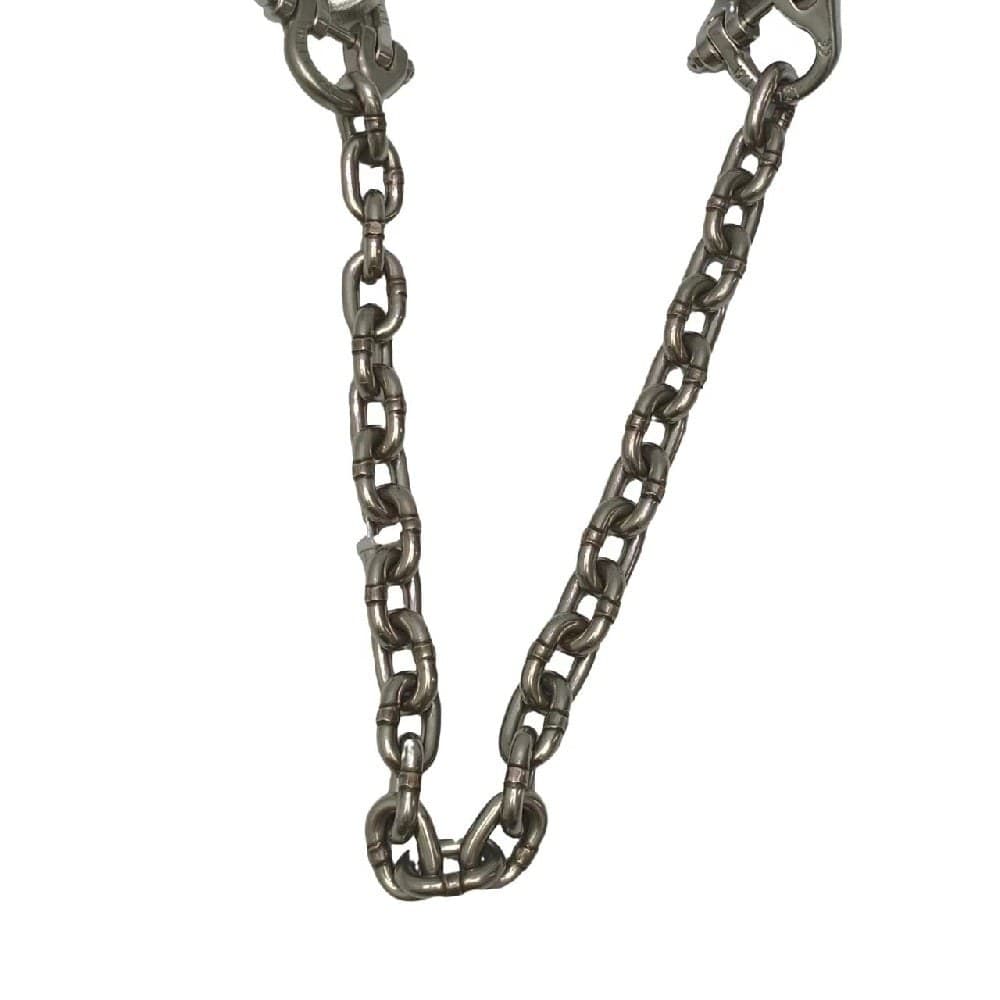 IH-LR-SC-G60Grade 60 Stainless Steel Lifting Chain
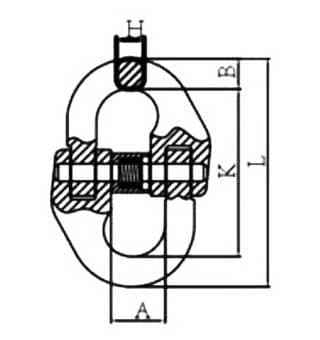 IH-LR-SC-SSHEStainless Steel Hammerlock — European Type
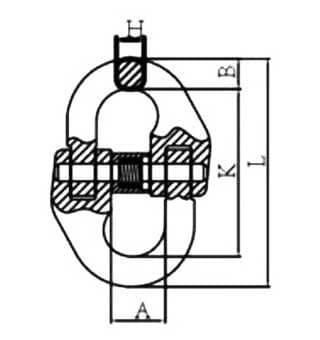 IH-LR-SC-SSHUSStainless Steel Hammerlock — US Type
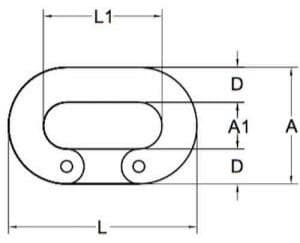 IH-LR-SC-SSSCLStainless Steel Split Connecting Link
 IH-LR-HK-SSCSHSLStainless Steel Clevis Slip Hook with Safety Latch
 IH-LR-SC-SSLCStainless Steel Lifting Chain