
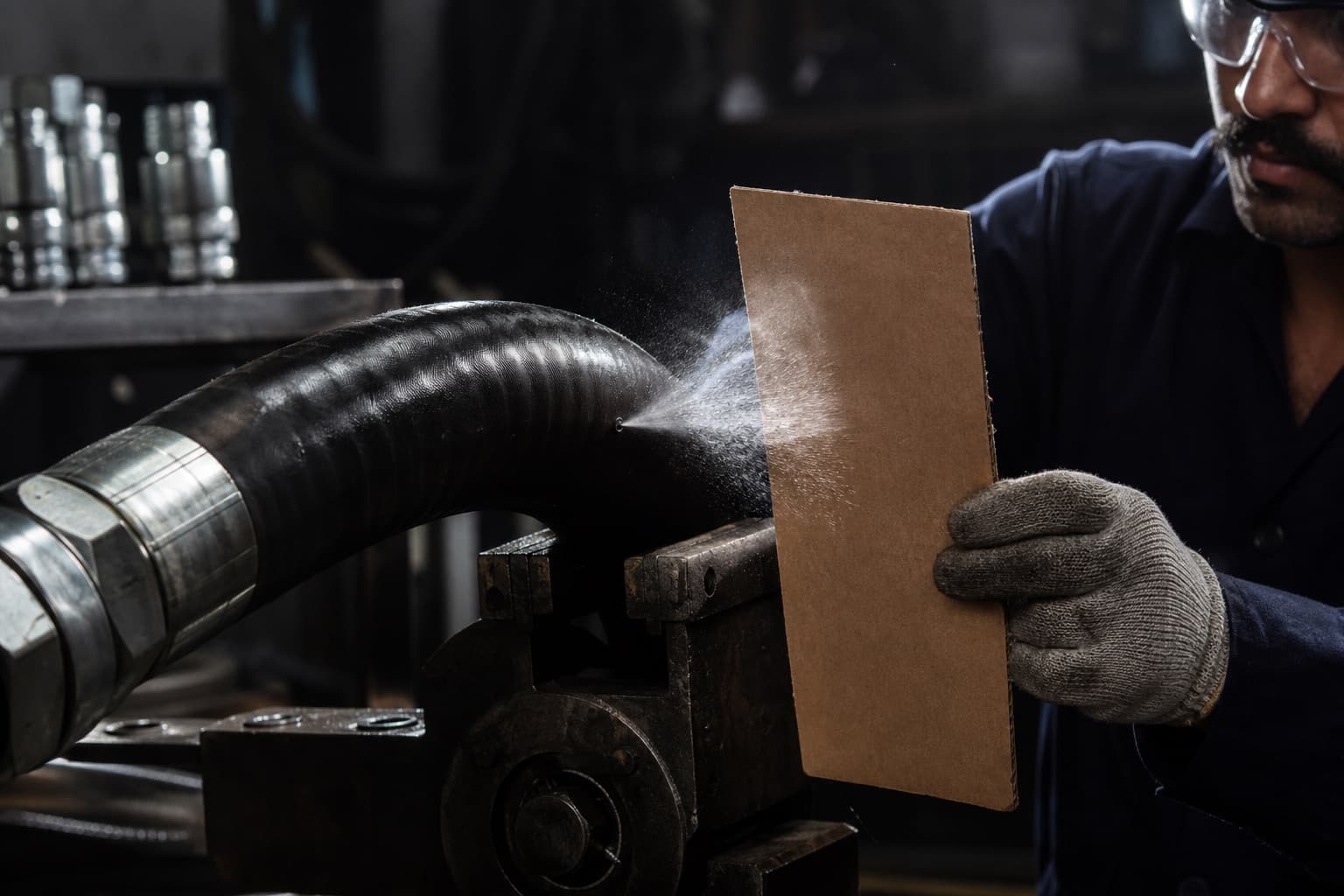
Someone runs a finger along a hose to find a weep. There is a mark on the fingertip, a bit of stinging, and no obvious wound. They finish the shift. That is the injury this article is about, and the reason it is dangerous is that at the moment it happens it does not feel like much.
What is actually happening.
A failing hose or fitting can release fluid through an opening far too small to see, at a pressure high enough to break the skin without any cut. The fluid does not stop at the surface. It follows the path of least resistance along tendon sheaths and tissue planes, spreading well beyond the entry point — which is why the visible mark tells you almost nothing about how far the damage extends.
The harm is mechanical and chemical at once. The injected volume raises pressure inside a compartment that cannot expand, restricting blood supply, while the fluid itself is an irritant that provokes an inflammatory response in tissue never meant to encounter it. Both worsen with time, which is the whole reason the clock matters.
What to do.
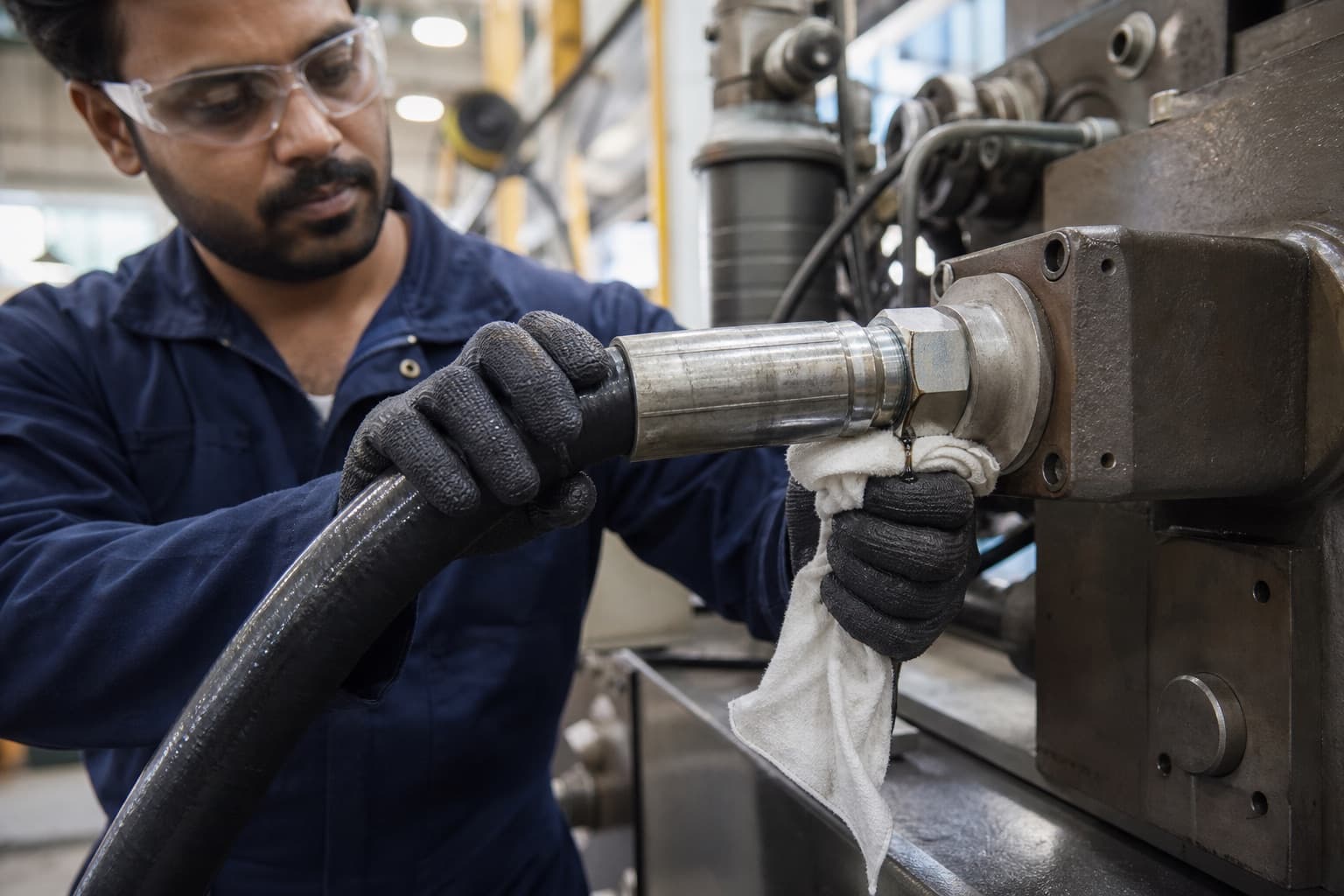
What should you do after a suspected hydraulic injection injury?
Treat it as an emergency and get to hospital immediately, even if the person feels fine and the wound looks like a pinprick. Tell staff explicitly that it is a high-pressure injection injury, and bring the safety data sheet for the fluid. Do not wait to see whether it worsens.
What this article deliberately does not do is describe treatment. That is a clinician’s decision, made with the fluid, the site and the elapsed time in front of them. The job on site is to recognise it, name it and move fast.
Not getting one.
Finding a leak without becoming the incident
Every one of these is standard practice and every one of them gets skipped when a machine is down and someone is in a hurry.
If · You need to locate a weep on a pressurised line
Depressurise first. If you genuinely cannot, use a piece of cardboard or timber held at arm’s length — never a hand, gloved or not.
A glove offers no protection whatsoever against injection pressure. It only hides the entry wound.
If · A hose shows cover damage with wire visible
Take the machine out of service and replace the assembly.
Exposed reinforcement is a hose already failing. It will not improve.
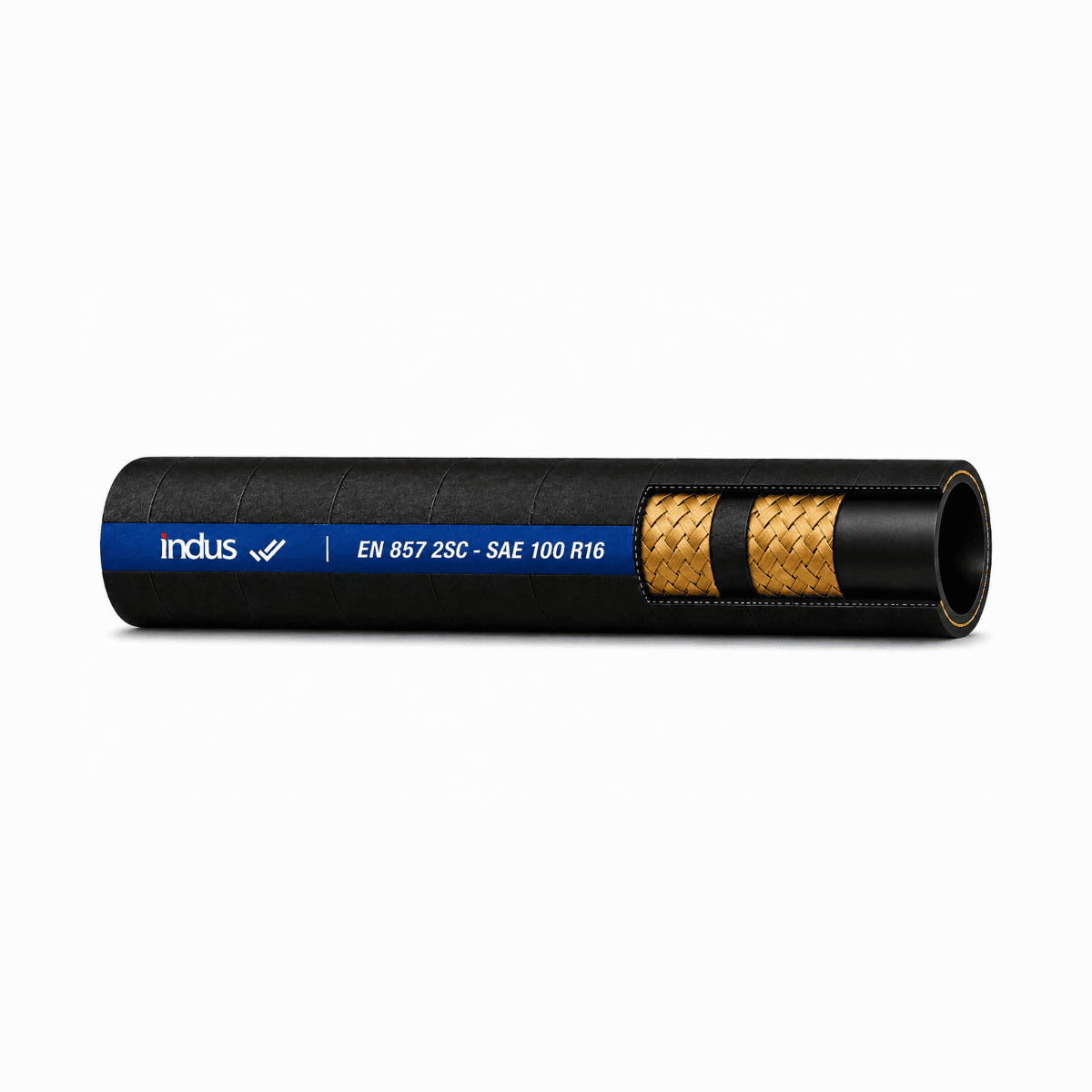
IH-HOSE-2SC →If · A hose is rubbing against structure or another hose
Re-route or clamp it now.
Abrasion is the most common route to a pinhole leak, and it is the easiest failure mode to design out.
If · An assembly is weeping at the fitting
Replace the assembly rather than re-torquing it.
A weep at a crimped fitting usually means the crimp or the seat is compromised; more torque does not fix either.
IH-CF-NS-R2T2SN →
Common questions
It barely bled and there is no pain. Is it still serious?
Yes, and that presentation is typical rather than reassuring. Minimal bleeding and little early pain are characteristic of injection injuries, because the wound is small and the damage is beneath it. Go to hospital.
Does the type of fluid matter?
It affects the clinical picture, which is exactly why the safety data sheet should go with the casualty. It does not change what you do on site — the response is the same for any hydraulic fluid.
Can this happen through a glove?
Yes. Gloves do not stop injection at hydraulic pressures, and they can make things worse by concealing the entry wound so the injury is noticed later.
What if we are not sure it was an injection?
Treat it as one. The cost of an unnecessary hospital visit is a few hours; the cost of a missed injection injury is measured in surgery.
Replacement hose and fittings
If a line has failed, the assembly should be replaced rather than patched. Full range in stock in Dubai.
Figures verified · Hazard description and first-response guidance only. Clinical management is deliberately out of scope.
Parts for this job
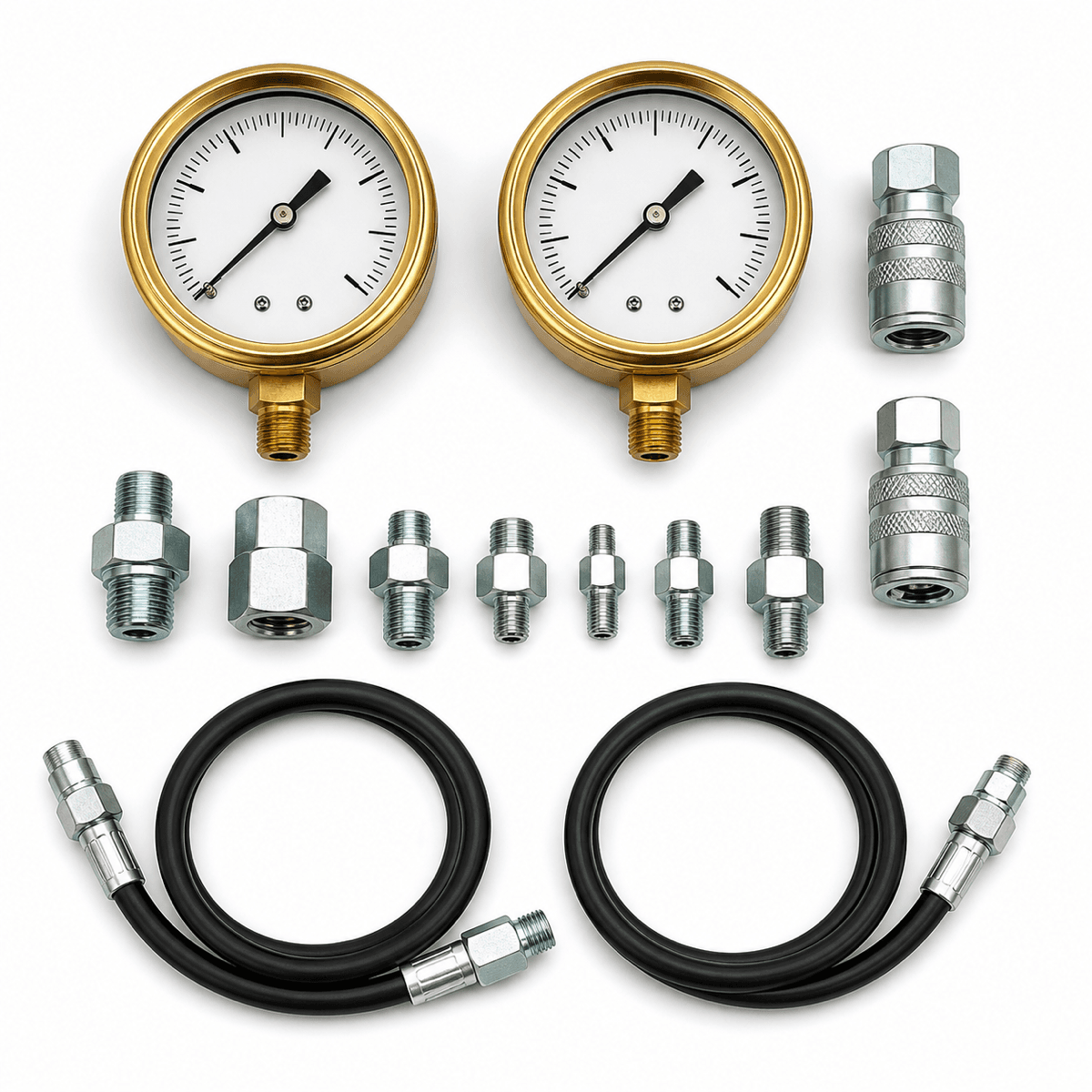
Replacing a failed line?
Send the part number or a photograph of the failed assembly. We will identify it and come back with what we hold and how quickly you can have it.
Plant-down? Call +971 52 2477942 — 24/7