Bonded seals are a small, cheap, almost invisible part that decides whether a BSPP joint holds. They also carry a naming convention that is genuinely confusing the first time you meet it, because the number on the packet is a thread designation inherited from Victorian pipe sizing and has no direct relationship to any dimension you can measure with a caliper.
/01Why the number does not match the measurement.
BSP sizes were originally the bore of a wrought iron pipe, not the outside diameter of the thread cut on it. A one-quarter BSP thread measures around thirteen millimetres across the major diameter — nowhere near a quarter of an inch. Every dimension you meet in this family carries that history, and a bonded seal is specified against the thread designation rather than against anything you can measure directly.
/02What makes it seal.
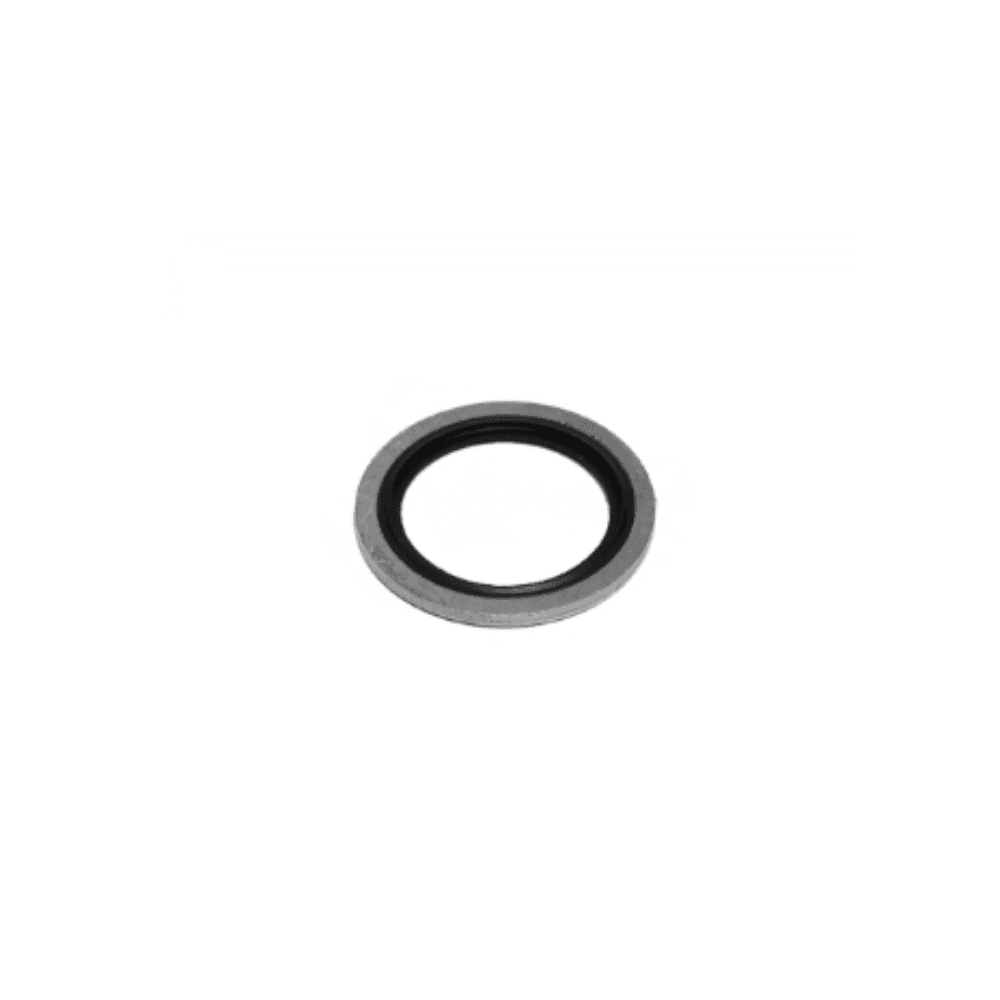
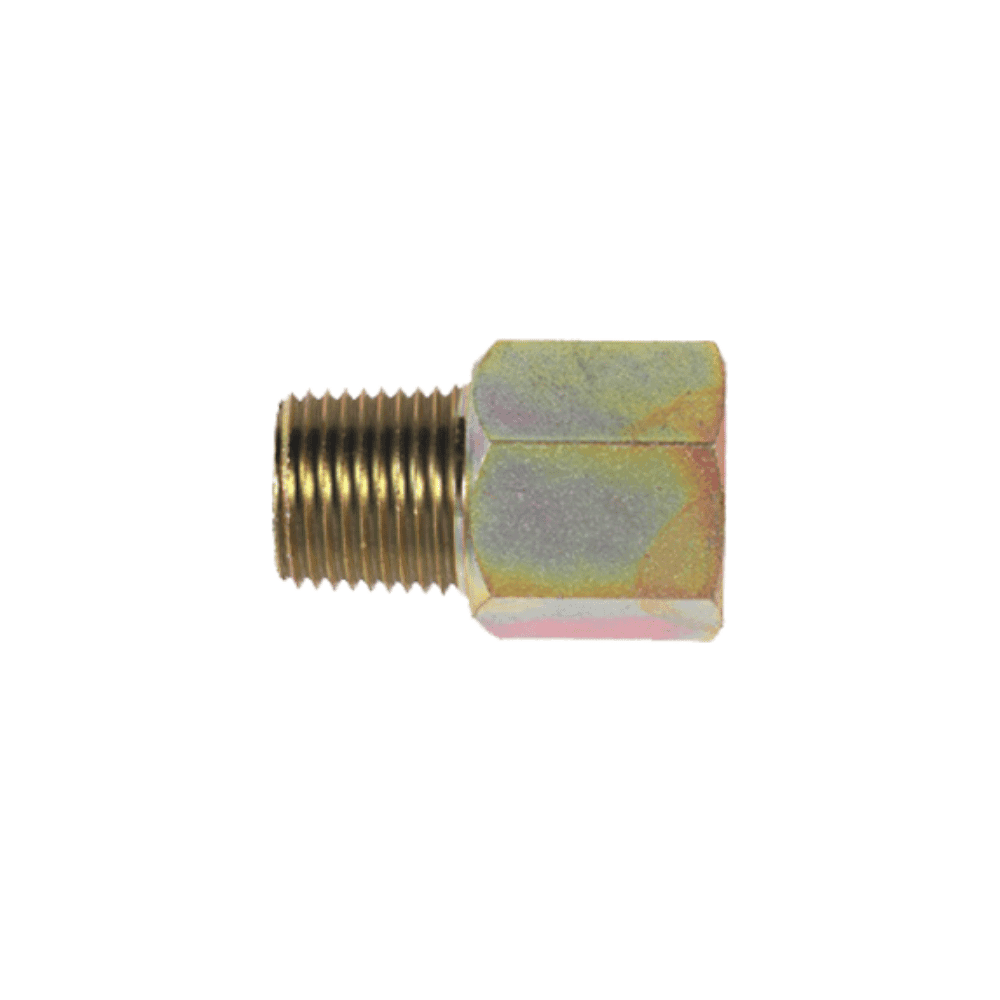
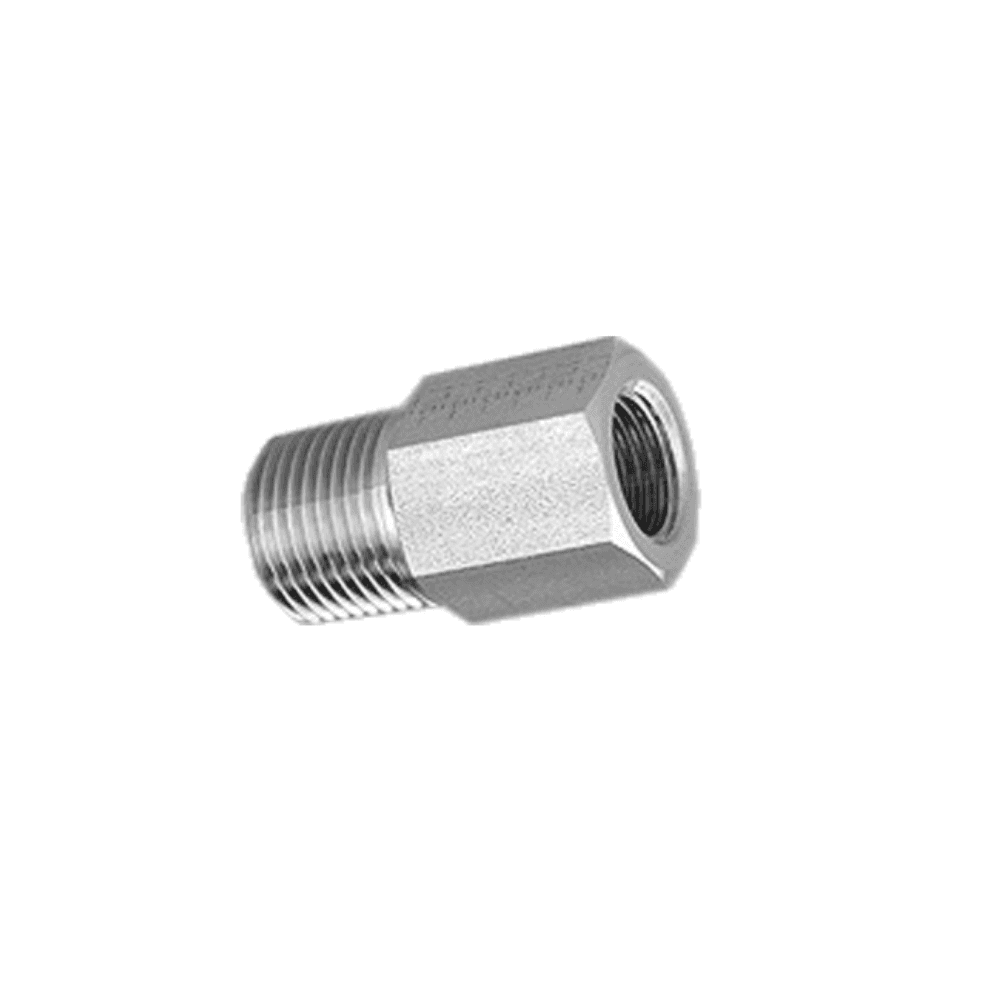
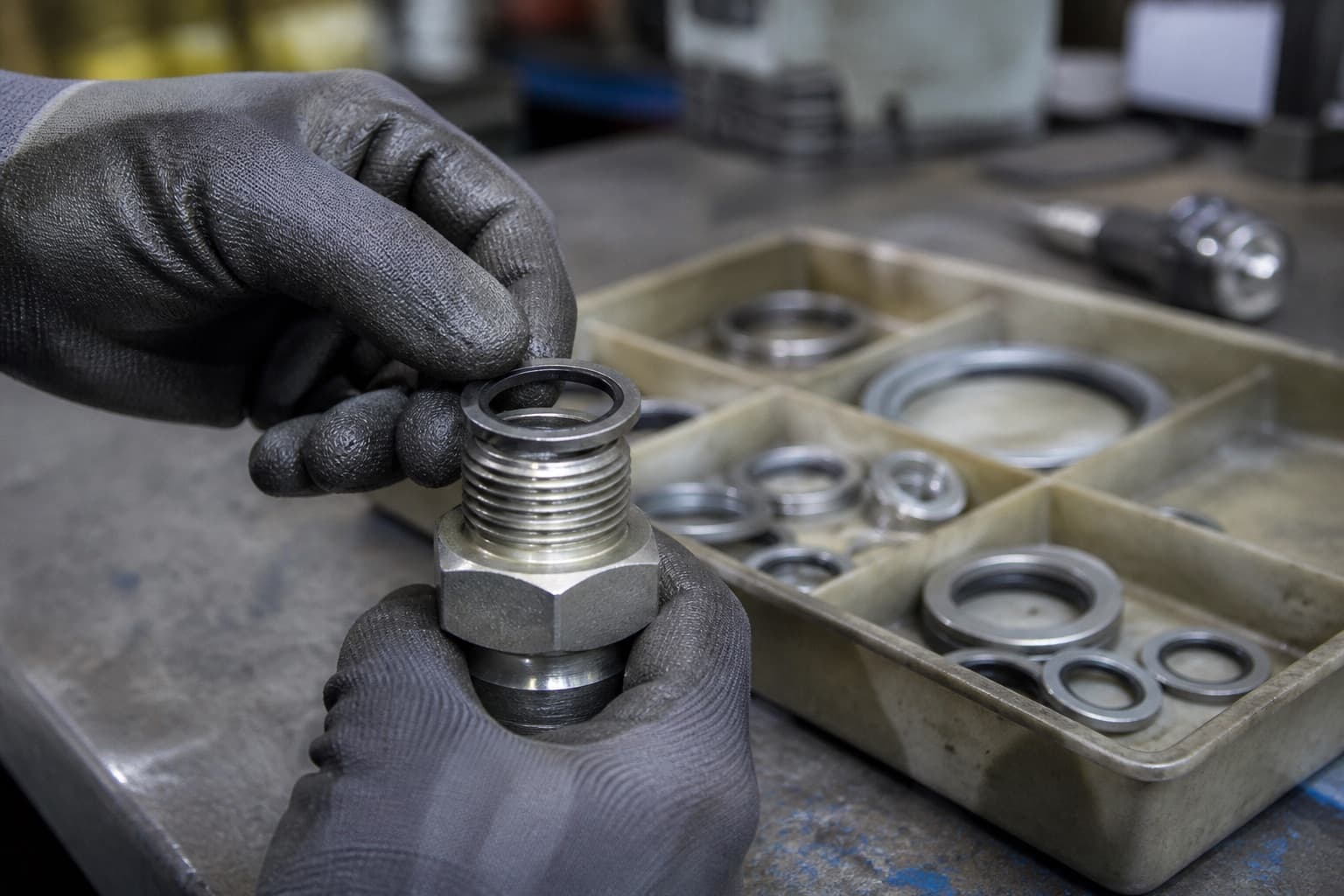
A bonded seal is a steel washer with a rubber ring bonded to its inner edge. As the fitting is tightened, the metal washer takes the clamp load and stops at a fixed thickness, and the rubber is compressed by a controlled amount against the port face. The metal is the reason a bonded seal does not extrude and does not need careful torque management. It seals the male stud of a BSP adapter against a flat port face, and it is sized to the thread, not the hex.
| Surface | Requirement | If it is wrong |
|---|---|---|
| Thread major diameterHighlighted | Seal is a close sliding fit on it | Rubber has no inner surface to seal against |
| Port faceHighlighted | Flat, machined, undamaged | Weeps regardless of torque |
| Fitting head underside | Flat and square to the thread | Loads the seal unevenly |
/03Materials, and when the standard one is wrong.
| Material | Use it for | Avoid with |
|---|---|---|
| Nitrile (NBR)Highlighted | Mineral oil hydraulics — the default | Phosphate ester fluids, high heat |
| Fluoroelastomer (FKM) | High temperature, aggressive fluids | Some water-glycol and steam applications |
| EPDMHighlighted | Water-glycol, some brake fluids | Mineral oil — it swells badly |
| Stainless carrier | Corrosive or washdown environments | Nothing in particular — it is a cost decision |
/04Assembly.
Fitting one so it holds first time
Four steps, and the first two are where the failures are.
IfCheck the port face
It must be flat and machined, with no radial scoring.
A cast or painted face is not a sealing surface. If the previous seal has embossed a ring into a soft face, that ring is now a leak path.
IfFit a new seal, not the old one
The rubber has taken a compression set.
Re-used bonded seals are cheap to avoid and expensive to diagnose. Have the sizes you use on the van.
IfSeal goes under the head, against the port face
Not on the thread, not part way down.
It should slide down the thread and come to rest flat on the face before the head reaches it.
IfTighten to the manufacturer figure
The metal carrier sets the compression, so this is forgiving — but not unlimited.
Over-tightening squeezes the rubber out from under the washer and the joint then depends on metal-to-metal contact that was never designed to seal.
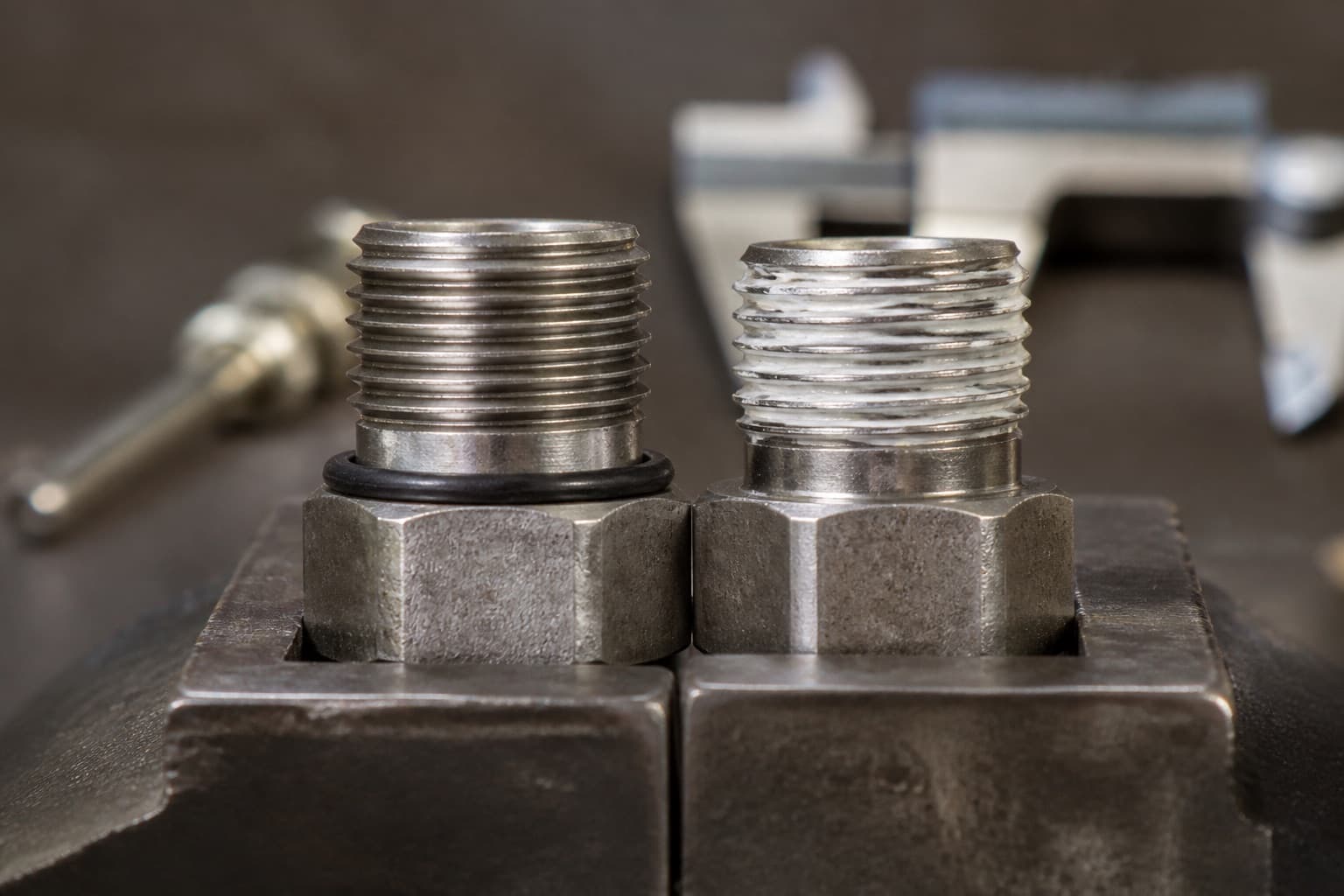
Pipe threads where pressure-tight joints are not made on the threads
The standard governing BSPP parallel threads. The title is the important part: the thread is explicitly not the sealing element, which is exactly why a bonded seal or an O-ring is required and why thread tape achieves nothing on this family.
Common questions
- Can I re-use a bonded seal?
- In practice, no. The rubber takes a compression set on first assembly and will not recover enough to seal reliably. They are inexpensive; carry the sizes you use.
- What is the difference between a bonded seal and a dowty washer?
- None in normal usage. Dowty is a brand name that became the generic term in much of the world, in the same way that a particular vacuum cleaner brand did.
- Can I use a plain copper washer instead?
- On a low-pressure or non-critical joint it may hold, but it seals by deforming metal and needs a much higher and more precise clamp load. On a hydraulic port, use the bonded seal the port was designed around.
- My port is BSPT, not BSPP. Do I need a bonded seal?
- No. A tapered BSPT thread seals on the thread flanks and takes a sealant instead. If you are unsure which you have, a parallel thread has the same diameter along its length and a tapered one visibly narrows.
- The joint still weeps with a new seal. What now?
- Check the port face for a machined flat, check that the seal is a close fit on the thread rather than loose, and check that the fitting head underside is square. In that order — the loose-seal case is the most common and the hardest to see once assembled.