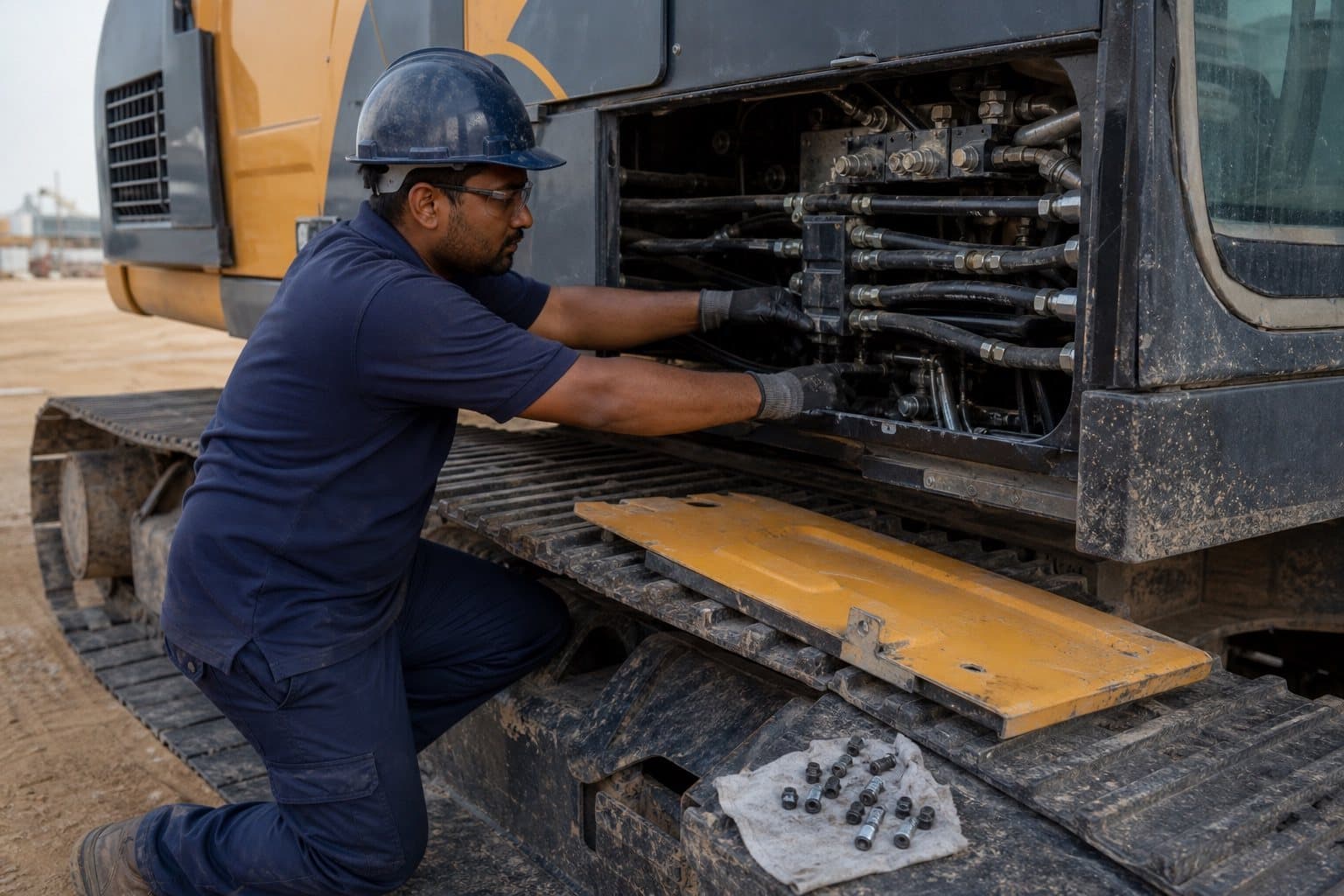
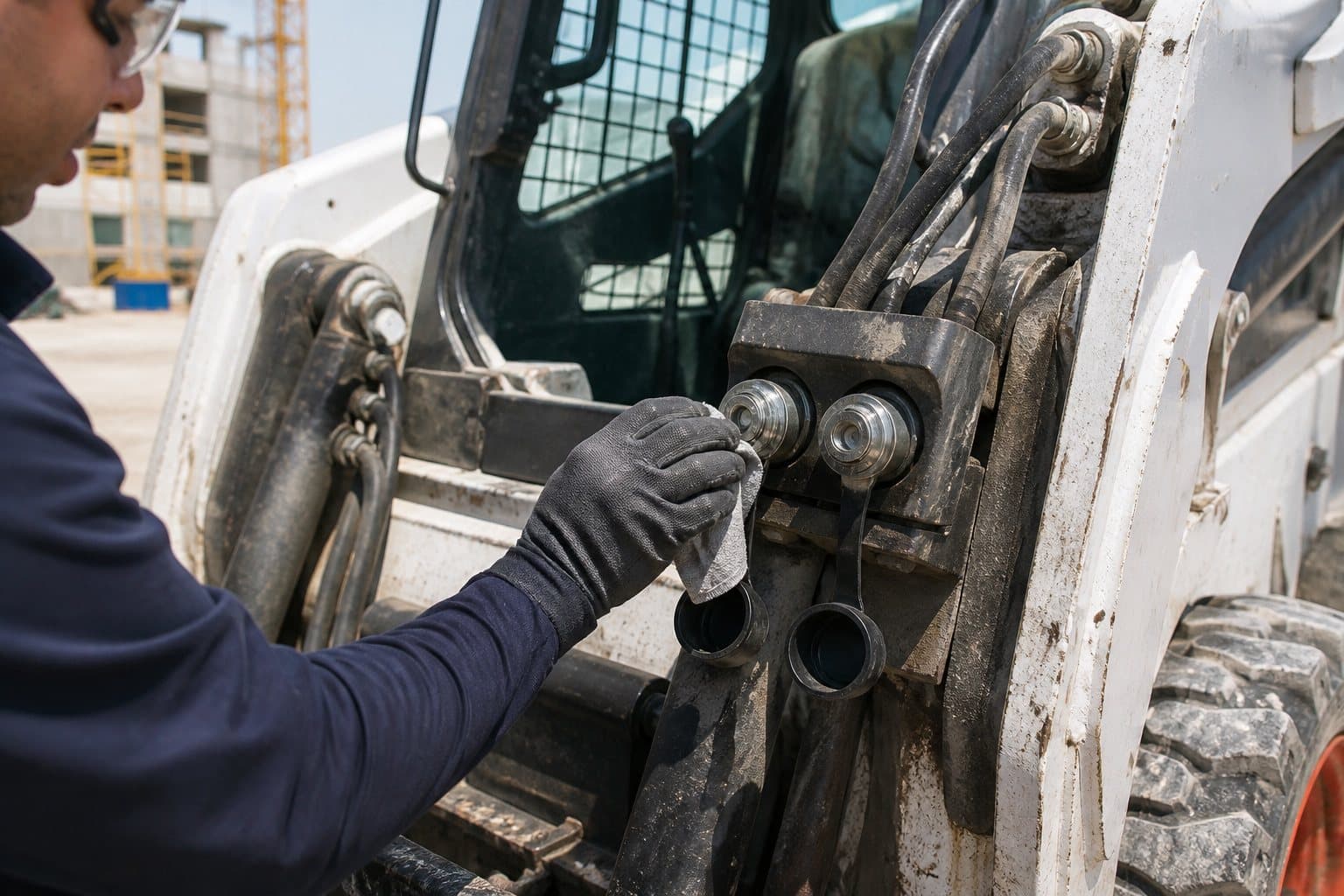
Skid steers fail differently from the machines around them, and the reason is that they are the only ones being connected and disconnected all day. The hydraulic problem on a skid steer usually starts at a coupler face rather than at a hose.
/01Read the symptom.
| What the machine does | Likely circuit | Where to look first |
|---|---|---|
| Attachment dead, loader arms fineHighlighted | Auxiliary | The couplers first, then the lines along the arm |
| Attachment weak or slow | Auxiliary flow | Partially connected coupler, or a restricted line |
| Arms will not lift | Lift | Lift cylinder lines |
| Bucket will not tilt | Tilt | Tilt cylinder lines, front of the machine |
| One side drives, the other does not | Drive | Drive motor lines on the affected side |
/02Why coupler type matters here.
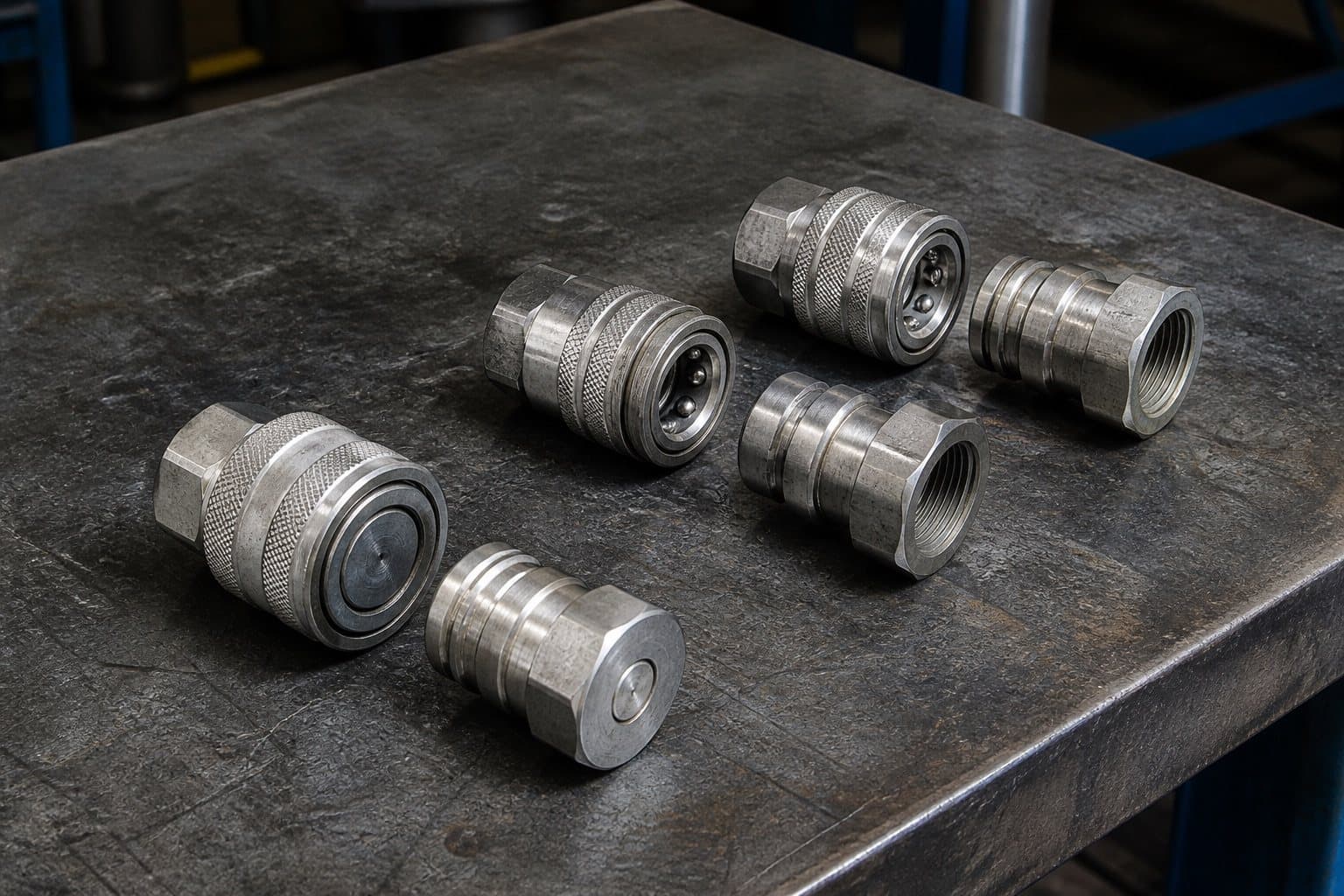
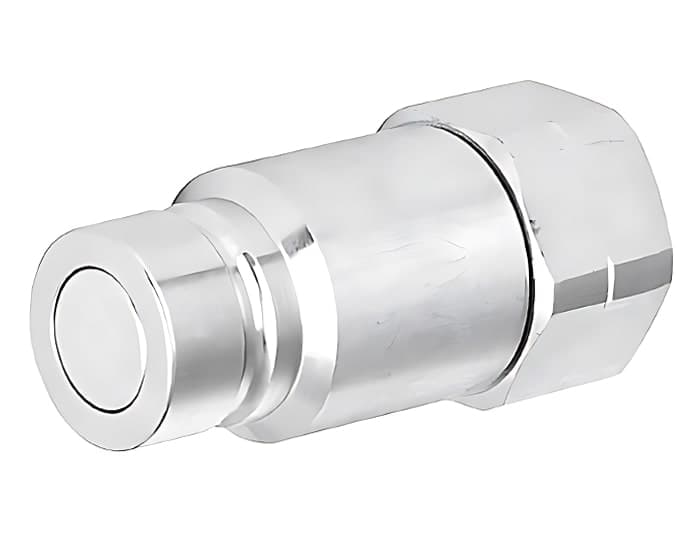
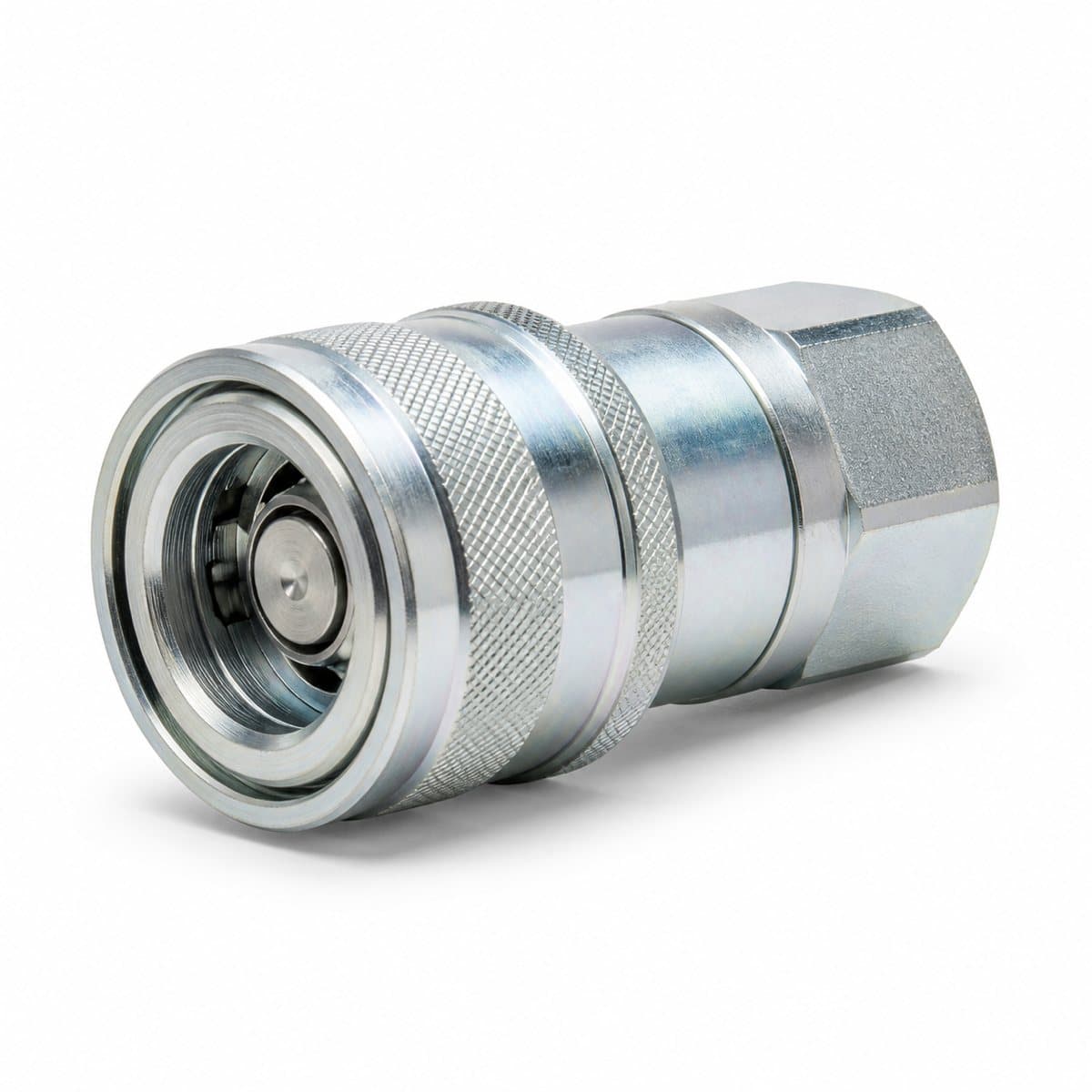
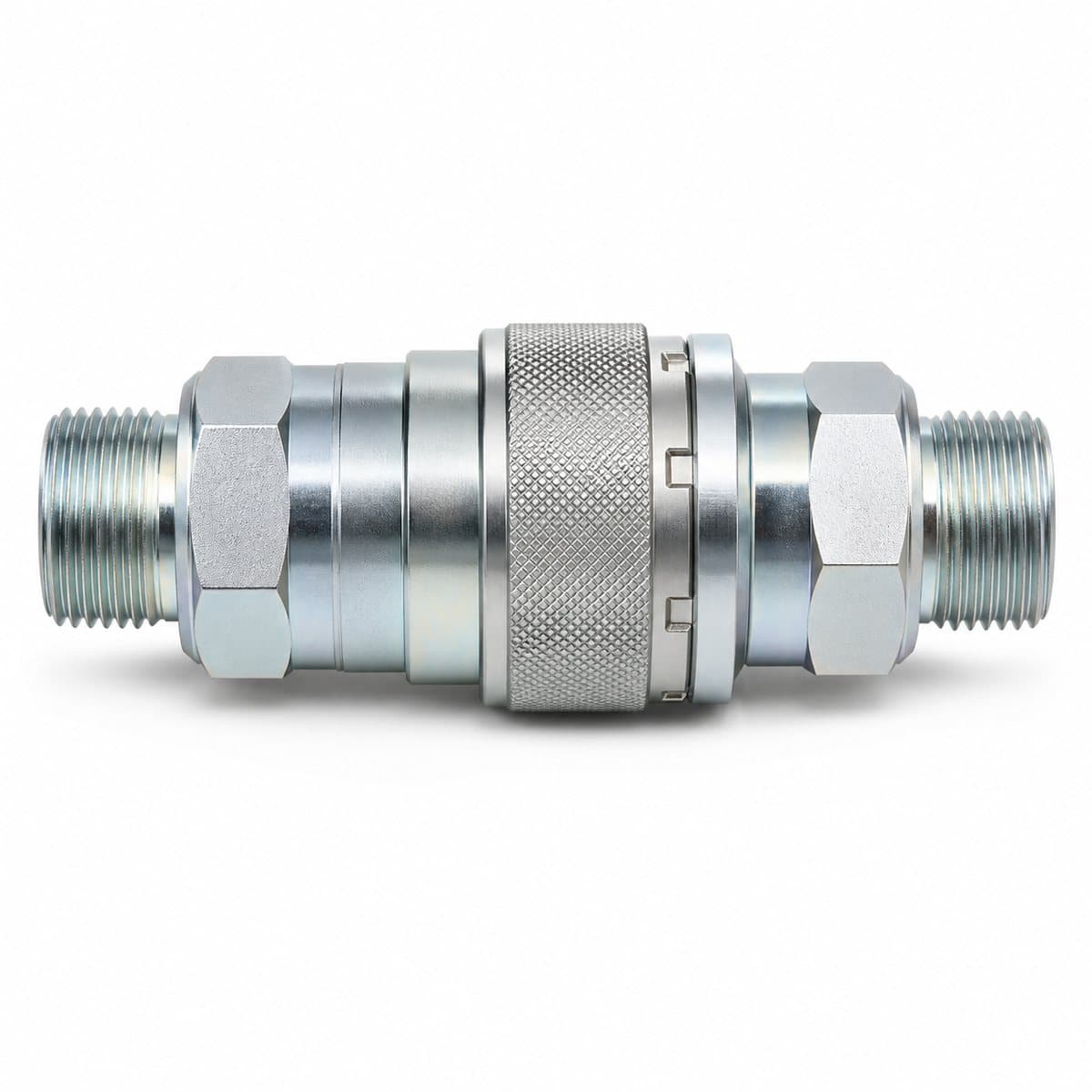
Every connection on a dusty site carries some dirt into the circuit. How much depends on the coupler face. Flat-face couplers are designed so the sealing surfaces are flush and wipeable, which is why they became the standard on machines that change attachments often. Older agricultural-style couplers have recesses that hold grit. For heavier circuits there is also a high-pressure ISO 16028 flush-face coupler; check the interchange marking on both halves before mixing them.
On a machine connecting several times a day, that difference accumulates into real contamination — and contamination damages pumps and valves, which are considerably more expensive than couplers.
/03Habits that pay for themselves.
Four, and none of them takes a tool
On a machine that connects this often, procedure is worth more than components.
IfAttachment is being changed
Wipe both coupler faces before connecting.
The single highest-value habit on the machine. It takes seconds and it keeps grit out of the pump.
IfAttachment is off the machine
Cap both halves.
Dust caps are part of the coupler, not an accessory that got lost.
IfA coupler will not engage
Relieve the trapped pressure by the machine’s procedure.
Do not force it. Forcing damages sealing faces.
IfAttachments are shared between machines
Standardise the coupler type across the yard.
Mixed types mean adapters, and adapters mean more joints and more leak paths.
Common questions
- Can I mix flat-face and agricultural couplers?
- Not directly — they do not intermate. An adapter set exists but adds joints and leak paths. Where a yard runs both, standardising is cheaper over any real period than carrying adapters.
- How do I relieve trapped pressure safely?
- By the machine’s own procedure, which normally involves cycling the auxiliary control with the engine off. Never crack a fitting to release pressure — that is how injection injuries happen.
- Attachment hoses keep failing at the same point. Why?
- They sit at ground level and get dragged and crushed. Guarding helps, and so does routing the slack so it cannot be caught under the attachment when it is set down.
- Do you supply attachment hose kits?
- Yes — send the coupler type, the bore and the lengths, or the old hoses, and we will build the set.