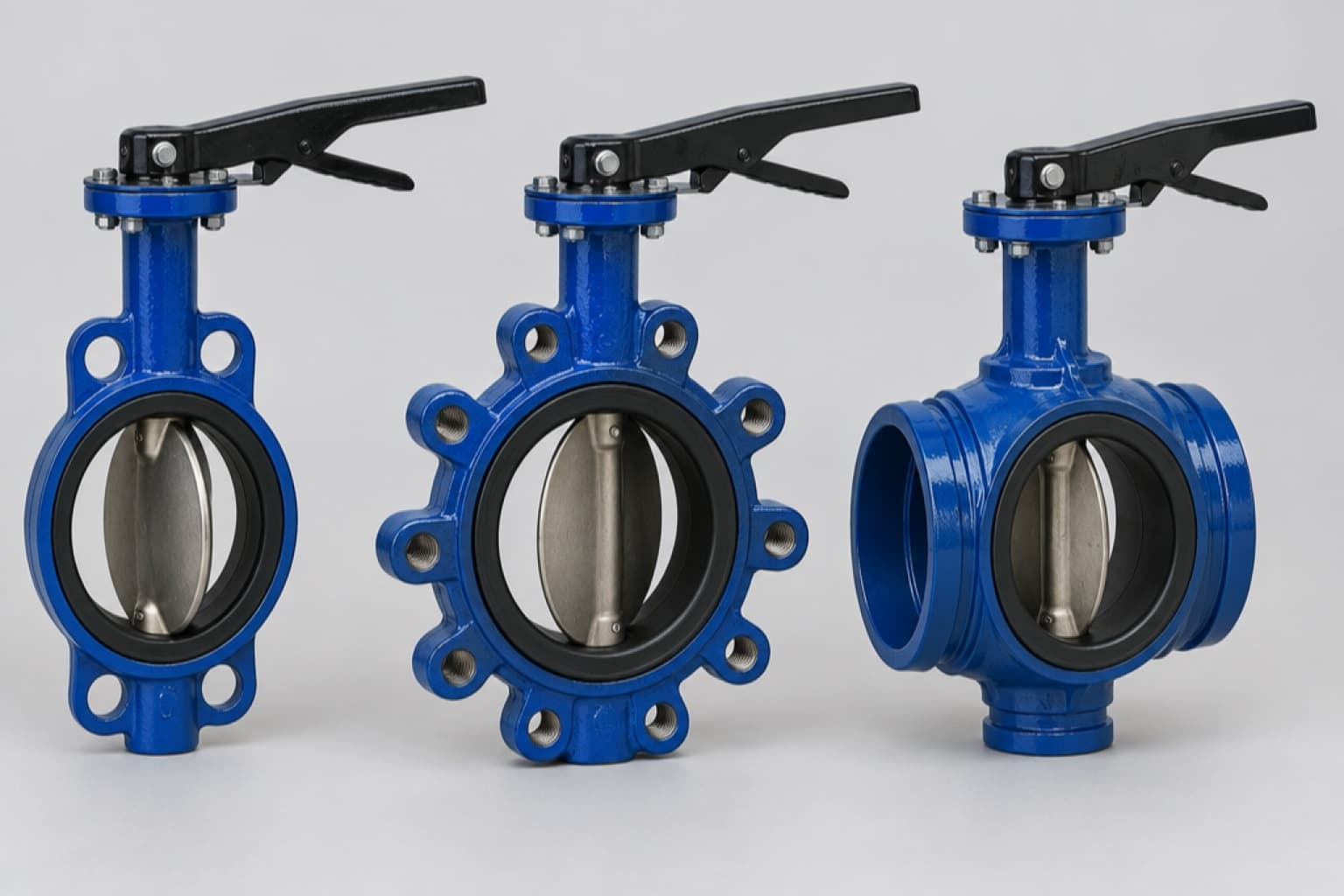
Butterfly valves isolate water, air, fuel, chemicals and slurry lines from 2″ to 36″ and more in a body a fraction of the length and weight of a gate or ball valve. A quarter-turn of the disc opens or closes the bore. The choices that matter are the body style, the shut-off rating, the seat elastomer and the operator — and getting the body style wrong is the one that hurts, because it decides whether the valve can hold the line when the pipe beyond it is taken away.
/01Wafer, lug or grooved.
| Body | How it is installed | Dead-end service | Example |
|---|---|---|---|
| WaferHighlighted | Clamped between two flanges by through-bolts | No — removing one flange releases the valve | DEMCO NE-C, NE-I, NE-D wafer |
| Lug (tapped) | Each flange bolts into threaded lugs | Yes, within the maker’s limit | DEMCO NE-C lug, NF-C lug |
| Grooved | Grooved couplings on grooved pipe | Yes, at full rating (Series 761) | Victaulic Series 700, 761 |
/02The DEMCO series.
| Series | Sizes | Bodies | Notes |
|---|---|---|---|
| NE-CHighlighted | 2–12″ | Wafer or lug | Long neck — clears 2″ of insulation on Class 150 flanges |
| NF-C | 14–36″ | Wafer or lug | Large bore; bronze bearings on both stems |
| NE-I | 2–12″ | Wafer (double-D stem) | Short neck; food, beverage, utilities, process lines |
| NE-D | 2–12″ | Wafer (square stem) | Short neck with body notches |
All are one-piece bodies rated ASME Class 150 (285 psi nonshock), fitting between Class 125/150 flanges. The standard shut-off rating — the pressure the closed disc seals against — is 200 psi on 2–12″ valves, with 285 and 50 psi options; 14–36″ valves are offered at 150 or 285 psi drop-tight. Throttling discs do not give drop-tight closure. The valves seal against 10 µm of vacuum (29.9 in Hg); DEMCO recommends 50 psi discs for vacuum duty.
Seats are a hard-backed cartridge — elastomer bonded to a rigid ring — in Buna-N or FKM as standard, EPDM or natural rubber as options, and set the temperature range within −30 to 300 °F. Bodies are ductile iron as standard, with aluminium bronze, carbon steel and stainless options; discs nickel-plated ductile iron, aluminium bronze or stainless; stems 416 stainless, with 316 and Monel options. The integral flange seal works with weld-neck, slip-on, threaded, socket and stub-end flanges. DEMCO cites MSS SP-67 (testing on request) and API 607 fire testing on selected sizes. For reading a DEMCO part number, see DEMCO butterfly valve part numbers.
/03Grooved butterfly valves.
- Victaulic Series 700 — 1½–6″, 200 psi, a ductile iron housing with an elastomer-lined carbon steel body and aluminium bronze disc. EPDM seats run −30 to +230 °F but are not for petroleum or steam; nitrile −20 to +180 °F.
- Victaulic Vic-300 MasterSeal Series 761 — 2–12″, full vacuum to 300 psi, with full working pressure for bi-directional and dead-end service. ISO 5211 mounting flange (F07 for 2–8″, F10 for 10–12″) for actuators; seats in EPDM, nitrile (+10 to +150 °F) or fluoroelastomer (+20 to +300 °F).
/04Handles, gears and throttling.
DEMCO offers three handle designs — 10-position locking, 2-position locking and memory stop — with a padlock hole, and recommends a gear operator for 8–12″ in all series. Its worm gears are self-locking with open and closed stops and a position indicator; the gear ratio rises with size, from 30:1 (7½ turns per 90°) on 2–6″ to 48:1 on 8–16″ and higher on the largest valves.
For throttling, Victaulic’s rule for the Series 761 is to keep the disc no less than 30° open, ideally between 30° and 70°. DEMCO notes that dynamic torque usually peaks with the disc about 70° open.
/05Concentric, double offset or triple offset.
| Design | Geometry | Seat and seating | API 609 |
|---|---|---|---|
| Concentric (no offset)Highlighted | Shaft and disc centred in the seat, which is centred in the body; the disc is always in contact with the seat | Elastomer seat or liner; position-seated with an interference fit | Usually Category A |
| Double offset (high performance) | Shaft offset from the seal/disc centreline and from the body centreline; the disc swings clear of the seal in the first 10–15° of travel | Pressure-assisted PTFE seat, or metal for high temperature; position-seated | Category B |
| Triple offset | The two offsets plus a seat cone inclined to the pipe centreline, so the disc touches the seat only when fully closed | Metal seat; torque-seated, no rubbing | Category B |
The DEMCO and Victaulic valves above are resilient-seated: the elastomer seat seals by interference, which is cheap and tight at moderate pressure but means the disc rubs the seat on every stroke. Emerson’s white paper sets out how the offsets move away from that. A double offset swings the disc clear of the seal early in its travel, so seal wear falls; PTFE seats are generally used to ANSI Class VI shut-off at up to 450 °F (232 °C), and 316 stainless metal seals to 1,000 °F (538 °C). The triple offset inclines the seat cone as well, so there is no rubbing at all and the valve is closed by torque rather than by position; Emerson points to it for high temperatures and pressures, safety-critical duty and wherever seal wear must be kept down.
API 609 (9th edition, 2021) splits butterfly valves into two categories:
- Category A — rated by the manufacturer’s cold working pressure (CWP), usually concentric; NPS 2 to 60, for Class 125 or 150 flange bolting.
- Category B — rated to an ASME class and pressure-temperature table, with an offset seat; Class 150, 300 and 600. Lug and wafer bodies run NPS 2 to 60 (NPS 3 to 60 at Class 600); double-flanged and butt-weld bodies NPS 3 to 60.
A valve above Class 600 or larger than NPS 60 is outside API 609’s scope, whatever its design follows, so check the data sheet’s claim against size and class. Our range: the concentric rubber-lined valve for water, cooling water and utilities, the double offset valve for process lines, and the triple offset metal-seated valve for high-temperature and hydrocarbon service.
Common questions
- What is the difference between a wafer and a lug butterfly valve?
- A wafer valve is clamped between two flanges by through-bolts; a lug valve has threaded lugs so each flange bolts to it separately, which lets it stay in service with one side removed, within the maker’s limits.
- Can a butterfly valve be used at the end of a line?
- A lug valve can, within the maker’s rules — DEMCO allows 2–12″ lug valves in liquid service up to 200 psi with a blind flange attached. A wafer valve cannot.
- What does a 200 psi shut-off rating mean?
- The closed valve seals against a 200 psi differential. The body itself is rated ASME Class 150 (285 psi nonshock).
- When do I need a gear operator?
- DEMCO recommends one for 8–12″ valves in all series, and on larger sizes.
- What is the difference between API 609 Category A and Category B?
- Category A valves carry the manufacturer’s cold working pressure rating and are usually concentric, NPS 2–60 on Class 125/150 bolting. Category B valves are rated to ASME Class 150, 300 or 600 and have an offset seat.
- Can a butterfly valve throttle?
- Yes, within limits: Victaulic advises keeping the disc between 30° and 70° open. Standard discs are for on-off or coarse throttling.
What we list
DEMCO and Victaulic butterfly valves, handles, gear operators and actuators, and concentric, double offset and triple offset butterfly valves for process and utility lines:
- DEMCO 10-Position Locking Handle for Butterfly Valves, 2″–12″
- DEMCO 2-Position Locking Handle for Butterfly Valves, 2″–12″
- DEMCO Memory-Stop Throttling Handle for Butterfly Valves, 2″–12″
- DEMCO Series DR Double-Acting Pneumatic Actuator for Butterfly Valves, 2″–24″
- DEMCO Series DR Spring-Return Pneumatic Actuator for Butterfly Valves, 2″–24″
- DEMCO Series NE-C General-Purpose Butterfly Valve, 2″–12″
- DEMCO Series NE-C Lug Butterfly Valve, 12″, 200 psi
- DEMCO Series NE-C Lug Butterfly Valve, 16″, 200 psi
- DEMCO Series NE-C Lug Butterfly Valve, 2″, 200 psi
- DEMCO Series NE-C Lug Butterfly Valve, 3″, 200 psi
- DEMCO Series NE-C Lug Butterfly Valve, 4″, 200 psi
- DEMCO Series NE-C Lug Butterfly Valve, 5″, 200 psi
- DEMCO Series NE-C Lug Butterfly Valve, 6″, 200 psi
- DEMCO Series NE-C Lug Butterfly Valve, 8″, 200 psi
- DEMCO Series NE-C Wafer Butterfly Valve, 12″, 200 psi
- DEMCO Series NE-C Wafer Butterfly Valve, 2″, 200 psi
- DEMCO Series NE-C Wafer Butterfly Valve, 2½″, 200 psi
- DEMCO Series NE-C Wafer Butterfly Valve, 3″, 200 psi
- DEMCO Series NE-C Wafer Butterfly Valve, 4″, 200 psi
- DEMCO Series NE-C Wafer Butterfly Valve, 5″, 200 psi
- DEMCO Series NE-C Wafer Butterfly Valve, 6″, 200 psi
- DEMCO Series NE-C Wafer Butterfly Valve, 8″, 200 psi
- DEMCO Series NE-D Short-Neck Notched-Body Butterfly Valve, 2″–12″
- DEMCO Series NE-D Wafer Butterfly Valve, 2″, 200 psi
- DEMCO Series NE-D Wafer Butterfly Valve, 4″, 200 psi
- DEMCO Series NE-D Wafer Butterfly Valve, 5″, 200 psi
- DEMCO Series NE-D Wafer Butterfly Valve, 6″, 200 psi
- DEMCO Series NE-I Lug Butterfly Valve, 2½″, 200 psi
- DEMCO Series NE-I Sanitary Butterfly Valve (FDA), 2″–12″
- DEMCO Series NE-I Short-Neck Butterfly Valve, 2″–12″
- DEMCO Series NE-I Wafer Butterfly Valve, 12″, 200 psi
- DEMCO Series NE-I Wafer Butterfly Valve, 2″, 200 psi
- DEMCO Series NE-I Wafer Butterfly Valve, 2½″, 200 psi
- DEMCO Series NE-I Wafer Butterfly Valve, 3″, 200 psi
- DEMCO Series NE-I Wafer Butterfly Valve, 4″, 200 psi
- DEMCO Series NE-I Wafer Butterfly Valve, 5″, 200 psi
- DEMCO Series NE-I Wafer Butterfly Valve, 6″, 200 psi
- DEMCO Series NE-I Wafer Butterfly Valve, 8″, 200 psi
- DEMCO Series NEI-T Teflon-Lined Sanitary Butterfly Valve, 2″–10″
- DEMCO Series NF-C Large-Bore Butterfly Valve, 14″–36″
- DEMCO Square-Nut Handle for Butterfly Valves, 2″–12″
- DEMCO Stem Extension for Butterfly Valves, 2″–24″
- DEMCO Worm-Gear Operator for Butterfly Valves, 2″–36″
- Victaulic Series 700 Grooved Butterfly Valve, 3″ (88.9 mm), 200 psi
- Victaulic Vic-300 MasterSeal Series 761 Butterfly Valve, 4″ (114.3 mm), 300 psi
- Concentric Butterfly Valve, Rubber Lined
- Double Offset Butterfly Valve, API 609
- Triple Offset Butterfly Valve, Metal Seated, API 609
Butterfly valves
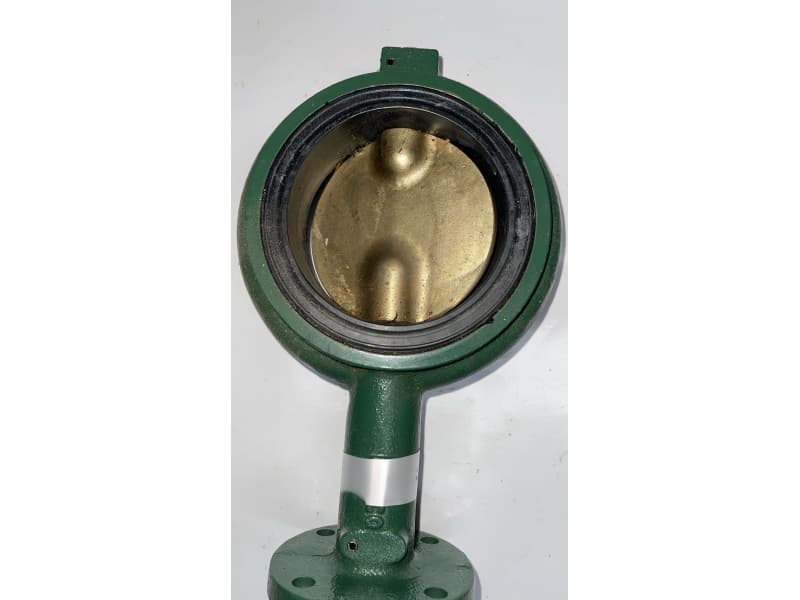 IH-VAL-BFLY-NEC-W-4DEMCO Series NE-C Wafer Butterfly Valve, 4″, 200 psiDEMCO
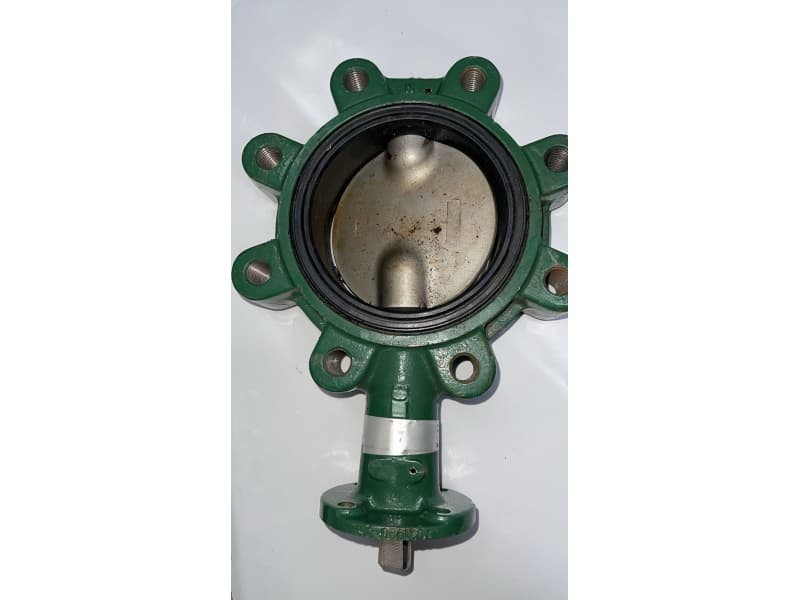 IH-VAL-BFLY-NEC-L-6DEMCO Series NE-C Lug Butterfly Valve, 6″, 200 psiDEMCO
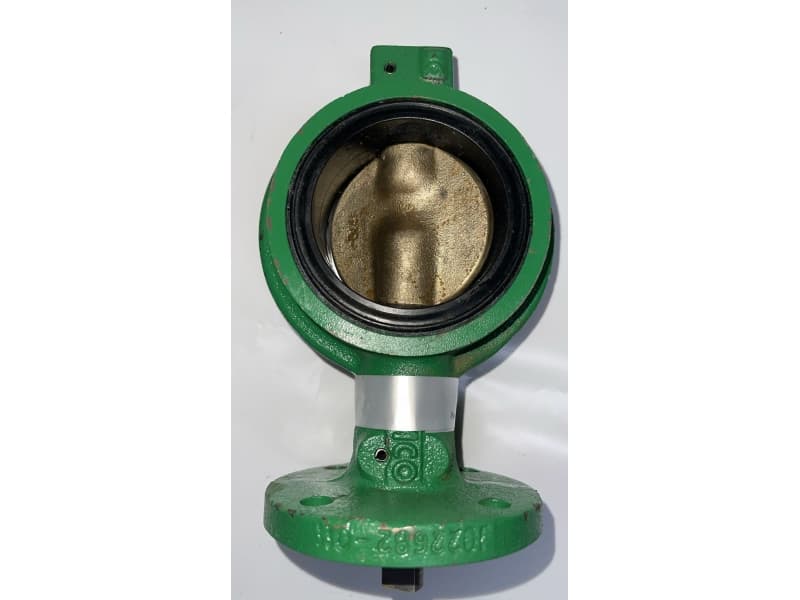 IH-VAL-BFLY-NEI-W-3DEMCO Series NE-I Wafer Butterfly Valve, 3″, 200 psiDEMCO
- IH-VAL-BFLY-NFCDEMCO Series NF-C Large-Bore Butterfly Valve, 14″–36″DEMCO
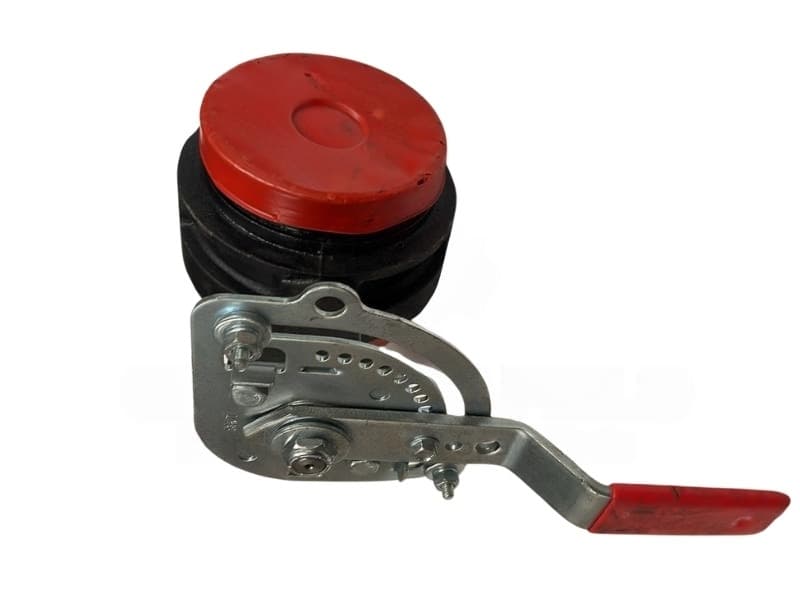 IH-VAL-BFLY-VIC-761-4Victaulic Vic-300 MasterSeal Series 761 Butterfly Valve, 4″ (114.3 mm), 300 psiVictaulic
- IH-VAL-BFLY-WGODEMCO Worm-Gear Operator for Butterfly Valves, 2″–36″DEMCO
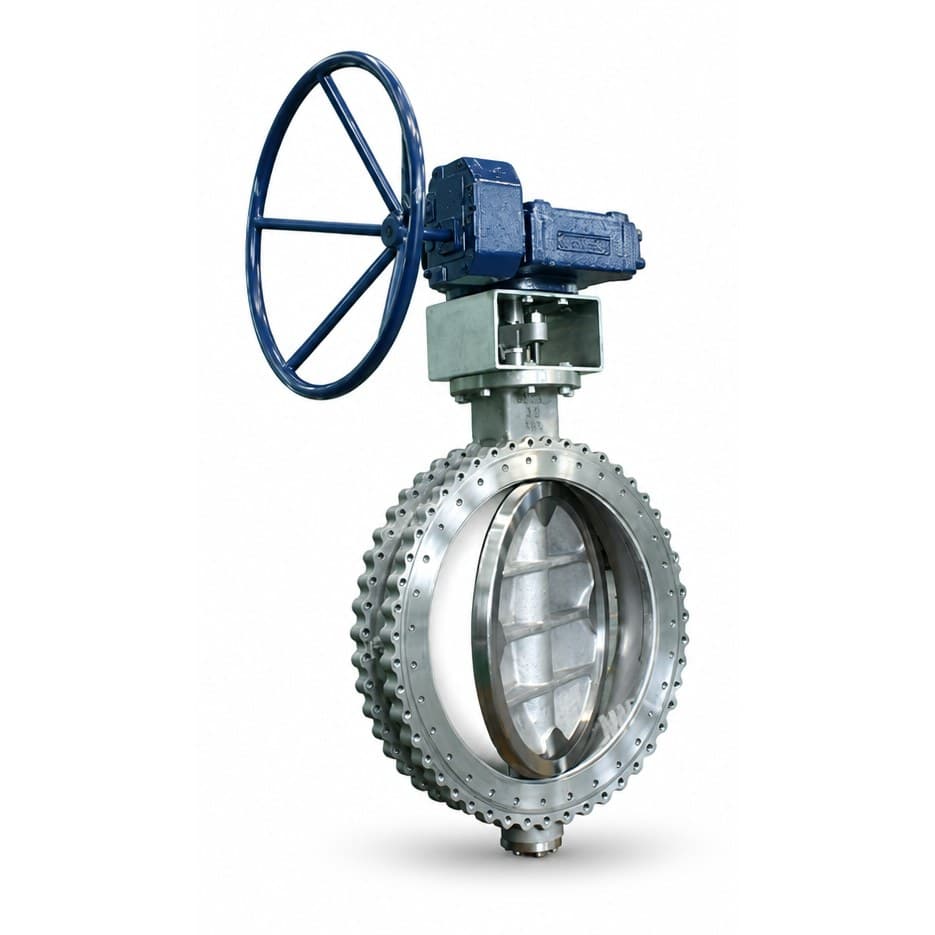 IH-PV-BFDDouble Offset Butterfly Valve, API 609Indus Hydraulics
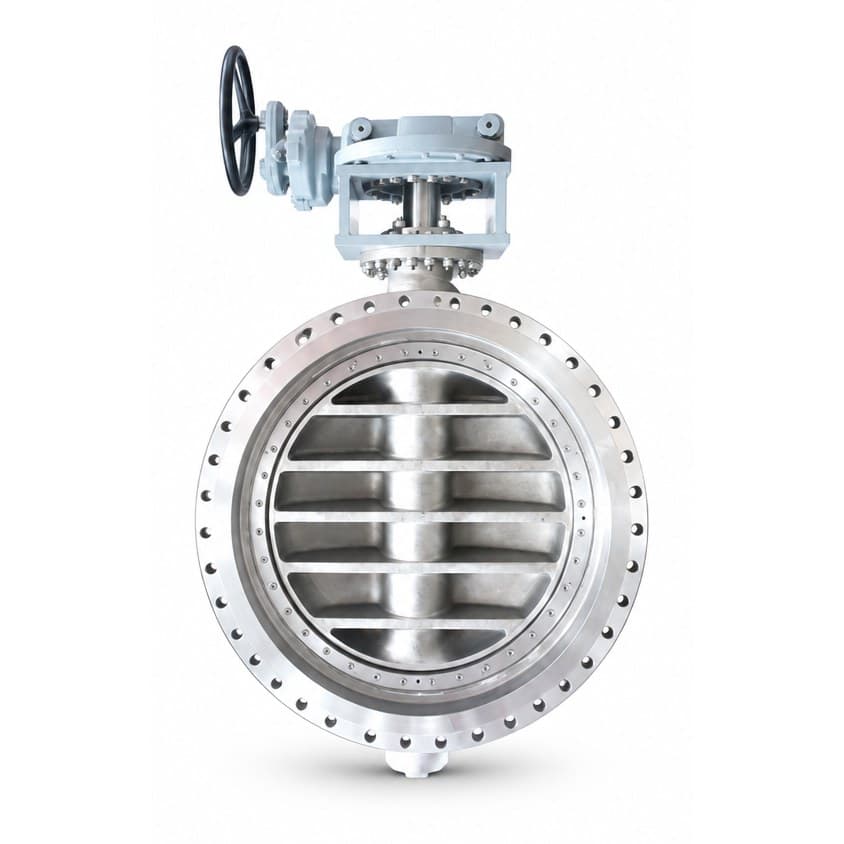 IH-PV-BFTTriple Offset Butterfly Valve, Metal Seated, API 609Indus Hydraulics
Sources
- 1.SLB. DEMCO Butterfly Valves catalogue (2024). ↗
- 2.Victaulic. Publication 08.05 — Series 700 Butterfly Valve. ↗
- 3.Emerson. White paper D353572X012 — Navigating the World of Butterfly Valves (2025). ↗
- 4.API STD 609, 9th edition (2021) — scope, as published by Normservis. ↗
- 5.Victaulic. Publication 08.20 — Vic-300 MasterSeal Series 761. ↗