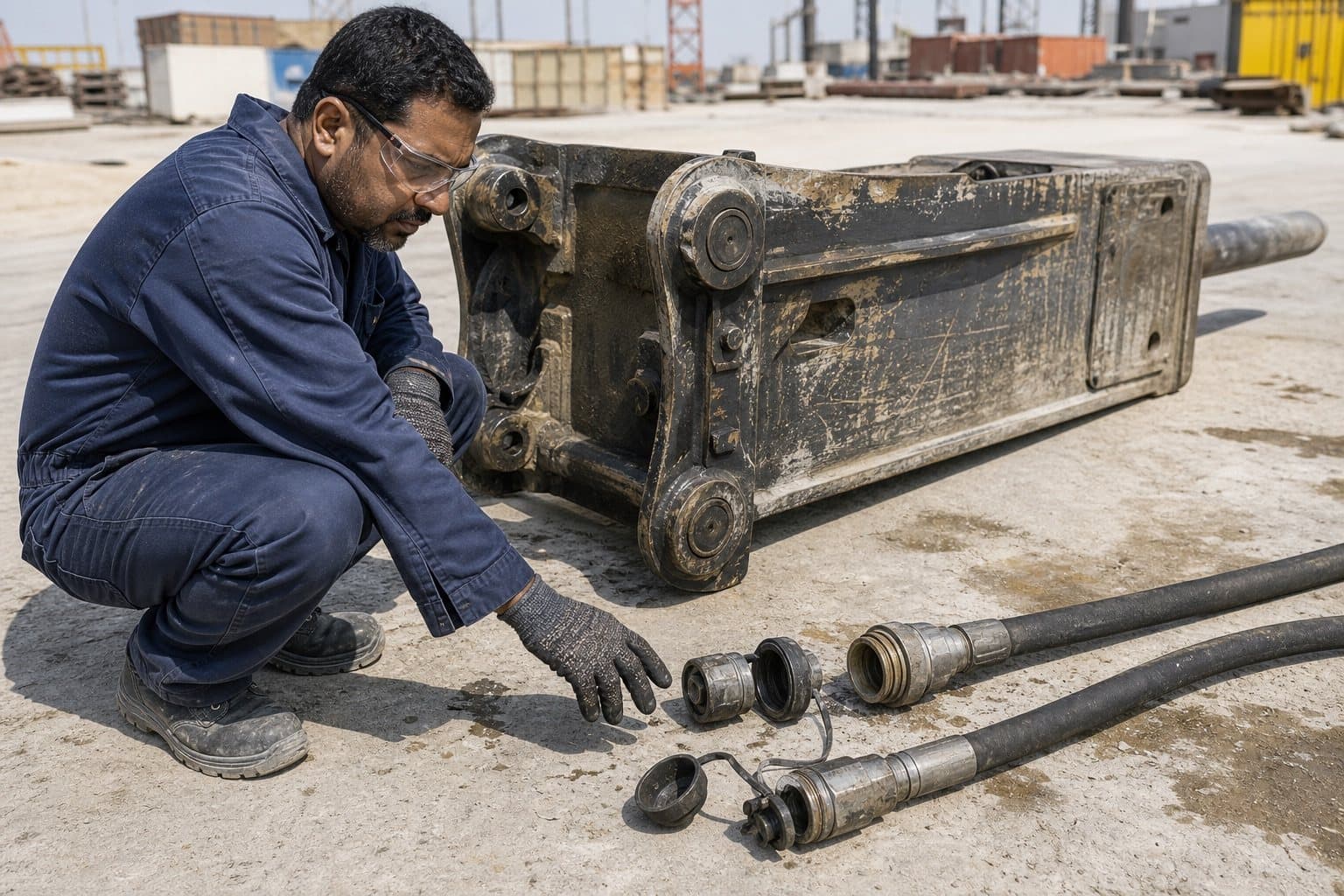
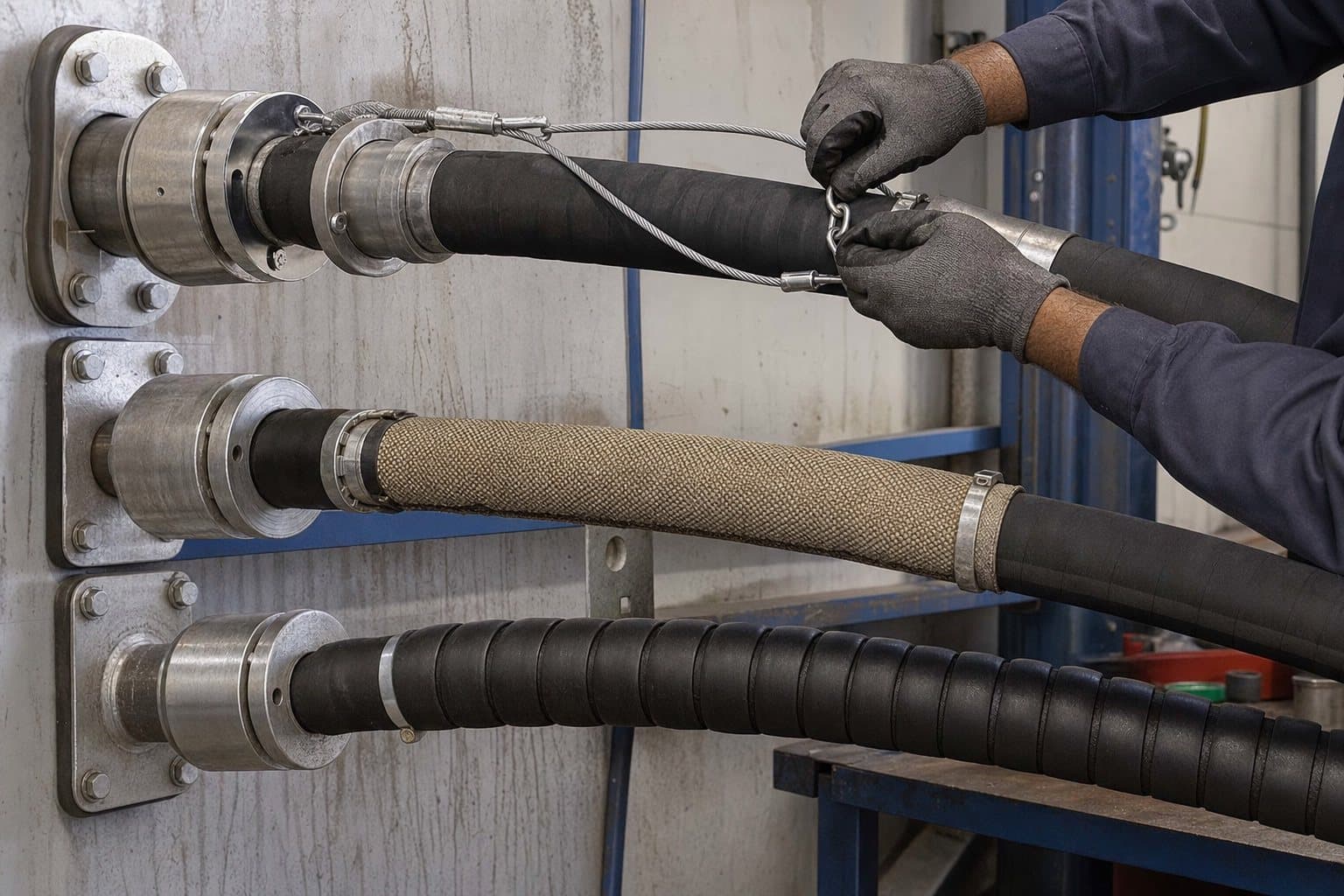
Drive-aways and pull-aways are among the most common causes of damage at loading points: a truck leaves with the hose still connected, or a vessel moves on its moorings. Without a weak link, the force goes into the hose, the loading arm or the tank nozzle, and the product comes out wherever the line fails. A safety breakaway coupling decides where the line fails, and makes that point close itself.
/01The three types.
| Feature | Breaking bolt, industrial | Breaking bolt, marine | Cable release (SBC-C) |
|---|---|---|---|
| Releases | At a set pull, any angle 0–90° | At a set pull, straight (axial) only | When the release cable is pulled |
| InstalledHighlighted | To at least one fixed point | Between two hose strings | With the cable anchored to a fixed point |
| Typical use | Tank trucks, loading arms, terminals | Ship-to-shore, ship-to-ship hose | High operating pressure on weak piping |
| Sizes (MannTek) | DN 25 to DN 300 | DN 25 to DN 300 | DN 50 to DN 150 |
/02Setting the breaking load.
The breaking load is not a catalogue number to pick from a list. MannTek calculates it for each installation from the line and the equipment it protects: the coupling must hold through normal handling and side load, and let go before the weakest item downstream is overloaded. To quote one, we need the hose size and length, the operating pressure, the medium, and a sketch of how the line is fixed. After a release, the MannTek SBC can be reset in minutes without special tools, with a new set of breaking bolts.
/03Cryogenic and powered release.
LNG and other cryogenic liquids need breakaways built for -196 °C: MannTek’s CBC comes in breaking-bolt (DN 25 to DN 200) and cable-release versions. In LNG bunkering the release is often powered: the PERC releases on an emergency shutdown signal or by manual override, and a vessel separation device triggers the alarm and shutdown stages as the ships move apart. See LNG bunkering couplings for how those parts work together.
Common questions
- Where should a breakaway coupling go?
- Where a vehicle, vessel or arm can move away while still connected: at the truck, on the loading arm, or between two hose strings in marine transfer.
- Does it stop all spillage?
- Both halves close their valves as they separate, so the loss is limited to the small volume between the valves.
- How is the breaking load chosen?
- MannTek calculates it for the installation. Send the hose size and length, pressure, medium and how the line is fixed.
- Can it be reused?
- Yes. The MannTek SBC resets in minutes without special tools, with new breaking bolts, once the cause is cleared.
- When is cable release better?
- Where the line runs at high pressure on piping that cannot take the pull needed to break bolts.
Breakaway couplings
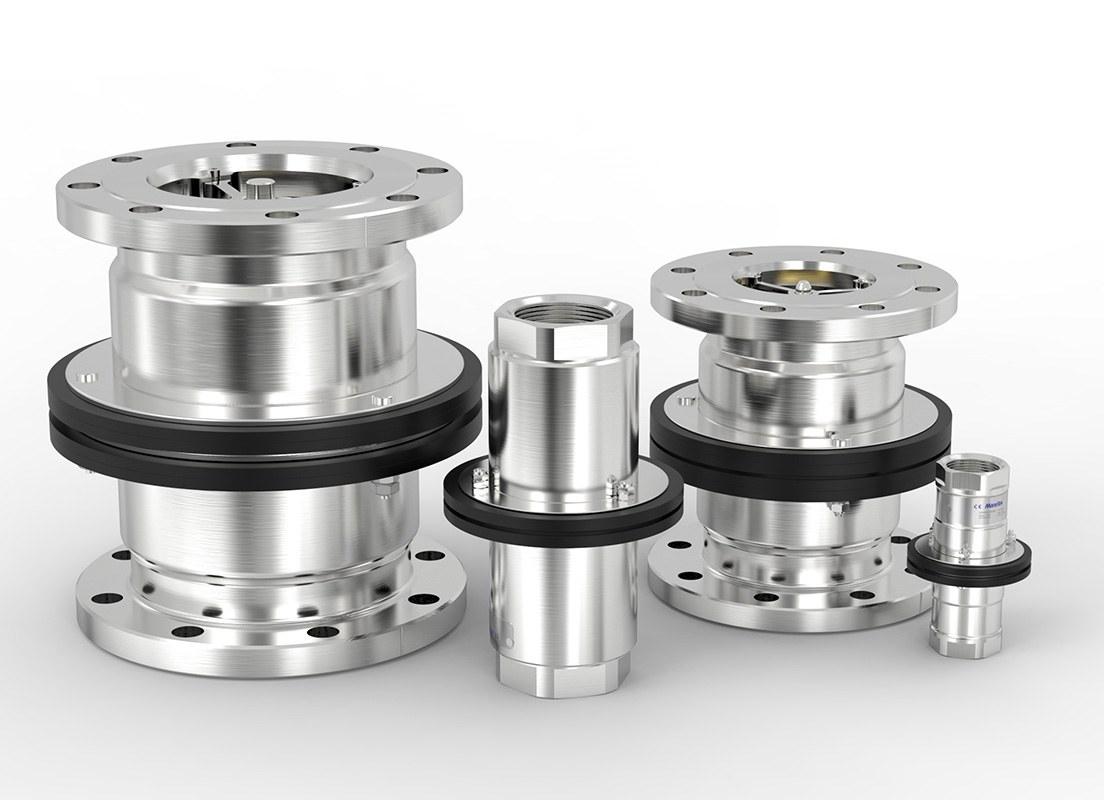
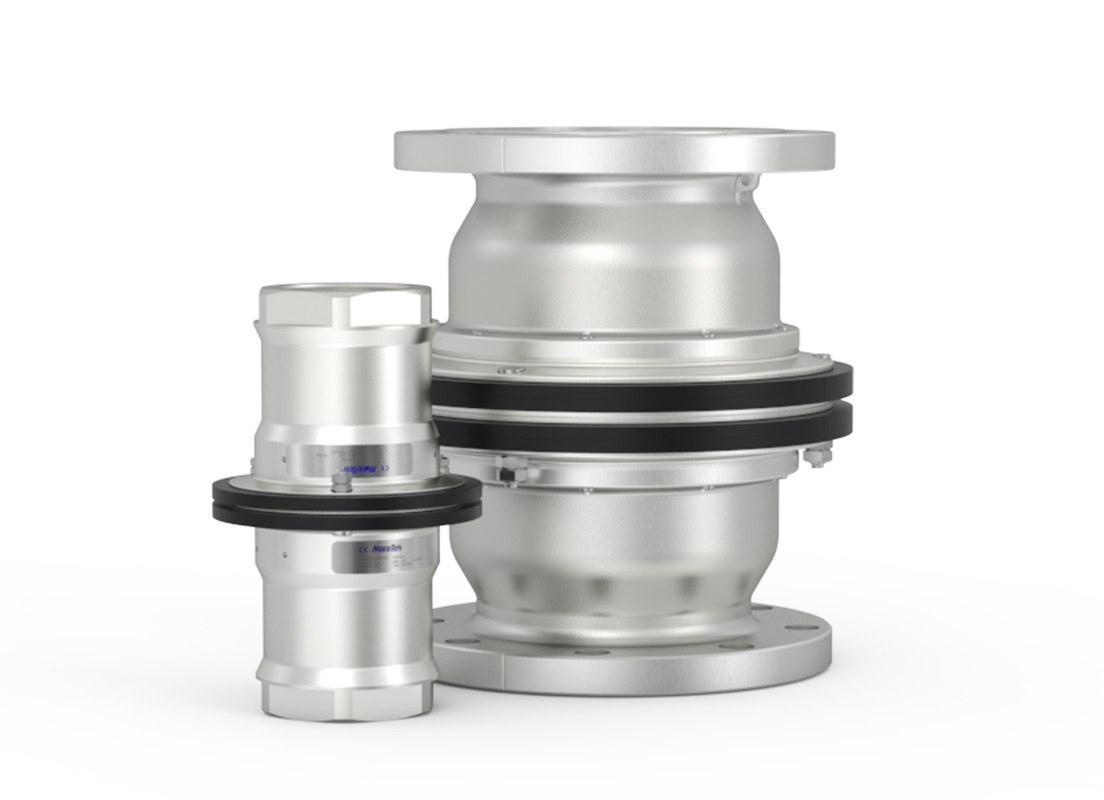 IH-MNT-SBCMannTek SBC Safety Breakaway Coupling, Breaking-Bolt Type — DN 25 to DN 300MannTek
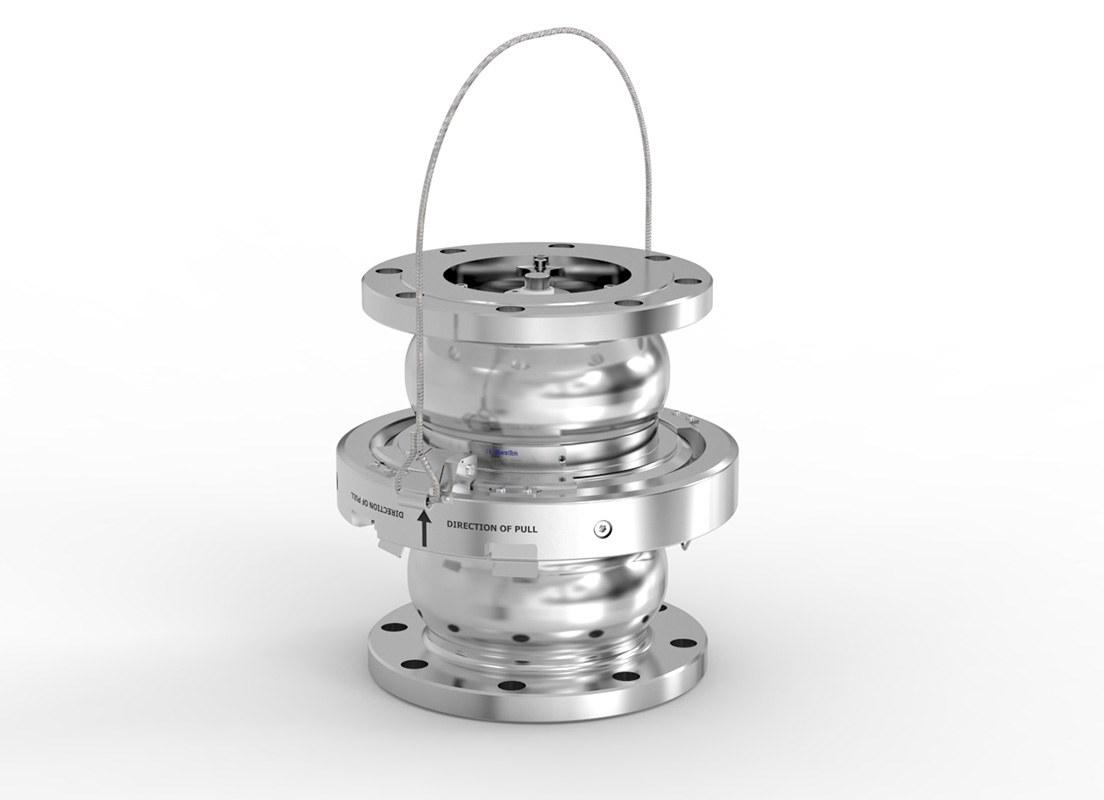
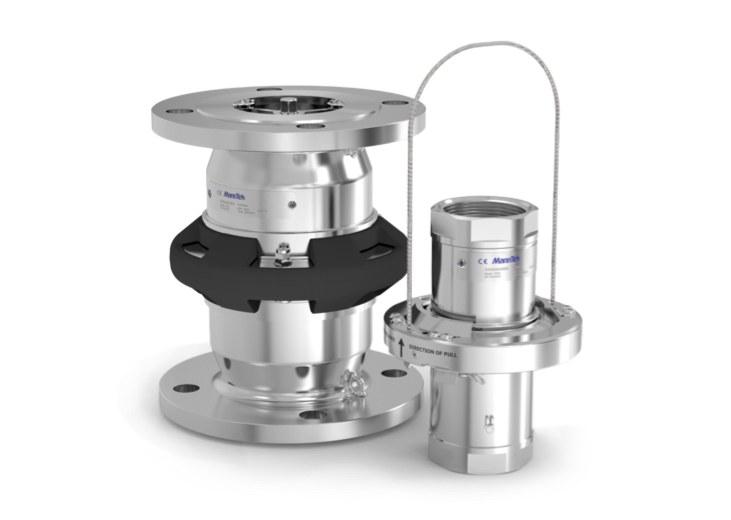 IH-MNT-SBCCMannTek SBC-C Cable-Release Safety Breakaway Coupling — DN 50 to DN 150MannTek
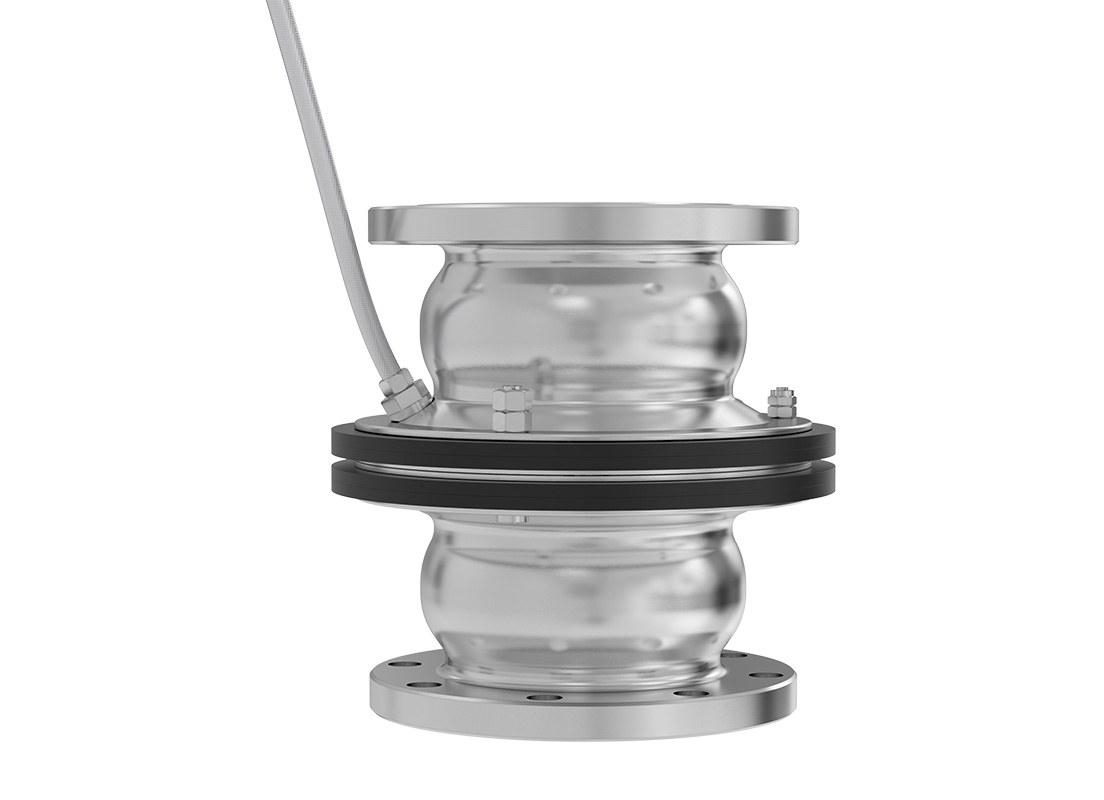
 IH-MNT-CBCMannTek CBC Cryogenic Breakaway Coupling for LNG, Breaking-Bolt Type — DN 25 to DN 200MannTek
 IH-MNT-CBCCMannTek CBC-C Cable-Release Cryogenic Breakaway Coupling for LNG — DN 50 to DN 150MannTek
 IH-MNT-PERCMannTek PERC Powered Emergency Release Coupling for LNG Bunkering — 2-1/2" to 8"MannTek