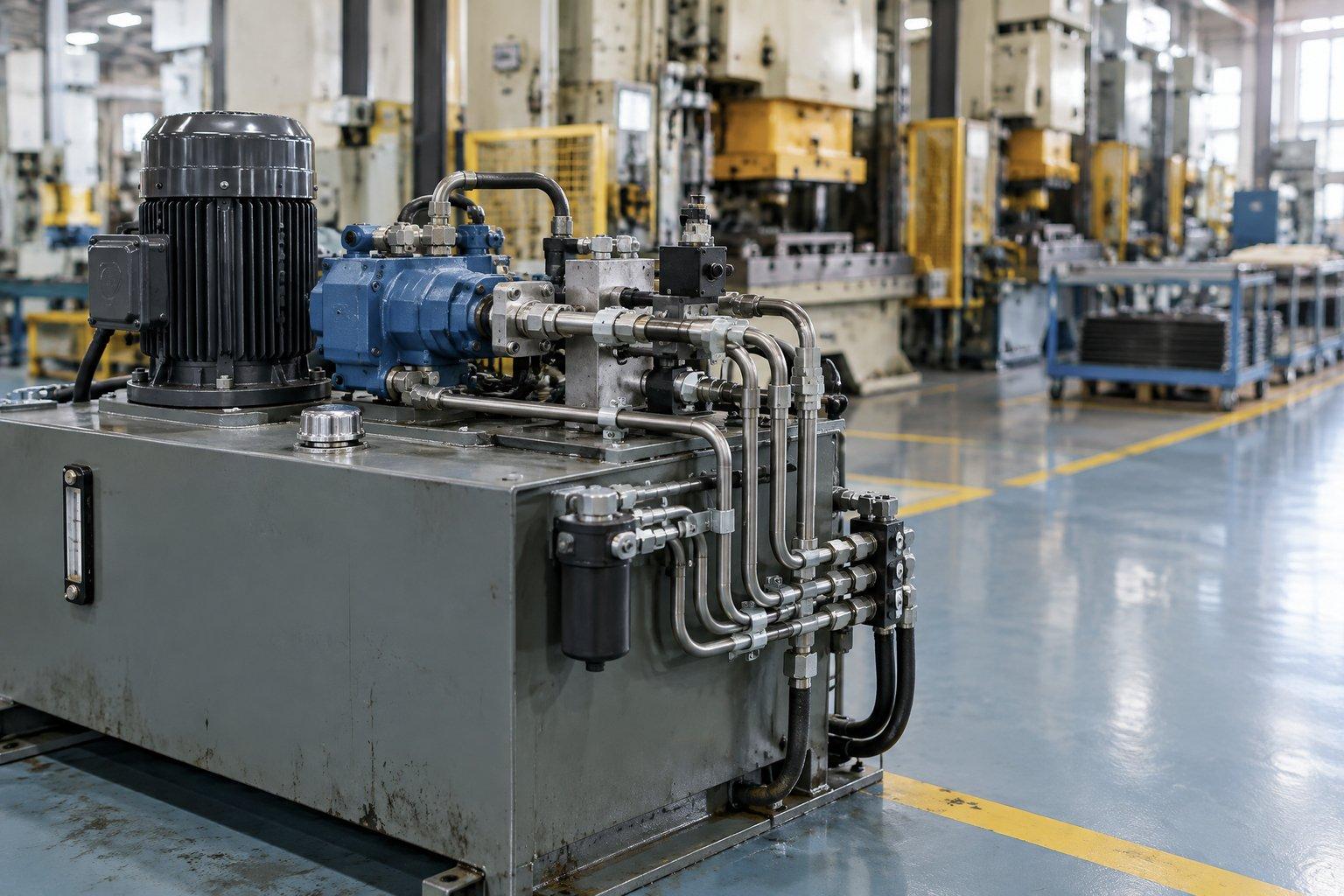
Fixed plant fittings are the one population where the thread families are a choice rather than an inheritance. Presses, injection moulders, packaging lines, textile plant and rolling mills have one advantage over every other customer in this series: the machines stay where they are. The fleet does not change monthly, the environment is known, and the thread population is therefore a decision rather than an accident of importing — which is precisely why it is such a waste that most plants never treat it as one.
/01What standardisation actually buys.
| Saving | How it arrives |
|---|---|
| Stores valueHighlighted | Fewer families means depth without breadth |
| Identification time | A fitter who meets two families stops guessing |
| Wrong-part errors | The commonest cause is a near-miss between similar families |
The second row is worth more than it looks. In a plant where every line is one of two families, a fitter can be confident by inspection; in a plant with six, they are always half-guessing, and the guesses are made under production pressure at three in the morning.
/02Converting without a shutdown.
Nobody has to convert a plant in one go, and nobody should. The method is boring and effective: choose the target families, then convert at each hose change — when a line is replaced anyway, it comes back with the target ends, and the adapters that used to bridge it come out. Over a year most of a plant migrates without a single dedicated intervention.
/03Where the plant is hot or wet.
Standardising on family is separate from specifying material. Lines near furnaces, ovens and steam ranges are a temperature question; lines in washdown areas are a corrosion one. Keep the family constant and vary the material by area — that keeps the identification benefit while putting the right steel where the environment demands it. Washdown areas are where 316L stainless fittings earn their cost; hot zones are a hose question, where PTFE hose rated to 204 °C moves the limit.
/04The machine you cannot touch.
Most plants have one machine — old, critical, and impossible to get parts for — where conversion is not worth the risk. Leave it alone, and be explicit about it: hold its specific spares, label them as belonging to that machine, and do not let them be cannibalised for anything else. An acknowledged exception costs a shelf; an unacknowledged one costs a night.
Frequently asked questions
- Which family should we standardise on?
- Usually whichever already dominates your plant, unless the environment argues otherwise. The gain comes from having fewer families, not from having a particular one — so the cheapest target is the one you are mostly already running.
- Is it worth converting a machine that is due for replacement?
- No. Convert at hose changes on equipment with years left, and leave anything on its way out alone. The point is to spend nothing extra, not to run a project.
- Can you quote a standardisation kit?
- Yes — send the target families and the positions. We will quote the ends and adapters needed to convert as lines come up, rather than a bulk change-out you do not need.