
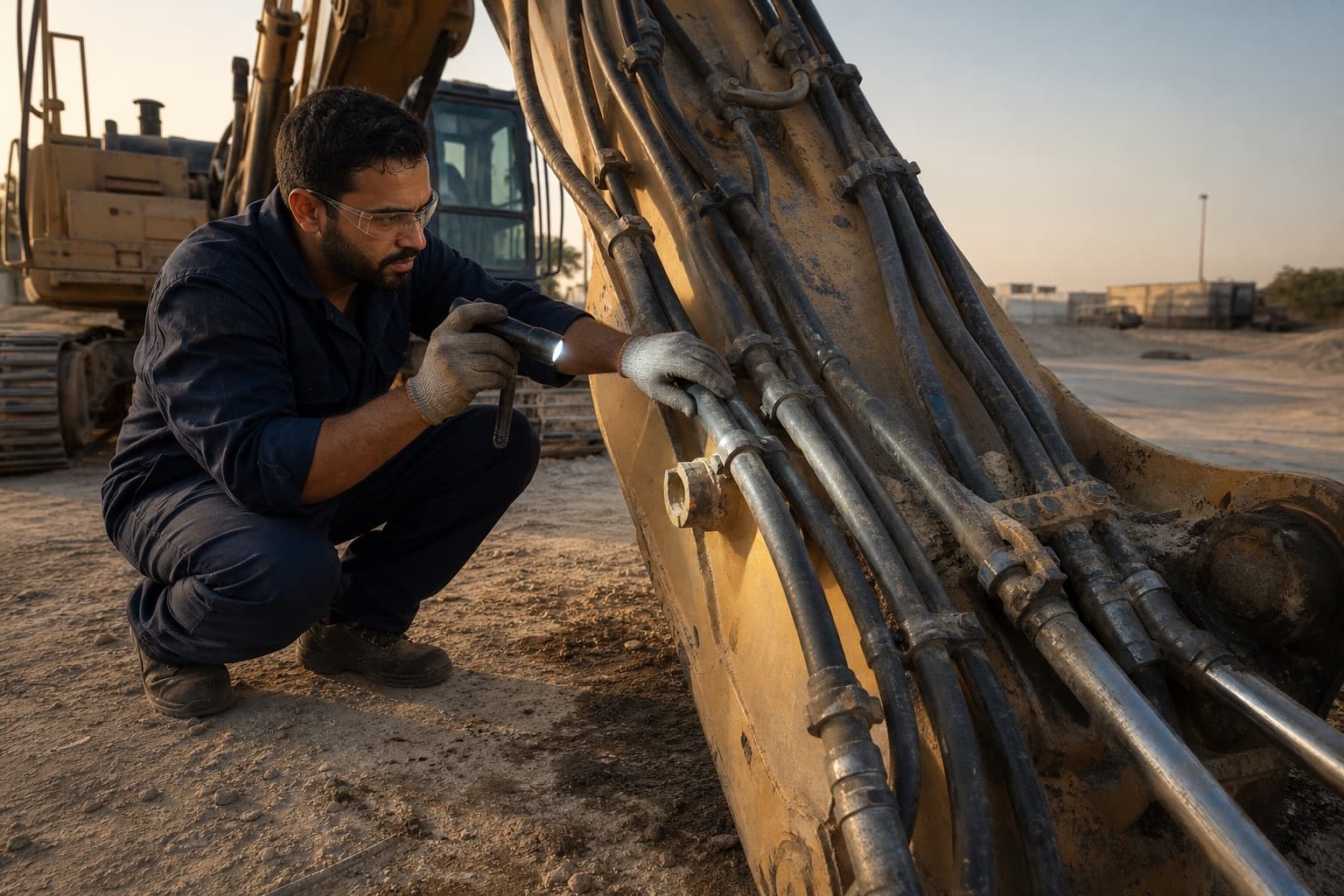
Hose inspection is one of the highest-return maintenance tasks there is, because the failures it catches are the ones that strand a machine and occasionally injure someone. It is also one of the easiest to do badly — a glance along a run is not an inspection.
Depressurise first.
The walk-round.
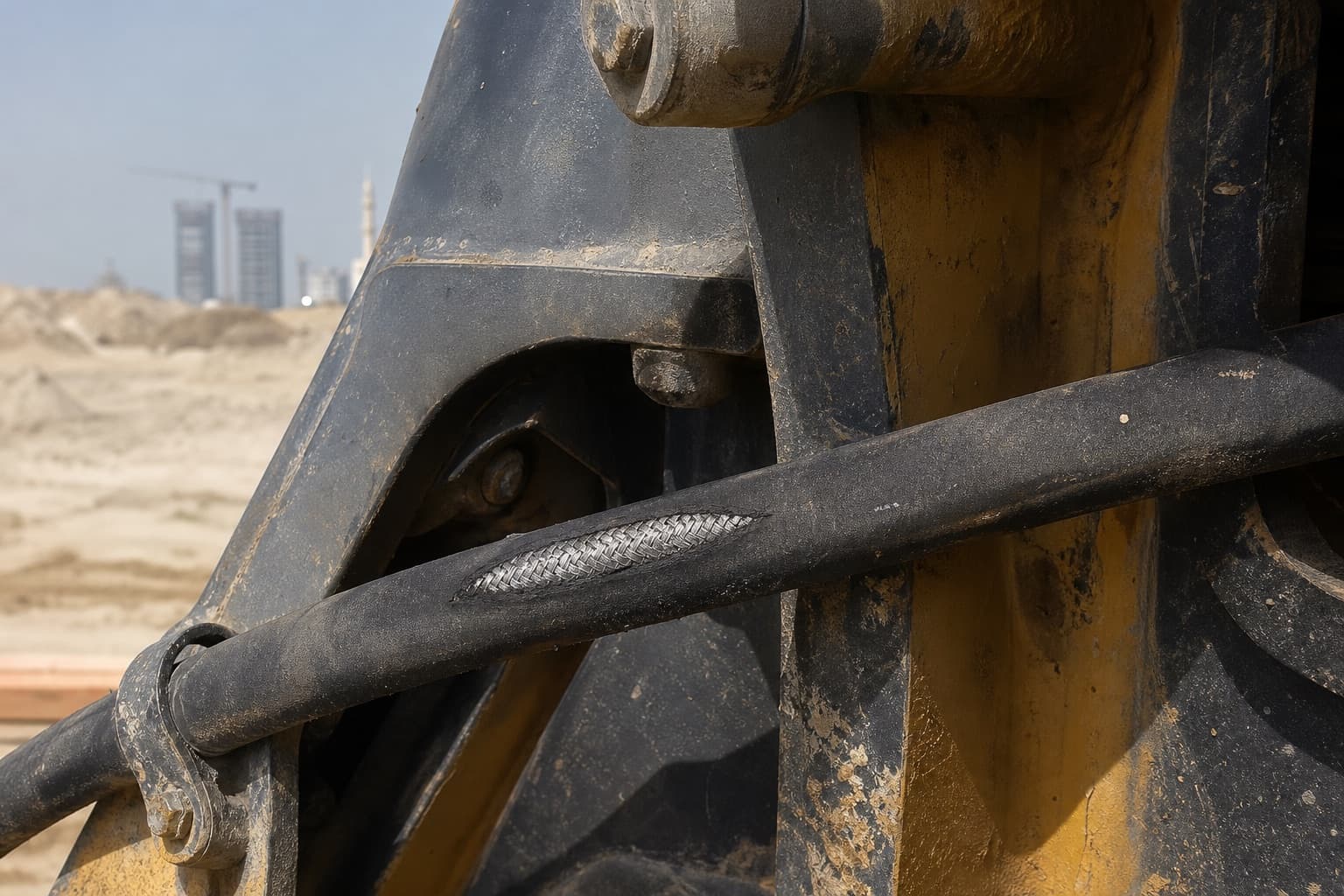
What each finding means.
| What you find | What it usually means | Action |
|---|---|---|
| Wire visible through the cover | Abrasion or a cut has breached the cover; reinforcement is now corroding | Replace now |
| Flat worn patch, no wire yet | Rubbing on structure or another hose | Replace at next opportunity, and fix the contact point |
| Blistered cover | Liner failure — fluid between the layers | Replace now |
| Weep at the ferrule | Crimp or seat compromised | Replace the assembly; do not re-torque |
| Layline spirals | Installed with twist | Re-install without twist and clamp so it cannot rotate |
| Stiff, crazed cover | Heat and UV ageing | Assess; plan replacement and shield the run |
How often should hydraulic hoses be inspected?
Frequently enough that a developing failure is caught between inspections — which depends on duty, environment and how critical the machine is, not on a universal number. In Gulf conditions, where heat and airborne sand accelerate cover damage and abrasion, intervals set for a temperate climate are optimistic.
This article deliberately does not give an interval in hours. Any figure that ignores duty cycle, ambient temperature and criticality is a number pretending to be guidance. What is defensible is the method: inspect against a written checklist, record what was found, and let the findings set the next interval.
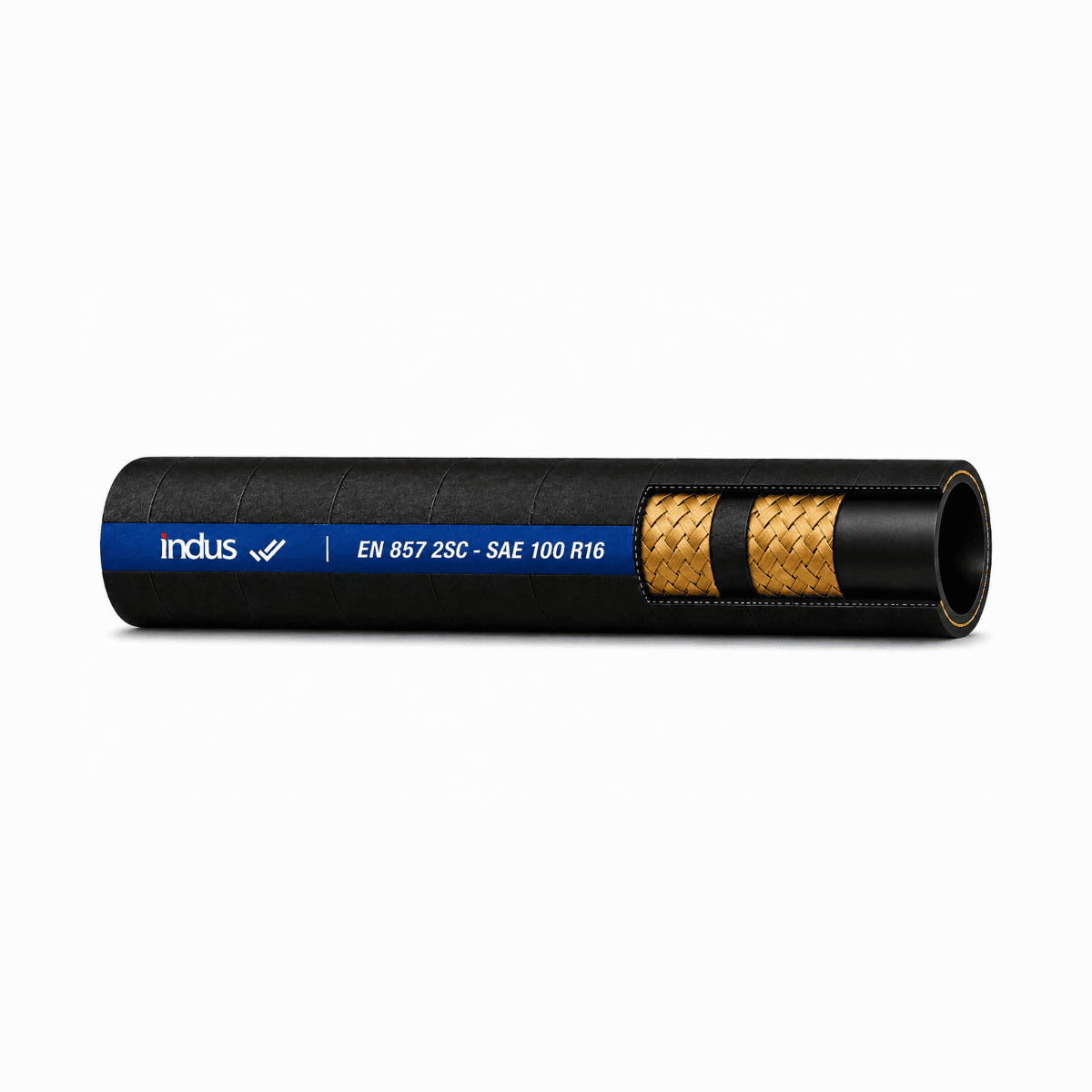
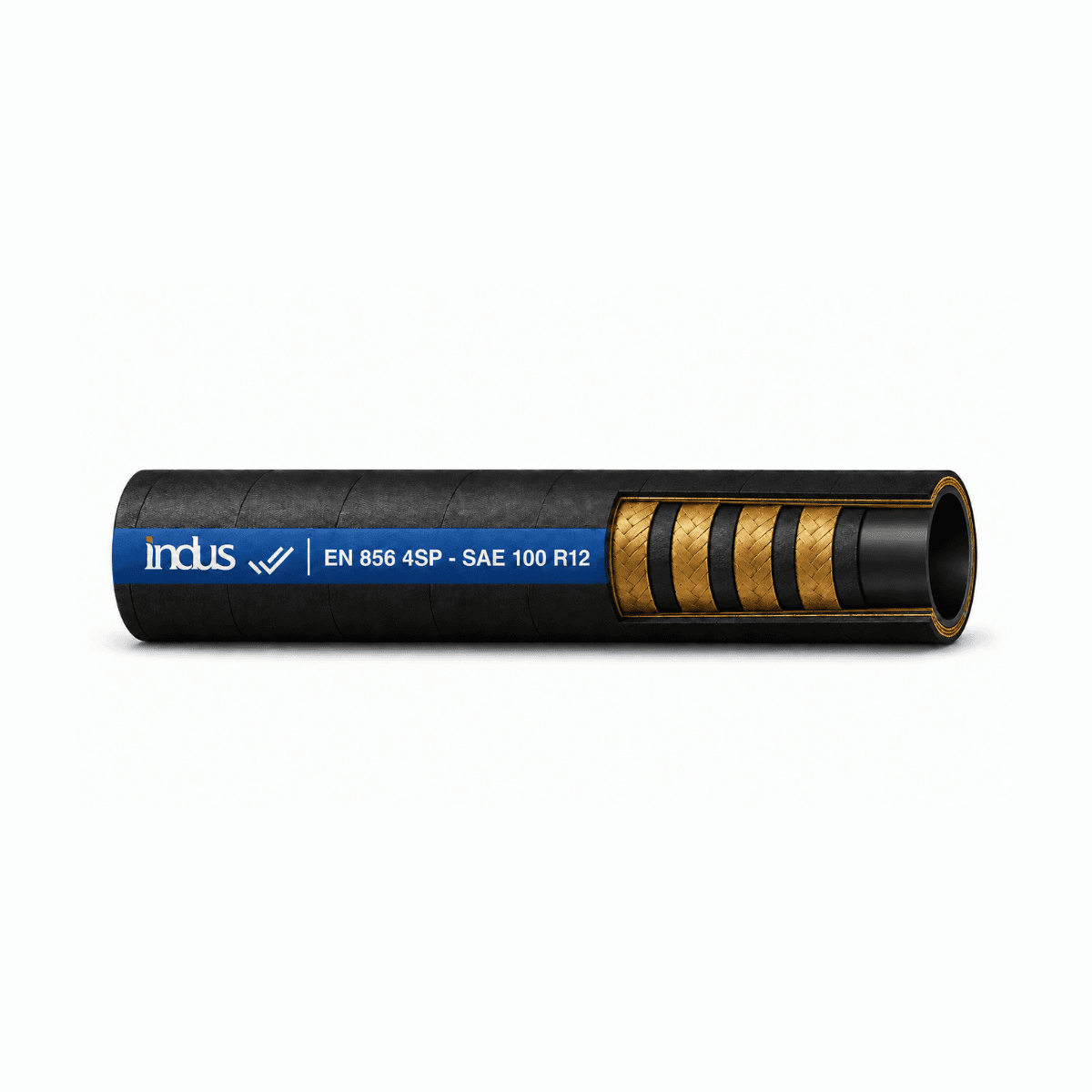
Replacement grades

Common questions
Is surface cracking on the cover enough to condemn a hose?
On its own it tells you the hose has aged, not what state the reinforcement is in. Treat it as a signal to plan replacement rather than as an immediate failure — unless there is wire visible, which is.
Should we pressure test hoses in service?
In-service proof testing is not routine and can itself damage an aged assembly. Inspection plus a planned replacement programme is the normal approach; testing belongs at build.
Can a hose be repaired rather than replaced?
No. There is no field repair for a hydraulic hose assembly that restores it to specification. Replace it.
Hydraulic hose by grade
Single and two-wire braid through four-spiral, in stock in Dubai.
Figures verified · Inspection method and findings only. No replacement intervals published — those depend on duty, environment and criticality.
Building an inspection programme?
Tell us the fleet and the duty. Our engineers can help set criticality and a replacement plan that fits how the machines are actually used.
Plant-down? Call +971 52 2477942 — 24/7