
Verifying a genuine hydraulic hose is usually discussed as a counterfeiting problem, which makes it sound rarer than it is. Verification is usually discussed as a counterfeiting problem, which makes it sound rare and dramatic. In practice most identity failures on a site are mundane: a coil re-labelled in a store, a substitution made in good faith during a breakdown and never written down, an assembly built from whatever was on the rack. The checks are the same either way, and they take a minute.
What the hose says about itself.
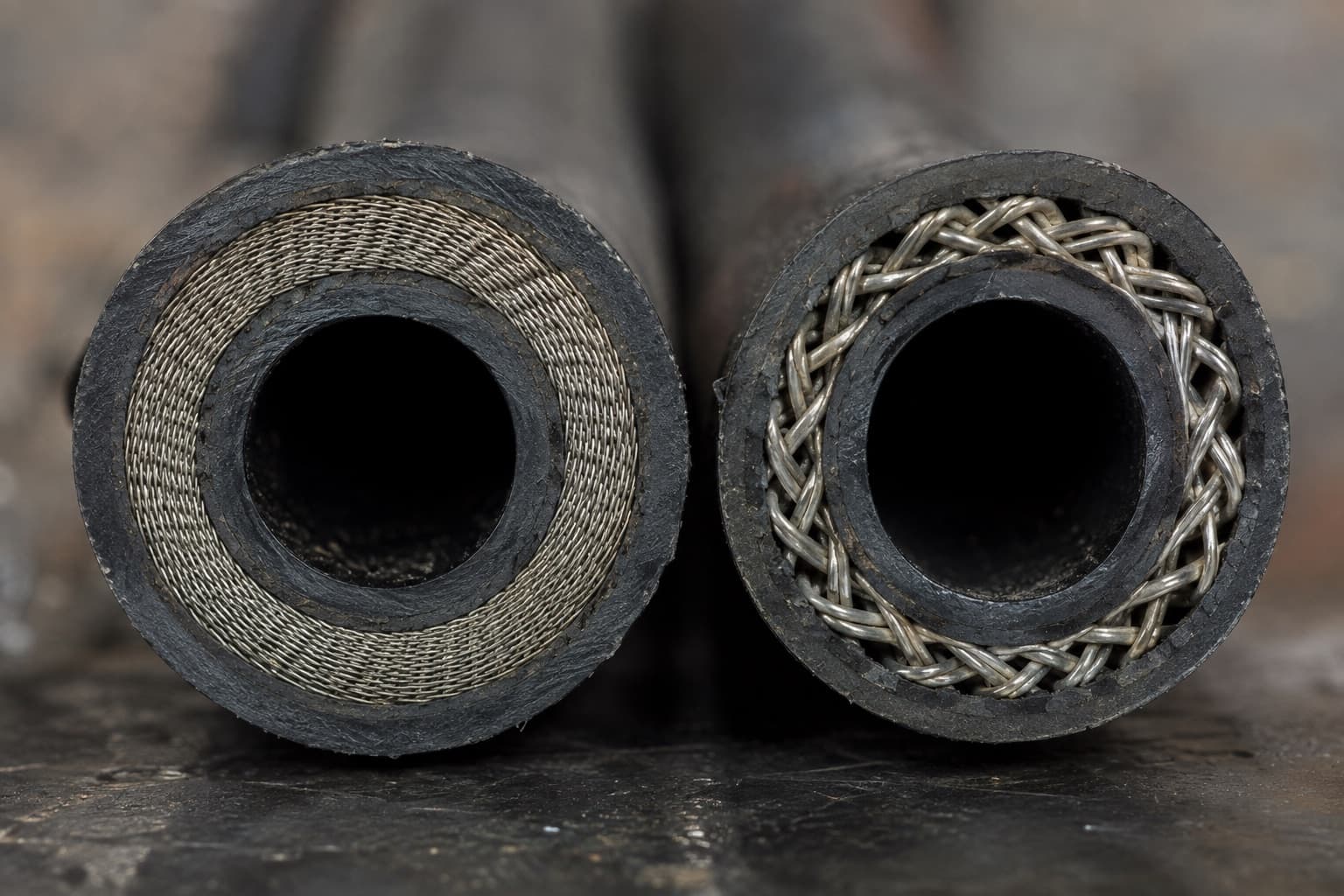
Bulk hose carries a printed layline along its length giving, in some order, the manufacturer, the construction standard, the size, the maximum working pressure and often a date or batch reference. That is a complete identity statement and it repeats every metre or so, which means any offcut long enough to fit is long enough to identify.
Why an assembly is harder.
Crimping a fitting on each end covers a few centimetres of hose at both ends and nothing in between, so the layline survives — but the assembly now involves three or four components whose identity is not printed anywhere: the fitting, the ferrule, and the crimp specification that ties them to that hose. Those are established by records rather than by markings, which is exactly what a tag and a test certificate are for.
| Component | Evidence available | How strong |
|---|---|---|
| Hose | Layline along the visible length | Strong, if legible |
| Fittings and ferrules | Part markings where present; otherwise the supplier’s records | Weak on the part, adequate on paper |
| The crimp | The assembler’s specification and test record | Only as good as the records kept |
| The assembly as a whole | Tag, proof-test certificate, invoice line | Strong when all three agree |
This is the practical reason to buy assemblies from whoever will document them, and to insist on tagging even when nobody is auditing you. The tag is the only thing that survives the crate being opened.
A receiving check that takes a minute.
Four checks, in the order they catch things
Do them on arrival, on the loading dock, before anything is put away.
If · Does the layline name the standard the order specified?
If not, stop here and ask
This catches grade substitution, which is the difference that matters most and is the easiest to see.
If · Does the tag match the certificate, and the certificate match the invoice line?
Three documents, one item
A mismatch is usually clerical, and clerical mismatches are exactly what makes a document pack unusable in an audit later.
If · Are the end connections the ones ordered, measured rather than eyeballed?
Check the seat, not the hex
JIC, ORFS and BSP are routinely confused by appearance. A thread gauge settles it.
If · Is there a date on the hose or the tag?
Record it — the clock starts now
Age matters for rubber whether or not the assembly is fitted immediately, and a date you did not record on arrival is one you will never recover.
Can you tell a counterfeit hose by looking at it?
Rarely, and not reliably. What you can do is check the markings, the documentation and the consistency between them — which catches substitution and mix-ups as well, and those are far more common.
What if the hose has no layline at all?
Treat it as unidentified. For a used hose that usually means the printing abraded away; for new stock, ask the supplier for the batch and the construction standard in writing before it is fitted to anything that carries pressure.
Do you supply hose with the manufacturer named?
Yes. The construction standard and the manufacturer are stated on the quotation rather than left to the layline to reveal, and assemblies are tagged with the hose, the fitting and the test date.
Want traceability on the next order?
Ask for the construction standard, the manufacturer and tagged assemblies on the quotation. It costs nothing, and it is the difference between a document pack that survives an audit and one that does not.
Plant-down? Call +971 52 2477942 — 24/7