
Building a jetty, quay wall or marine outfall puts rigging in the worst environment on any site: wet, salty, abrasive, and moving. Piles and precast units are lifted from barges that pitch, lines are left rigged across a tide, and slings come out of the water carrying sand and salt. Hardware that would last years on a dry site can be rejected in months. This guide covers what to specify for marine works and how to keep it in service.
/01Galvanised or stainless.
For the heavy lifting on a marine job — piles, precast, steel — hot-dip galvanised carbon and alloy hardware is the norm: it is strong, rated and economical, and the zinc protects the steel through the splash zone. Stainless is the choice for small fittings that stay in salt water or salt air for years — handrail wires, mooring fittings, fixtures — but its ratings vary by maker and casting, and it costs more for the same load. Our guide to stainless vs galvanised rigging in the Gulf covers the trade-off, including galvanic corrosion where the two meet.
/02Pins that cannot back out.
Barge motion, wave action and tidal movement are exactly the conditions in which a screw pin can rotate and back out. Use bolt-type shackles — bolt, nut and cotter — for anything left rigged, and mouse screw pins with wire where a screw-pin shackle must be used. For heavy marine connections, wide-body sling shackles protect large slings on the bow. See how to rig a shackle correctly.
/03Slings in salt water.
| Sling | Strengths | Watch for |
|---|---|---|
| Galvanised wire rope | Abrasion resistance, heavy loads, long life with care | Internal corrosion and broken wires; lubricate and inspect |
| Chain (Grade 80/100) | Toughness, abrasion, easy to inspect | Weight; corrosion pitting at links |
| Polyester round and webbing | Light, non-marking, unaffected by salt water | Cuts on pile edges and barge decks; UV ageing |
/04Lashing on barges and pontoons.
Loads carried on barges — piles, precast, plant — must be lashed against the barge’s motion, which is a job for chain and binders or rated lashing hardware, not for whatever slings are spare. Use rated chain, load binders, lashing points and turnbuckles such as the Hamburger lashing turnbuckle, and check lashings as the tide and swell change. See ratchet strap vs chain and binder.
/05Marine standards on the drawing.
Marine and shipyard drawings often name DIN 82101 shackles (a German shipbuilding standard for lifting, towing and lashing) or European and BS patterns rather than US ones. Order to the drawing — see BS 3032, DIN 82101 and AS 2741 shackles. For mooring, see mooring bollards and anchor chain grades.
Common questions
- Is stainless steel rigging stronger than galvanised?
- No. Stainless is chosen for corrosion resistance; its ratings vary by maker and casting and are often lower or more expensive for the same load. Compare the WLL on each listing.
- Should I use screw pin shackles on a barge?
- Prefer bolt-type shackles for anything left rigged or moving with the barge; if a screw pin must be used, mouse it.
- Can polyester slings be used in salt water?
- Yes, polyester is not affected by salt water, but protect it from sharp edges and rinse and dry it after use.
- What is a DIN 82101 shackle?
- A dee shackle to the German shipbuilding standard, used for lifting, towing and lashing on ships and in yards.
- How often should marine rigging be inspected?
- Before each use and at the periodic intervals your site and authority require — and always after immersion.
For marine works
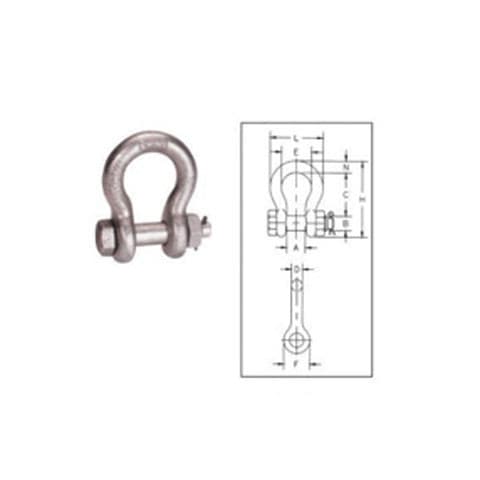 IH-LR-SH-G2130Bolt-Type Anchor Shackle — G-2130 Pattern
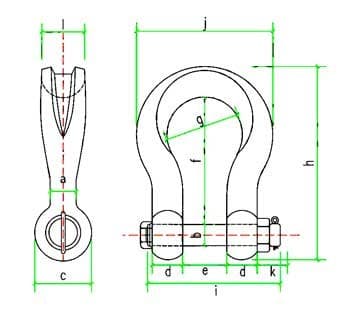 IH-LR-SH-WBSSSPWide Body Sling Shackle, Safety Pin
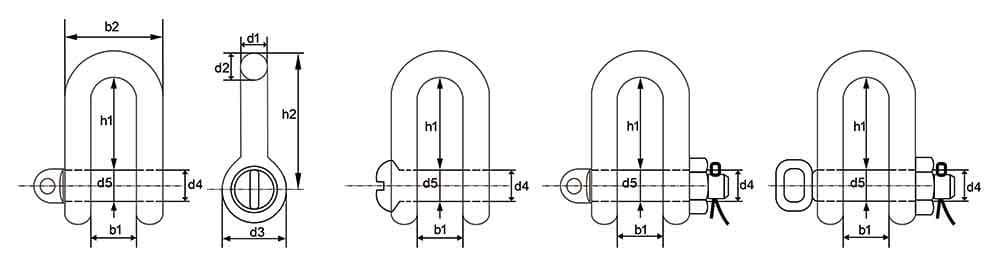 IH-LR-SH-SD82101FBShackle — DIN 82101 Form A, B and C Pattern, Galvanized
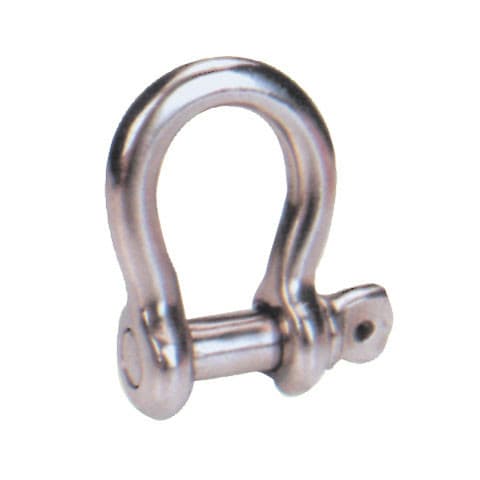 IH-LR-SH-SSAStainless Steel Screw Pin Anchor Shackle — US Type
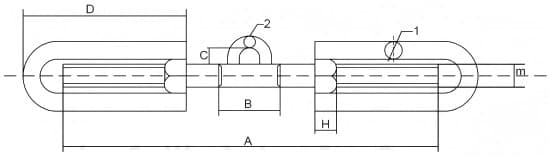 IH-LR-TB-HLTHamburger Lashing Turnbuckle
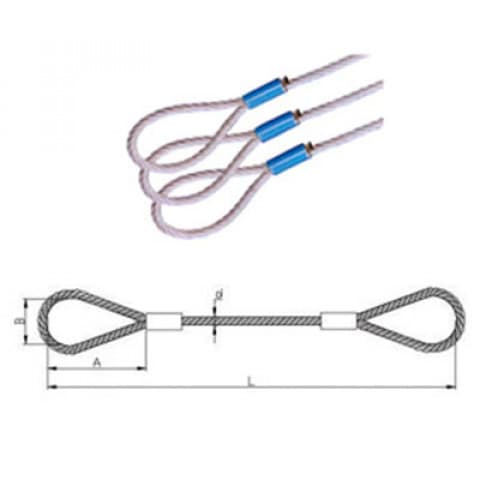 IH-LR-WS-SWGSwaged Soft Eye Wire Rope Sling (Ferrule Secured)
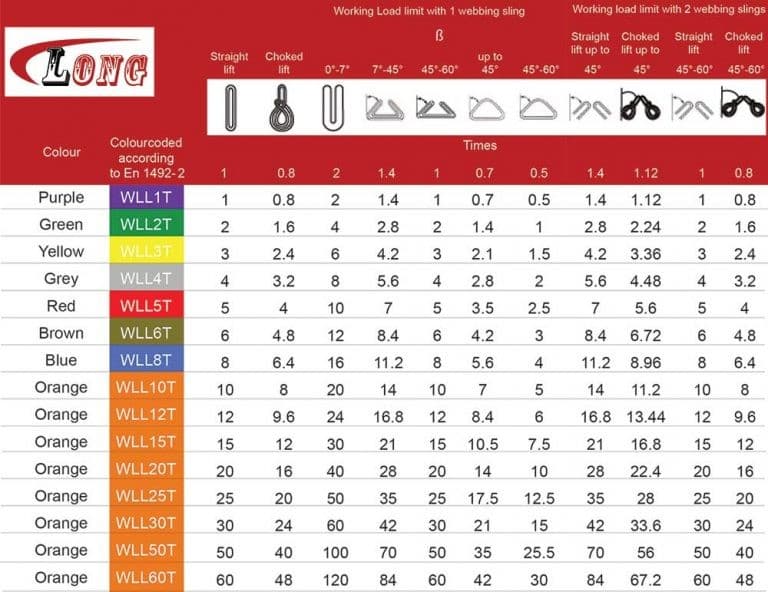 IH-LR-SY-PRSEPolyester Round Sling — Endless