Most rubber chemical hose sold today is not really a rubber hose on the inside. It is lined with UHMWPE — ultra-high molecular weight polyethylene — and the rubber is there to carry pressure, hold the helix and survive being dragged. That division of labour is why it handles such a broad range of chemicals, and it is also why the lining's limits are the hose's limits.
/01What the lining does.
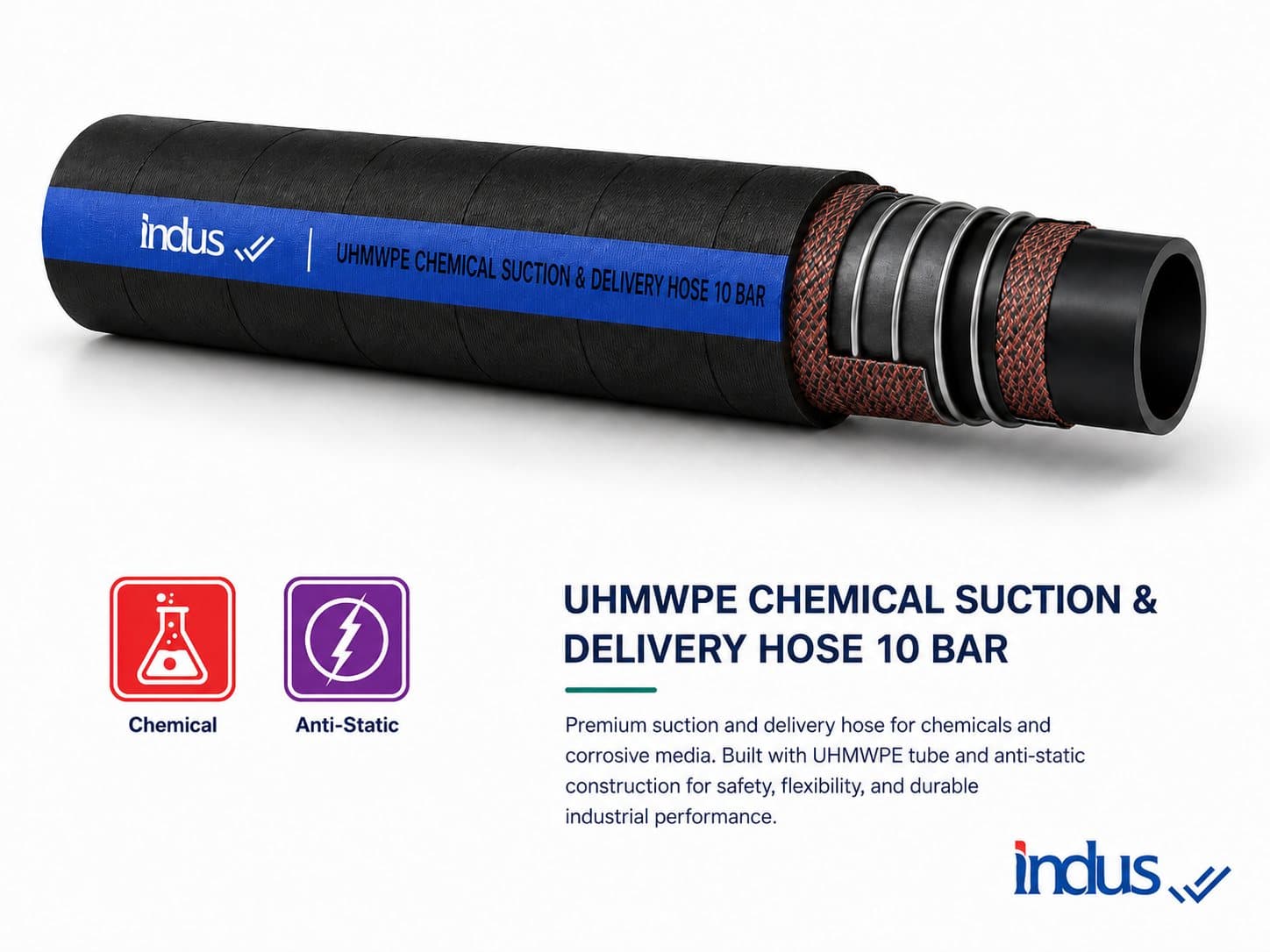
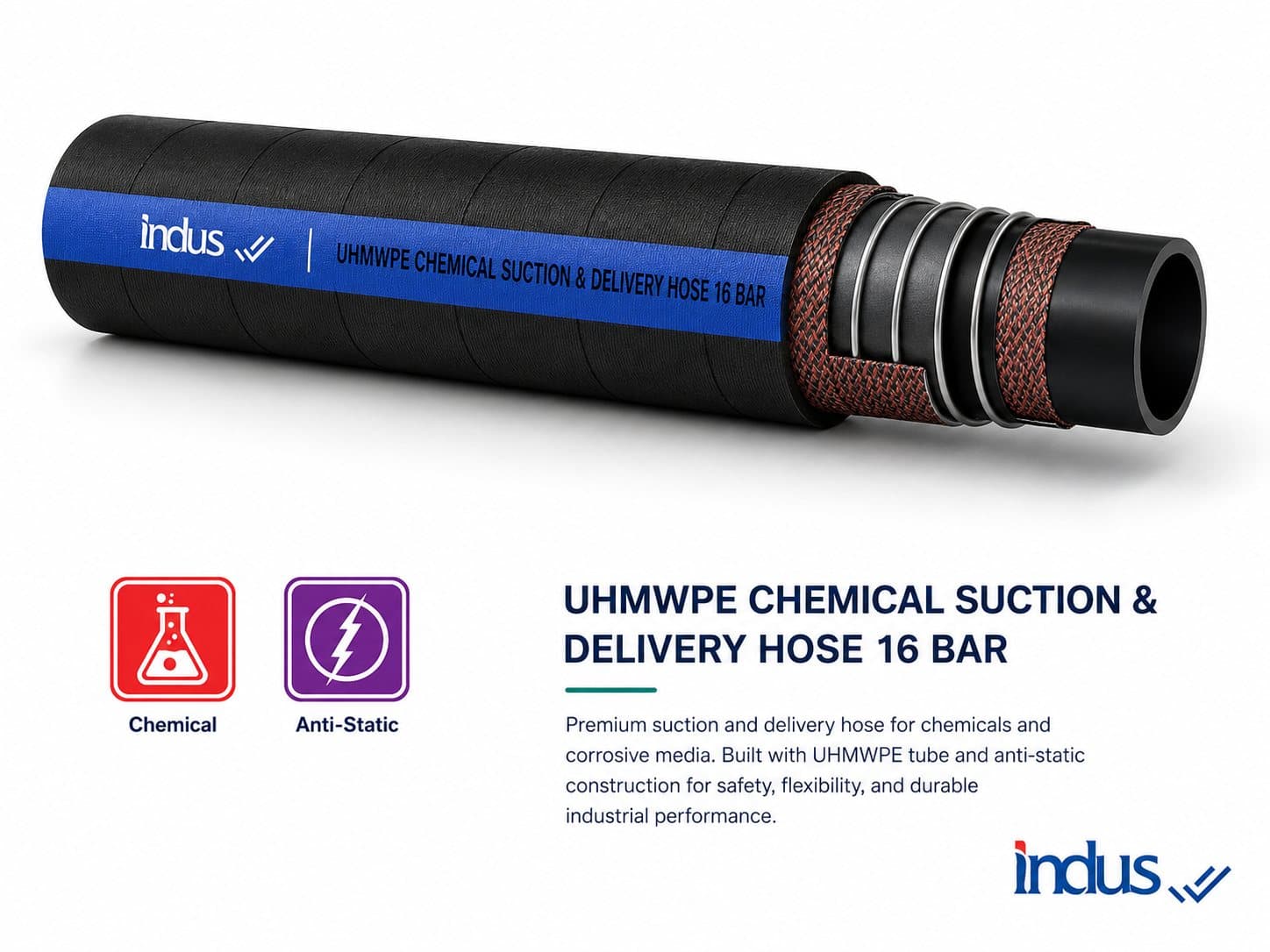
UHMWPE is dense, smooth and chemically inert to a very wide range of acids, alkalis and many solvents, which is why it is the standard lining for multipurpose chemical transfer. A smooth bore also drains and cleans well. Behind it, our A410 and A416 carry high-tensile textile plies, twin carbon steel wire helices for suction, and a copper braided anti-static wire, under a blue EPDM cover resistant to ozone and weather.
| Property | A410 | A416 |
|---|---|---|
| Working / burst pressure | 10 / 40 bar | 16 / 48 bar |
| Safety factor (listing) | 4:1 | 3:1 |
| Sizes | 3/4" – 4" | 3/4" – 4" |
| Temperature | −30 to +100 °C; +130 °C intermittent sterilisation | −30 to +100 °C; +130 °C intermittent sterilisation |
| LiningHighlighted | UHMWPE | Conductive UHMWPE, FDA specification |
| Static | Copper braided anti-static wire | Copper braided anti-static wire |
/02Compatibility is the whole decision.
Both listings carry the same qualifier: the temperature range applies subject to chemical compatibility. A compatibility rating is a statement about a material, a chemical, a concentration and a temperature together; change one and the rating can change. Check the chemical at its actual concentration and temperature against the UHMWPE lining, then against the coupling gasket — because a compatible hose with an incompatible gasket still leaks at the coupling.
/03Against composite and PTFE.
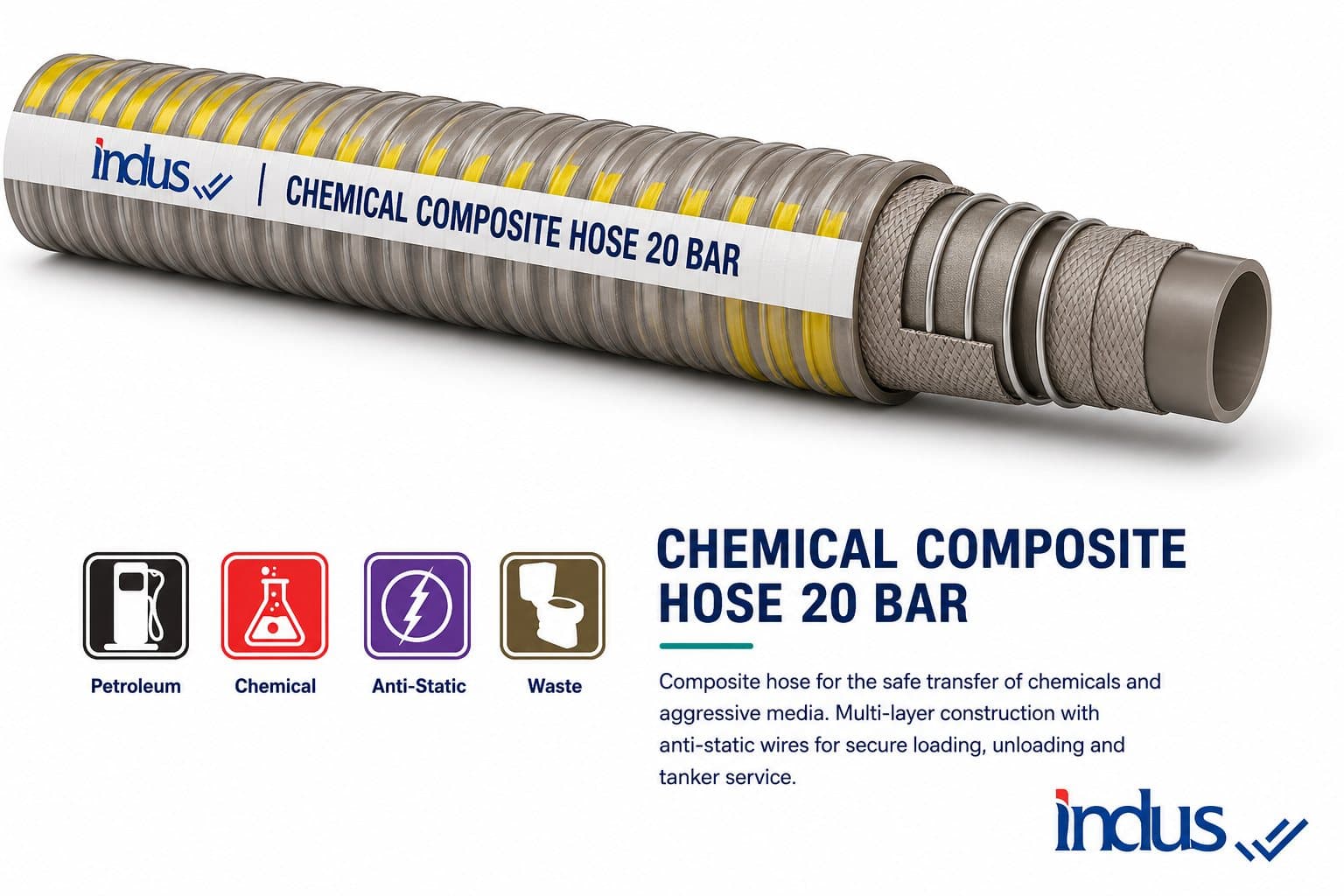
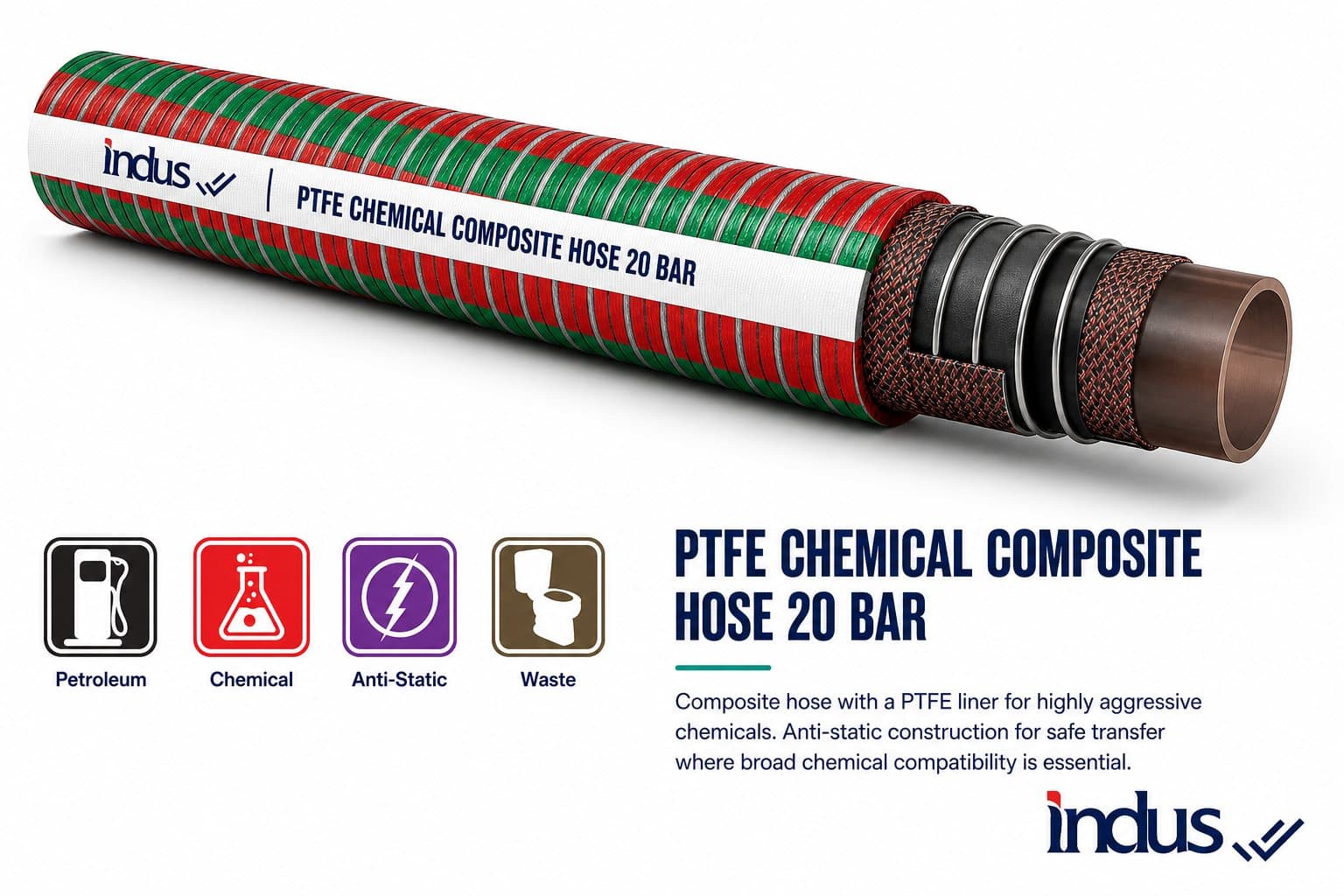
UHMWPE rubber hose is heavier than composite but tougher: it tolerates being dragged across a yard and crushed under a wheel far better. Our chemical composite hose (A906PG) is 20 bar, 1" to DN100, −30 to +80 °C, built from polypropylene and polyethylene films and fabrics, and lighter to handle; the PTFE chemical composite hose (A911SG) adds a PTFE lining and runs to +120 °C for the more aggressive media. For small bores and the widest chemical range, PTFE-lined metal or smoothbore PTFE hose is the next step.
| Hose | Rating | Temperature |
|---|---|---|
| A410 UHMWPE rubber | 10 bar, 3/4" – 4" | −30 to +100 °C |
| A416 UHMWPE rubberHighlighted | 16 bar, 3/4" – 4" | −30 to +100 °C |
| A906PG chemical composite | 20 bar, 1" – DN100 | −30 to +80 °C |
| A911SG PTFE chemical composite | 20 bar, 1" – DN100 | −30 to +120 °C |
/04Ends and static.
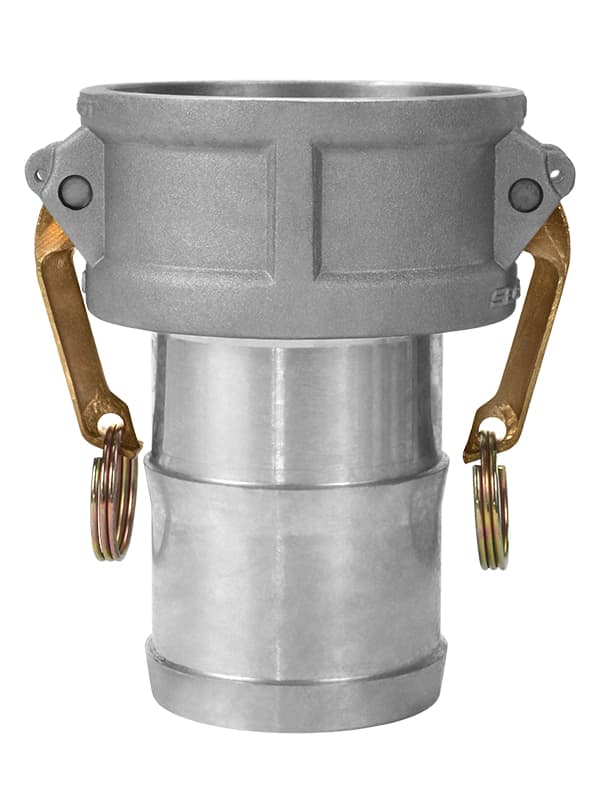
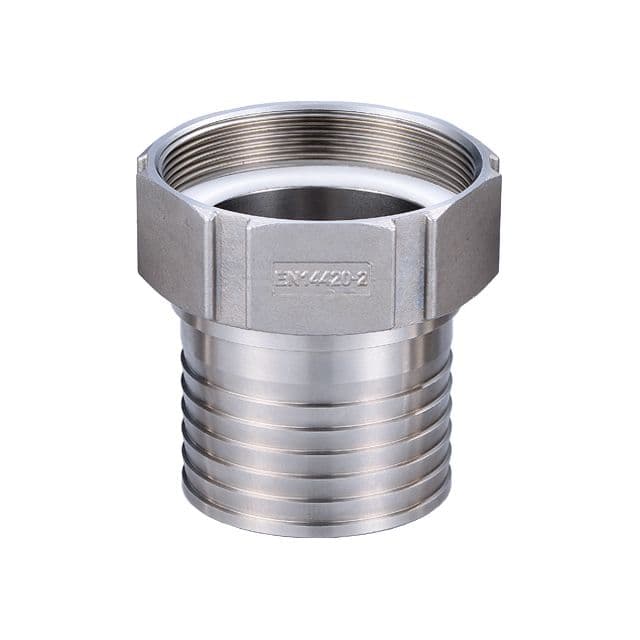
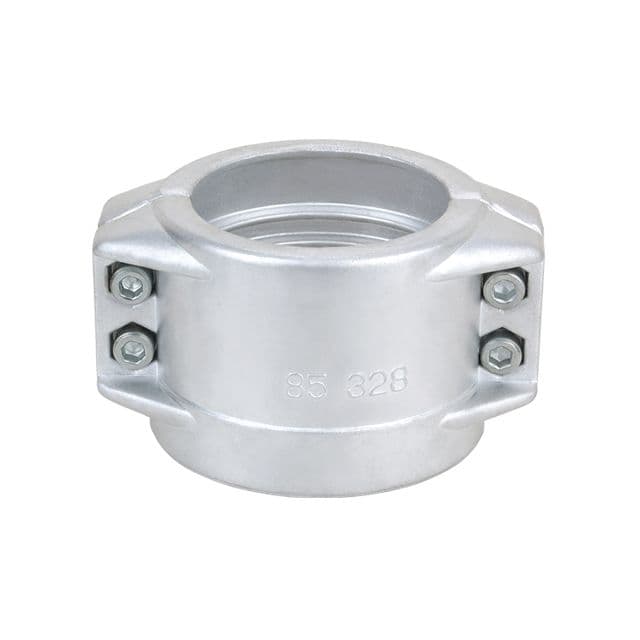
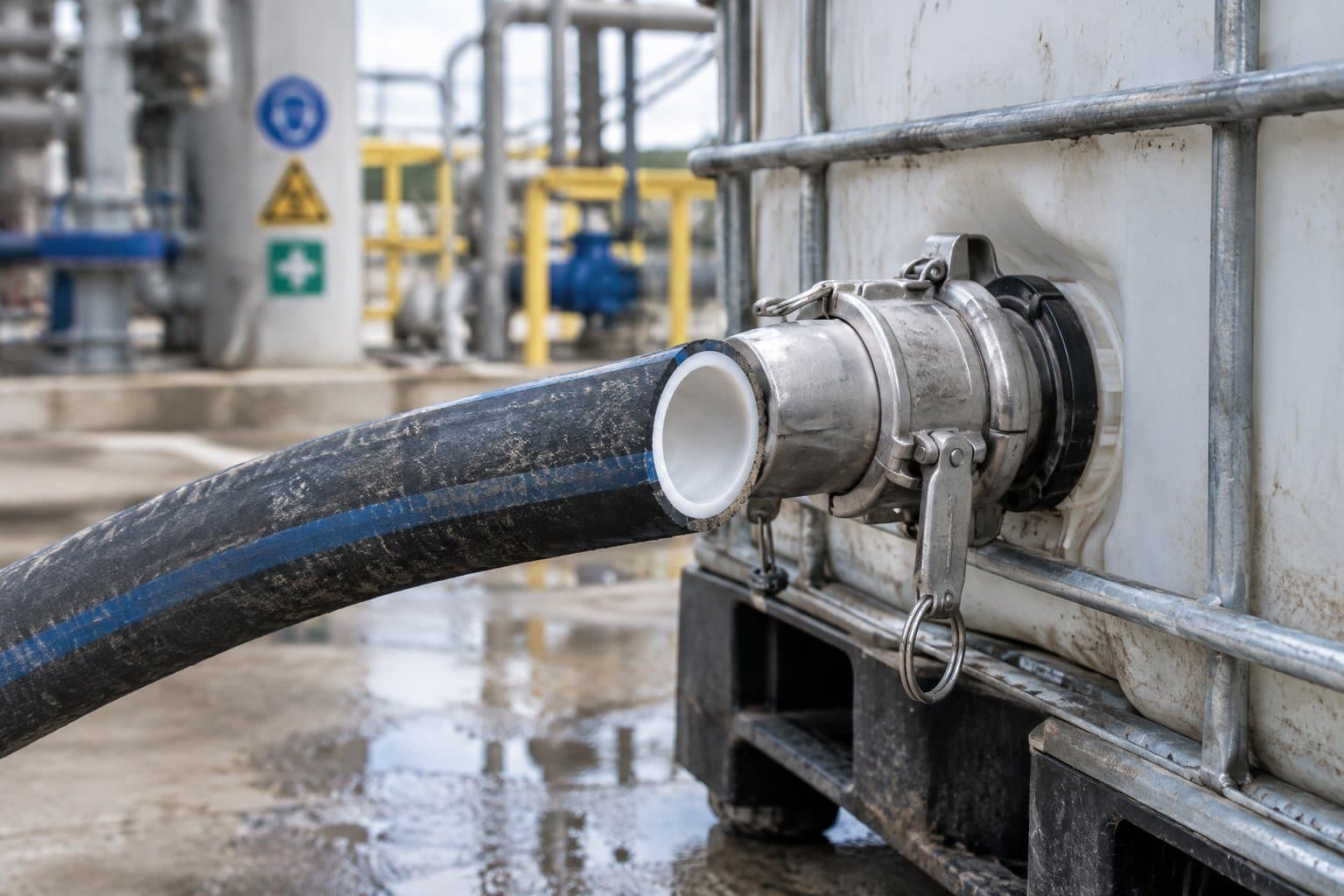
Chemical hose usually ends in stainless cam and groove halves or EN 14420-5 fittings under a DIN 2817 safety clamp, with the gasket chosen for the chemical — PTFE or Viton where nitrile will not do. The copper anti-static wire must be bonded to both couplings and the couplings earthed; check continuity when the assembly is built and at every inspection.
Frequently asked questions
- What does UHMWPE stand for?
- Ultra-high molecular weight polyethylene — a dense, smooth plastic used as the chemical-resistant lining inside rubber chemical hose.
- What temperature can UHMWPE chemical hose handle?
- Our A410 and A416 are listed from −30 to +100 °C, with +130 °C for intermittent sterilisation, subject to chemical compatibility.
- What is the difference between A410 and A416?
- A410 is rated 10 bar at a 4:1 safety factor; A416 is rated 16 bar at 3:1 with a conductive, FDA-specification UHMWPE lining. Both run 3/4" to 4".
- Is UHMWPE hose compatible with every chemical?
- No. It resists a very wide range, but compatibility depends on the chemical, concentration and temperature. Check the lining and the gasket, and ask us where the medium is a strong oxidiser or a hot aromatic solvent.