
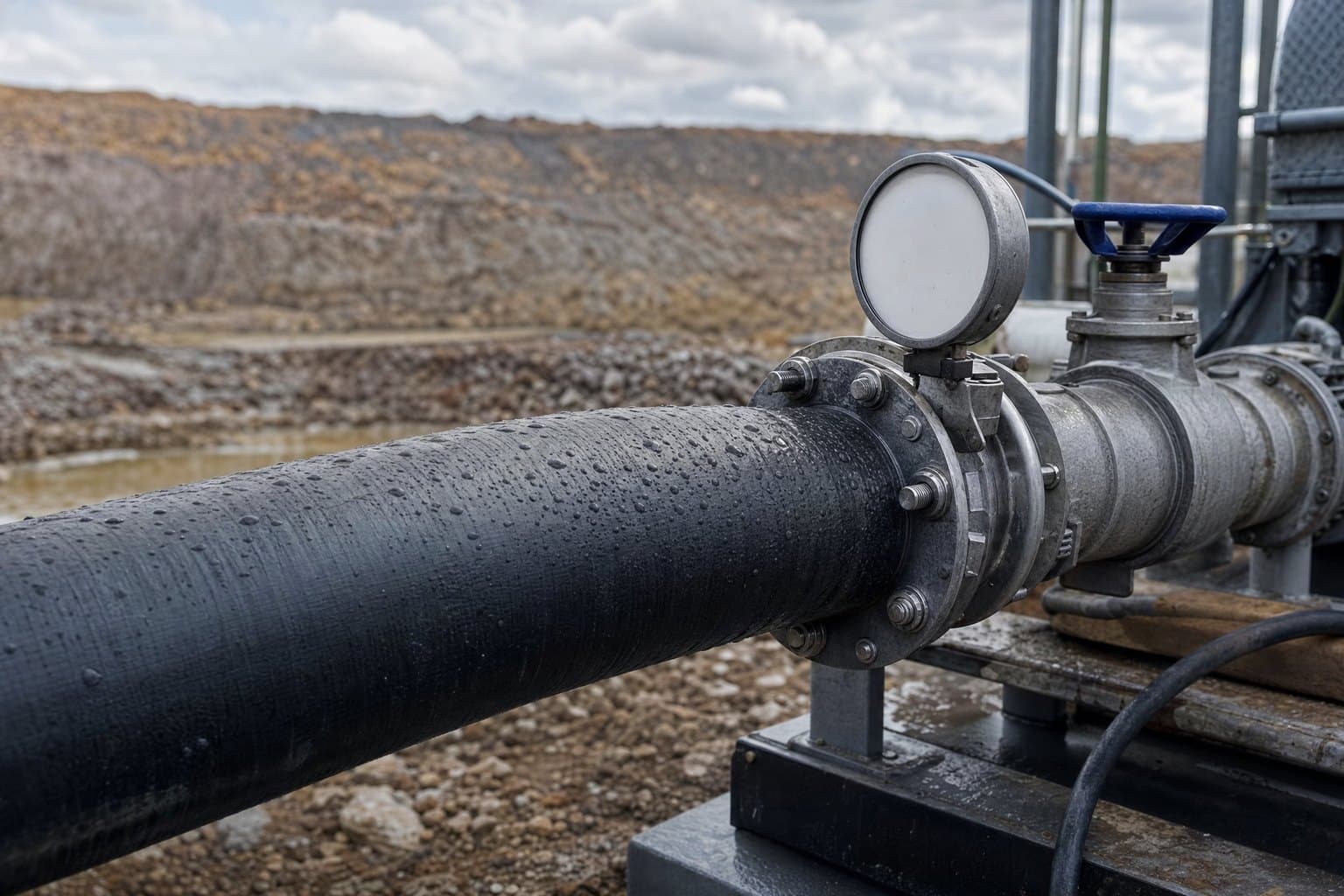
Lay flat hose is sold on a pressure rating, and that one figure is the most misread number on the datasheet. It changes with the bore, it means something different from the burst figure beside it, and on a real line it is often not the hose that sets the limit at all. Getting it right is the difference between a dewatering line that runs for a season and one that splits on the first morning.
/01Working pressure and burst pressure.
The ratio between the two is the safety factor. Our TPU dewatering hose and NBR discharge hose are rated at 3:1 — 21 bar working against 63 bar burst, and 10 bar against 30 bar. The TPU well riser hose works at 2.1 to 2.5:1, reflecting a steady, continuous duty. When comparing hoses from different sources, compare working pressures at the same bore; a higher burst figure with a lower safety factor is not a stronger hose.
/02Why bigger bores rate lower.
Pressure inside a hose tries to split it along its length. The force on the wall grows with the diameter, so for the same jacket a larger bore can hold less pressure — the relation engineers know from Barlow’s formula, where allowable pressure is proportional to wall strength divided by diameter. Makers offset this with heavier jackets and thicker walls in the larger sizes, which is why the rating steps down unevenly rather than in a straight line.
| Bore | TPU dewatering | TPU well riser | TPU slurry drag | NBR discharge |
|---|---|---|---|---|
| 1-1/2" | 21 | 30 | — | 10 |
| 2-1/2" | 21 | 30 | 21 | 10 |
| 3" | 17 | 27 | 17 | 10 |
| 4" | 17 | 26 | 12 | 10 |
| 6" | 14 | 25 | 10 | 10 |
| 8" | 15 | 20 | 10 | 10 |
| 10" | 14 | 18 | — | 10 |
| 12" | 14 | — | — | 10 |
| 16" | 10 | — | — | — |
At the top of the range sits concrete placement: the high-pressure class of our TPU concrete hose is rated 85 bar at 3" to 4" and 75 bar at 5", with burst at 150 to 170 bar. That is a different product built for a different job, not a stronger version of a dewatering hose.
/03What pressure your line actually sees.
The hose has to carry the highest pressure anywhere on the line, and that is almost always at the pump discharge. It is the sum of three parts:
- Friction loss along the whole line, including couplings and bends. It depends on flow, bore and length — see our friction loss guide.
- Static lift: about 1 bar for every 10 m the discharge end is above the pump. A borehole riser carries the full depth of the well on top of the surface pressure.
- Delivery pressure: anything needed at the far end — a sprinkler, a tank inlet, a frac blender.
Worked example: 200 m³/h through 1 km of 6" TPU hose, discharging 20 m above the pump into an open tank. Friction is about 4.6 bar, lift about 2 bar, delivery nil — roughly 6.6 bar at the pump, comfortably inside the 14-bar rating of the 6" dewatering hose. The same flow through 4" hose would need over 30 bar for friction alone — above the 17-bar rating — so the bore, not the pump, is the problem.
/04Surge, heat and couplings.
Surge. When moving water is stopped suddenly — a valve snapped shut, a pump tripping — its momentum turns into a pressure spike that travels along the line. A flexible hose absorbs some of it, but on a long, full line the spike can still exceed the running pressure by a wide margin. Open and close valves slowly, start and stop pumps against a partly closed valve where possible, and leave headroom between the running pressure and the rating.
Heat. Ratings are given for normal ambient service. Our TPU hoses are rated for use from -50 °C to +80 °C and NBR from -20 °C to +80 °C; in the Gulf, a black hose lying empty in the sun gets far hotter than the air. Keep hoses full or shaded where you can, and ask for confirmation of the rating if the fluid itself is hot.
Couplings. A line is only as strong as its weakest joint. Banded small-bore couplings, large-bore lay flat couplings and pump or valve connections all have their own limits, and the lowest of them is the line’s limit. For high-pressure transfer lines use a coupling built for the duty — such as our high-pressure male and female coupling, each one leak-tested.
/05Testing a line before use.
Before a new line goes into service, fill it slowly, bleed the air out at the high points, and bring it up to pressure in steps while walking the line for leaks at couplings. Never test with air — compressed air stores energy that water does not, and a failure under air is violent. Test against the maker’s test pressure for the assembly, never towards the burst figure.
Common questions
- Why is my 16-inch hose rated lower than my 4-inch hose?
- Because the force trying to split the hose grows with its diameter. For the same family of hose, larger bores carry less pressure: our TPU dewatering hose is 17 bar at 4" and 10 bar at 16".
- What safety factor should lay flat hose have?
- Transfer and dewatering hoses are commonly rated at 3:1 burst to working, as ours are. Some products built for steady duty, such as our well riser hose, are rated at a lower factor; always operate at or below the published working pressure.
- Can I run a hose at its burst pressure for a short time?
- No. The burst pressure is where test samples fail. Operating anywhere near it removes the safety margin entirely.
- Does the coupling have its own pressure rating?
- Yes, and it may be lower than the hose. The line’s limit is the lowest rating of any hose, coupling or fitting on it.
- How much pressure does lifting water take?
- About 1 bar for every 10 m of height (0.098 bar per metre of water). A 100 m borehole adds about 10 bar at the pump before any friction.
Hoses quoted in this guide
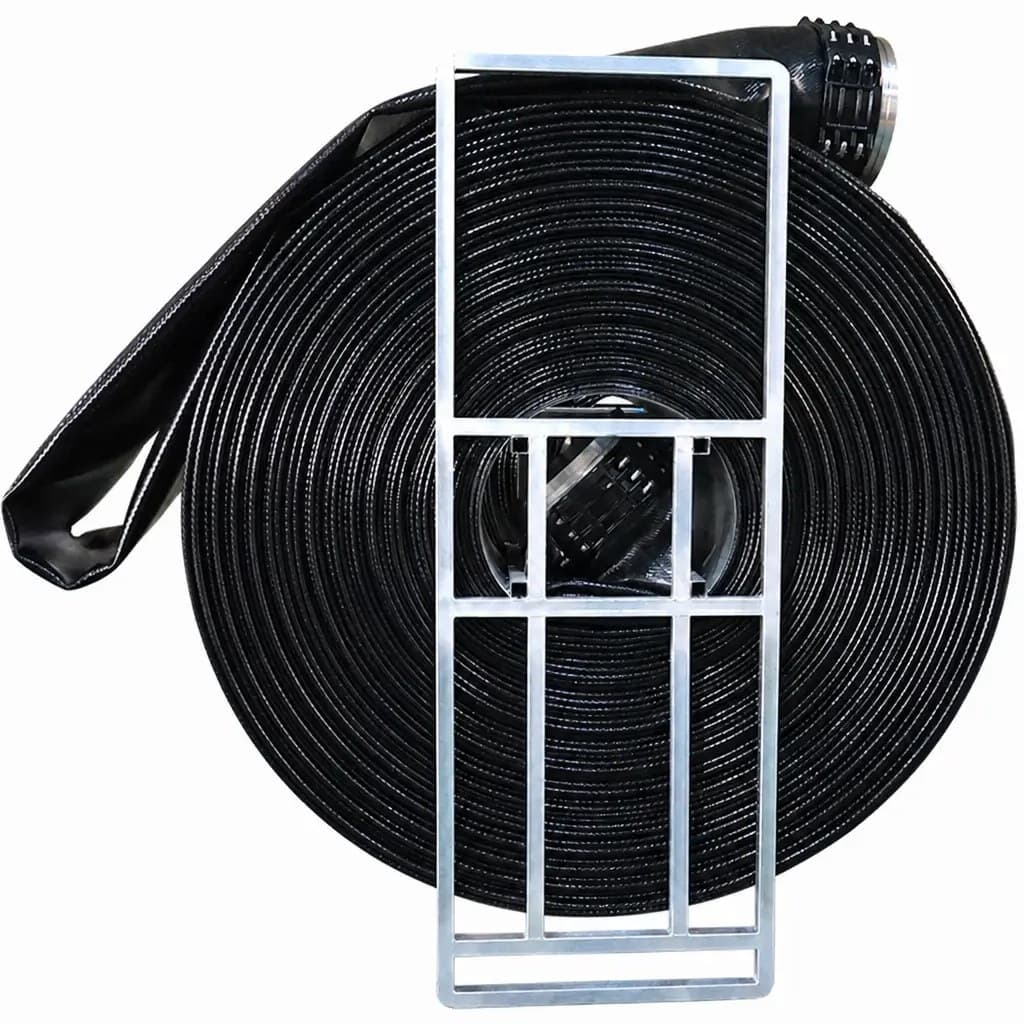 IH-LF-TDWTPU Lay Flat Dewatering and Water Transfer HoseIndus Hydraulics
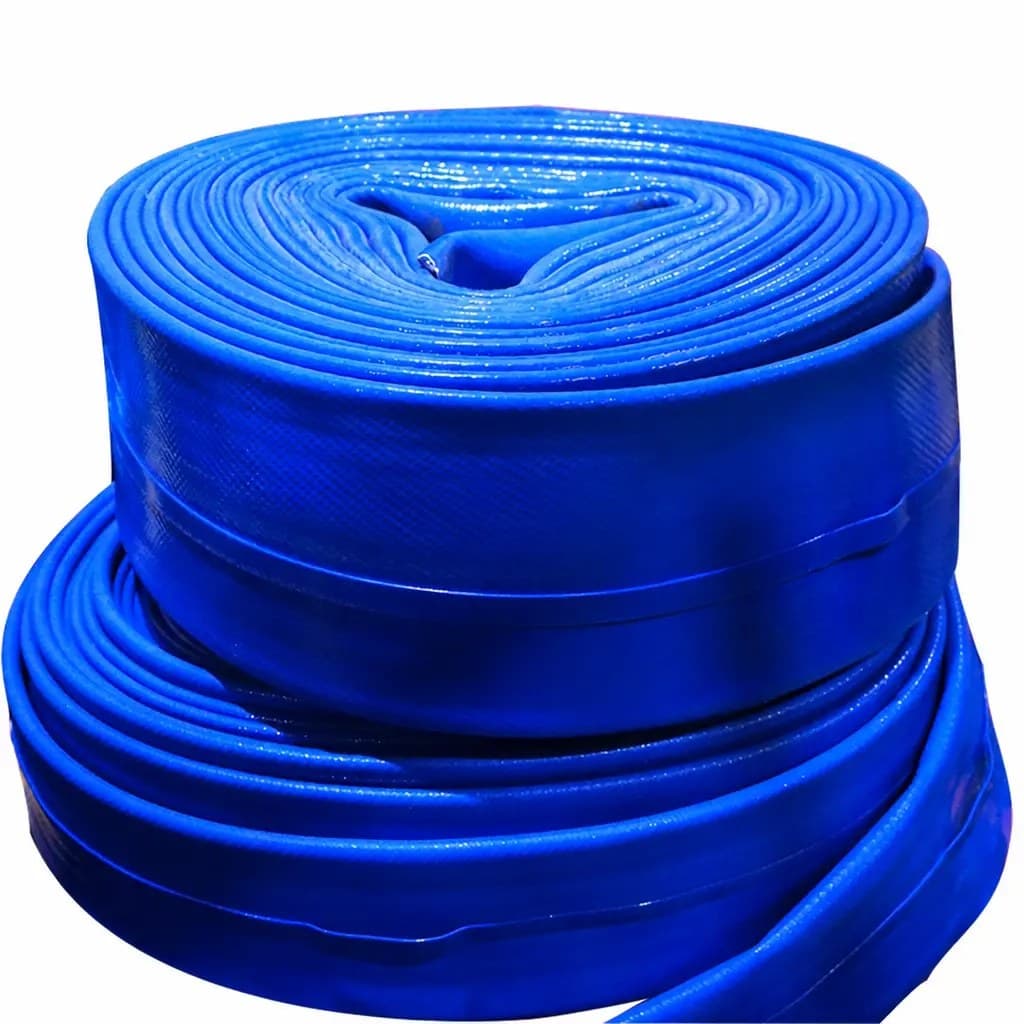 IH-LF-TWRTPU Lay Flat Well Riser HoseIndus Hydraulics
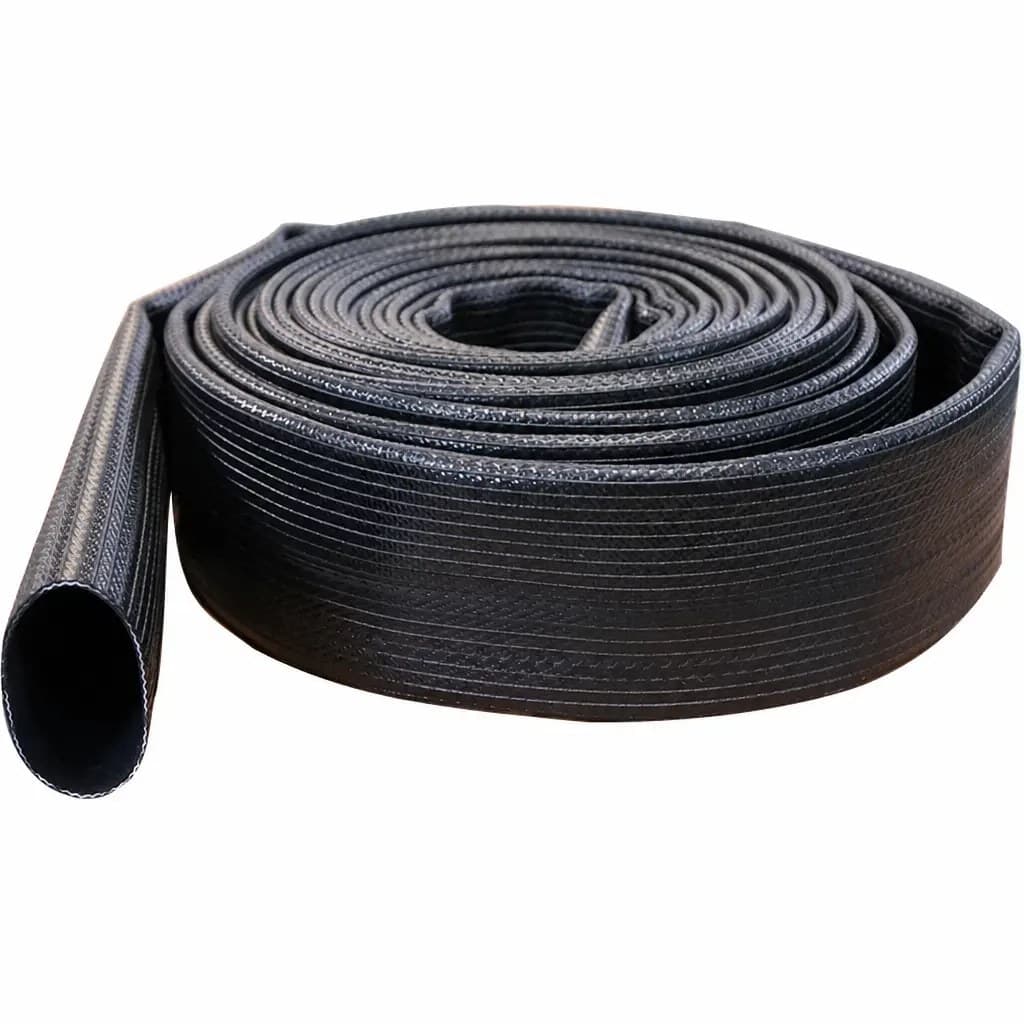 IH-LF-NBRNBR Lay Flat Discharge Hose, Ribbed CoverIndus Hydraulics
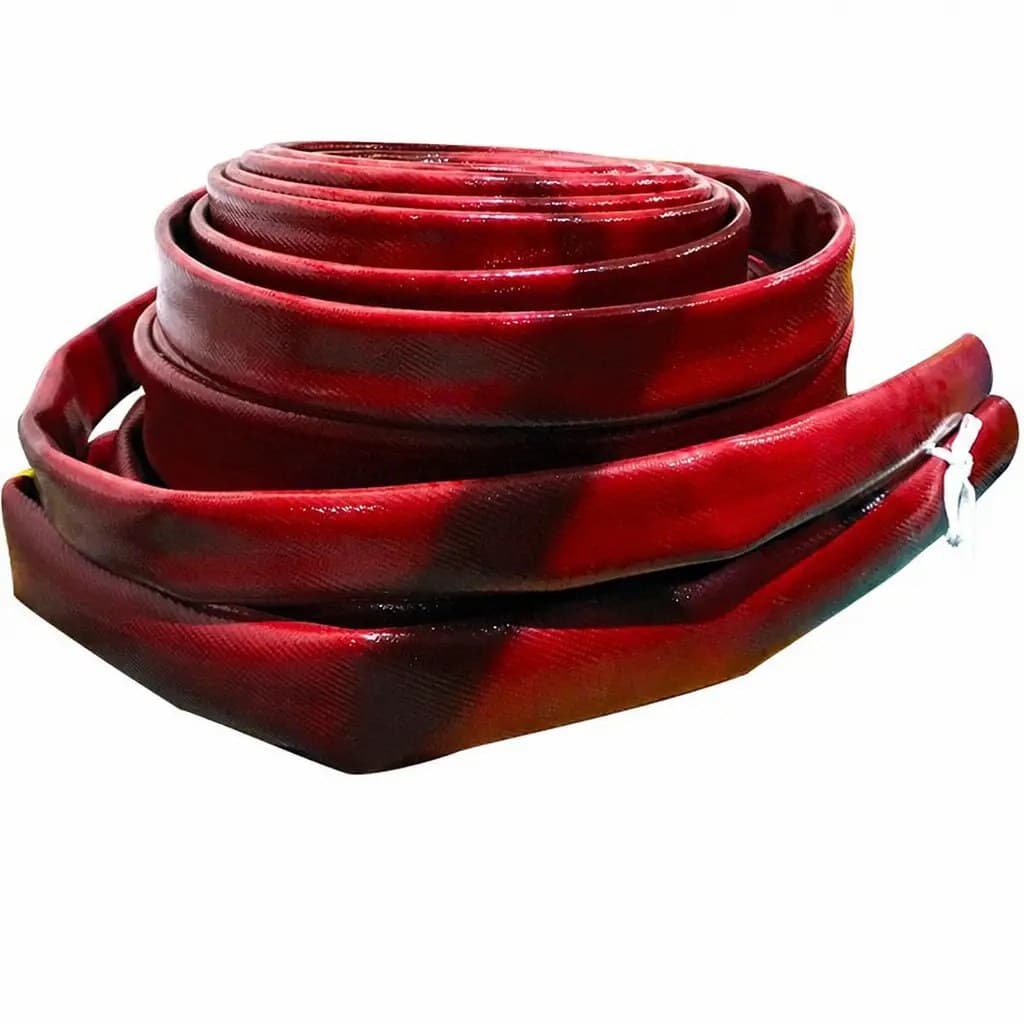 IH-LF-TCPTPU Lay Flat Concrete Placement HoseIndus Hydraulics
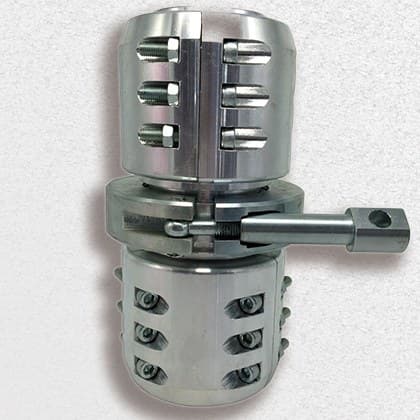 IH-LF-CHPHigh-Pressure Lay Flat Hose Coupling, Male × FemaleIndus Hydraulics


