This is not an argument that cheap fittings are bad fittings. Plenty of perfectly sound hydraulic hardware is made by companies nobody in this region has heard of. The argument is narrower and harder to answer: if you cannot say who made it, you cannot state what the assembly built from it is rated to.
/01The crimp problem.
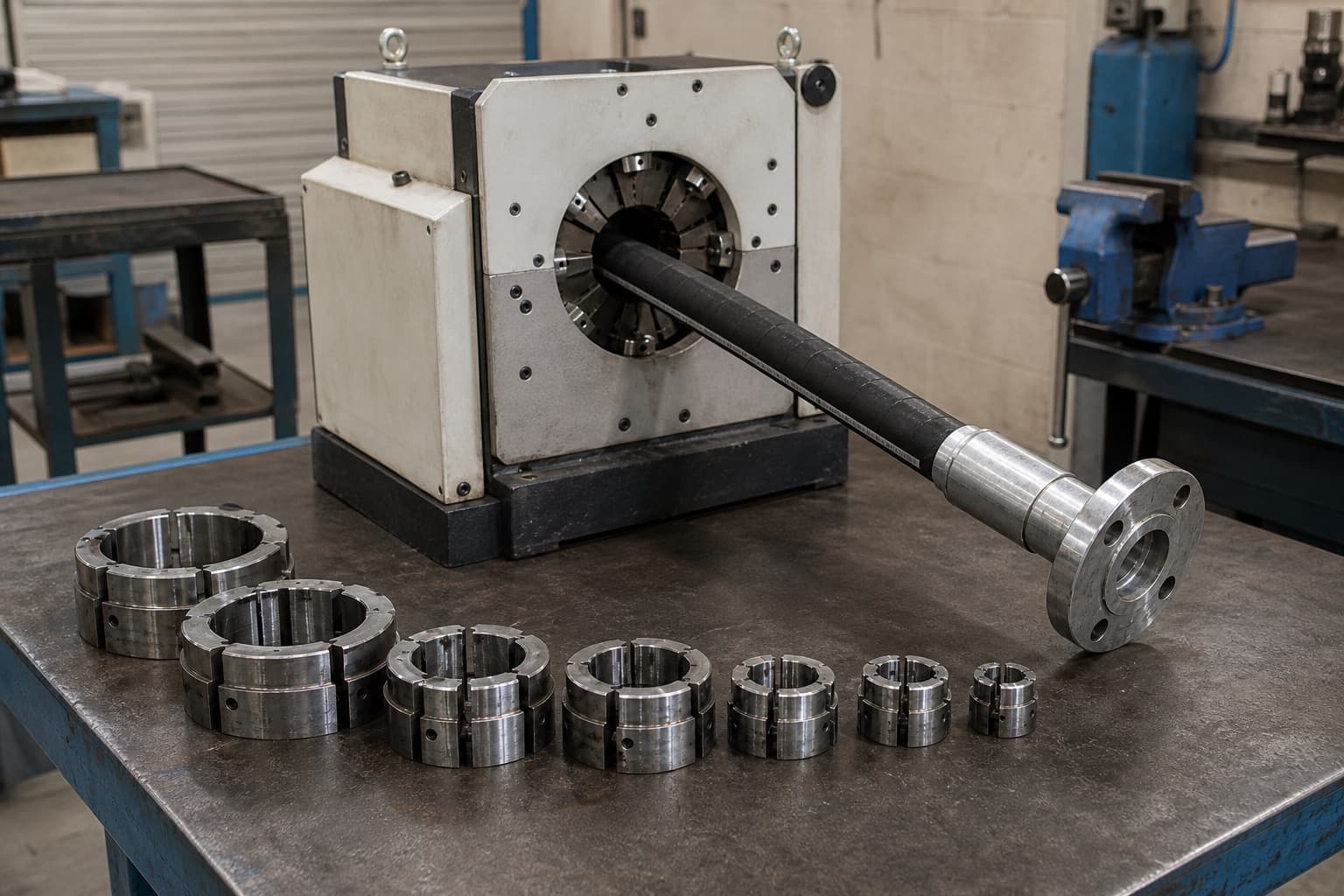
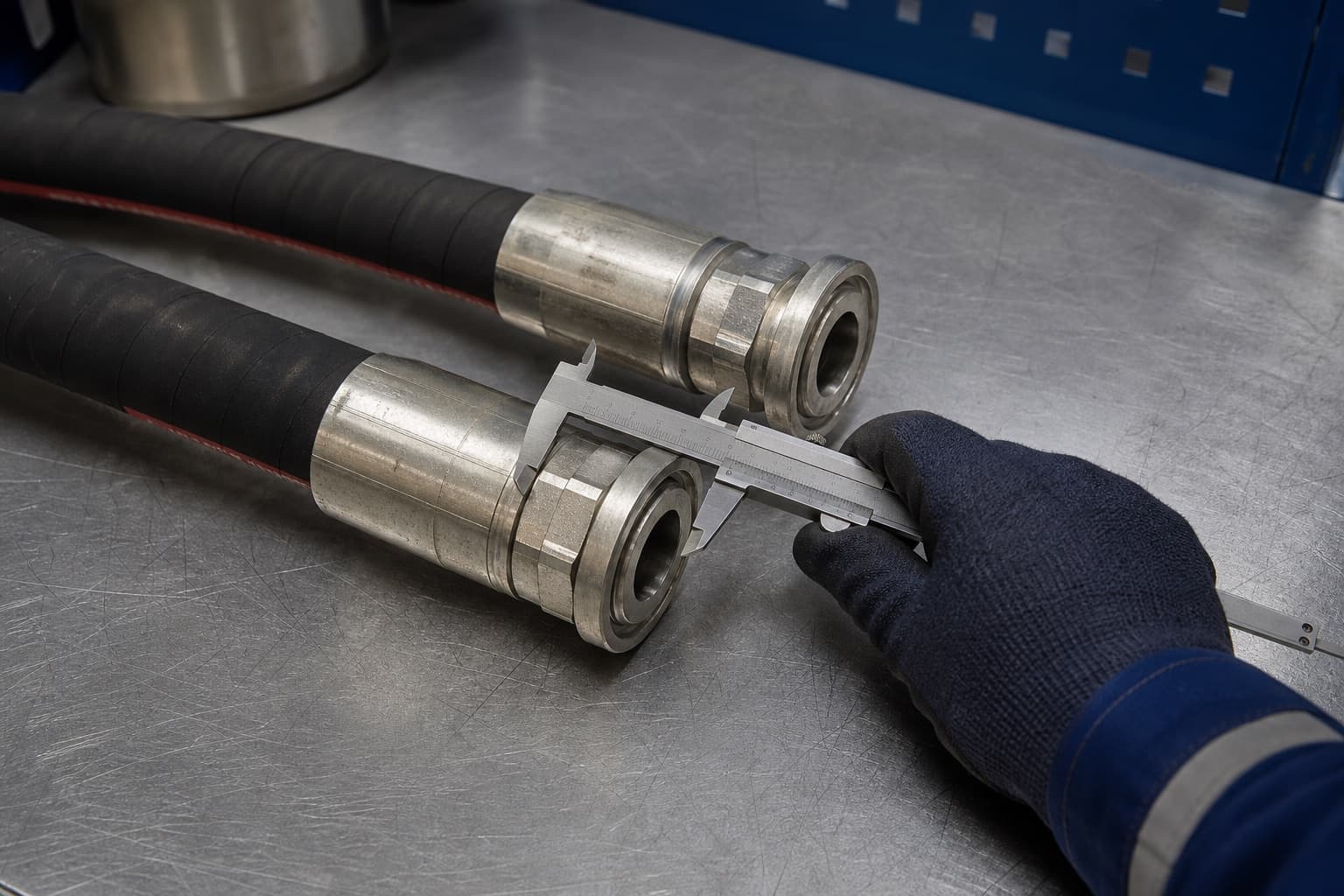
A crimp is a finished outside diameter, published by the fitting manufacturer for a specific combination of hose construction and ferrule. It is the number that makes the assembly a rated component rather than a hopeful one.
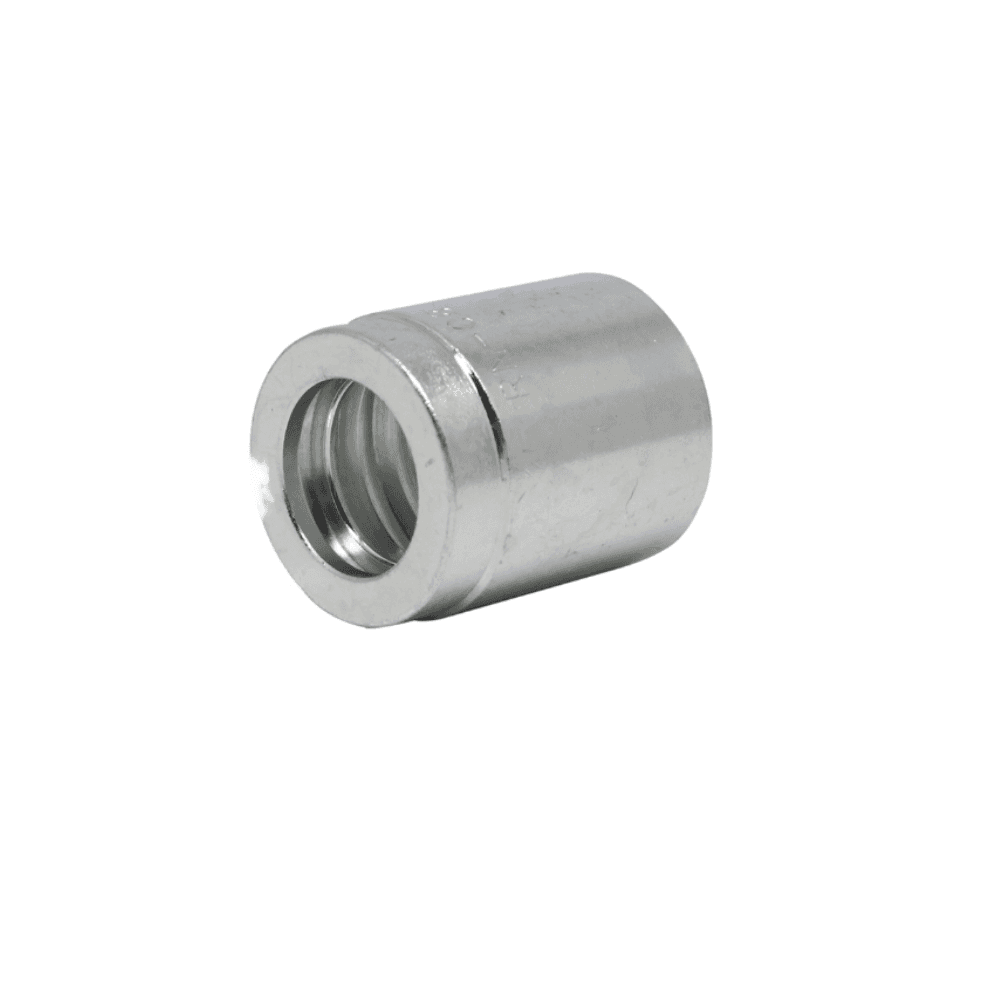
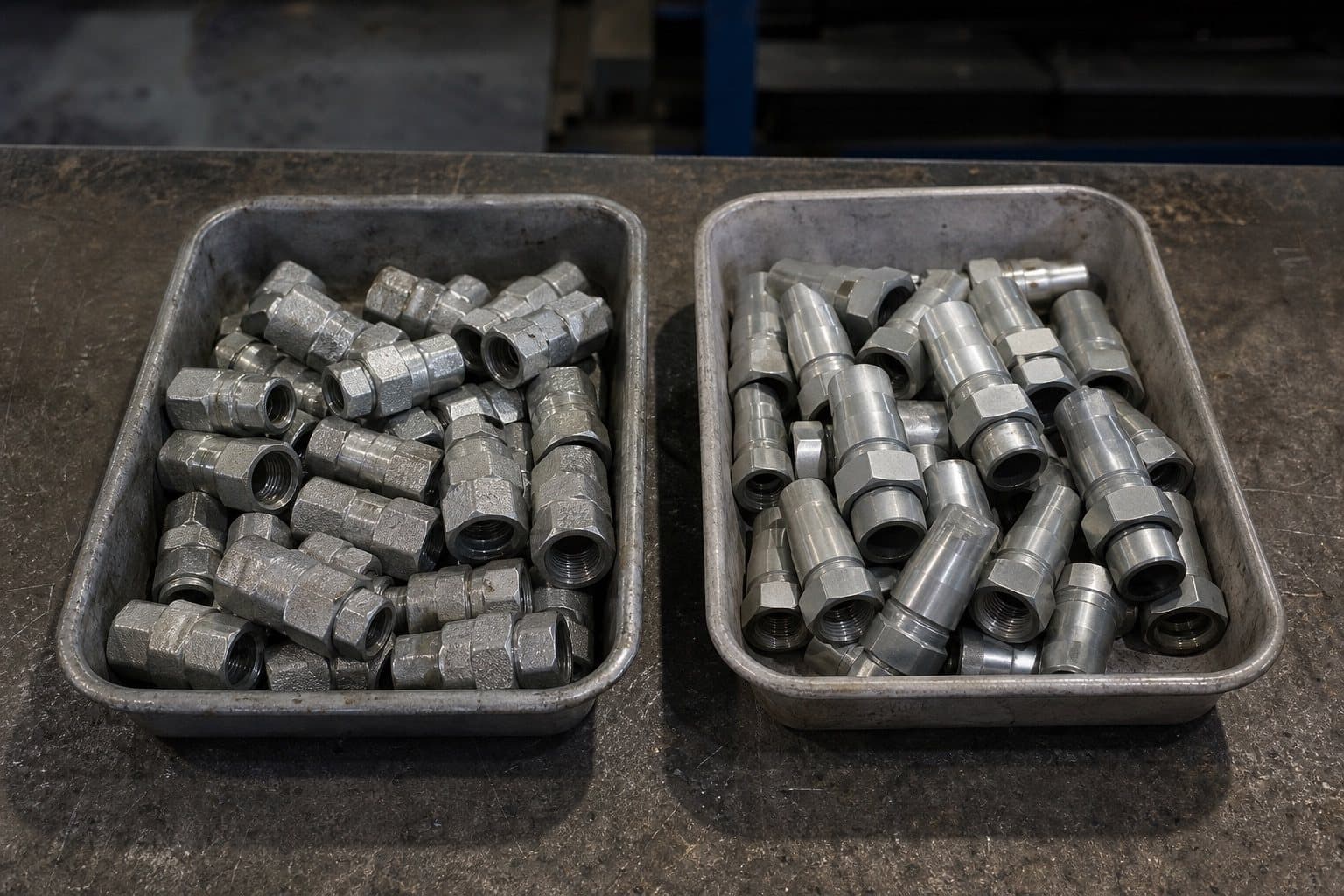
An unmarked ferrule has no published anything. It can be crimped — it will grip, it will hold on a test — but the workshop cannot state the diameter it should have reached, so it cannot verify that it did. The assembly leaves with a pressure rating that is an assumption. A marked ferrule, by contrast, ties back to a published crimp table — ours, such as the no-skive ferrule for R2AT and 2SN, are listed against the hose they were designed for.
/02What is invisible.
| Property | Why it matters | Visible? |
|---|---|---|
| Crimp specificationHighlighted | Defines whether the assembly is rated | No |
| Base material and heat treatment | Strength, and behaviour at pressure | No |
| Plating type and thickness | Corrosion life, especially coastal | Partly — and misleadingly |
| Stainless gradeHighlighted | 316 and 304 look identical and behave differently in salt | No |
| Thread tolerance | Whether it seats correctly or merely engages | No |
| Ferrule length and profile | Whether it matches the hose reinforcement | Partly |
/03Three questions to ask.
Of any supplier, including us
None is unreasonable and all three have specific answers.
IfWho manufactured this?
A name, not a country.
"Imported" is not a manufacturer. A supplier who cannot name the maker cannot obtain a specification from them either.
IfWhat is the crimp diameter for this hose and ferrule?
A number, in millimetres, from the manufacturer.
If the answer is a machine setting rather than a finished diameter, that is the wrong answer.
IfWhat does the certificate state?
What was tested, at what pressure, on what.
A generic statement of conformity is not a test record for your assembly.
IfAny of the three cannot be answered
You are buying hardware, not a rated assembly.
That may be acceptable on a low-consequence circuit. It is not acceptable on lifting, access or anything within an inspection regime.
Common questions
- How can I tell a stainless fitting is really 316?
- Not by eye, and not reliably by a magnet. It comes from the material certificate, which is why traceability is the whole answer to this question rather than an inspection technique.
- We have been using unmarked fittings for years without problems. Is that evidence?
- It is evidence that they have held, which is worth something. It is not evidence of a rating, and it does not transfer to the next batch from the same source — which may be from a different factory entirely.
- Do you supply the crimp specification with your fittings?
- Yes. Ask and you will get the published crimp diameter for the combination. If you are crimping in-house you should have it, and we should not be leaving you to guess.
- Is a brand name enough on its own?
- No — counterfeits of known brands exist. What matters is a supply chain you can trace and a supplier who can produce the specification, which is a different question from what is stamped on the hex.