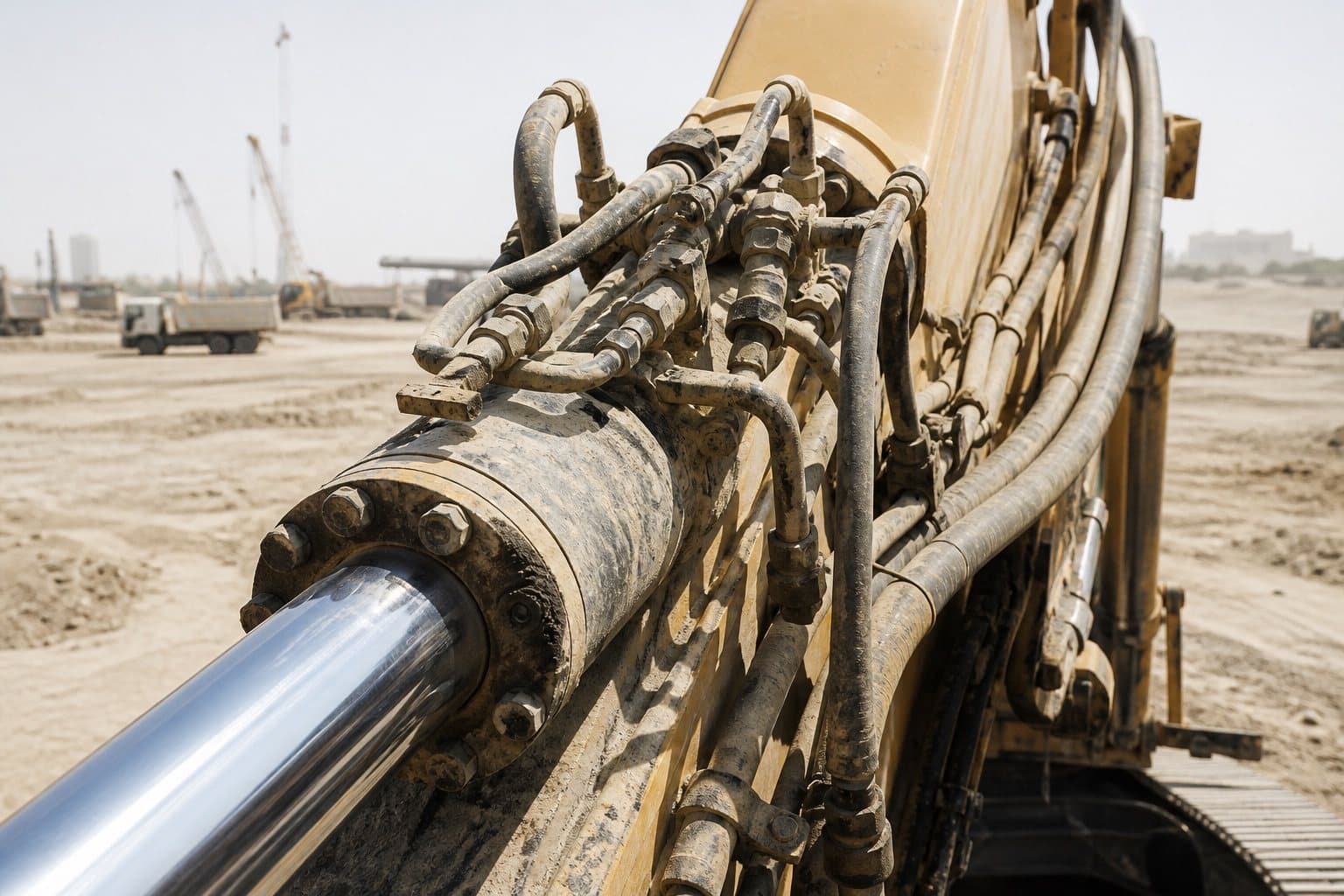
Everyone who runs plant in this region knows the hot months are harder on hydraulics. The reason is not simply that it is hot — it is that several independent things move in the same direction at the same time, and each one makes the others worse.
/01The four that compound.
| Change | Consequence | What it loads first |
|---|---|---|
| Ambient air near 50 °CHighlighted | Hose heated from outside as well as inside | Cover and tube ageing |
| Cooler rejects less heat | Fluid runs hotter for the same duty | Everything in the circuit |
| Oil thins as it warms | Thinner protective film | Pumps, seals, valves |
| Longer working hours | More cycles, less cool-down between shifts | Everything, cumulatively |
The second row is the one people underestimate. A heat exchanger works on the difference between fluid and air; raise the air temperature and its capacity drops. Cooling capacity falls precisely when the system needs it most, which is why fluid temperature can rise more than ambient does.
/02What we can and cannot say about the numbers.
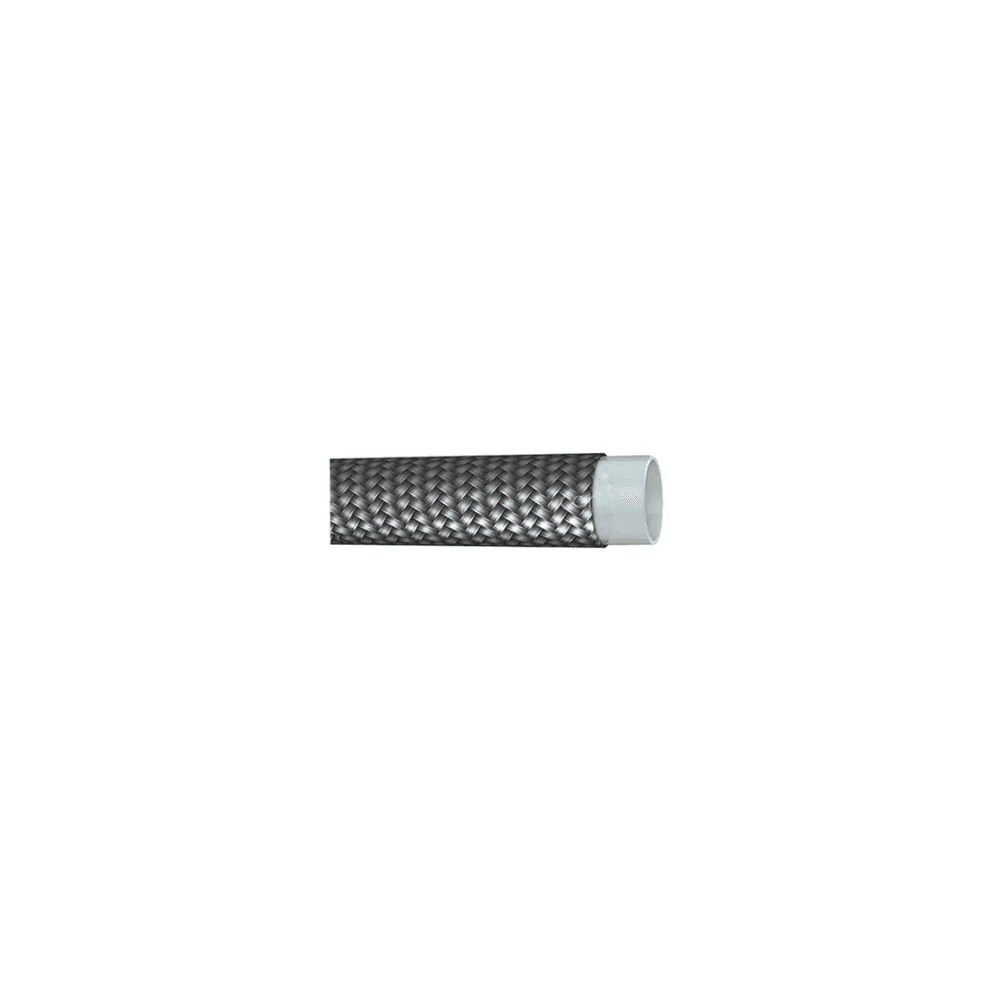
What is worth acting on is the direction, which is not in doubt: the hot months consume hose life faster, and the consumption is permanent. That is enough to justify moving the preparation work earlier in the year. For runs that live hot, R13 is rated to 121 °C and R14 PTFE to 204 °C — headroom, not immunity.
/03Do the work in spring.
Before the season rather than during it
All of these are cheaper in March than in an August breakdown.
IfCoolers and radiators are dusty or silted
Clean them properly, on the fluid side as well as the air side.
A cooler at reduced capacity raises the temperature of every hose in the circuit simultaneously.
IfHoses run close to hot components
Move them or shield them now.
A few centimetres of distance is worth more than a grade change, and it costs nothing in a planned stop.
IfExposed runs sit in direct sun
Sleeve or shade them.
The sleeve also protects against abrasion, so it is rarely wasted effort.
IfAssemblies are old and undated
Replace the oldest and tag the new ones.
Going into summer on hose of unknown age is how a planned cost becomes an unplanned one.
Higher-rated constructions

Common questions
- Should we change hose grade for summer?
- Rarely. Where a specific run is genuinely too hot, a 121 °C construction is the answer year-round rather than seasonally. For most fleets the improvement is in cooling, routing and shading.
- Does the fluid need changing for summer?
- That is a system question rather than a hose one, and it depends on the viscosity grade and the machine. Worth asking your lubricant supplier — but do not change fluid type without checking hose and seal compatibility first.
- Our failures cluster in one week every year. Why?
- Usually a batch of hoses fitted together reaching the end of its life together, brought forward by the season. It looks like an event and is really a cohort. Staggering replacement breaks the pattern.
- Is it worth measuring hose temperature?
- Yes, at the worst point of the worst run, on the hottest afternoon you can catch. It converts an argument about whether heat is the problem into a number.