When a lay flat line splits, the first instinct is to order a stronger hose. Usually that is the wrong fix. A hose rated well above the pump’s pressure can still fail if it is charged while twisted, dragged over a sharp edge, folded the same way for years or slammed by a closing valve. The evidence is almost always on the failed length — if you know what to look for.
/01The eight common failure modes.
| Failure | What you see | Usual cause |
|---|---|---|
| Kink burstHighlighted | Split at a sharp bend or twist | Charged while twisted, on the reel, or over an edge |
| Fold-line wear | Cover worn through along the two edges | Rolled and stored the same way for years; dragged flat |
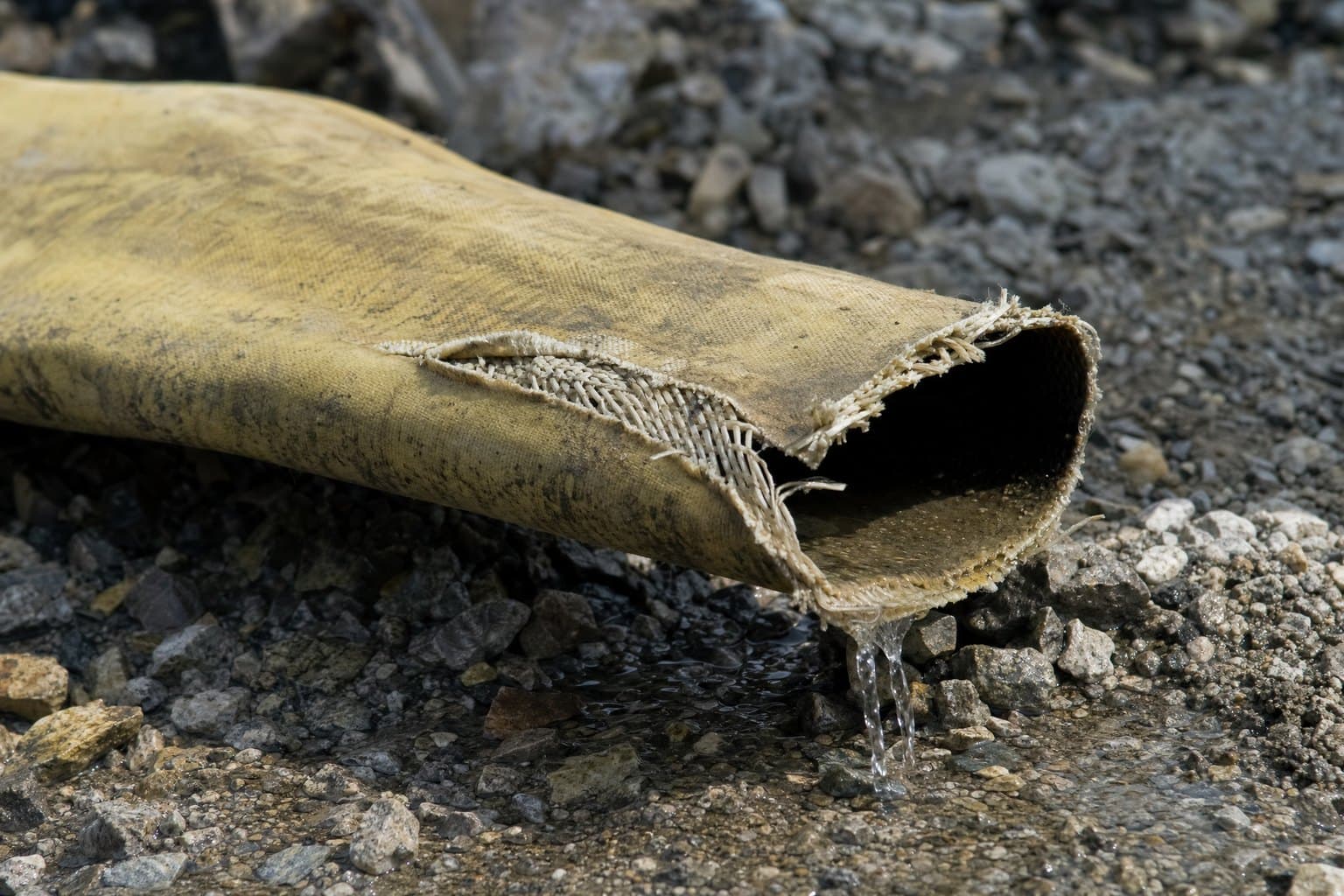
| Abrasion | Patches of exposed woven jacket | Dragging over rock, concrete, gravel |
| Surge rupture | Long split, often near the pump or a valve | Fast valve closure or pump trip on a full line |
| Coupling pull-off | Hose blown off the shank | Wrong clamp for the wall, uneven tightening, not re-checked |
| Heat and UV | Chalky, cracked or stiff cover | Long sun exposure empty; PVC worst |
| Suction collapse | Hose flat at the pump inlet, pump starving | Lay flat used on a suction line |
| Chemical attack | Swollen, soft or blistered cover or tube | Fluid not compatible with the polymer |
/02Kinks and twists.
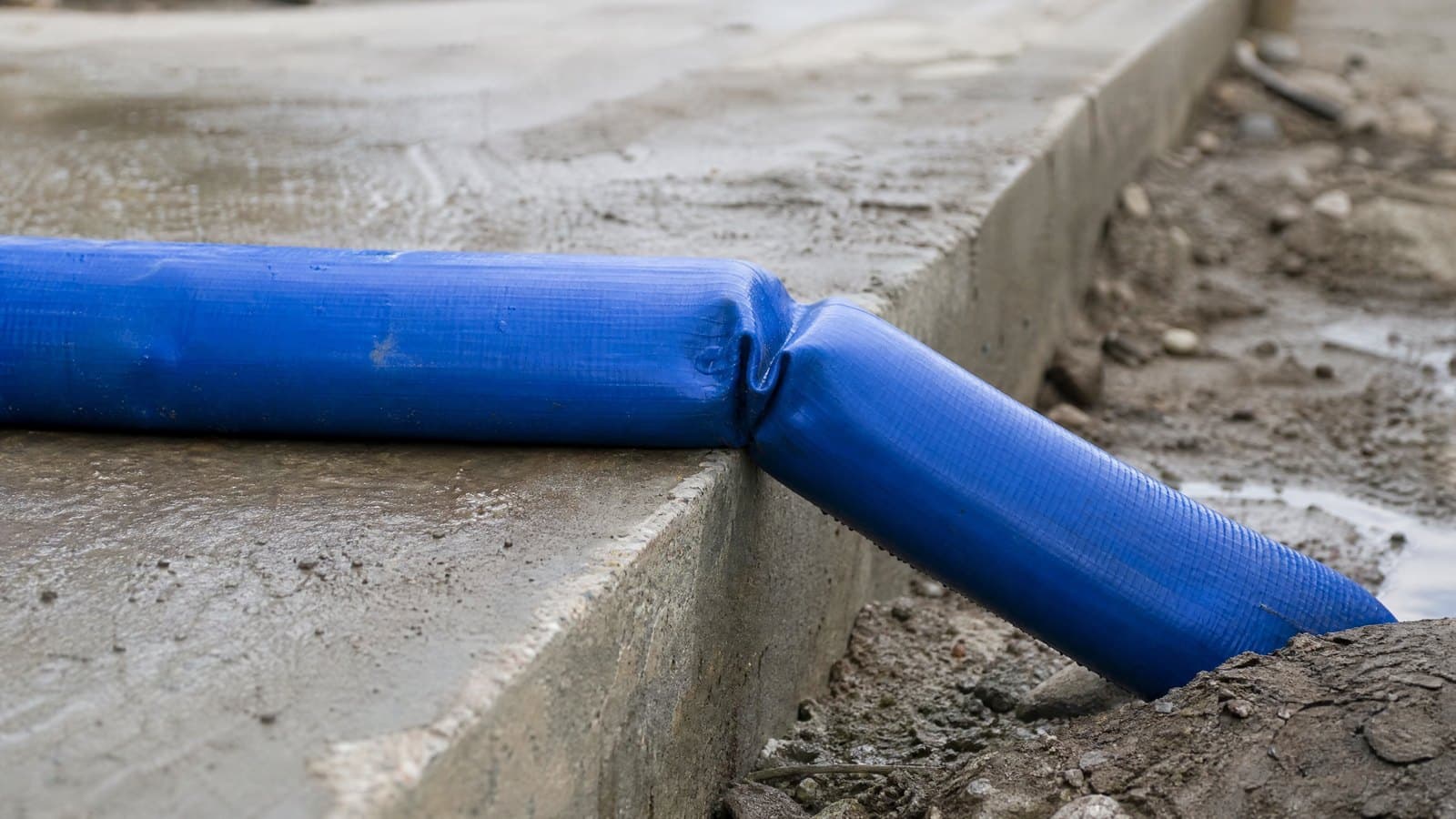
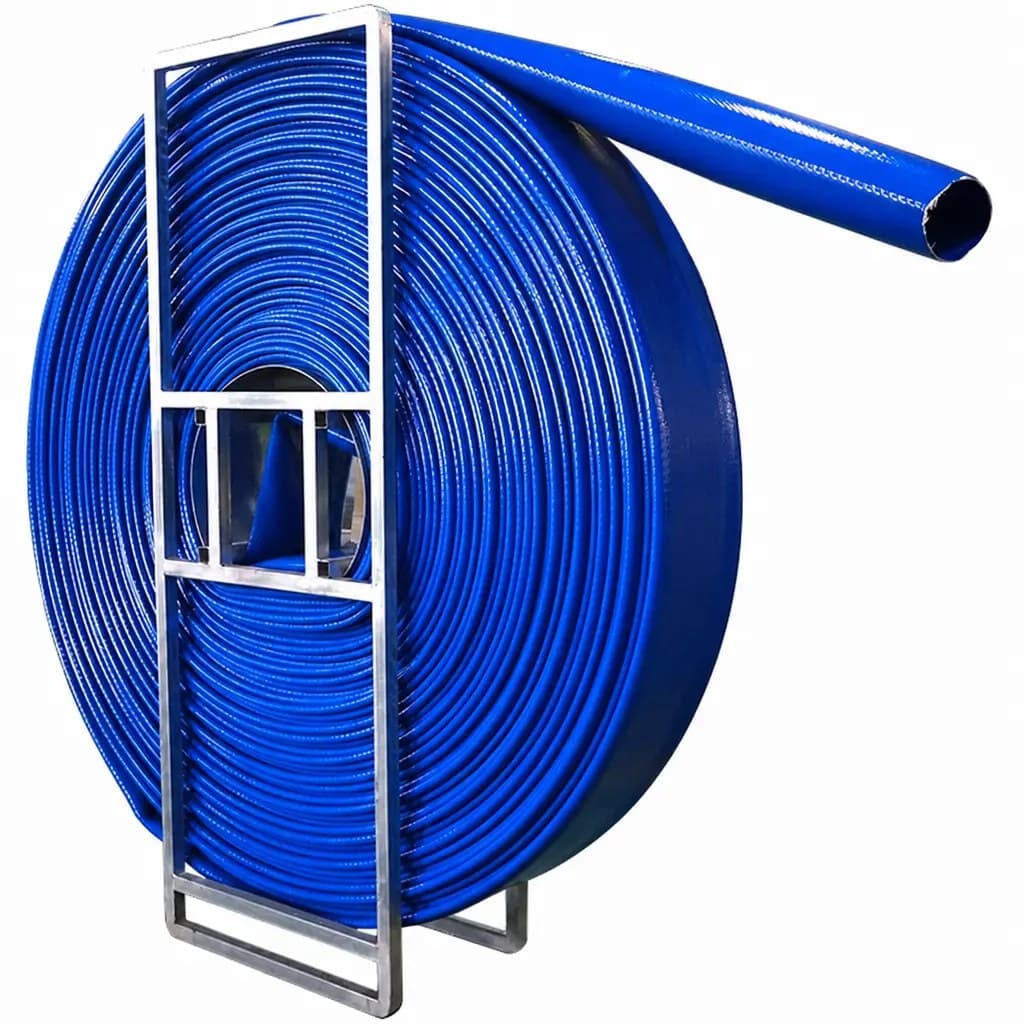
A lay flat hose is designed to be round under pressure. Charge it while it is twisted, still partly on the reel, or bent over a kerb and the wall folds into a sharp crease that concentrates stress on a few yarns of the jacket. The fix is procedural: unroll fully, lay the hose straight with gentle curves, then fill slowly from the pump end with the far end open to let air out. Use hose bridges at road crossings rather than letting vehicles fold it.
/03Folds, abrasion and dragging.
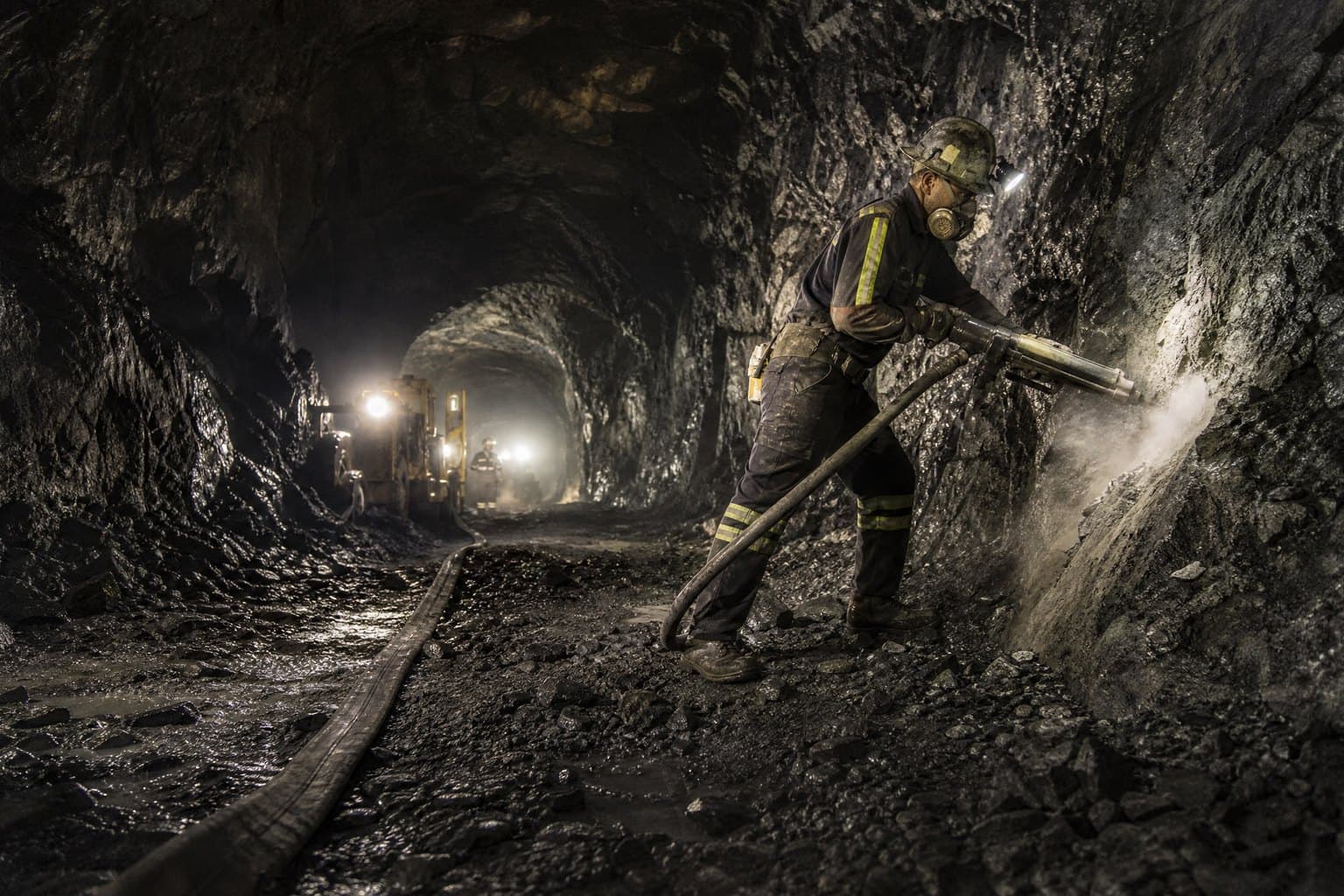
Every time lay flat is rolled, its two edges are folded. Over years the cover along those fold lines wears first — the classic sign is a hose sound everywhere except two strips running its full length. Rolling from alternate ends, and storing coils without heavy loads on top, spreads the wear. Dragging is the other enemy: a hose pulled across rock or concrete loses its cover quickly.
Material choice decides how much of this a hose takes. Through-the-weave TPU, as in our TPU dewatering hose and the heavier-walled slurry drag hose, resists abrasion best; nitrile rubber with a ribbed cover, as in our NBR discharge hose, comes next; PVC wears fastest. Our materials comparison covers the trade-offs.
/04Pressure: overpressure and surge.
Working pressure falls with bore, so a pump that is safe on 6" hose can overpressure 16" hose. Check the rating for the size in use — our TPU dewatering hose runs from 21 bar at 1-1/2" to 10 bar at 16" — and remember a centrifugal pump makes its highest pressure at shut-off. Surge is the sudden spike when moving water stops: a valve snapped shut or a pump tripping can briefly push pressure well above the running value. Open and close valves slowly, and size the hose with headroom. Our guide to pressure ratings explains how.
/05Couplings, heat, suction and chemicals.
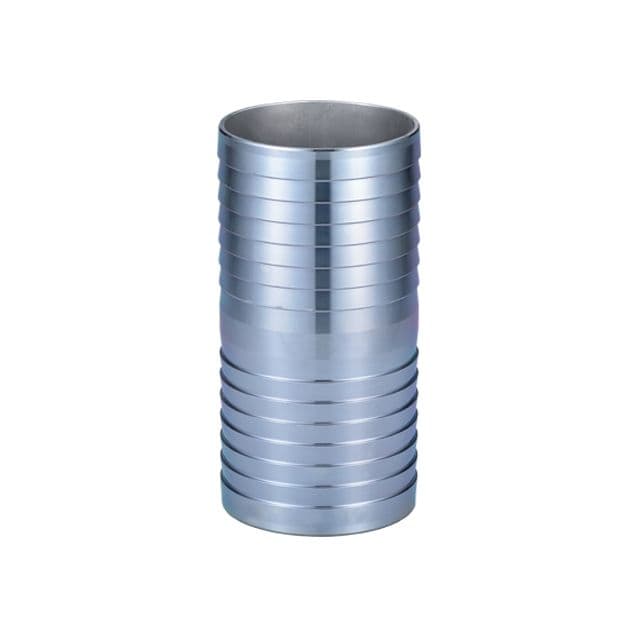
- Coupling pull-off. The clamp must match the hose wall, be tightened evenly and be re-checked after the first pressurisation. On large bores use a dedicated lay flat coupling with a forged shank and bolted clamp — see our coupling guide.
- Heat and UV. An empty hose in direct sun gets much hotter than the air. TPU and NBR are rated to +80 °C in our range and resist UV well; PVC ages fastest. Store coils shaded, and keep working lines full where possible.
- Suction collapse. Lay flat cannot hold vacuum. Fit a rigid-helix suction hose on the pump inlet — see suction vs lay flat.
- Chemical attack. Fuels and oils need NBR or TPU, and fuel transfer needs an antistatic hose earthed at both ends. Check compatibility for anything other than water.
/06An inspection routine.
Before each deployment
Five minutes per length, before it goes back into service.
IfIs the cover worn through to the jacket anywhere?
Retire or cut out the section and re-couple; exposed jacket fails quickly under pressure.
IfAre there blisters, soft spots or swelling?
Suspect chemical attack or delamination — retire the length.
IfAre the fold lines cracked or thin?
Downgrade to low-pressure duty or retire; roll from the other end next time.
IfAre couplings, shanks and clamps sound and tight?
Replace damaged parts; re-torque clamps after the first fill.
IfIs the hose marked or tagged with its size and class?
If not, confirm its rating before using it on a pressurised line.
A damaged length can often be saved: cut out the damaged section and rejoin the two ends with a hose mender or a pair of couplings. Our TPU hose is made in lengths up to 400 m, so a cut-down length still has plenty of use.
In the Gulf, heat and sun are a failure mode of their own; see lay flat hose in Gulf heat for summer practice and storage.
When damage does happen, see how to repair lay flat hose; to prevent the storage damage above, see how to roll and store it.
Common questions
- Why does my lay flat hose keep splitting along the edge?
- Edge splits are usually fold-line wear from rolling the same way for a long time, or abrasion from dragging the hose flat. Roll from alternate ends, avoid dragging, and choose a TPU or ribbed NBR cover for heavy handling.
- Can a lay flat hose burst below its rated pressure?
- Yes, if it is kinked, twisted, damaged or hit by a pressure surge. The rating assumes the hose is laid straight, undamaged and correctly coupled.
- How do I stop lay flat hose from kinking?
- Unroll it fully, lay it straight with gentle curves, and fill it slowly before running at full pressure. Protect it at road crossings with hose bridges.
- Can I repair lay flat hose?
- Yes. Cut out the damaged section and rejoin the ends with a hose mender or couplings sized to the hose. Do not patch over a damaged jacket on a pressurised line.
- Does sun damage lay flat hose?
- Long exposure ages the cover, especially PVC. TPU and NBR resist UV far better. Store coils shaded and avoid leaving empty hose in direct sun for long periods.