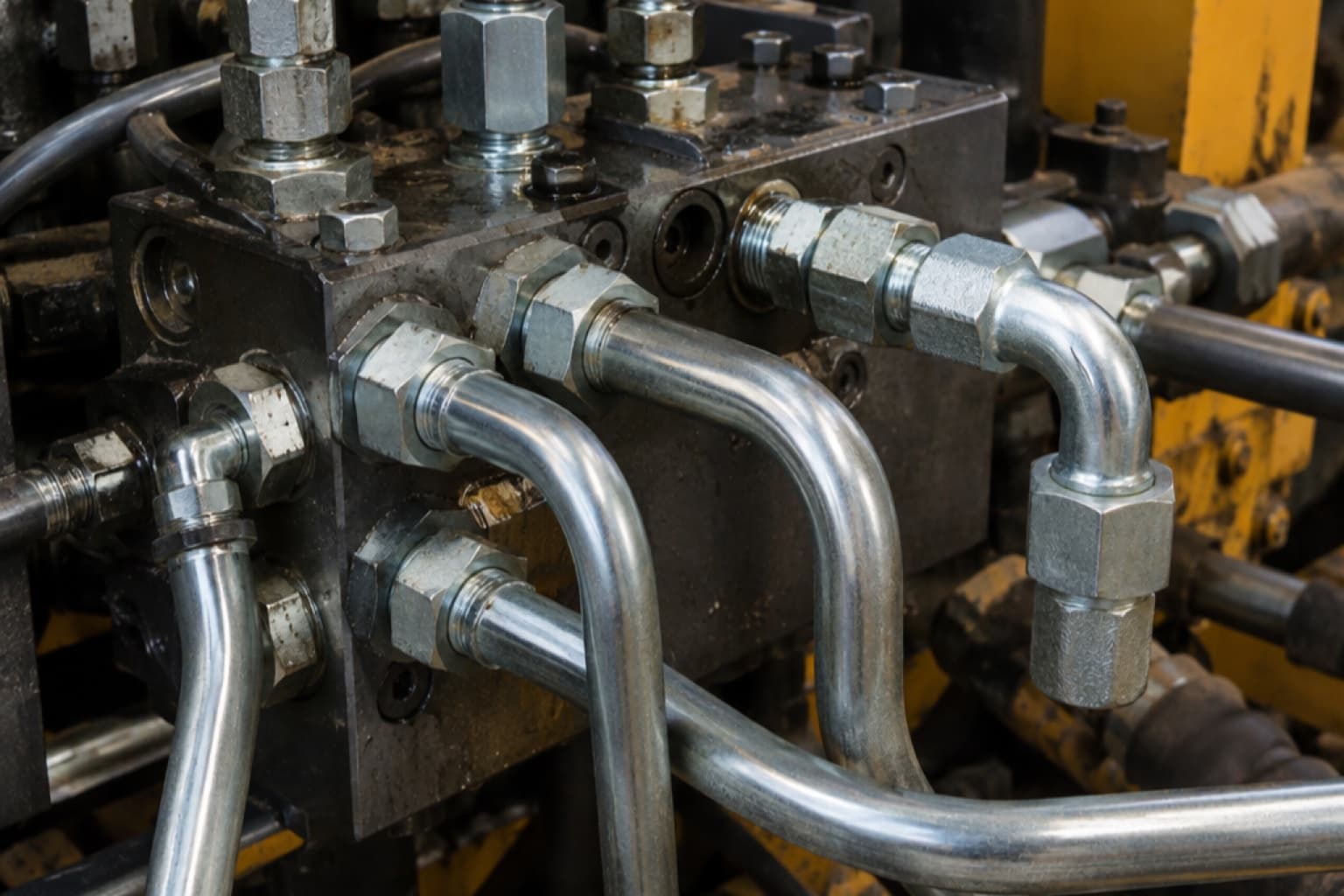
Open the hydraulics on a European excavator, crane, tractor or machine tool and the tube joints are almost all 24° cone cutting-ring fittings. The connection itself is simple; the ordering is not, because every fitting carries a series, a tube size and often a stud end. This guide covers the range and how to specify it. For why European machines use it and how to spot L and S on the machine, see fittings on European machines.
/01Series and ratings.
| Series | Tube OD (mm) | Rating | Nut thread examples |
|---|---|---|---|
| LL — extra light | 4–12 | 100 bar | — |
| L — light | 6, 8, 10 | 500 bar | — |
| L — lightHighlighted | 12, 15, 18 | 400 bar | L12: M18×1.5 |
| L — light | 22, 28, 35, 42 | 250 bar | L22: M30×2 |
| S — heavy | 6, 8, 10 | 800 bar | — |
| S — heavyHighlighted | 12, 14, 16 | 630 bar | S12: M20×1.5 |
| S — heavy | 20, 25, 30, 38 | 420 bar | S38: M52×2 |
VOSS’s figures under its DNV type approval match Parker’s steel column, and DNV notes that carbon-steel ratings are reduced above 120 °C. Stainless is rated lower — see stainless DIN 2353. Because L and S use different nut threads on the same tube, a heavy-series body will not take a light-series nut; mixing them is the most common DIN ordering mistake.
/02The shapes and stud ends.
- Tube-to-tube: straight unions, union elbows, tees, crosses and bulkhead unions, all with 24° cones, nuts and cutting rings.
- Stud connectors and stud elbows: a 24° cone on one end and a port thread on the other — BSPP or metric parallel with an ED elastomer seal or a metal sealing edge, or tapered BSPT or NPT.
- Adjustable stud ends: elbows and tees with a locknut and O-ring stud so they can be aimed before locking.
- Swivel connectors: a 24° female swivel nut onto a male 24° cone, BSPP 60° cone, metric or flat face — for joining to a fitting without turning it.
- Banjos: high-pressure banjo elbows for tight clearances.
- Weld and orbital-weld nipples and pump connectors for weld-in and pump-port joints.
- Nuts, cutting rings, plugs and soft-seal caps for spares and blanking.
A stud end with an ED seal seals on the port face, not the thread; see BSP adapters and metric adapters for the port forms.
/03Presetting the ring in steel.
The cutting ring has to be preset — driven into its cone until its edge cuts into the tube — before the joint is finally made up. Parker’s guidance for steel tube:
- Use seamless steel tube no harder than HRB 75.
- Steel and copper tube can be preset in the fitting body itself; for frequent presetting, a hardened pre-assembly tool lasts longer.
- Above 18 mm, a hydraulic presetting tool is recommended.
- Manual preset is 1½ turns; final assembly is to wrench resistance plus 1/12 turn.
- Fit support sleeves in thin-wall tube so the ring cannot collapse it.
After presetting, the bite is visible: a raised collar of tube material ahead of the ring’s edge. No collar, no grip.
Common questions
- What is the difference between DIN 2353 L and S series?
- L (light) and S (heavy) take the same tube ODs but use different nut threads and bodies; S is rated higher. A 12 mm L-series nut is M18×1.5, an S-series nut M20×1.5.
- What pressure are DIN 2353 fittings rated for?
- In steel, L series 500 bar at 6–10 mm, 400 bar at 12–18 mm and 250 bar at 22–42 mm; S series 800, 630 and 420 bar. Ratings fall above 120 °C.
- Is DIN 2353 the same as ISO 8434-1?
- For the connection, yes — ISO 8434-1 is now the main standard. DIN 2353:2013 is still current for stud-end fittings ISO 8434-1 does not cover.
- What is an ED seal?
- An elastomer seal held in a groove under the stud end’s hex, sealing on the port face of a BSPP or metric parallel port — not on the thread.
- Can I preset a cutting ring in the fitting body?
- For steel tube, yes; Parker recommends a hardened tool for frequent presetting and a hydraulic tool above 18 mm. For stainless, use the tool.
- Can I reuse a cutting ring?
- A preset ring stays on its tube and can be remade on the same body. If the tube is cut back, fit a new ring.
What we list
Steel 24° cone DIN 2353 fittings and adapters:
- Orbital Weld Nipple
- Lock Nut for Bulkhead
- Cutting Ring for 24° Cone End Nut
- 24° Cone End Nut
- Union Cross
- Pump Connector
- Swivel Nut Run Tee (DIN 2353)
- Swivel Nut Branch Tee (DIN 2353)
- Adjustable Branch Tee
- Adjustable Branch Tee m Metric X m SAE X m Metric
- Adjustable Branch Tee (Variant 2)
- Adjustable RunTee
- Adjustable Run Tee m Metric X m Metric
- Union Tee (DIN 2353)
- Male Female Connector
- Blanking Plug for Port with ED Seal
- Blanking Plug with Nut for Cone
- Blanking Plug
- Swivel Union
- Swivel Connector BSPP Flat
- Swivel Connector BSPT
- Swivel Nut Elbow (DIN 2353)
- Swivel Connector BSPP 60° Cone Seat
- Swivel Nut Union Tube End Reducer
- Swivel Connector Metric
- Bulkhead Elbow Union Metric
- Bulkhead Union Metric
- Weld Connector
- Male Stud Connector BSPT (DIN 2353)
- Male Stud Elbow BSPT (DIN 2353)
- Male Stud Elbow NPT (DIN 2353)
- Male Stud Connector NPT (DIN 2353)
- Male Stud Connector Metric
- High Pressure Banjo Elbow Metric
- Adjustable LockNut Elbow Metric
- High Pressure Banjo Elbow BSPP
- Male Stud Connector Metric with ED Seal
- Adjustable Lock Nut Elbow BSPP
- Male Stud Connector BSPP with ED Seal
- Male Stud Connector
- Male Stud Connector BSPP
- Union Metric
- Union Elbow Metric
- Metric Bite Type 45° Elbow UN/UNF Adjustable Stud End
- BSP Adjustable Stud End Run Tee
- Metric Bite Type 90° Elbow UN/UNF Adjustable Stud End
- Metric Bite Type 45° Elbow Male Adjustable Stud End
- 45° Elbow BSP Adjustable Stud End
- Metric Bite Type 45° Elbow Reducer Tube Adaptor with Swivel Nut
- Metric Bite Type Elbow Pump Flange Connection
- Steel DIN 2353 Soft-Seal Tube Cap, Light Series
- Steel DIN 2353 Soft-Seal Tube Cap, Heavy Series
- Steel DIN 2353 Female Swivel × BSPP Male Adapter, Light Series
- Steel DIN 2353 Female Swivel × BSPP Male Adapter, Heavy Series
- Steel DIN 2353 Female Swivel × NPT Male Adapter, Light Series
- Steel DIN 2353 Female Swivel × NPT Male Adapter, Heavy Series
- Steel DIN 2353 Female Swivel × Metric Male Adapter, Light Series
DIN 2353 adapters
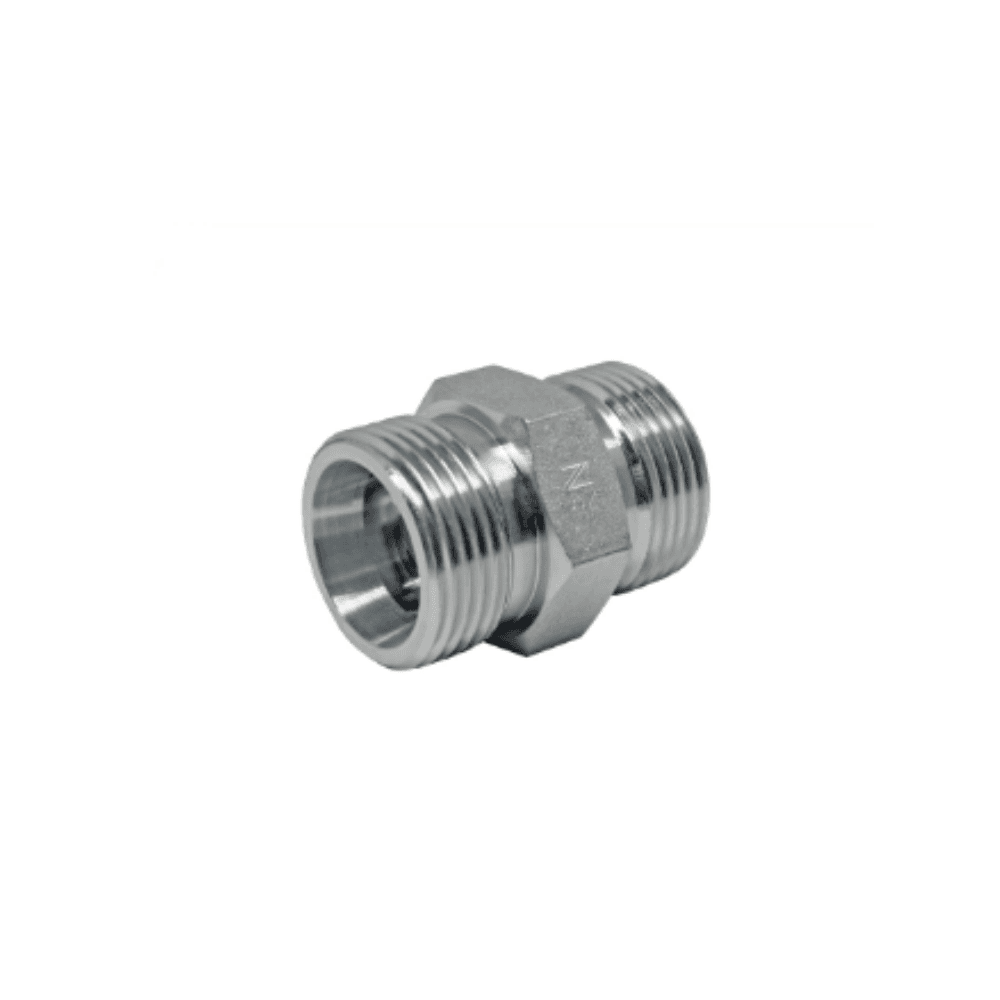 IH-AD-DIN-044Union MetricIndus Hydraulics
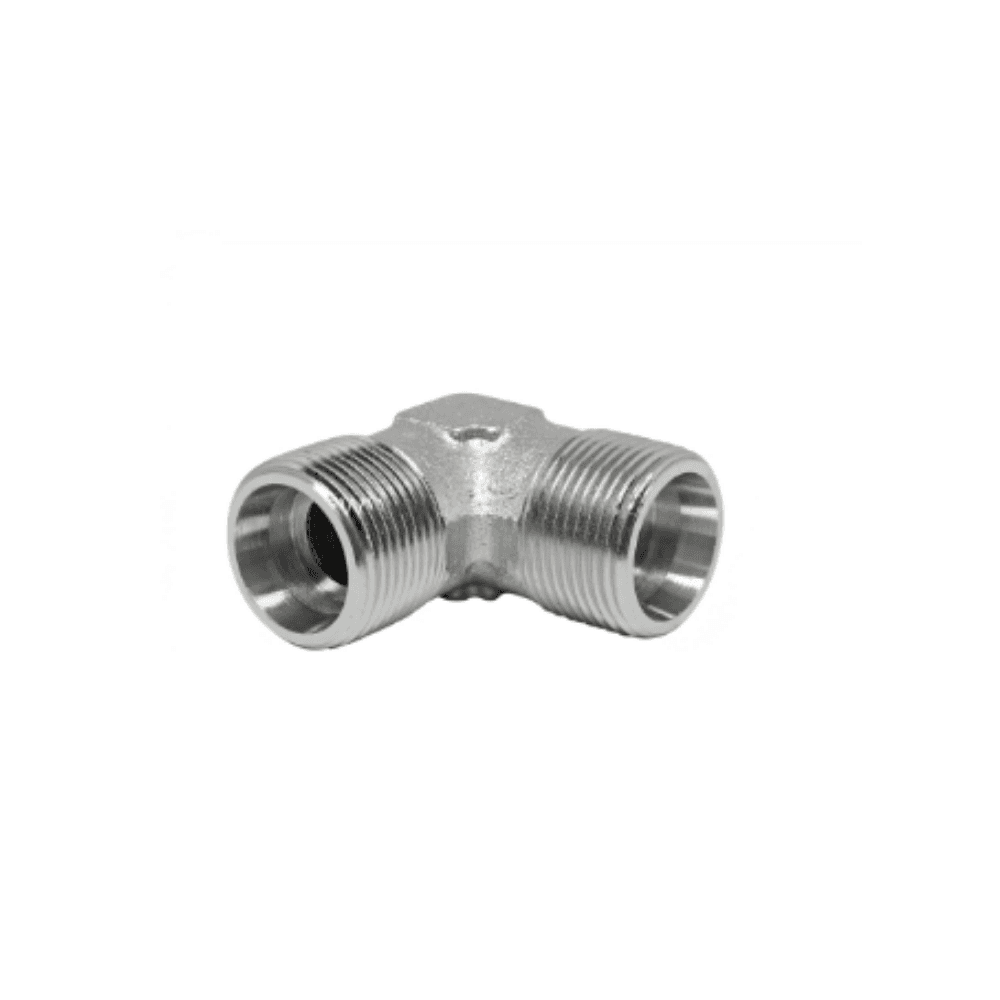 IH-AD-DIN-045Union Elbow MetricIndus Hydraulics
 IH-AD-DIN-014Union Tee (DIN 2353)Indus Hydraulics
 IH-AD-DIN-040Male Stud Connector BSPP with ED SealIndus Hydraulics
 IH-AD-DIN-038Male Stud Connector Metric with ED SealIndus Hydraulics
 IH-AD-DIN-019Swivel UnionIndus Hydraulics
 IH-AD-DIN-037High Pressure Banjo Elbow BSPPIndus Hydraulics
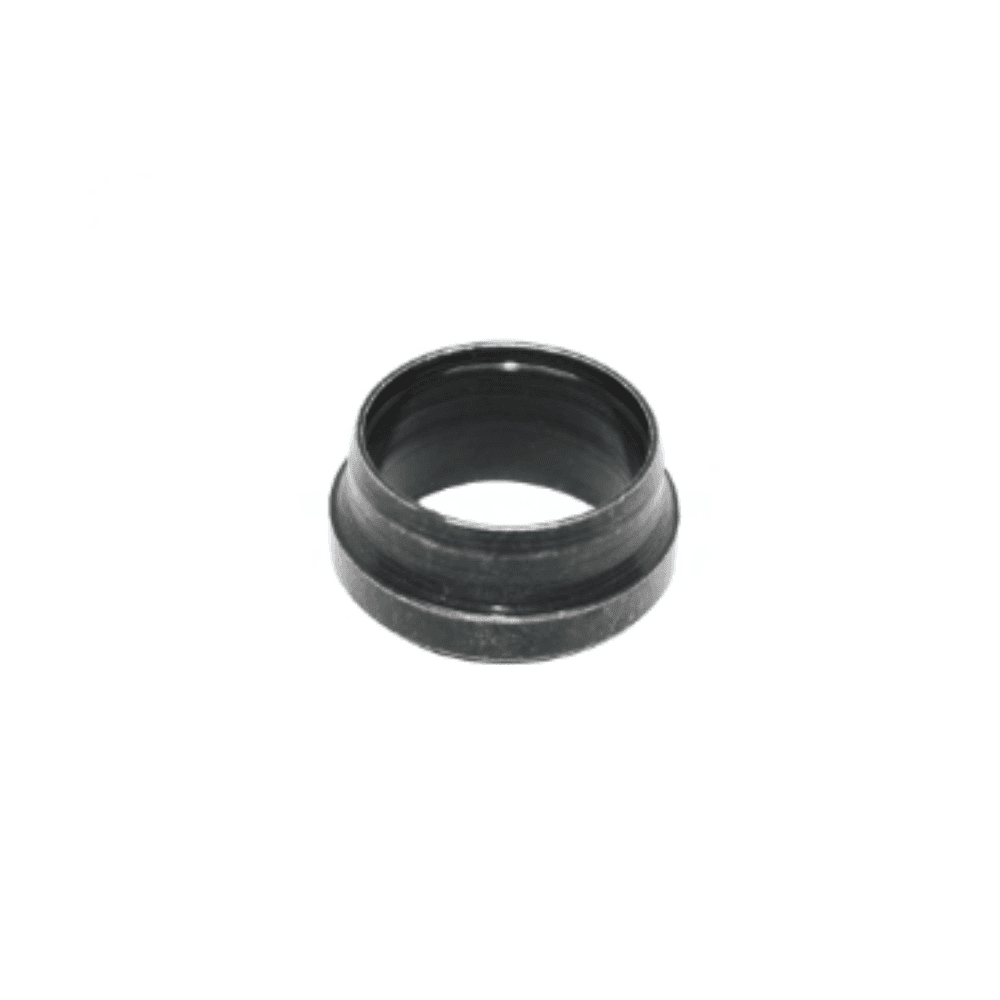 IH-AD-DIN-003Cutting Ring for 24° Cone End NutIndus Hydraulics