Two-wire braided hose is the workhorse of mobile and industrial hydraulics, and almost every assembly made in a hose shop is braided hose with two crimped ends. The crimp is the part that fails if anything in the chain is wrong — the wrong series, the wrong ferrule, the wrong die or a crimper set by feel. This guide covers the braided crimp range and how to make an assembly that holds its rating. For braided against spiral fittings see braided vs spiral.
/01Series, and why they do not mix.
Hose fittings are designed as a system with particular hoses. In Parker’s US catalogue the 43 Series is listed for 1SN and 2SN (100R1AT, 100R2AT), EN 857 2SC, 100R16 and ISO 18752 braided hose, among others; its part numbers read connection, series, end size and hose size — 1JC43-12-8 is a crimp, female ORFS swivel, 43 Series, -12 end on -8 hose. The same 2SN hose is paired with 48 Series fittings in Parker’s European catalogue. Every maker publishes such lists, and none of them cross over.
Parker’s safety guide is explicit: do not mix and match — components from different manufacturers should not be combined into hose assemblies. Its three tenets, consistent with SAE J1273: only assemble hoses and fittings of the same make; always use a crimper approved by the maker of the hose and fittings; crimp only to the maker’s specification. Gates lists mix-and-match hose and couplings among its restricted applications.
/02Ferrules, skive and no-skive.
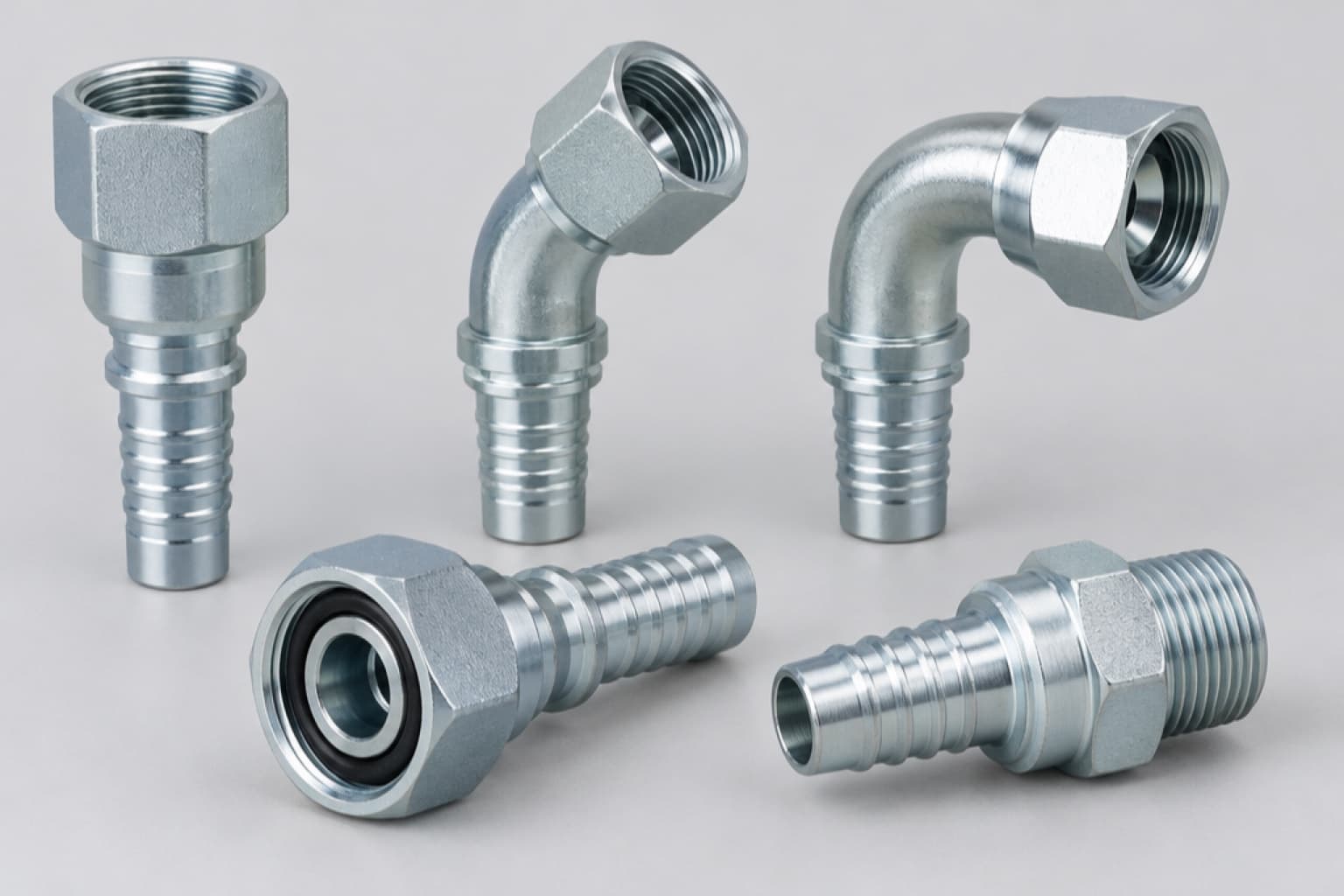
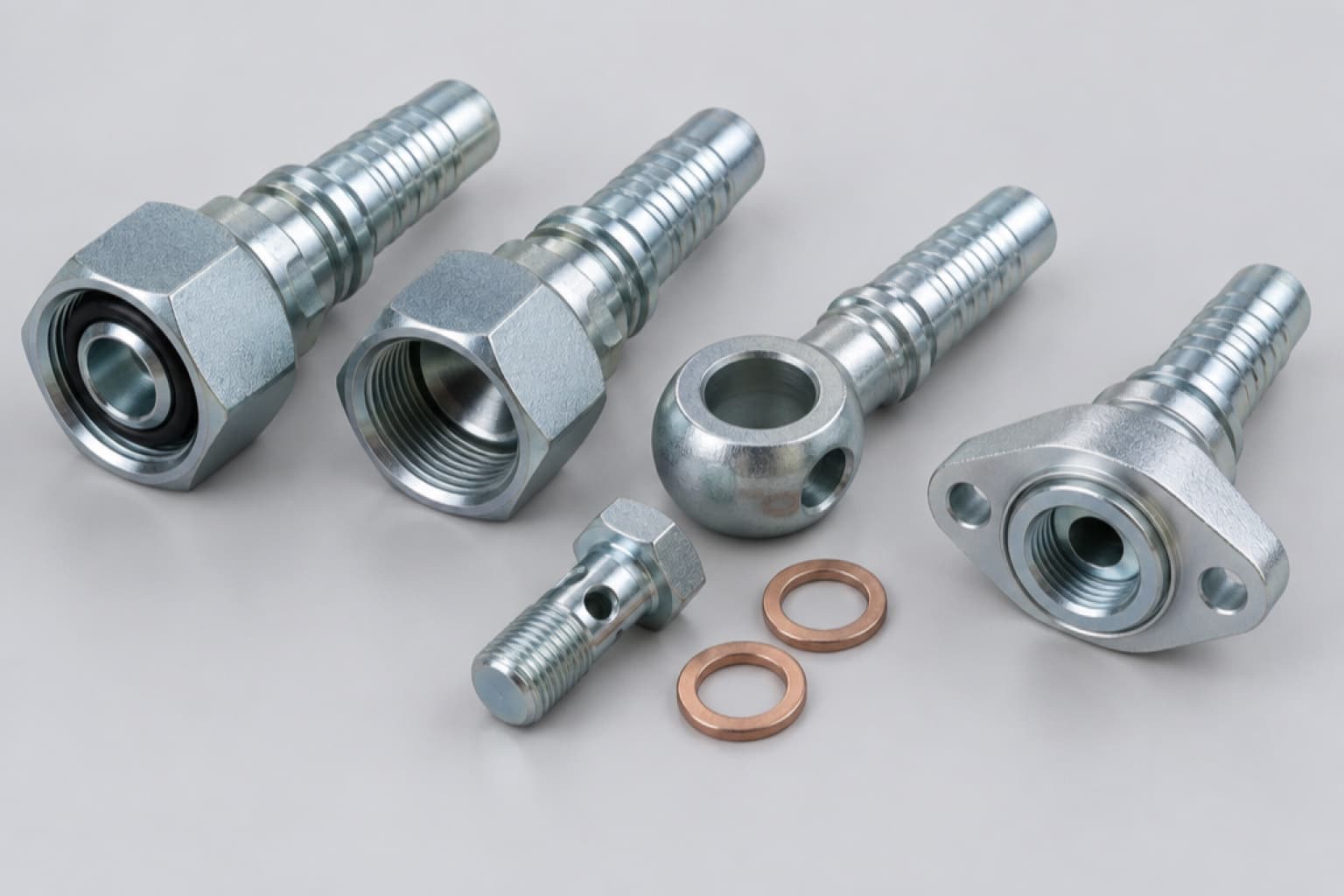
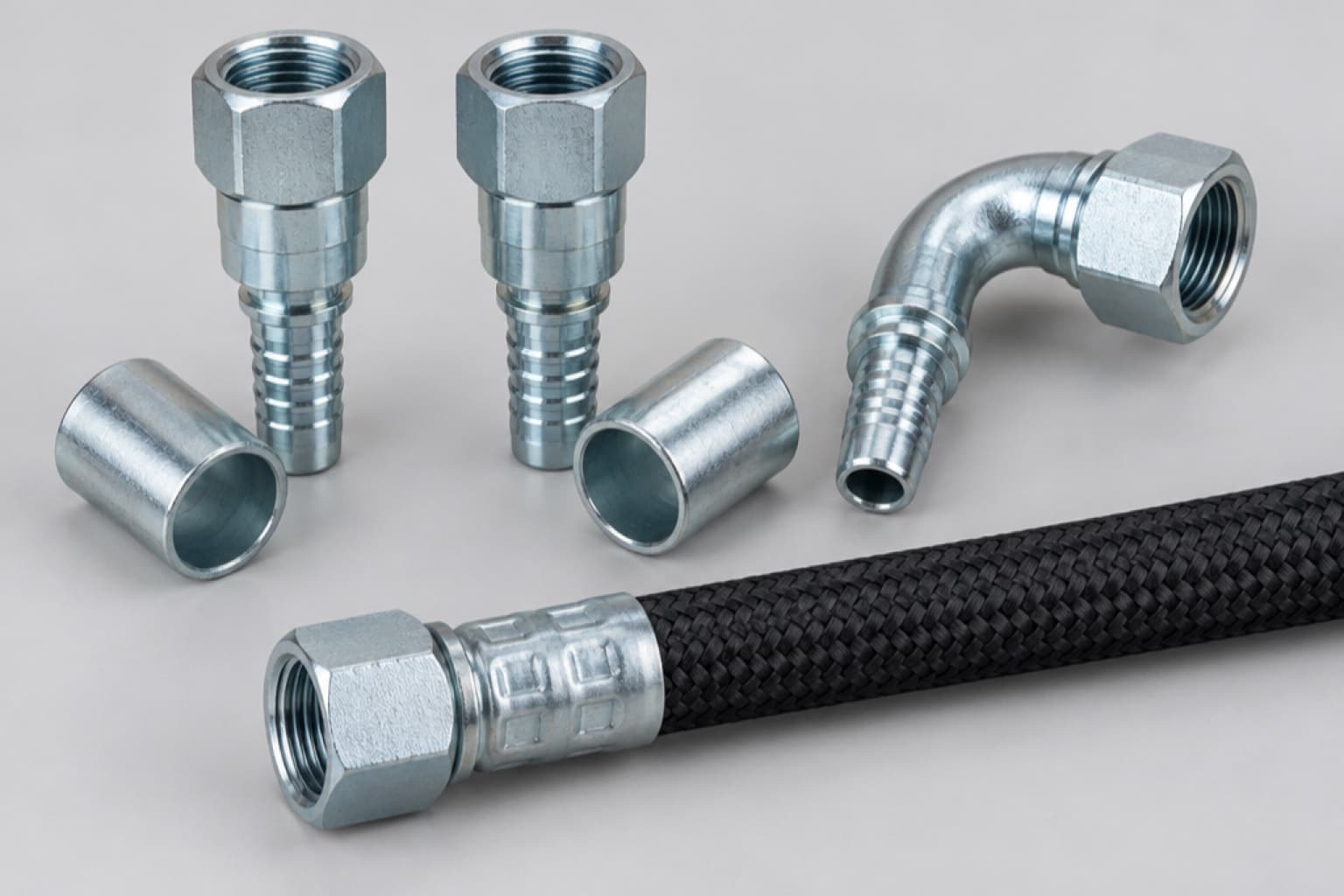
A crimp fitting is a stem (the nipple with the end connection) and a ferrule (the shell crimped over the hose). Some series are one-piece with the ferrule attached; others, like the ferrules in our range, are separate and chosen for the hose. Gates defines skiving as removing the hose cover down to the reinforcement, with a wire wheel or hand tool, and buffing as removing some cover while still leaving the reinforcement covered; Danfoss notes that a skive can remove the cover, the inner tube or both. Most current braided hose is no-skive — Parker’s No-Skive principle is that the reinforcement stays intact through the progressive compression of the crimp, with no tool and no cover removal — and Gates says most of its products no longer need skiving. Skive ferrules remain for some hose types (older R1A/R2A and 1ST/2ST, and most four- and six-spiral hose); get the skive length right and do not damage the wire. See skiving explained.
/03Ratings: the hose, then the end.
| Dash | 1SN / 100R1AT (422) | 2SN / 100R2AT (302) |
|---|---|---|
| -4 (1/4")Highlighted | 3,250 | 5,800 |
| -6 (3/8") | 2,600 | 4,750 |
| -8 (1/2") | 2,325 | 4,000 |
| -12 (3/4") | 1,525 | 3,100 |
| -16 (1")Highlighted | 1,275 | 2,400 |
| -20 (1-1/4") | 900 | 1,800 |
| -24 (1-1/2") | 725 | 1,300 |
| -32 (2") | 575 | 1,150 |
Parker’s rule: the maximum working pressure of an assembly is the lower of the published maximums of the hose and the fittings used. A JIC or NPT end can sit below the hose rating — see JIC adapter ratings — and Gates adds that hose OD and crimp tolerances stack, so an assembly built at the edge of both loses life. Braided hose ratings fall with size; for large bores at high pressure, use spiral hose (spiral crimp fittings).
/04Making and checking the crimp.
- Cut square — Gates: within 5° of perpendicular to meet SAE and ISO standards — and clean the bore.
- Mark the insertion depth on the hose and push the stem fully home; Parker allows a drop of hose oil on braided hose.
- Select the die by hose size and type from the crimper’s chart; Parker’s eight-segment dies are colour-coded and stamped with series and dash size.
- Crimp to the chart diameter. A maker’s crimp chart lists hose and stem, crimp length and crimp OD with tolerance, crimper, die set and setting.
- Measure it. Gates: measure at the centre of the crimp length, on the flats, not the ridges; tolerances are ±0.005" for swaged couplings and ±0.010" for crimp OD on other families. Parker: never use an assembly with an incorrect crimp diameter.
Which ferrule?
If1SN or 2SN hose (EN 853), no-skive?
No-skive ferrule for 1SN / 2SN.
IH-CF-NS-1SN2SNIfR1AT or R2AT (SAE 100R1AT / R2AT)?
No-skive ferrule for R1AT / R2AT.
IH-CF-NS-R2T2SNIfOlder R1A / R2A or 1ST / 2ST with a thick cover?
Skive ferrule — remove the cover to the wire first.
IH-CF-SK-R2A2STIfFour-spiral 4SP / 4SH / R12, or R13?
A spiral skive or interlock ferrule — see spiral crimp fittings.
IH-CF-SK-4SH-IL
Common questions
- Can I use one brand’s fittings on another brand’s hose?
- Makers say no: Parker’s safety guide says do not mix and match hose and fittings from different manufacturers, and to crimp only to the maker’s specification with an approved crimper.
- What is a no-skive fitting?
- A fitting and ferrule designed to crimp over the hose cover, so the cover does not have to be stripped to the reinforcement first.
- What pressure is 2SN hose rated for?
- Parker’s 2SN (302) is 5,800 psi at -4, 4,000 psi at -8, 2,400 psi at -16 and 1,150 psi at -32. The assembly is rated to the lower of hose and fitting.
- How do I check a crimp?
- Measure the crimp diameter at the middle of the crimp, on the flats, with calipers, and compare it with the maker’s chart; Gates’ tolerances are ±0.005" or ±0.010" depending on the coupling family.
- Can I reuse a crimp fitting?
- No. Parker forbids reusing any part of a crimped fitting, and EN ISO 4413 forbids building assemblies from used components.
- What does 1JC43-12-8 mean?
- A Parker part number: 1 = crimp, JC = female ORFS swivel, 43 = fitting series, 12 = end size, 8 = hose size.
What we list
Crimp fittings for braided hose — including Parker 43 Series — and skive, no-skive and Manuli ferrules:
- BSP Female Swivel 60° Cone Crimp Fitting for Braided Hose
- BSP Female Swivel 60° Cone 45° Elbow Crimp Fitting for Braided Hose
- BSP Female Swivel 60° Cone 90° Elbow Crimp Fitting for Braided Hose
- SAE Code 61 Flange Head Crimp Fitting for Braided Hose
- SAE Code 61 Flange Head 45° Elbow Crimp Fitting for Braided Hose
- SAE Code 61 Flange Head 90° Elbow Crimp Fitting for Braided Hose
- SAE Code 62 Flange Head Crimp Fitting for Braided Hose
- SAE Code 62 Flange Head 45° Elbow Crimp Fitting for Braided Hose
- SAE Code 62 Flange Head 90° Elbow Crimp Fitting for Braided Hose
- DIN Heavy Metric 24° Female Swivel Crimp Fitting for Braided Hose
- DIN Heavy Metric 24° Female Swivel 45° Elbow Crimp Fitting for Braided Hose
- DIN Heavy Metric 24° Female Swivel 90° Elbow Crimp Fitting for Braided Hose
- DIN Heavy Metric 24° Cone Male Crimp Fitting for Braided Hose
- DIN Light Metric 24° Female Swivel Crimp Fitting for Braided Hose
- DIN Light Metric 24° Female Swivel 45° Elbow Crimp Fitting for Braided Hose
- DIN Light Metric 24° Female Swivel 90° Elbow Crimp Fitting for Braided Hose
- DIN Light Metric 24° Cone Male Crimp Fitting for Braided Hose
- JIC 37° Female Swivel Crimp Fitting for Braided Hose
- JIC 37° Female Swivel 45° Elbow Crimp Fitting for Braided Hose
- JIC 37° Female Swivel 90° Elbow Crimp Fitting for Braided Hose
- JIC 37° Female Swivel 90° Long Drop Crimp Fitting for Braided Hose
- JIC 37° Male Rigid Crimp Fitting for Braided Hose
- JIS BSP 30° Female Swivel Crimp Fitting for Braided Hose
- Komatsu JIS Metric 30° Female Swivel Crimp Fitting for Braided Hose
- NPT Male Rigid Crimp Fitting for Braided Hose
- NPT Male Swivel Crimp Fitting for Braided Hose
- SAE O-Ring Boss Male Crimp Fitting for Braided Hose
- ORFS Female Swivel Crimp Fitting for Braided Hose
- ORFS Female Swivel 45° Elbow Crimp Fitting for Braided Hose
- ORFS Female Swivel 90° Elbow Crimp Fitting for Braided Hose
- ORFS Female Swivel 90° Long Drop Crimp Fitting for Braided Hose
- SAE 45° Flare Female Swivel Crimp Fitting for Braided Hose
- Parker 10126 Male NPTF Pipe Crimp Fitting, Rigid, Straight (26 Series)
- Parker 10243 Female NPTF Pipe Crimp Fitting, Rigid, Straight (43 Series)
- Parker 10326 Male JIC 37° Crimp Fitting, Rigid, Straight (26 Series)
- Parker 10426 Male SAE 45° Crimp Fitting, Rigid, Straight (26 Series)
- Parker 10443 Male SAE 45° Crimp Fitting, Rigid, Straight (43 Series)
- Parker 10626 Female JIC 37° Crimp Fitting, Swivel, Straight (26 Series)
- Parker 10743 Female NPSM Pipe (60° Cone) Crimp Fitting, Swivel, Straight (43 Series)
- Parker 10826 Female SAE 45° Crimp Fitting, Swivel, Straight (26 Series)
- Parker 10G43 Male SAE O-Ring Boss (ORB) Crimp Fitting, Swivel, Straight (43 Series)
- Parker 10L43 Male SAE O-Ring Boss (ORB) Crimp Fitting, Swivel, 90° Elbow (43 Series)
- Parker 11143 Male Ferulok Flareless Crimp Fitting, Rigid, Straight (43 Series)
- Parker 11243 Female Ferulok Flareless Crimp Fitting, Swivel, Straight (43 Series)
- Parker 11643 SAE Code 61 Flange Head Crimp Fitting, 22½° Elbow (43 Series)
- Parker 11843 SAE Code 61 Flange Head Crimp Fitting, 67½° Elbow (43 Series)
- Parker 11D43 Male Metric L Standpipe Crimp Fitting, Rigid, Straight (43 Series)
- Parker 11L43 Male NPTF Pipe Crimp Fitting, Swivel, 90° Elbow (43 Series)
- Parker 12643 SAE Code 61 Flange Head Crimp Fitting, 30° Elbow (43 Series)
- Parker 12743 SAE Code 61 Flange Head Crimp Fitting, 60° Elbow (43 Series)
- Parker 12826 Male Inverted SAE 45° Crimp Fitting, Swivel, Straight (26 Series)
- Parker 12843 Male Inverted SAE 45° Crimp Fitting, Swivel, Straight (43 Series)
- Parker 13726 Female JIC 37° Crimp Fitting, Swivel, 45° Elbow, Short Drop (26 Series)
- Parker 13926 Female JIC 37° Crimp Fitting, Swivel, 90° Elbow, Short Drop (26 Series)
- Parker 14943 DIN Metric Banjo Crimp Fitting, Straight (43 Series)
- Parker 15G26 Male Tube-O Crimp Fitting, Rigid, Straight (26 Series)
- Parker 15H26 Female Tube-O Crimp Fitting, Swivel, 45° Elbow, Short Pilot (26 Series)
- Parker 15K26 Male Tube-O Crimp Fitting, Swivel, 90° Elbow (26 Series)
- Parker 15L26 Female Tube-O Crimp Fitting, Swivel, 90° Elbow, Long Pilot (26 Series)
- Parker 15R26 Male Tube-O Crimp Fitting, Swivel, 45° Elbow, Short Pilot (26 Series)
- Parker 15S26 Female Tube-O Crimp Fitting, Swivel, Straight, Short Pilot (26 Series)
- Parker 15T26 Female Tube-O Crimp Fitting, Swivel, 90° Elbow (26 Series)
- Parker 15W26 Female Compressor Crimp Fitting, Swivel, 90° Elbow (26 Series)
- Parker 16743 Male Inverted SAE 45° Crimp Fitting, Swivel, 45° Elbow (43 Series)
- Parker 16826 Female JIC 37° / SAE 45° Dual Flare Crimp Fitting, Swivel, Straight (26 Series)
- Parker 16926 Male Inverted SAE 45° Crimp Fitting, Swivel, 90° Elbow (26 Series)
- Parker 16943 Male Inverted SAE 45° Crimp Fitting, Swivel, 90° Elbow (43 Series)
- Parker 17726 Female SAE 45° Crimp Fitting, Swivel, 45° Elbow (26 Series)
- Parker 17743 Female SAE 45° Crimp Fitting, Swivel, 45° Elbow (43 Series)
- Parker 17926 Female SAE 45° Crimp Fitting, Swivel, 90° Elbow (26 Series)
- Parker 17943 Female SAE 45° Crimp Fitting, Swivel, 90° Elbow (43 Series)
- Parker 17B26 Female Air Brake (Brass) Crimp Fitting, Swivel, Straight (26 Series)
- Parker 1C443 Female Metric L (Ball Nose) Crimp Fitting, Swivel, 45° Elbow (43 Series)
- Parker 1C643 Female Metric S (Ball Nose) Crimp Fitting, Swivel, Straight (43 Series)
- Parker 1D943 Male BSP Parallel Pipe (60° Cone) Crimp Fitting, Rigid, Straight (43 Series)
- Parker 1EN43 Male Universal Push-to-Connect (UPTC) Crimp Fitting, Straight (43 Series)
- Parker 1EU43 Male Universal Push-to-Connect (UPTC) Crimp Fitting, 45° Elbow (43 Series)
- Parker 1GJ43 Female Grease Connection Crimp Fitting, Straight (43 Series)
- Parker 1GU43 Female BSP Parallel Pipe (60° Cone) Crimp Fitting, Swivel, Straight (43 Series)
- Parker 1J043 Male Seal-Lok O-Ring Face Seal (ORFS) Crimp Fitting, Rigid, Straight (43 Series)
- Parker 1J643 Female Seal-Lok O-Ring Face Seal (ORFS) Crimp Fitting, Swivel, 22½° Elbow (43 Series)
- Parker 1J726 Female Seal-Lok O-Ring Face Seal (ORFS) Crimp Fitting, Swivel, 45° Elbow (26 Series)
- Parker 1J926 Female Seal-Lok O-Ring Face Seal (ORFS) Crimp Fitting, Swivel, 90° Elbow, Short Drop (26 Series)
- Parker 1J943 Female Seal-Lok O-Ring Face Seal (ORFS) Crimp Fitting, Swivel, 90° Elbow, Short Drop (43 Series)
- Parker 1JB43 Male Seal-Lok O-Ring Face Seal (ORFS) Bulkhead Crimp Fitting, Straight, without Locknut (43 Series)
- Parker 1JC26 Female Seal-Lok O-Ring Face Seal (ORFS) Crimp Fitting, Swivel, Straight, Short (26 Series)
- Parker 1LB43 Male JIC 37° Bulkhead Crimp Fitting, Straight, without Locknut (43 Series)
- Parker 1S243 Female NPTF Pipe Crimp Fitting, Swivel, Straight (43 Series)
- Parker 1S526 Male Tube-O Crimp Fitting, Swivel, Straight (26 Series)
- Parker 1T126 Male Refrigerant Tube Mender Crimp Fitting, Straight (26 Series)
- Parker 1UT43 Male BSP Taper Pipe (60° Cone) Crimp Fitting, Rigid, Straight (43 Series)
- 43 Series Crimp Hose Fitting × NPTF Female
- 43 Series Crimp Hose Fitting × NPSM Female Swivel
- 43 Series Crimp Hose Fitting × ORB Male Swivel, 90° Elbow
- Double-Skive Crimp Ferrule for R13 Hose
- No-Skive Crimp Ferrule for 1SN / 2SN Hose
- No-Skive Crimp Ferrule for Automotive A/C Hose (SAE J2064)
- No-Skive Crimp Ferrule for R1AT / 1SN Hose
- No-Skive Crimp Ferrule for R2AT / 2SN Hose
- No-Skive Crimp Ferrule for R7 / R8 Thermoplastic Hose
- Crimp Ferrule for SAE 100R5 Hose
- Skive Crimp Ferrule for 4SH Hose, DN10–DN16
- Skive Interlock Crimp Ferrule for 4SH Hose
- Skive Crimp Ferrule for 4SP Hose
- Skive Crimp Ferrule for China 1-Wire Hose
- Skive Crimp Ferrule for China 2-Wire Hose
- Skive Crimp Ferrule for China 3-Wire Hose
- Skive Crimp Ferrule (DIN 20023) for 4SH / R12-32 Hose
- Skive Crimp Ferrule for R12 Hose, DN6–DN16
- Skive Crimp Ferrule for R12 Hose, DN32–DN51
- Skive Crimp Ferrule for R12 Four-Spiral Hose
- Skive Crimp Ferrule for R1A / 1ST Hose
- Skive Crimp Ferrule for R2A / 2ST Hose
- Skive Crimp Ferrule for R9 Hose
- Specialty Crimp Ferrule for PTFE / Teflon Hose
- Manuli M00110 / M00120 / M00130 Skive Ferrule
- Manuli M00310 / M00320 No-Skive Ferrule
- Manuli M00820 / M00830 No-Skive Ferrule
- Manuli M00910 / M00920 Skive Ferrule
- Manuli M03300 No-Skive Ferrule
- Manuli M03400 No-Skive Ferrule
- Manuli M03500 No-Skive Ferrule
Braided hose crimp fittings
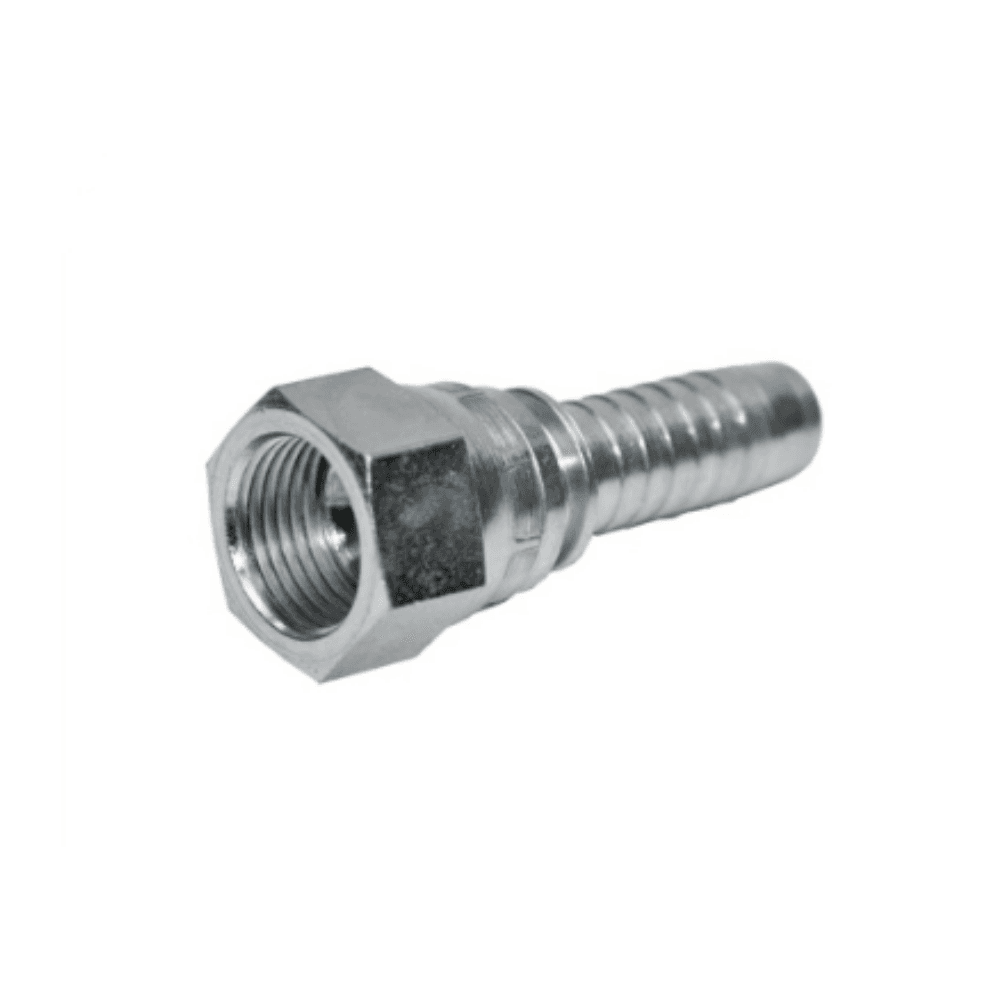 IH-CF43-JICFJIC 37° Female Swivel Crimp Fitting for Braided HoseIndus Hydraulics
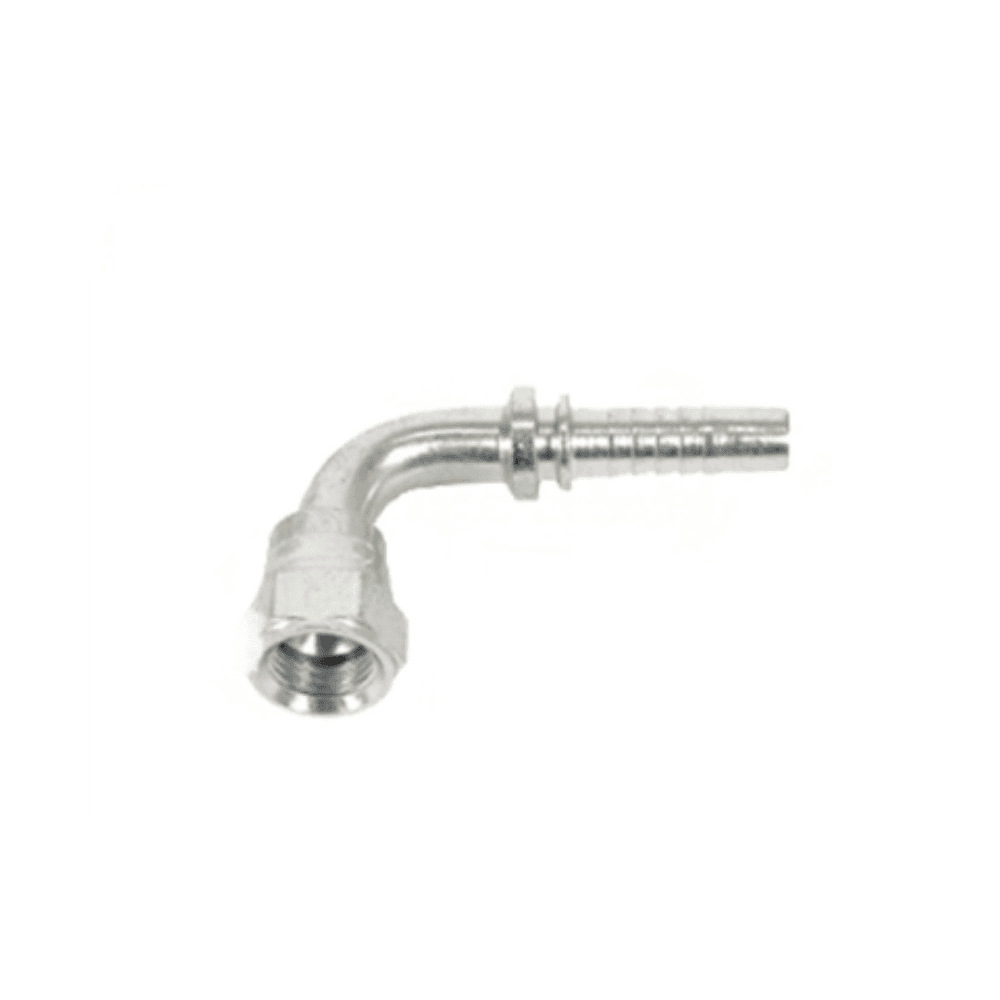 IH-CF43-JICF-90JIC 37° Female Swivel 90° Elbow Crimp Fitting for Braided HoseIndus Hydraulics
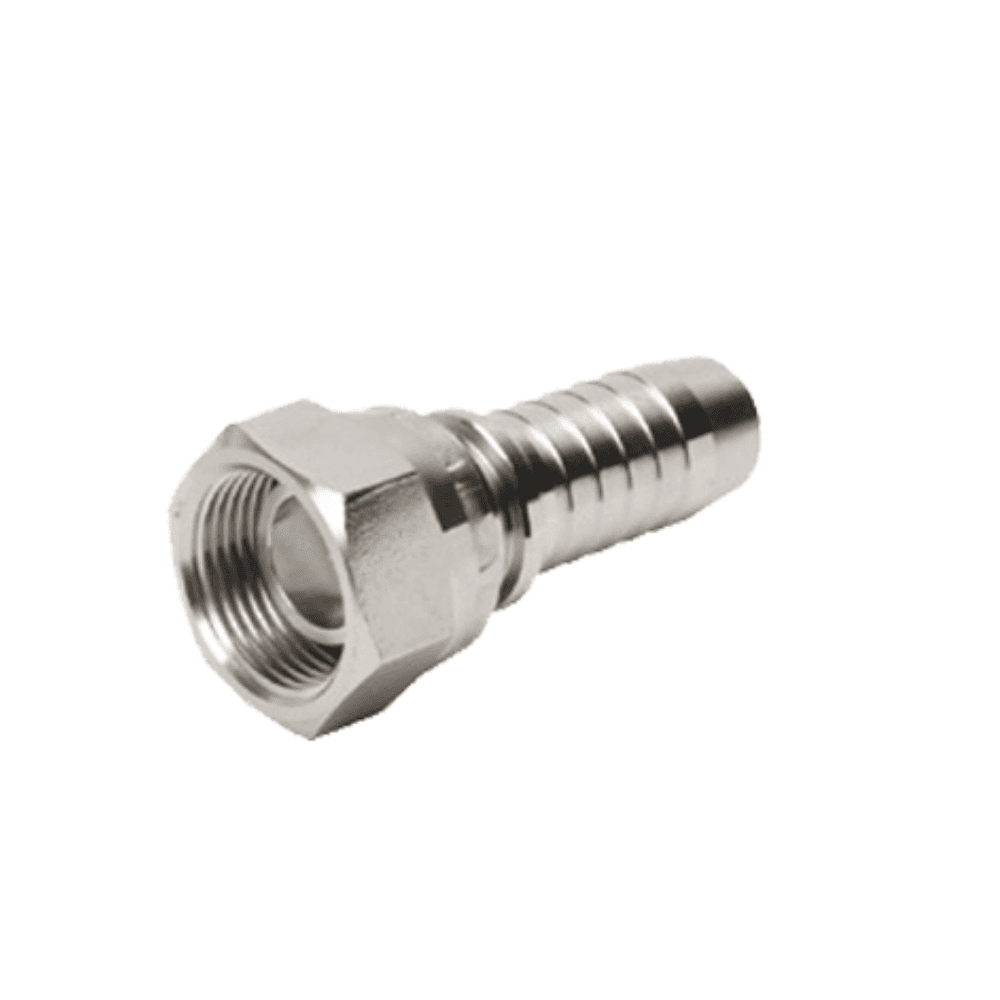 IH-CF43-BSPFBSP Female Swivel 60° Cone Crimp Fitting for Braided HoseIndus Hydraulics
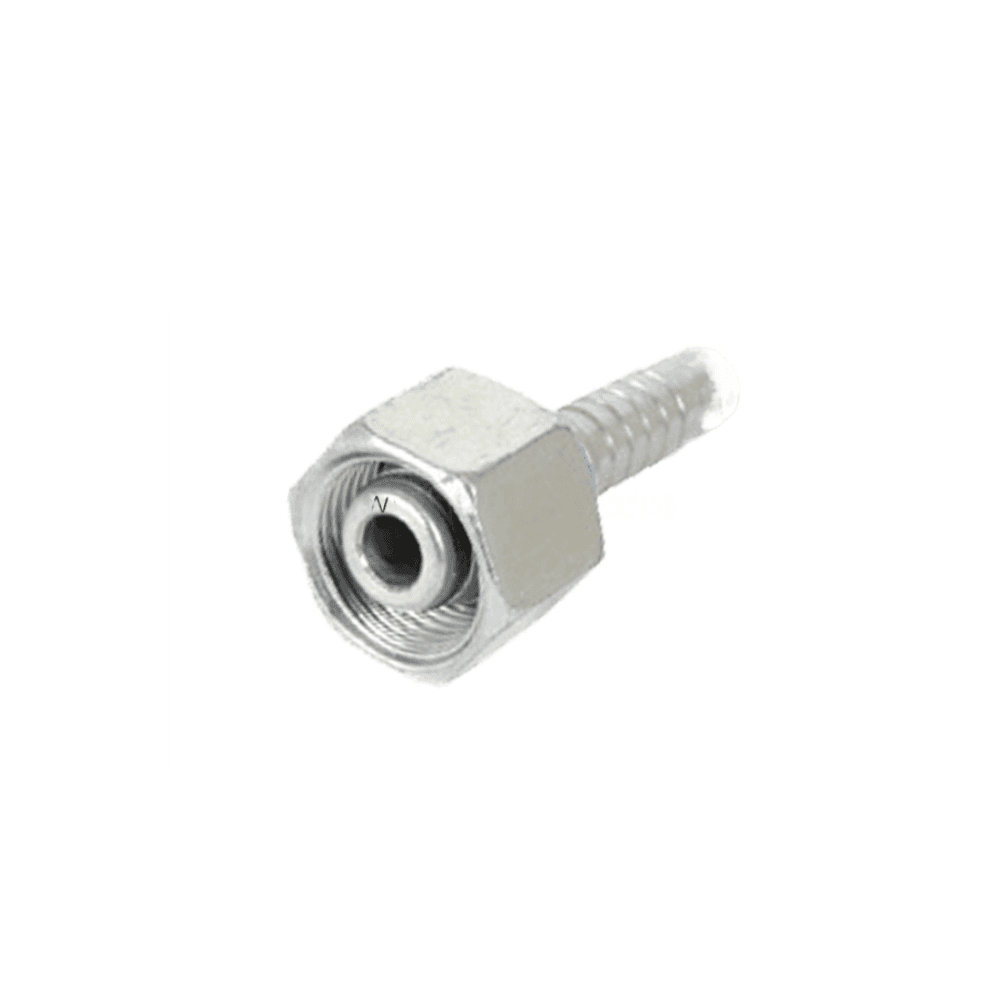 IH-CF43-DINLFDIN Light Metric 24° Female Swivel Crimp Fitting for Braided HoseIndus Hydraulics
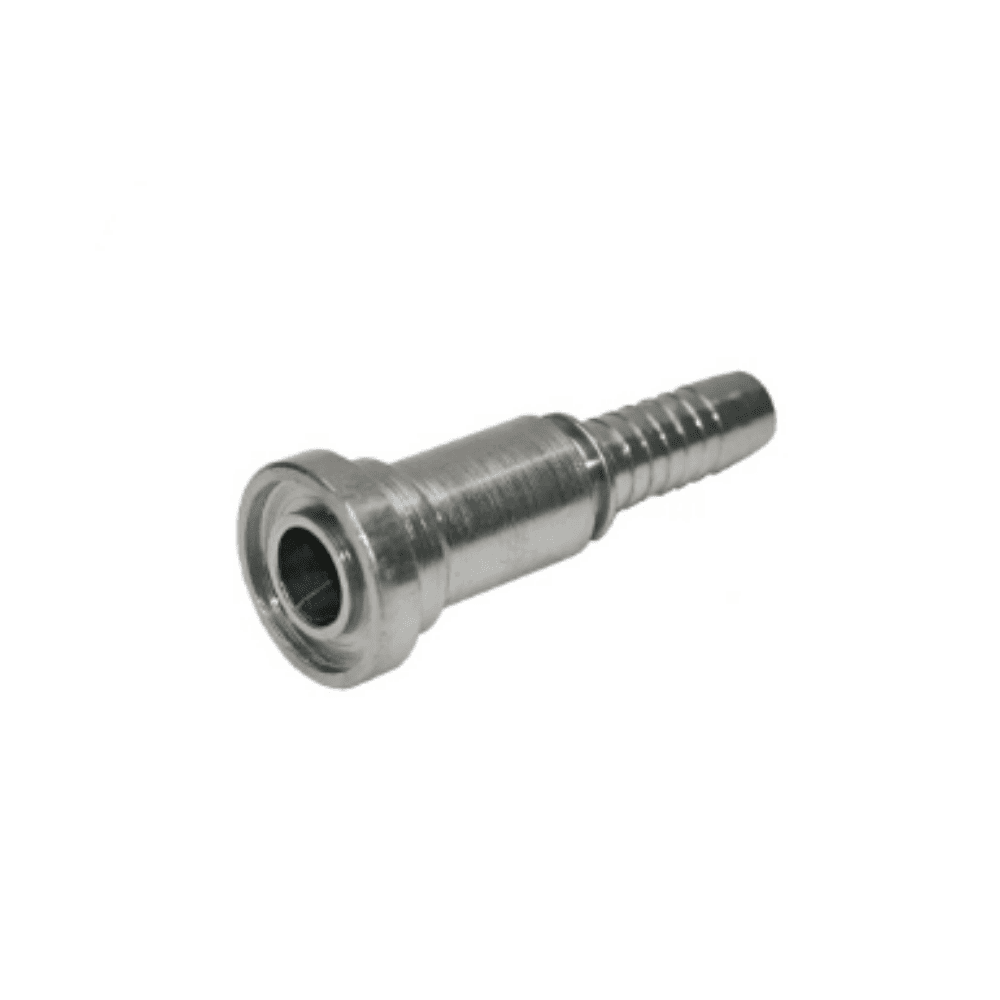 IH-CF43-C61SAE Code 61 Flange Head Crimp Fitting for Braided HoseIndus Hydraulics
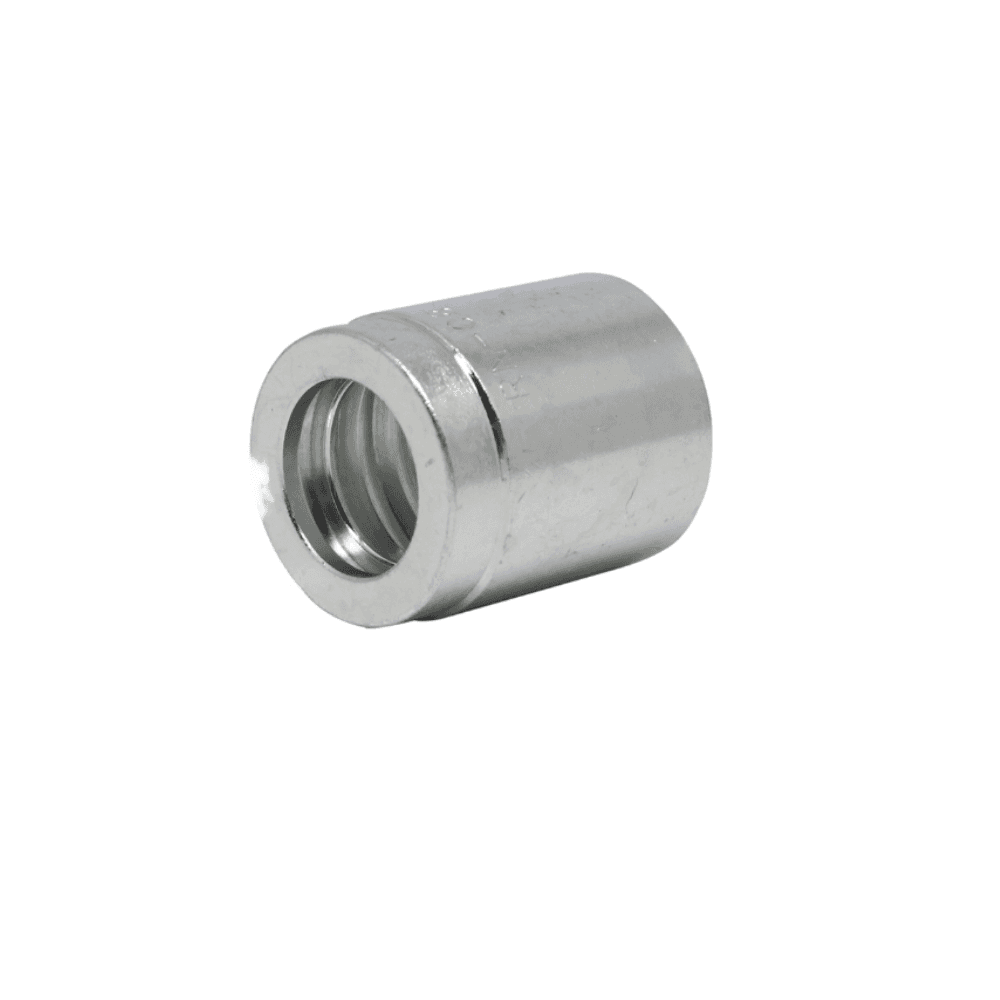 IH-CF-NS-1SN2SNNo-Skive Crimp Ferrule for 1SN / 2SN HoseIndus Hydraulics
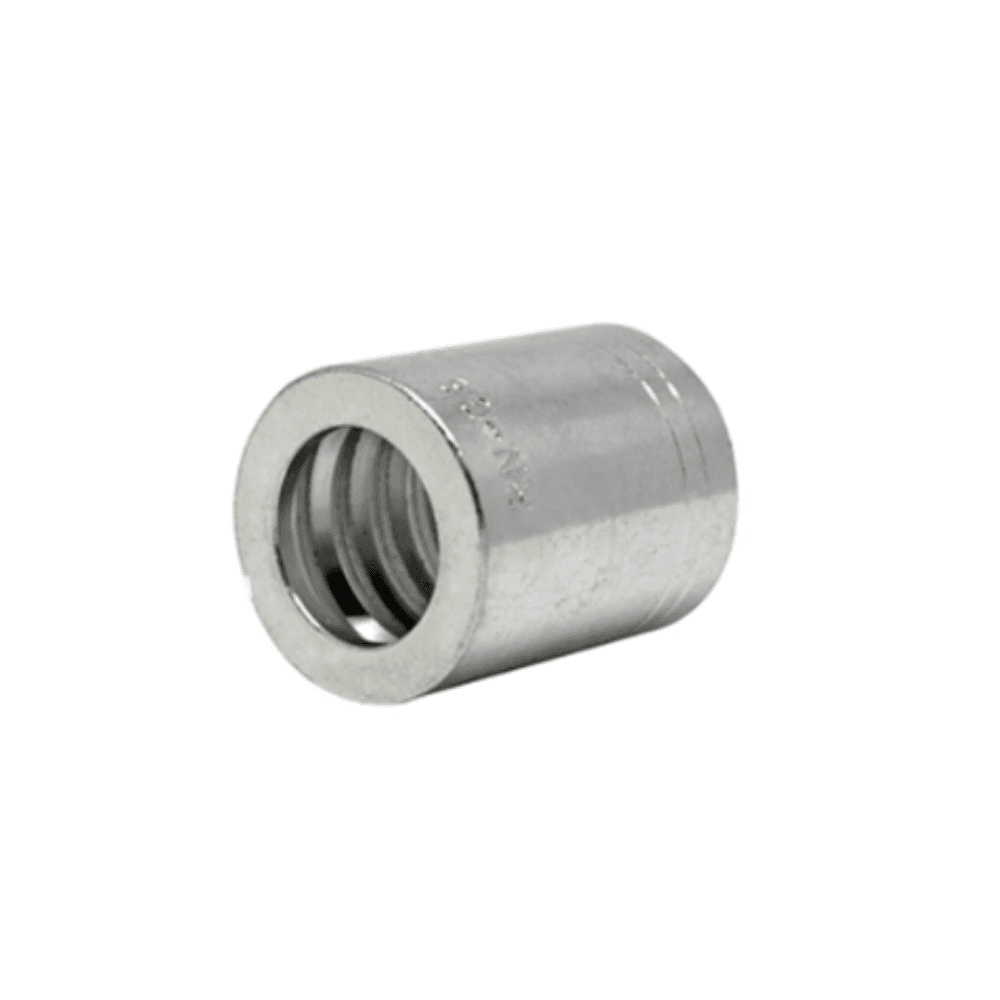 IH-CF-NS-R2T2SNNo-Skive Crimp Ferrule for R2AT / 2SN HoseIndus Hydraulics
- IH-FER-M00310Manuli M00310 / M00320 No-Skive FerruleManuli