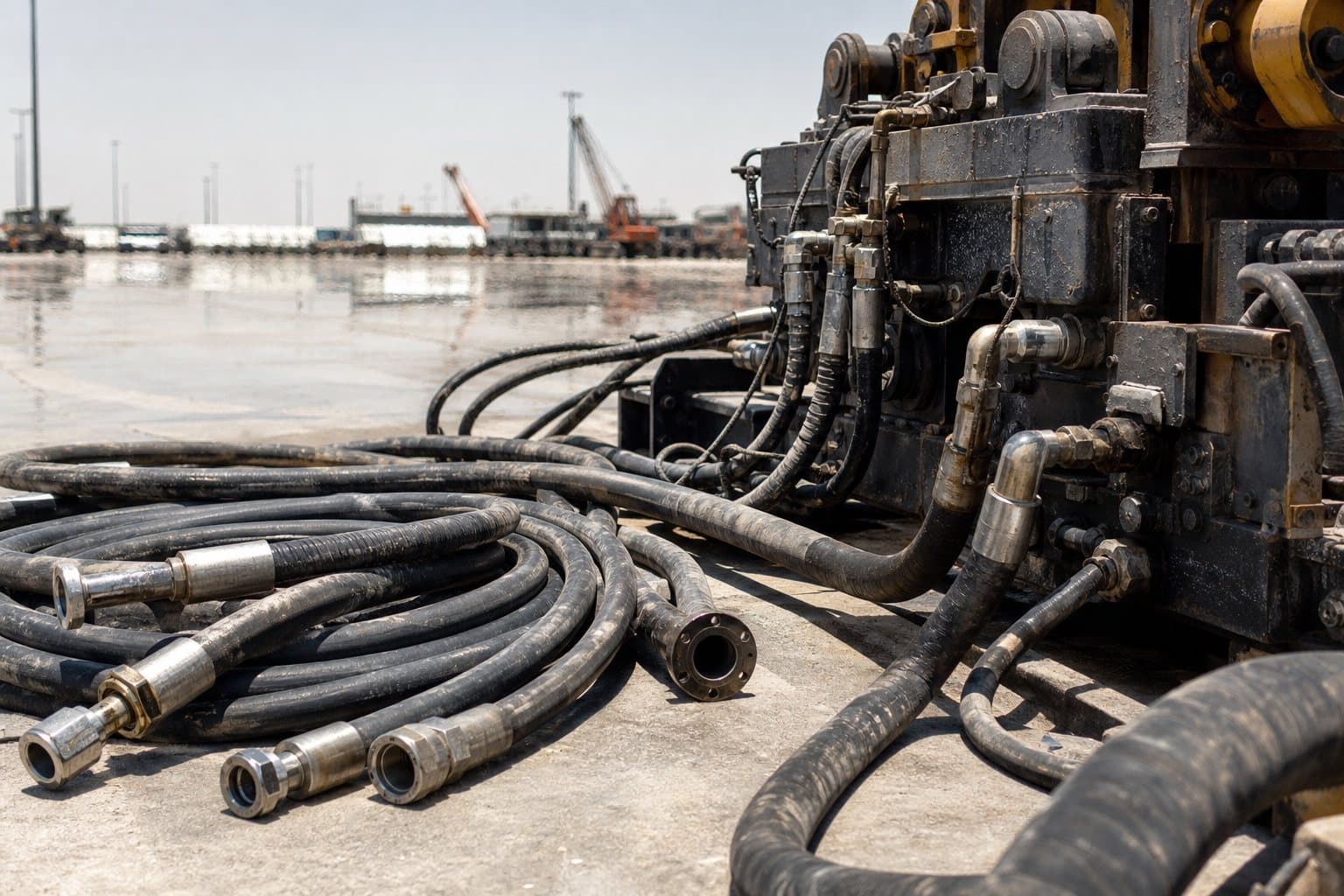
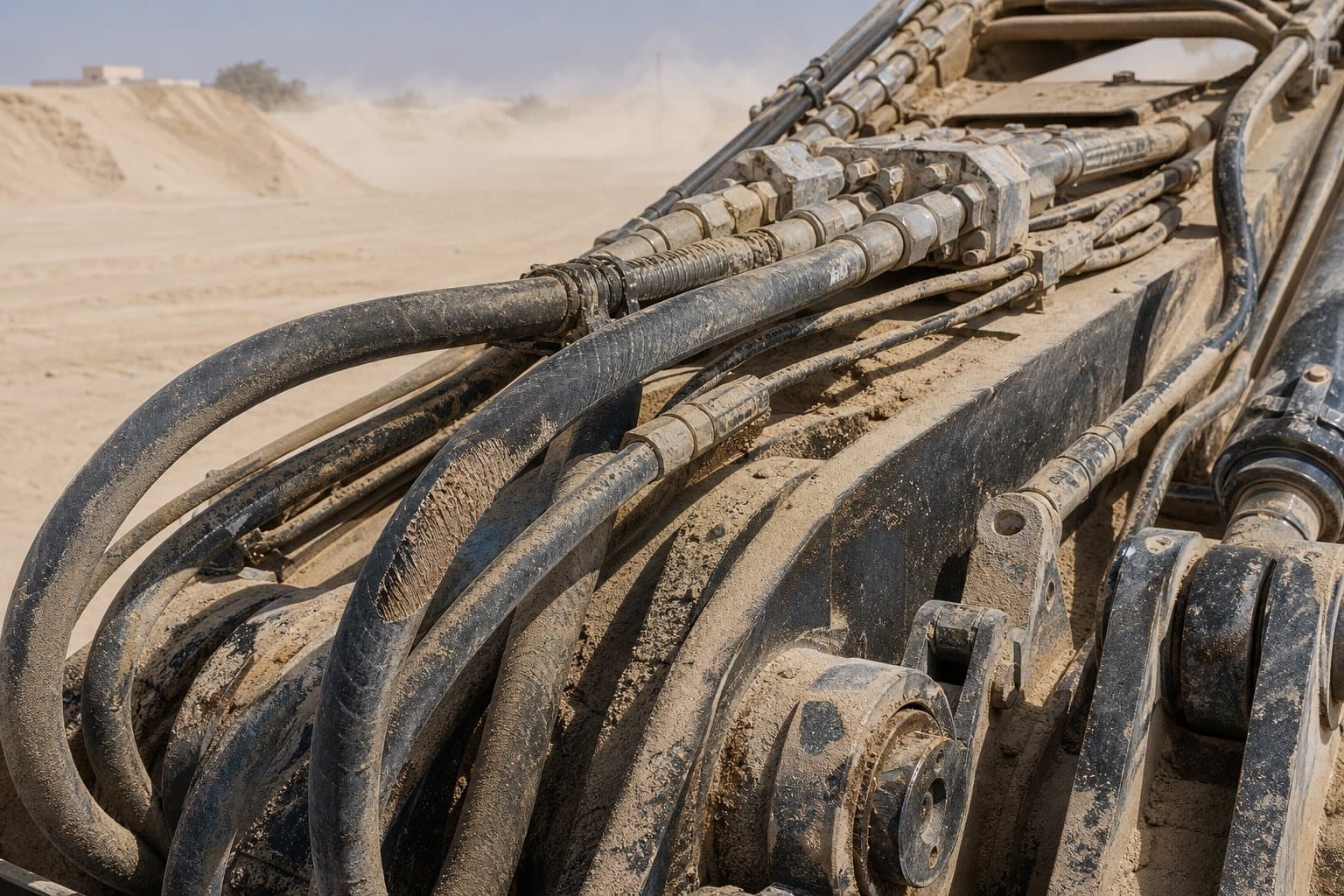
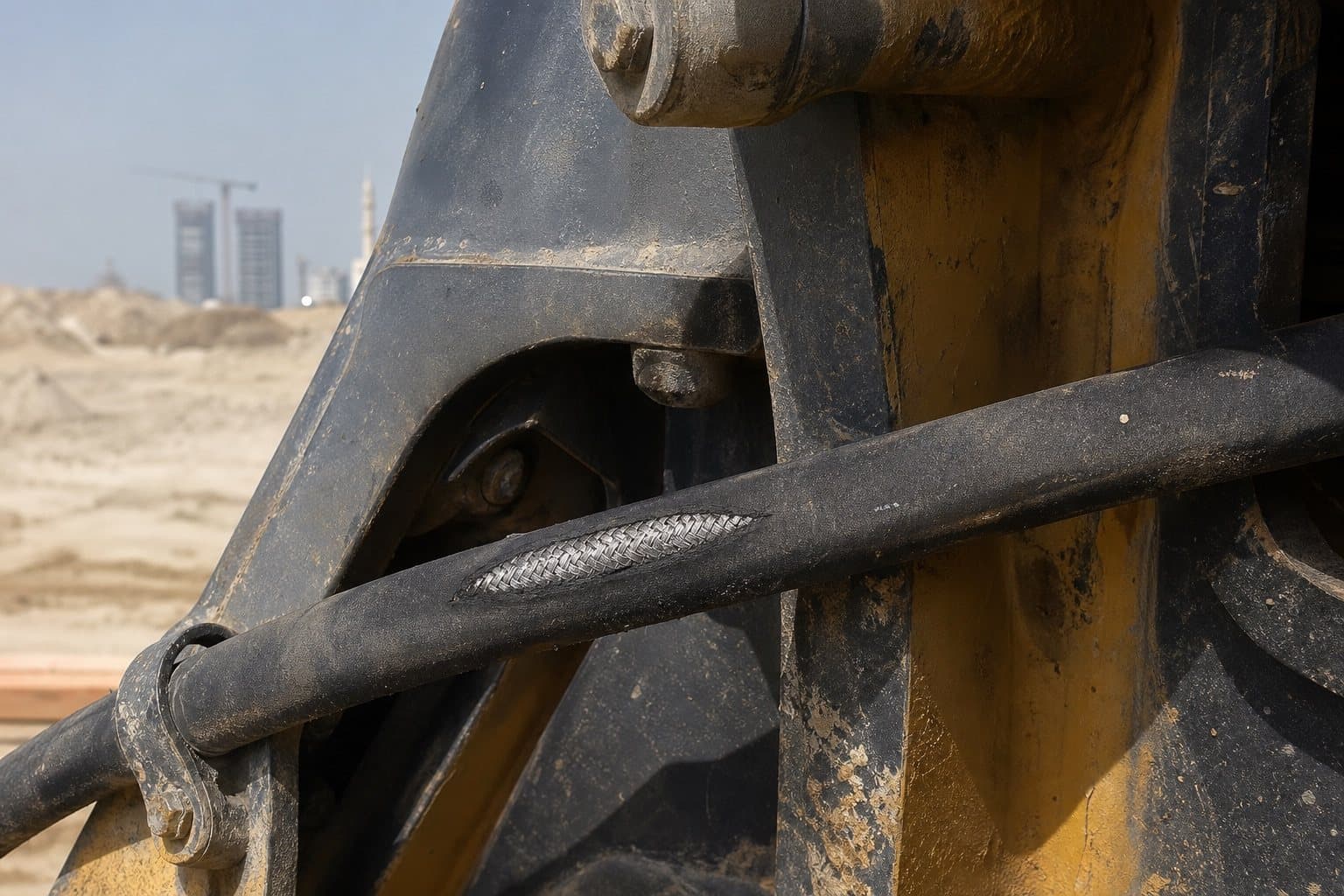
Abrasion is the most preventable hose failure anywhere. On a desert site it is also the fastest, because the surfaces doing the abrading are not the ones anybody designed against — they are ordinary brackets and clamps with a few grains of quartz sitting between them and the hose.
/01Why the same contact is worse here.
A hose resting against a smooth bracket wears slowly; rubber against painted steel is not a very effective abrasive pair. Introduce sand and the contact becomes rubber against quartz, which is harder than almost anything else on the machine. The bracket stops being the abrasive and becomes the anvil.
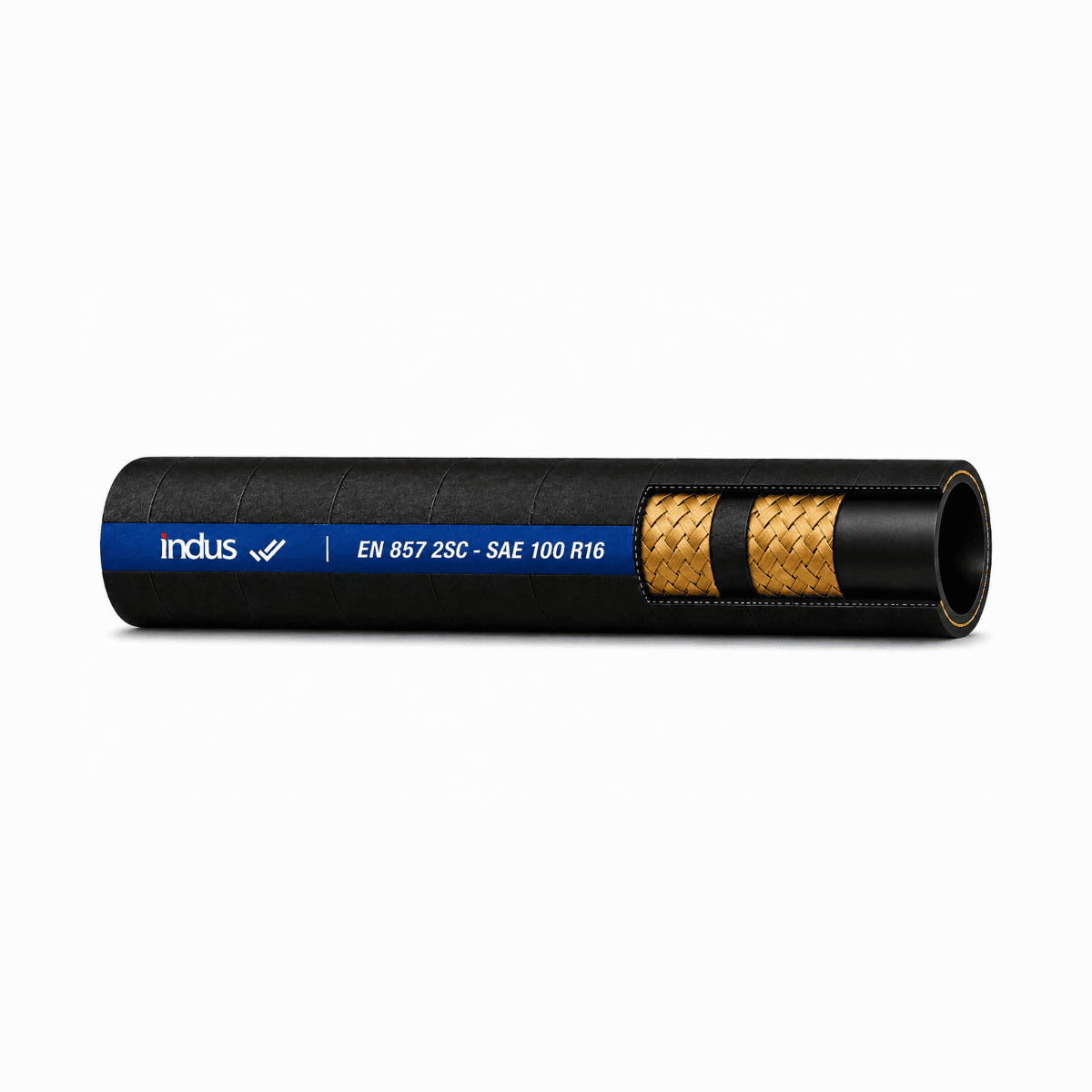
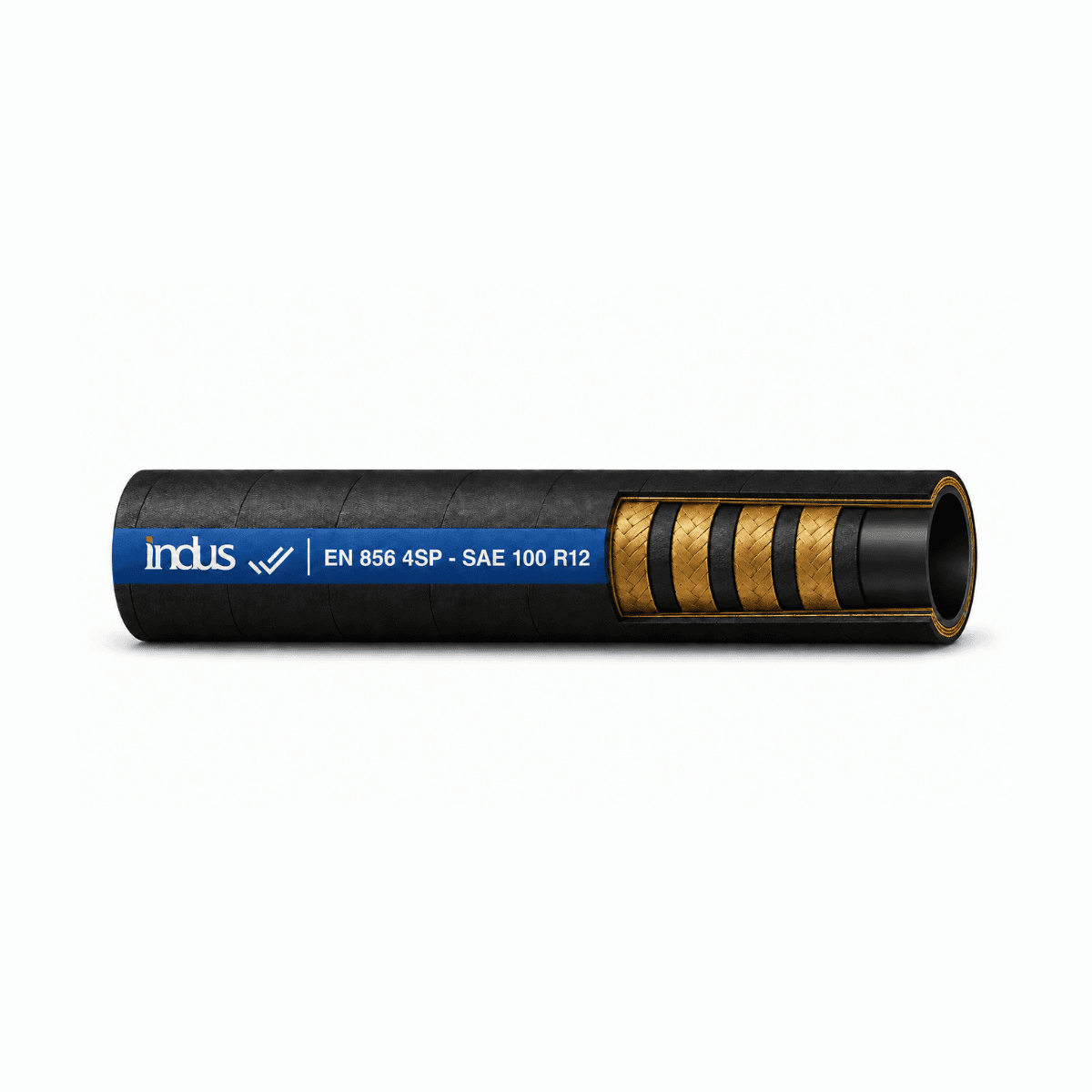
It also creates contacts that would not otherwise exist. Sand builds up in the space between a hose and a frame member, and a gap that was adequate clearance becomes a wear point without anything having moved. Covers specified for abrasion — 2SC and 4SP both carry one — resist it longer, but clearance is still the cure.
/02The clamp problem.
| Option | Sheds sand? | Notes |
|---|---|---|
| Re-route away from contactHighlighted | Not applicable — no contact | Always the best answer where there is room |
| Spiral guard | Yes — open construction | Sand falls through rather than accumulating |
| Close-fitting textile sleeve | Poorly | Excellent against rubbing, can trap grit against the cover |
| Clamp | No | Effective, but needs clearing on a dusty site |
/03It is not only the hose.
Sand loads every external surface on the machine, and hydraulic connections are among the things that suffer. Grit on a fitting thread makes assembly harder and can damage a seat; grit on a quick coupler face is carried straight into the circuit on the next connection. On a dusty site, capping and wiping couplers before connecting is a fluid-cleanliness measure, not housekeeping. Flat-face couplers such as ISO 16028 wipe clean in a way recessed poppet couplers do not.
Common questions
- Spiral guard or textile sleeve?
- Spiral guard where sand is the issue, because its open construction lets grit fall out. Textile sleeve where the problem is rubbing against a smooth surface and dust is not a factor. On many desert machines both are appropriate in different places.
- What size guard do I need?
- Sized on the hose outside diameter, which varies by construction at the same dash size. Tell us the grade as well as the size and we will get it right first time.
- Does an abrasion-resistant cover solve it?
- It helps and it is worth specifying where contact is unavoidable. It extends the time before the cover is breached rather than stopping the wear, so it is a complement to fixing the contact, not a substitute.
- How often should clamps be cleared on a desert site?
- Whenever the machine is greased is a reasonable rhythm, because someone is already going round it with a rag. What matters is that it is on a list at all — clamps are almost never inspected once fitted.