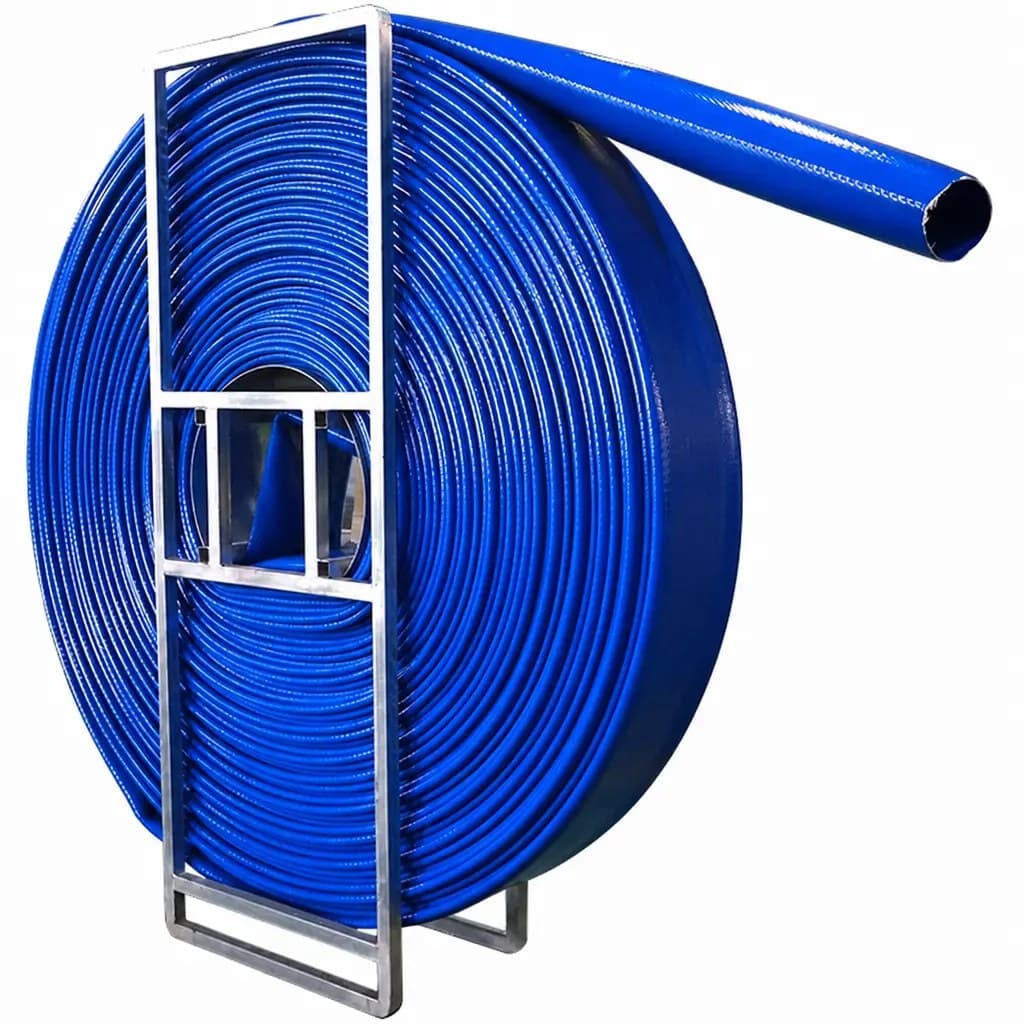
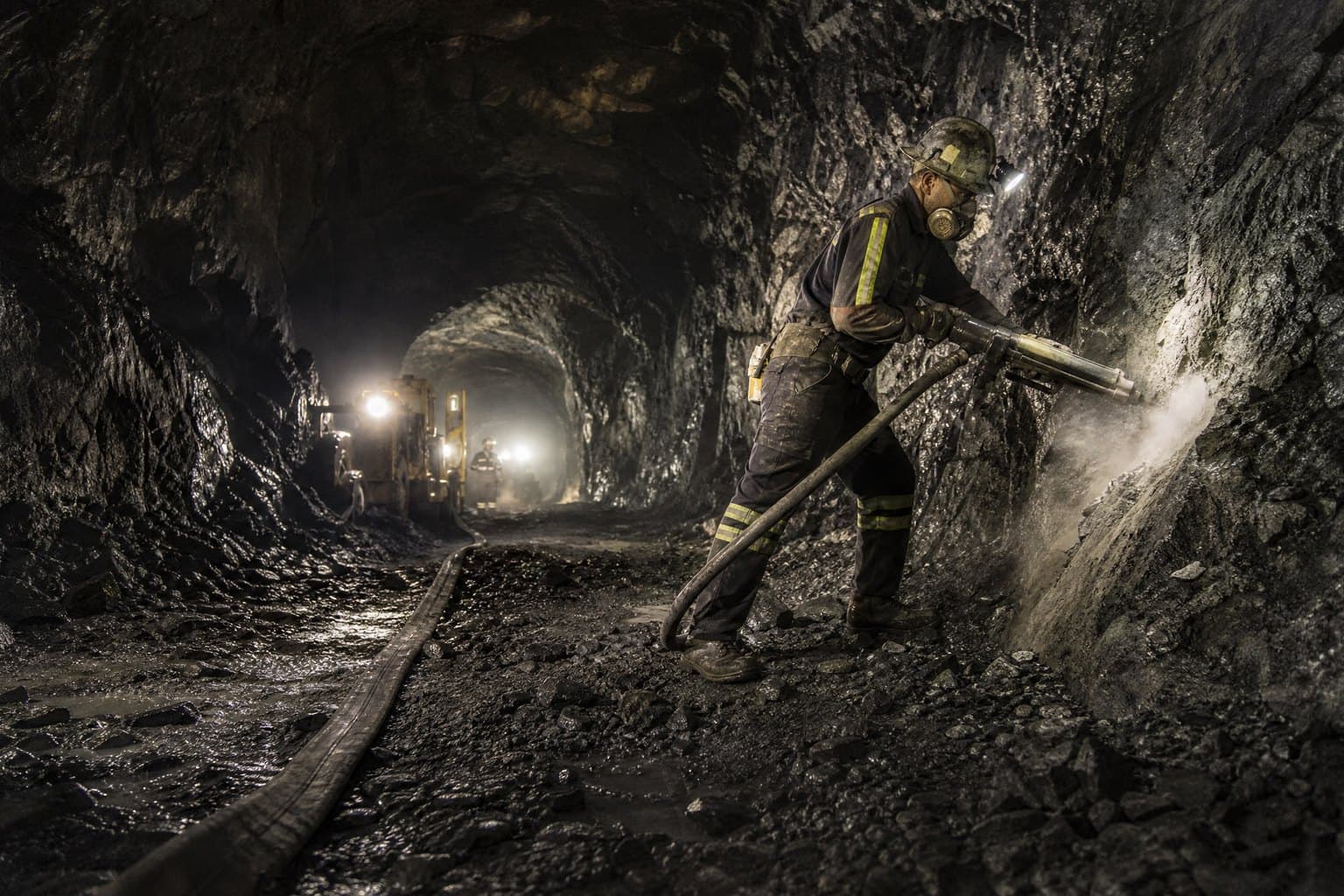
The advantage of lay flat over pipe is that it goes back on a pallet at the end of the job. But a hose rolled full of water is heavy and kinks; one rolled dirty grows mould; one stored in the sun ages twice as fast. Good recovery and storage costs a few minutes per length and adds seasons to the hose. This guide covers it from the end of pumping to the next deployment.
/01Draining the line.
- Stop the pump and close the valves gradually.
- Open the far end and any drain points, and let gravity empty what it can.
- Lift the high points and walk the water towards the low end.
- Disconnect into short lengths you can handle.
- Flush lines that carried slurry, seawater, sewage, concrete or fuel before rolling them.
/02Rolling by hand.
Lay the length out straight and flat. For a straight roll, start at the far end and roll towards the coupling, keeping the edges aligned so the coil is tight and flat; rolling from the far end pushes the last water out ahead of the roll. Protect the coupling at the centre or outside so its thread or face cannot be damaged. For a double roll, fold the length in half and roll from the fold, so both couplings end up on the outside together — slower to make, faster to deploy, and the usual pattern for small fire and forestry hose. Whatever the pattern, use the one your crew deploys from.
/03Rolling by machine.
From about 6" upwards, rolling by hand takes several people and is hard on backs and on the hose. Three machines cover most work: a portable motorised winder for 6" to 12" hose in lengths up to 40 m, wheeled to the hose end and back; a tractor-mounted reel that lays and recovers about 610 m of 6" hose from the tractor hydraulics; and a hose mover that lifts and relocates long lines between fields or work areas without dragging them over rough ground. For borehole risers, a winding trailer recovers hose, cable and pump together.
/04Storage.
- Dry before storage. Hose rolled or boxed wet grows mould and mildew. NFPA 1962 requires fire hose to be drained and thoroughly dried before it is stored — good practice for all lay flat.
- Not on hot ground. Do not dry hose on hot pavement or in intense sun.
- Out of direct sunlight, in a ventilated store or under a shade canopy.
- Away from ozone sources — electric motors and high-voltage equipment — which age rubber.
- Away from fuels, chemicals and sharp objects, and protected from rodents.
- On pallets or racks, not stacked so high that the bottom coils deform.
- Tag damaged hose and keep it apart from ready stock until it is repaired and tested.
Before the next deployment, inspect each coil: cover wear along the edges, cracking at old folds, coupling damage and seals. Rotate stock so the oldest hose is used first, and change the fold points when re-rolling fire hose so creases do not wear through in one place. See why lay flat hose fails and how to repair lay flat hose.
Common questions
- Should lay flat hose be stored wet?
- No. Drain and dry it fully first; hose stored wet grows mould and mildew and the jacket can rot.
- How do I roll large lay flat hose?
- With a machine — a portable winder for 6" to 12" lengths up to 40 m, or a tractor-mounted reel for long lines.
- Can lay flat hose be stored outside?
- Only under cover. Direct sun and heat age the cover; store it in shade, off the ground and away from ozone sources.
- What is a double roll?
- A roll made from the middle of a folded length, so both couplings finish on the outside — quick to deploy.
- How high can I stack hose coils?
- Not so high that the bottom coils deform. Use pallets or racks.
Winders, reels and movers
 IH-LF-EPWPortable Motorised Lay Flat Hose Winder, 6" to 12"Indus Hydraulics
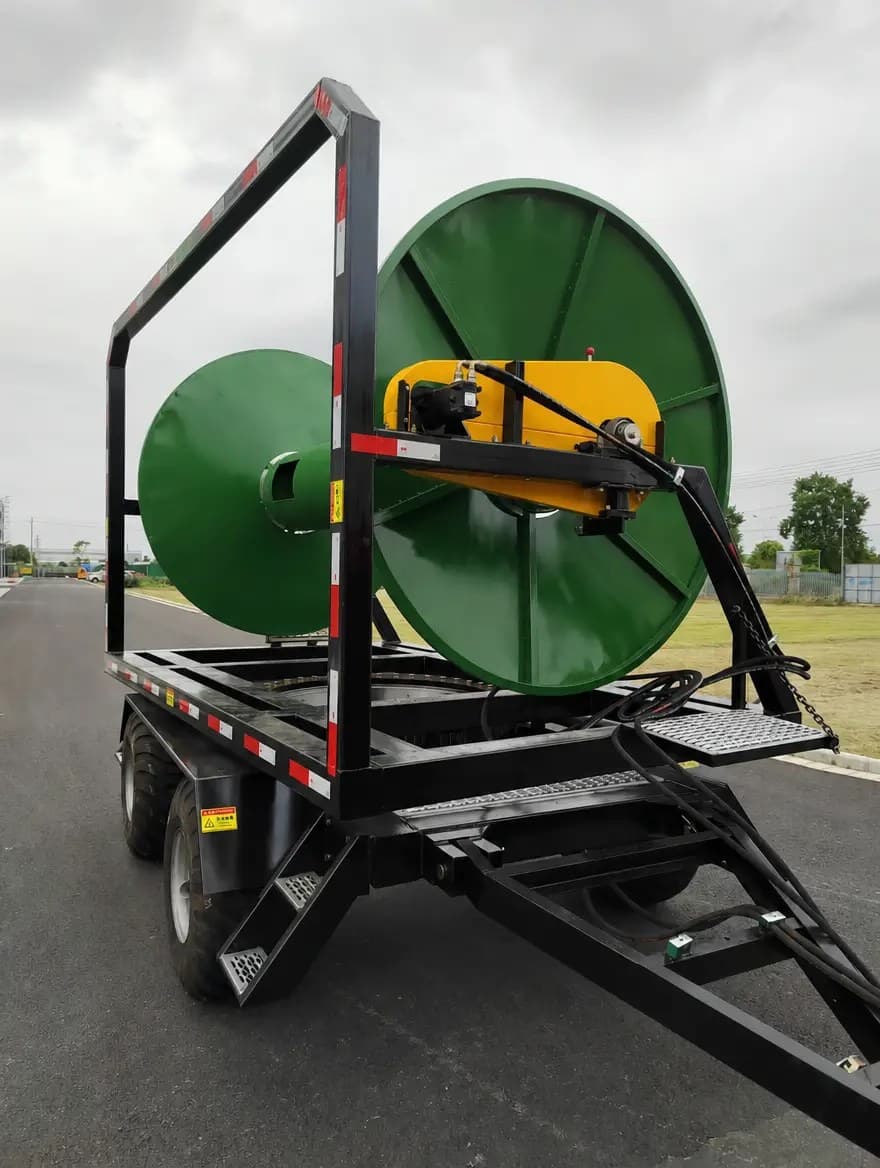 IH-LF-EHRTractor-Mounted Lay Flat Hose Reel, 3-Point HitchIndus Hydraulics
 IH-LF-EHMLay Flat Hose Mover, 3-Point HitchIndus Hydraulics
 IH-LF-EWR1Well Riser Hose Winding Trailer, 2" × 300 mIndus Hydraulics
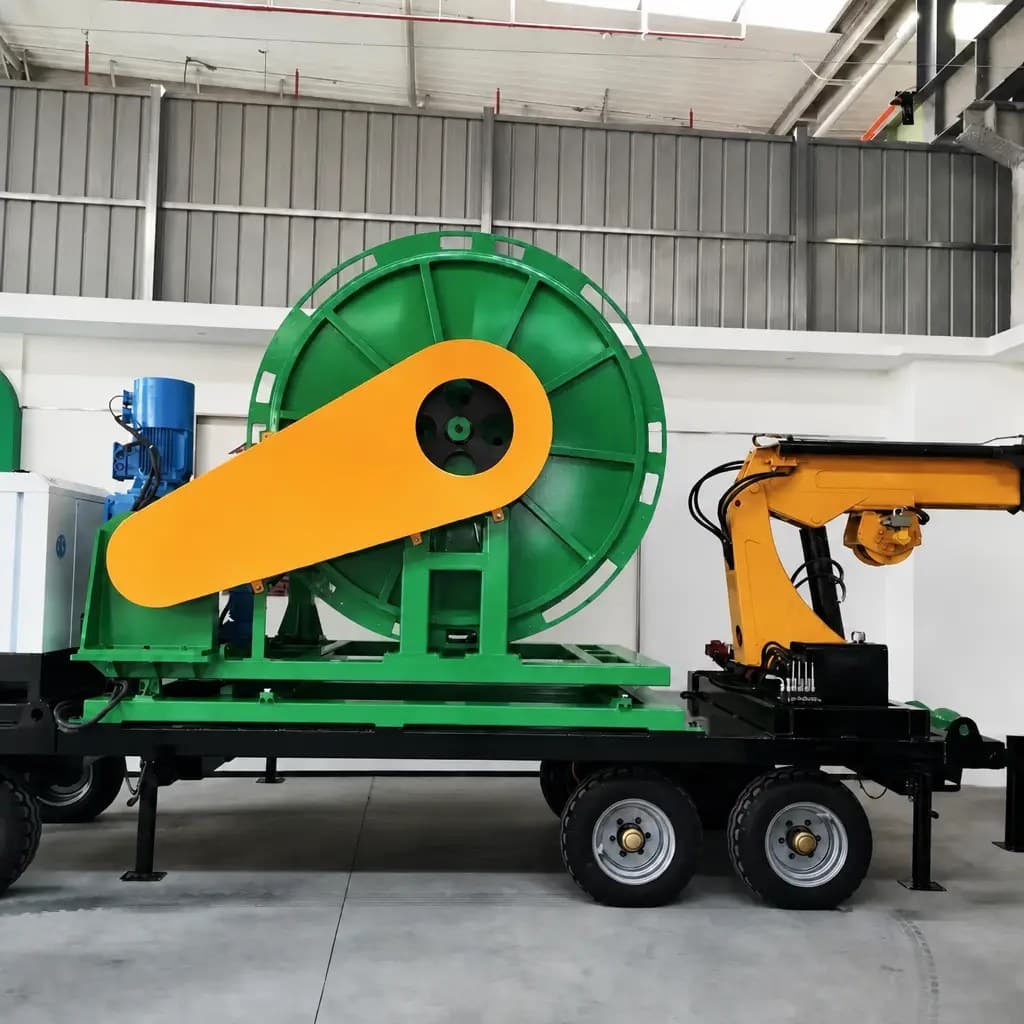 IH-LF-EWR2Large-Bore Riser Hose Winding System, 8" × 150 mIndus Hydraulics