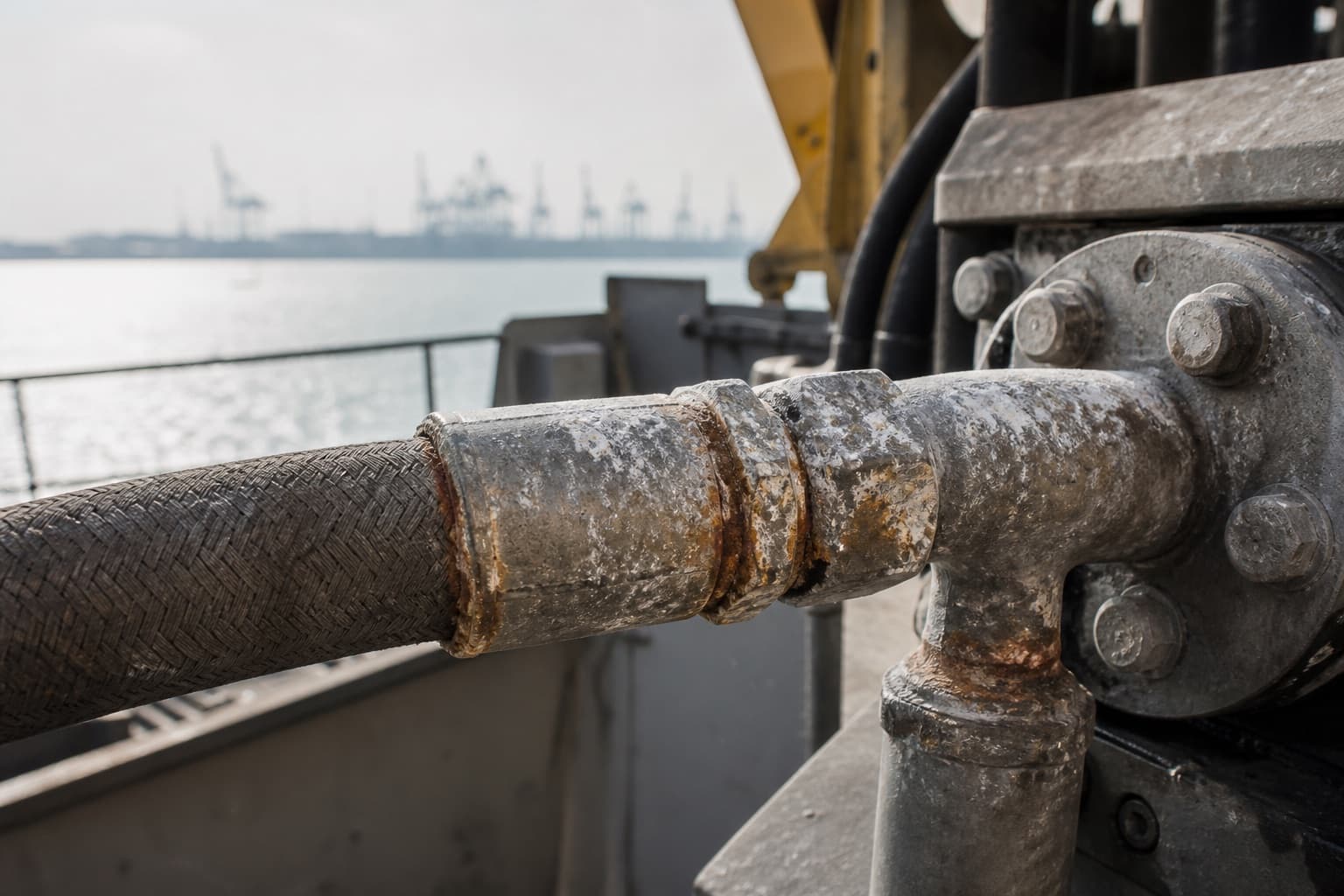
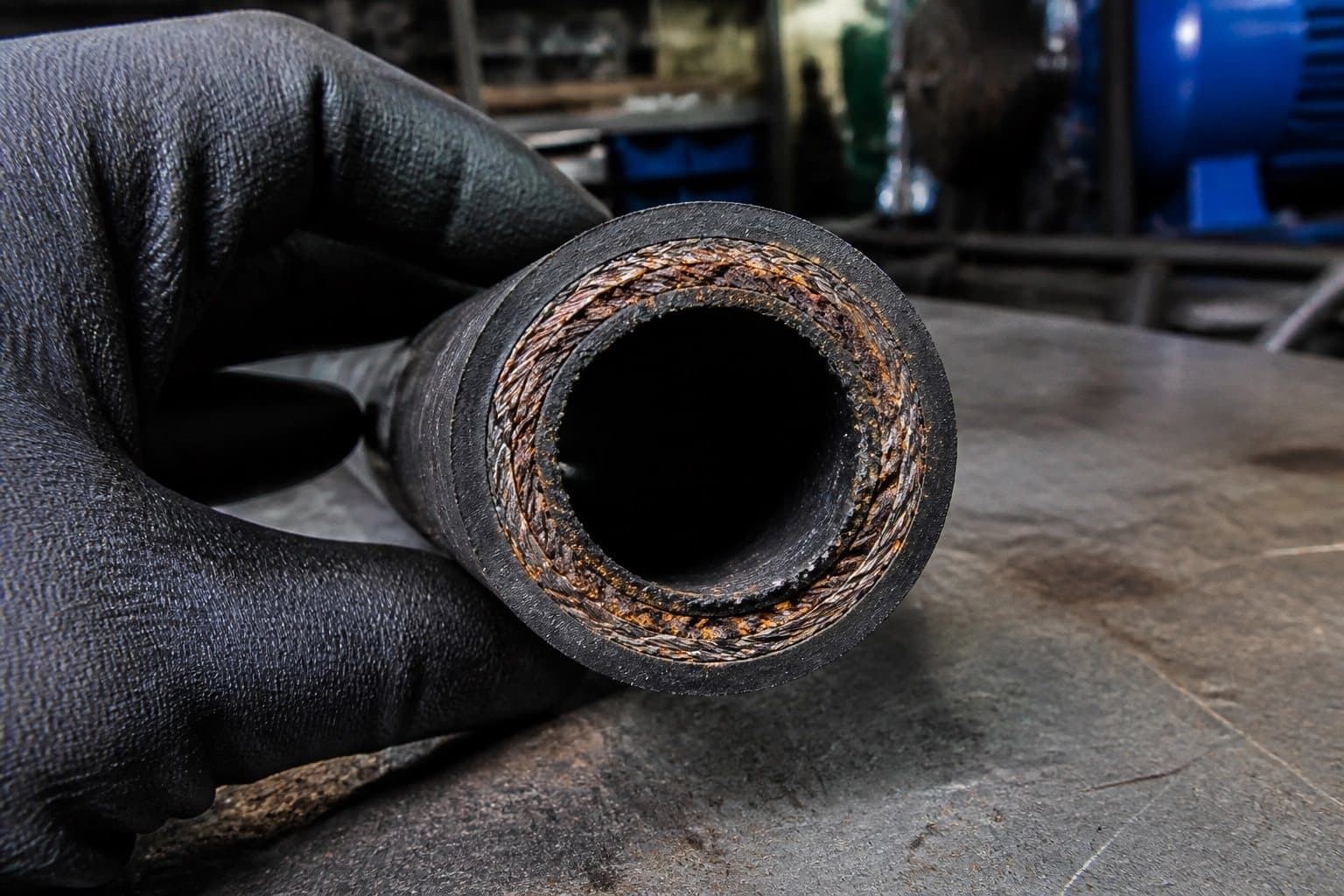
Nothing about coastal corrosion is different in kind from corrosion anywhere else. What is different is that a scar you would have got away with for two years inland is working against you in months here — and because the damage happens under an intact-looking cover, you will not be told.
/01Three things happening at once.
| Factor | Effect on reinforcement |
|---|---|
| Airborne saltHighlighted | Accelerates corrosion once moisture is present |
| High humidity | Keeps moisture available essentially all the time |
| Overnight condensation | Delivers liquid water onto and into equipment nightly |
| Daytime heat | Speeds the reaction and ages the cover that was keeping water out |
The last row is the one that compounds. Heat degrades the cover, the degraded cover admits moisture, and the salt-laden moisture attacks the wire. The heat problem and the corrosion problem are the same problem in this climate, which is why they are worth addressing together.
/02What actually changes in practice.
Four adjustments, none of them exotic
The hose specification usually does not change. The regime around it does.
IfAny cover damage found on inspection
Treat it as a replacement trigger, not an observation.
Inland a scarred cover is a watch item. On the coast it is the start of an invisible clock.
IfMachines are washed down
Rinse salt off, but keep the lance away from hose and fittings.
Washing is genuinely protective against salt and genuinely destructive at close range. Distance and angle decide which.
IfAssemblies have no fitted date
Tag them, because age-based replacement is the only workable control.
You cannot inspect for this failure mode, so the register is the control.
IfEquipment sits idle for long periods
Do not assume idle time is free.
Corrosion continues on a parked machine. Condensation happens whether or not anything is running.
/03Where stainless is the right answer.
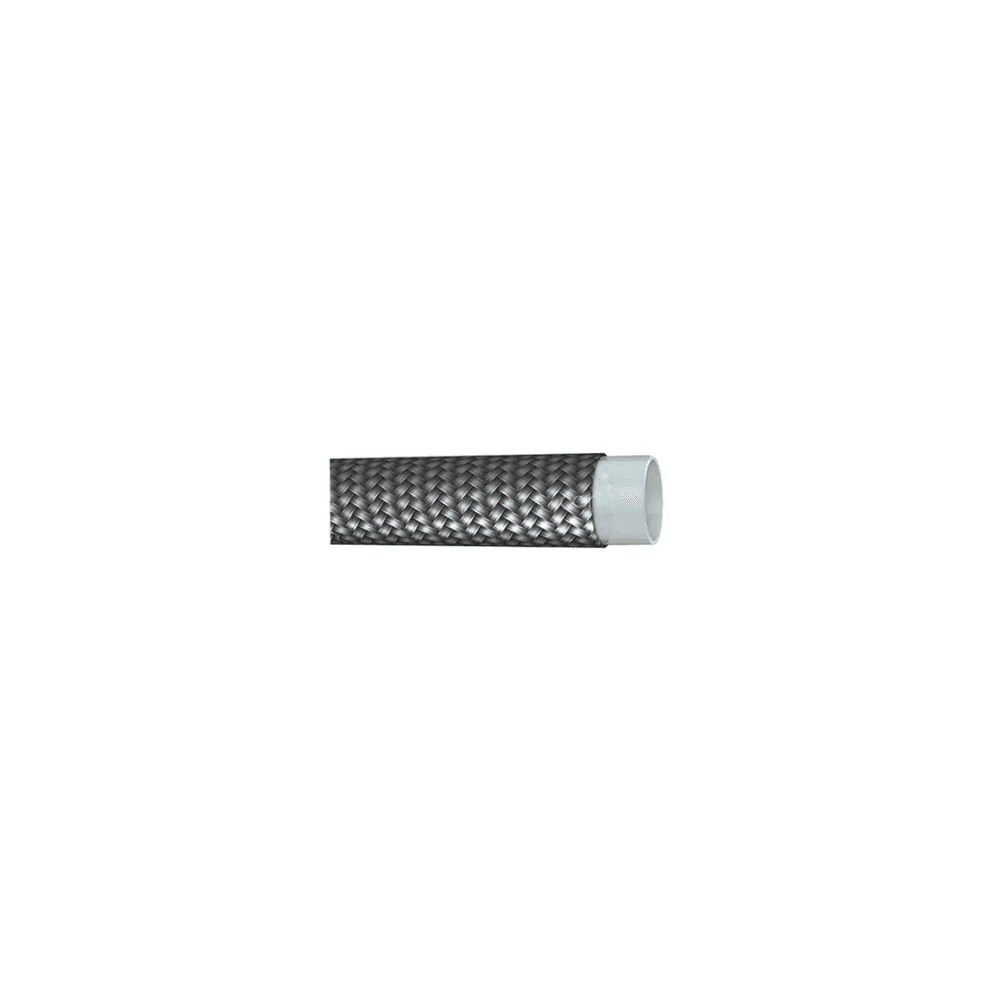
Hydraulic hose reinforcement is carbon steel in essentially every common construction, so "corrosion-resistant hydraulic hose" is not a variant you can order. Where corrosion resistance is the governing requirement rather than one factor among several, the answer is a different family — PTFE hose with stainless braid, or a metallic hose — and stainless fittings to go with them.
Where the environment governs

Common questions
- How much shorter is hose life on the coast?
- We do not publish a multiplier, because it depends almost entirely on whether the cover has been breached. An undamaged cover in coastal air is doing its job; a scarred one is on a much faster clock than the same scar inland.
- Would galvanised or coated wire help?
- It is not something you can specify on standard hydraulic hose — the reinforcement is what the construction says it is. Protecting the cover is the available control.
- Does washing machines down help or hurt?
- Both, and the difference is technique. Rinsing salt off is protective. A lance held close enough to drive water through the cover or strip it at a scar is the opposite.
- We are 20 km inland. Does this apply?
- Less, but humidity and overnight condensation still do. The salt component drops off with distance from the coast; the moisture component is a Gulf-wide condition.