
Open up a chain sling and the joints are where the choices are. The chain has to meet the master link at the top and the hooks at the bottom, and each meeting is made one of three ways. All three are sound when the parts are matched and rated; the risk is in using a link that looks like a lifting connector and is not. This guide covers the joints; for the parts themselves see master links explained and lifting hook types.
/01Three ways to join.
| Joint | How it works | Typical use |
|---|---|---|
| Hammerlock-type connecting linkHighlighted | Two forged halves close over a load pin, held by a bush or retaining pin | Chain to master link; eye fittings to chain; assembling slings on site |
| Clevis fitting | The chain link sits in the clevis jaw; a pin and retainer close it | Hooks, shorteners and links straight onto chain |
| Eye fitting | A solid eye, joined by a connecting link or directly onto a master link | Hooks on master links; where a fitting must be swapped |
/02Matching grade and size.
Connecting links and clevis fittings are sized to the chain: a 10 mm Grade 80 connecting link in our range is rated 3.15 t, matching 10 mm Grade 80 chain; a 10 mm Grade 100 connector is rated 4 t. Fit the same grade throughout, or accept the lower grade’s rating for the whole sling. European forged components for chain slings are made to EN 1677. See Grade 80 vs Grade 100.
| Size | Grade 80 connecting link | Grade 100 connector |
|---|---|---|
| 6 mm | 1.12 t | 1.4 t |
| 10 mm | 3.15 t | 4 t |
| 16 mm | 8 t | 10 t |
/03Assembling and re-using.
Assemble connecting links to the maker’s instructions: the load pin fully home, the bush or retaining pin fitted and secured, and the link able to articulate. Check the maker’s instructions before reassembling a used link — some require new pins or bushes — and if in doubt fit a new one. Any sling assembled or repaired on site needs examination by a competent person before use. See lifting gear rejection criteria.
Common questions
- What is a hammerlock?
- A mechanical connecting link of two halves and a load pin, used to join chain, master links and eye fittings in a chain sling.
- Is a clevis hook better than an eye hook?
- Neither is stronger when rated for the same chain. A clevis hook fits straight onto chain; an eye hook needs a connecting link or goes on a master link.
- Can I use a G-335 link to repair a lifting sling?
- No. Riveted repair links of that pattern are not suitable for Grade 80 or Grade 100 chain in overhead lifting.
- Can a connecting link be reused?
- Follow the maker’s instructions; some require new pins or bushes. If in doubt, fit a new link, and have the sling examined.
- Do connecting links need to match the chain grade?
- Yes — or the sling takes the lower grade’s rating.
Connecting links and clevis fittings
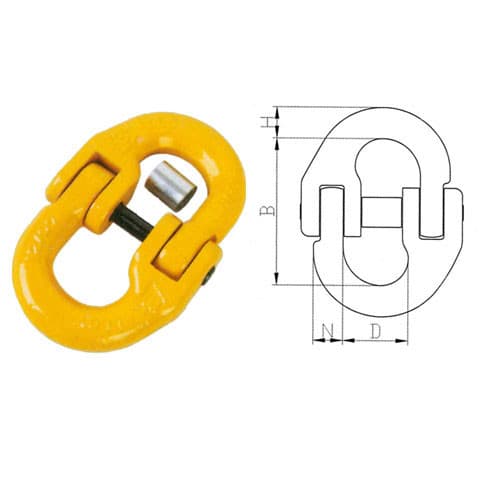 IH-LR-G8-CLEGrade 80 Connecting Link — European Type
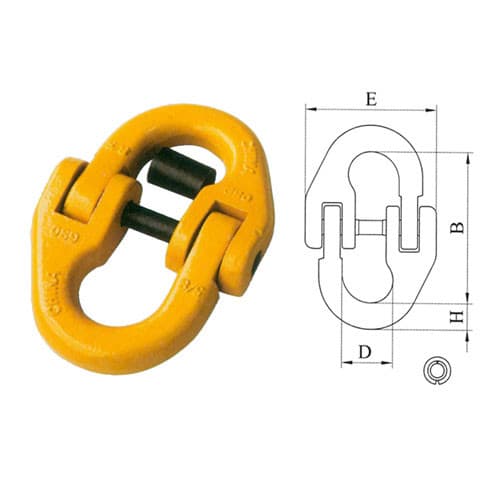 IH-LR-G8-CLUGrade 80 Connecting Link — US Type
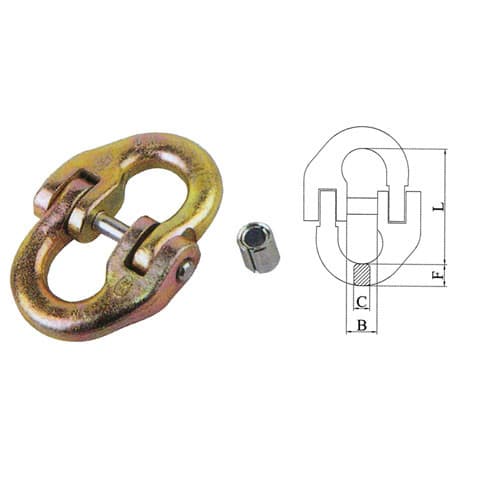 IH-LR-G8-CLIGrade 80 Connecting Link — Italian Type
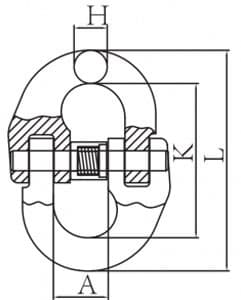 IH-LR-G10-CCEGrade 100 Chain Connector — European Type
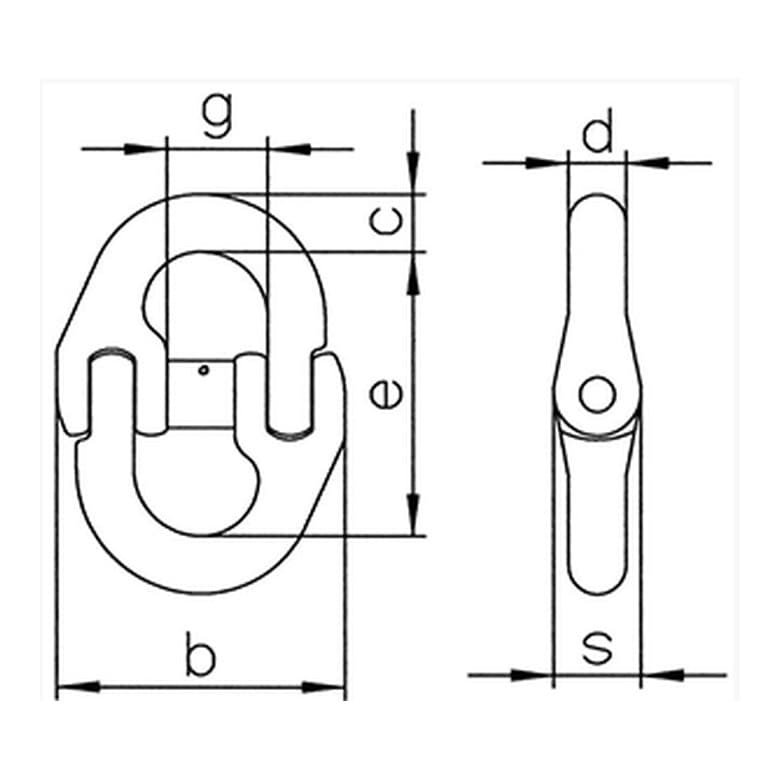 IH-LR-G10-NRCLGrade 100 Connecting Link — Non-Removable
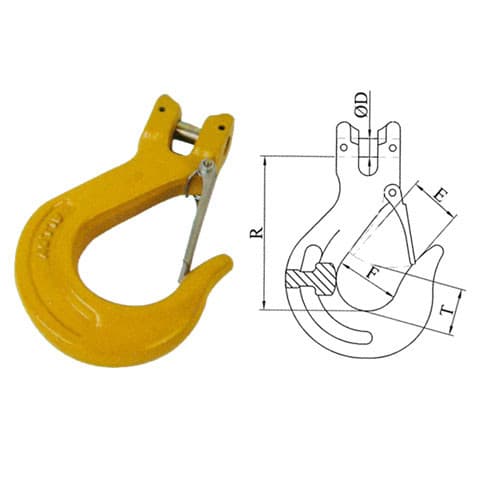 IH-LR-G8-CSHLGrade 80 Clevis Sling Hook with Latch
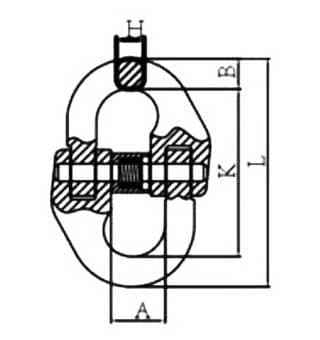 IH-LR-SC-SSHEStainless Steel Hammerlock — European Type