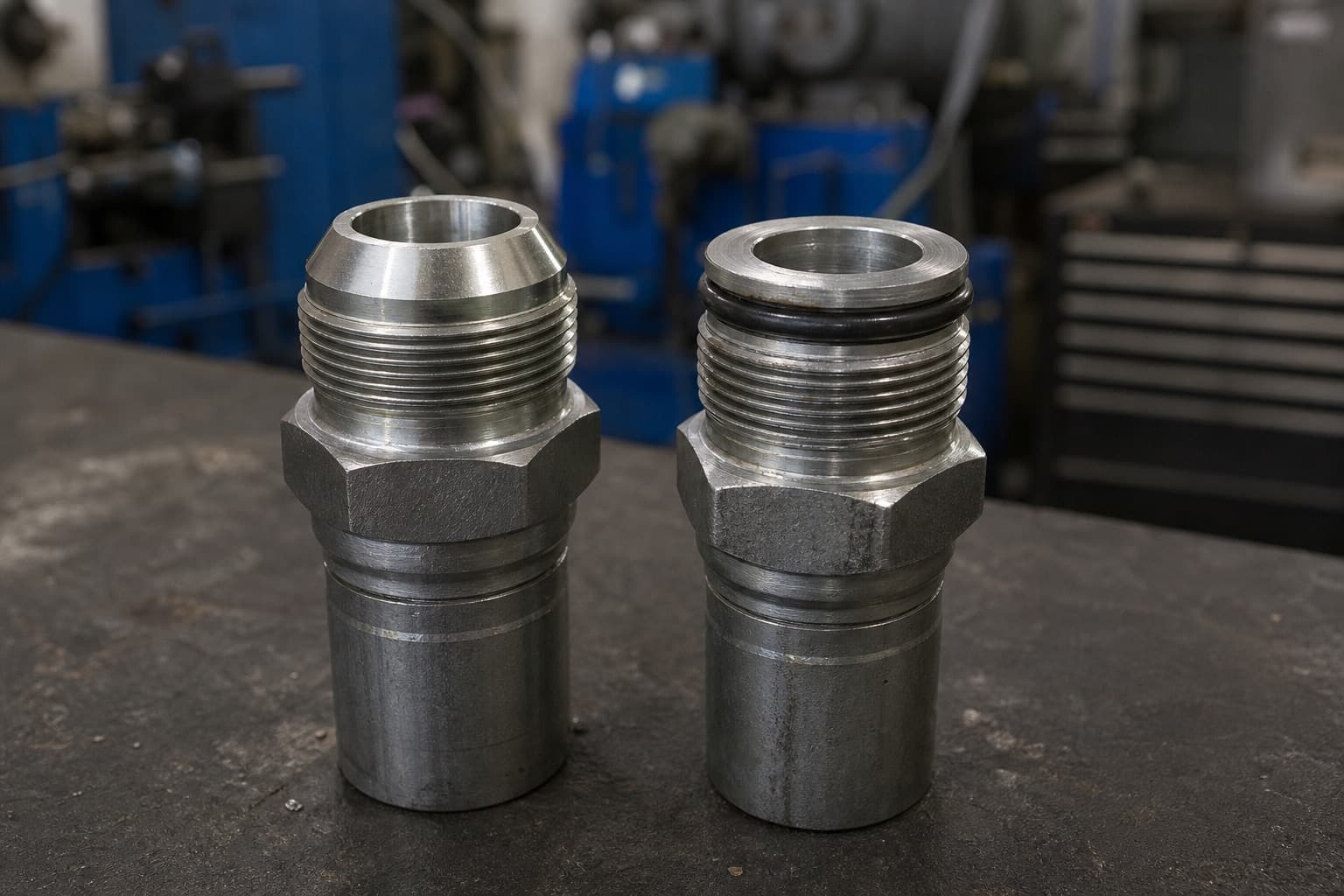
This is not an argument against JIC. It is inexpensive, available everywhere, tolerant of imperfect assembly, easy to identify by eye and easy to seal without consumables — which is why it is the sensible default and why most of a machine should be built with it. The point is the four cases where defaulting to it costs you, and where the alternative is well established and not much more expensive. The usual alternatives are ORFS fittings and, at large bores, SAE flange heads.
/01What a metal cone gives you, and what it costs.
| Property | JIC 37 degree | ORFS |
|---|---|---|
| Seals onHighlighted | Metal cone | Face O-ring |
| Consumable required | None | An O-ring per assembly |
| Tolerance of imperfect assembly | Good | Good, provided the O-ring is present and correct |
| Resilience under vibrationHighlighted | Poor — no elastic element | Good — the elastomer follows movement |
| Repeated make and breakHighlighted | Degrades the cone each time | New O-ring restores the seal |
| Sensitivity to over-tightening | High — the cone flattens permanently | Moderate — the O-ring extrudes, the seat survives |
| Cost per connection | Lower | Higher |
/02The four cases.
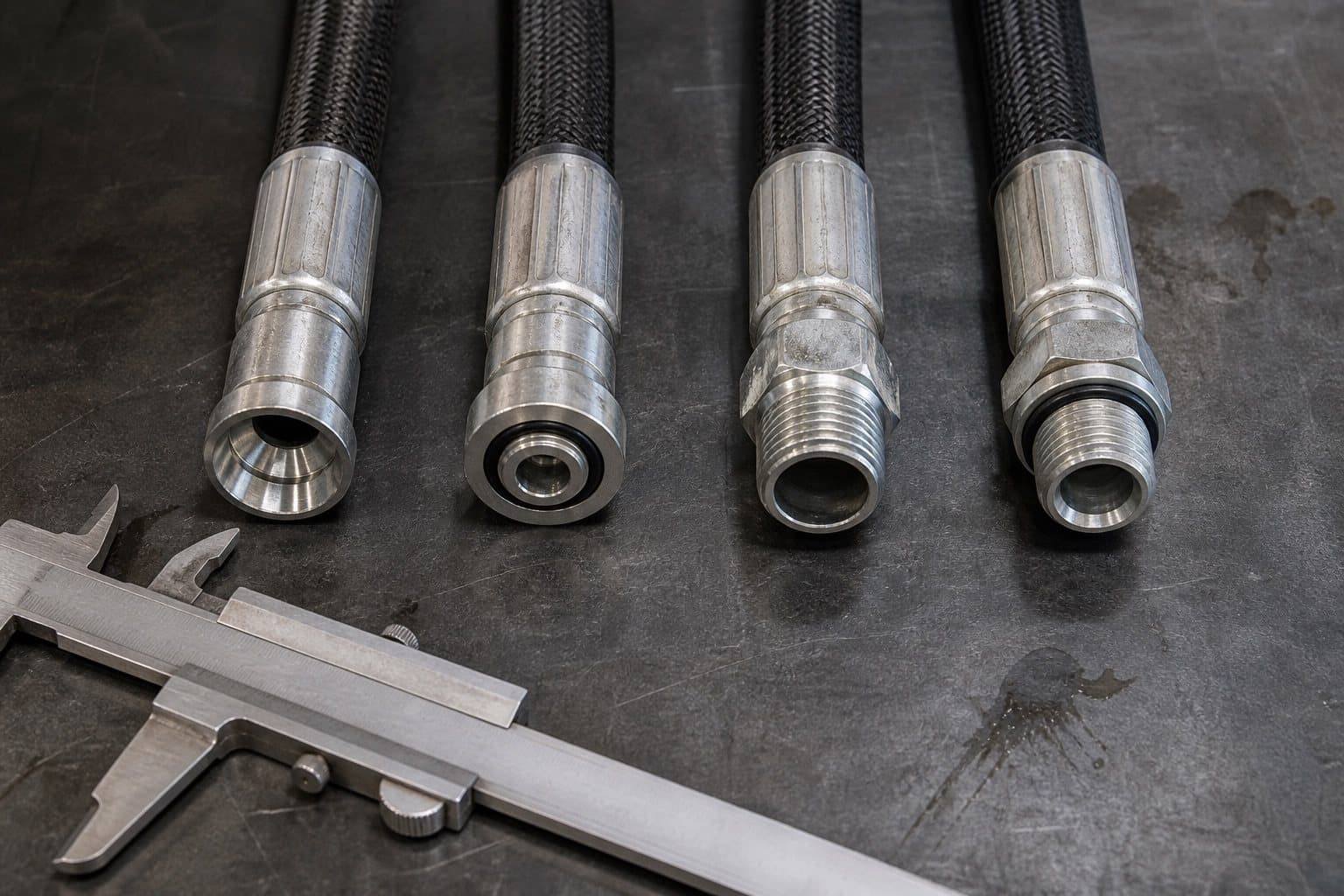
Where to specify something else
If a circuit matches one of these, the default is worth overriding.
IfSustained vibration — engine-mounted, screening plant, compactors
ORFS.
A metal cone has no elastic recovery. Micro-movement at the seat unloads it a fraction at a time until it weeps, and no amount of re-tightening fixes it permanently because each re-tighten marks the cone further.
IfThe joint is broken and remade regularly
ORFS, or a quick coupler if it is genuinely routine.
Every make-up marks the cone slightly. A test point or a component that comes off for service monthly is on borrowed time with JIC.
IfHigh impulse — breakers, presses, hammers, fast-cycling circuits
ORFS or split flange, depending on bore.
Impulse loading is what pulls a metal-to-metal seat apart momentarily. This is the case where a failure is most likely to be sudden rather than a weep.
IfBore above roughly one inch
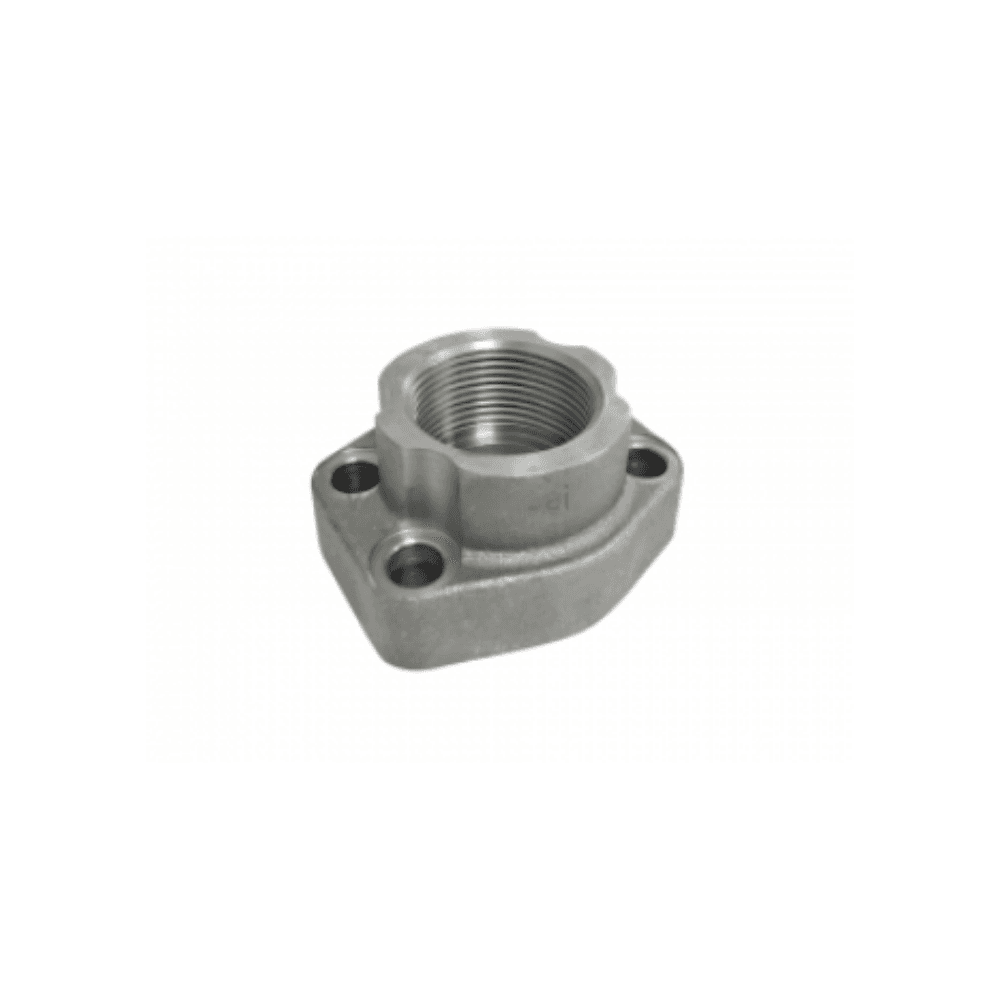
SAE split flange.
The nut size becomes impractical to torque correctly and the thread carries the whole load. Flanges spread it across four bolts and are easier to make up in a confined space.
/03The practical objections to switching.
| Objection | Assessment |
|---|---|
| "ORFS needs an O-ring we will not have" | Fair on a remote site. Answered by stocking the sizes you use, not by accepting the wrong connection |
| "The whole machine is JIC already"Highlighted | Fair. Change the circuit that keeps failing, not the machine |
| "ORFS costs more" | True per connection, and irrelevant next to one unplanned failure on the circuit that keeps weeping |
| "We can just tighten it more"Highlighted | This is the belief that destroys the cone and makes the leak permanent |
| "It has always been JIC there" | Worth checking whether it has always leaked there too |
Hydraulic Tube Fittings
Defines the 37 degree flare connection and the related fitting families, including the dimensions that make certain 37 and 45 degree parts thread together. Read the seat angle from the standard rather than inferring it from a thread size.
Common questions
- Is ORFS simply better than JIC?
- No. It is better under vibration, impulse and repeated assembly, and worse when the consumable O-ring is unavailable or when cost per connection matters across a whole machine. They are different tools.
- Can I convert one JIC port to ORFS?
- Yes, with an adapter, though every adapter adds a joint and a leak path. On a circuit that keeps failing it is usually worth doing the whole run properly rather than adapting one end.
- My JIC joint weeps only when the machine is working. Why?
- Vibration and thermal cycling unloading a metal seat that has already been marked. Inspect the cone; if it has a witness ring off centre or a radial scratch, replace both halves rather than re-tightening.
- What about BSPP with a bonded seal instead?
- A reasonable option in the same situations, and common on European machines. It shares the advantage of a soft seal, with the same consumable caveat.
- At what bore should I move to flanges?
- Around one inch is where it usually starts to make sense, but pressure and access matter as much as bore. If a nut is hard to reach with a torque wrench, that is the real signal.