
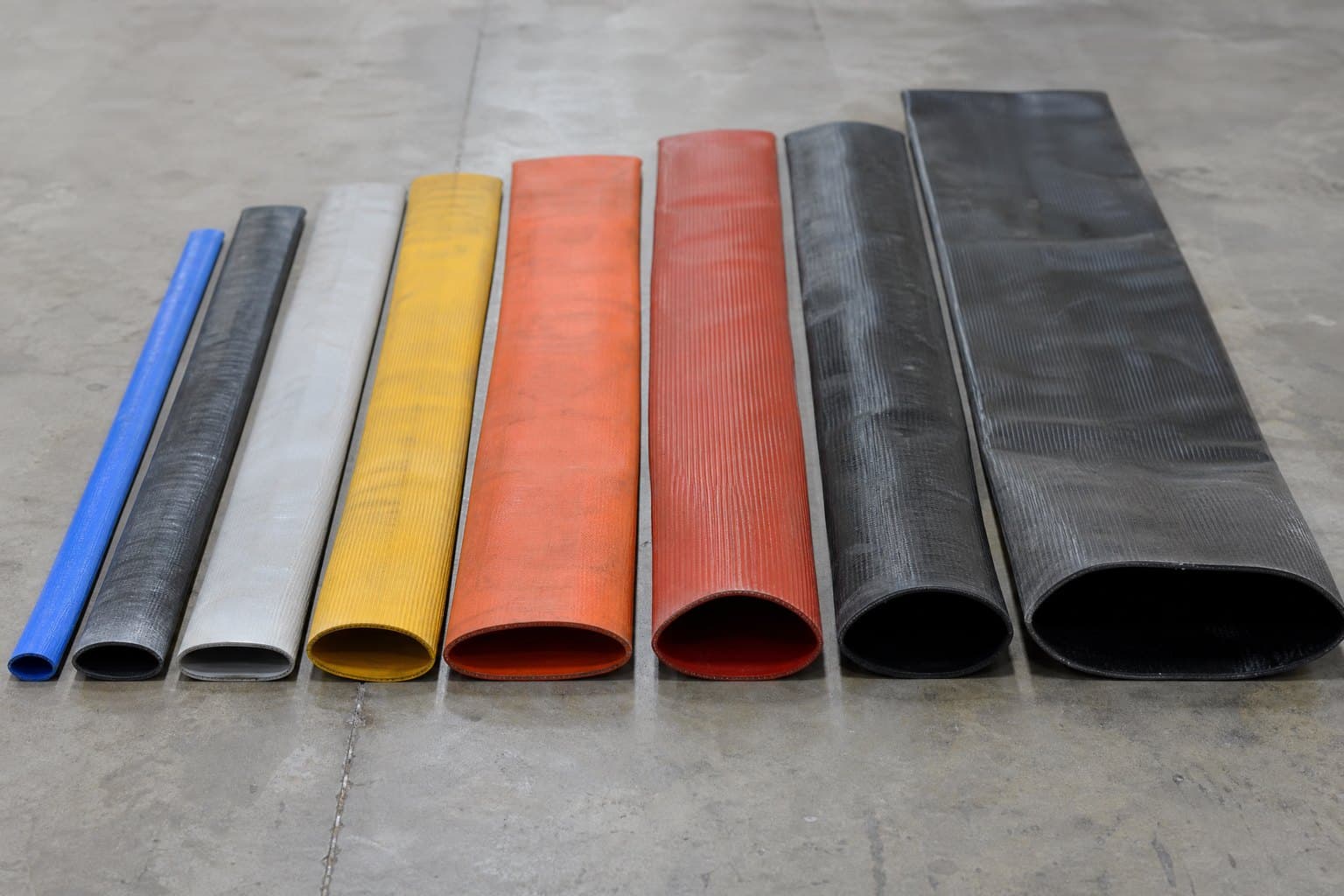
A customer asks for “6-inch layflat”. The pump outlet is DN150, the spec sheet says 155 mm ID, the coupling catalogue lists 152.4 mm, and the hose on the ground measures about 25 cm across. All of these describe the same hose. This chart lines the numbers up so buyers, engineers and stores can talk about the same thing — taken from the published size tables of our lay flat hose range.
/01The master chart.
| Size | DN | Inside diameter | Wall | Flat width (approx.) | Weight | Working pressure |
|---|---|---|---|---|---|---|
| 1-1/2" | DN40 | 39 mm | 2.6 mm | ≈ 65 mm | 0.45 kg/m | 21 bar |
| 2" | DN50 | 51 mm | 3.0 mm | ≈ 85 mm | 0.70 kg/m | 21 bar |
| 2-1/2" | DN65 | 64.5 mm | 3.0 mm | ≈ 106 mm | 0.75 kg/m | 21 bar |
| 3" | DN80 | 76 mm | 3.0 mm | ≈ 124 mm | 1.07 kg/m | 17 bar |
| 4" | DN100 | 104 mm | 3.5 mm | ≈ 169 mm | 1.45 kg/m | 17 bar |
| 6"Highlighted | DN150 | 155 mm | 4.0 mm | ≈ 250 mm | 2.3 kg/m | 14 bar |
| 8" | DN200 | 205 mm | 4.5 mm | ≈ 329 mm | 3.5 kg/m | 15 bar |
| 10" | DN250 | 254 mm | 4.2 mm | ≈ 406 mm | 3.8 kg/m | 14 bar |
| 12" | DN300 | 305 mm | 4.3 mm | ≈ 486 mm | 4.6 kg/m | 14 bar |
| 14" | DN350 | 355 mm | 4.3 mm | ≈ 564 mm | 5.25 kg/m | 14 bar |
| 16" | DN400 | 405 mm | 4.3 mm | ≈ 643 mm | 6.2 kg/m | 10 bar |
The chart is for our TPU dewatering and transfer hose and TPU drinking-water hose, which share sizes and ratings; burst pressure is three times working. Bores up to 24" are made to order. Flat width is our approximation from the published bore and wall — measure a sample if it matters.
/02Other lay flat families.
| Size | NBR discharge | TPU well riser | TPU slurry drag | TPU slurry supply |
|---|---|---|---|---|
| 1-1/2" | 10 bar | 30 bar | — | — |
| 2" | 10 bar | 30 bar | — | — |
| 3" | 10 bar | 27 bar | 17 bar | — |
| 4" | 10 bar | 26 bar | 12 bar | — |
| 5" | 10 bar | 25 bar | 10 bar | 14 bar |
| 6"Highlighted | 10 bar | 25 bar | 10 bar | 14 bar |
| 8" | 10 bar | 20 bar | 10 bar | 15 bar |
| 10" | 10 bar | 18 bar | — | 14 bar |
| 12" | 10 bar | — | — | 14 bar |
The NBR discharge hose is 10 bar working, 30 bar burst in every size; the TPU well riser hose also starts at 40 bar at 1-1/4"; the slurry drag hose is 21 bar at 2-1/2" and comes in 5-1/2" and 7-1/2" too; and the slurry supply hose runs to 16" (10 bar). The concrete placement hose is a heavier-walled family: 3" to 5", with a high-pressure class at 75–85 bar.
/03Measuring a hose you already have.
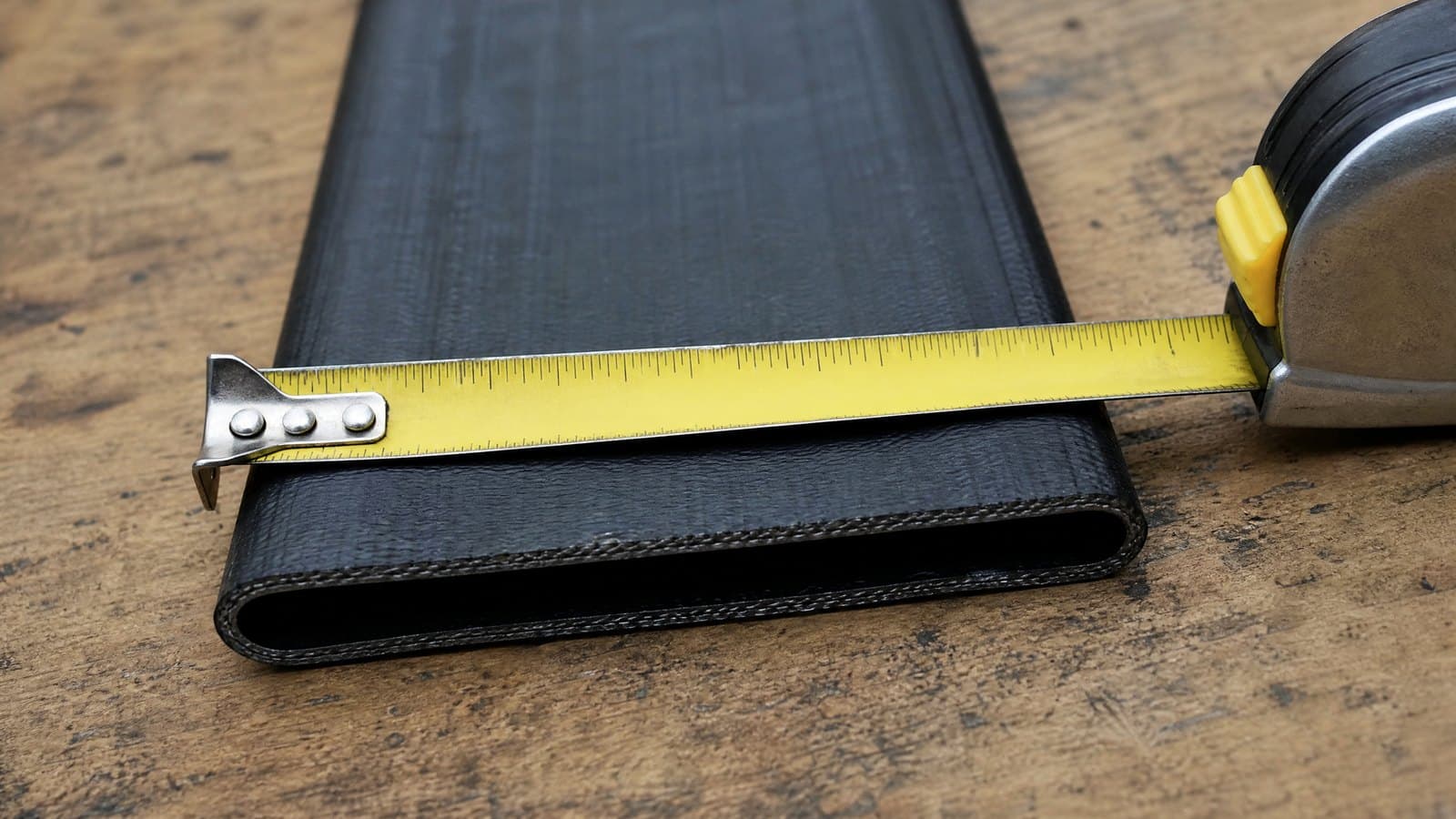
- Flat width: lay the hose flat and measure edge to edge. Divide by about 1.6 for the approximate bore, then pick the nearest nominal size.
- Inside diameter: at a cut end, round the hose out and measure across the bore with a caliper or rule.
- Wall thickness: measure at a cut end with a caliper — couplings are matched to it.
- Coupling: identify the type (Storz, camlock, Bauer, grooved, flanged) and size at the end, and note any thread.
- Markings: many hoses carry a printed or embossed line with size and pressure; photograph it.
Common questions
- What sizes does lay flat hose come in?
- Commonly from 1-1/2" (DN40) to 16" (DN400), with 1", 1-1/4" and up to 24" made for particular uses.
- How heavy is 12 inch lay flat hose?
- About 4.6 kg per metre empty for our TPU transfer hose — under five tonnes per kilometre.
- Is DN the same as inside diameter?
- DN is a nominal size. The actual inside diameter is close to it but can differ by a few millimetres; check the listing.
- How do I find the size of a lay flat hose without cutting it?
- Measure the flat width and divide by about 1.6 to estimate the bore, then pick the nearest nominal size.
- Why does pressure rating fall as size increases?
- For the same reinforcement, a larger bore puts more load on each yarn at the same pressure. See our guide to lay flat hose pressure ratings.
Lay flat hoses with published size tables
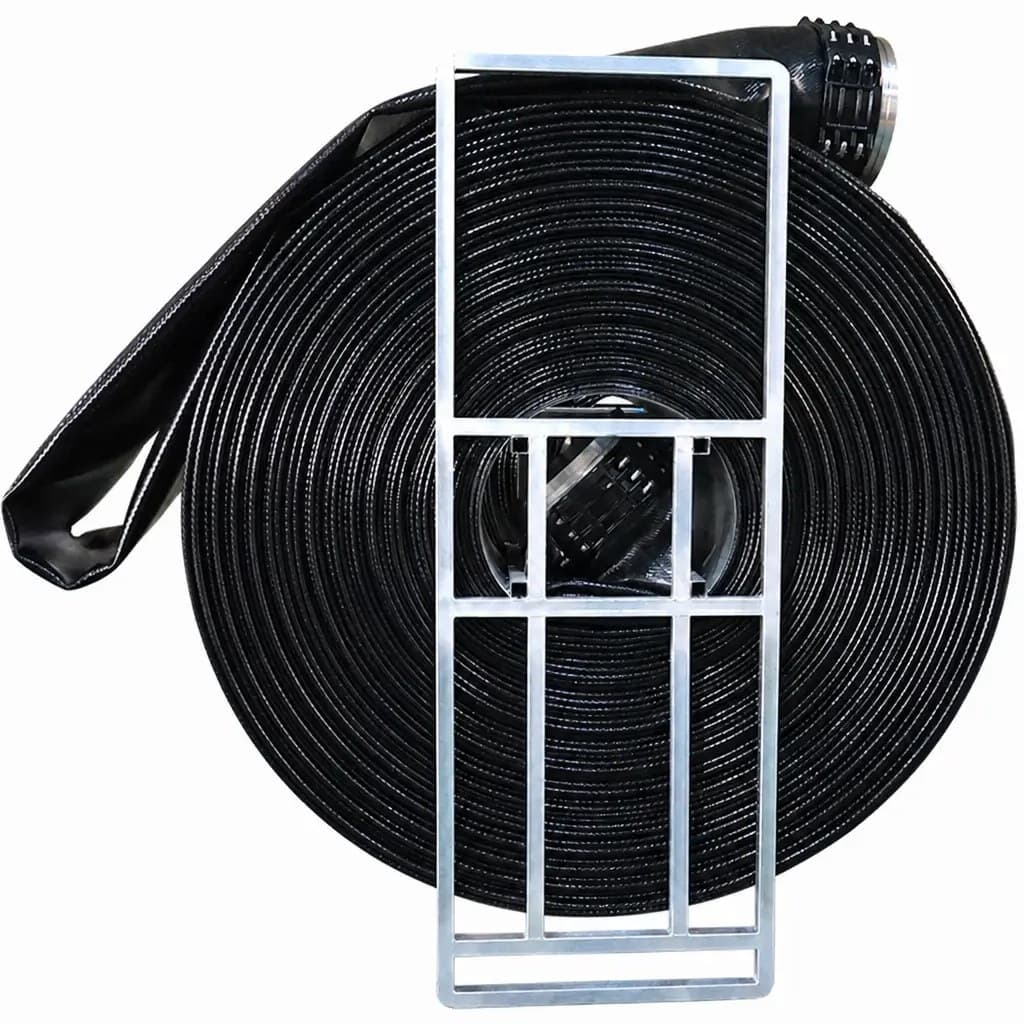 IH-LF-TDWTPU Lay Flat Dewatering and Water Transfer HoseIndus Hydraulics
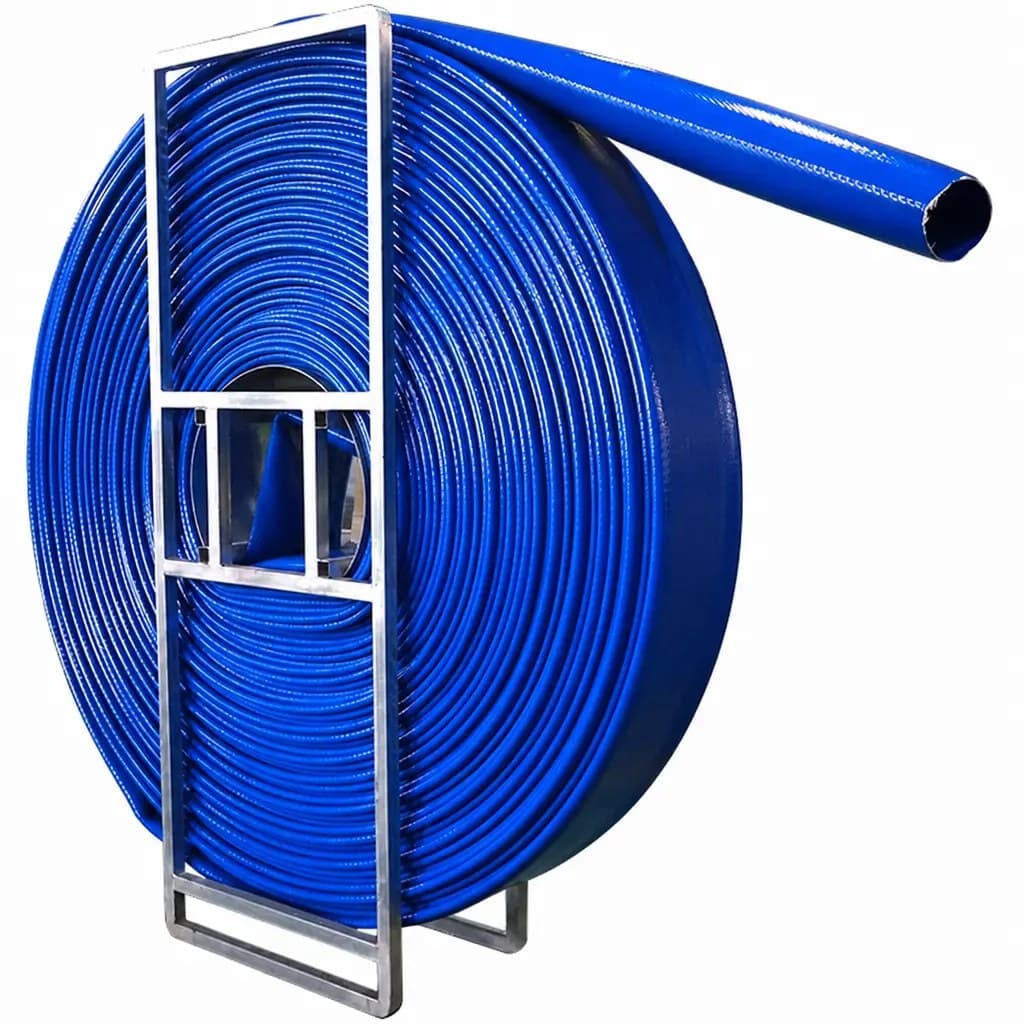 IH-LF-TPWTPU Lay Flat Drinking Water HoseIndus Hydraulics
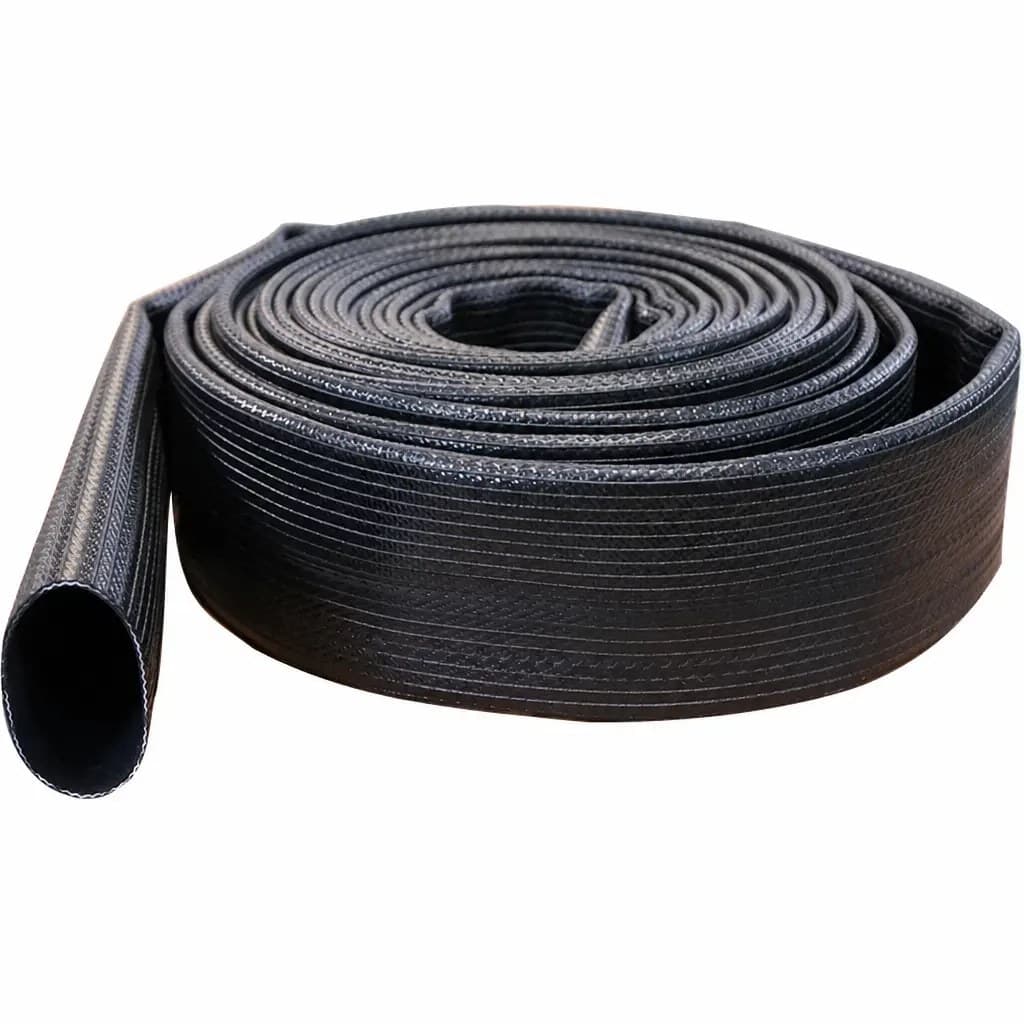 IH-LF-NBRNBR Lay Flat Discharge Hose, Ribbed CoverIndus Hydraulics
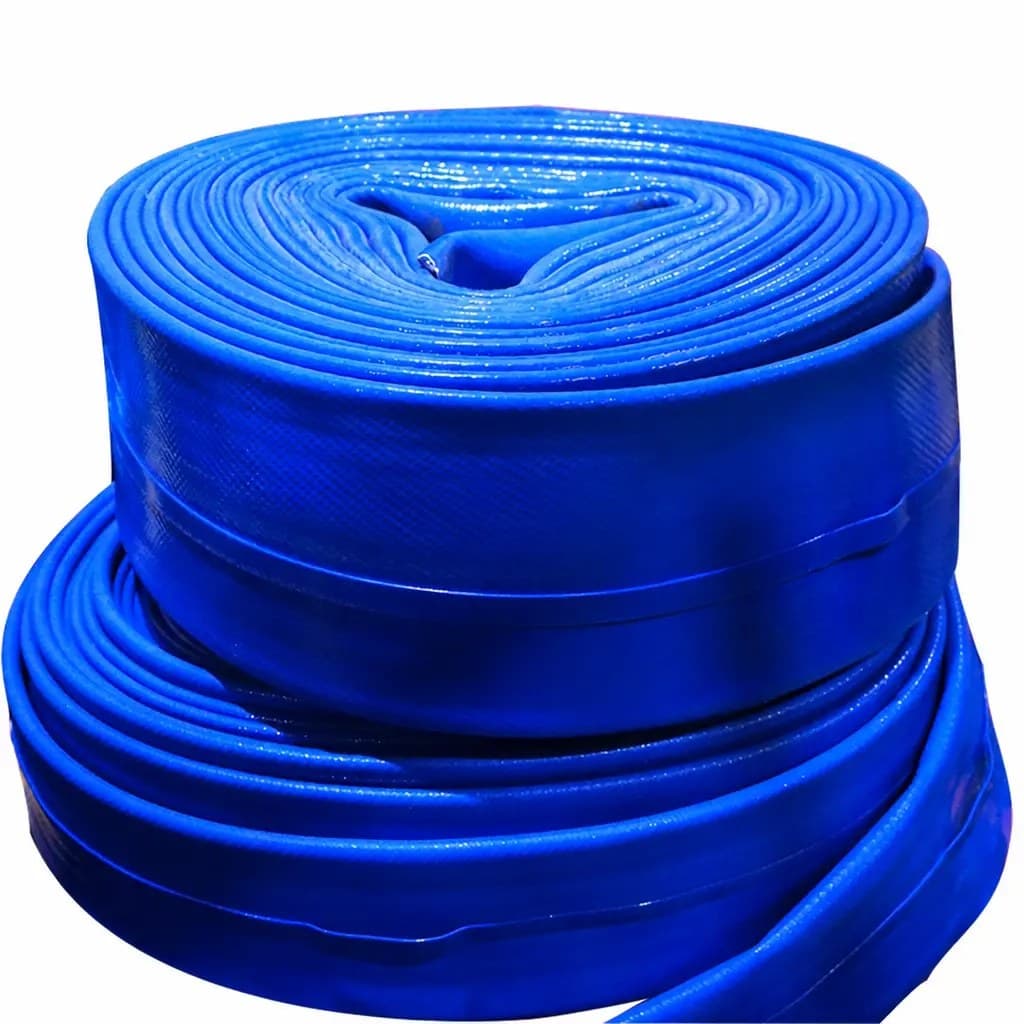 IH-LF-TWRTPU Lay Flat Well Riser HoseIndus Hydraulics
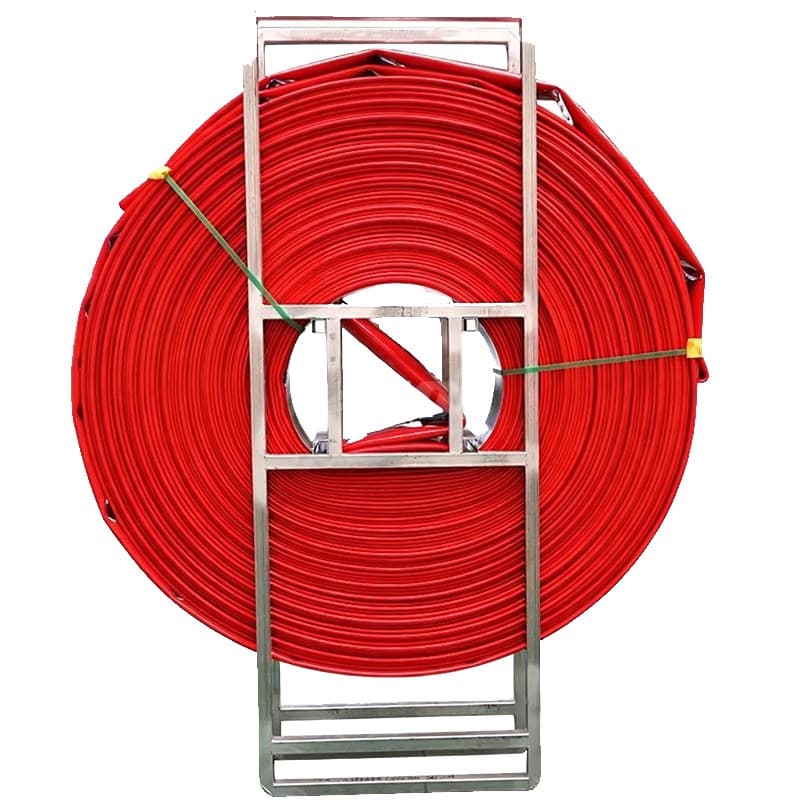 IH-LF-TSDTPU Lay Flat Slurry Drag HoseIndus Hydraulics
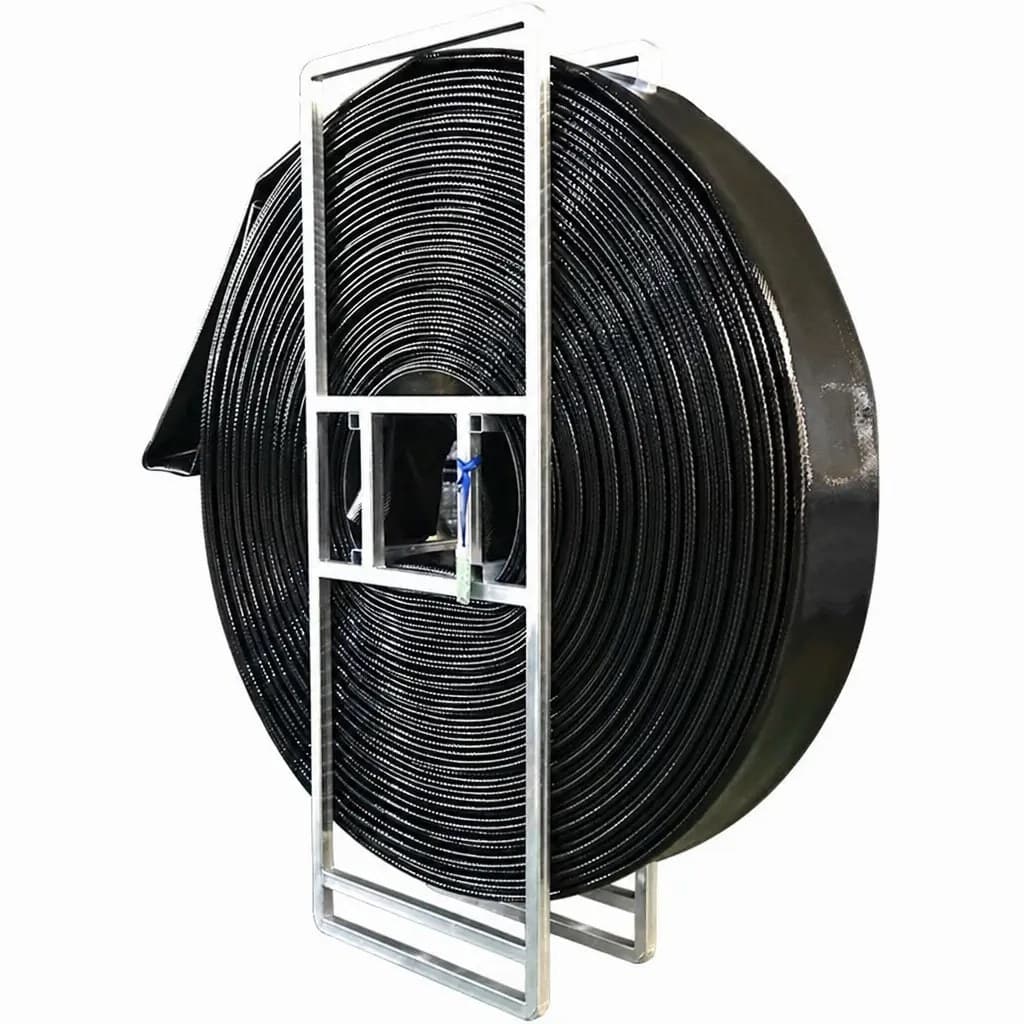 IH-LF-TSSTPU Lay Flat Slurry Supply HoseIndus Hydraulics
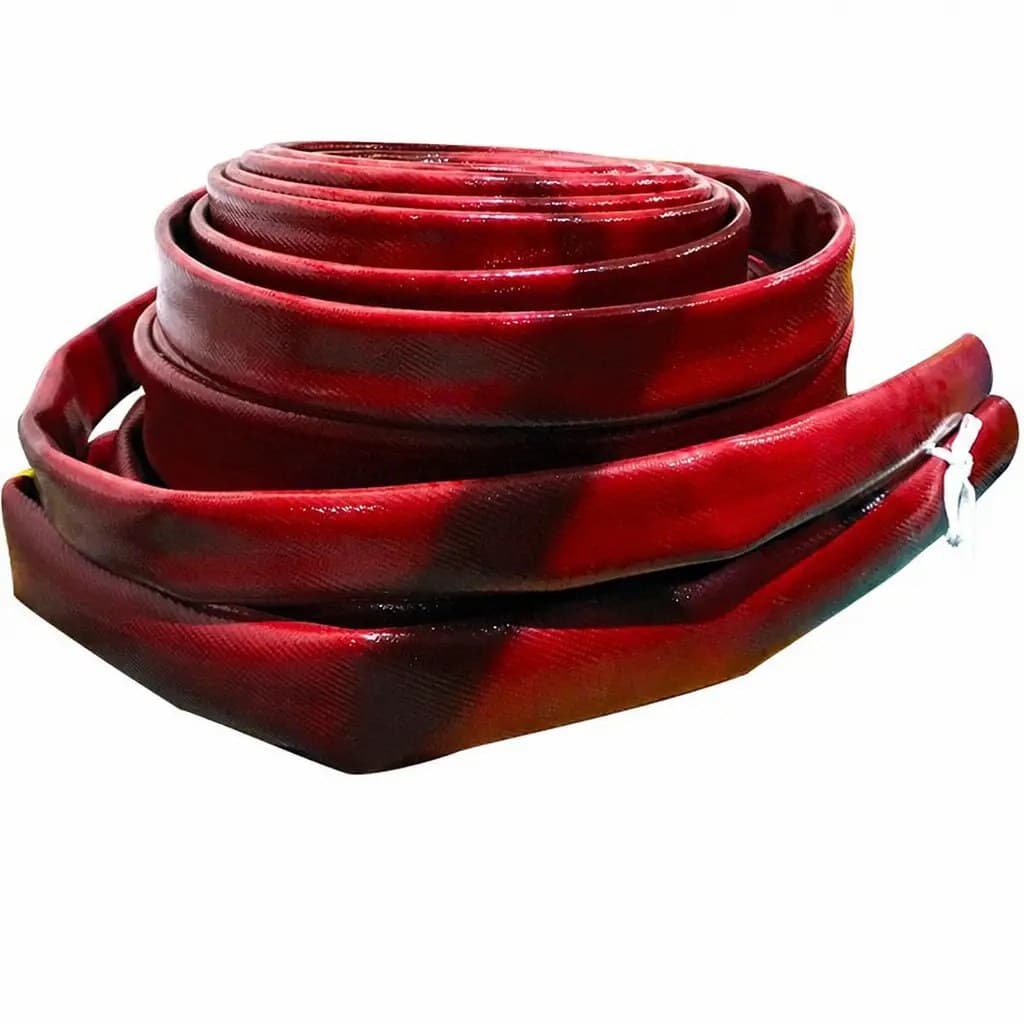 IH-LF-TCPTPU Lay Flat Concrete Placement HoseIndus Hydraulics
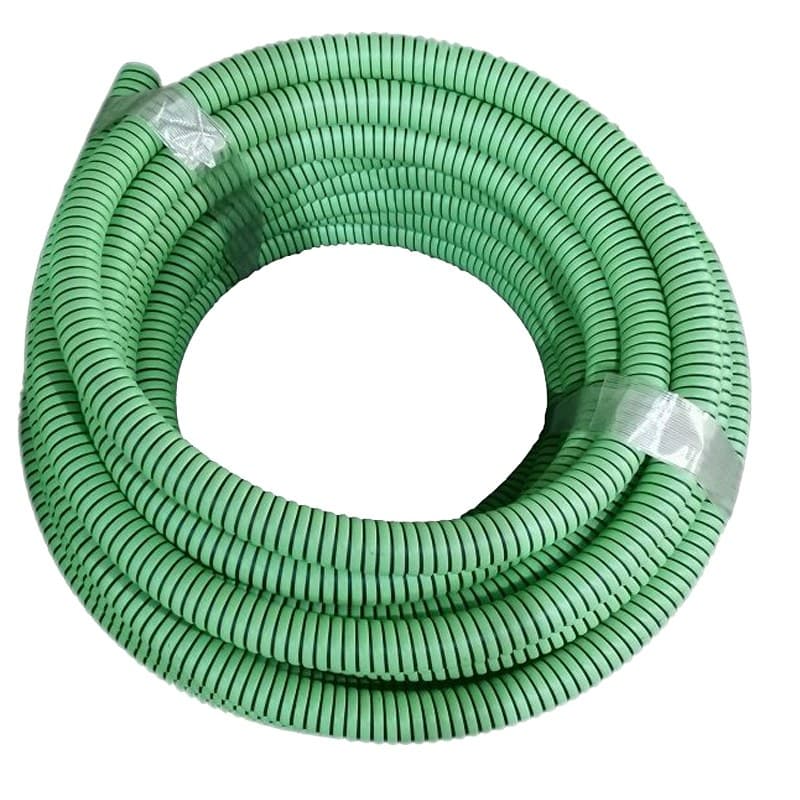 IH-LF-SEPEPDM/PE Suction Hose with Rigid HelixIndus Hydraulics


