
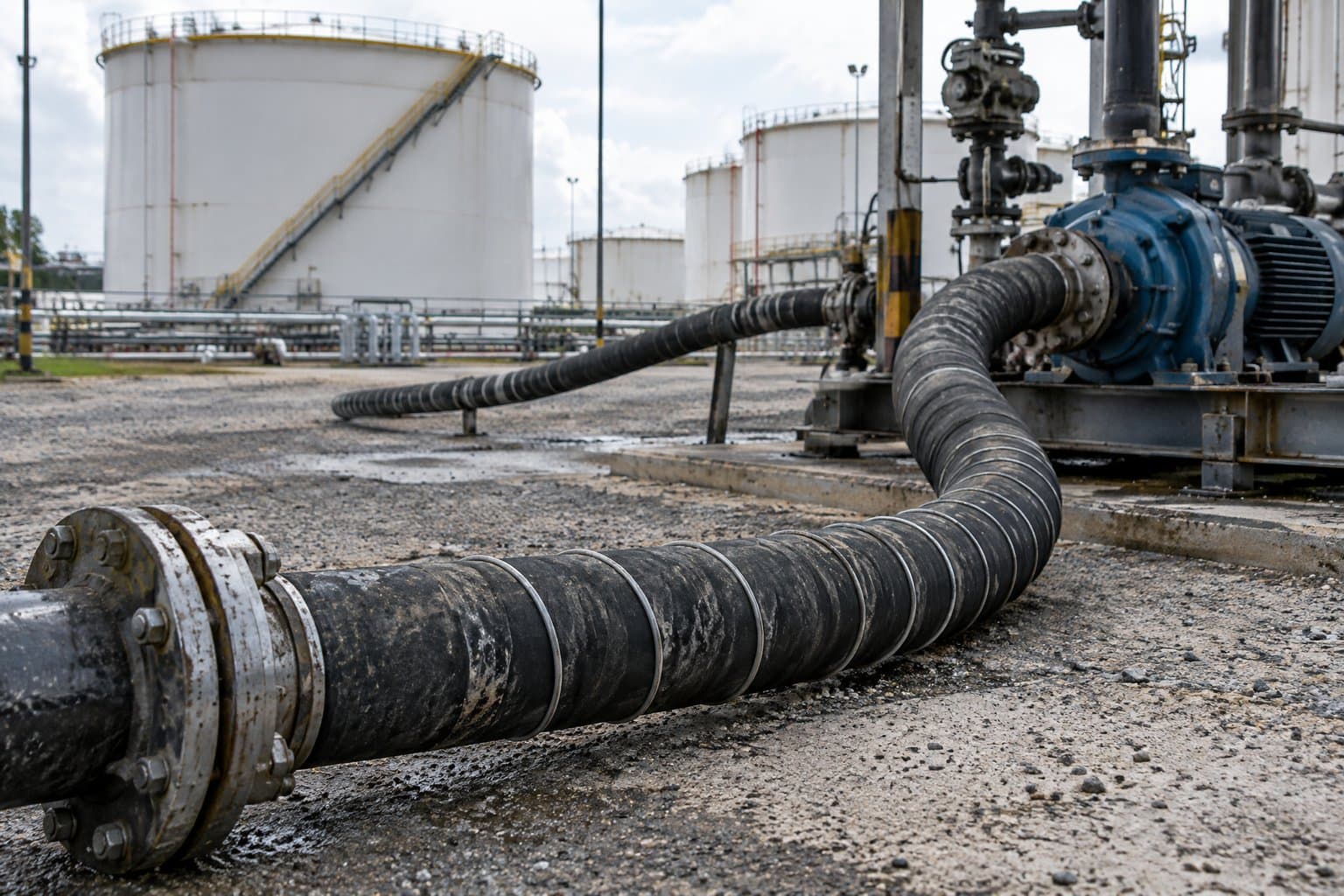
Oil transfer hose looks like water hose with a different colour stripe, and is bought like it far too often. The questions that matter are ones a water hose never asks: how aromatic is the oil, will the hose have to hold a vacuum, and where does the static go. Get those three right and the bore and pressure are the easy part.
/01The tube and the aromatics.
Petroleum products differ in how aggressive they are to rubber, and the aromatic fraction is the part that does the damage — it swells and softens tube compounds that are fine in a lighter oil. Our rubber oil suction and delivery hoses (A430, A460) and the oil, mud and sea water hose (A400EU) all carry NBR tubes listed as suitable for 50% aromatic hydrocarbons. That covers diesel, fuel oils and most lubricating and hydraulic oils; for highly aromatic solvents or blends, ask before relying on a rubber tube, and consider a composite or UHMWPE hose instead.
| Hose | Working / burst | Sizes | Temperature |
|---|---|---|---|
| A430 oil S&D, 10 bar | 10 / 30 bar, SF 3:1 | 1" – 6" | −35 to +80 °C |
| A460 oil S&D, 20 barHighlighted | 20 / 60 bar, SF 3:1 | 2" – 6" | −40 to +100 °C |
| A400EU oil, mud and sea water, 20 bar | 20 / 80 bar, SF 4:1 | 3" – 8" | −30 to +90 °C |
| BAKU PVC oil S&D | 3 – 9 bar by size | 1" – 6" | −10 to +55 °C |
/02Suction needs a helix.
A hose that will pull oil from a tank or a drum has to resist being flattened by atmospheric pressure, and only a steel helix does that. A430 and A460 have twin steel helices, and their laylines print the vacuum: 0.93 bar on A430 and 0.9 bar on A460. A400EU carries a steel helix wire for the same reason. The PVC BAKU hose uses a rigid PVC helix and is listed at 0.88 to 0.78 bar of vacuum depending on size. A delivery-only hose pressed into suction service works until the pump pulls hard, then collapses — and it reads as a pump fault.
/03Where the static goes.
Oil flowing through a hose builds an electrostatic charge, and a spark at the coupling is an ignition source in fuel vapour. That is why our rubber oil S&D hoses are built with anti-static wires alongside the helix. The wires only help if the couplings are bonded to them and the couplings are earthed to the tank and the truck. A hose with a non-conductive tube — such as our red multipurpose A104, listed as non-conductive — is a deliberate choice for some duties and the wrong one for others; it is a decision, not a default.
/04Small-bore oil and air lines.
Below 1", oil service moves to the multipurpose hoses: A110 mineral oil hose (10 bar, 3/16" to 1", −40 to +100 °C, SF 4:1) and A125 mineral oil and air hose (20 bar, 1/4" to 1", −40 to +80 °C). Both have non-conductive NBR tubes and covers resistant to oil, abrasion, ozone and weather. They suit lube lines, workshop oil transfer and compressor connections, not fuel transfer at a tanker.
/05Couplings for oil transfer.
Most oil transfer hose ends in cam and groove halves, with an NBR (Buna-N) gasket for hydrocarbons — and on a large bore the coupling, not the hose, may set the rating: our cam and groove listings step down to 75 psi at 5" and 6". Hammer unions and flanged ends take over on oilfield mud and transfer lines. Whatever the coupling, clamp the shank properly or crimp it; a 20 bar hose on a single band is not a 20 bar assembly.
For temporary fuel transfer over longer distances, an antistatic TPU lay flat hose with a copper earthing wire in the jacket is an alternative to rigid-wall hose; see TPU vs NBR vs PVC lay flat hose.
Static is the hazard every fuel line shares: our antistatic fuel transfer hose guide explains M and Ω hose and how to bond and earth a temporary line.
Frequently asked questions
- Can an oil suction hose carry petrol?
- Our A430 and A460 NBR tubes are listed for hydrocarbons with up to 50% aromatic content. For petrol and highly aromatic fuels, confirm the specific fuel with us first; a composite hose may be the better choice.
- What vacuum will an oil suction hose hold?
- A430 is printed 0.93 bar vacuum and A460 0.9 bar. The PVC BAKU hose is listed at 0.88 to 0.78 bar depending on size.
- Why does an oil hose need anti-static wires?
- Flowing oil builds static charge. The wires carry it to the couplings, which must be bonded and earthed, so it cannot discharge as a spark in fuel vapour.
- Is a PVC oil hose suitable for hot oil?
- No. Our PVC oil hose is listed from −10 to +55 °C. For hot oil use a rubber S&D hose such as A460, rated to +100 °C.
Oil suction and delivery hose
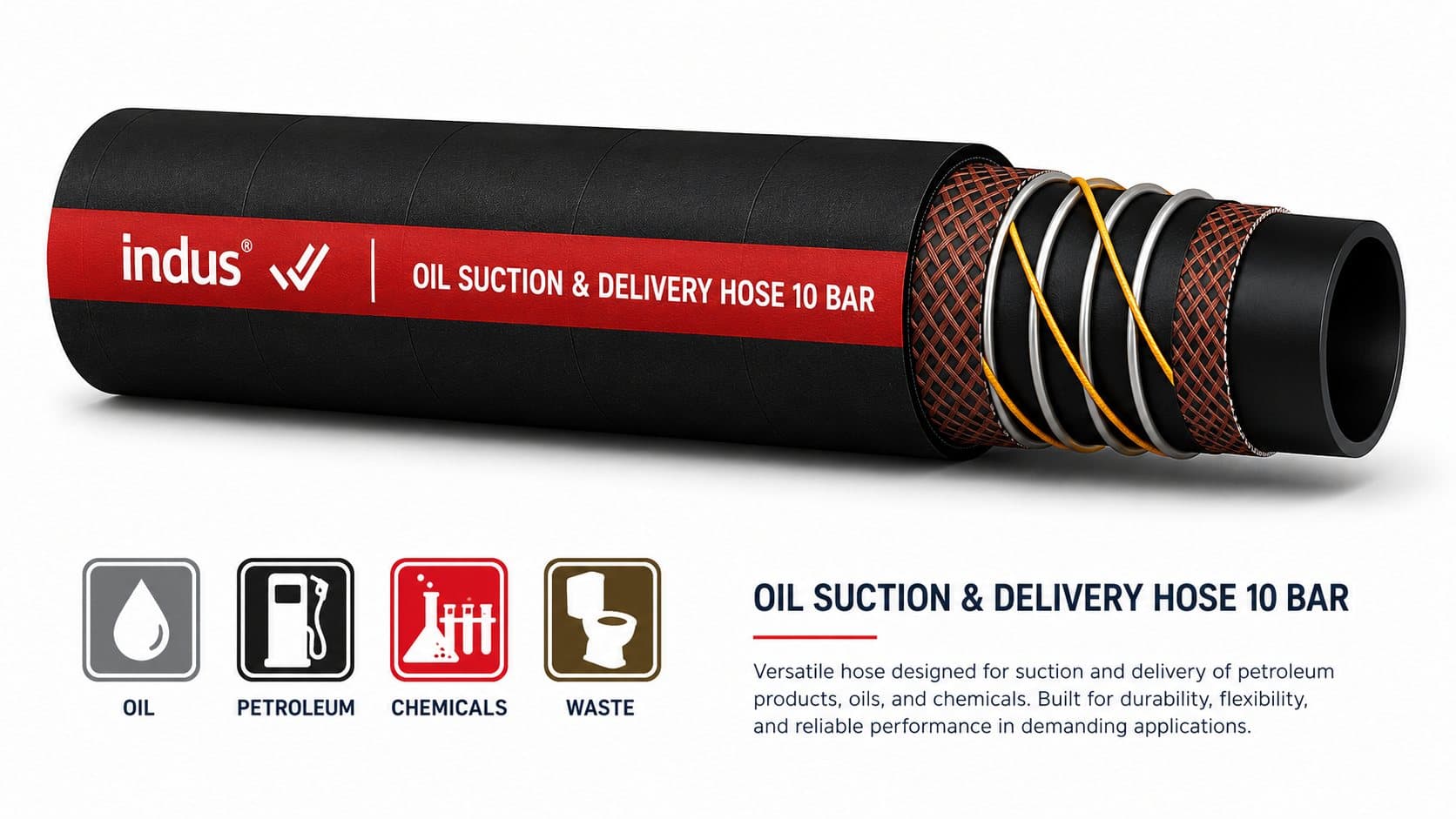 IH-IH-A430Oil Suction & Delivery Hose 10 BarIndus Hydraulics
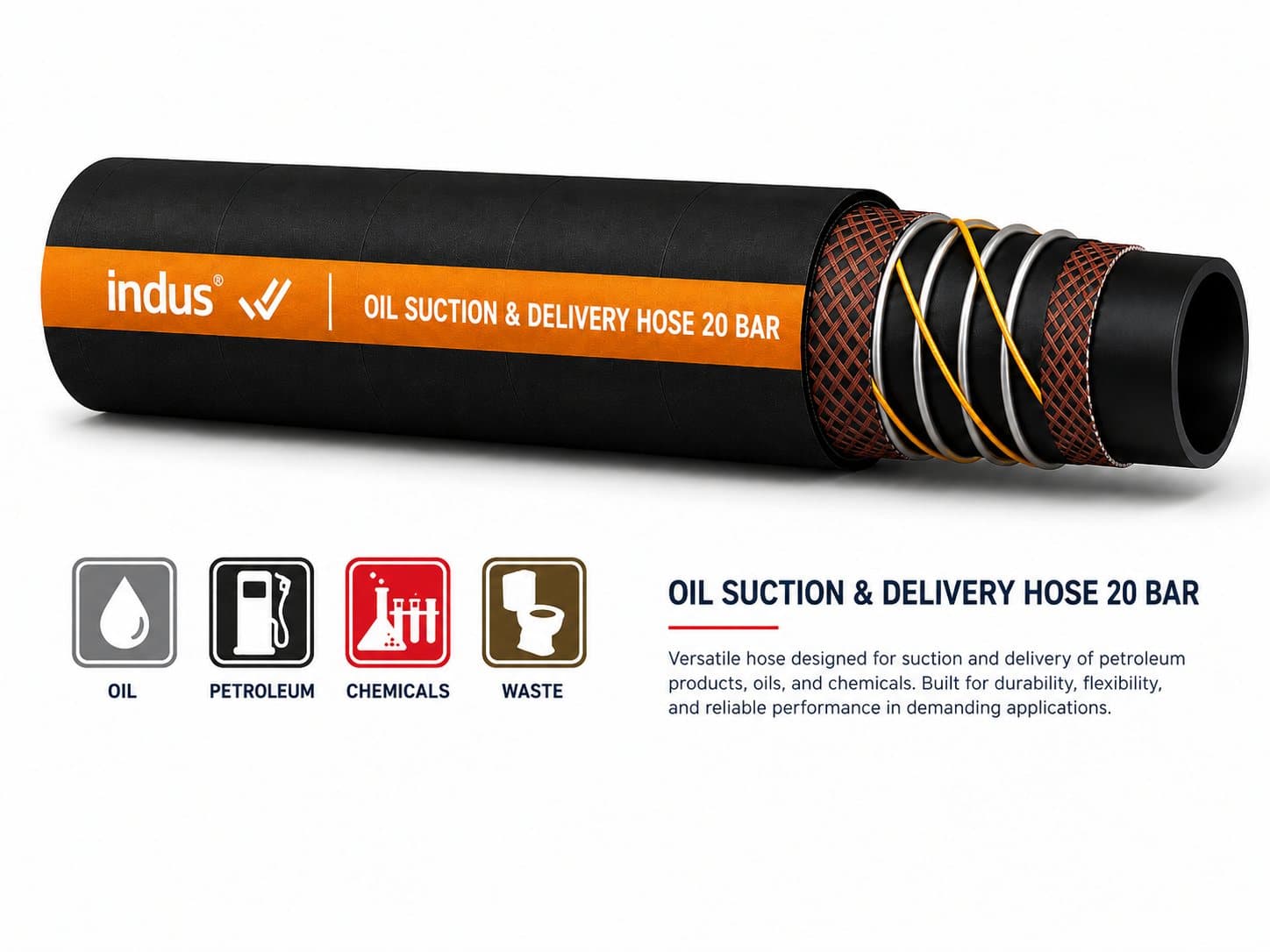 IH-IH-A460Oil Suction & Delivery Hose 20 BarIndus Hydraulics
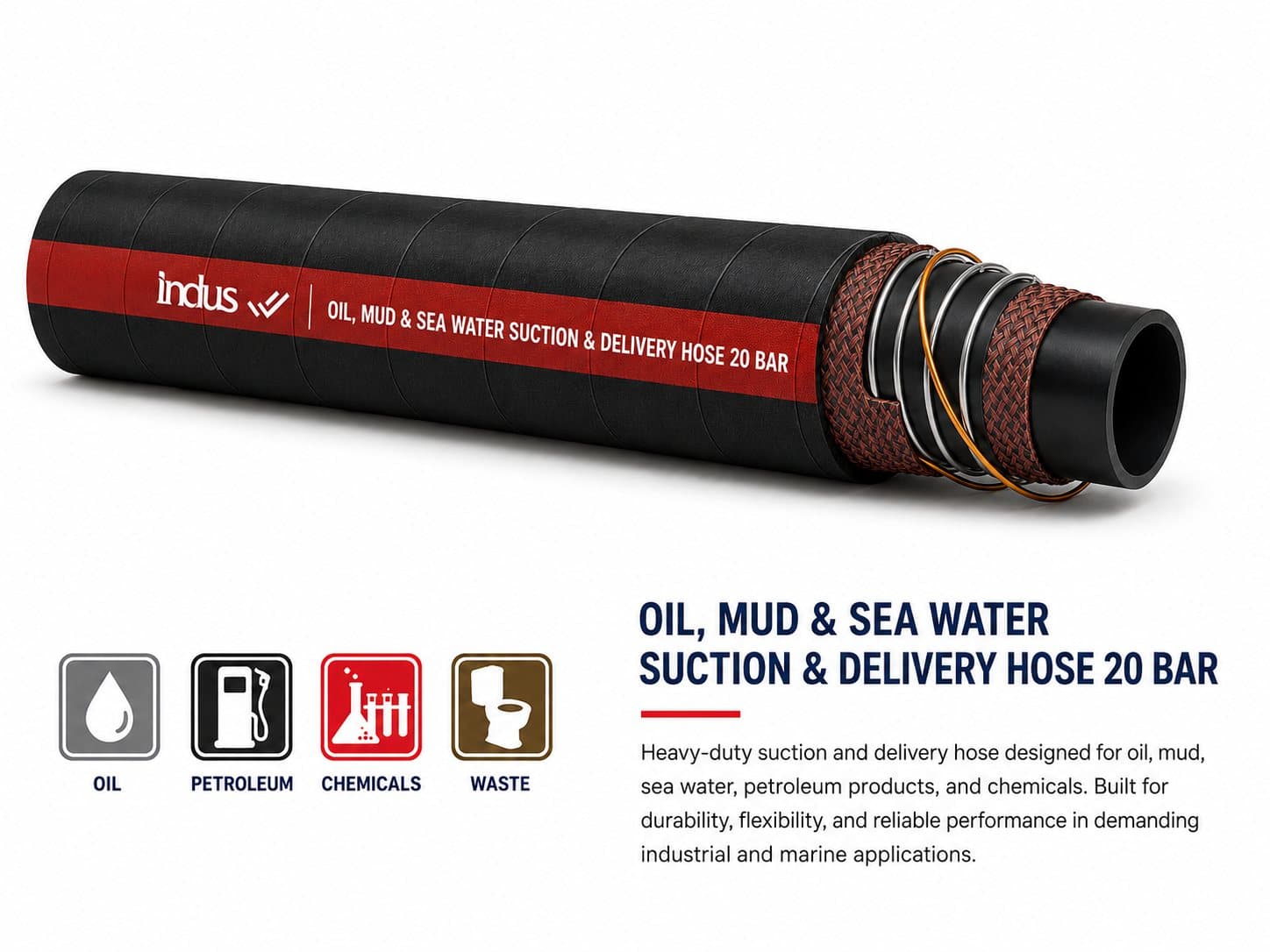 IH-IH-A400EUOil, Mud & Sea Water Suction & Delivery Hose 20 BarIndus Hydraulics
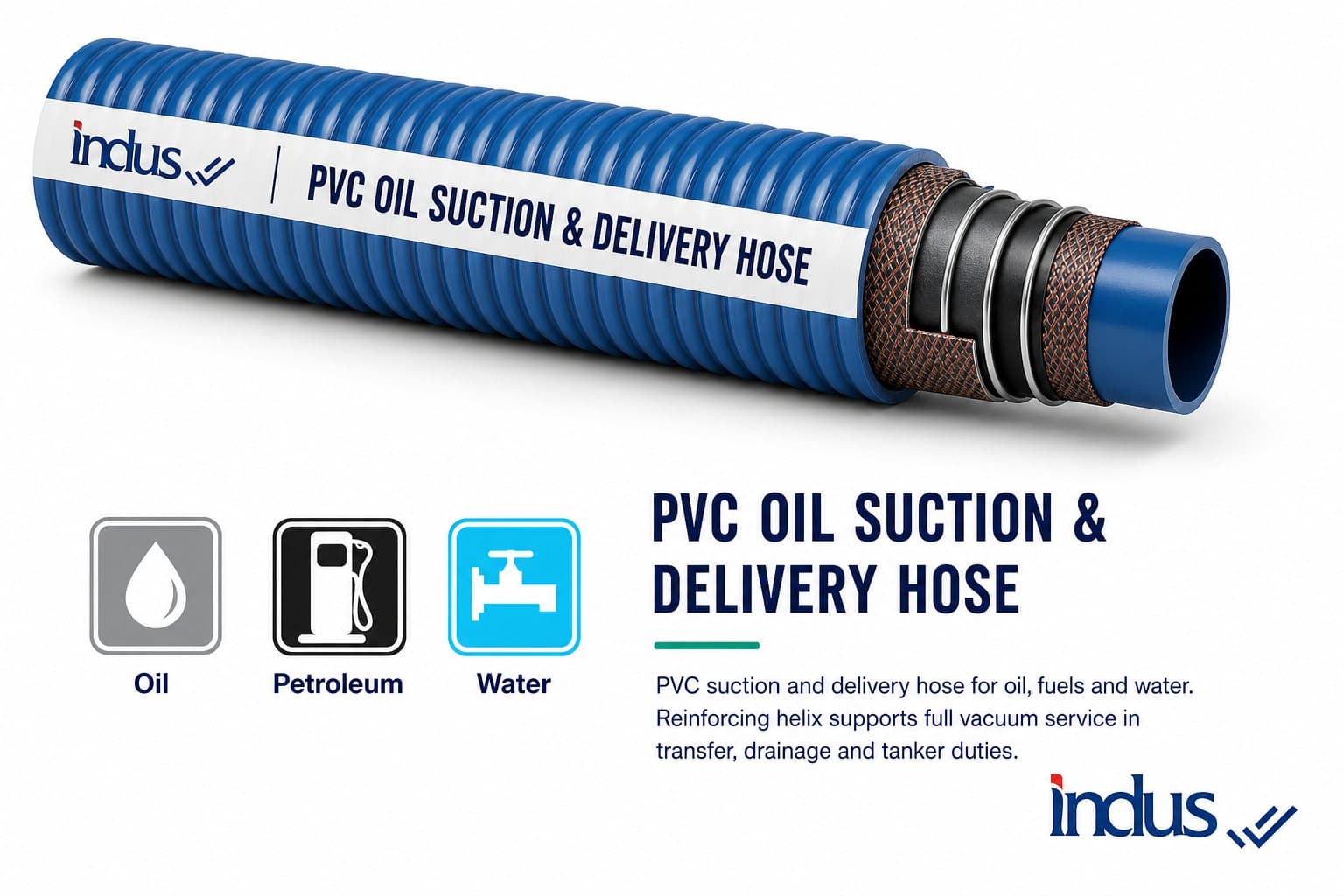 IH-IH-BAKUPVC Oil Suction & Delivery HoseIndus Hydraulics
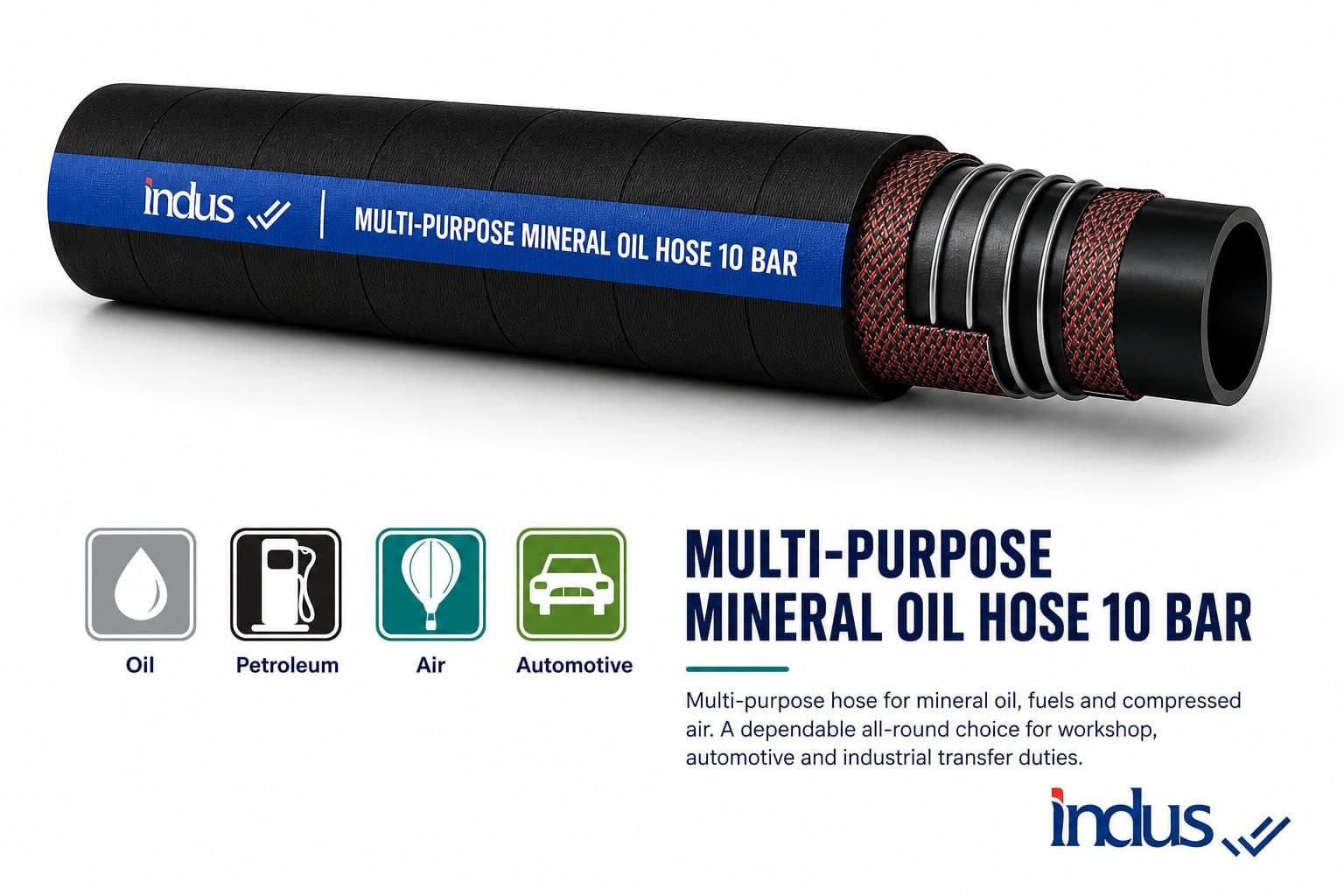 IH-IH-A110Multi-Purpose Mineral Oil Hose 10 BarIndus Hydraulics
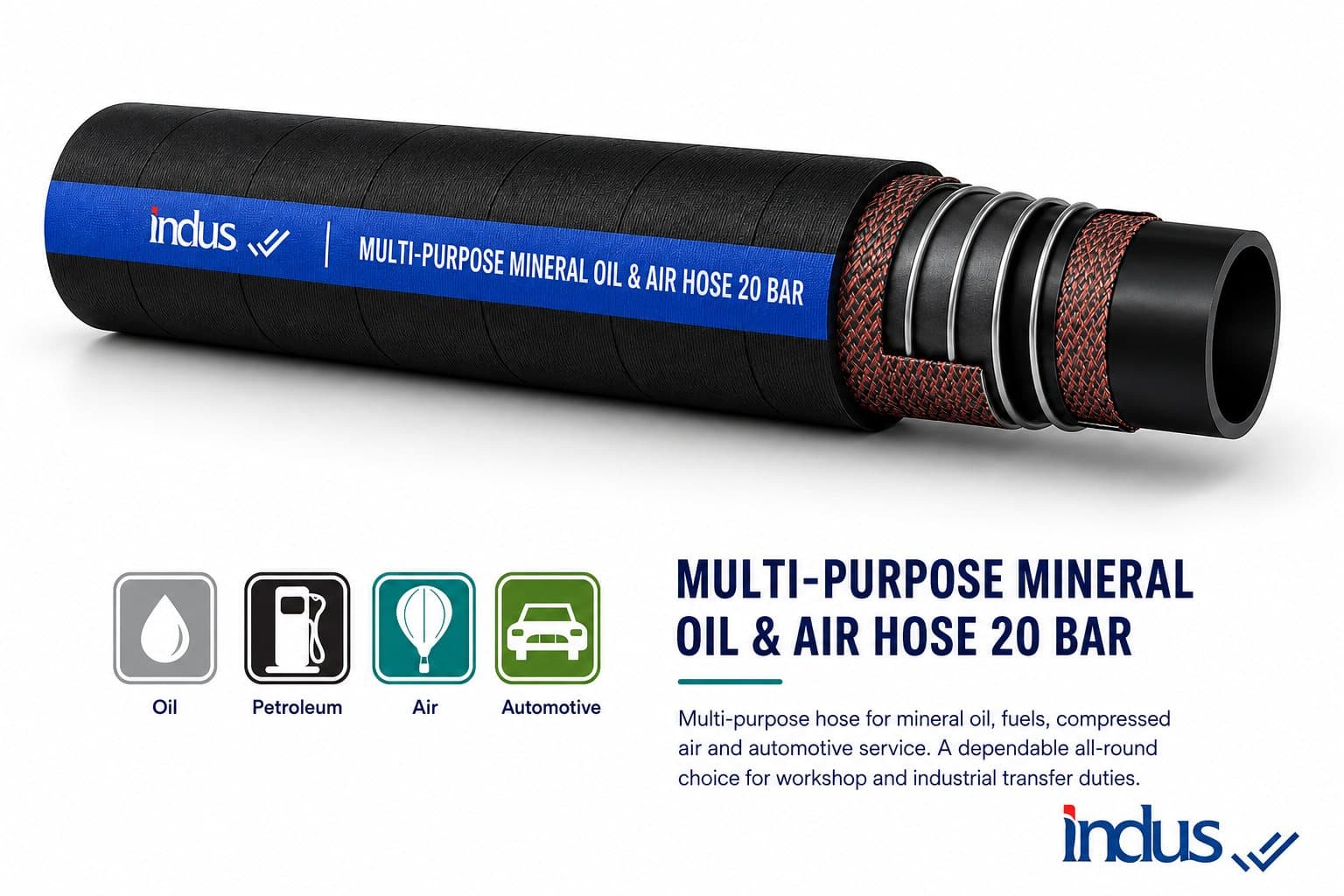 IH-IH-A125Multi-Purpose Mineral Oil & Air Hose 20 BarIndus Hydraulics
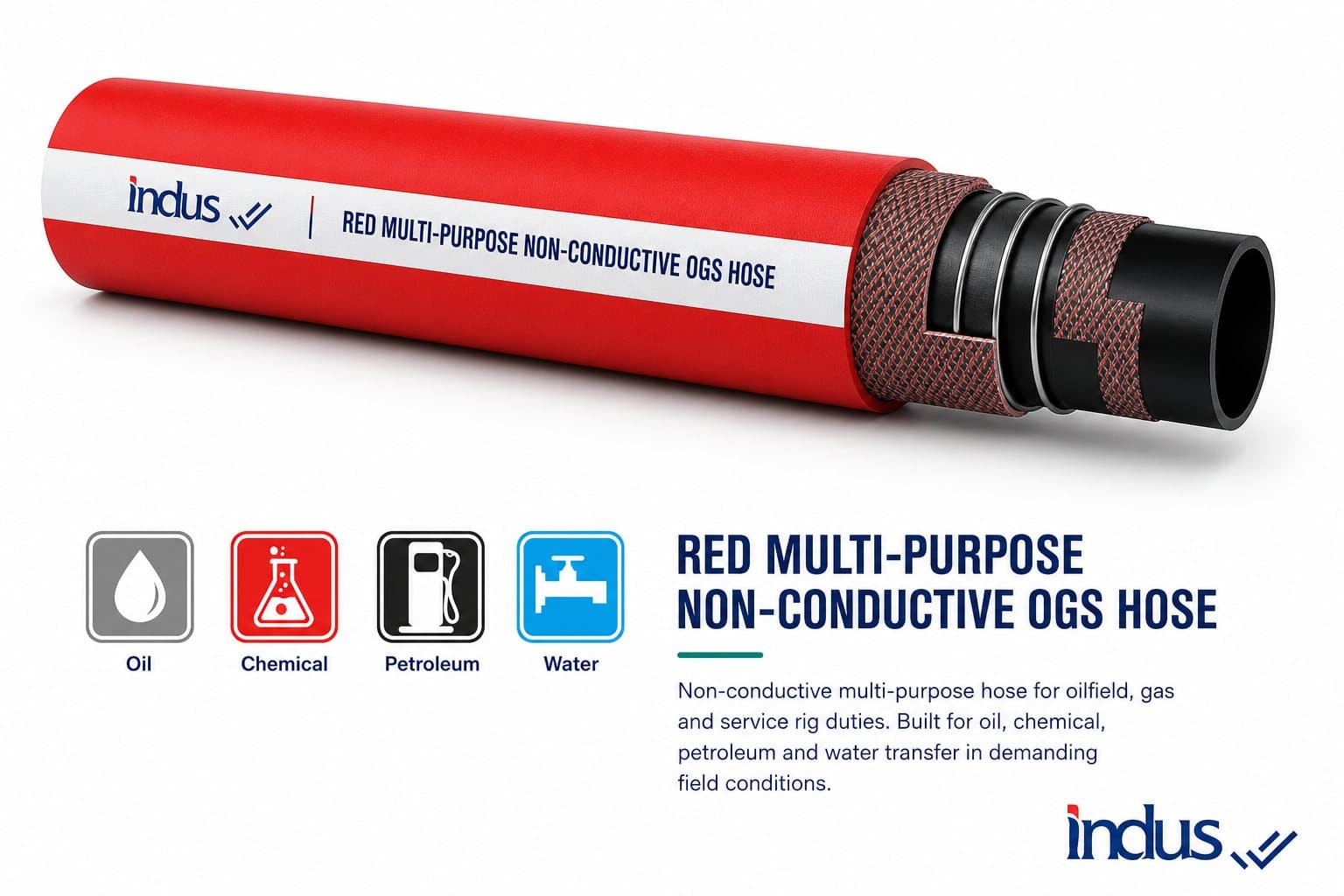 IH-IH-A104Red Multi-Purpose Non-Conductive OGS HoseIndus Hydraulics


