Every compressor, receiver, gauge, lubricator and water line on a site has brass pipe fittings on it, and most hydraulic workshops keep a drawer of them. They are easy to machine, do not rust, and seal well with sealant on a tapered thread. They are also much weaker than steel, and the wrong brass on a drinking-water line can break a regulation. This guide covers the brass NPTF and BSP range, its ratings and how to use it.
/01Ratings.
| Fitting | Rating | Temperature |
|---|---|---|
| Brass NPTF pipe fittings (SAE J530 / J531)Highlighted | Up to 1,000 psi (68.9 bar) | −65 to +250 °F |
| Brass metric and BSP adapters, ⅛"–½" | 2,900 psi (200 bar) | −76 to +302 °F (without sealing washer) |
| Brass metric and BSP adapters, ¾"–1" | 2,175 psi (150 bar) | −76 to +302 °F (without sealing washer) |
| Nickel-plated brass adapters | 870 psi (60 bar) | +14 to +176 °F |
Parker publishes no temperature derating for its brass pipe fittings — 1,000 psi holds across the range. For comparison, its steel NPTF hex nipple is rated 6,000 psi up to ½" (see steel NPT adapters). Brass belongs on compressed air, water, fuel, coolant and instrument lines, not on a hydraulic pressure circuit.
/02Threads and how to make them up.
Parker’s brass products use Dryseal NPTF threads to ANSI B1.20.3, and it still recommends a thread sealant. Its make-up guidance avoids over-driving soft brass: straight fittings hand-tight plus 2 wrench turns up to ½" male pipe thread, and 1½ to 2½ turns above ½"; elbows and tees hand-tight plus 1 to 1½ turns, aligned clockwise only — never counter-clockwise — and neither end backed out once made.
On the British side, Parker notes that BS 21 / ISO 7-1 taper threads are pressure-tight on the thread, while BS 2779 (G) parallel threads are not and need an elastomeric peripheral seal. In general BS 21 and BS 2779 threads do not necessarily mate at the limits of tolerance. Our BSP range includes BSPP, BSPT, BSP female, NPT and metric adapters, and aluminium sealing washers for the parallel threads.
/03Which brass: lead and dezincification.
| Alloy | Lead | Use |
|---|---|---|
| C36000 free-cutting brass (CA360) | 2.5–3.0% | The machining reference alloy; general fittings — not lead-free |
| CW614N (CuZn39Pb3) | 2.5–3.5% | European machining brass; not dezincification resistant |
| C27450 yellow brass | 0.25% max | Low-lead fittings |
| C69300 silicon brass ("ECO brass", CW724R)Highlighted | 0.09% max | Lead-free plumbing and pneumatic fittings, water valves |
| CW602N DZR brass (CuZn36Pb2As) | about 2% | Dezincification resistant to EN ISO 6509 — for aggressive water |
In the US, "lead free" for pipes and fittings in drinking-water service means a weighted average of no more than 0.25% lead across the wetted surfaces; the EPA has required manufacturers and importers to certify compliance since 1 September 2023, and NSF/ANSI/CAN 372 is the lead-content standard used to certify it. Standard leaded brass does not meet it. In some water, ordinary brass also dezincifies — loses its zinc and turns porous; Diehl describes its CW602N as particularly suitable for aggressive tap water and dezincification resistant to EN ISO 6509. If a fitting will carry drinking water, say so when you order, and ask for the alloy and its certificate.
Common questions
- What pressure are brass pipe fittings rated for?
- Parker rates its brass NPTF pipe fittings up to 1,000 psi (68.9 bar) from −65 to +250 °F. Its brass metric and BSP adapters are 2,900 psi to ½" and 2,175 psi at ¾–1".
- Can brass fittings be used for hydraulics?
- Brass pipe fittings are for air, water, fuel and gauges at their rated pressure — far below steel hydraulic adapters. Use steel or stainless on hydraulic pressure lines.
- Do brass NPT fittings need thread sealant?
- Yes. Parker recommends sealant on its Dryseal NPTF brass threads.
- Are brass fittings lead free?
- Standard free-machining brass such as C36000 contains 2.5–3% lead and is not lead-free under US rules (0.25% weighted average). Lead-free alloys such as C69300 are used for drinking water.
- What is DZR brass?
- Dezincification-resistant brass, such as CW602N, which resists losing its zinc in aggressive water (tested to EN ISO 6509).
- How do I seal a brass BSP parallel thread?
- With a peripheral seal — an aluminium or bonded washer, or an O-ring — because BS 2779 (G) threads do not seal on the thread.
What we list
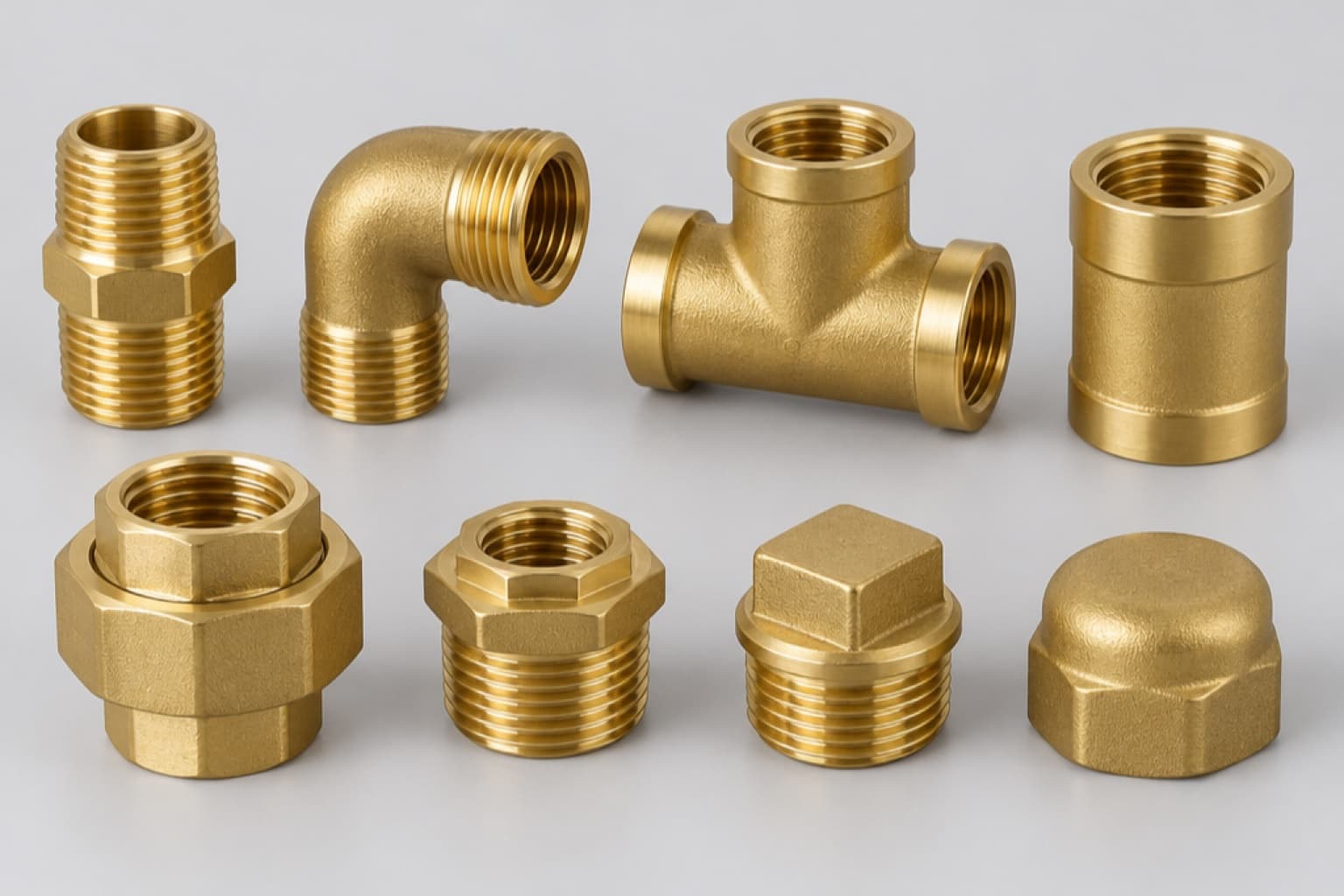
Brass NPTF pipe fittings, and brass BSP and metric adapters:
- Brass NPSM Pipe Locknut
- Brass NPTF Female Pipe Cap
- Brass NPTF Slotted Head Pipe Plug
- Brass NPTF Square Head Pipe Plug
- Brass NPTF Hex Head Pipe Plug
- Brass NPTF Countersunk Hex Socket Pipe Plug
- Brass NPTF Female × NPTF Male Adapter
- Brass NPTF Male × NPTF Female Hex Bushing
- Brass NPTF Female Pipe Union
- Brass NPTF Female Coupling
- Brass NPTF Male Hex Nipple
- Brass NPTF Seamless Pipe Nipple
- Brass NPTF 45° Street Elbow
- Brass NPTF Male 90° Elbow
- Brass NPTF 90° Street Elbow
- Brass NPTF Female 90° Elbow
- Brass NPTF Female × NPTF Male Branch Tee
- Brass NPTF Female Tee
- Brass NPTF Street Tee
- Brass NPTF Female Cross
- Brass Garden Hose Male × NPTF Male Adapter
- Brass BSPP Male × BSPP Male Adapter
- Brass JIC 37° Male × BSPP Male Adapter
- Brass BSPP Male × NPT Male Adapter
- Brass BSPT Male × NPT Male Adapter
- Brass BSPP Countersunk Sealed Plug
- Brass BSPT Countersunk Plug
- Brass BSP Female Cap
- Brass NPT Male × BSP Female Adapter
- Brass NPT Male × BSPT Female Adapter
- Brass BSPT Male × BSP Female Adapter
- Brass BSPP Male × BSP Female Bushing
- Brass BSP Female Coupling
- Brass BSP Female × NPT Female Adapter
- Brass BSPT Male × BSPT Female 45° Elbow
- Brass BSPT Male 90° Elbow
- Brass BSPT Male × BSP Female 90° Elbow
- Brass BSP Female 90° Elbow
- Brass BSPT Male Tee
- Brass BSP Female Tee
- Brass BSPT Male × BSP Female Branch Tee
- Brass BSPT Male × BSP Female Run Tee
- Brass BSP Female × BSPT Male Branch Tee
- Brass BSP Female × BSPT Male Run Tee
- Brass BSP Female Cross
- Brass Metric Male × NPT Female Adapter
- Aluminium Sealing Washer for BSP Threads
- Brass NPT Male × Metric Male Adapter
Brass pipe fittings and adapters
 IH-BR-3325Brass NPTF Male Hex NippleIndus Hydraulics
 IH-BR-3400Brass NPTF 90° Street ElbowIndus Hydraulics
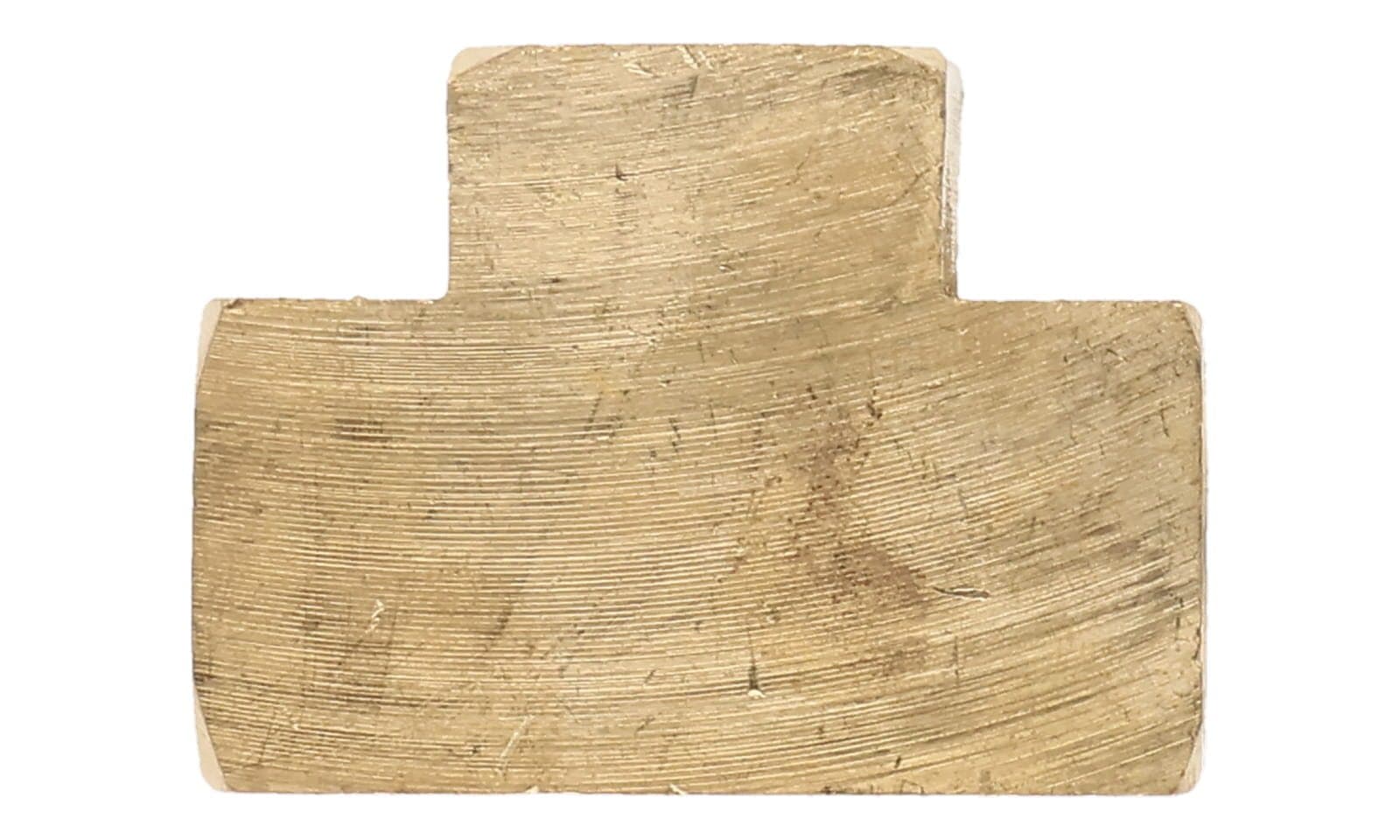 IH-BR-3700Brass NPTF Female TeeIndus Hydraulics
 IH-BR-3220Brass NPTF Male × NPTF Female Hex BushingIndus Hydraulics
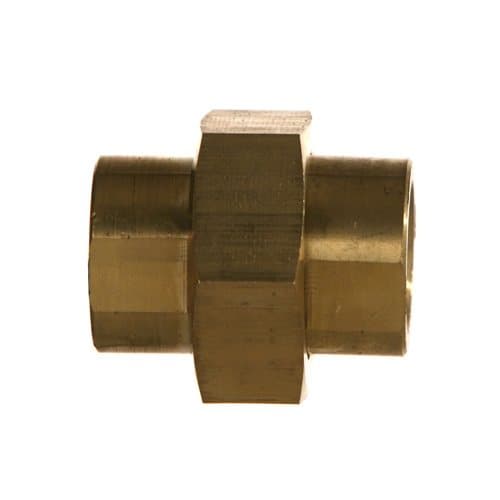 IH-BR-3250Brass NPTF Female Pipe UnionIndus Hydraulics
 IH-BR-8007Brass BSPP Male × NPT Male AdapterIndus Hydraulics
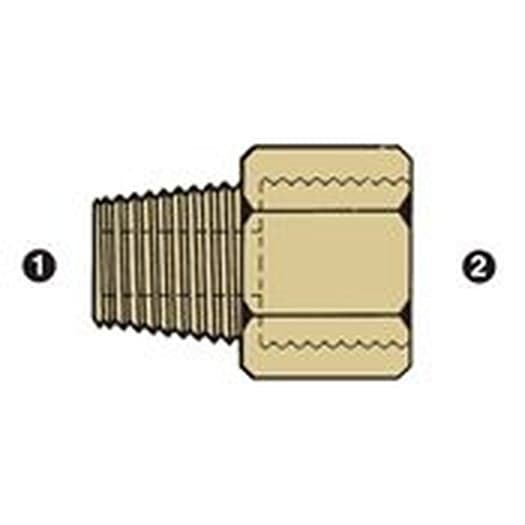 IH-BR-8037Brass NPT Male × BSP Female AdapterIndus Hydraulics
 IH-BR-8400Aluminium Sealing Washer for BSP ThreadsIndus Hydraulics
Sources
- 1.Parker Hannifin. Catalog 3501E — Brass, Composite and Thermoplastic Fittings and Valves (rev. 05/22). ↗
- 2.US EPA. Use of lead free pipes, fittings, fixtures, solder and flux for drinking water. ↗
- 3.NSF. NSF/ANSI/CAN 372 technical requirements. ↗
- 4.Copper Development Association. Alloy C69300. ↗
- 5.Diehl Brass Solutions. Material datasheet 410 (CW602N). ↗