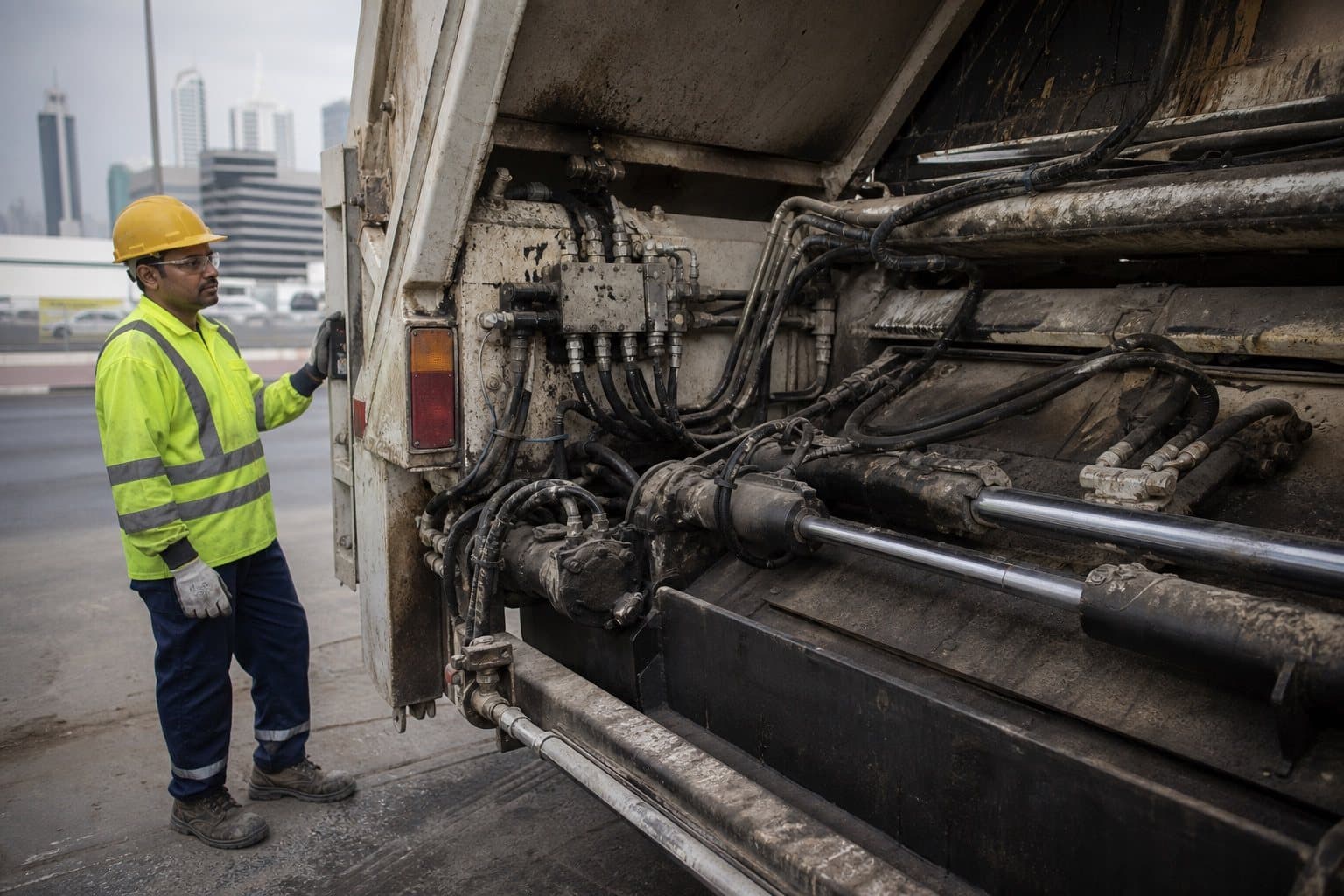
A refuse collection vehicle looks like a truck and is serviced like one, but the body on the back is a piece of hydraulic plant working a duty cycle that few excavators would match. The mismatch between how it is worked and how it is maintained is where the hose failures come from.
/01Which circuit.
| What stopped | Circuit | Notes |
|---|---|---|
| Packer blade will not cycleHighlighted | Packer / compaction | Highest cycle count on the vehicle |
| Bin lifter will not raise or grip | Lifter | Second highest, and the most exposed |
| Body will not eject at the tip | Ejector | High force, low speed — reveals marginal specification |
| Tailgate will not raise or lowerHighlighted | Tailgate | Crush hazard — prop before working under it |
| Nothing works, engine running | PTO or pump supply | Check the PTO is engaged before anything else |
/02The cycle count is the whole story.
A packer cycling every collection, a lifter cycling for every bin, hundreds of times a shift, five or six days a week, all year. That is an impulse duty, and impulse duty is what consumes hose assemblies — not peak pressure, which the specification handles comfortably.
The consequence is that calendar-based intervals borrowed from the truck side of the vehicle do not reflect what the body has done. A three-year-old body on a busy urban round has been worked considerably harder than a five-year-old one on a rural route, and treating them the same is how failures arrive unplanned.
/03Failing in public.
A hose failure on this vehicle happens on a residential street with traffic around it and oil on the road. That makes the cost of an unplanned failure quite different from the same failure in a yard — recovery, cleanup, a blocked road and a missed round.
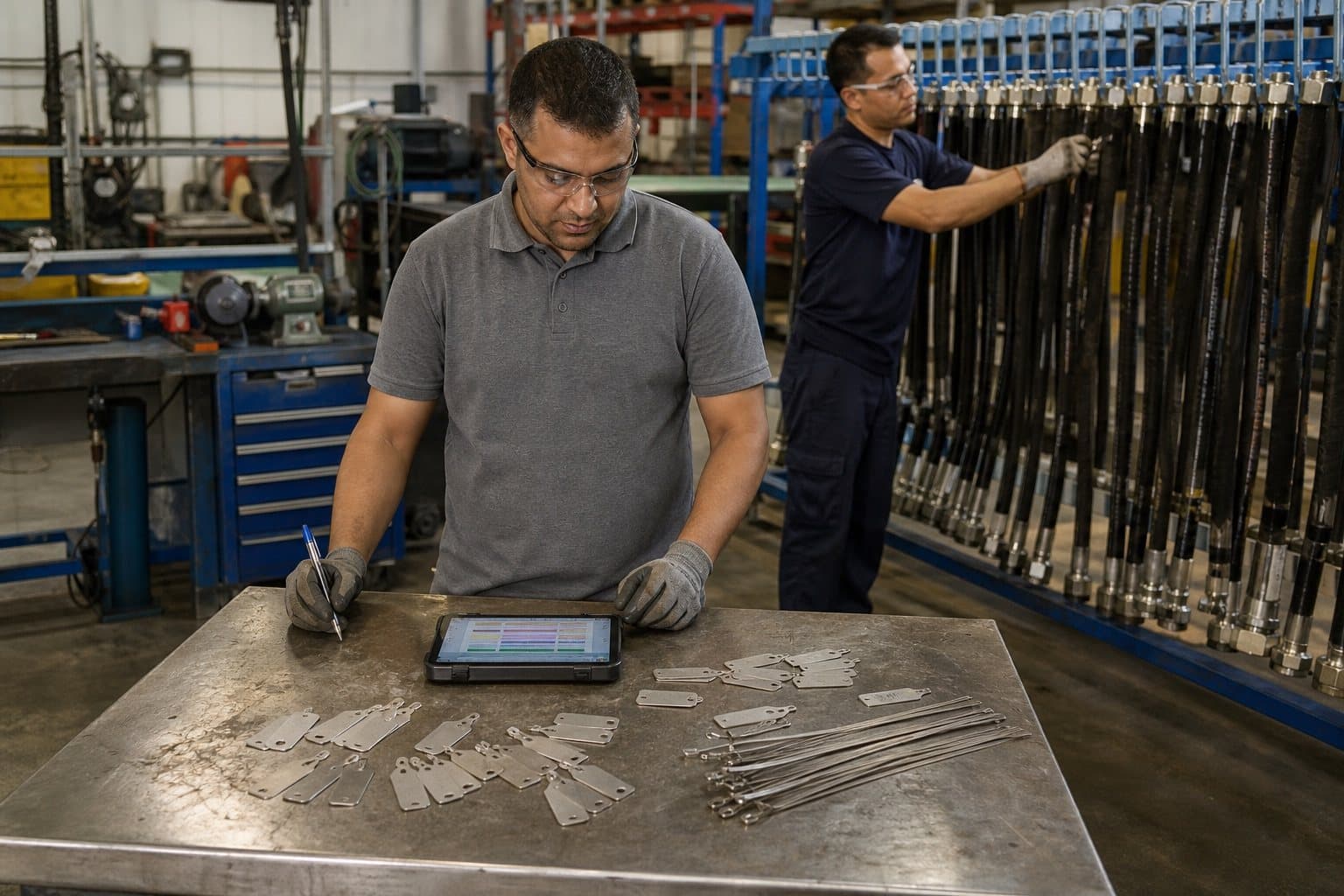
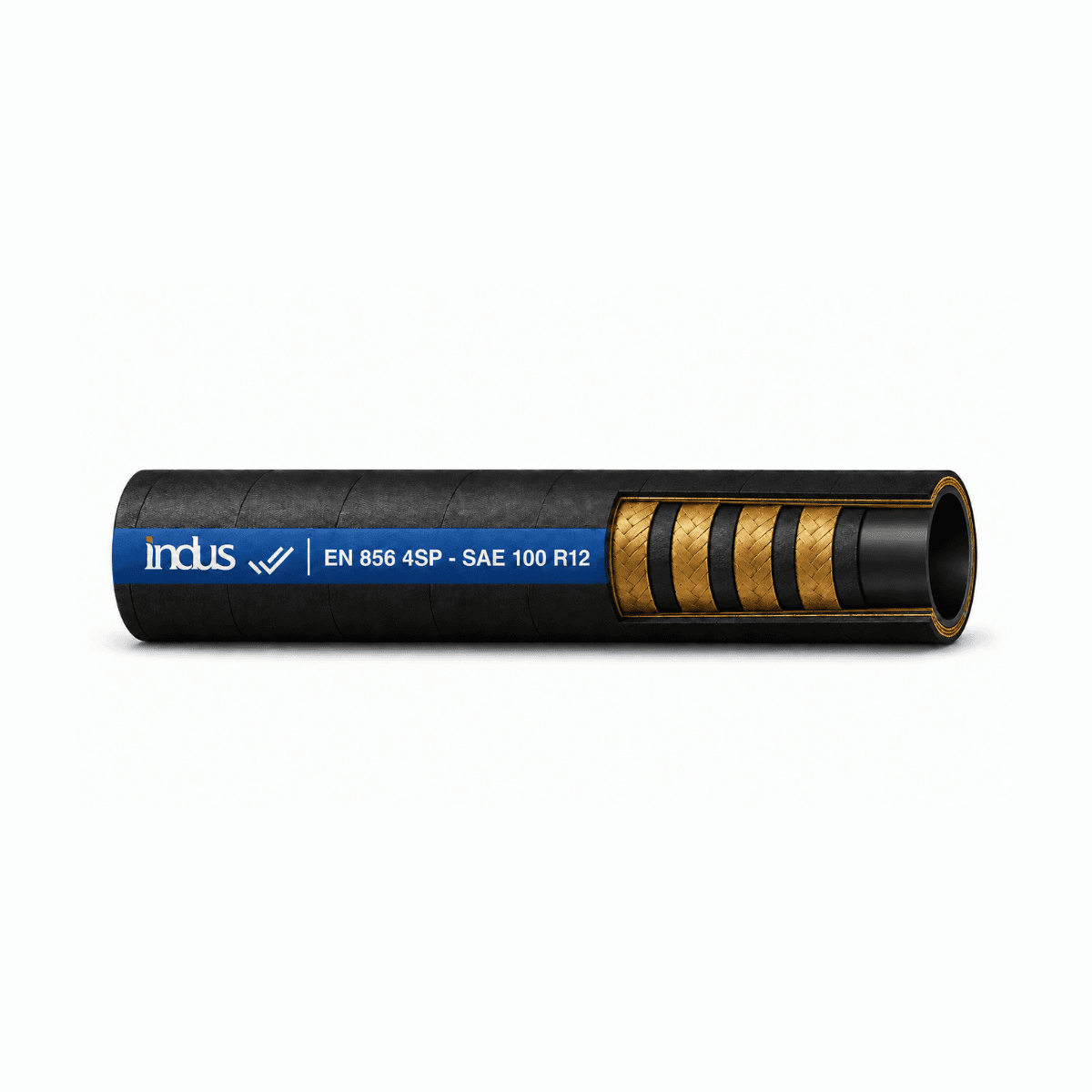
Which is the argument for planned replacement on these circuits specifically. The packer and lifter hoses are known, countable and replaceable in a workshop in an hour. Replacing them on a schedule is cheap next to the alternative. Built as a set — in 2SN or 4SP to match what is fitted — the packer and lifter assemblies can be swapped in one workshop visit.
Grades used on body circuits

Common questions
- Which refuse vehicle hoses should we hold as spares?
- The packer and lifter sets, because they are the highest-cycle and the most likely to stop a round. Hold them tagged and dated so they can be rotated rather than aged out on a shelf.
- Should we replace body hoses on a schedule?
- On these circuits it usually pays. They are countable, accessible and predictable, and the alternative is a failure on a street rather than in a workshop.
- The lifter is slow but working. Hose?
- Slow with no leak usually points past the hose to a valve, a cylinder or flow. A collapsed suction line is the one hose fault that presents this way.
- Do you fit at a depot overnight?
- Yes. For a fleet that has to be out at six, that is normally the only window that works, and we would rather use it than the roadside.