A boiler or HRSG is, at heart, a large assembly of tubes and headers that carry water and steam past the hot gas. Those pressure parts wear out — through creep, erosion, corrosion or overheating — and are replaced as panels, coils and headers built to the original drawing and code.
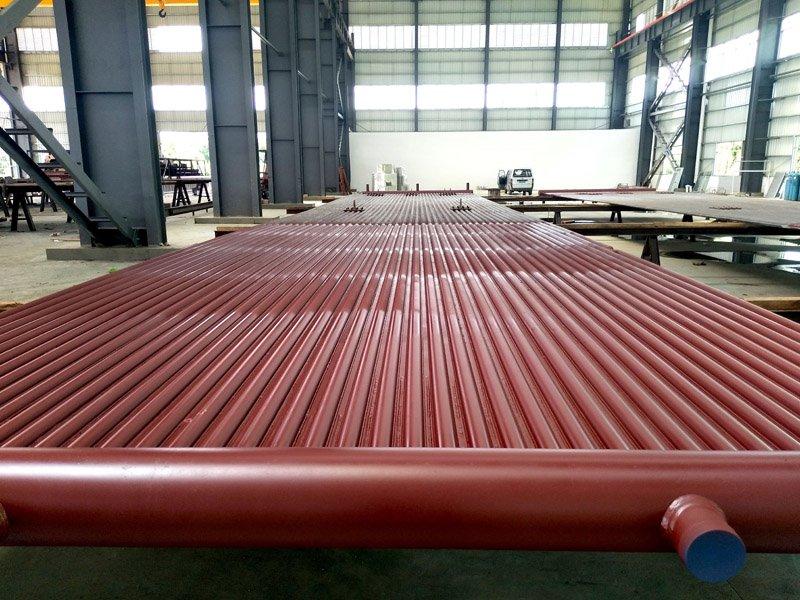
/01Membrane water walls.
Membrane panels carry water or steam in the tubes, with flat membrane bars welded between them to close the gaps, so the furnace is gas-tight without a separate casing. Tubes are A210, A192 or A213; bars are SA-36 or A387 to match. Panels are shop-built in sections with bends and openings for burners, sootblowers and doors, then hydrotested.
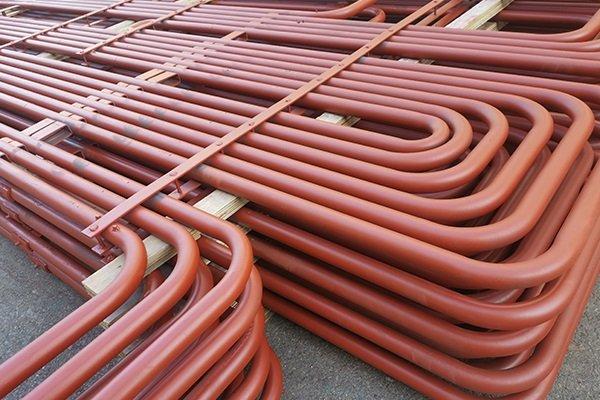
/02Superheaters and reheaters.
Superheaters and reheaters run at the highest metal temperatures in the boiler, so the tube grade steps up along the coil: carbon steel at the cool end, then chrome-moly T11, T22 and T91, and stainless where the metal is hottest. The grades are compared in A179 vs A192 vs A210 vs A213.
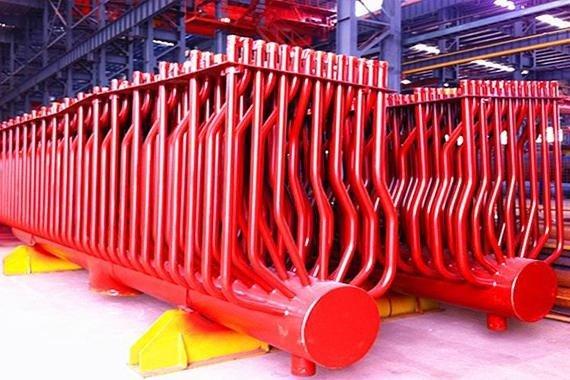
/03Headers.
Headers collect and distribute water and steam between panels, coils and drums. They are heavy-wall A106 or A335 (P22 and others) pipe with stub tubes, nozzles, end caps and handholes welded on, then heat treated and examined to code — so the welding and NDE plan matters as much as the material.
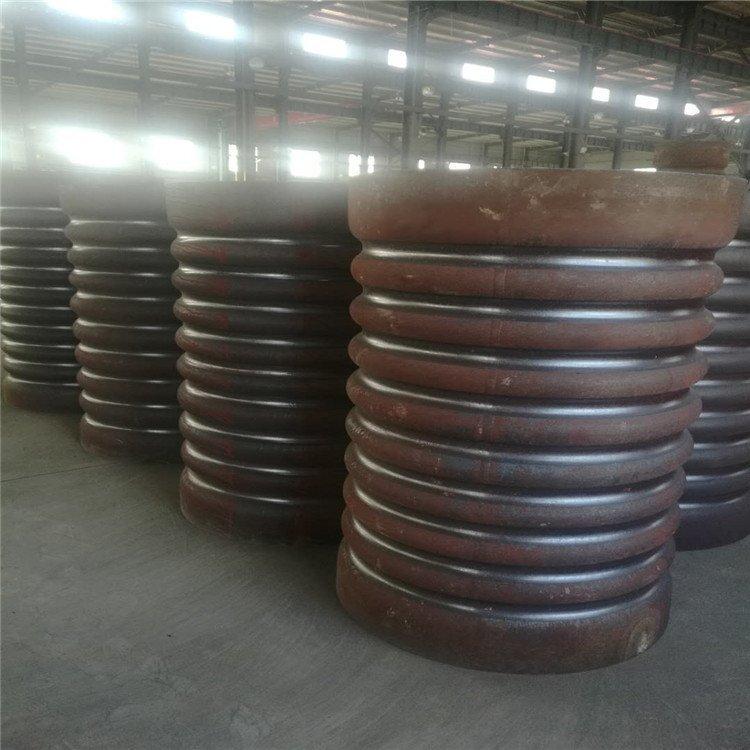
/04Furnaces and heads.
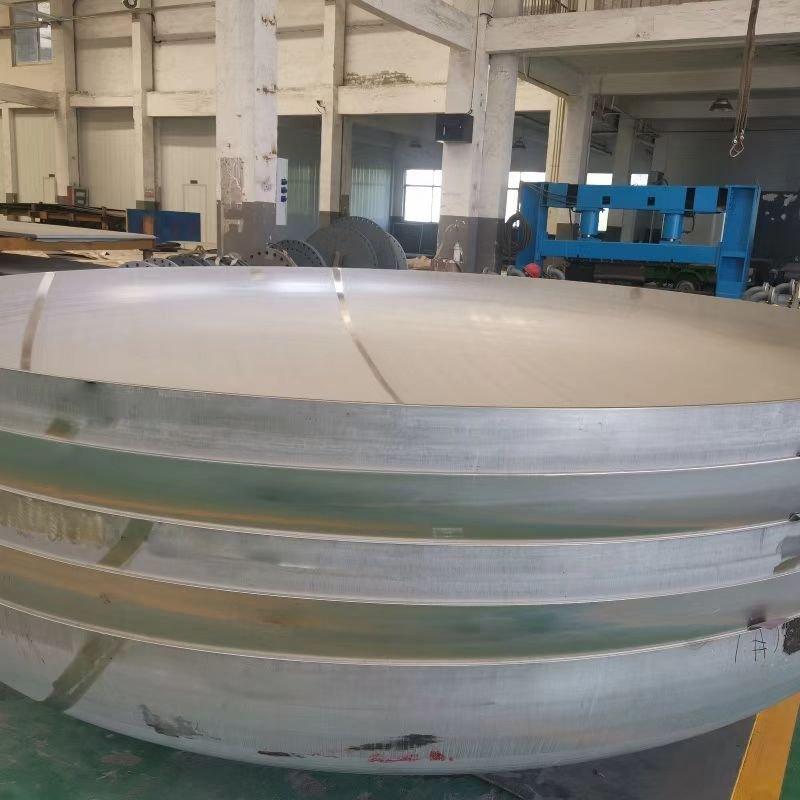
Fire-tube (shell) boilers use corrugated furnaces to ASME Section I or EN 12953-3, and vessels and exchanger channels use formed heads to ASME VIII, DIN 28011/28013 or EN 13445-3.
/05What to send.
- Drawing, or the dimensions and arrangement.
- Design code (ASME Section I or VIII, EN 12952, EN 12953, EN 13445).
- Design pressure and temperature.
- Material grades for tubes, plates, forgings and fittings.
- NDE, heat treatment and hydrotest requirements.
- Third-party inspection and the certificate the authority needs.
- Quantity and delivery point.
Common questions
- Which code covers boiler pressure parts?
- ASME Section I for power boilers, or EN 12952 (water-tube) and EN 12953 (shell boilers) under PED.
- Why do superheater tubes change grade along the coil?
- Metal temperature rises along the coil, so higher-alloy grades are used where creep and oxidation demand them.
- Are replacement panels hydrotested?
- Yes, to the code and the inspection and test plan, before shipping.
- Can you build to an old drawing?
- Yes, with the original grades translated to current standards where needed and the substitution confirmed with the owner.
- Is third-party inspection available?
- Yes, arranged with the order, with the documents the inspecting authority needs.