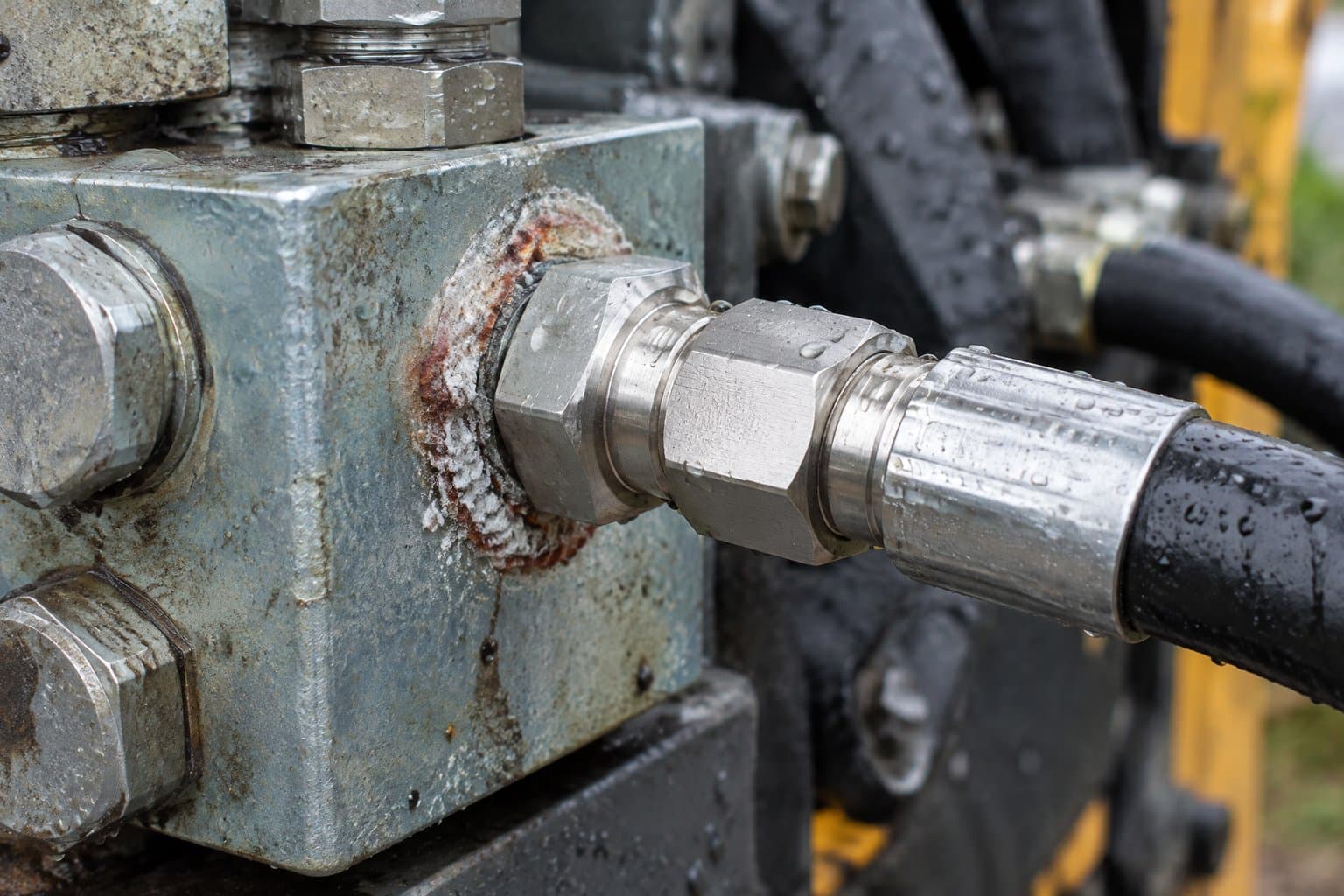
The instinct is to blame whoever made the hose. Sometimes that is right. Far more often the assembly is fine and the joint it was screwed into is not — and because the fault is at the machine end rather than the hose end, replacing the hose again produces exactly the same weep.
/01First: find out which end of the joint is leaking.
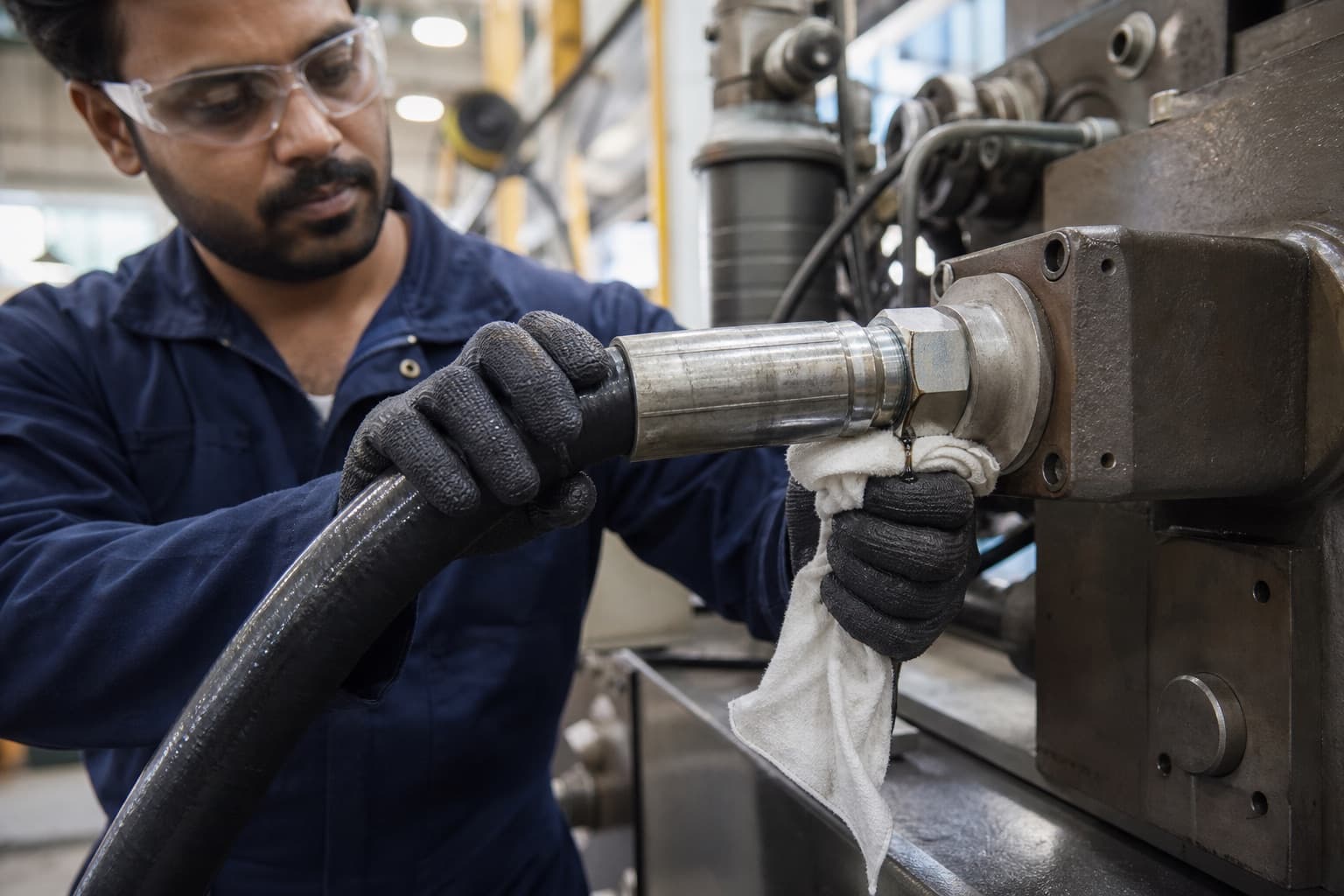
Oil tracks along a hose and pools somewhere convenient, which is almost never where it came from. Wipe the whole assembly and both connections completely dry, run the circuit briefly, then look before the oil has time to travel. Everything below depends on getting this right.
| Oil appears | What is leaking | Section below |
|---|---|---|
| At the union nut, between nut and portHighlighted | The sealing surface | Sections 02 to 04 |
| Between the ferrule and the hose cover | The crimp | Section 05 |
| Through the hose cover itself, away from the ends | The hose — pinhole or permeation | Not a fitting fault at all |
| From the port body, around its own threads | The port adapter, not your new hose | Section 02 |
/02The seat is damaged, or it is the wrong seat.
This is the largest single cause. A metal cone seals by deforming slightly against its mate, so a scratch, a burr, or a previous over-tightening is permanent. A damaged seat cannot be sealed by tightening harder — that only spreads the damage into the mating cone as well, turning one bad part into two.
| Check | How | If it fails |
|---|---|---|
| Radial scratch across the coneHighlighted | Fingernail across the seat | Replace the fitting — polishing does not restore it |
| Bright ring worn off centre | Look at the contact witness mark | The two cones are different angles |
| Flattened or spread cone tip | Compare against a new fitting | Previous over-tightening; replace both halves |
| Pitting or corrosion | Wipe clean and look under light | Replace; pits are leak paths |
/03The O-ring is missing, pinched, or the wrong one.
ORFS and O-ring boss connections carry a soft seal that does all the work. New assemblies arrive with it fitted; it then falls into the tray, gets rolled out of its groove during assembly, or gets replaced from a generic kit with something a size out. An ORFS joint torqued perfectly with no O-ring leaks immediately and looks exactly like a crimp failure to anyone standing back from it.
| Fault | How it presents |
|---|---|
| O-ring absentHighlighted | Steady leak from the moment of first pressure |
| O-ring pinched on assembly | Weeps, and a piece of the ring is visible at the joint edge |
| Wrong size from a generic kit | Seals cold, weeps warm |
| Wrong material for the fluidHighlighted | Seals for days or weeks, then swells or hardens |
| Reused ring from the old assembly | Takes a set, then weeps after the first heat cycle |
/04Contamination and make-up.
The last two checks before the crimp
Both are quick and both are common on a hose fitted in the field.
IfWas the seat clean when it was assembled?
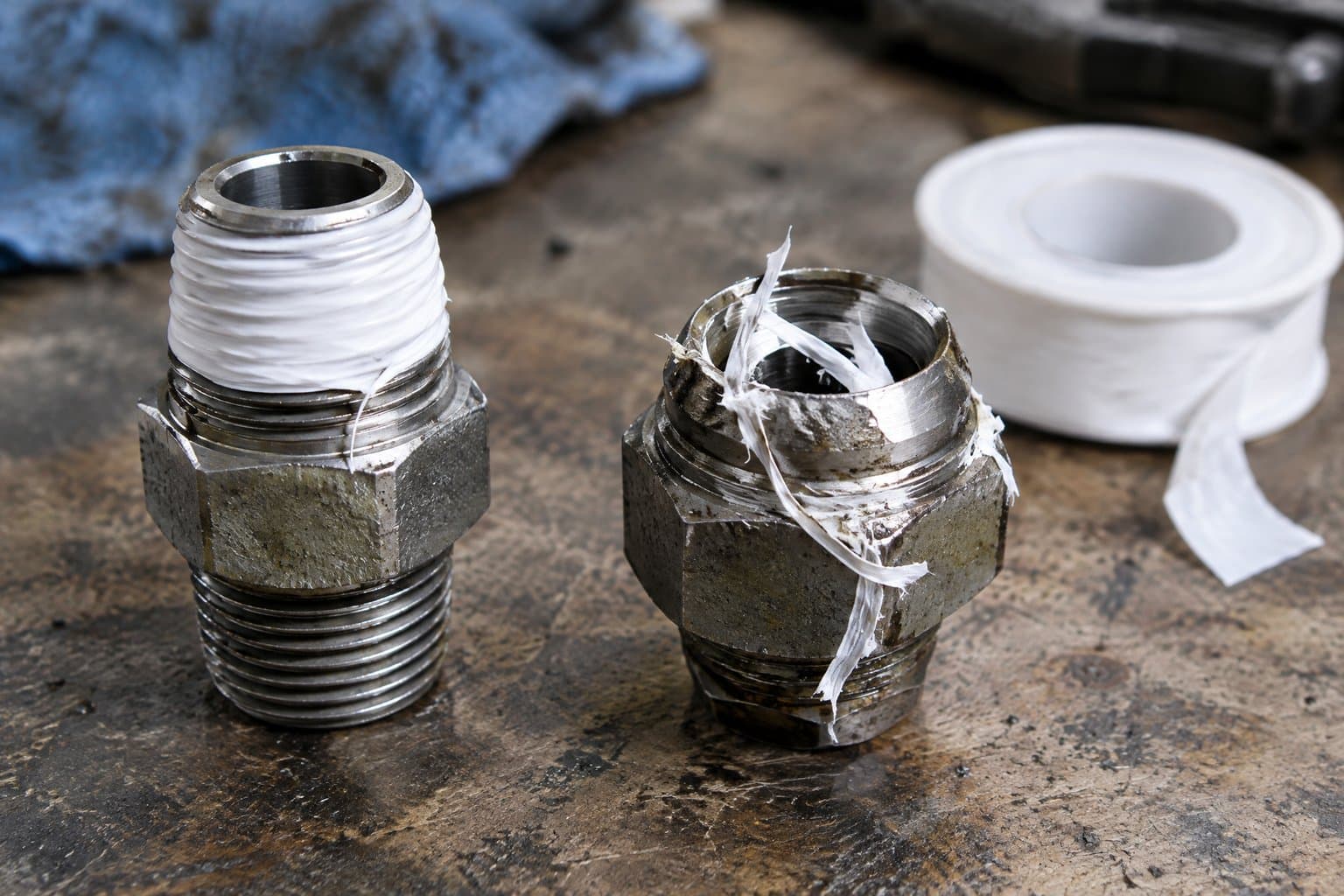
Grit, paint or thread sealant on a metal cone holds it open.
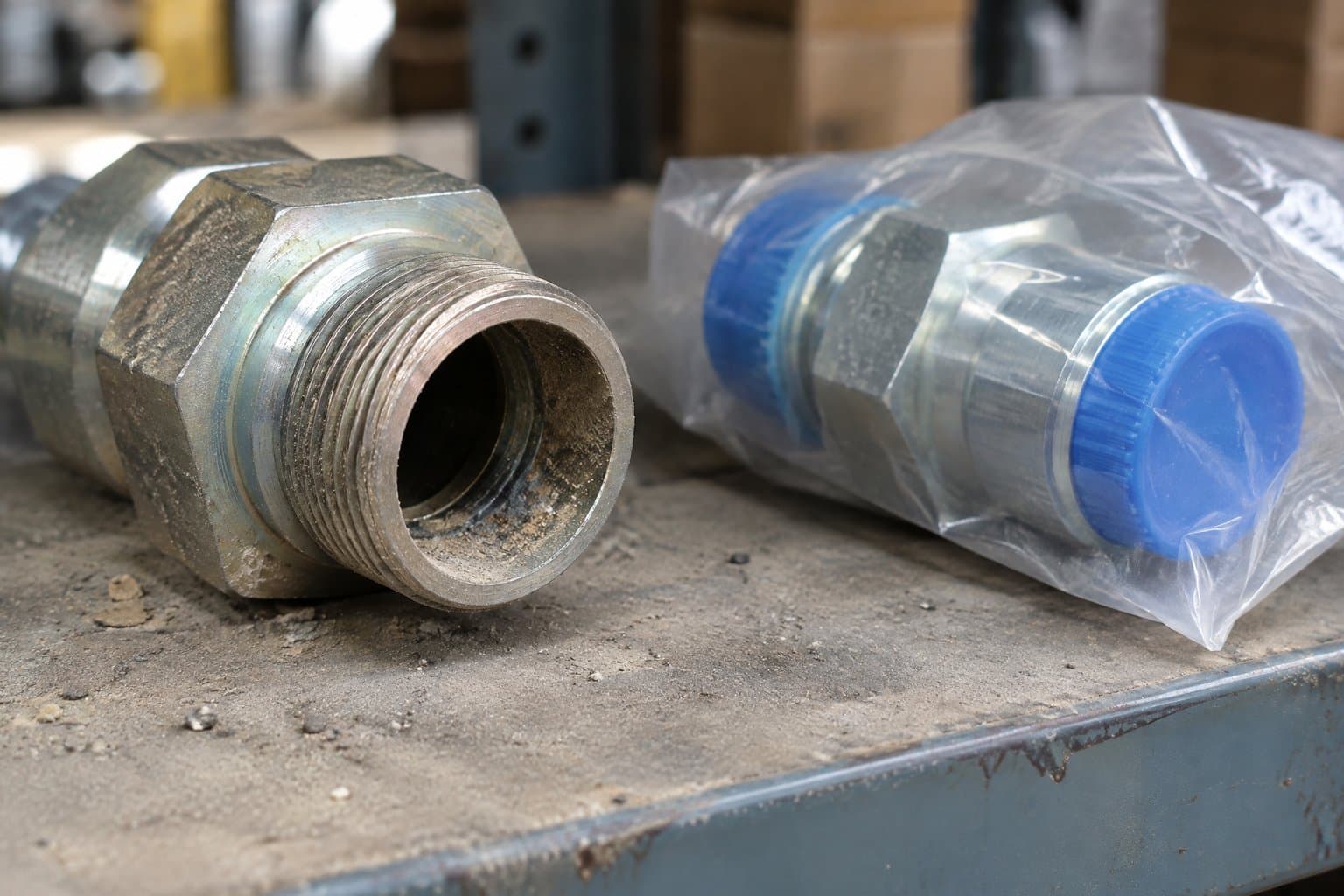
Sand on a sealing face is a Gulf-specific version of this problem. Any compound on a seat that is not meant to have one produces the same result.
IfWas the joint properly made up?
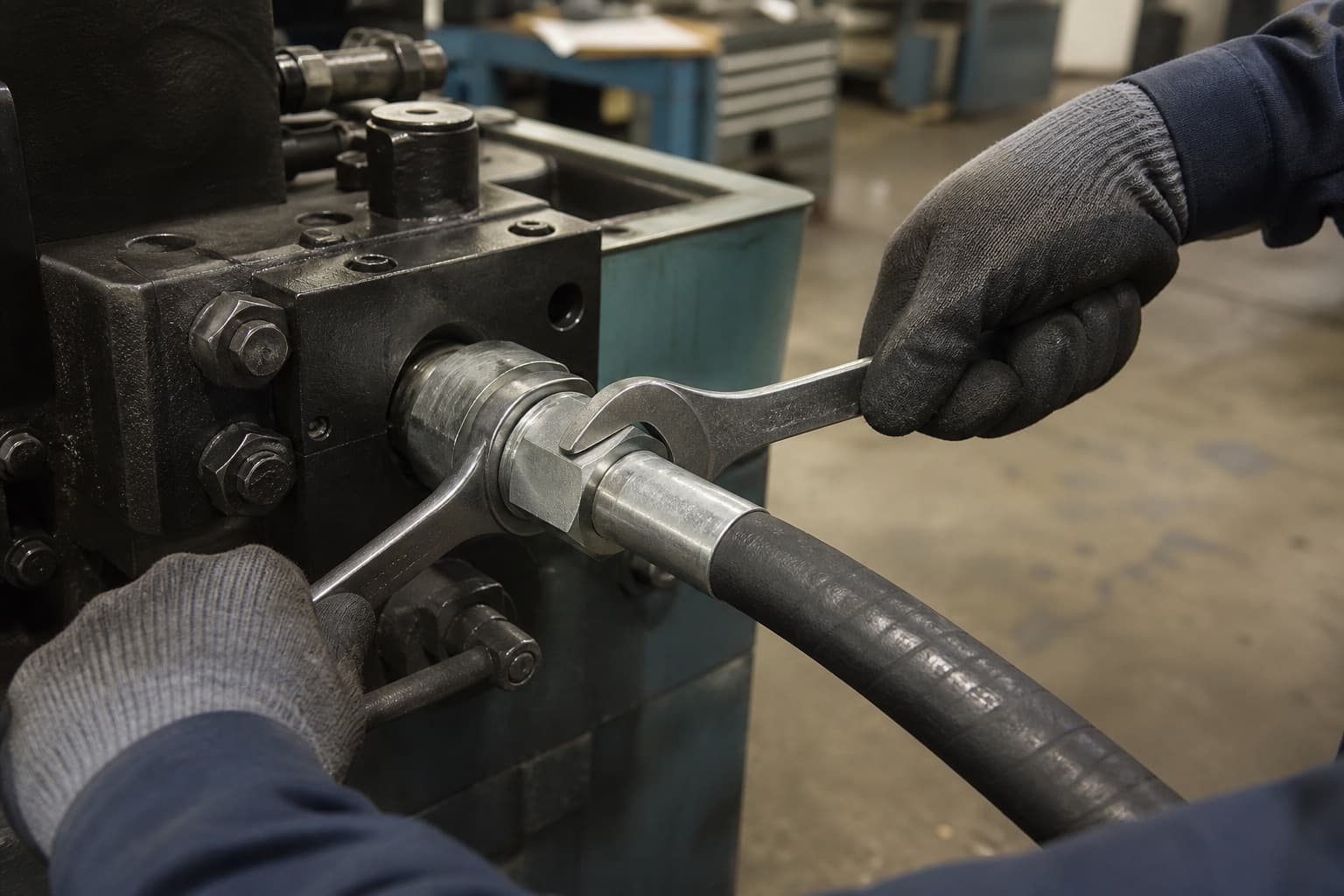
Under-tightening weeps; over-tightening destroys the seat and then weeps.
Both ends of the mistake produce a leak, which is why "it must not be tight enough" is such a costly assumption. Use the manufacturer torque figure, or turns from finger tight where a wrench cannot reach.
IfWas the assembly under tension or twist when tightened?
A hose installed with a twist unloads through the nut.
Look at the layline. If it spirals, the assembly is fighting the joint every time the circuit pressurises.
/05When it really is the crimp.
A crimp fault does not usually weep politely at the union nut. It shows as oil emerging between the ferrule skirt and the hose cover, and it tends to progress quickly rather than sit at a steady drip. If that is what you have, stop using the assembly — an under-crimped fitting can release the hose entirely under pressure.
Common questions
- The joint weeps. Should I just tighten it more?
- Once, gently, if it was clearly under-tightened. Beyond that you are damaging the seat, and a damaged seat cannot be recovered by tightening. If a modest nip does not stop it, take the joint apart and look at the sealing surfaces.
- Can I put sealant on a JIC or ORFS fitting to stop a weep?
- No. Those seal on a cone and a face O-ring respectively. Sealant on the thread holds the sealing surfaces apart and makes the leak permanent.
- How do I tell 37 degree from 45 degree by eye?
- Side by side it is obvious; alone it is not. Compare against a known fitting, or measure the seat diameter at the mouth against the thread size — a 45 degree flare has a visibly shallower cone for the same thread.
- The hose was fine for a week, then started weeping. Is that still an assembly fault?
- Usually yes — a marginal seal that survived until the first proper heat cycle, or an O-ring of the wrong material starting to swell. A genuinely good joint does not begin weeping on its own.
- The new hose is slightly too short. Does that cause leaks?
- Yes. A hose under tension pulls on the sealing faces continuously and will unseat a joint that would otherwise hold. Length is a sealing issue, not only a routing one.