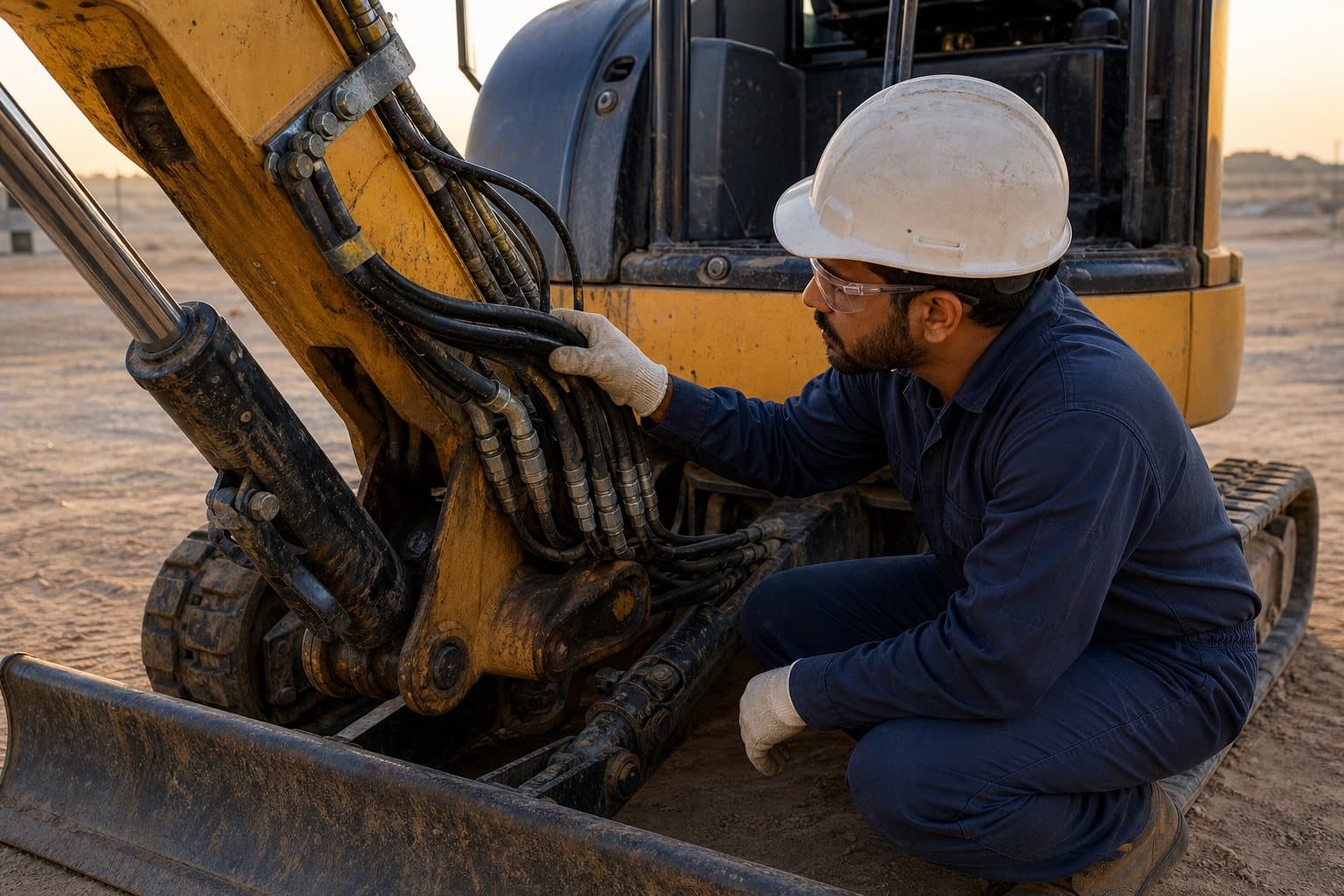
A mini excavator is the most-used machine on most sites in this region and the least likely to have anything written down about its hoses. The service book covers engine oil and filters. The hoses are inspected when one bursts.
/01Where they actually fail.
| Position | Why it fails | What to look for |
|---|---|---|
| Attachment quick couplersHighlighted | Constant connection cycles, ground-level dirt, trapped pressure | Weeping seals, stiff sleeves, cracked female bodies |
| Boom to arm crossingHighlighted | Continuous flexing through the full working range | Cover wear where hoses touch each other or structure |
| Dozer blade circuit | Low, exposed, takes impacts and debris | Cover damage, crushed sections, torn clips |
| Slew centre and swing circuit | Tight routing and repeated twisting | Twist in the layline, wear at the entry point |
| Auxiliary circuit to the attachmentHighlighted | High impulse from breakers, plus coupler cycling | Fatigue at the fitting, weeping under load |
/02The routine.
| Interval | Check | Time |
|---|---|---|
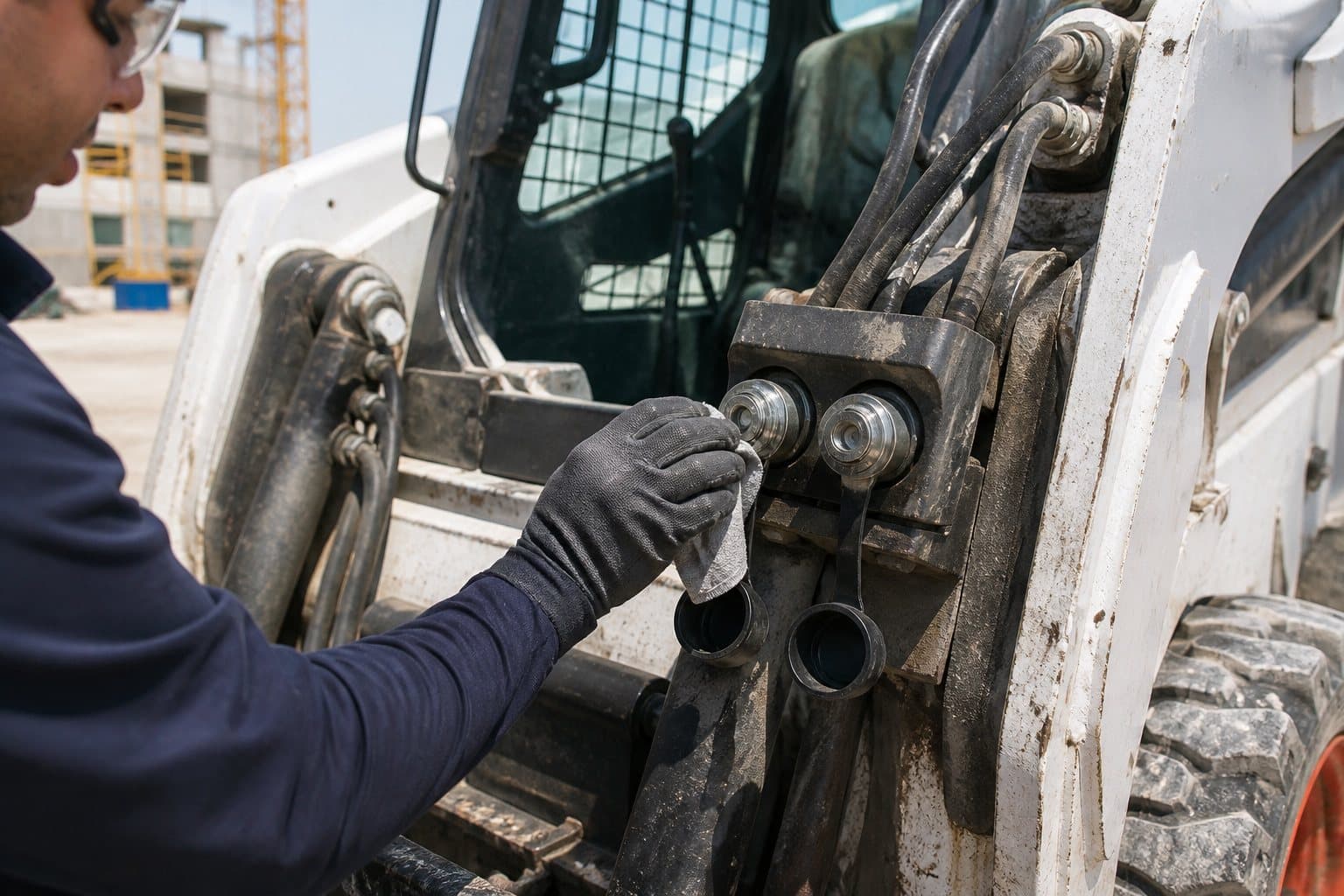
| Every shiftHighlighted | Walk-round: cover damage, wet joints, hoses out of clips, coupler faces wiped before connecting | 90 seconds |
| Weekly | Cycle every circuit through full range and watch for hoses touching or pulling | 5 minutes |
| WeeklyHighlighted | Coupler condition: sleeve movement, seal weep, dust caps present | 2 minutes |
| Monthly | Clamp blocks and clips present and holding the routing | 10 minutes |
| Quarterly | Look at the four failure positions properly, with the machine articulated | 30 minutes |
| On attachment changeHighlighted | Wipe both coupler faces, check for trapped pressure, no hammering | Seconds |
/03Reading wear before it becomes a failure.
What a mark on a hose is telling you
Cover damage is a warning with a schedule attached. It is worth learning to read.
IfShiny patch, cover intact
Rubbing. Find what it touches and fix the routing or fit protection.
At this stage nothing needs replacing. This is the cheapest moment in the whole cycle.
IfCover worn through, reinforcement visible but bright
Replace at the next opportunity, and fix the cause.
Exposed wire corrodes quickly in coastal air, and corroded wire fails at a fraction of its rating.
IfReinforcement visible and rust-coloured
Replace now.
The strength member is already compromised. This one bursts, and usually at the least convenient moment.
IfCracked cover across the whole exposed length
Age and sun, not mechanical damage.
Typical of machines standing outdoors in this climate. Check the rest of the set — they are all the same age.
IfBlistering or bulging
Replace immediately, do not run the machine.
A bulge is the reinforcement having already failed locally.
/04Rental fleets.
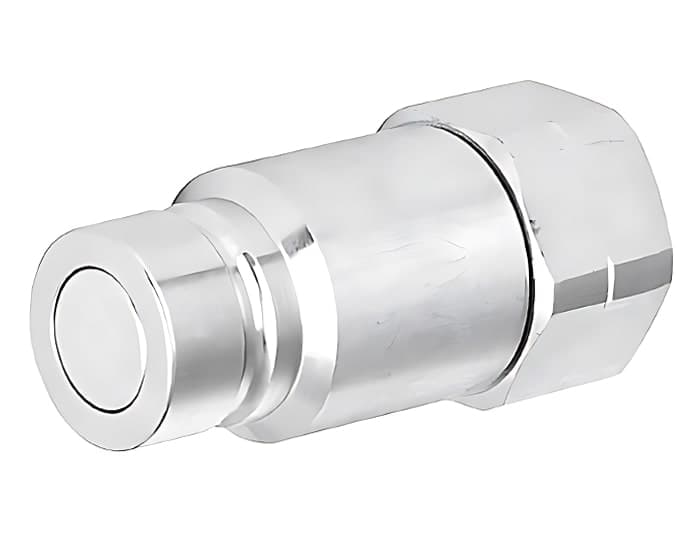
A hired machine sees the same hours and different treatment. The couplers take the worst of it: connected by whoever is on site, forced when they will not go, left uncapped, dropped in sand. On a rental fleet the coupler pairs are effectively consumables, and inspecting them on every return is more valuable than any hose check. Most current attachment circuits use ISO 16028 flat-face couplers; keep spare pairs of whichever quick coupler type the machine already runs.
| Check | Action if it fails |
|---|---|
| Coupler sleeves move freely, no hammer marksHighlighted | Replace the pair — a forced coupler is fatigued |
| Dust caps present on both halves | Refit. They cost nothing and keep sand out |
| Auxiliary hoses free of new rub marks | Fix the routing before the next hire |
| No weep at any joint after a runHighlighted | Investigate before it goes out again |
| Blade and boom hoses clipped correctly | Refit clips; missing clips cause the next failure |
Common questions
- Should hoses be replaced on a time interval?
- Condition rather than the calendar drives most replacements, but age matters in this climate — sun and heat crack covers on machines that stand outdoors. When one hose of a set fails from age, look hard at the rest, because they are the same age.
- Is it worth replacing all the hoses at once on an older machine?
- Often, yes. Once a machine starts failing hoses one after another, a planned set replacement ends the pattern instead of chasing it, and it can be scheduled instead of stranding a crew.
- The couplers weep a few drops on disconnect. Normal?
- On poppet couplers a few drops is normal. Weeping while connected is not, and neither is a growing puddle under a parked machine.
- What is the single most valuable check?
- Cycling every circuit slowly through full articulation and watching the hoses. Almost every routing fault shows itself at one end of the range and is invisible with the machine parked.
- How do I stop hoses being forced onto couplers?
- Fix the reason they will not connect. Nearly always it is trapped pressure, and pressure-eliminator couplers remove the temptation entirely.