
Grade 80 and Grade 100 are both alloy lifting chain, built into slings with matching master links, connectors and hooks. Grade 100 is the stronger steel, so it does the same job with smaller, lighter chain — which matters when riggers carry slings up a structure or onto a roof. Grade 80 is the long-established workhorse, and more forgiving of heat. For the full grade ladder, from Grade 30 to Grade 100, see chain grades explained.
/01Side by side.
| Chain size | Grade 80 WLL | Grade 100 WLL | Weight per metre |
|---|---|---|---|
| 6 mm | 1.15 t | 1.4 t | 0.8 kg |
| 8 mm | 2.05 t | 2.5 t | 1.43 kg |
| 10 mmHighlighted | 3.2 t | 4 t | 2.2 kg |
| 13 mm | 5.4 t | 6.7 t | 3.7–3.8 kg |
| 16 mm | 8.2 t | 10 t | 5.6–5.7 kg |
| 22 mm | 15 t | 19 t | 10.8–10.9 kg |
/02Choose by the job.
| Situation | Better choice | Why |
|---|---|---|
| Slings carried by hand, at height or onto roofs | Grade 100 | Same WLL in a smaller, lighter chain |
| Heavy multi-leg slings | Grade 100 | Smaller chain and fittings for the same capacity |
| Hot work — near furnaces, hot plant, steel works | Grade 80 | Keeps more of its rating at temperature; check the maker’s limits |
| Adding to or repairing an existing Grade 80 fleet | Either, rated as Grade 80 | Mixed slings take the lower rating |
/03Heat.
European makers commonly rate Grade 80 slings at their full WLL up to 200 °C, 90% from 200 to 300 °C and 75% from 300 to 400 °C, and not for use above 400 °C. Grade 100 varies more by maker: some do not permit their Grade 100 slings above 200 °C at all; others derate from 200 °C. Some US makers publish different steps again. Use the derating table for the sling you actually have, and remember that a sling exposed to high heat may lose strength permanently — it needs examination before further use.
/04Mixing and marking.
A chain sling is only as strong as its weakest part. US OSHA rules require attachments to be rated at least equal to the chain, or the sling is rated to the weakest component; makers say the same. Grade 100 fittings can be used to repair a Grade 80 sling, but the sling keeps its Grade 80 rating. Components are commonly marked with their grade (“8” or “10”), and every sling should carry a tag stating at least its size, grade, rated capacity and reach. See chain sling codes explained and the chain sling capacity chart.
Common questions
- Is Grade 100 chain stronger than Grade 80?
- Yes. At the same size, Grade 100 carries about 25% more — for example 6.7 t against 5.4 t at 13 mm in our tables.
- Can I use Grade 100 hooks on Grade 80 chain?
- Yes, if they fit the chain size, but the sling is rated as Grade 80.
- Can Grade 100 chain be used at high temperature?
- Less than Grade 80. Some makers do not permit Grade 100 slings above 200 °C. Check the maker’s table.
- Is Grade 100 chain heavier?
- No — the same weight per metre at the same size. For the same load it is usually lighter, because a smaller size is needed.
- Can alloy chain slings be galvanised?
- No. Makers forbid galvanising or plating alloy lifting chain after manufacture.
Grade 80 and Grade 100 chain and slings
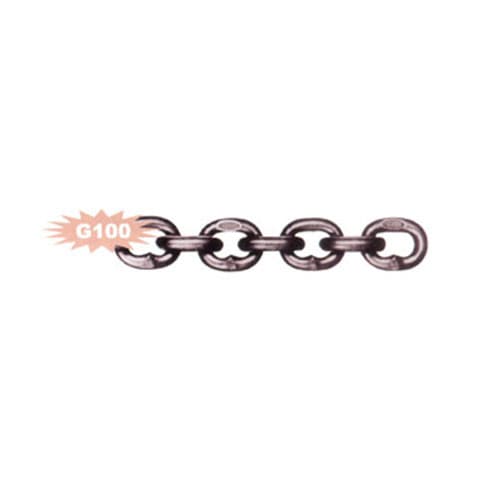 IH-LR-CH-G100Grade 100 Alloy Lifting Chain
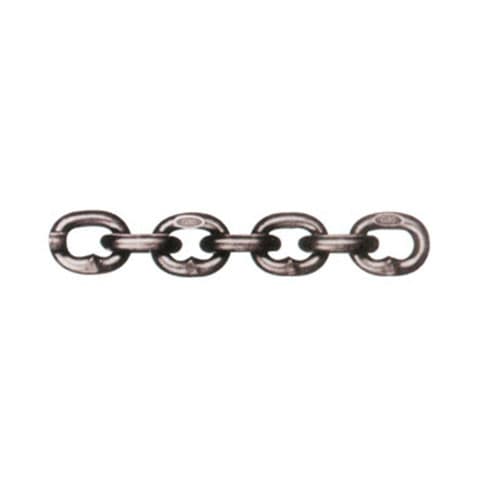 IH-LR-CH-G80Grade 80 Alloy Lifting Chain
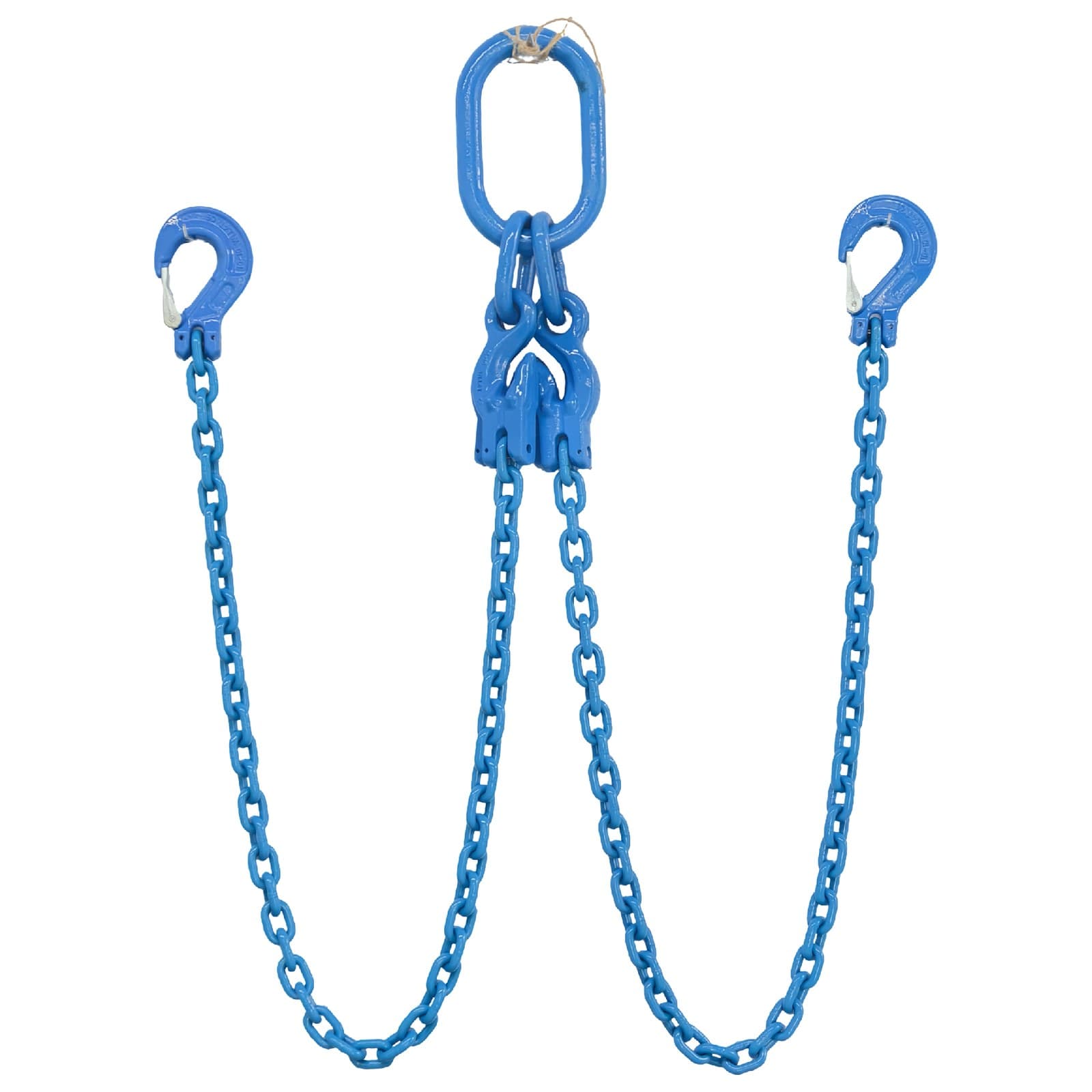 IH-LR-CS-G100DOSGrade 100 Two-Leg Chain Sling with Sling Hooks — Type DOS
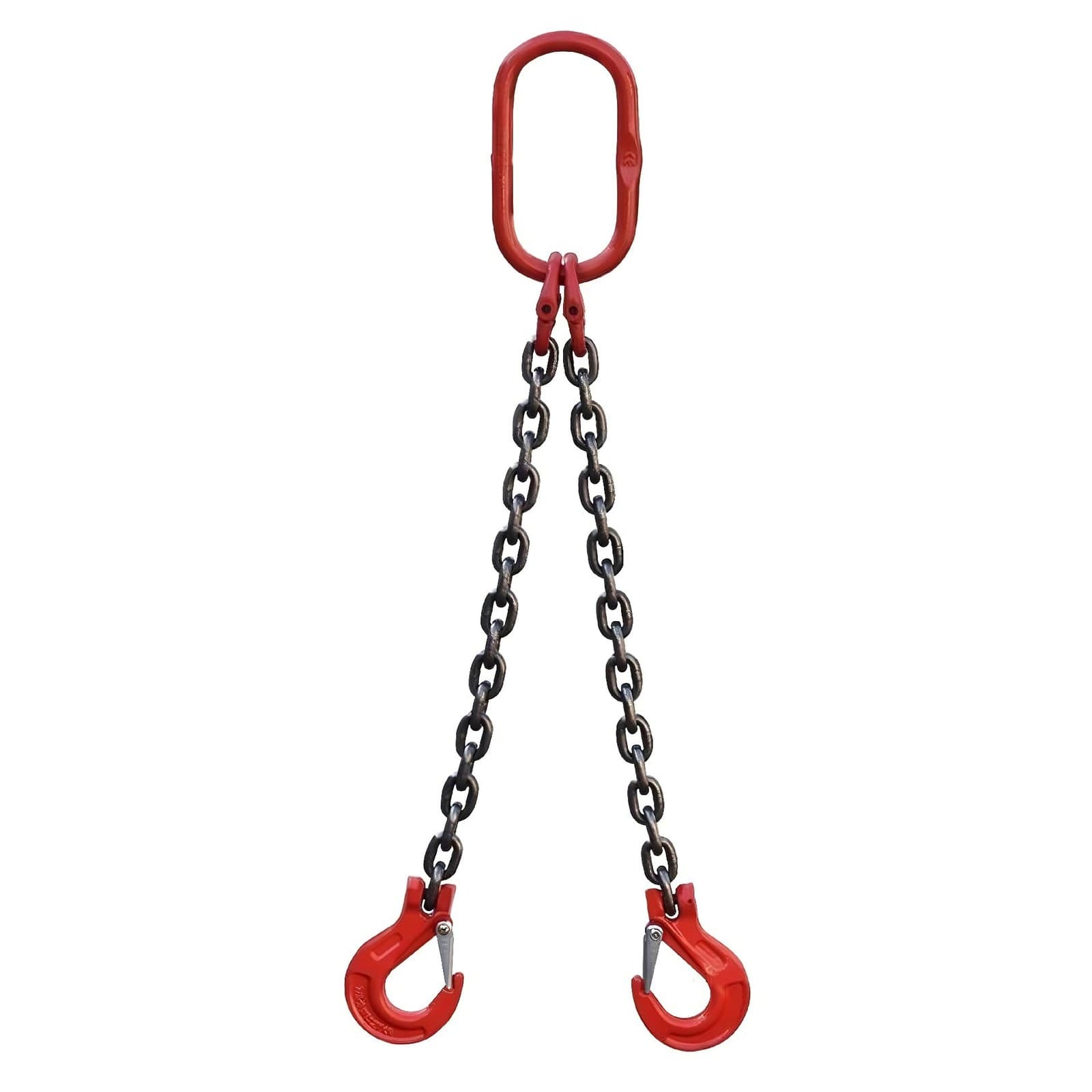 IH-LR-CS-G80DOSGrade 80 Two-Leg Chain Sling with Sling Hooks — Type DOS
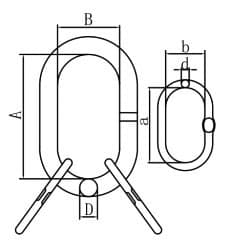 IH-LR-G10-MLAGrade 100 Master Link Assembly
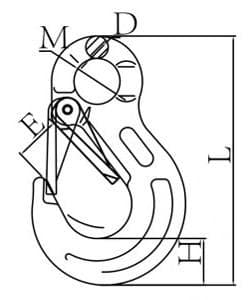 IH-LR-G10-ESHLGrade 100 Eye Sling Hook with Latch
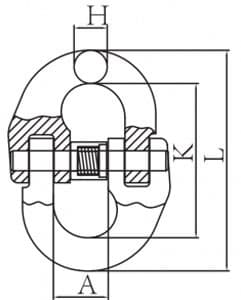 IH-LR-G10-CCEGrade 100 Chain Connector — European Type
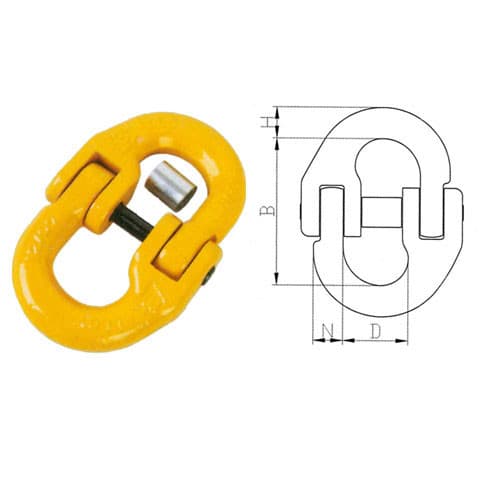 IH-LR-G8-CLEGrade 80 Connecting Link — European Type