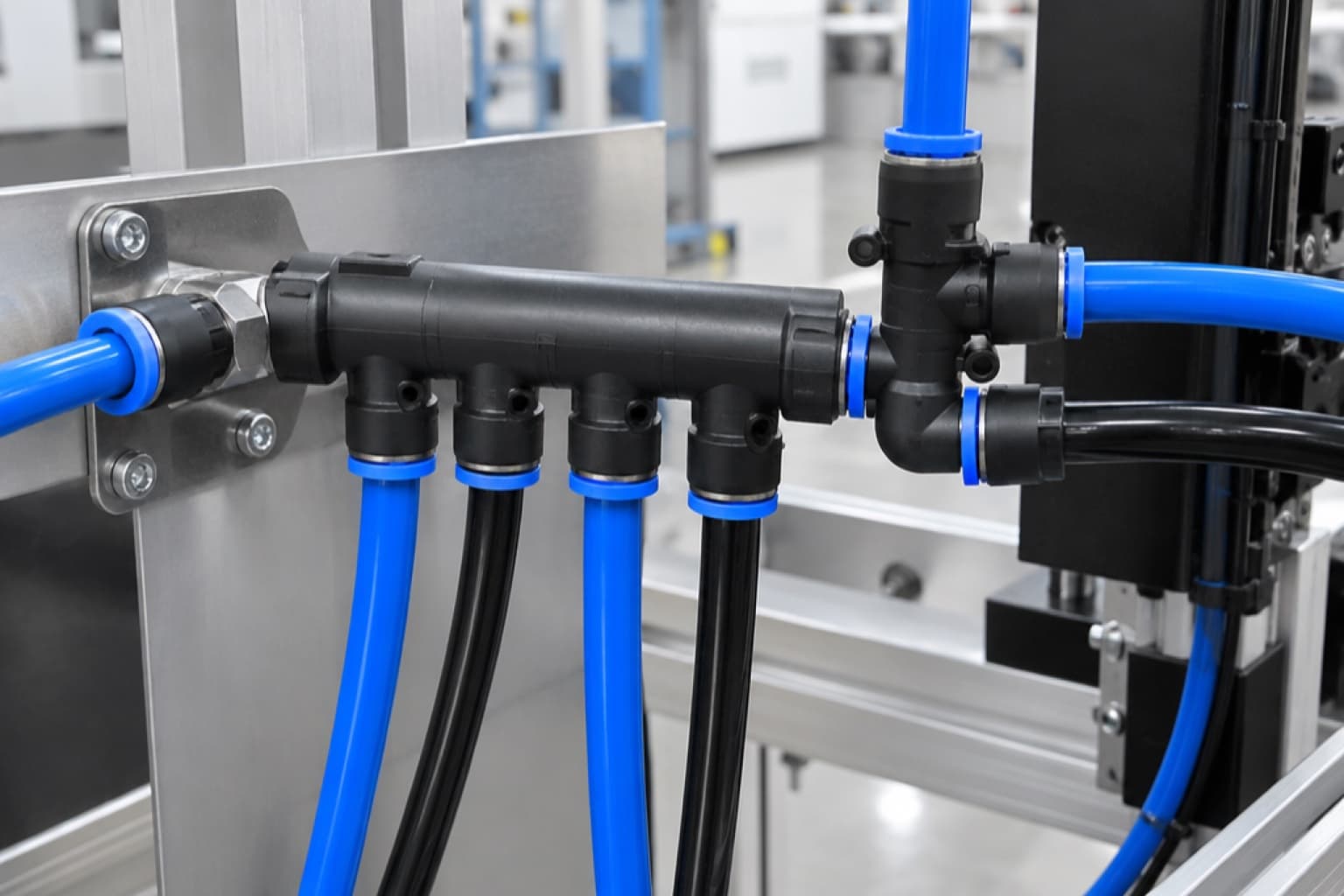
Push-to-connect fittings changed how pneumatic machines are built: no spanners, no nuts, a tube that goes in by hand and comes out by pressing a collar. They are also the fitting most often blamed for leaks that are really installation faults. This guide covers how they work, what they are rated for, the tube they need and how to fit them so they stay tight.
/01How they grip and seal.
SMC describes its KQ2 design plainly: a stainless steel chuck grips the tube, a POM collet and release button free it, and an NBR packing seals with a profile that both seals and eases insertion. Parker’s metal Prestolok uses a stainless grab ring and a nitrile seal. Pressing the release collet lifts the teeth off the tube; SMC notes this also stops the teeth biting in excessively when the tube is removed. Our range follows the same pattern — an engineering-plastic body, POM release collet, stainless teeth and an internal O-ring — in straight and reducing unions, elbows, tees, crosses, Y connectors, bulkheads, banjo elbows, plugs and end caps, with NPT threads where they meet a port.
/02Ratings.
| Range | Pressure | Vacuum | Temperature |
|---|---|---|---|
| Our push-to-connect range (maker’s figures)Highlighted | 0–150 psi (0–9.9 bar) | to −29.5 inHg | 32–140 °F (0–60 °C) |
| SMC KQ2, inch | 1.0 MPa (145 psi) max operating; 3.0 MPa proof | — | −5 to 60 °C |
| Parker Prestolok PLP (metal) | Up to 300 psi, depending on tubing | 28" Hg | 0 to +200 °F |
| Parker Prestolok composite | 290 psi (20 bar) | — | −4 to +175 °F |
Two rules sit behind every figure. The tube can limit the joint before the fitting does — Parker states its Prestolok rating depends on the tubing used. And surges count: SMC requires surge pressure to stay below the maximum operating pressure, so a line that sees pressure spikes needs headroom. Our range is for compressed air only — not other gases, water, oil or hydraulic service.
/03Tube and installation.
- Use the right tube. Nylon or polyurethane air tube of the fitting’s outside diameter. Parker specifies 95 Shore A polyurethane for its metal Prestolok; softer tube may need a tube support.
- Cut it square. Use a tube cutter, not side cutters. Parker allows a maximum of 15° off square.
- Mark the insertion depth and push the tube in until it bottoms. Parker publishes full insertion depth and the minimum to pass the O-ring for each size — for example 0.78" full and 0.51" to the O-ring for ⅜" tube in its metal range.
- Pull to check. A tube pushed past the grab ring but not the O-ring will hold and still leak.
- To release, push the tube in slightly, hold the collet down and pull the tube out. Re-cut a scored tube end before refitting.
Pneumatic fluid power — Push-in connectors for thermoplastic tubes
General requirements and test methods for the design and performance of push-in connectors for thermoplastic tubes from 3 mm to 16 mm OD, including inch sizes. It does not apply to air braking systems.
Common questions
- How do push-to-connect fittings work?
- Stainless teeth grip the tube as it is pushed in and an O-ring seals on its outside diameter. Pressing the release collet lifts the teeth so the tube can be pulled out.
- What pressure are push-to-connect fittings rated for?
- It depends on the make and the tube. Our range is rated 0–150 psi; SMC’s KQ2 inch range 145 psi (1.0 MPa); Parker’s metal Prestolok up to 300 psi depending on tubing.
- Why is my push-in fitting leaking?
- Usually the tube is not fully inserted, was cut at an angle, is scored, or is the wrong OD or too soft. Re-cut square, push to the bottom and pull to check.
- Can push-to-connect fittings be used for water?
- Our range is for compressed air only. Some makers offer push-in fittings rated for water; use one that states it.
- Can I use push-in fittings on truck air brakes?
- No. Use DOT air brake push-in fittings made to SAE J2494 and FMVSS 106; ISO 14743 pneumatic connectors exclude air brakes.
- Do push-to-connect fittings work on vacuum?
- Many do — ours are rated to −29.5 inHg, Parker’s metal Prestolok to 28" Hg.
What we list
Push-to-connect fittings for inch plastic air tube:
- Push-to-Connect Male Connector, Tube × NPT
- Push-to-Connect Female Connector, Tube × NPT
- Push-to-Connect Reducing Union
- Push-to-Connect Reducing Union Tee
- Push-to-Connect Banjo Elbow, Tube × NPT Male
- Push-to-Connect Male Elbow, Tube × NPT
- Push-to-Connect Female Elbow, Tube × NPT
- Push-to-Connect Bulkhead Female Connector, Tube × NPT
- Push-to-Connect Bulkhead Union
- Push-to-Connect Plug
- Push-to-Connect Tube End Cap
- Push-to-Connect Male Run Tee, NPT × Tube × Tube
- Push-to-Connect Male Branch Tee, Tube × NPT
- Push-to-Connect Straight Union
- Push-to-Connect Union Elbow
- Push-to-Connect Union Tee
- Push-to-Connect Male Y Connector, NPT × Tube × Tube
- Push-to-Connect Union Cross
Push-to-connect fittings
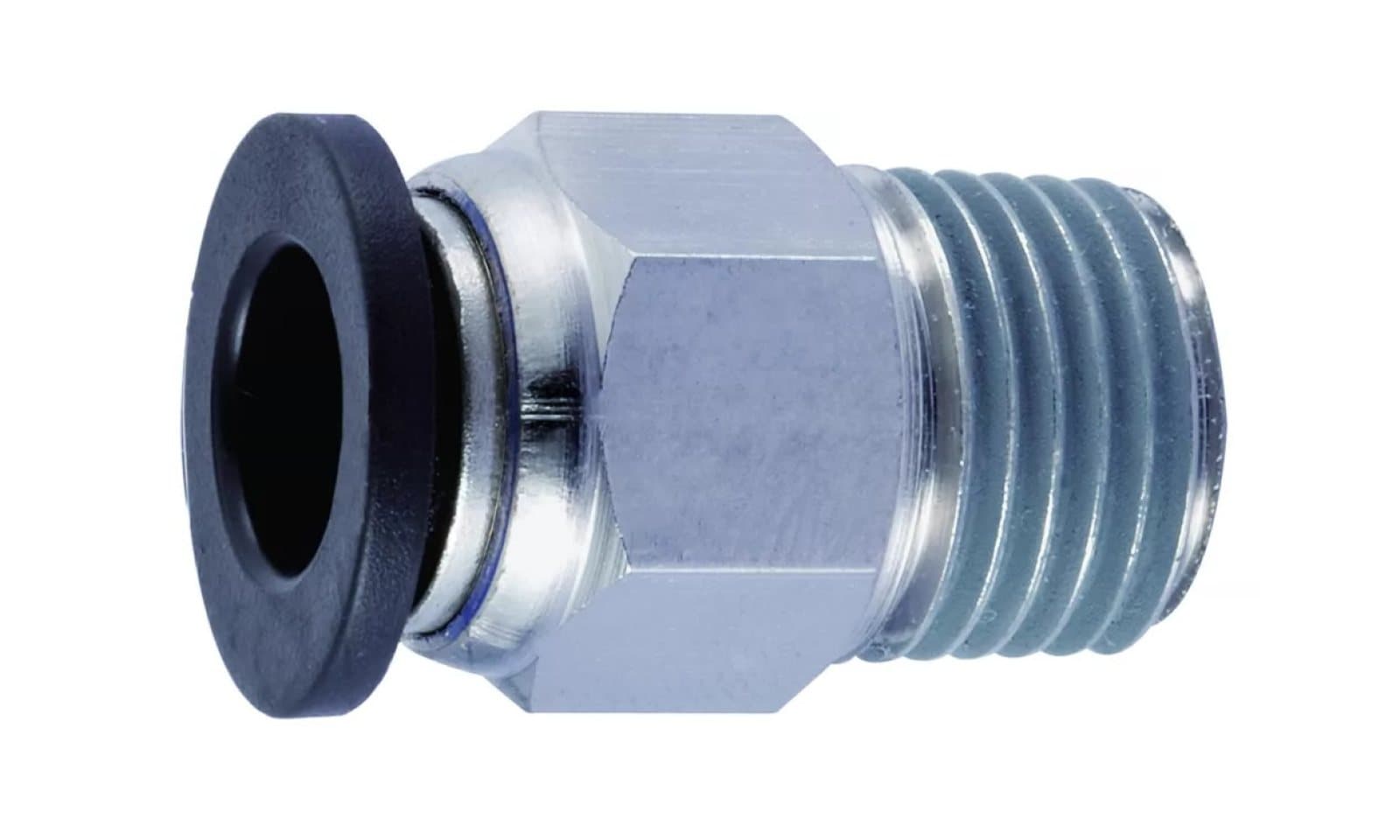 IH-PN-PCPush-to-Connect Male Connector, Tube × NPTIndus Hydraulics
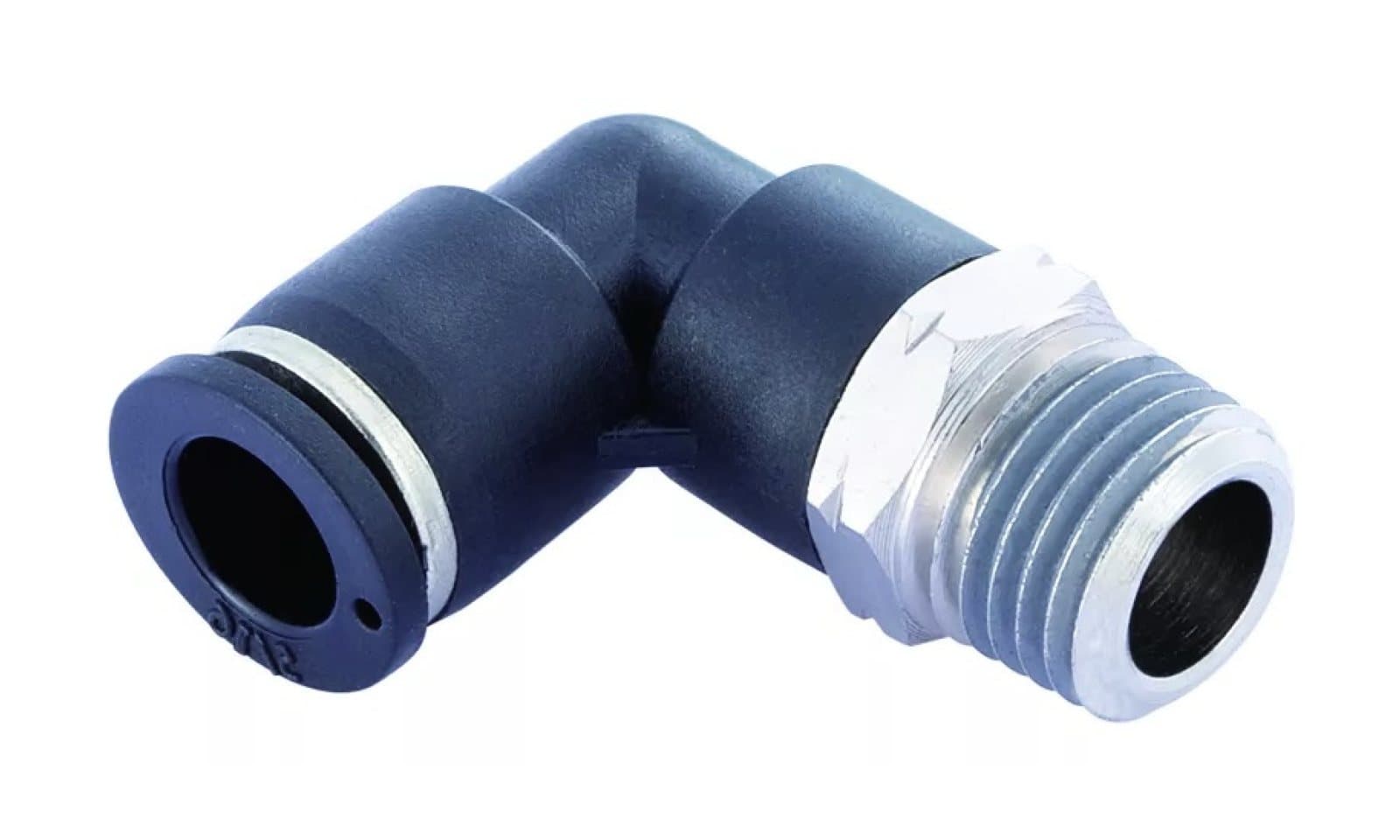 IH-PN-PLPush-to-Connect Male Elbow, Tube × NPTIndus Hydraulics
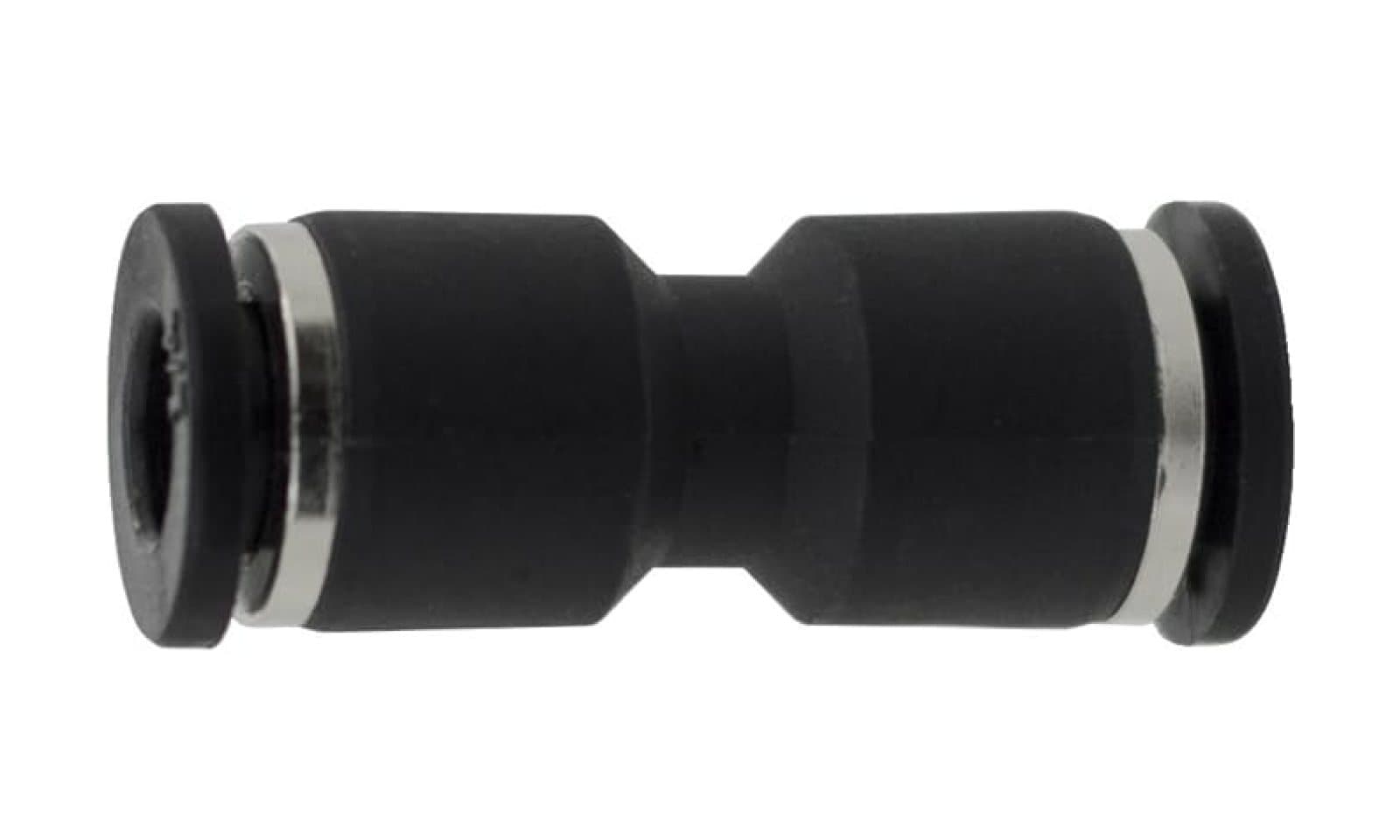 IH-PN-PUCPush-to-Connect Straight UnionIndus Hydraulics
 IH-PN-PUTPush-to-Connect Union TeeIndus Hydraulics
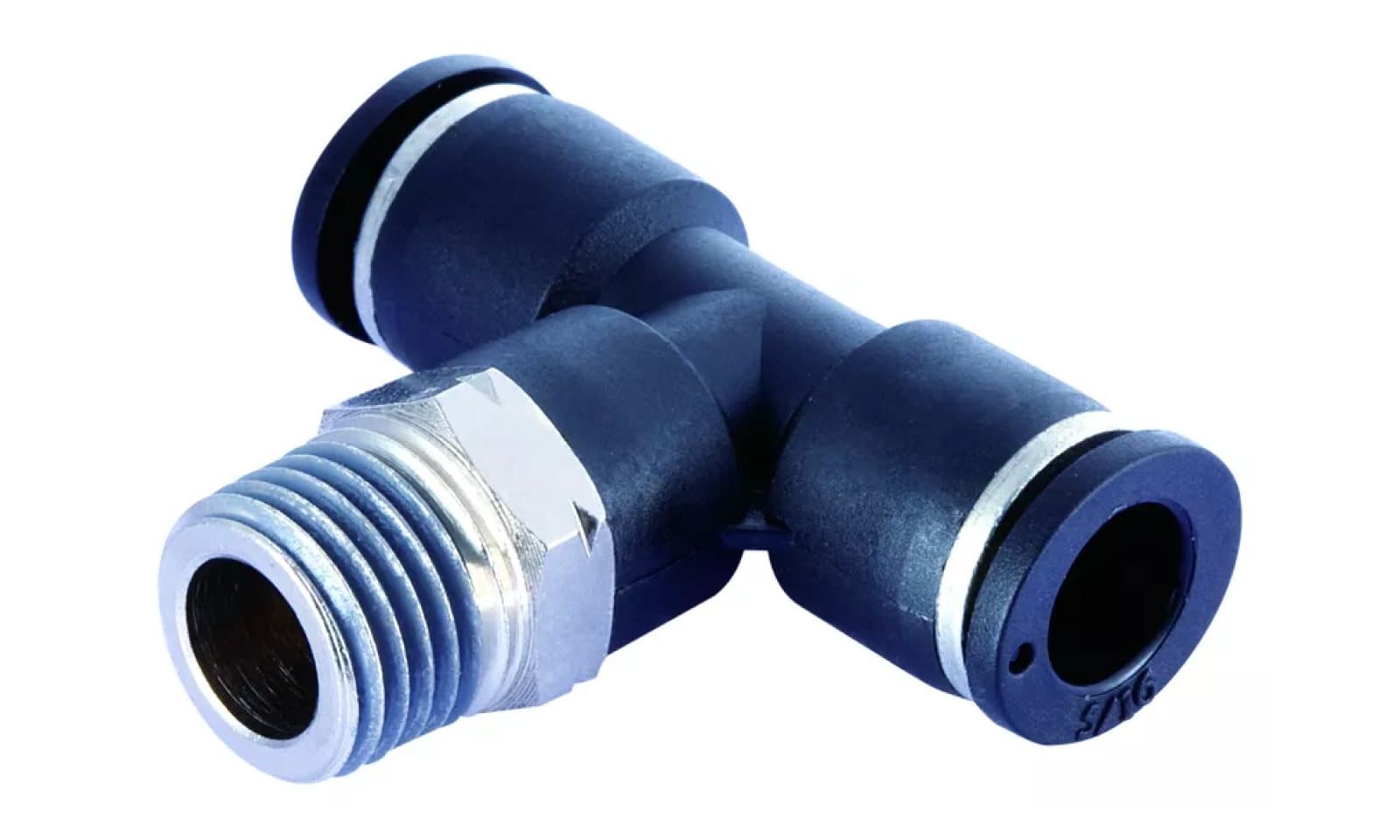 IH-PN-PTPush-to-Connect Male Branch Tee, Tube × NPTIndus Hydraulics
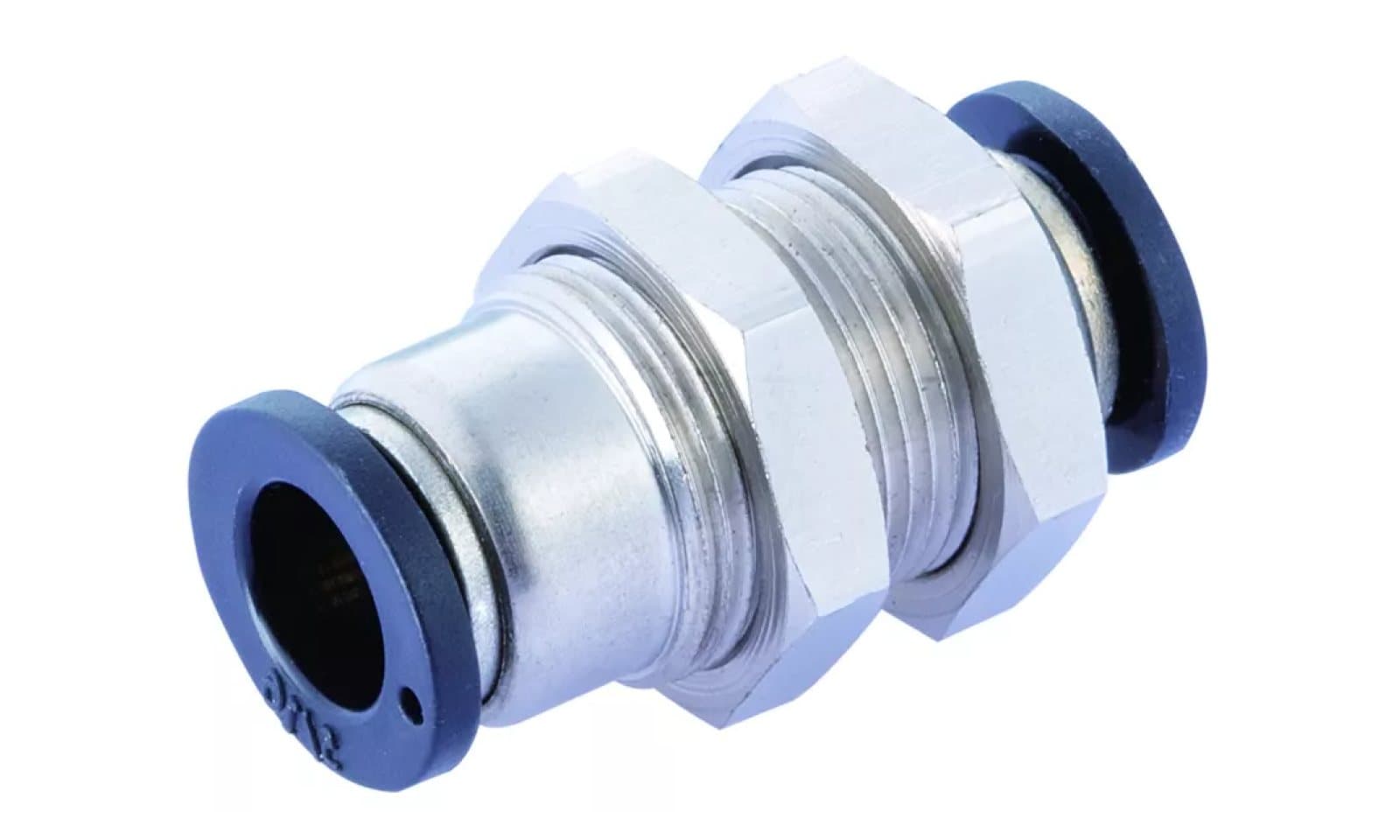 IH-PN-PMMPush-to-Connect Bulkhead UnionIndus Hydraulics
 IH-PN-PWTPush-to-Connect Male Y Connector, NPT × Tube × TubeIndus Hydraulics
 IH-PN-PPPush-to-Connect PlugIndus Hydraulics