Some parts cannot be greased after assembly, some must not attract dust, and some run where oil would contaminate the product. For those the answer is to put the lubricant on before the part goes in, as a film bonded to the surface. That is an anti-friction coating, and Molykote lists them from aerosol cans for the workshop to drums for production lines.
/01What is in the can.
Every coating on our listings is described the same way: organic binder, solids and solvent. The solid is the lubricant — MoS2, graphite, a blend of the two, or PTFE. The binder holds it on the surface, and the solvent lets it be sprayed, dipped or brushed and then leaves as the film dries or cures. The result is a film measured in microns rather than millimetres, so tolerances on close-fitting parts are barely affected.
| Coating | Solid lubricant | Cure | Listed temperature |
|---|---|---|---|
| D-321 RHighlighted | MoS₂, graphite | 20 °C | −180 °C to 450 °C |
| D-96 | PTFE | 23 °C | −40 °C to 150 °C |
| D-3484 | MoS₂, graphite | 23 °C to 200 °C | −70 °C to 250 °C |
| D-10-GBL | Graphite | 180 °C | −70 °C to 380 °C |
| D-708 / D-7708 | PTFE | 180 °C | −60 °C to 240 °C |
| PA-744 | Graphite, MoS₂ | 180 °C | −75 °C to 300 °C |
| D-6024 | Blend | 180 °C | −70 °C to 310 °C |
| D-6600 | PTFE | 200 °C | −40 °C to 260 °C |
| D-6818 | Graphite, MoS₂ | 220 °C | −70 °C to 310 °C |
| D-7620 | MoS₂, graphite | 220 °C | −70 °C to 300 °C |
/02Air-cure or heat-cure.
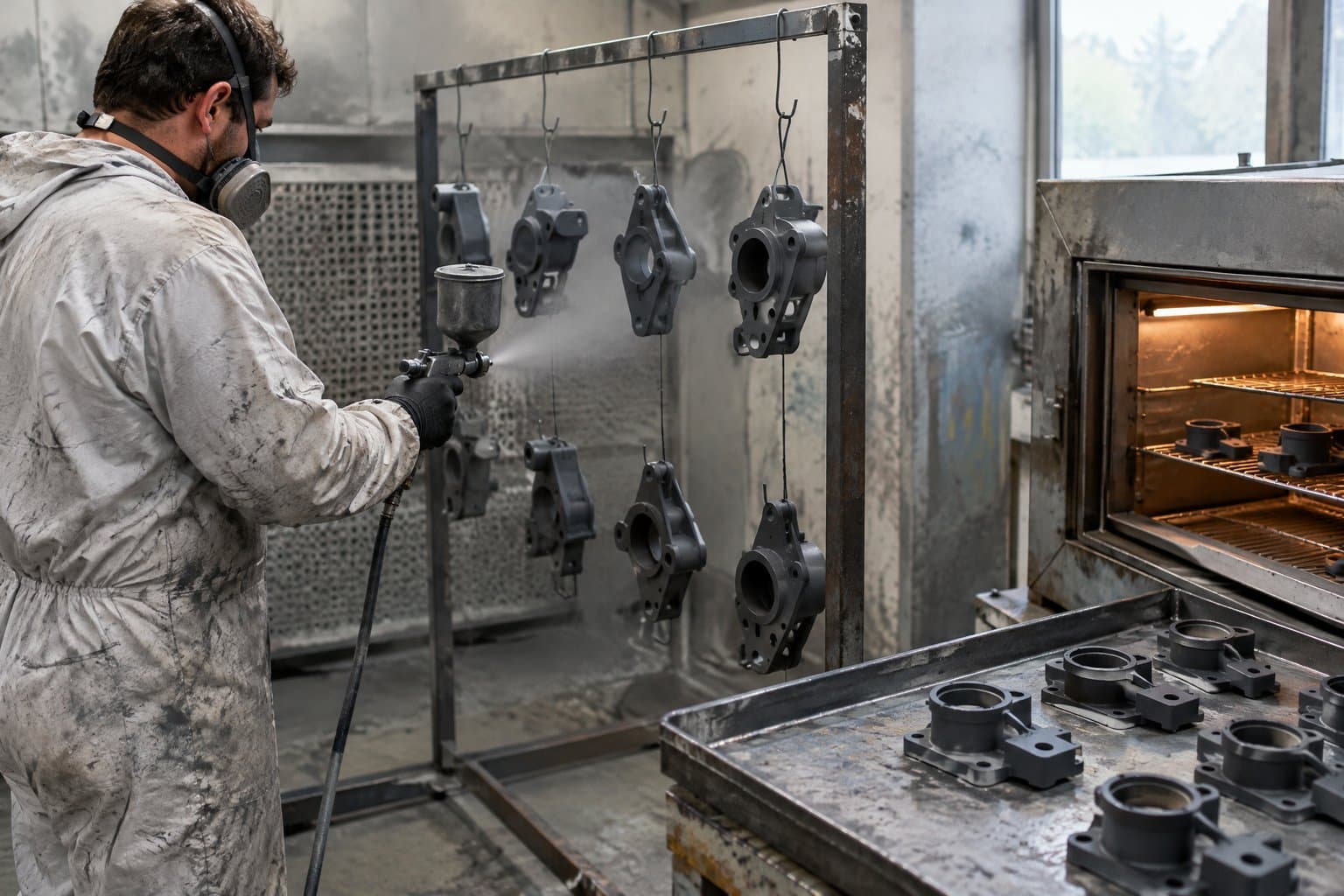
The cure temperature is the first filter. A room-temperature film such as D-321 R or D-96 can go onto an assembled part, a large component or a part in the field, because nothing has to go into an oven. A heat-cured film needs the part to tolerate the cure — 180 °C to 220 °C on our listings — which rules out assemblies with seals, plastics or heat-treated parts that would be affected, but suits production runs of fasteners, springs, slides and small components. D-3484 is listed with a cure from 23 °C to 200 °C.
/03Choosing the solid.
MoS2 and graphite films are the choice for high contact pressure and slow movement — threads, cams, slides and hinges — and the widest temperature ranges on our listings belong to them: D-321 R from −180 °C to 450 °C and D-10-GBL to 380 °C. PTFE films (D-96, D-708, D-7708, D-6600) give low friction at moderate loads and a cleaner finish; D-96 is listed as transparent. Where friction must be consistent, as on fasteners tightened to a torque, a cured film gives the same surface on every part.
/04Preparation decides adhesion.
A coating is only as good as its bond. The surface has to be free of oil, grease and loose scale before application, and a slightly roughened surface — blasted or phosphated — holds a film far longer than a polished one. Apply thin, even coats rather than one heavy one, let each flash off, and follow the cure time and temperature for the product. A thinner (Molykote 7415) is listed on the same shelf for adjusting solvent-borne coatings; check that it suits the coating before using it.
/05Where a coating beats grease.
Coatings earn their place where grease fails for reasons other than lubrication: dusty or sandy sites where grease turns into grinding paste, food and clean areas where oil must not migrate, parts that cannot be re-lubricated once assembled, and very low or very high temperatures where a grease thickens or runs. For moving parts that can be serviced, a grease is still simpler; for static threads, an anti-seize or assembly paste. The wider range is in Molykote lubricant types explained.
Frequently asked questions
- How is an anti-friction coating applied?
- By spraying, dipping or brushing onto a clean, slightly roughened surface, then letting it dry or curing it in an oven, depending on the product. Thin, even coats work better than one heavy coat.
- Which Molykote coating cures at room temperature?
- D-321 R is listed with a 20 °C cure and D-96 with a 23 °C cure. D-3484 is listed from 23 °C to 200 °C.
- MoS2 or PTFE coating?
- MoS2 and graphite films for high loads and slow movement; PTFE films for low friction at moderate loads and a cleaner finish.
- Can an anti-friction coating replace grease?
- On parts that cannot be re-lubricated, must stay clean or run in dust, often yes. On bearings that can be serviced, a grease usually remains the better choice.
Molykote anti-friction coatings
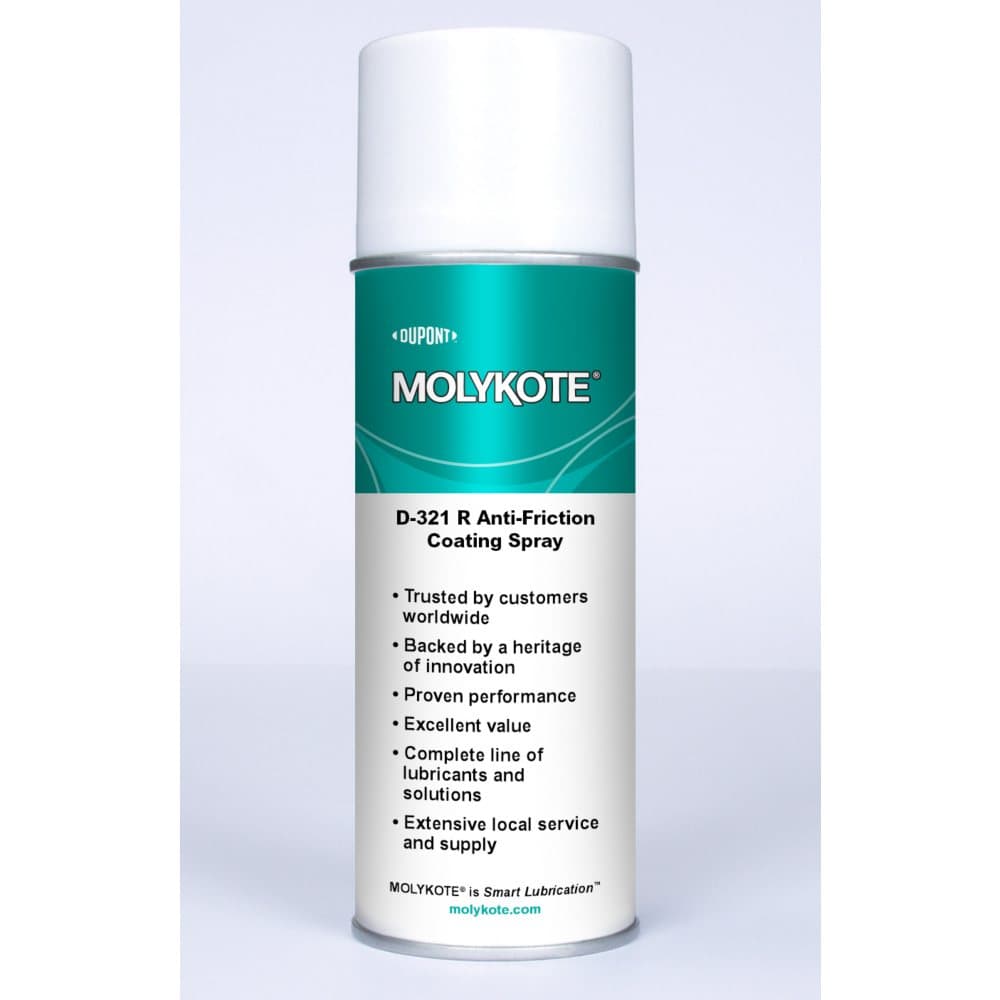 IH-LUB-D-321-R-ANTI-FRICTION-COATING-SPRAYMolykote D-321 R Anti-Friction Coating SprayMolykote
 IH-LUB-D-96-ANTI-FRICTION-COATINGMolykote D-96 Anti-Friction CoatingMolykote
 IH-LUB-D-3484-ANTI-FRICTION-COATINGMolykote D-3484 Anti-Friction CoatingMolykote
 IH-LUB-D-10-GBL-ANTI-FRICTION-COATINGMolykote D-10-GBL Anti-Friction CoatingMolykote
 IH-LUB-D-708-ANTI-FRICTION-COATINGMolykote D-708 Anti-Friction CoatingMolykote
 IH-LUB-PA-744-ANTI-FRICTION-COATINGMolykote PA-744 Anti-Friction CoatingMolykote
 IH-LUB-D-6600-ANTI-FRICTION-COATINGMolykote D-6600 Anti-Friction CoatingMolykote
- IH-LUB-D-7620-ANTI-FRICTION-COATINGMolykote D-7620 Anti-Friction CoatingMolykote